Plagues Fell on Pharaoh Because of Sarai
Abram pitched Sarai's tent before he pitched his own. Then the grain failed, and he asked her to tell the Egyptians she was his sister.
Table of Contents
 Click for full size
The Tent He Pitched First
Abram came up through the land as far as the oak at Moreh, and the Canaanites were in it, farming it, holding it, with every right to it that anyone had. Then God told him the land would go to his descendants, and he stacked stones for an altar on the spot, over the news and nothing else, because there was nothing else yet.
He moved on to the hill east of Beth El and made camp. He put up Sarai's tent first and his own after it. Then he built a second altar and called on the name of the Lord out loud, where the herdsmen could hear him.
He had a promise, two piles of stone, and no field of his own.
The Grain Failed
Then the rain did not come, and the famine in the land was heavy.
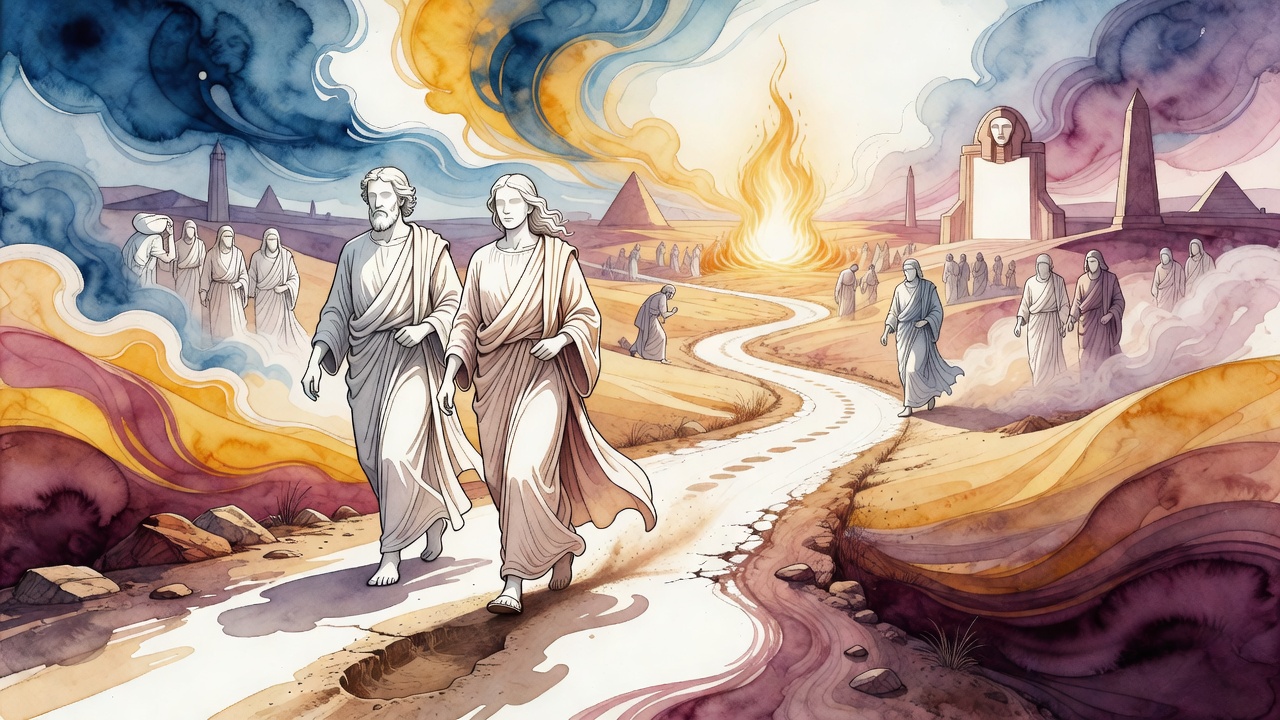
Egypt had the Nile and the storehouses, so Egypt was where people went. Abram took his household down the road south with the dust rising off the flocks. He was walking toward full granaries and a king who collected women the way other men collected horses.
Near the border he stopped and said the thing he had been turning over for days.
"I know what a beautiful woman you are. When the Egyptians see you they will say, this is his wife, and they will kill me and keep you alive. Say you are my sister, so that it will go well with me because of you and I will stay alive."
She did not answer, or nobody wrote down her answer. They went in.
Taken Into the House
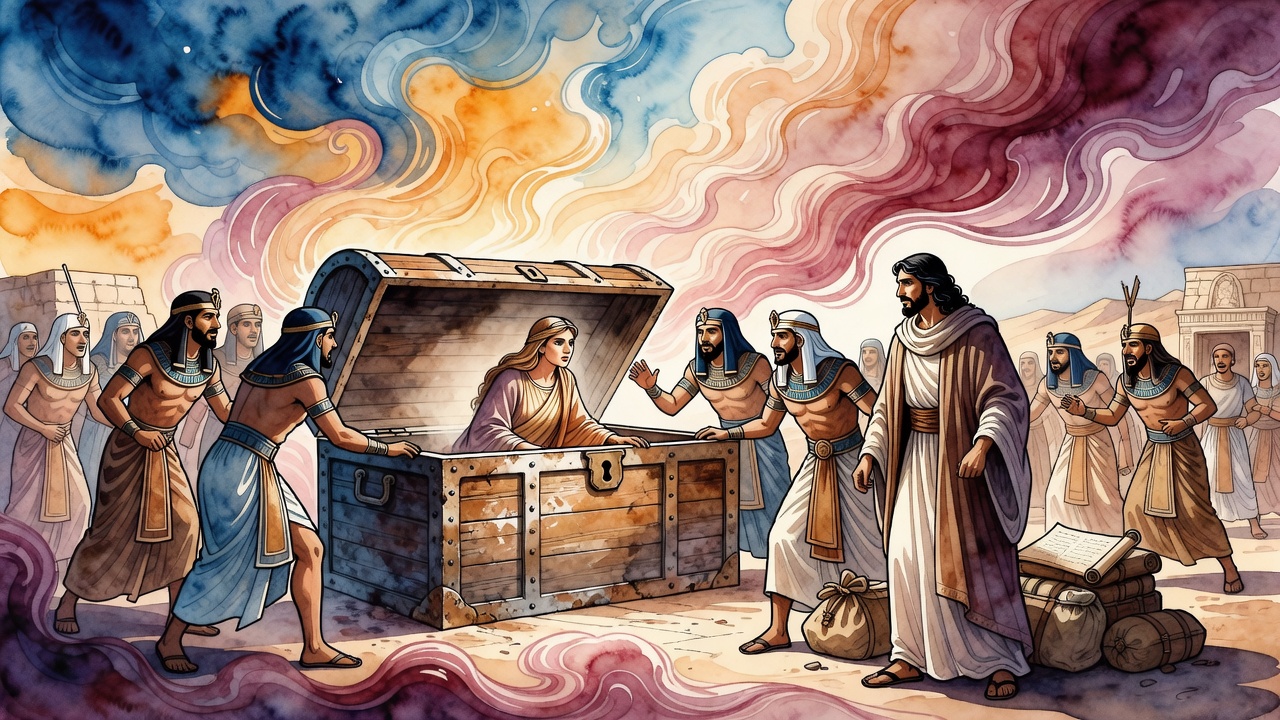
The Egyptians saw her at once. Pharaoh's officials saw her, and then they went and talked her up in front of their king, and she was taken into the royal house.
Abram was paid. Sheep, cattle, donkeys, male and female slaves, camels. The gifts came in from the palace while his wife was in it, and he took them, and no one at the gate said out loud what the payment was for.
The nights in the women's quarters went slowly. Sarai said nothing that was written down there either. She was inside the house of a man who had never once been refused, and there was no one in that country who would refuse him for her.
She was already under a ban she could not see. Do not touch my anointed ones. Do not harm my prophets. That guard had been over the family since they left Haran, and it had a way of finding kings.
Sores in the Palace
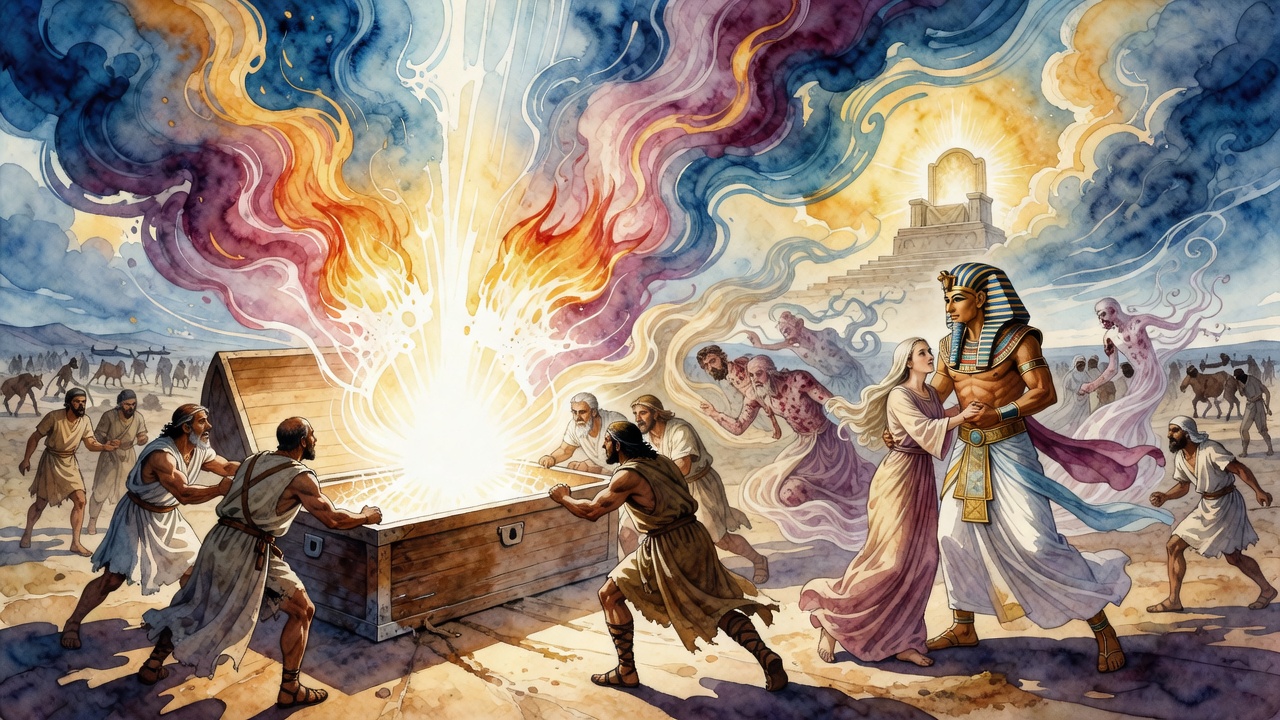
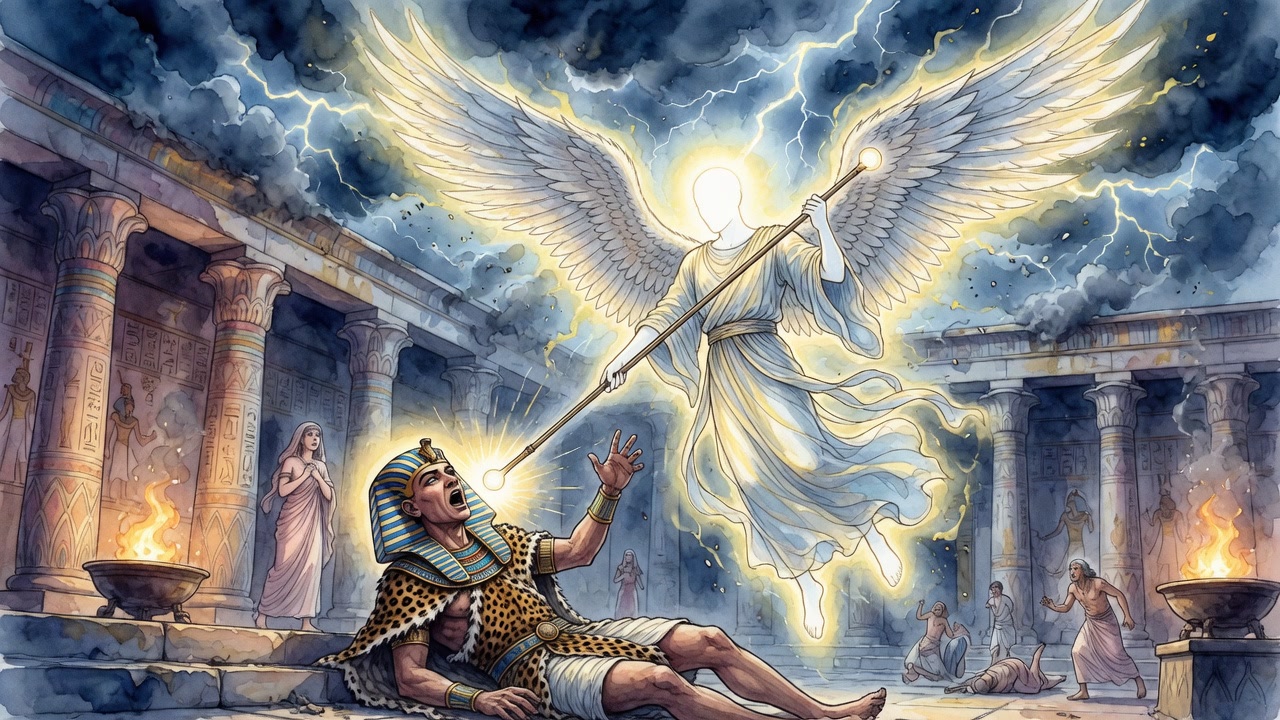
The plagues hit Pharaoh's house that night, and they were heavy ones, and they did not stop at the king.
Servants broke out. The women of the household broke out. The diviners came running with their charts and could not name it. Somewhere in the palace a man worked out which guest had arrived just before the skin started going wrong, and the king sent for Abram.
Pharaoh had lost the swagger by the time Abram was standing in front of him.
"What is this you have done to me? Why did you not tell me she was your wife? Why did you say she was your sister, so that I took her for myself? Here is your wife. Take her and go."
He gave orders about Abram, and men walked them out of the country with everything they owned, the flocks and the slaves and the camels the palace had paid for, all of it still in their hands. Sarai came out of the house with the king's plan unfinished. The sores had been her wall.
A servant girl carrying wash water saw the foreign woman go past into the light and understood, without a word of Torah, that some guests travel with a God who hits kings.
The Road Back to the Altar
They came up out of Egypt loaded down, into the dry country, and kept going by stages until they were back on the hill between Beth El and Ai, at the place where the altar was.
The stones were where he had left them. He called on the name of the Lord there again, in the same voice, on the same hill, with a wife who had been taken and returned and a herd three times the size it had been when he went down.
He pitched her tent first.
← All myths