Parshat Lech Lecha5 min read

Customs Officers Forced Open Sarah's Chest

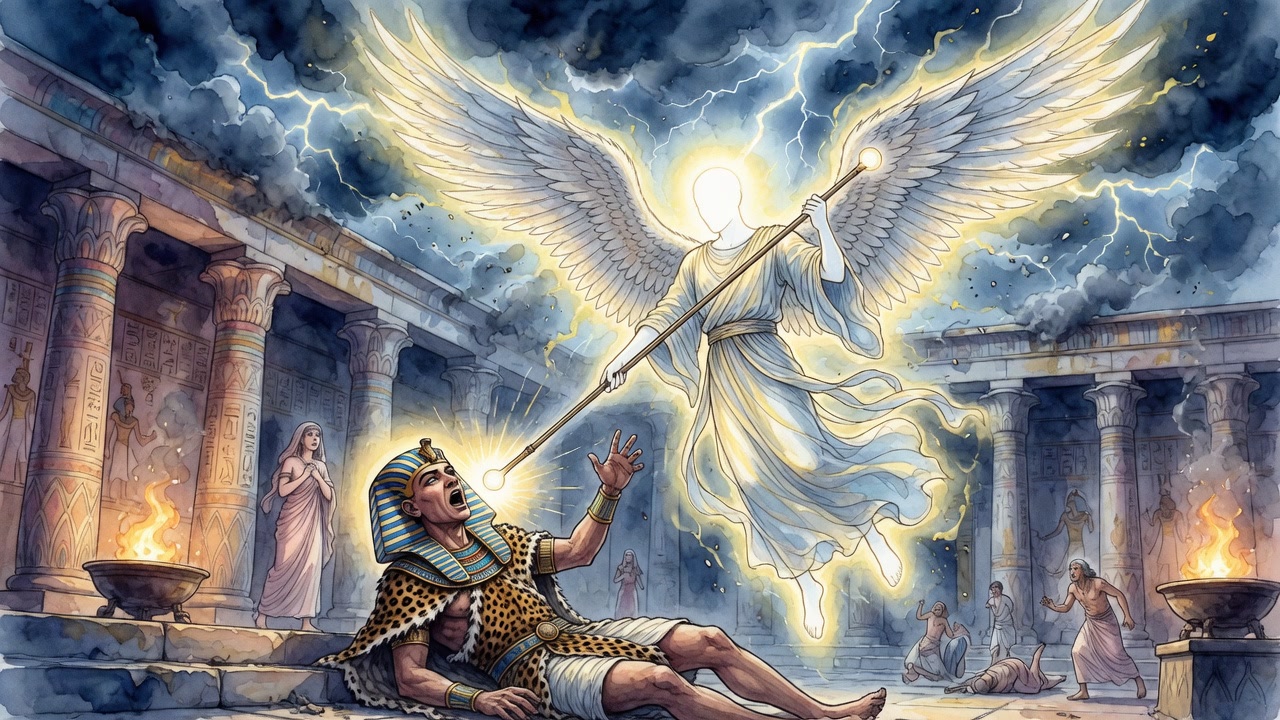
By nightfall Sarah was lying face down on the floor of Pharaoh's house, and an angel stood over the king with a whip, waiting for her to say the word.

Curated by Arthur · Told by Maggid ·
Table of Contents
  1. What Abraham Said at the Border
  2. The Officers Wanted to See Inside
  3. A Hundred Dinars, Then Two Hundred
  4. The Night the Angel Waited for Her Word
  5. The Road Out
Customs Officers Forced Open Sarah's Chest Click for full size

What Abraham Said at the Border

Abraham stopped the caravan within a day of Egypt and told his wife she was beautiful.

They had been married for decades. He said it like a man who had just worked something out. "Look, I know that you are a beautiful woman." The road takes a face apart. Weeks of dust and bad water and sun, and most people arrive at a border looking like nothing worth a second glance. Sarah had come through all of it and had not faded, and that was the trouble. They had crossed Aram Naharaim and Aram of Nahor without meeting a woman who could stand next to her. Among their own people that had been a quiet pleasure. In front of Egypt it was a death sentence with his name on it.

So he had a chest brought down off a pack animal, put her inside it, and locked it.

The Officers Wanted to See Inside

The customs house at the frontier ran on suspicion, and the men there had seen every trick a merchant can pack.

"Duty."

"I will pay it."

"You are carrying garments."

"Then I will pay the rate on garments."

"Silks."

"I will pay the rate on silks."

"Pearls."

"I will pay the rate on pearls."

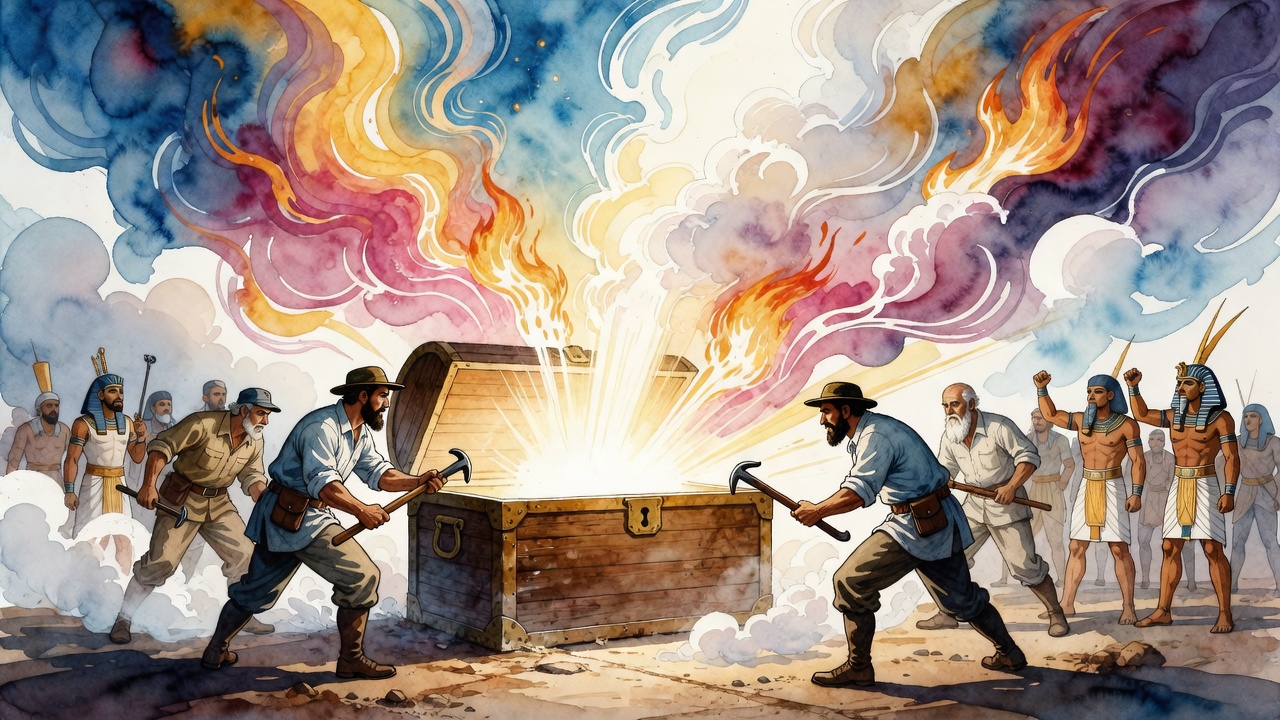
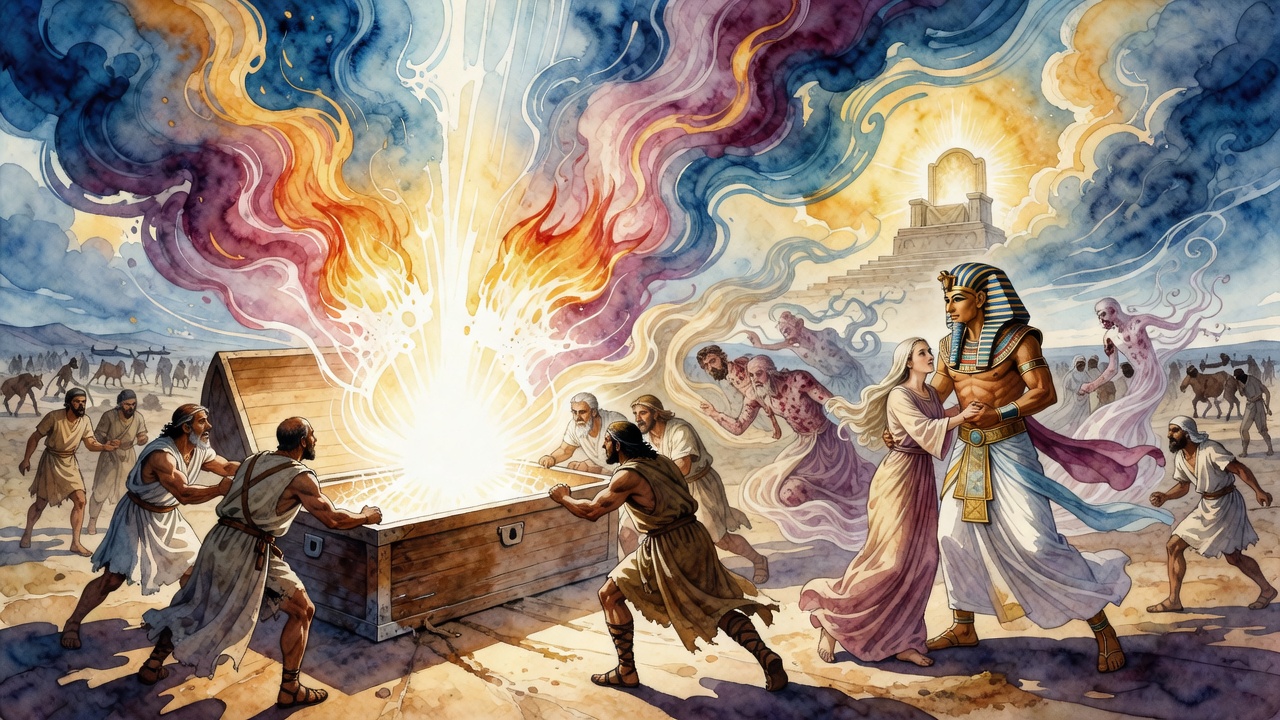
He never argued a single number down. That was his mistake. Nobody pays a pearl merchant's duty on a crate he will not open, and the officers stopped quoting rates and put their hands on the lid. It came up.

The light of her went out of that box and across the whole land of Egypt.

There was a likeness of Eve that had been handed down through the heads of the generations, and it was the measure everyone used. When Scripture wants to say that Abishag the Shunammite was lovely, it says the girl was very beautiful, meaning she came up close to that likeness. Sarah went past it. She was more beautiful than the likeness of Eve.

A Hundred Dinars, Then Two Hundred

Pharaoh's officers reached the customs house and did not behave like men who had seen a wonder. They started bidding.

"A hundred dinars and I go in to her."

"Two hundred."

The number climbed while they walked her toward the palace, and the praise they carried to Pharaoh climbed with it, each man talking her price up because he had already put money on her. She went into the king's house that evening as the most expensive thing in Egypt, and Abraham stood at the edge of the market with an open chest and the receipts for silk and pearls.

The Night the Angel Waited for Her Word

Sarah spent that night on the floor with her face against the stone.

"Master of the universe. Abraham walked out of his country on a promise. I walked out on nothing but trust. Abraham is standing outside the boat. I am inside it."

"Everything I am doing," God told her, "I am doing for you."

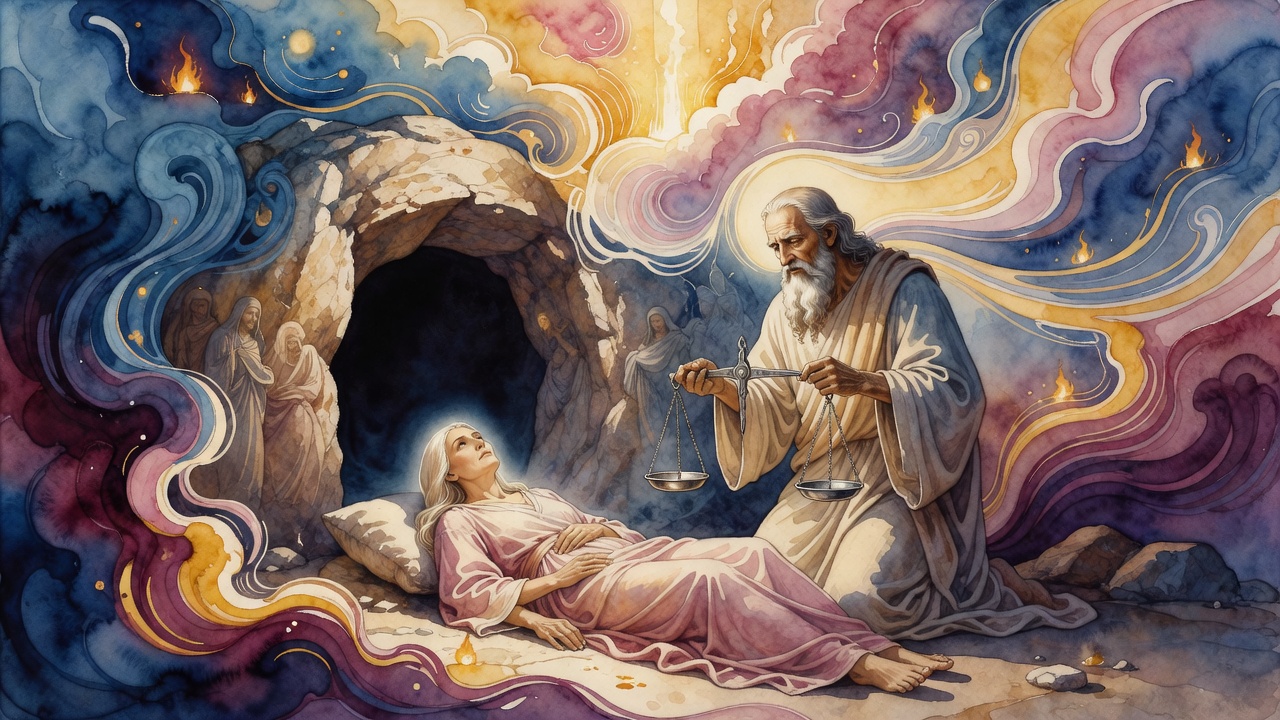
An angel stood in that room all night with a whip in his hand and took his orders from her. When she said strike, he struck. When she said leave him, he left off. And she said it over and over, the one sentence that should have ended the night at the door, that she was a married woman, and Pharaoh kept coming back.

So the whip kept moving. Bar Kappara said the disease that came over Pharaoh was raatan. Rabbi Shimon ben Gamliel met an old man covered in sores in Sepphoris who told him there are twenty-four kinds of skin plague and only one of them makes a man useless in bed, and that was the one the king got. The beams of the house were struck along with him. Servants ran through corridors where the wood itself was breaking out, and every one of them was saying the same thing to every other one: it is because of Sarai, the wife of Abram.

A palm tree kills the man who climbs it carelessly. He gets to the crown, he loses his grip, and the ground does the rest.

The Road Out

Pharaoh gave the order himself and put men on the road to walk them out. Abraham left Egypt heavy with cattle and silver and gold, and he went back north by the same stages he had come down, stopping where he had stopped before to settle what he still owed.

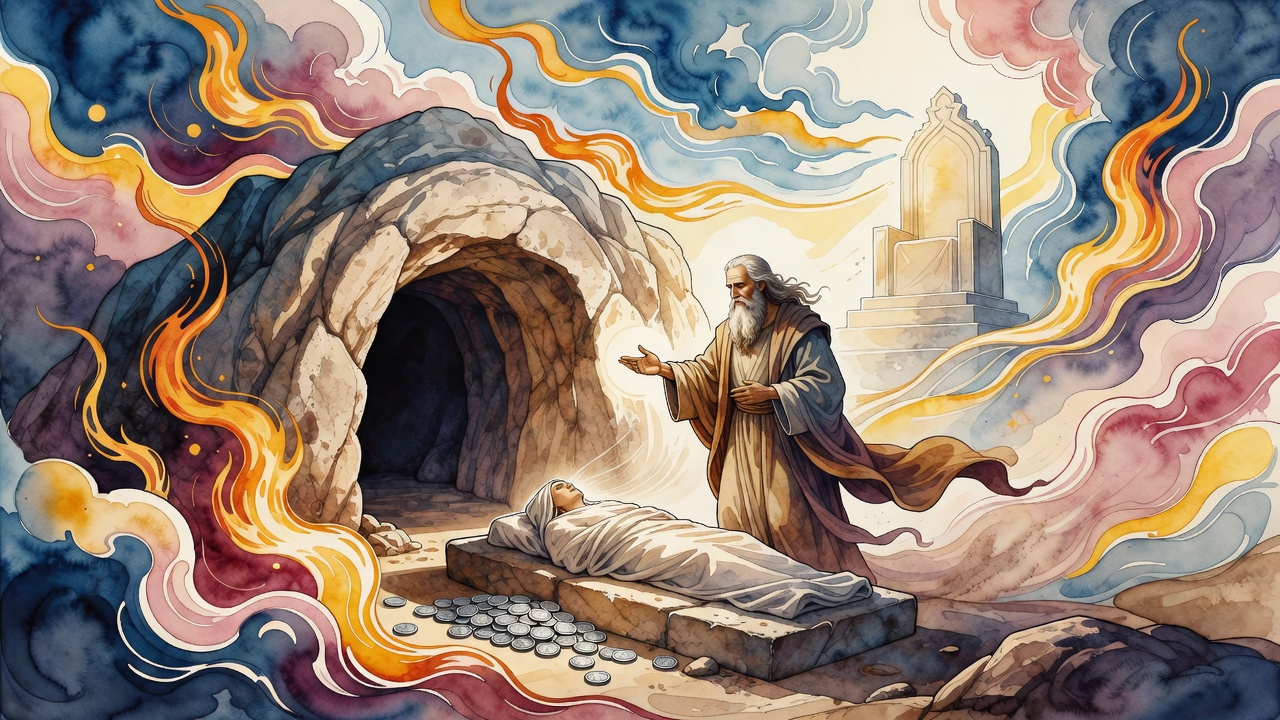
He had been told at the start what the trip was for. Go down and conquer the road ahead of your children. Every step of it came back later, in order, with different names on it. A famine drove the father down. A famine drove the sons down. The father's wife was taken and the sons' children were thrown in the river. The father came out loaded with silver and gold, and so did they.

The chest went back on the pack animal empty. Sarah rode north with the light still in her and said very little.


← All myths
From the tradition

Sources

4 sources

The texts behind this telling. Some cards carry a translation of the source; others are our own retelling of it, and each card says which. Every card links out to the original.

Yalkut Shimoni on Torah 67:7Yalkut Shimoni on Torah

Translation of the source text.Torat Emet (Yalkut Shimoni) · CC-BY-NC

"And it came to pass, when Abram was come into Egypt" (Genesis 12:14). And where was Sarah? He had placed her in a chest and locked it shut before her. When he reached the customs house, they said to him: pay the duty. He said: I will pay. They said to him: you are carrying garments. He said to them: I will pay for garments. They said to him: you are carrying silks. He said: I will pay for silks. They said to him: you are carrying pearls. He said to them: I will pay for pearls. They said to him: it cannot be unless we open it and see what is inside. As soon as they opened it, she lit up the whole land of Egypt with her radiance. Rabbi Azariah and Rabbi Jonathan bar Haggai in the name of Rabbi Isaac said: the likeness of Eve was handed down to the heads of the generations. Of one elsewhere it says, "And the maiden was very fair" (1 Kings 1:4), meaning she reached the likeness of Eve; but here, she was fairer than the likeness of Eve.

Full source
Yalkut Shimoni on Torah 67:8Yalkut Shimoni on Torah

Translation of the source text.Torat Emet (Yalkut Shimoni) · CC-BY-NC

"And the princes of Pharaoh saw her, and praised her to Pharaoh" (Genesis 12:15). She kept rising higher. This one said: I will give a hundred dinars and go in to her. And that one said: I will give two hundred dinars and go in to her. I know only of their rising; from where do I learn of their descending? "And they took Jeremiah, and so forth" (Jeremiah 38:6) they raised him up. I know only of this world; from where do I learn of the world to come? Scripture teaches, "And many peoples shall take them and bring them to their place" (Isaiah 14:2).

Full source
Yalkut Shimoni on Torah 67:5Yalkut Shimoni on Torah

Translation of the source text.Torat Emet (Yalkut Shimoni) · CC-BY-NC

(Genesis 12:11-13) "And it came to pass, when he drew near to enter Egypt, etc." All these years she was with him, and only now does he say to her, "Behold now, I know [that you are a woman fair to look upon]"? Rather, [it was] because through the journey a person becomes disfigured [from the hardship of travel, yet she remained beautiful]. Another interpretation: We traveled through Aram Naharaim and Aram Nahor, and we did not find a woman as beautiful as you; and now we are entering a place of ugly and dark people [and your beauty will draw dangerous attention].

Full source
Yalkut Shimoni on Torah 69:3Yalkut Shimoni on Torah

Translation of the source text.Torat Emet (Yalkut Shimoni) · CC-BY-NC

The Holy One, blessed be He, said to Abraham: Go and conquer the road before your children. You find that everything written of Abraham is written of his children. Of Abraham it is written, "And there was a famine in the land" (Genesis 12:10), and of Israel it is written, "For these two years has the famine been in the land" (Genesis 45:6). Of Abraham it is written, "And Abram went down into Egypt" (Genesis 12:10), and of Israel it is written, "And our fathers went down into Egypt" (Numbers 20:15). Of Abraham it is written, "to sojourn there," and of Israel it is written, "To sojourn in the land are we come" (Genesis 47:4). Of Abraham it is written, "And it came to pass, when he drew near," and of Israel it is written, "And Pharaoh drew near" (Exodus 14:10). Of Abraham it is written, "and they will kill me, but they will keep you alive," and of Israel it is written, "Every son that is born you shall cast into the river, and every daughter you shall keep alive" (Exodus 1:22). Of Abraham it is written, "that it may be well with me for your sake" (Genesis 12:13), and of Israel it is written, "And God dealt well with the midwives" (Exodus 1:20). Of Abraham it is written, "And it came to pass, when Abram was come into Egypt" (Genesis 12:14), and of Israel it is written, "And these are the names of the children of Israel who came into Egypt" (Exodus 1:1). Of Abraham it is written, "And Abram was very rich in cattle" (Genesis 13:2), and of Israel it is written, "And He brought them forth with silver and gold" (Psalms 105:37). Of Abraham it is written, "And they sent him away," and of Israel it is written, "And the Egyptians were urgent upon the people, to send them out of the land in haste" (Exodus 12:33). Of Abraham it is written, "And he went on his journeys," and of Israel it is written, "These are the journeys of the children of Israel" (Numbers 33:1). "And the LORD plagued Pharaoh." It is written, "The righteous shall flourish like the palm tree" (Psalms 92:13). Just as this palm tree, everyone who climbs to its top falls if he does not guard himself, so everyone who comes to mate with Israel ends up taking what is his out of their hands. Know that it is so, for since Pharaoh dragged Sarah away for one night, he and all his house were struck with plagues, this is what is written, "And the LORD plagued Pharaoh." Resh Lakish in the name of Bar Kappara said: Pharaoh was struck with raatan. Rabbi Shimon ben Gamliel said: an old man stricken with boils met me in Sepphoris and said to me, there are twenty-four kinds of boils, and there is none among them all for which intercourse is harmful except raatan alone, and with it Pharaoh the wicked was struck. "And his house" even the beams of his house were struck, and all were saying it was on account of Sarai the wife of Abram, because he dared to approach the matron's shoe. And all that night Sarah lay prostrate on her face and said: Master of the universe, Abraham went out on a promise and I went out on faith; Abraham went out beyond the ship and I am within the ship. The Holy One, blessed be He, said to her: all that I do, I do for your sake, and all are saying it is on account of Sarai the wife of Abram. Rabbi Levi said: all that night the angel stood with a whip in his hand, and if she said to him strike, he would strike, and if she said to him leave off, he would leave off; and all this why? Because she kept saying to him, I am a married woman, and yet he would not desist. We have heard concerning Pharaoh that he was struck with leprosy, and concerning Abimelech that he was struck with stoppage [of his household]. From where do we apply what is said here to there and what is said there to here? Scripture teaches, "for the matter of" "for the matter of" for a gezeira shavah [a verbal analogy linking the two cases]. "And Abram was very rich in cattle, in silver, and in gold" (Genesis 13:2) this is what is written, "And He brought them forth with silver and gold, and there was none feeble among His tribes." "And he went on his journeys" (Genesis 13:3) on the same journeys by which he had gone, he returned and went back to pay off his debts.

Full source