Egypt Opened Sarah's Casket and the Night Struck
He paid for barley, then wheat, then gold. They forced the lid anyway. An angel waited in Pharaoh's room with a stick.
Table of Contents
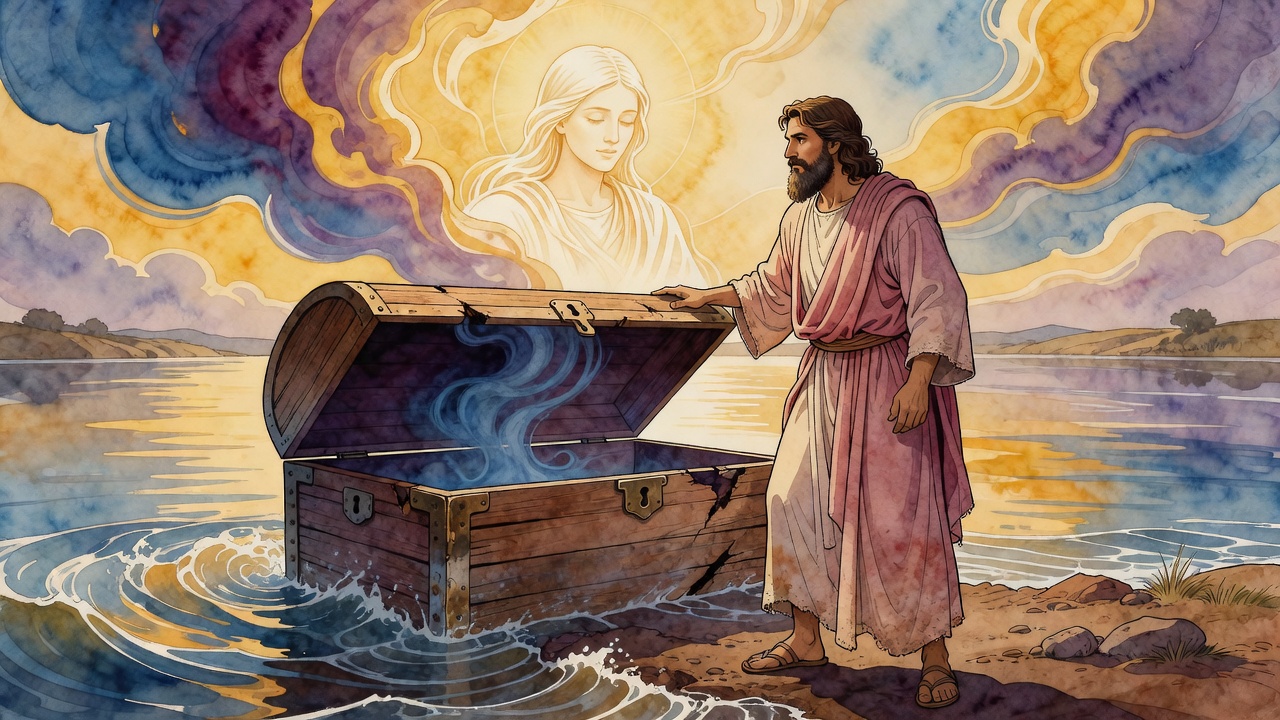
The stream showed him a face he had lived beside and never looked at. Abraham stopped in the current. Sarah's reflection burned on the water like noon.
 Click for full size
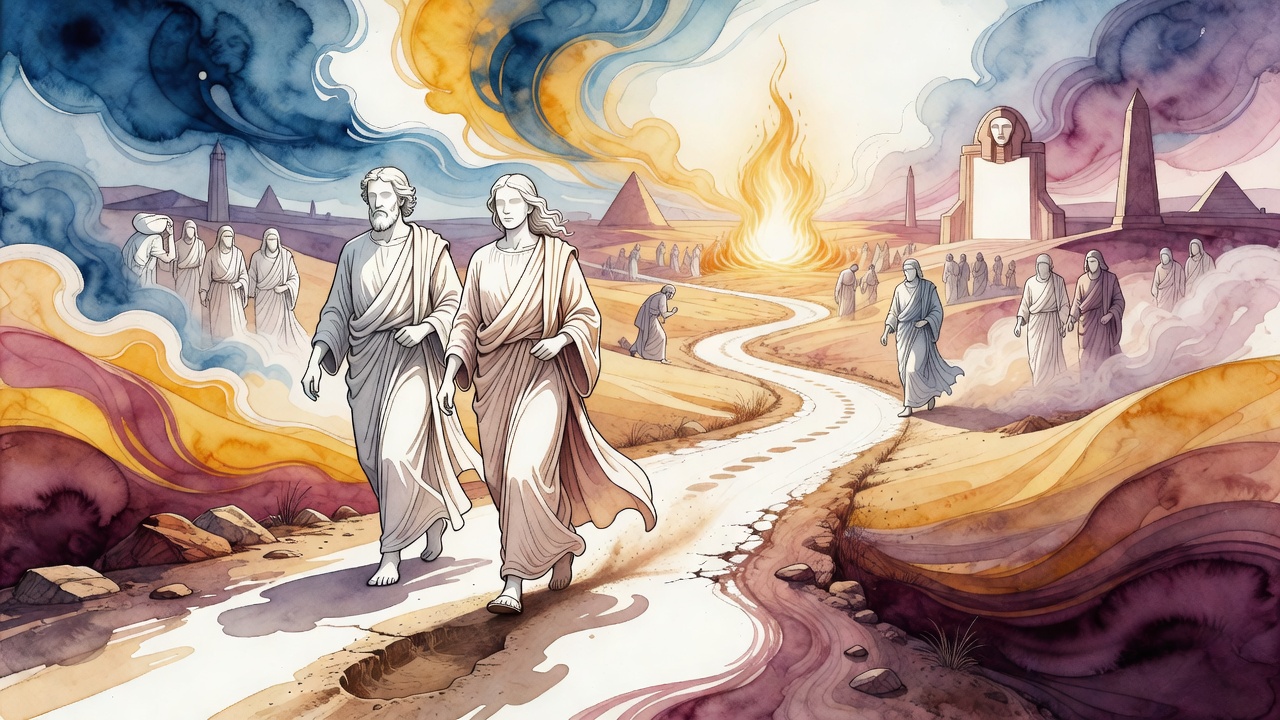
Canaan had gone thin. Grain failed in the land God had just named as his. Abraham did not murmur. He turned south for bread, and, if the priests of the Nile would listen, for a Name larger than their river.
He knew what Egypt did with light like that. He set her in a casket and told himself it was barley.
The Collectors Forced the Lid
At the border they asked what the chest held.
"Barley," Abraham said.
"Wheat," they answered, already smelling a better tariff.
He paid as for wheat.
"Pepper."
He paid.
"Gold. Stones."
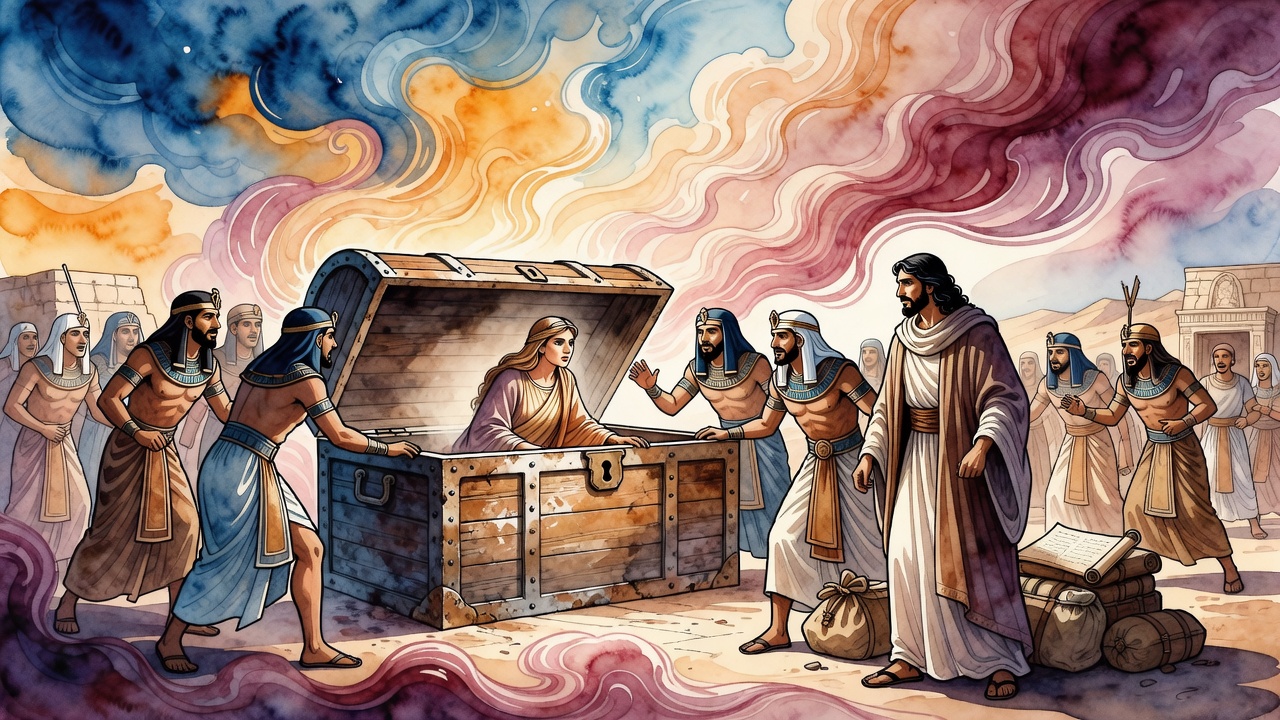
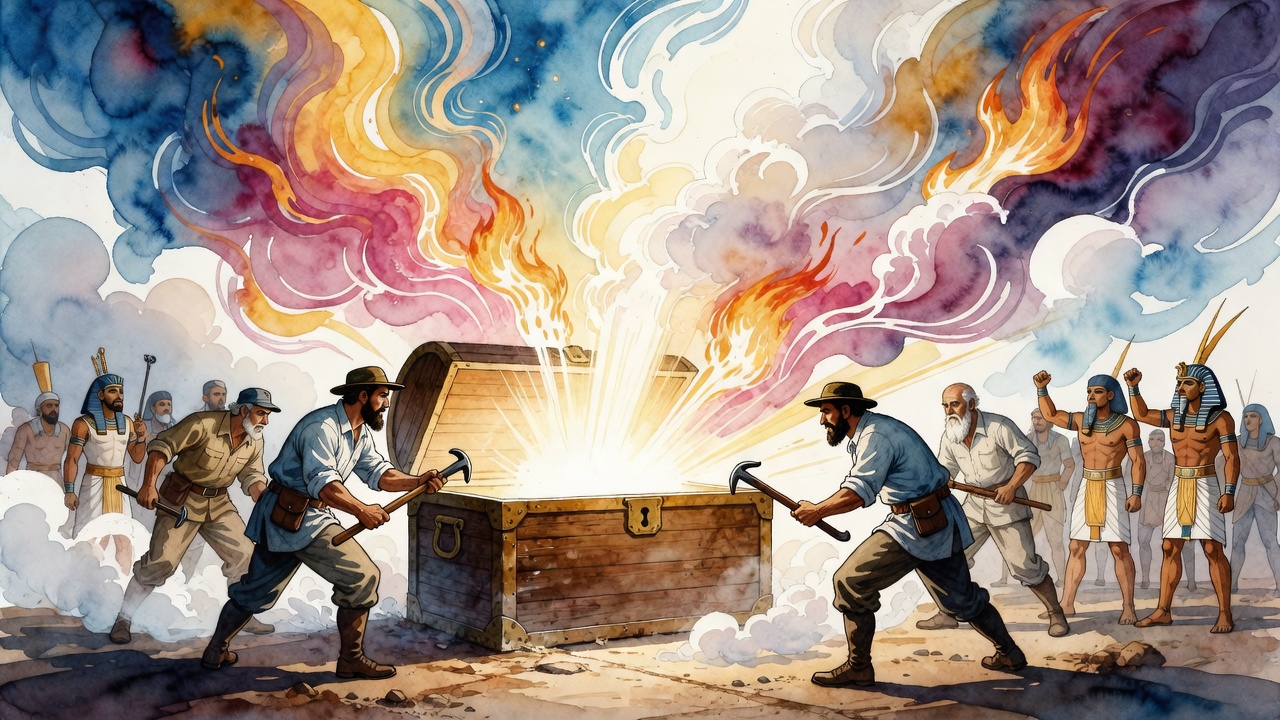
He paid those too. Coin after coin, until the fees themselves made them suspicious. A man who never argues about the rate is hiding something. They forced the lid.
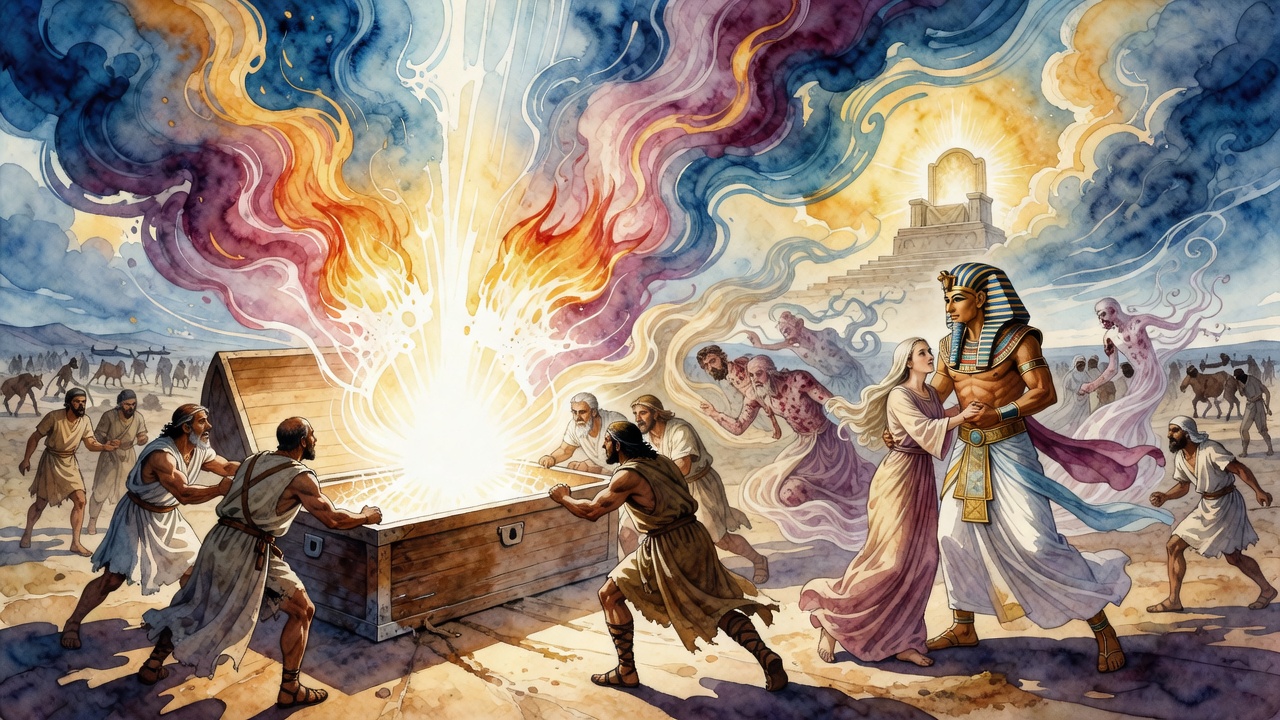
Egypt lit up. Beside Sarah every other beauty looked like an ape set next to a human face. Even Eve fell short. Servants ran as if a roof had caught fire. Pharaoh sent an armed escort for the woman who, they said, should not belong to one private man.
Abraham prayed with sand in his teeth. "Is this the reward for my confidence in You? Let not my hope be put to shame."
Sarah prayed while the soldiers held her. They had left their father's house because God had spoken. They had come for grain. Now a king with soft hands and hard laws had her by the arm.
Hagar and the Deed to Goshen
An angel stood at Sarah's shoulder, invisible to Pharaoh. "Fear naught, Sarah, for God hath heard thy prayer." The words did not loosen the soldiers. They taught her lungs how to keep working.
Pharaoh questioned her. She called Abraham her brother, the old sentence that leaves a man alive. The king pledged power. He poured out gold, silver, pearls, flocks, and slaves. He gave Abraham a room inside the palace precincts. The air smelled of oils and river mud.
He wrote a marriage contract. He deeded her what he owned, even the province of Goshen, the strip her descendants would later occupy because a sick hand had already written it as theirs.
Most of all he gave his own daughter Hagar into Sarah's service. He would rather see his child a handmaid in that household than a mistress in another man's harem.
The gifts bought him nothing.
A Stick in the Dark
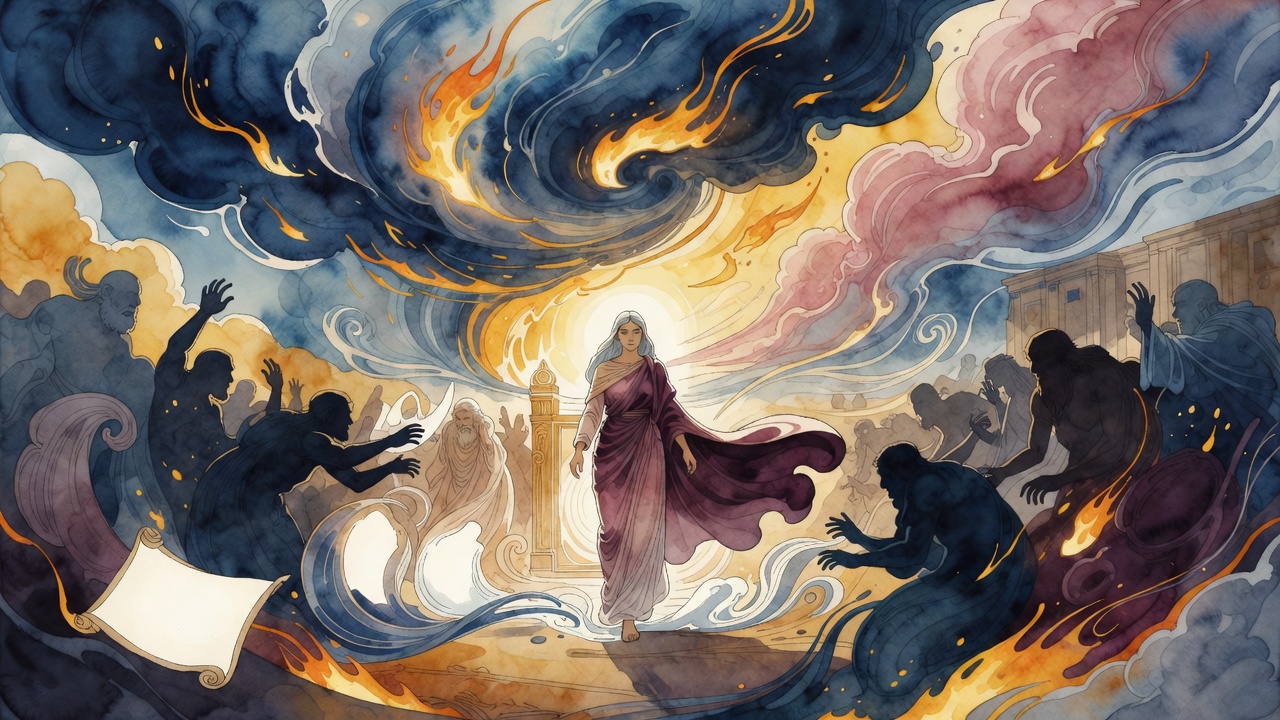
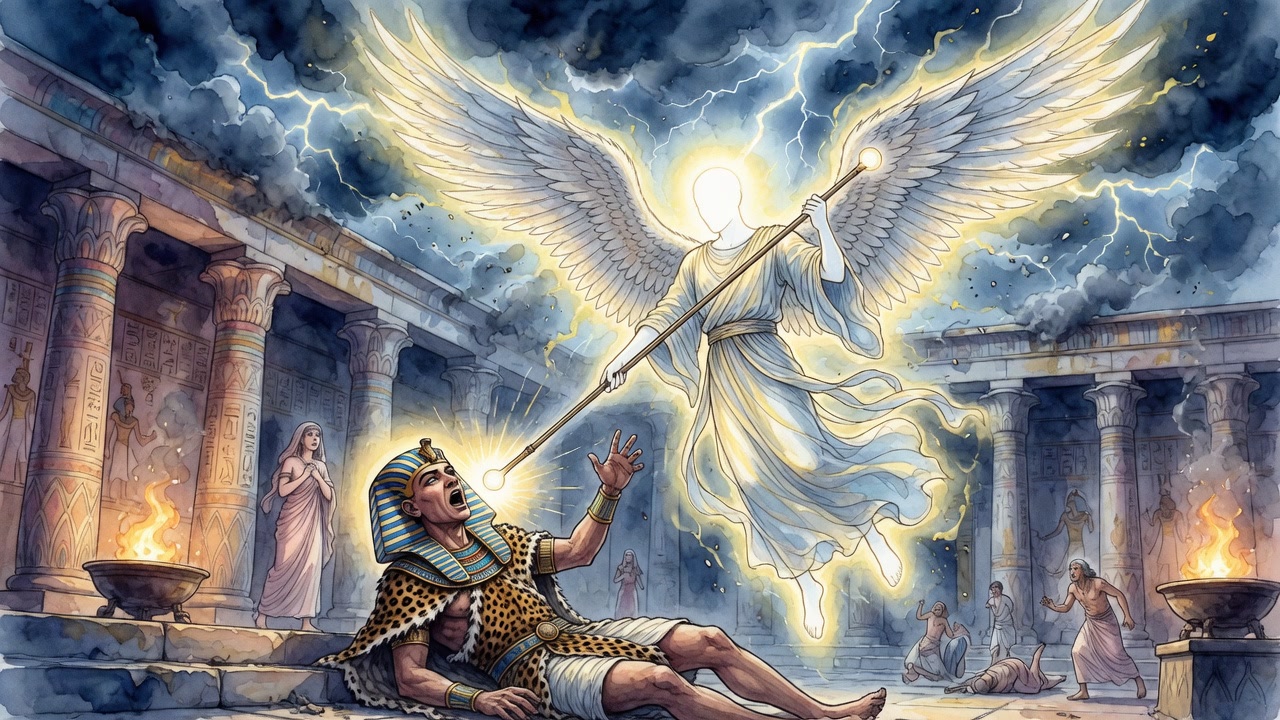
Night came. Pharaoh reached for Sarah's shoe to take it off. An angel held a stick. The blow landed on the king's hand. When Pharaoh grasped her dress, a second blow followed. Before each strike the angel asked Sarah whether to let it fall. If she told him to wait, he waited.
Leprosy bloomed on the king, on his nobles, on the servants, on the walls, on the bed. He could not finish what he had started. Skin cracked. The house itself looked unclean.
The night was the fifteenth of Nisan. Later God would strike Egypt in that same span of dark to free a nation not yet born in Sarah's body. The hour was already spoken for.
Pharaoh ran to his priests. They named the cause. Sarah confirmed it. He sent for Abraham, returned his wife untouched, and excused himself. He had meant to marry into the family of a brother. He loaded them with gifts and sent them out after three months in Egypt.
On the road north they stopped at the same night-shelters and paid the same accounts. Sarah rode without the casket. The stream behind them showed ordinary sky.
Abraham Asked for Increase
Later Abimelech of Gerar took her under the same sister-story. God closed every womb in that house. Whatever Pharaoh had given, he had given toward Sarah. Whatever Abimelech gave, he gave toward Abraham: sheep, oxen, restitution piled at a husband's feet.
Abraham stood and prayed. "Sovereign of all the worlds. You created the whole world to increase and multiply. Let Abimelech and the women of his house increase and multiply."
The wombs opened. The man who could have cursed asked for children in a court that had borrowed his wife by force and given her back under nightmare.
When Lot was taken, Abraham divided his men by night and struck. He brought back the goods and his brother's son, and not one servant failed him (Genesis 14:16). He had learned the dark in Pharaoh's house. He used it.
Hagar walked in Sarah's shadow toward a well neither woman could yet name. Goshen waited in a contract written while the walls were sick. Egypt had opened a casket. The night had answered. It would answer again.
← All myths