Parshat Miketz5 min read

Jacob Sent Benjamin With Gifts He Could Not Spare

Jacob refused, then yielded. He packed gum, honey, and double silver, and sent Benjamin south into a house where five portions and first wine waited.

Curated by Arthur · Told by Maggid ·
Table of Contents
  1. When Hunger Out-Argued Grief
  2. Panic at the Threshold
  3. Five Portions and the First Cup
  4. What Jacob Could Not Pack

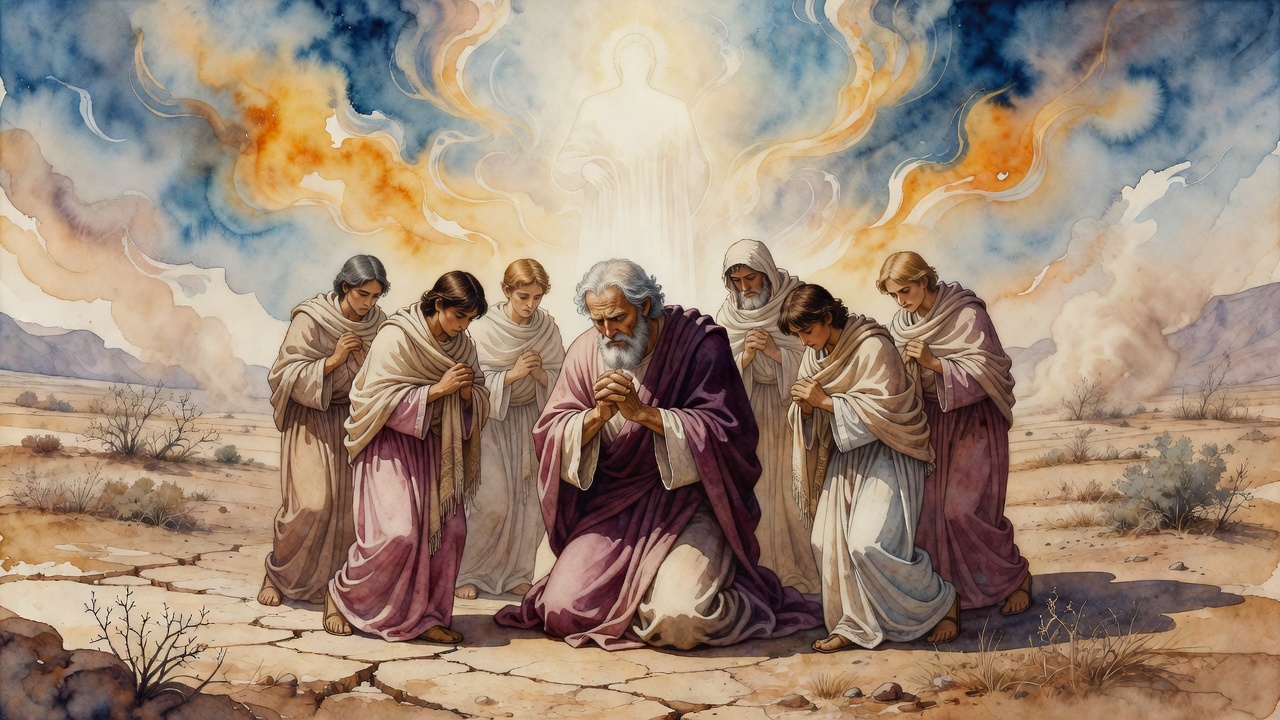
"My son shall not go down with you," Jacob said, and the house felt the sentence land like a bolt. "His brother is dead, and he alone remains of his mother. If death should befall him on the way you go, you will bring down my age with mourning to the grave" (Genesis 42:38).
Jacob Sent Benjamin With Gifts He Could Not Spare Click for full size

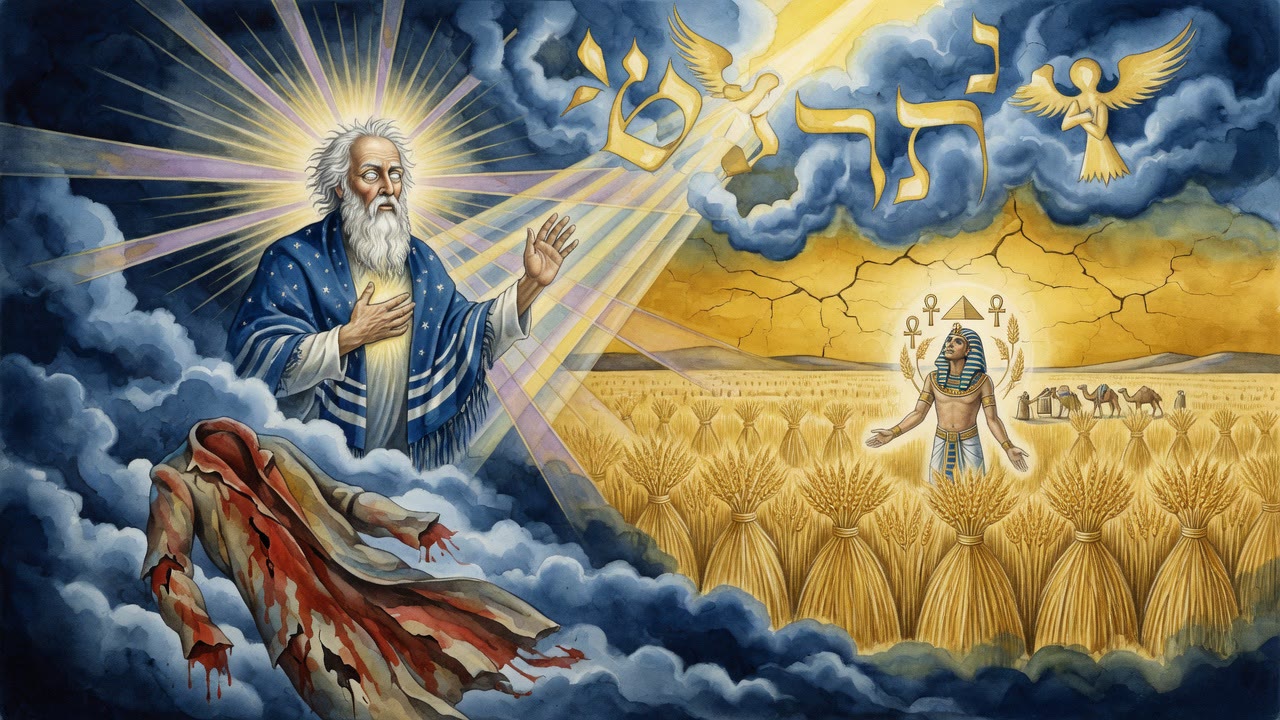
Rachel's second boy was not a bargaining chip. He was the last warm room in a house full of old cold. The brothers could talk about Egypt's viceroy until their mouths dried. Jacob had already buried one son in his mind and would not rent the other to a foreign official's curiosity. For a time the refusal held. Jars lightened anyway. Children stared at bottoms of vessels that used to hold months. Hunger does not respect a patriarch's locked decisions forever.

When Hunger Out-Argued Grief

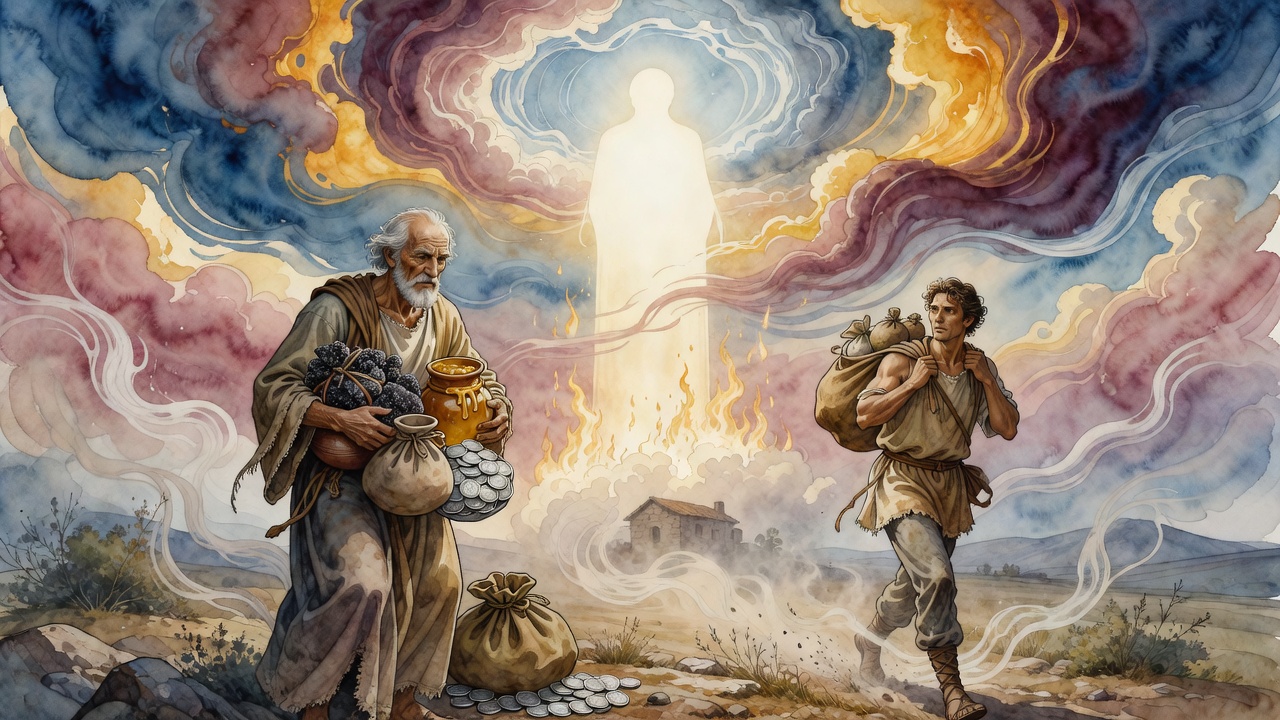
Judah put his own life down as pledge, and the old man finally moved from refusal to strategy. "If it must be so, do this," Israel said. "Take of the praiseworthy things of the land and carry the man a present: a little gum and a little honey, wax and ladanum, the oil of nuts and the oil of almonds" (Genesis 43:11).

He was buying favor with the last luxuries Canaan still hid in cracks. He was also teaching his sons how a patriarch walks into a threat: not empty-handed, not loud, not pretending the danger is imaginary. The gifts were small in weight and large in meaning. They said: we are not beggars only. We are a house that still knows what praiseworthy things are, even when the grain is gone.

"And money two upon one take in your hands, even the money that was returned in the mouth of your baggage. Take it back. Perhaps it was done in error" (Genesis 43:12). Double silver. Open books. No tricks if he could help it. Jacob still believed some Egyptian clerk might have made a mistake. He did not yet know the clerk was his own missing son designing the fear. He packed honesty the way other men pack weapons.

Panic at the Threshold

They brought Benjamin. They brought the gifts. They brought the doubled money. When they were led into Joseph's house the men feared. "For the money that was returned in our sacks at the first are we brought in," they said, "that he may find occasion against us and condemn us, and sell us for slaves, and take our asses" (Genesis 43:18).

The old crime whispered through the new panic. Sale was a family language. Asses and silver and a foreign house felt like the Midianite road again, only this time they were the cargo imagining itself. The steward met them with a blessing that did not match their dread. Peace, he said in effect. Your God and the God of your father put treasure in your sacks. Simeon was brought out. Their knees still did not trust the floor. Benjamin stood among them like a living proof that Jacob had finally opened his last door.

Five Portions and the First Cup

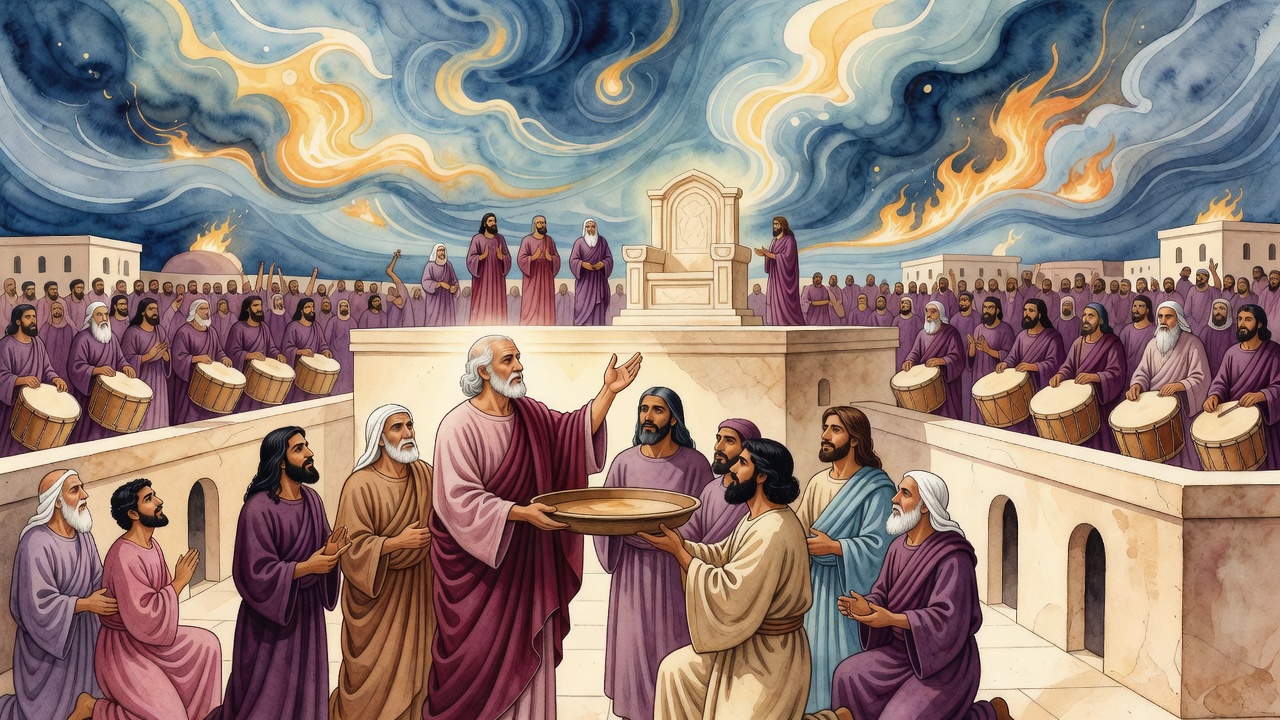
They sat to eat. Portions came from Joseph's table. Benjamin's portion was larger than the portions of any of them: five portions, counted in the Targum as his own, one from Joseph, one from Joseph's wife, and two from Joseph's two sons (Genesis 43:34). The room watched the youngest receive a king's affection without knowing why the king's eyes kept shining. Brothers who once stripped a coat now watched extra plates stack in front of Rachel's boy and did not know what the stack meant.

They drank and were drunken with him. From the day they were separated they had not drunk wine, neither he nor they, until that day. Twenty-two years without a shared cup. The first pour after a sale is a dangerous sacrament. Laughter can sit on top of a wound and still not close it. Joseph managed the table the way he managed grain: with a plan under the hospitality. The five portions were love in code. The wine was a truce that had not yet been earned in speech.

What Jacob Could Not Pack

Gum, honey, oils, double silver: those fit in vessels. Jacob could not pack a guarantee. He sent the son he had sworn not to send into a house that was already feeding that son like a prince. The gifts were a father's last diplomacy. The five portions were a brother's first public confession without words. Between them the famine kept chewing, and the real test still slept in a silver cup not yet planted in a sack. Jacob waited in Canaan with an emptier house and a mind full of roads. Benjamin ate five portions in Egypt and did not know he was sitting across from the brother his father still mourned.


← All myths
From the tradition

Sources

5 sources

The texts behind this telling. Some cards carry a translation of the source; others are our own retelling of it, and each card says which. Every card links out to the original.

Targum Pseudo-Jonathan on Genesis 42:38Targum Pseudo-Jonathan on Genesis

Retold in our words. Read the original at the link below.The Targum of Jonathan ben Uzziel, trans. J. W. Etheridge, London, 1862 · Public Domain

Jacob draws the line. Targum Pseudo-Jonathan on (Genesis 42:38) preserves his refusal: "My son shall not go down with you; for his brother is dead, and he alone remains of his mother; and if death should befall him in the way that you go, you will bring down my age with mourning to the grave."

Three sentences, three wounds

The first: his brother is dead. Jacob still believes Joseph is gone, and he cannot face a second loss from Rachel's line. The second: he alone remains of his mother. Rachel is also dead (Genesis 35:19). Benjamin is the only living thing left of the wife Jacob loved most. The third: you will bring down my age with mourning to the grave. This is the same phrase Jacob used about Joseph when he first believed him dead (Genesis 37:35), he has not moved on. He is the same man, trapped in the same grief, twenty-two years later.

The weight of the word "you"

The Aramaic paraphrase, which took its final form in the Land of Israel around the seventh or eighth century CE, preserves Jacob's pronoun: the way that you go. Not "the way you travel." The way that you, specifically you, the sons who came back without Joseph once already, are going. Jacob is not simply afraid of bandits. He is afraid of his own sons' track record with lost brothers. The rabbinic tradition in Bereishit Rabbah 91:10 reads Jacob's hesitation as a quiet indictment: he does not fully trust the ten men standing in front of him, and he has reasons.

The takeaway

A father's no is sometimes the last protection a favored child has. Jacob's refusal will hold until hunger forces the family's hand. But the grief behind it reveals how much has been unsaid in his household.

Full source
Targum Pseudo-Jonathan on Genesis 43:11Targum Pseudo-Jonathan on Genesis

Retold in our words. Read the original at the link below.The Targum of Jonathan ben Uzziel, trans. J. W. Etheridge, London, 1862 · Public Domain

When Jacob finally yields, he does not send his sons empty-handed. He sends a basket of the land itself. "Take of the praiseworthy things of the land," he tells them, "and put them in your vessels, and carry down the man a present, a little gum and a little honey, wax and ladanum, the oil of nuts, and the oil of almonds" (Genesis 43:11). So Targum Pseudo-Jonathan preserves the inventory, item by item.

These are not random goods. They are the luxuries that make Canaan Canaan, balsam from Gilead, pistachio oil, the honey of dates, the resin that Egyptian embalmers paid dearly for. Jacob knows exactly what Egypt lacks. He is sending the taste of the Eretz Yisrael into a land drowning in grain but starving for fragrance.

The midrashic tradition hears a deeper message in the list. Rashi, following earlier midrash, notes that zimrat ha'aretz, "the praiseworthy things of the land", literally means the song of the land. Jacob is sending melody as tribute.

There is also a lesson in hishtadlut, human effort paired with trust. Jacob prays. Jacob sends Benjamin. And Jacob also packs a proper gift. Faith does not excuse the small practical act. You bring the honey. You bring the almonds. You bring what you have, and let the Holy One do the rest.

When the brothers set out again toward Mizraim, they carry more than commerce. They carry the scent of home into the palace of a man who, though they do not yet know it, has been missing that scent for twenty-two years.

Full source
Targum Pseudo-Jonathan on Genesis 43:12Targum Pseudo-Jonathan on Genesis

Retold in our words. Read the original at the link below.The Targum of Jonathan ben Uzziel, trans. J. W. Etheridge, London, 1862 · Public Domain

Jacob thinks through every detail. If the brothers return to Egypt carrying only fresh money, the viceroy might remember the strange matter of the silver they discovered in their sacks on the last trip. So Jacob orders a simple accounting: pay twice. "Money two upon one take in your hands," he instructs, "even the money that was returned in the mouth of your baggage, take back in your hands; perhaps it was done in error" (Genesis 43:12).

Targum Pseudo-Jonathan renders this with quiet care. The word be'shaluta, "in error", is Jacob's generous interpretation. He will not accuse the Egyptian official of a trick. Maybe the clerk miscounted. Maybe the sacks got mixed up. Maybe it was a mistake. Pay it back, plus the new fare, and let no one say the house of Israel came down to Mizraim owing anything.

The sages call this dan l'chaf zechut, judging favorably. Jacob does not know who returned the money or why. He does not assume malice. He assumes clerical error and acts accordingly. That is a posture of derekh eretz, basic decency, baked into the legal instinct of the patriarch.

There is also a practical theology at work. Jacob cannot control the outcome in Egypt. He cannot shield Benjamin with his own hands. What he can do is make sure his sons arrive with clean palms. Whatever the viceroy decides, it will not be because the sons of Jacob stole from him.

The small refund becomes, in the hand of the Targum, a lesson: go into uncertain places carrying more honesty than the situation requires. The Holy One works in the margins of honest people.

Full source
Targum Pseudo-Jonathan on Genesis 43:18Targum Pseudo-Jonathan on Genesis

Retold in our words. Read the original at the link below.The Targum of Jonathan ben Uzziel, trans. J. W. Etheridge, London, 1862 · Public Domain

Kindness frightens a guilty conscience more than cruelty does. When Joseph's men usher the brothers into the viceroy's private house, they should be relieved. No dungeon, no interrogation, just a doorway and a welcome. Instead, the brothers tremble.

"The men feared when they were brought into Joseph's house," Targum Pseudo-Jonathan reports, "and said, For the money that was returned in our sacks at the first are we brought in, that he may find occasion against us and condemn us, and sell us for slaves, and take our asses" (Genesis 43:18).

Look at the list of fears. Occasion against us. Condemnation. Enslavement. Confiscation of the donkeys. In one sentence they narrate the entire injustice they once visited on Joseph. They sold a brother into slavery and stripped him of his coat. Now they expect to be sold and stripped themselves.

The Talmud teaches middah k'neged middah, measure for measure: the punishment we fear is often the transgression we remember. The brothers' panic is not paranoia. It is teshuvah beginning to stir. They cannot yet name the crime, but they can feel it rising in their throats the moment a door closes behind them.

The irony of the Targum is exquisite. The brothers fear the house will be a trap. In fact the house is a reunion waiting to unfold. The brother they sold is about to feed them. The silver they fear will not be taken back. The Holy One is already bending the plot toward forgiveness. But forgiveness cannot arrive until the guilty begin, quietly, to confess.

Full source
Targum Pseudo-Jonathan on Genesis 43:34Targum Pseudo-Jonathan on Genesis

Retold in our words. Read the original at the link below.The Targum of Jonathan ben Uzziel, trans. J. W. Etheridge, London, 1862 · Public Domain

At Joseph's table the platters move in a strange rhythm. Every brother receives a portion. Then Benjamin receives five.

Targum Pseudo-Jonathan accounts for the arithmetic. "Benjamin's portion was larger than the portions of any of them; five portions: one was his own portion, one portion from himself, one from his wife, and two portions from his two sons" (Genesis 43:34). The Aramaic counts the invisible family Joseph is honoring. Joseph's own portion, for himself. His wife Asenath's portion. And the portions of his two sons, Manasseh and Ephraim. All of it heaped onto Benjamin's plate as though the vizier were sending his whole household to sit, symbolically, beside the one brother who shares his mother.

The sages note the risk. Joseph had been sold by his brothers in part because their father loved him more. Now he publicly loves Benjamin more at the dinner table. Is he repeating the mistake?

The midrash answers no. Joseph is testing. He wants to see whether his brothers will resent Benjamin the way they once resented him. If jealousy flares, their teshuvah is incomplete. If they accept the lopsided favor without complaint, they have changed. The Targum implies they passed, they simply ate.

Then the final detail, almost unbearable: "They drank and were drunken with him; for from the day when they were separated from him they had not drunk wine, neither he nor they, until that day." Twenty-two years of abstention from wine, on both sides. The sages say Joseph vowed no wine until he saw his brothers again. The brothers, racked by guilt, did the same. This meal is the first cup any of them has tasted since the pit at Dothan. Five portions and a goblet long denied, the quiet calculus of a family returning to itself.

Full source