The Cupbearer Forgets Joseph Until Heaven Opens the Door
The cupbearer had Joseph's name in his mouth. Then the thought emptied, and two years of prison held until a king woke sweating.
Table of Contents
 Click for full size
The Name Died on His Tongue
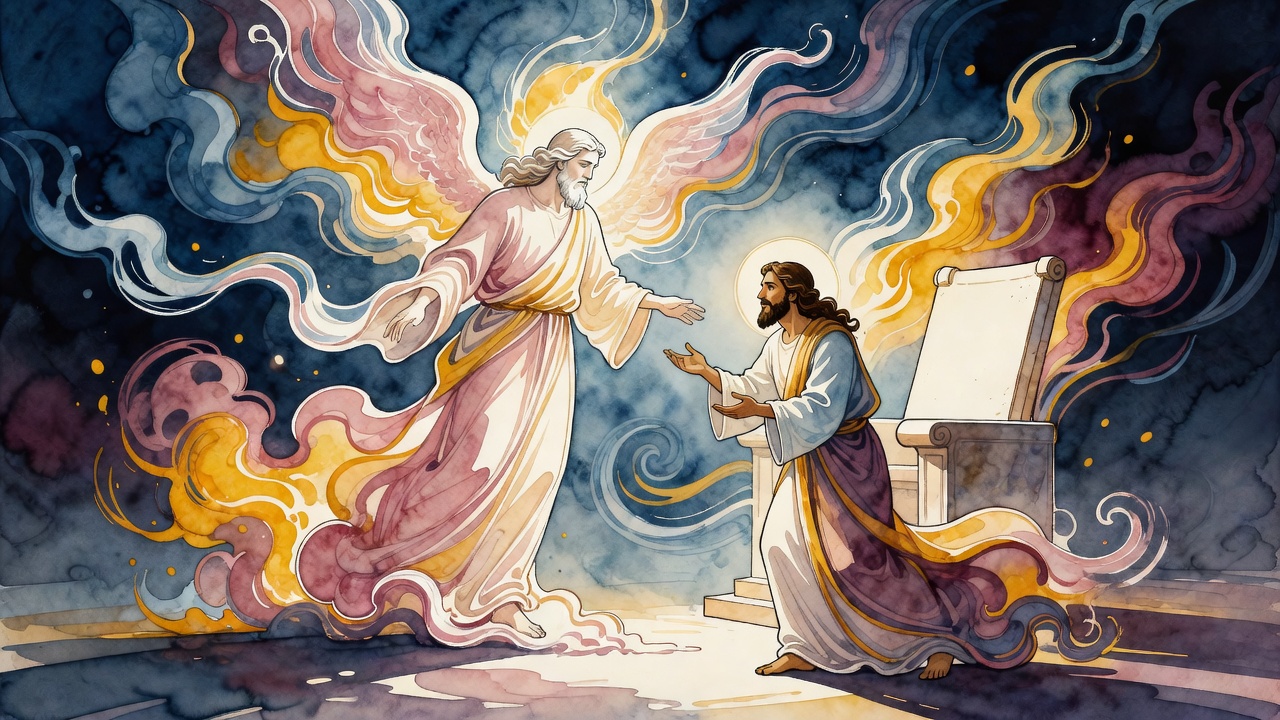
The chief cupbearer stood outside Pharaoh's palace with Joseph's name already formed in his mouth. Wine still clung to the memory of the prison. A Hebrew youth had read his dream and named his restoration before the goblet returned to his hand. For one clean breath the man decided. He would go in. He would say, "Bring up that Hebrew who spoke my dream."
Then the thought drained. It did not argue with itself. It simply emptied, the way wine empties from a cracked vessel. The cupbearer walked into the court with his office restored and his debt unpaid. Joseph stayed under the earth of Egypt's prison, counting nights that would not answer him.
Gratitude alone could not open that door. The hour for Joseph to leave the pit had not arrived. A man's good memory could not force what an appointed end still refused.
Two Full Years
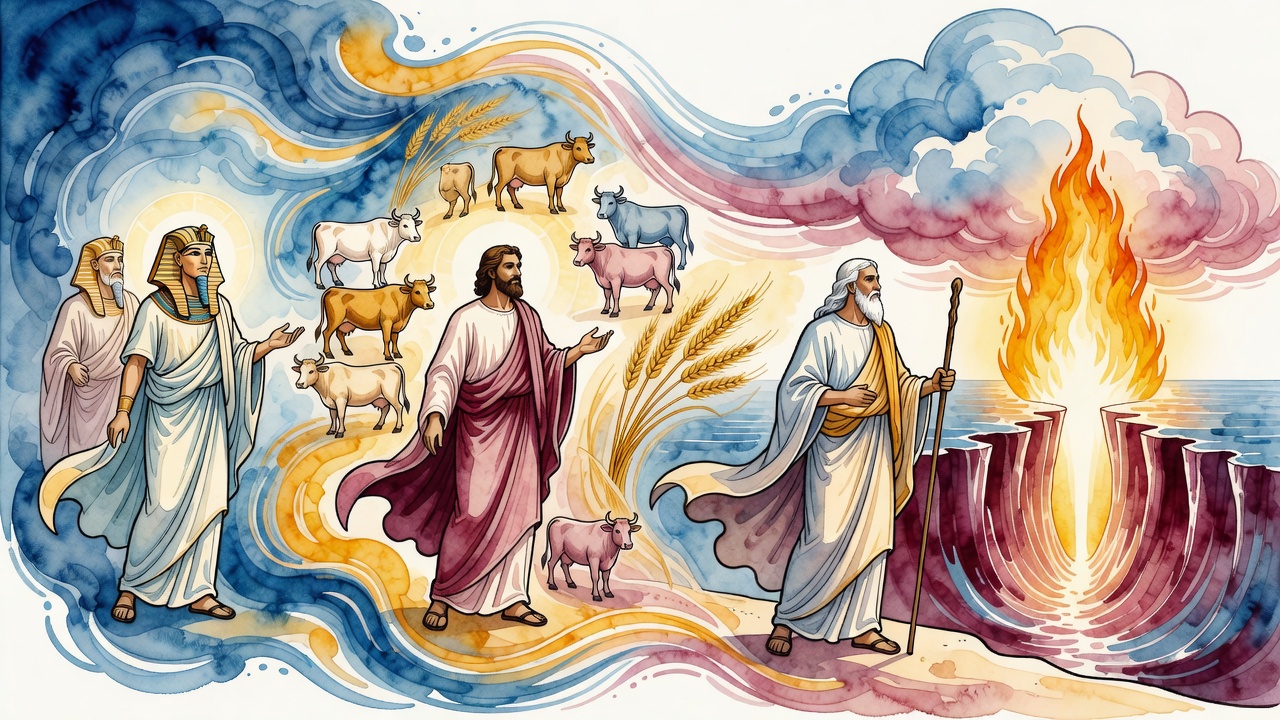
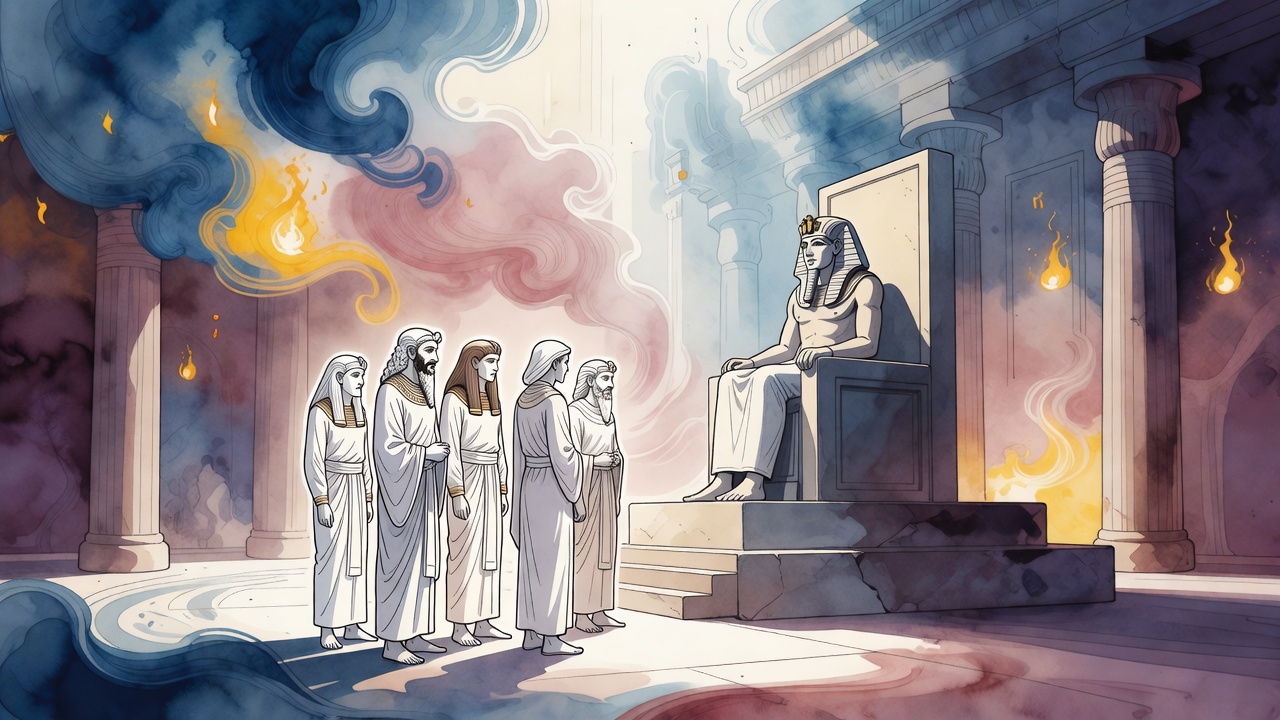
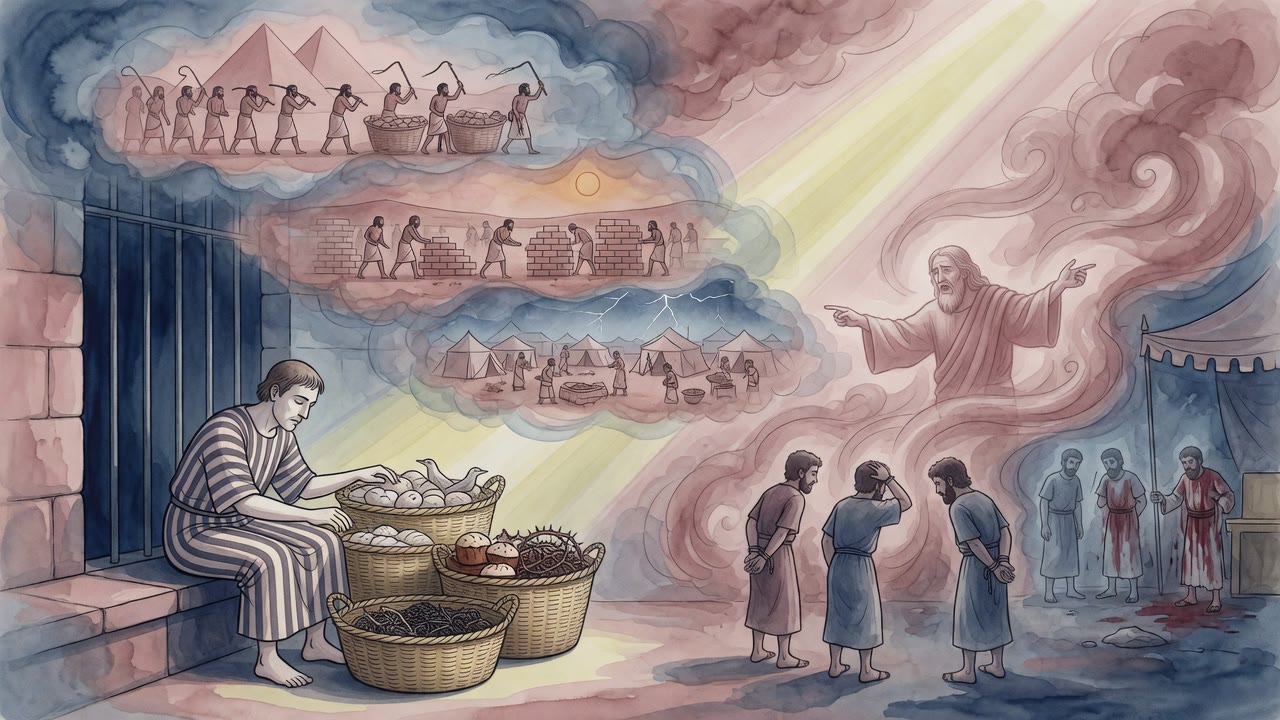
Two years late by the cupbearer's conscience. Exactly on time by God's. "Now it came to pass at the end of two full years" (Genesis 41:1). When the moment finally turned, no prisoner's petition pulled the latch. A king woke sweating. Magicians failed. Dreams tangled themselves into threats no court could untie.
Only then did the forgotten name rise again. The cupbearer remembered as if the thought had never left, only waited. Joseph shaved, changed, and stood before the throne that had once owned his body as a slave. The same mouth that had gone silent now spoke the Hebrew into the center of power.
Joseph did not waste the rise on revenge. He stored grain. He married into Egypt's high house. He named his sons for forgetting and for fruitfulness, as if the pit and the palace both needed to fit inside one life. Still the old wound waited for brothers.
The House Instead of the Seat
Years later, famine dragged those brothers down the road. Every day the viceroy of Egypt went out to the bema (בימה), the judgment seat, and ruled before the land. Egypt watched him. Egypt measured him. On the day the silver cup was planted in Benjamin's sack, Joseph did not go out.
He stayed inside his house. The brothers would be dragged back accused and broken open. He would not let their disgrace unfold under cold Egyptian eyes. The man who had every right to stage their shame on a public platform chose walls instead of witnesses. "To Joseph's house," the verse says, and the house itself becomes the kindness (Genesis 44:14).
Judah and the others came in off the road with dust on their mouths. No crowd. No bema. Four walls, and a brother they did not yet know they were facing.
Only at Morning Light
Even the trap was timed. He would not send them into the night. Lions, serpents, wolves: that is how the tribes move when darkness gives them cover. Judah is a lion's whelp. Dan a serpent on the road. Benjamin a ravening wolf. Naphtali a hind let loose. Joseph looked at the men who had once thrown him in a pit and saw a pack. If he released them after sundown, no creature on the road could stand against them.
He waited until morning light before he sent them onto the road with food in their sacks and a goblet in the youngest one's mouth (Genesis 44:3). Daylight for the test. Daylight so Egypt would not mistake them for bandits. The same precision that had waited out the cupbearer's silence now timed a brother's repentance to an hour when the land could see them as men, not as a night of beasts.
Rachel's Face in a Younger Body
When Joseph first lifted his eyes to Benjamin, the boy carried Rachel's face into the room. Scripture names him "the son of his mother," and the naming did the rest (Genesis 43:29). The wife of his father returned as a younger likeness. Joseph's heart leapt, then set the plan moving through Manasseh his steward. Fill the sacks. Hide the silver. Let the morning carry them, then haul them back.
The test that followed was not pure cruelty. It was a brother checking whether the old pit still lived in their hands. Would they abandon the youngest again? Would Judah offer his own body for the boy the way no one had offered for Joseph? The cupbearer had forgotten on God's schedule. The brothers would have to remember on theirs.
When the steward overtook them and opened the sacks, the silver cup flashed like a second accusation. They tore their clothes. Judah found speech again, but now the speech had weight because the cupbearer once had none. A forgotten Hebrew in a pit had become the man who could keep Benjamin forever. Joseph still did not unveil himself. He wanted to see whether the old sale would repeat with a different face of Rachel on the block.
The house held them. The bema would have sold tickets to their fear. Inside four walls, Judah could offer himself without Egypt applauding the bargain. Forgetting had kept Joseph underground for two years. Memory, when it finally returned, did not make him cruel in public. It made him precise. He remembered the pit so well that he refused to dig a new one under foreign eyes.
← All myths