Two Dreams One Morning in Pharaoh's Prison
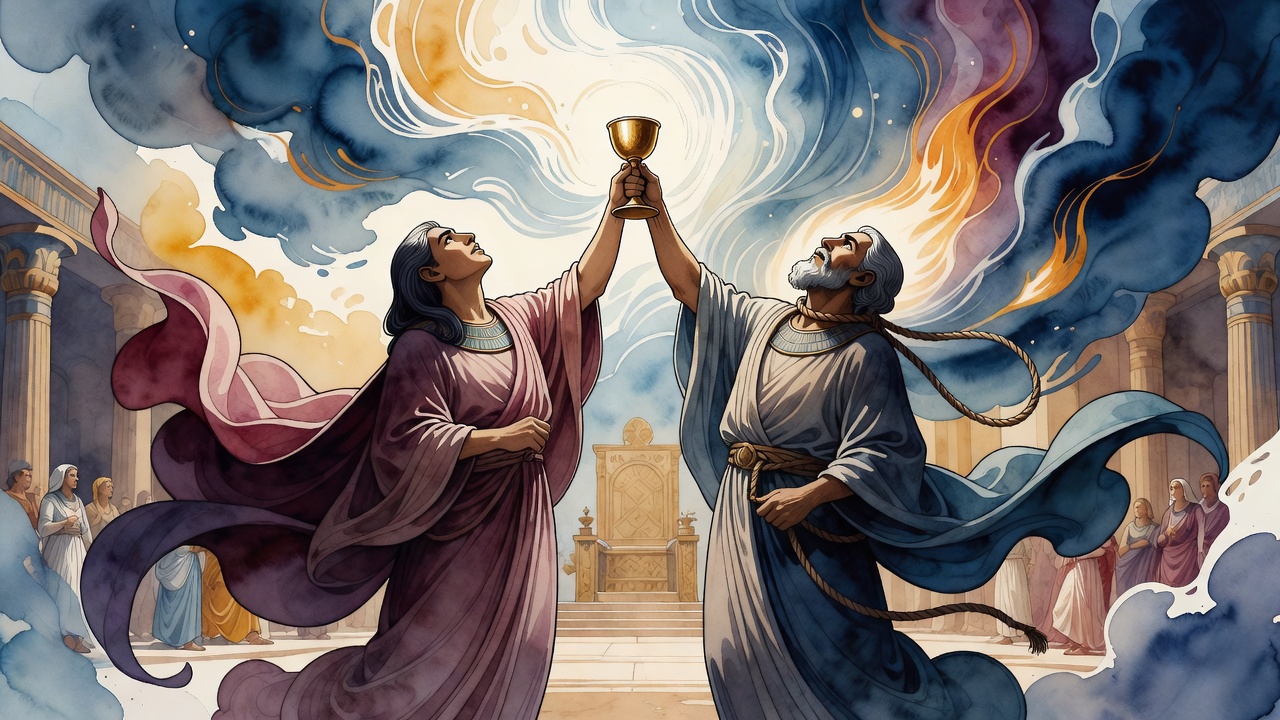
The butler woke first. The baker pressed both palms to his face. Iron still held their ankles, and neither man could name what he had seen.
Table of Contents
 Click for full size
Two Men Woke on the Same Straw
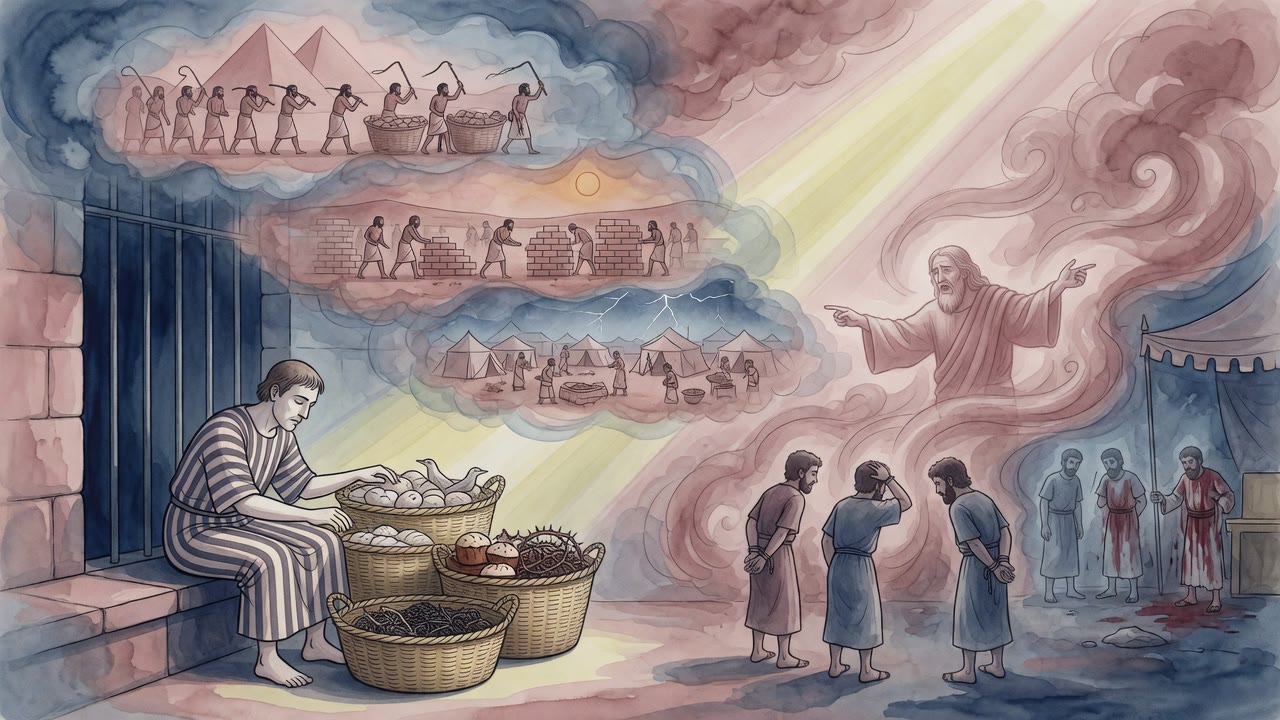
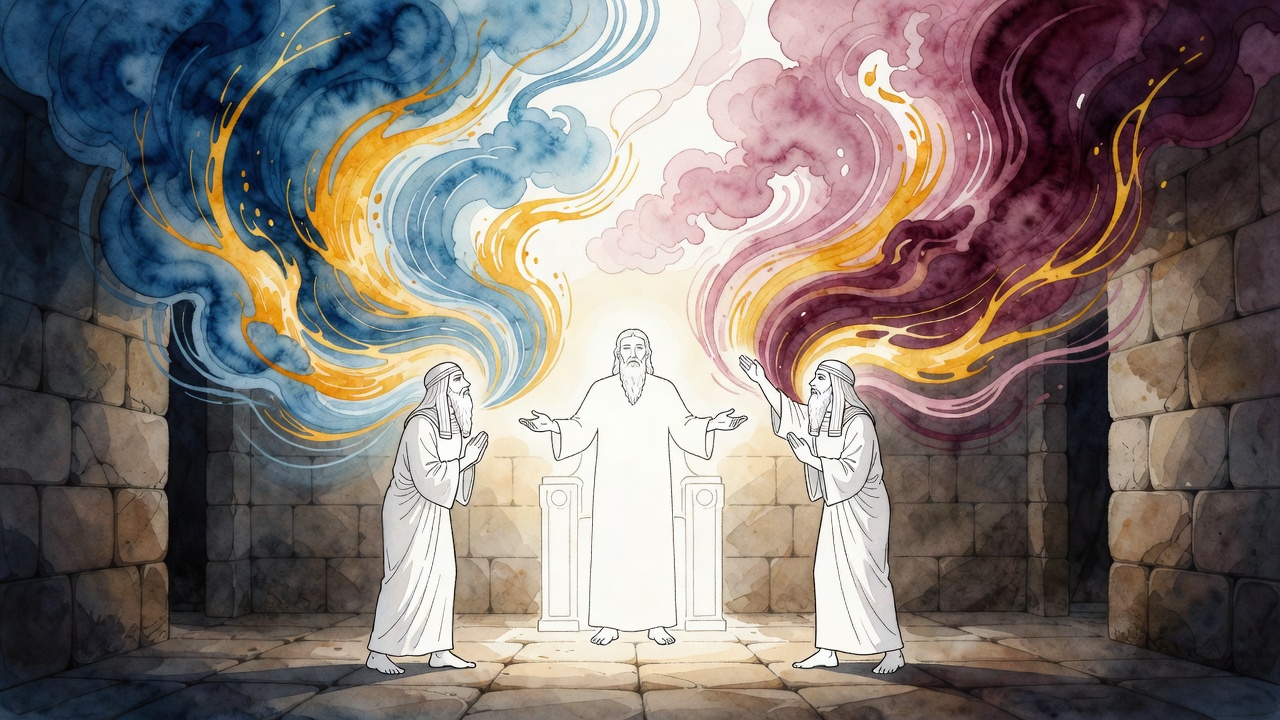
The chief butler woke first and sat up as if someone had spoken his name. The chief baker woke a breath later and pressed both palms to his face. Iron still held their ankles. Stone still held the damp. Between them, on the same thin strip of night, two dreams had arrived like twin messages sealed with different seals.
Each man had dreamed his own dream, and also the interpretation of his companion's dream. Neither held only his private future. Each carried, half-known, the shape of the other's fate. That is why both men rose disturbed. They knew something had been said. They did not know what. They lacked a voice that could pull the two dreams into speech before the day forced them back into ordinary fear.
The prison kept the smell of straw and sweat. Pharaoh's cupbearer and Pharaoh's baker sat on the same floor and would not look at each other.
Branches and Baskets
The butler's vine had three branches. Grapes filled his hand. Pharaoh's cup received the press of them. The baker's three baskets rode his head while birds pecked the upper bread meant for the king. Ordinary dreams are leftovers of the day's thinking. These were not ordinary. The two visions had arrived with their meanings already braided in, two voices, one morning, in the prison of the king of Mizraim (Genesis 40:5-7).
Joseph found them with faces fallen. He was a Hebrew slave who still remembered his own dreams of sheaves and stars, dreams that had earned him this cell. He asked why they looked so ill. They told him. He did not claim the art as his own.
"Interpretations belong to God," he said.
Then he spoke the three days and the two endings. One man restored to the cup. One man lifted on a tree for the birds. He sat with them until the fear in their eyes became sentences, and then he made the sentences exact enough to survive daylight.
Three Days, Two Endings
The third morning came on schedule, as if the dreams had already signed the orders. The butler stood again at Pharaoh's elbow and poured. The baker hung where birds could reach him. Joseph watched the iron on his own legs and waited for the cupbearer to remember a Hebrew who had read the night like an open ledger.
The butler did not remember. Not that week. Not that year. Joseph stayed in the damp with the two dreams already proven, and the man who had been saved forgot the mouth that had saved him.
The pit had been the beginning of a throne, though no one in that cell could have said so. Underneath were the everlasting arms, even here, even with straw in the hair and a forgotten promise drying on a courtier's tongue (Deuteronomy 33:27).
Shaved and Stood Before Pharaoh
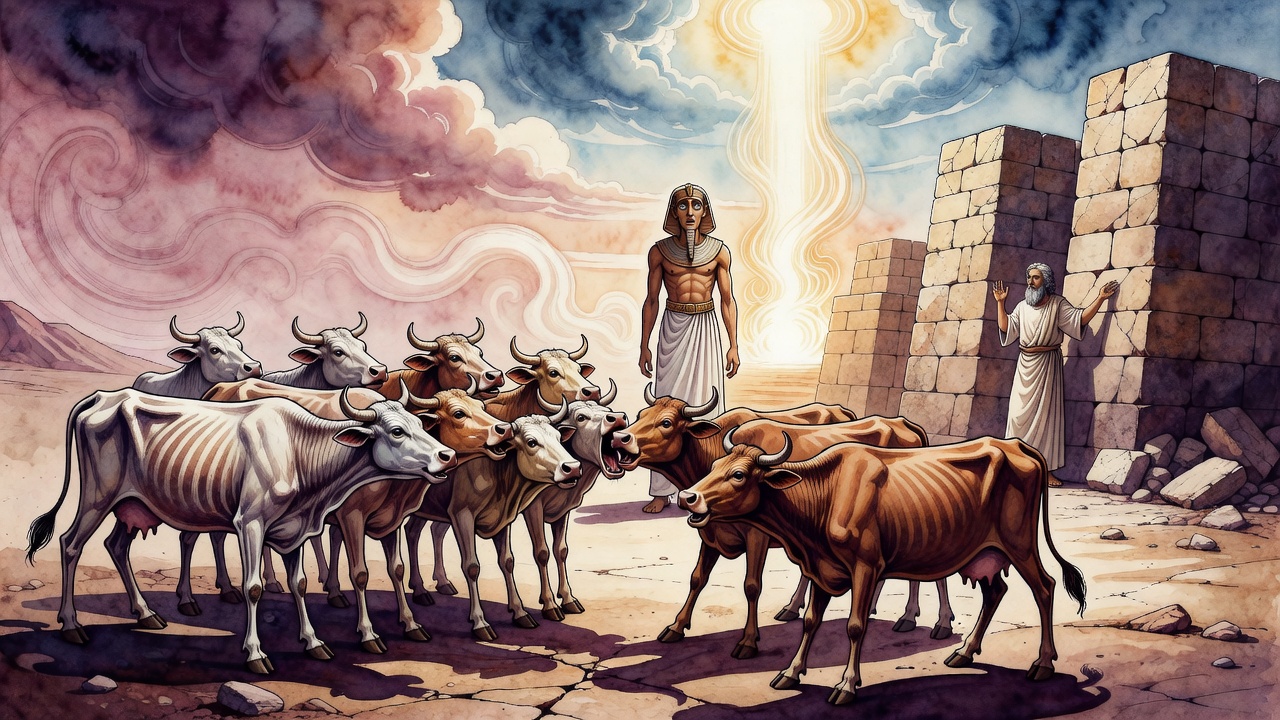
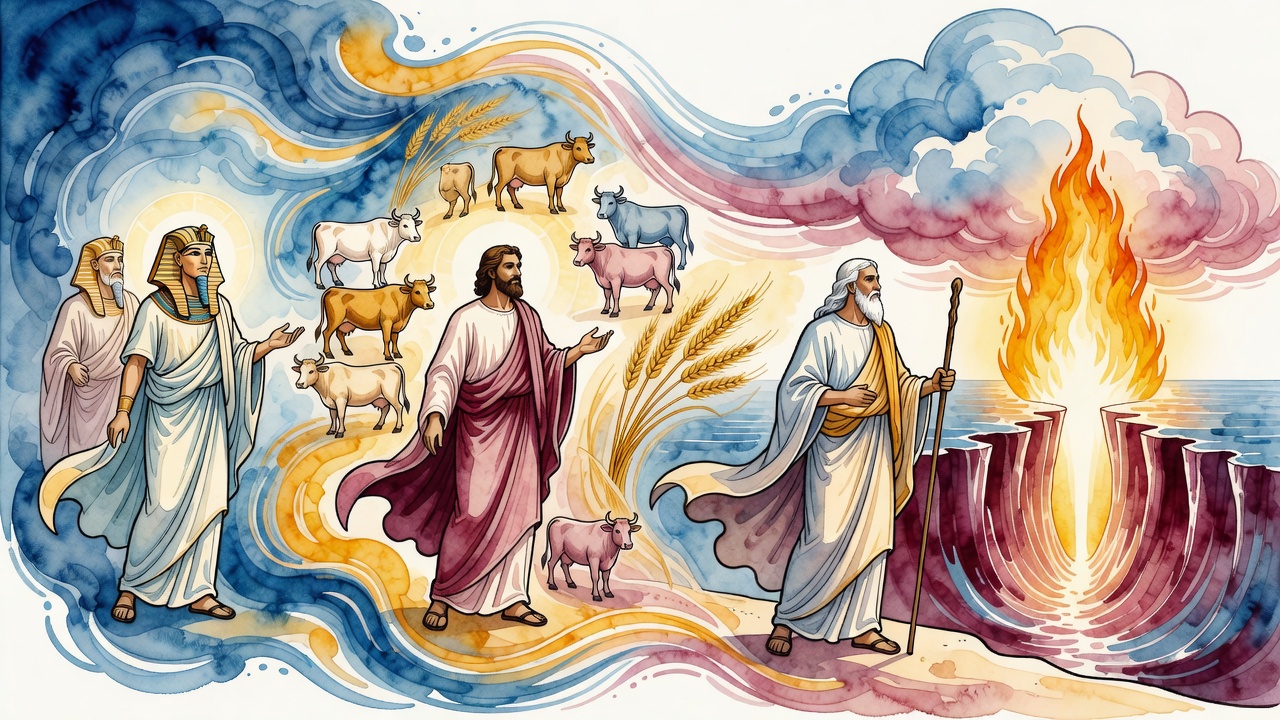
Years later Pharaoh dreamed seven fat cows swallowed by seven thin ones, seven full ears of grain consumed by seven withered. The magicians failed. The butler finally remembered the Hebrew who had named a cup and a tree in one morning. Joseph was washed, shaved, and stood before power that still smelled of Nile mud and panic.
Pharaoh wanted Joseph to take credit. Joseph refused.
"It is not in me," he said. "God will answer."
He pointed the praise past himself to its true Owner. Then he named the years. Plenty. Famine. Storehouses. A plan that would save Egypt and, later, the house of Jacob, which did not yet know it would need saving from a hunger that travels faster than armies. What God conceals in sleep, He reveals through those who still fear Him enough to refuse the credit when a king is offering glory like a second coat.
Jacob Came Down and the Hunger Broke
The famine that should have lasted seven years broke after only two, the moment Jacob and his sons came down to Egypt. Joseph saw the wagons in the yard and the stores still full. The presence of the righteous patriarch lifted the curse from the land. The remaining years of desolation were not erased. They were deferred, and they came due in the days of the prophet Ezekiel, when Egypt was laid waste for forty years as he had warned (Ezekiel 29:12).
Israel filled Goshen, a thousand thousand and more, and still, in God's eyes, like a single beloved child. Jeremiah would later hear that voice: Ephraim is a dear son, a darling child (Jeremiah 31:20). Joseph's pit had been the start of a throne. His prison had been the school of other men's nights. The iron came off his legs. The ring went on his hand. The boy who once boasted of stars learned to say the answer was never his, even when the whole palace waited for him to speak first.
The butler and the baker never met again after their morning. One poured wine. One became a carcass under birds. Joseph carried both of their dreams, and Pharaoh's, into a life that would feed nations.
← All myths