Two Heads Lifted at Pharaoh's Birthday Feast
In the prison Joseph named two endings. Three days later the cupbearer poured again, and the baker hung where the kitchen staff could see.
Table of Contents
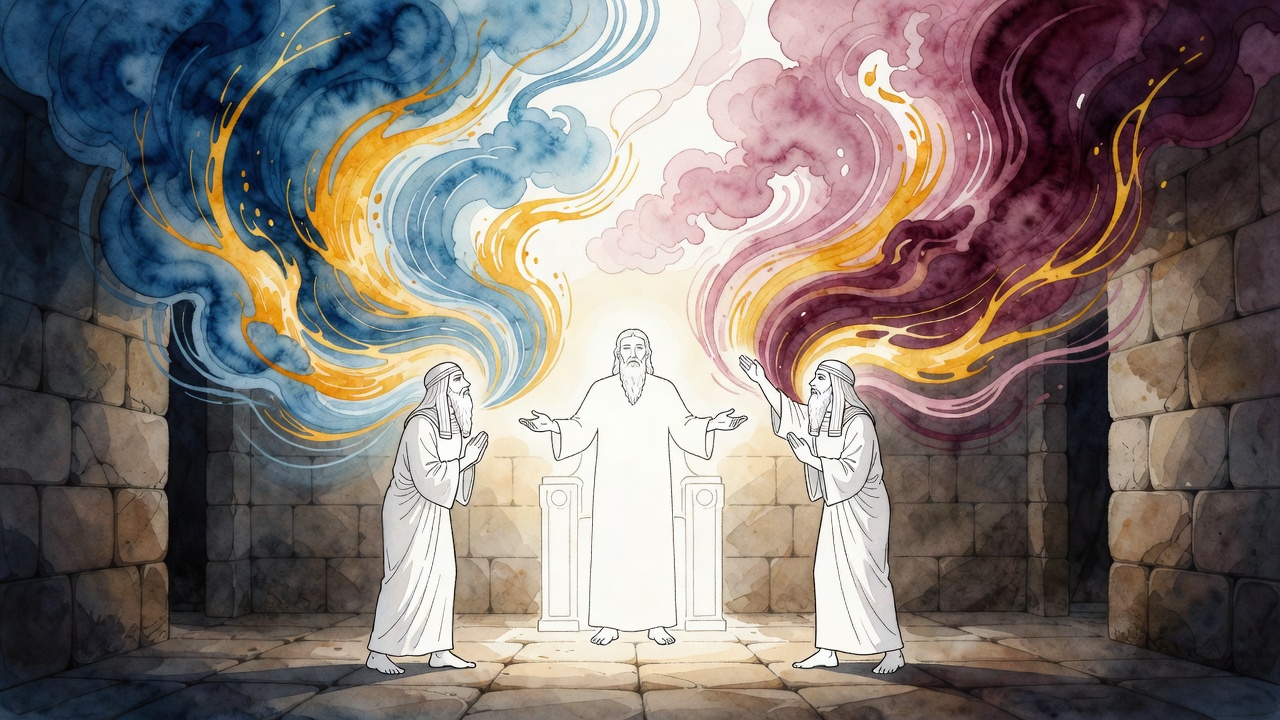
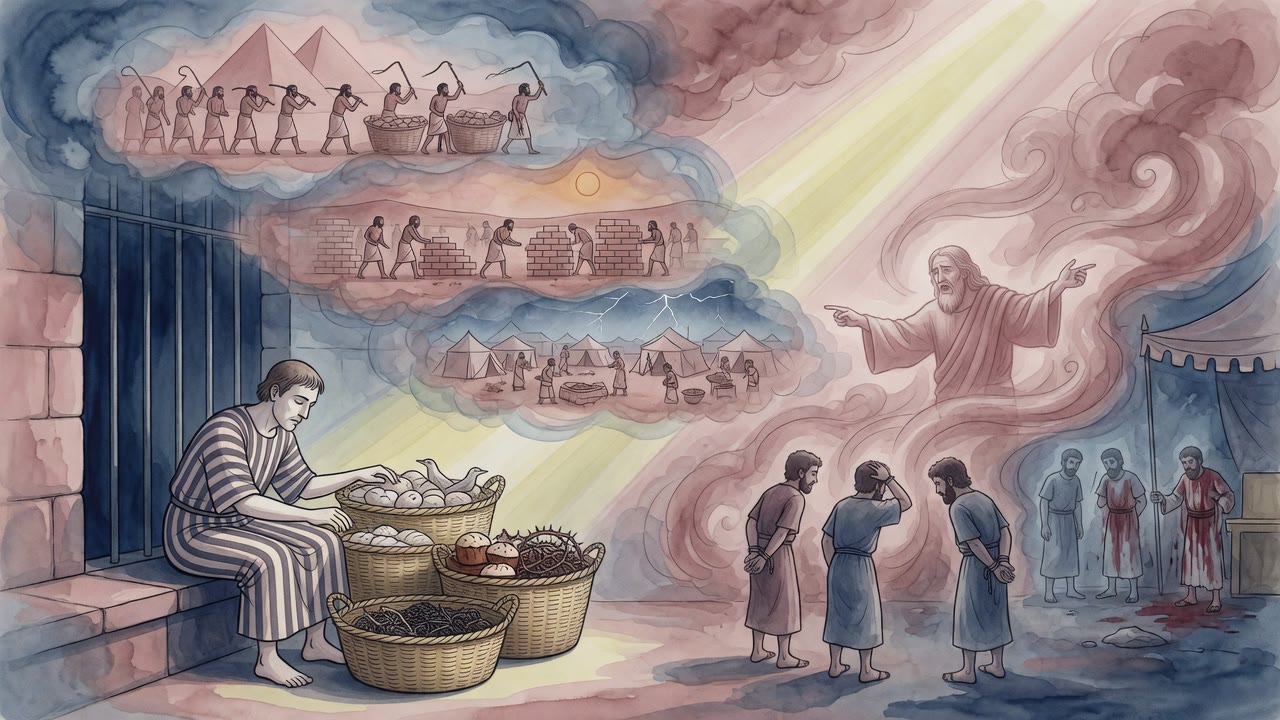
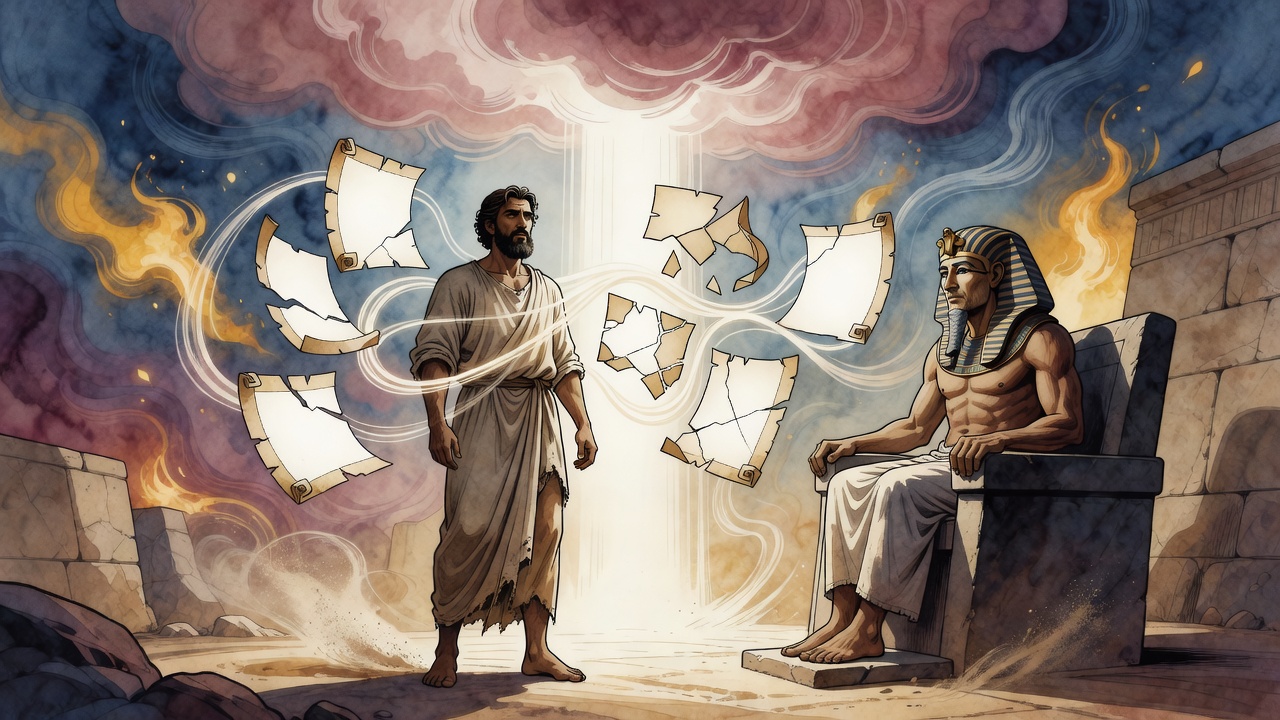
Joseph listened to two frightened men in the dark and did not flinch at the word death. The chief butler had dreamed a vine with ripe clusters and a cup returning to a royal hand. The chief baker had dreamed baskets stacked on his head that birds could reach. Both men had once stood close enough to Pharaoh to smell perfume on a royal sleeve. Both now sat in the house of the bound, waiting for a birthday they might not live to see.
 Click for full size
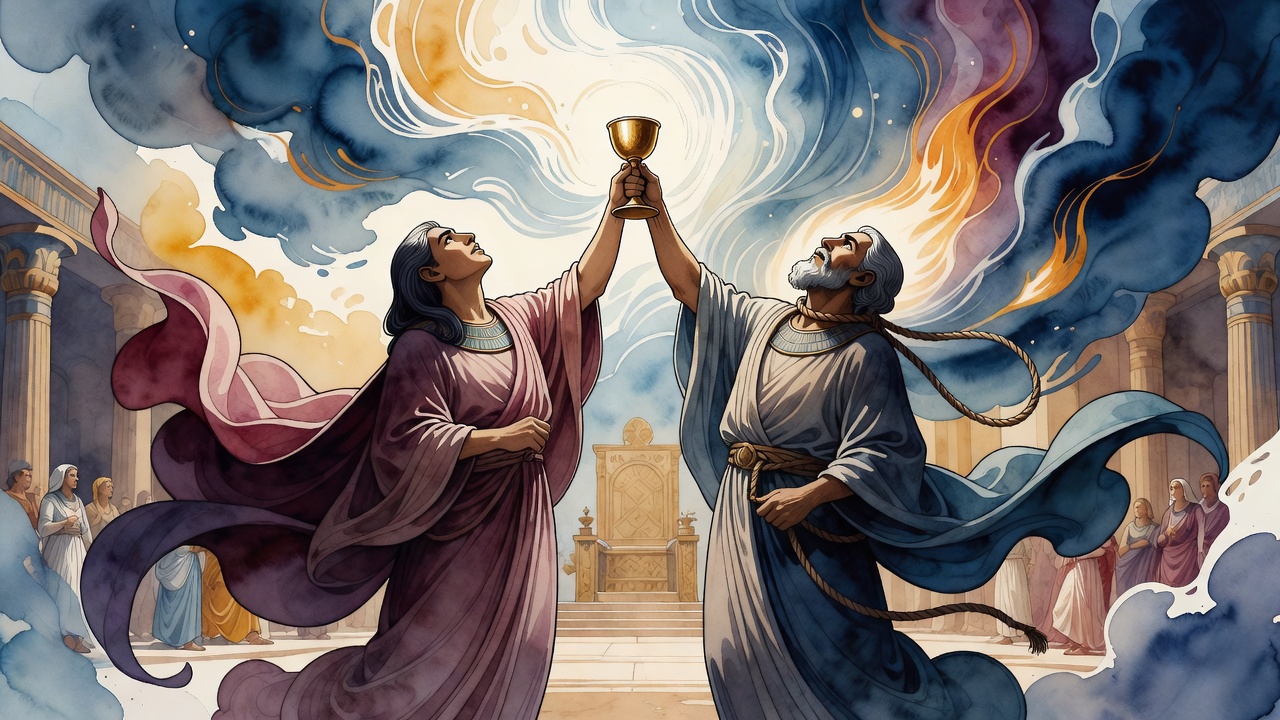
"At the end of three days," Joseph told the butler, "the memory of you will come before Pharaoh, and he will lift up your head with honor, and restore you to your service, and you will put the cup into his hand again, according to your former custom in pouring out for him" (Genesis 40:13).
The Same Phrase, Two Ends
The same phrase, lift up the head, would land differently on the baker. Joseph said so without soft edges. One head would rise into a cup. One head would rise onto a stake. The language of the court was elastic enough to hold mercy and execution in a single idiom, and Joseph refused to pretend the idiom was kind.
He asked only to be remembered when the restored man stood again beside the throne. It was a small request from a man who had already been sold once and jailed once for a crime he did not commit. The butler nodded the way frightened men nod when they will promise anything to get out of a cell.
The baker heard his own sentence in the same room. Birds had already named him. He did not argue with the dream. He sat with it until the third morning came.
The Feast That Lifted Both Heads
On the third day Pharaoh kept his birthday. He made a feast for all his servants. Music, meat, and the careful laughter of people who work near power filled the hall. In the middle of that noise he lifted up the head of the chief butler and the head of the chief baker (Genesis 40:20).
The room applauded the restored cupbearer. The room grew quiet for the man who would not pour again. Joseph's words had been exact. Three days. Two lifts. Two ends. The butler returned to the side of the throne with a debt he would spend two years forgetting. The baker left the feast as a warning hung high enough for the kitchen staff to see on their way to work.
In the dungeon Joseph waited for a messenger who never came. He had read the dreams correctly. Correct reading did not open locks by itself. The cupbearer drank from gold and left the Hebrew under stone, as if the prophecy had been a service already paid in full by the act of hearing it.
Two Years the Clock Did Not Skip
Years are long when a man has already lost a coat, a father, and the open sky. Joseph counted harvests he could not see. He counted other men's birthdays. He counted the silence of a restored servant who still owed him a sentence of speech. The captain of the prison still trusted him with work. Trust is not freedom. It is only a softer chain.
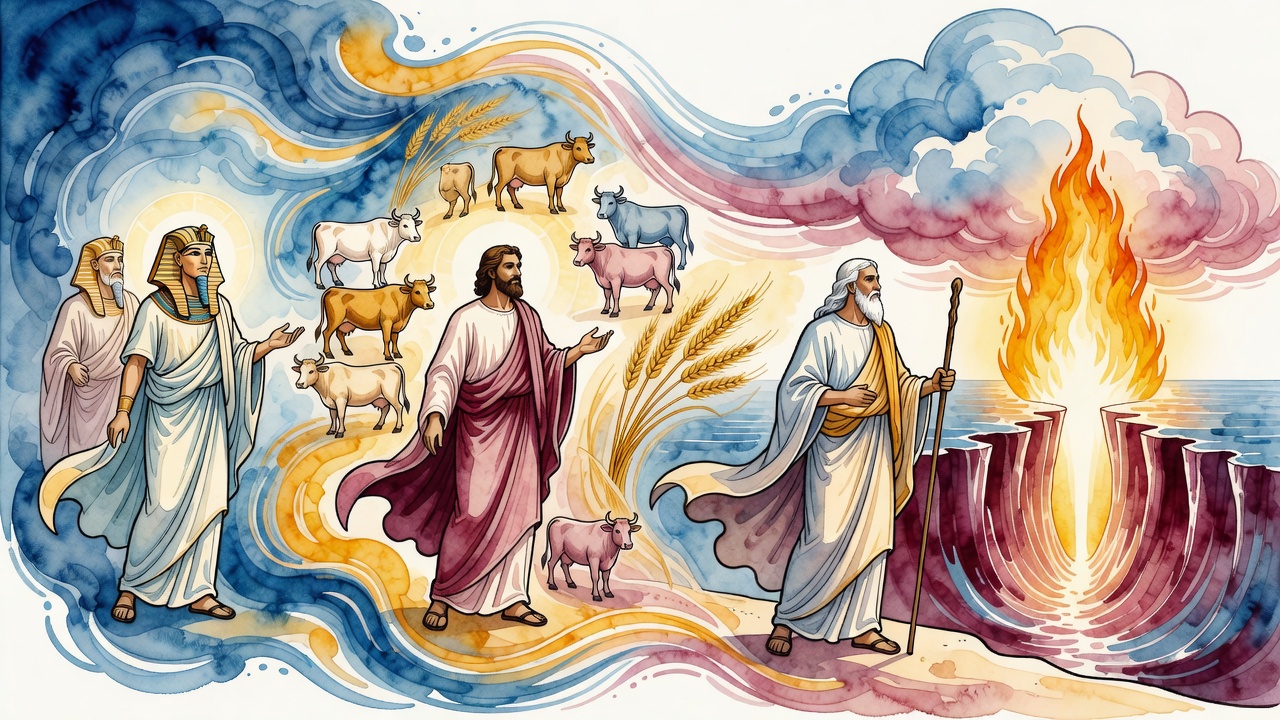
Then, at the end of two years, the remembrance of Joseph came before the Memra (מימרא), the Word of the Lord. And Pharaoh dreamed, and stood by the river (Genesis 41:1).
In the ordinary telling the dream arrives first and the memory of Joseph is a lucky afterthought. Here the order flips. Heaven remembers the forgotten prisoner before the king sees a single cow or a single ear of grain. The Word moves the file. The nightmare is the courier that forces the court to call for a man who can read what Egypt cannot.
When the Butler Finally Spoke
Pharaoh woke twice into the same terror. Magicians failed with polished phrases. Advisers failed with safer ones. Only then did the cupbearer clear his throat and drag a prison story into the throne room: a young Hebrew, two dreams, two heads lifted exactly as he said. The man who had forgotten for two years suddenly remembered with perfect precision, because the Word had already opened the ledger.
Joseph was shaved, dressed, and pushed toward a king who still smelled of river panic. The birthday feast had proved Joseph could read ends. The delayed memory would prove he could read empires. He walked out of the house of the bound carrying both prophecies in his bones: the lift that restores, and the lift that ends a life, and the knowledge that human gratitude keeps a poor clock.
The baker never got to revise his dream. The butler never got to keep his silence forever. Joseph never got to leave the dungeon on human gratitude alone.
← All myths