5 min read

Joseph Corrected Pharaoh's Broken Dream in Egypt

Pharaoh left gaps in the dream to test Joseph. The prisoner filled them because the same vision had reached him in the same night.

Curated by Arthur · Told by Maggid ·
Table of Contents
  1. The Dream With Missing Pieces
  2. A Prisoner Held the Same Night
  3. The River Left Unnamed
  4. Speech Can Feed or Trap
  5. Seventy Men From the Brick Pits

Pharaoh did not tell the dream straight.
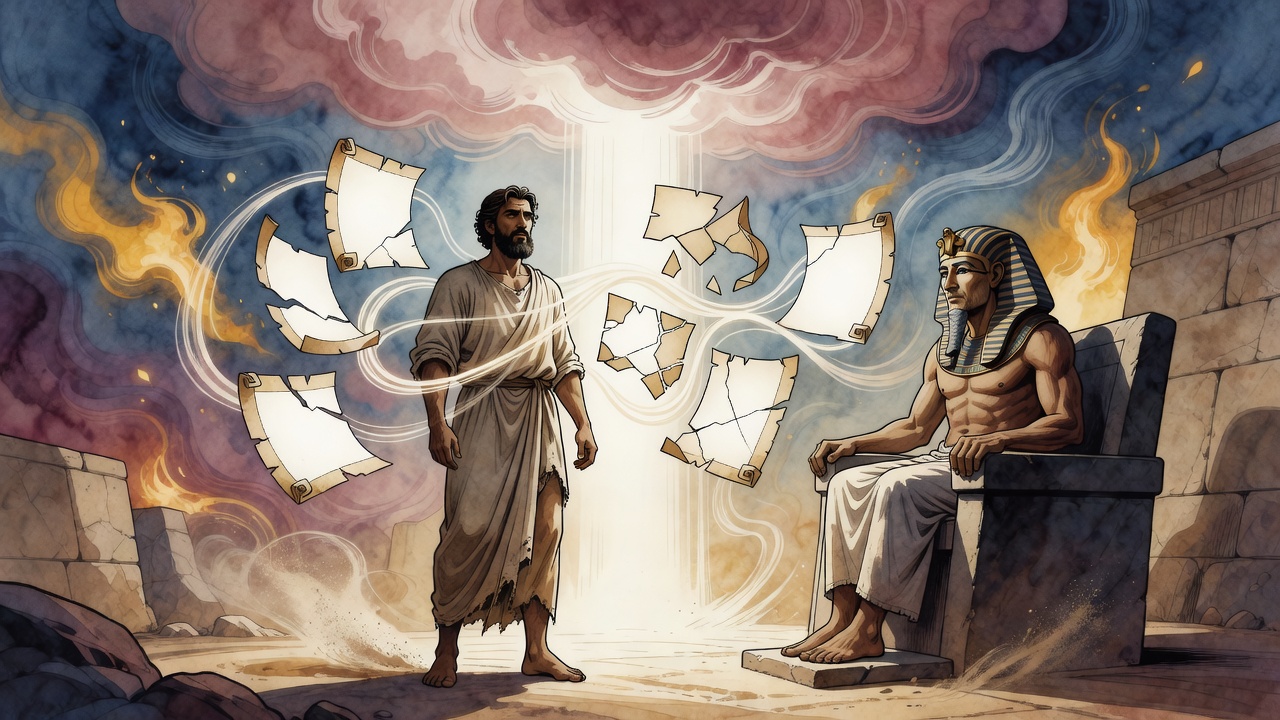
He had brought Joseph up from prison because the court had failed him, but need does not make a king trusting. He began to speak and left pieces out. He shifted details. He gave the prisoner a dream with broken edges and watched to see whether the Hebrew would flatter him, guess at him, or know.

The Dream With Missing Pieces

Joseph listened. The royal hall held its breath. A wrong answer could send him back to the pit, or lower. Pharaoh had already seen enough empty wisdom from his own men, and a prisoner had no cushion beneath him.

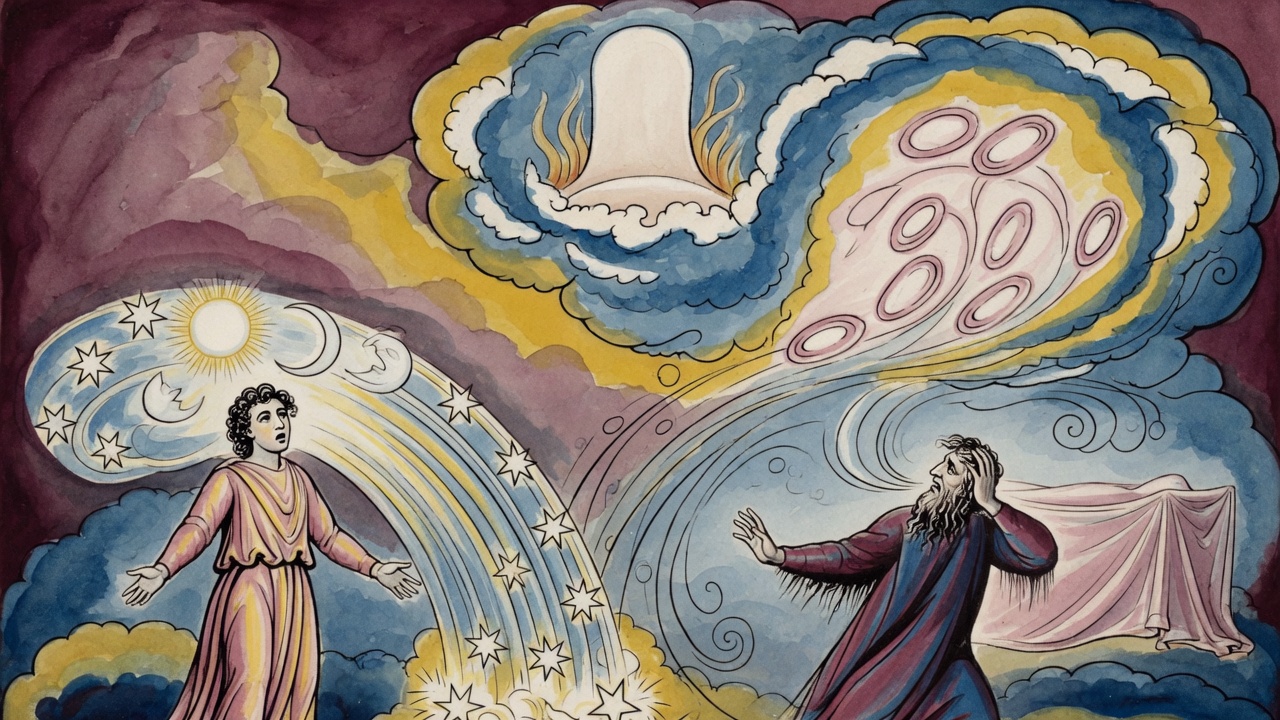
Then Joseph began putting the dream back together. A missing detail returned. A distorted image straightened. The sequence took shape as if he were not receiving Pharaoh's account but restoring something both men had lost and found again. The king had tried to hide the dream inside speech. Joseph reached past the speech.

Pharaoh was amazed because interpretation was no longer the main thing. Joseph had corrected a dream that had not been fully told. He was not standing outside the vision with cleverness. He was standing inside it with memory.

A Prisoner Held the Same Night

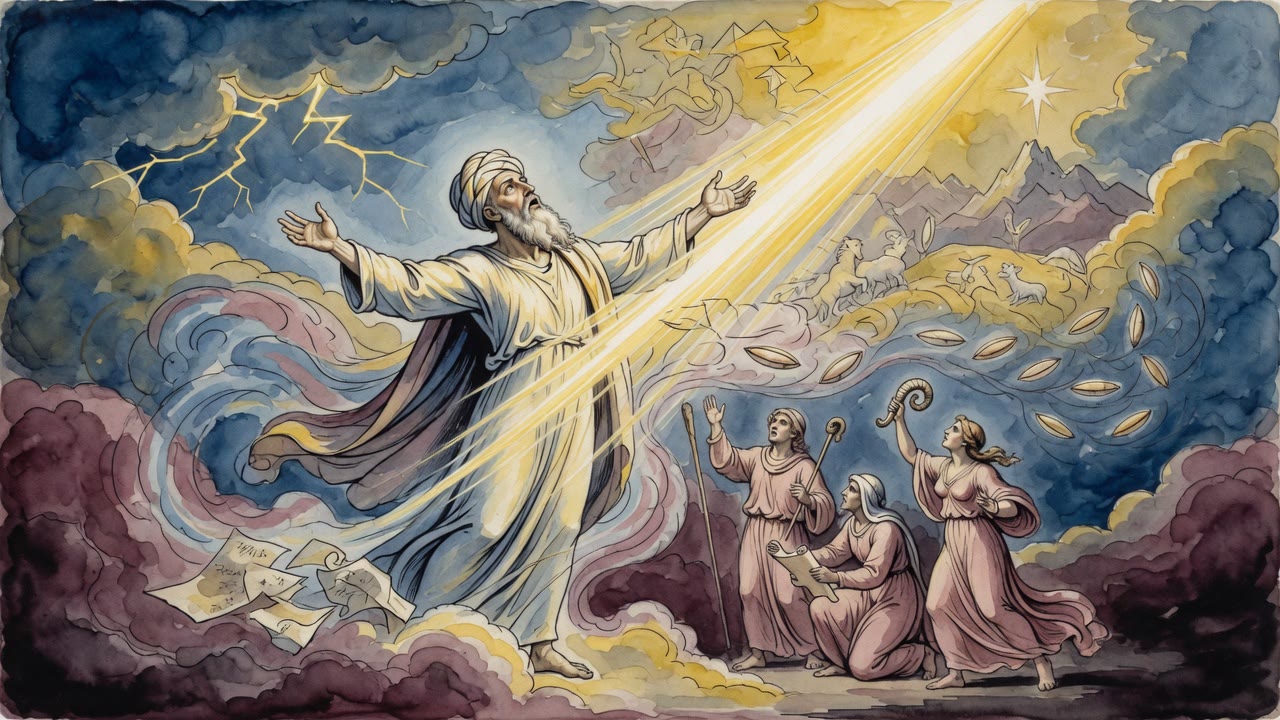
The reason was simple and terrifying. God had sent Joseph the same dream at the same time. While Pharaoh tossed in palace linen, Joseph received the same cattle, the same hunger, the same warning inside the dungeon. One night crossed stone and gold without asking permission from either.

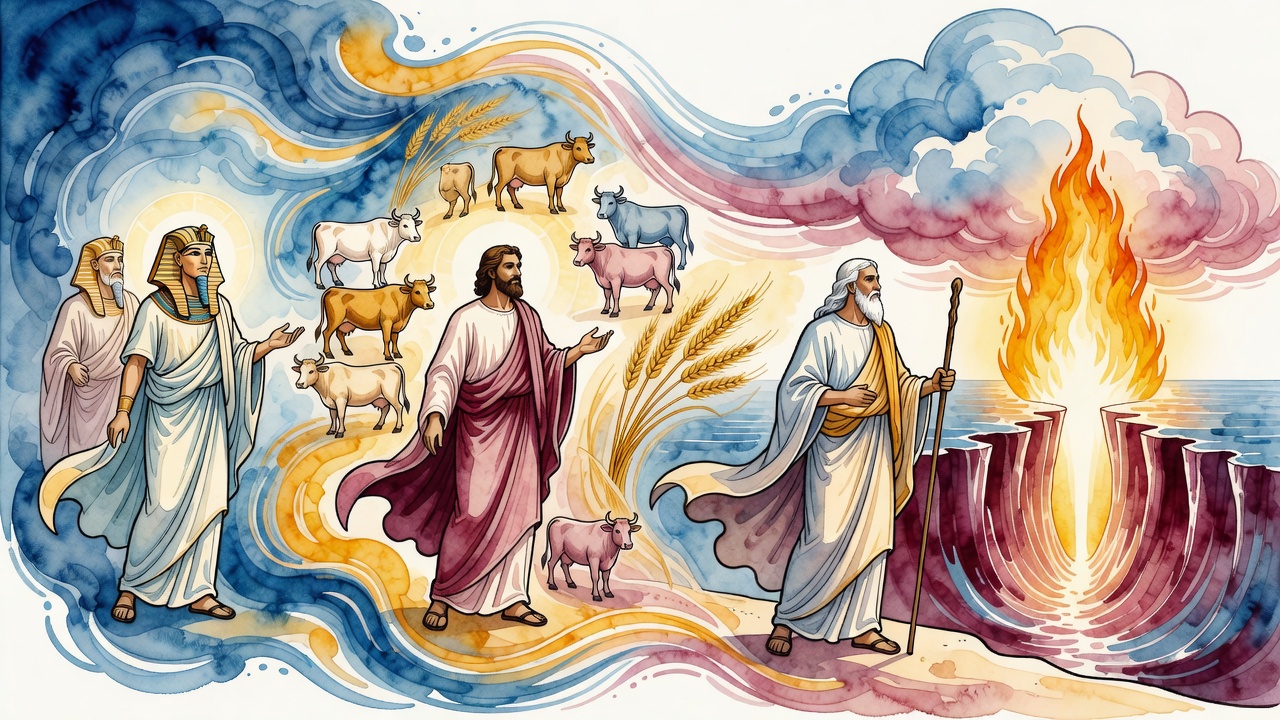
So Joseph did not guess. He remembered. The seven fat cows, the seven lean cows, the fear under the images, the truth pressed into them. Pharaoh had power over Egypt, but the dream did not belong to him alone. It had another witness, kept in a cell until the morning needed him.

Joseph also named the source of the gift before the gift could make him famous. There is a God in heaven who reveals secrets, and the secret was not given to Joseph because he had more wisdom than any living person. It was given so the meaning could reach the king. That sentence kept Joseph small enough for the message to pass through him.

The River Left Unnamed

Once Pharaoh saw that Joseph knew, he retold the dreams with all their details. Almost all. One word stayed behind his teeth.

Nile.

The lean cows had emerged from the river, but Pharaoh would not say that evil had come from the river Egypt revered. A king may command armies and still fear a word. He could summon a prisoner from the dungeon, expose his own panic before the court, and ask for an interpretation that might save the land. He still hesitated before naming the place where famine had risen.

Joseph did not need to force the word from him. The dream was clear. Seven years of plenty would come, then seven years of famine would devour them. The warning had not arrived to humiliate Pharaoh's river. It had arrived to save the bodies that depended on grain.

Speech Can Feed or Trap

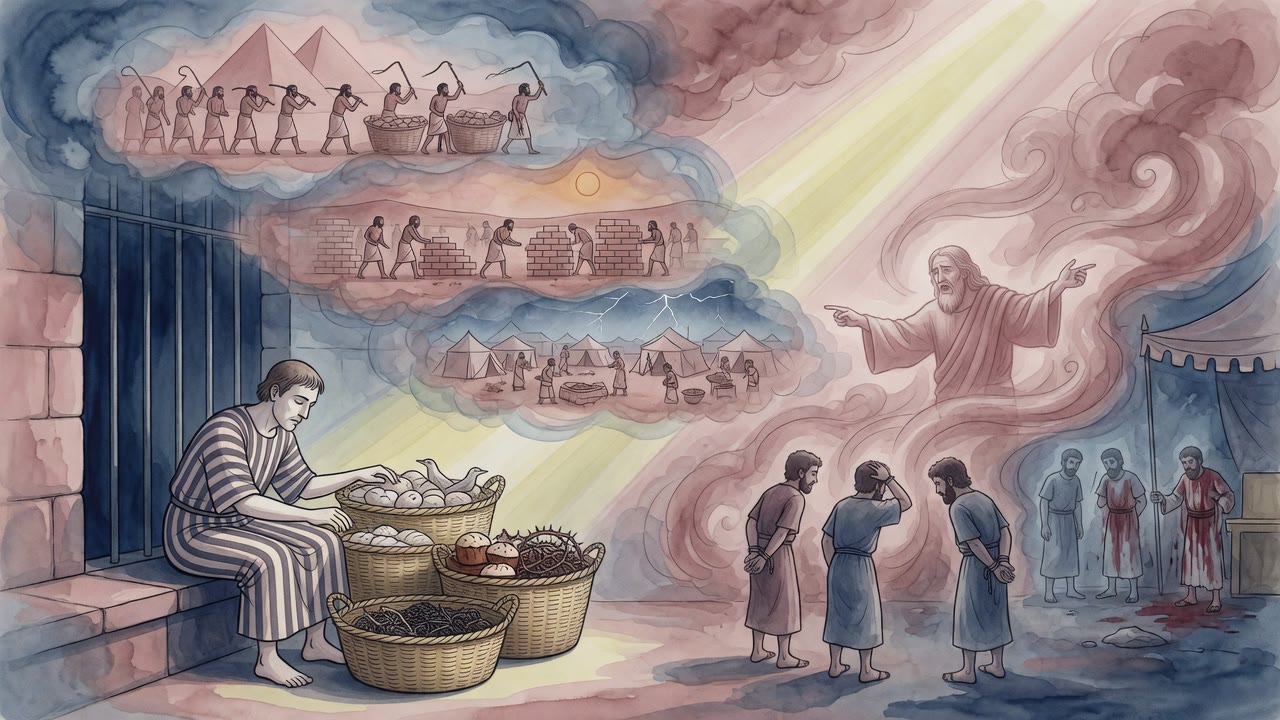
Generations later, another Pharaoh would use speech with a different hand. He gathered Israel and spoke with a gentle mouth, befeh rakh. He asked for a favor. One day's help. He took a basket and a rake himself and began making bricks, and who could watch the king work and refuse to join him?

Israel labored with all its strength. They were mighty, and their first day proved it. When darkness came, the overseers counted the bricks and turned generosity into law. This number every day. The favor became quota. The king's basket became a chain.

Then straw was withheld. Bricks were still counted. When the number fell short, Egyptian overseers beat the Israelite foremen. The foremen could have handed over the people beneath them. They did not. They took the blows and said it was better for them to be beaten than for the rest of the people to suffer.

Seventy Men From the Brick Pits

Long after the beatings, God told Moses to gather seventy elders. Moses hesitated. He did not know who was worthy. God pointed him back to Egypt: choose the elders and foremen who had already borne the people's burden. The men with bruises from the brick quotas were the men fit to stand beside Moses and carry leadership.

That memory changes Pharaoh's dream chamber. One Pharaoh hides pieces of a dream and receives truth from a prisoner. Another Pharaoh hides slavery inside a polite request and receives resistance from foremen willing to suffer for their people. Speech sits at the center of both scenes. One king's guarded words still open a path to bread. Another king's soft words harden into labor and blood.

Joseph walked into Pharaoh's hall with a dream he had shared from below. The foremen stood in Egypt with backs made witnesses by the whip. Heaven remembered both kinds of truth: the secret shown in the night, and the body that refuses to hand over another body by day.


← All myths
From the tradition

Sources

2 sources

The texts this telling draws on, in full. Open a card to read inline, or expand it for a wider, quieter read.

Legends of the Jews 1:168Legends of the Jews

The familiar story is this: Joseph, sold into slavery by his jealous brothers, rises through the ranks thanks to his ability to interpret dreams. But the encounter with Pharaoh, as retold in Legends of the Jews (Ginzberg), is more than just a demonstration of divine power. It's a fascinating glimpse into the minds of these two powerful figures.

Pharaoh, desperate to understand his troubling visions of seven fat cows devoured by seven lean ones, summons Joseph from the dungeon. But the verse says, Pharaoh wasn't entirely truthful. He deliberately omitted and altered details of his dream, testing Joseph's abilities. Was he trying to trip him up? To expose him as a fraud? Perhaps.

Joseph, however, was up to the task. With uncanny accuracy, he corrected Pharaoh, piecing together the dreams exactly as they had occurred. Ginzberg tells us that Joseph was able to do this because he, too, had dreamed the same dream at the same time! Imagine the sheer awe and maybe even a little fear that must have washed over Pharaoh at that moment.

Pharaoh wasn't finished with his little test. He retold the dream, this time with all the details… almost. He left out one crucial word: Nile. the Nile River was worshipped as a god by the Egyptians. And Pharaoh, even in his desperation, hesitated to associate anything negative – the "lean kine" representing famine – with their deity.

What does this tell us? It tells us that even in the face of a potential national crisis, Pharaoh's religious beliefs and political considerations were at play. He was a ruler walking a tightrope, balancing the need for answers with the sensitivities of his people. And Joseph? He wasn't just interpreting dreams; he was working through the complex world of power, faith, and human nature.

Joseph's humility shines through in his explanation. As he says in the Book of Daniel (2:30), "There is a God in heaven that revealeth secrets, but as for me, this secret is not revealed to me for any wisdom that I have more than any living, but to the intent that the interpretation may be made known to the king, and that thou mayest know the thoughts of thy heart." He understood that his gift wasn't about personal glory, but about serving a higher purpose.

The story of Joseph and Pharaoh reminds us that even the most extraordinary events are often shaped by the very human flaws and complexities of those involved. And that sometimes, the greatest insights come not just from dreams, but from understanding the hidden agendas and unspoken truths that lie beneath the surface. So next time you have a vivid dream, ask yourself: What's the real message here? And who might be trying to hide something?

Full source
Bamidbar Rabbah 15:20Bamidbar Rabbah

The book of Bamidbar Rabbah, a collection of rabbinic teachings on the Book of Numbers, illuminates this very question.

We find ourselves at a pivotal moment in the Israelites' journey. Moses is tasked with gathering seventy elders to share the burden of leadership. But wait a minute… hadn’t elders been appointed before? As we read in Exodus (3:16), even back in Egypt, there were elders. So why this special call to assemble seventy men?

The passage poses this very question, and the answer takes us back to the harsh realities of Egyptian slavery. Remember Pharaoh's cunning plan to oppress the Israelites? "Let us be cunning with it…they appointed taskmasters over them” (Exodus 1:10–11). To understand the gravity of the situation, we need to explore how Pharaoh implemented his cruel decree.

The Bamidbar Rabbah paints a vivid picture. Pharaoh, in a deceptive display of solidarity, gathered all of Israel. With a "gentle mouth" (befeh rakh), he feigned camaraderie, asking for a small favor. As it says, "The Egyptians ruthlessly [befarekh] coerced the children of Israel to work" (Exodus 1:13). He even picked up a basket and rake himself, making bricks alongside them. Who could refuse to work when the mighty Pharaoh himself was setting the example? The Israelites, driven by a sense of obligation and perhaps fear, labored diligently.

But the illusion shattered with nightfall. Pharaoh deployed overseers, demanding an impossible quota of bricks each day. Egyptian overseers were appointed over Israelite foremen, who in turn were responsible for the people. The situation deteriorated rapidly when straw, a necessary component for brickmaking, was withheld. When the daily brick count fell short, the Egyptian overseers mercilessly beat the Israelite foremen, as it is stated: “The foremen of the children of Israel…were beaten” (Exodus 5:14).

Here's the crucial point. These foremen, these leaders, chose to bear the brunt of the punishment themselves, shielding their people from further suffering. They prioritized the well-being of the community over their own safety. They said, ‘It is preferable that we are beaten and let the rest of the people not suffer.’ What an incredible act of selflessness!

So, when God instructs Moses to "Gather to Me seventy men of the elders of Israel," Moses is understandably hesitant. "Master of the universe," he says, "I do not know who is worthy and who is not worthy.” God provides the criteria: “Whom you know to be the elders of the people, and its foremen.”

These weren't just any elders. These were the leaders who had proven their dedication and compassion in the face of adversity. These were the foremen who had sacrificed themselves, absorbing the blows meant for their people. "Those elders and foremen who sacrificed themselves to be stricken for them in Egypt over the quota of the bricks, let them come and assume this prominence."

The text emphasizes that these leaders, by bearing the burden of the people, earned a unique honor. As Bamidbar Rabbah highlights, God drew a parallel between them and Moses. "They will bear the burden of the people with you" (Numbers 11:17). From this, we learn a profound lesson: anyone who sacrifices himself on behalf of Israel merits honor, prominence, and the Divine Presence.

The story circles back to its origin. The Bamidbar Rabbah concludes by asking: Who were these worthy leaders? They were the ones in whose regard it is written: “The foremen of the children of Israel…were beaten.”

This passage from Bamidbar Rabbah challenges us to consider what true leadership entails. It's not about wielding power or seeking personal gain. It's about empathy, sacrifice, and a willingness to stand in the gap for others. It’s about recognizing those who already are leaders, those who have proven it through their actions. It's a timeless reminder that the most profound acts of leadership often occur in the shadows, unnoticed by the masses, but deeply felt by those they serve. What kind of leader are we called to be? And how can we recognize and uplift those who embody these qualities in our own communities?

Full source