Thin Cows Swallowed Fat Ones and Stayed Hollow
Pharaoh woke with the river still in his mouth. His magicians had words for the dream. None of them could fill the hollow cows.
Table of Contents
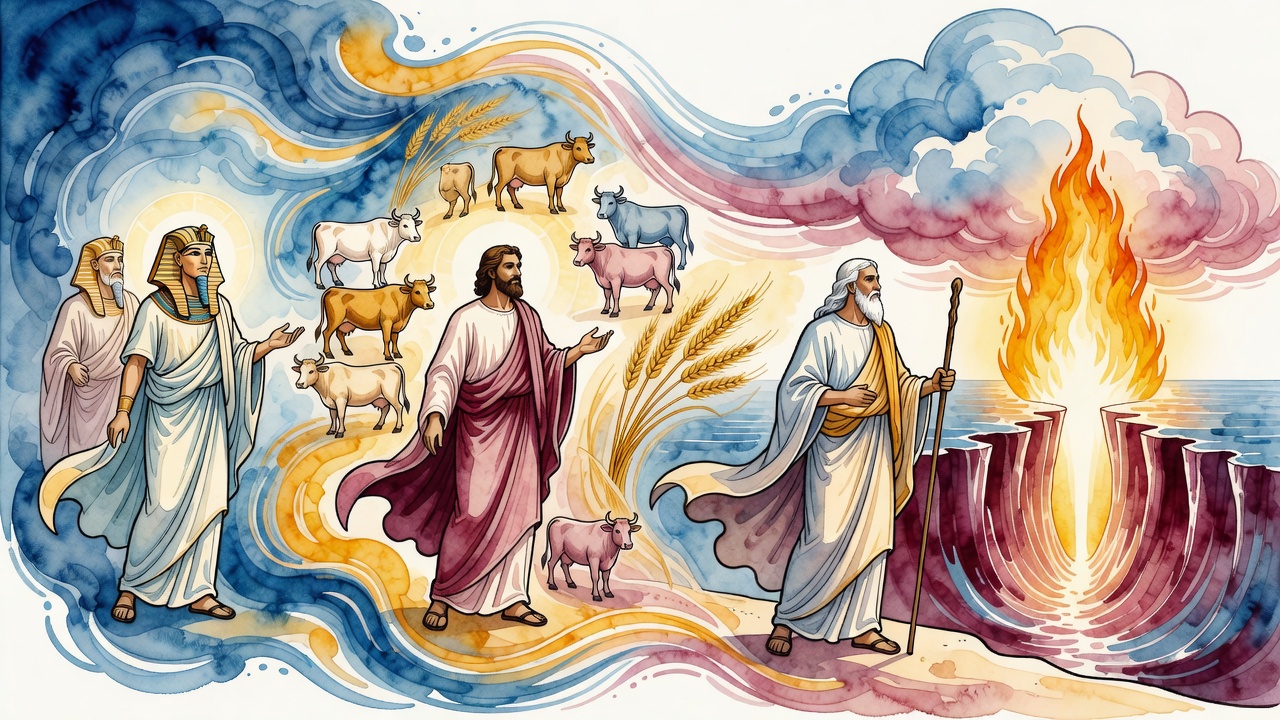
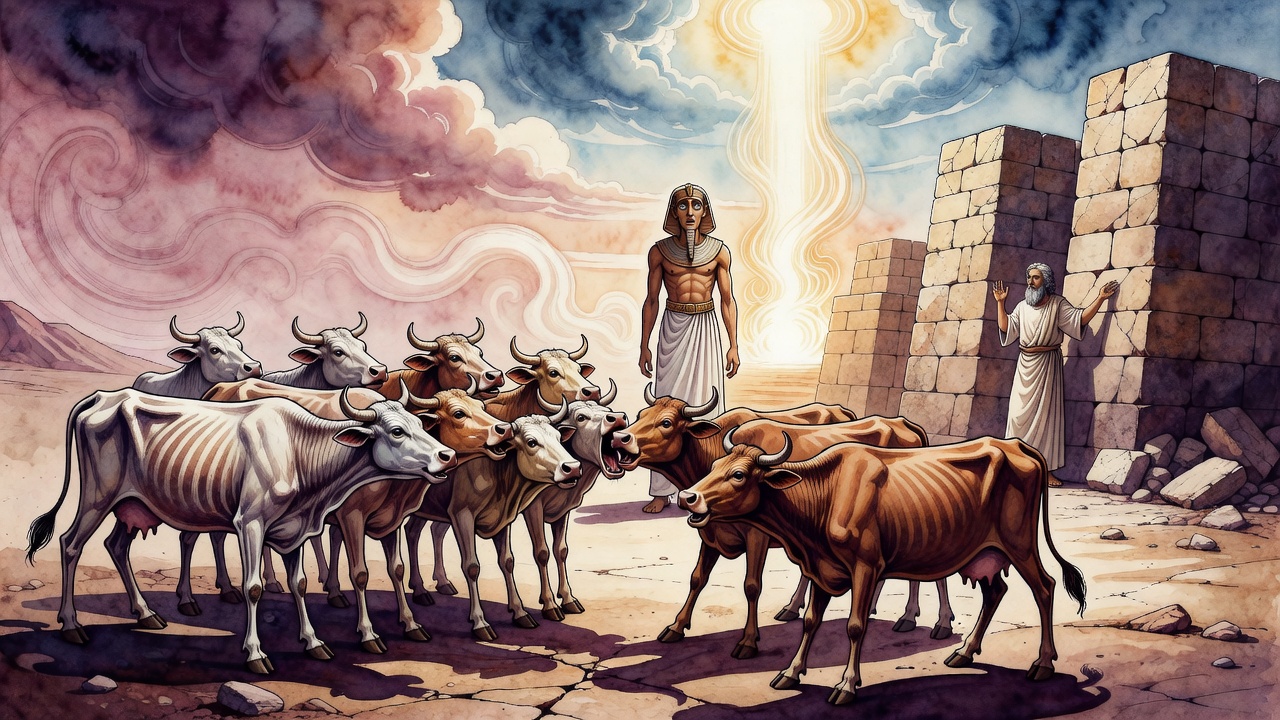
Pharaoh woke with the river still in his mouth. He had watched seven thin cows climb out of the Nile and swallow seven fat ones whole, and when the meal ended the thin cows looked as wretched as before. No bulge. No satisfaction. No proof that a meal had happened at all.
 Click for full size
He told the court what his eyes had done to him. They entered into their stomach, and it could not be known that they had entered into their stomach, for their appearance was evil as before. The magicians arranged words. None of the words held the empty belly of the dream. They offered symbols, and every symbol left the king more alone in the room.
The Dream That Would Not Digest
A normal famine follows plenty and is softened by it. Reserves cushion the blow. This dream refused that mercy. Seven years of overflowing granaries would vanish into seven years of want without leaving a trace behind them. Hunger that erases memory is not weather. It is a sentence written in animal flesh.
Pharaoh paced. The Nile kept moving past the palace as if the night had been ordinary. The thin cows stayed in his mouth. He needed a reader who would not decorate the horror. He needed a man who had already learned, in a smaller room, that a dream can carry two futures at once.
Joseph Names the Logic
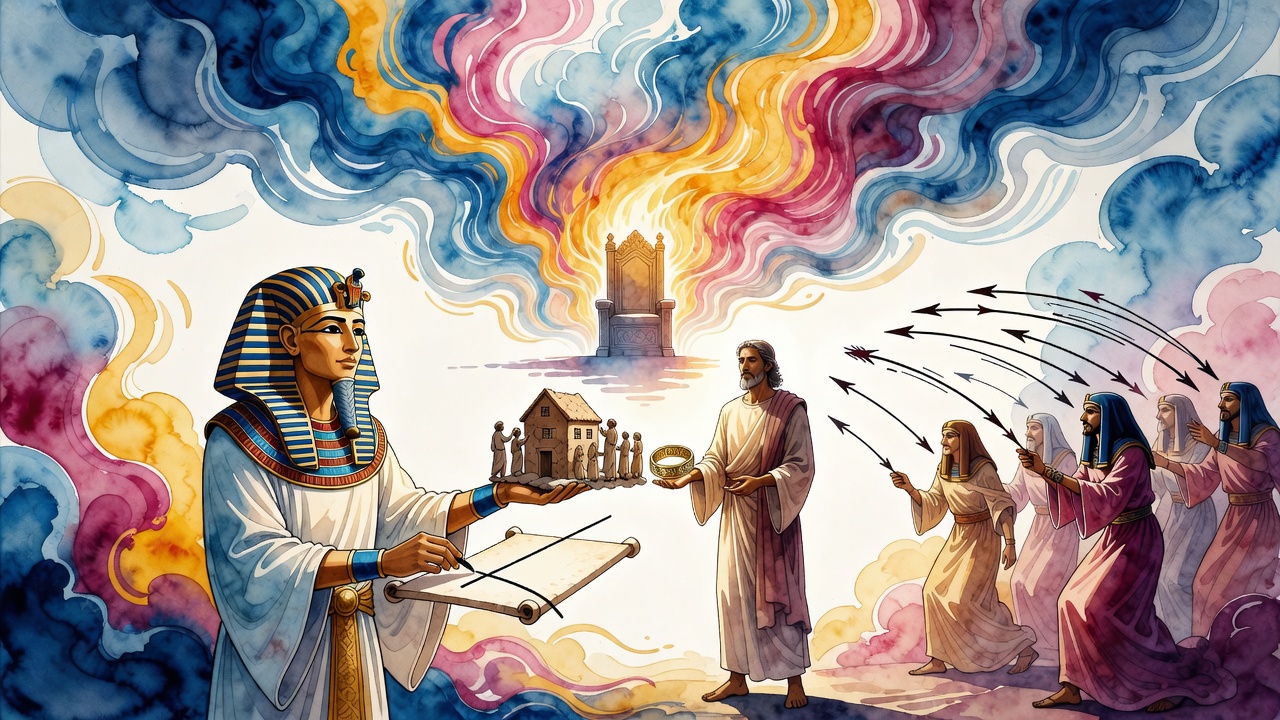
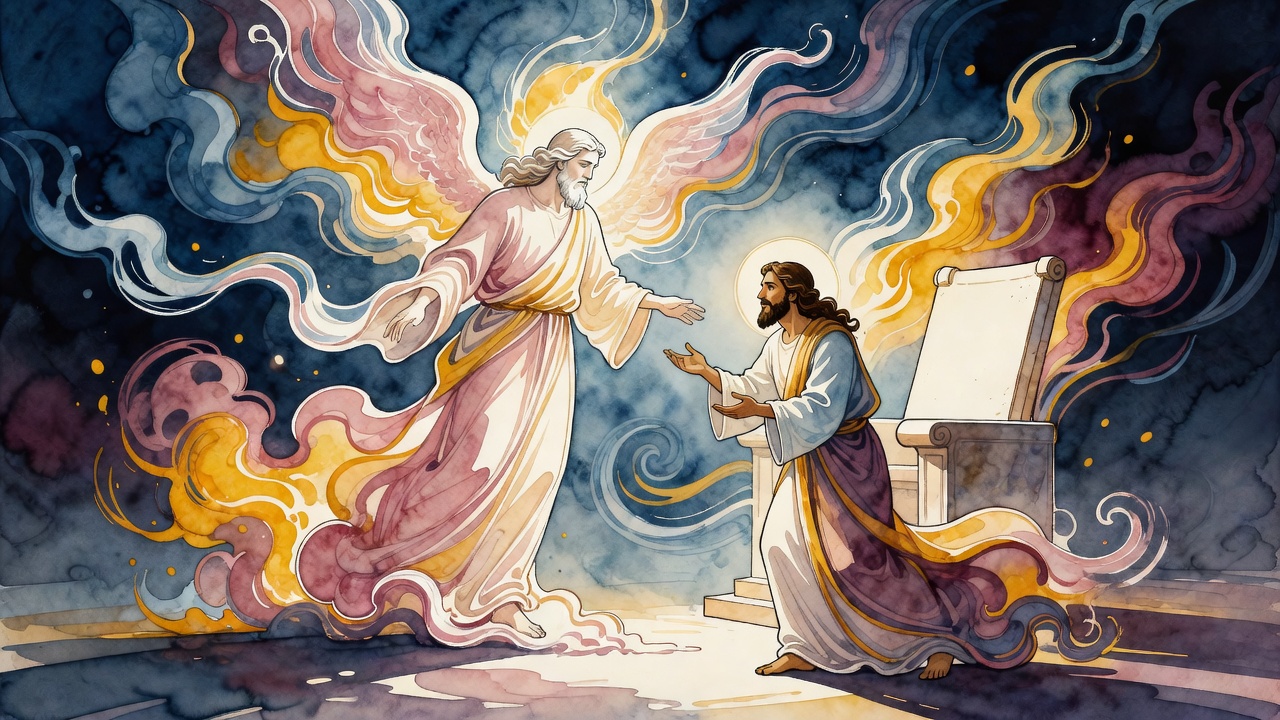
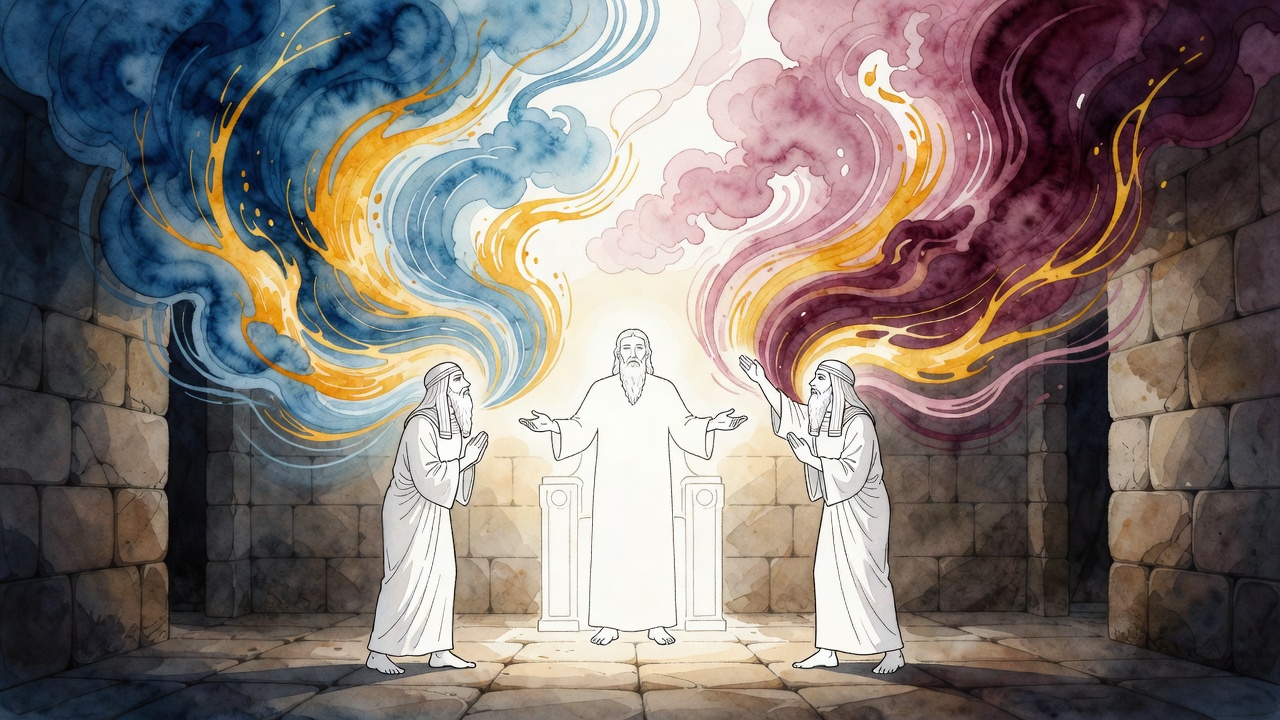
Joseph was brought up from the prison with his hair cut and his clothes changed. He did not flatter the throne. He said the dream was one dream, repeated because God had already fixed the matter. Seven fat years. Seven lean years. The thin cows that stayed hollow meant the lean years would swallow the fat years so completely that the land would forget it had ever been full.
Then he did what dream readers rarely do. He prescribed. Set superintendents over the land. Take one part in five of everything the fields give in the seven years of plenty. Store it city by city, and put one man over the whole of it with the authority to say no when the markets begin to beg.
Pharaoh looked at the Hebrew and heard an administrator instead of a slave. The plan began before the first thin year arrived. Joseph rode out and counted while the granaries were still overflowing and nobody could picture an empty one.
Three Branches in a Prison Cup
Joseph had learned to hear two futures in one night, and he had learned it in a cell.
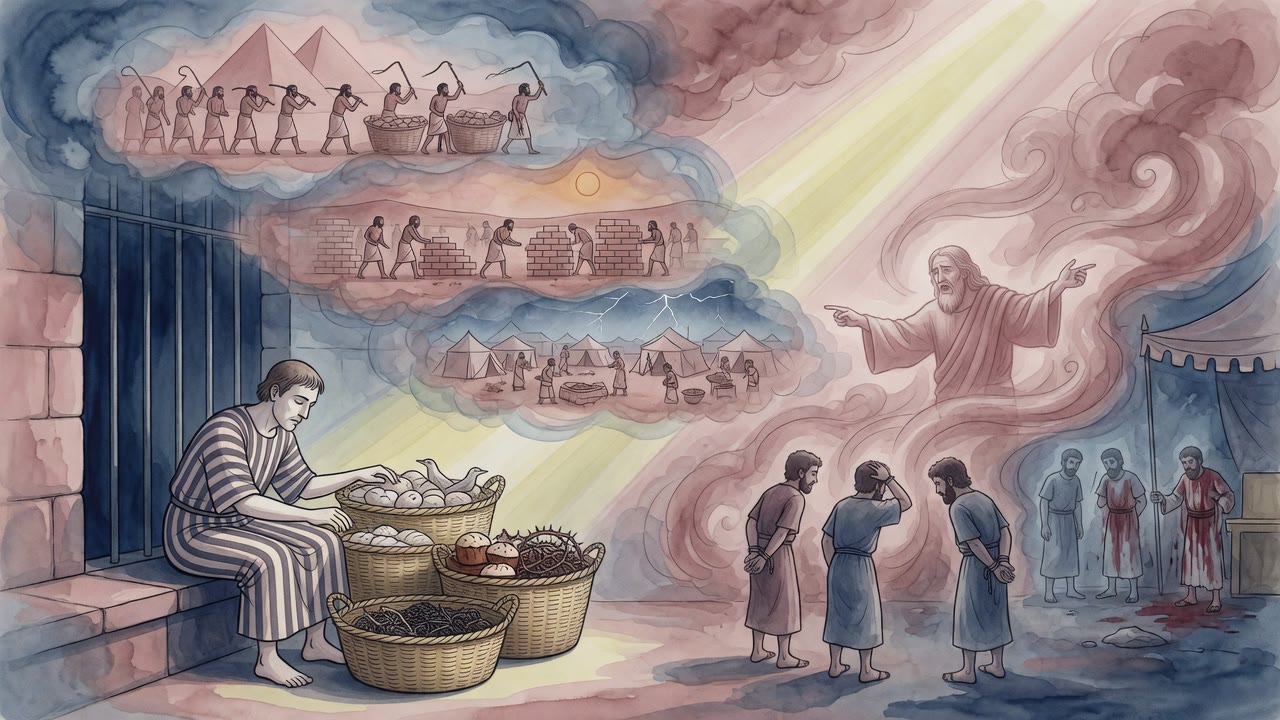
Years earlier the chief butler had dreamed a vine with three branches that ripened into grapes, and the butler had pressed them into Pharaoh's cup and put the cup in Pharaoh's hand. Joseph gave him the reading his face was begging for. Three days. Restoration. A cup returned to a royal palm.
The same vision carried a second reading that the butler never asked for. The three branches were Abraham, Isaac, and Jacob, whose grandchildren would be worked into clay and brick and every labor of the field in Egypt, and afterward brought out by the hand of three shepherds. The cup was a second thing too. It was the cup of wrath that Pharaoh himself would drink at the last.
A prisoner's dream about a vineyard turned out to hold the whole future of the house that had imprisoned him. Joseph handed over the three days and kept the rest. When the thin cows later refused to show their meal, he already knew a vision can tell a man his morning and still hide a nation's night inside the same fruit.
A Fifth for the Years That Forget
He took a fifth from the land in the years of plenty and locked it where cities could reach it. A fifth is a calibrated number, enough to carry seven starving years without crushing seven fat ones. Superintendents went out with him. Egypt got a civil service before it got a famine.
He became the man who said no while the bins were still full. He sealed doors. He appointed officers who could stand in a doorway and refuse a bribe while the first thin season still looked like a rumor from upriver. Farmers asked why grain was leaving their villages in the fat years. The officers kept taking it. Joseph had seen cows that swallowed plenty and stayed starving. He would not trust memory to do the work of storehouses.
When the famine finally walked the earth, Egypt had grain, and the surrounding lands came to buy it, and the brothers who had sold him stood in line inside the economy he had built out of a dream that would not digest. They bowed to the man behind the table without recognizing his face.
The Line at the Granary
The butler had gotten his three days and his cup. Pharaoh got seven fat years and a tax he had approved while the river still looked kind. Joseph got a seat that could say no. The brothers got hunger and a stranger who held the keys.
The thin cows had told the truth that plenty cannot be eaten twice. Store it, or watch it vanish into a hunger that leaves no bulge. The vine in the prison had told another truth. The house of the three fathers would labor in clay and brick in this same land, and a cup of wrath waited for the throne that now praised the Hebrew's plan.
Joseph watched the line form and did not explain the cows again. The hollow bellies had already done the preaching. Grain moved. Names were written. Doors stayed shut until he opened them. A prisoner who had once read a butler's vine now read a nation's stomach, and the Nile, which had given up the thin cows, kept moving as if it had no opinion.
← All myths