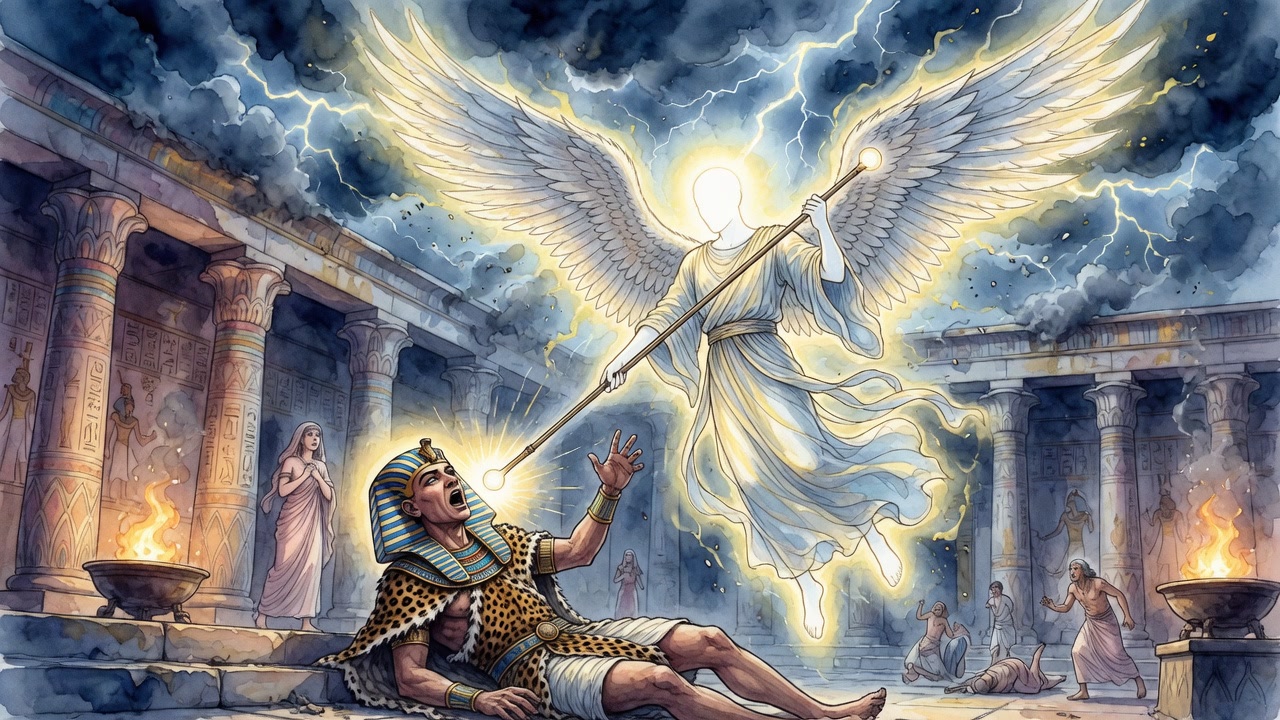
Gabriel Taught Joseph All Seventy Languages in One Night
Pharaoh's throne sat atop seventy steps. A foreign prince could climb thirty-one, a petitioner three. Joseph came from the cell and climbed all seventy.
Table of Contents
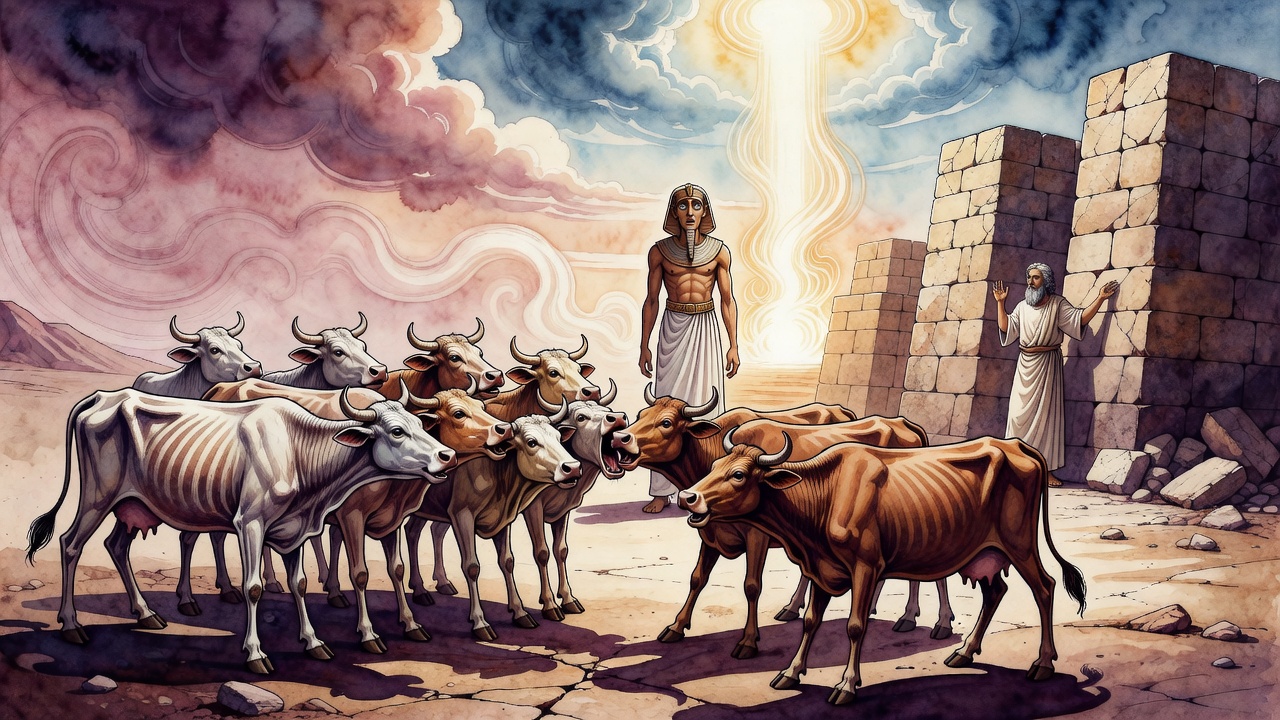
The cell was dark. Joseph lay in it knowing that in a few hours he would stand before the most powerful man in the world. He had been in Egypt for thirteen years, most of them in this place or one like it, and the summons to Pharaoh's court had come the way all decisive things came to Joseph: suddenly, with no preparation, preceded only by a dream no one else could read (Genesis 40:8).
 Click for full size
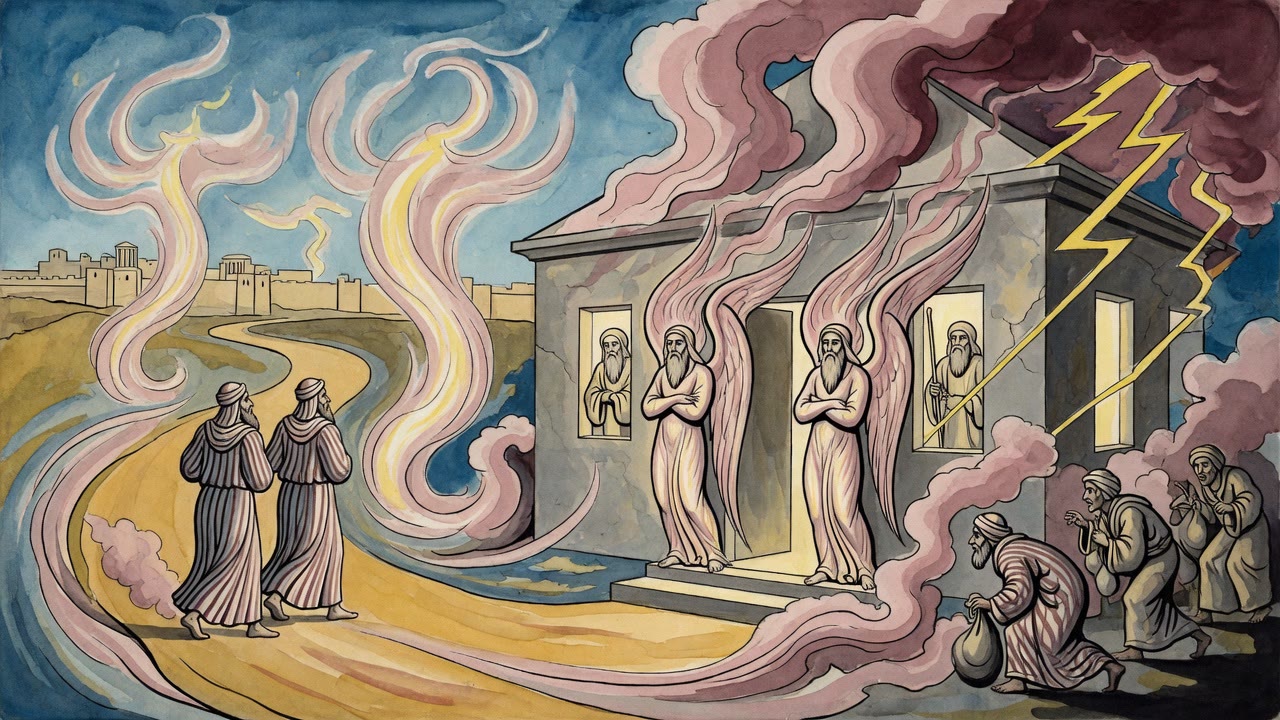
Then Gabriel arrived. Not to encourage him. Not to announce that the dream interpretations would land well. The angel came bearing a curriculum.
What Gabriel Brought Before Dawn
By morning, Joseph would know every language spoken on earth. All seventy of them. Gabriel moved through each one, and Joseph received them. The angel also changed his name: the letter heh, which appears twice in the divine name, was added to Joseph's name, transforming him into Jehoseph. When a person is given a letter from God's name, they are being prepared for something God intends to use them for. Joseph had been prepared many times already. This was the last preparation.
He had no way to know he would need it all by midmorning. He would find out soon enough.
Why the Butler Forgot
Two years before this night, a royal butler had been released from the same prison. Joseph had asked him to mention his name to Pharaoh. It was a reasonable request, one man doing another a favor. But it was also a misplaced trust, the kind of trust that should have been directed upward rather than sideways, and the consequences arrived immediately: the butler forgot, and Joseph stayed where he was for two more years.
Those two years were not wasted. They were precision work. Joseph had already been shaped by Potiphar's house, where he ran a great estate from inside a foreign household and learned what Egyptian administration looked like from the outside. Prison had added patience, the kind that comes from having no choice but to wait. The extra two years placed him before Pharaoh's court at exactly the moment the dreams arrived that only Joseph could read, with the seven years of plenty still ahead and time enough to act on whatever the dreams required (Genesis 41:1).
The butler's forgetting was not accident. Every time the man tried to form the thought, the moment slipped. When he tied a knot in his garment to remind himself, the knot came undone. The delay was deliberate. Joseph before Pharaoh at the wrong moment would have been a curiosity, maybe a minor minister absorbed into the bureaucracy at a level too low to matter. Joseph before Pharaoh at this moment was irreplaceable.
Seventy Steps, One Language Each
Pharaoh's throne sat at the top of seventy steps. The protocol was fixed and well understood at court: a foreign prince might climb to the thirty-first step before the king descended to meet him; an ordinary petitioner was permitted three steps only. But a man who knew all seventy languages could climb all seventy steps. The number was not chosen casually. Seventy was the count of all the nations of the world, all the tongues branching from the scattering at Babel (Genesis 11:9). To know them all was to have been prepared for a role that encompassed all of them.
The court watched Joseph climb. He spoke each language as he ascended, one per step, and by the time he reached the top, the objection that had blocked him from the appointment was gone. There had been an Egyptian law: no one who had been a slave could hold the second rank in the kingdom. The princes had raised this objection the day before, and Pharaoh had relented, promising to examine Joseph on the languages. Now the examination had answered itself. The man before them had mastered every tongue in the known world overnight. Something larger than circumstance had prepared him for this role. Egypt would benefit from having him.
Pharaoh gave him the signet ring, the gold chain, the linen robes, the title. Only Pharaoh himself above him (Genesis 41:40).
The Languages He Put to Use
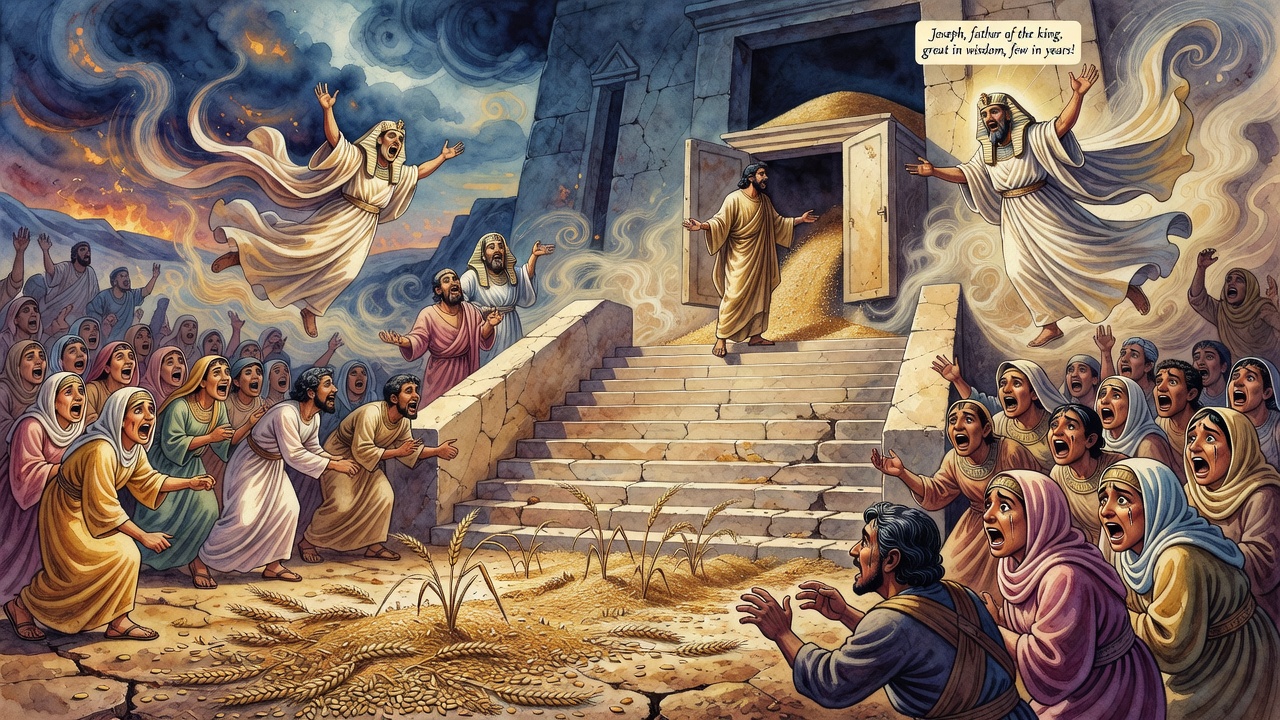
The seven fat years came first. Joseph moved through Egypt collecting grain: a fifth of every harvest, stockpiled in the cities nearest the fields, so much grain that the scribes stopped counting and the granaries groaned (Genesis 41:49). He toured the land and administered it, receiving officials and landowners and farmers in their own languages, because seventy languages meant Egypt's population, its foreign trading partners, and the delegations from neighboring nations who would eventually come desperate for food.
They came when the lean years hit. The famine was not regional. Every land Egypt traded with was starving. People arrived in the capital covered in clay, the visible mark of total destitution, and Joseph received them at honest prices, the kind that did not punish people for the timing of their need. He had been bought and sold himself. He understood something about desperation that a man raised to power could not have known the same way.
The Debt He Did Not Forget
As the famine deepened, Egypt's private property moved into Pharaoh's hands, field by field (Genesis 47:20). People traded land for grain and became tenants on the earth they had owned. One group was exempt: the Egyptian priests. Joseph had not forgotten what they had done for him.
When Potiphar's wife had accused him, the Egyptians hesitated to elevate a man under such a charge. It was the priests who suggested examining the torn garment to determine the truth. The tear was in the back, meaning Joseph had been fleeing, not attacking. Gabriel had moved it there. But the priests had been the instruments of his vindication in court, and Joseph's memory for debts ran as long as his memory for everything else. Their land stayed theirs. The famine took the rest of Egypt. It did not take them.
← All myths