Joseph Planted the Cup and Judah Named the Sin
Guards at the grain gates wrote down every buyer's father and grandfather. Joseph read the lists, waiting for ten names from Canaan to show up.
Table of Contents
 Click for full size
Lists at the Gate of Egypt
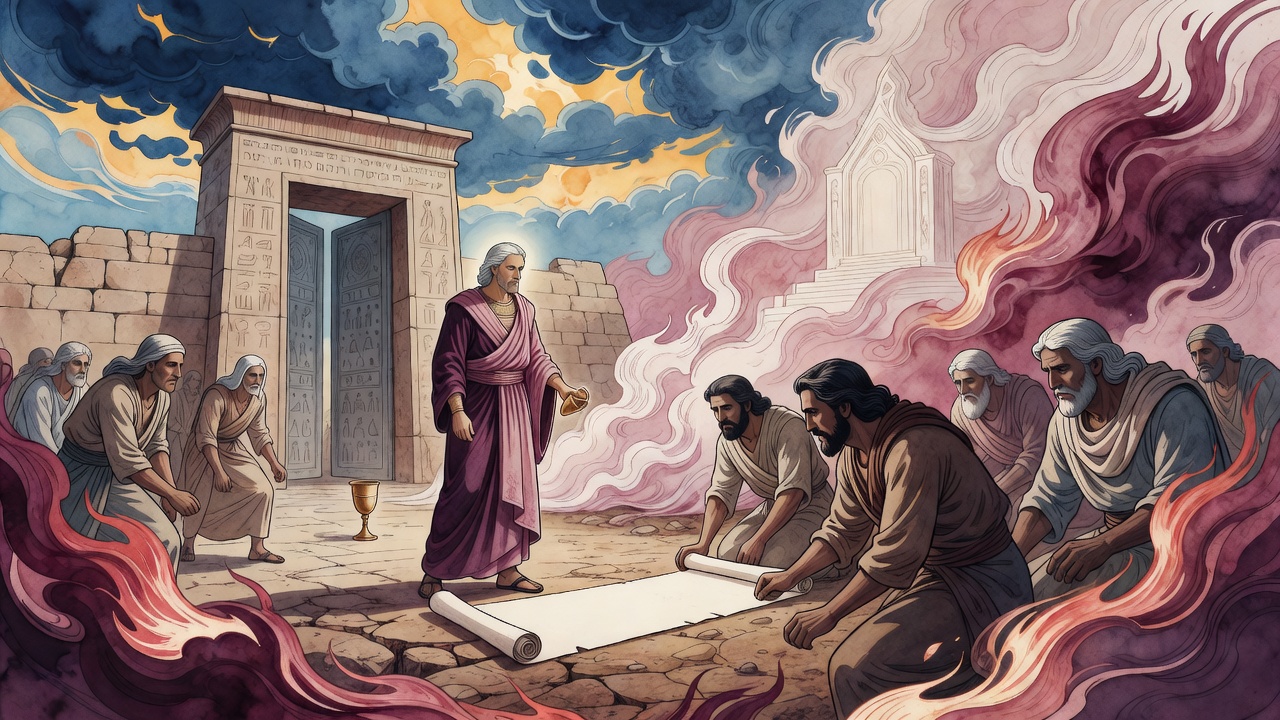
Guards stood at every entrance to the grain city. Their office was simple and merciless. Take the name of every man who came to buy corn. Take the name of his father. Take the name of his grandfather. At night the lists went up to the viceroy. Joseph did not post them for clean books. He posted them so that ten men from Canaan would write their own arrival the moment their feet crossed the border.
On the road those ten spoke more of Joseph than of famine. "We know that Joseph was carried down into Egypt," they said to one another. "We will make search for him there, and if we should find him, we will ransom him from his master, and if his master should refuse to sell him, we will use force, though we perish ourselves." They came as buyers. They came as hunters of a brother they had sold. The lists would catch both missions.
Bows That Finished an Old Dream
When the brothers stood before the viceroy, Judah took Benjamin by the hand and presented him. They bowed to the earth. The dreams of the sheaves and the stars finished their work in that dust. Joseph asked after their father and their grandfather. "Thy servant our father is well; he is yet alive," they answered. From the phrasing he knew Isaac was gone. The grandfather had died when Joseph left prison. Heaven's joy over a freed slave had been cut by grief over a patriarch's grave.
Judah handed over a letter in Jacob's hand. Joseph saw the familiar strokes and had to leave the chamber to weep. When he returned he laid his palm on Benjamin's head. "God be gracious unto thee, my son." Jacob had once spoken of children God had given him before Benjamin's birth. Joseph paid that missing grace now, in a foreign court, over a brother who still thought him a stranger with a throne.
The Cup That Named a Disappearance
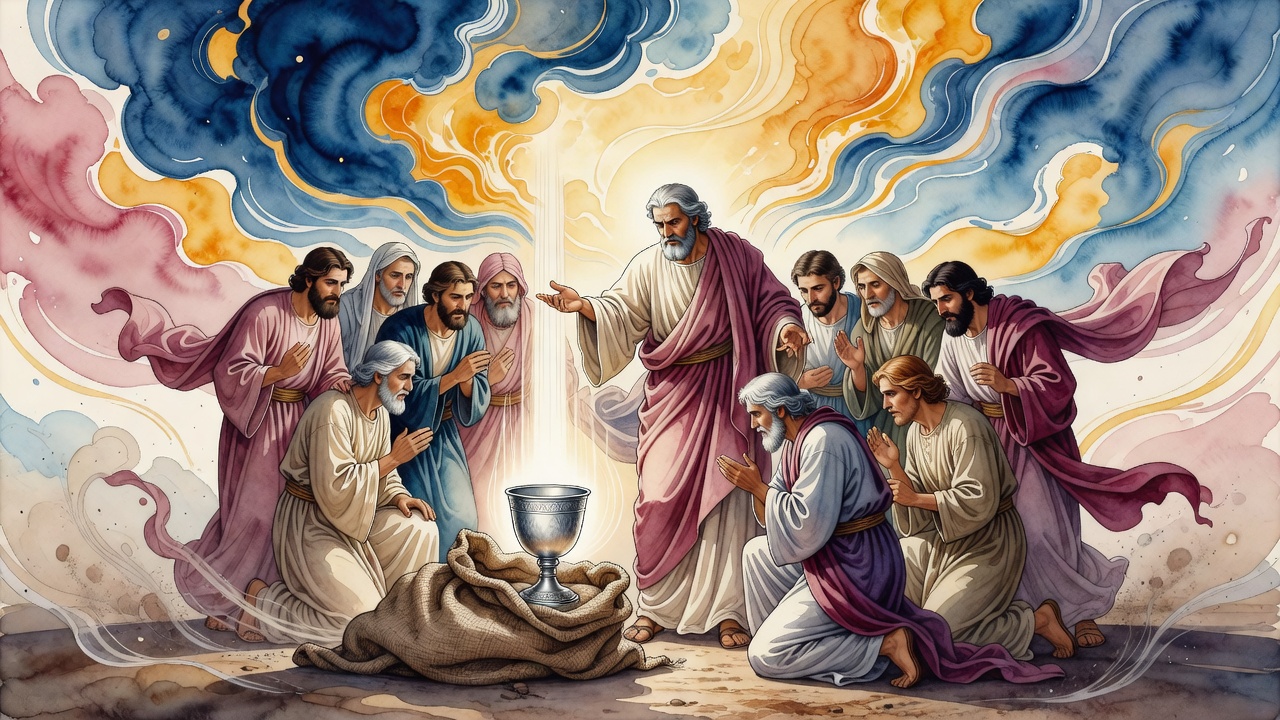
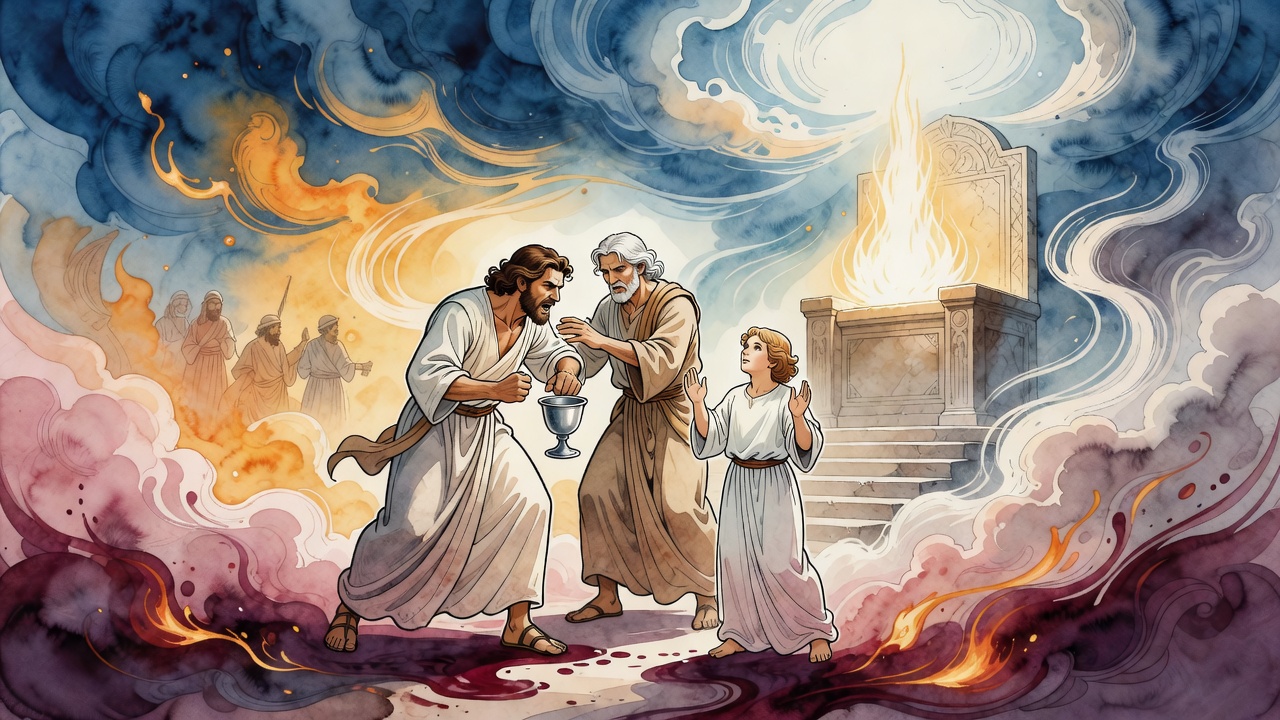
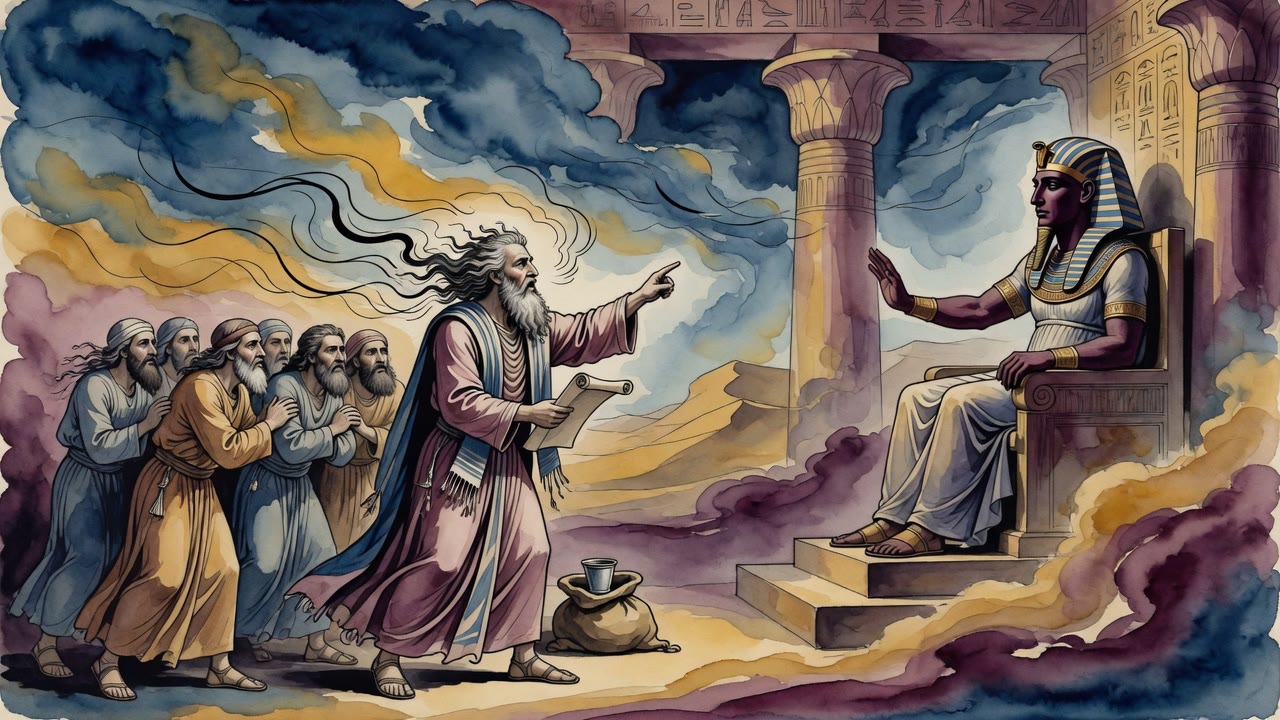
The trap tightened around silver that had already returned twice in the sacks. Joseph sent men after them. When he faced them again, valiant guards at his right and left, he snarled the charge. "What deed is this that ye have done, to steal away my cup? I know well, ye took it in order to discover with its help the whereabouts of your brother that hath disappeared."
He accused them of theft and of magic at once. Divination to find the missing brother. The knife twisted because the missing brother stood in the room, dressed as Egypt, wearing the power they had once stripped from a coat. Judah answered as a man cornered by debts he could not list cleanly. What about the first money in the sacks? What about the second? How could they clear themselves concerning the cup?
"We cannot acknowledge ourselves guilty, for we know ourselves to be innocent in all these matters," Judah said. "Still we cannot avow ourselves innocent, because God hath found out the iniquity of thy servants, like a creditor that goes about and tries to collect a debt owing to him." Two brothers do not enter a house of mirth together, he said, lest the evil eye catch them. But they had all been caught in one place, by reason of the sin they committed in company.
A Debt Older Than Grain
The cup was new. The debt was not. Judah did not name the pit, the sale, the lie carried home in a bloody garment. He named the shape of collective guilt. A creditor who keeps walking until the house pays. Heaven collecting in Egypt what Canaan had refused to settle. The planted silver and the planted cup were Joseph's tools. The confession that they deserved to be found together was Judah's, and it opened the door Joseph had been guarding with lists and with silence.
They had come to ransom a brother. They found a brother who could ransom or condemn them with a word. The divination cup, whether it ever saw futures or only held wine, held something sharper in that hour. It held the old crime up to the light until a spokesman of the family could not keep calling himself clean.
What the Viceroy Was Waiting to Hear
Joseph had built the whole machinery for this speech. Gates. Names. Returned silver. A youngest brother forced into the caravan. A cup in a sack that belonged to the one Jacob loved most. Strategy is not mercy, and it is not cruelty alone. It is a father in Canaan who still bleeds for a missing son, and a ruler in Egypt who will not reveal himself until the brothers prove they will not sell another favorite for silver.
When Judah spoke of a debt heaven was collecting, the trap finished its work without needing more soldiers. The lists at the gate had done their part. The bows had done theirs. The cup had done the rest. Somewhere behind the mask, the boy from the pit listened for the first honest accounting of what ten men had done to one, and for the first time the accounting came out of Judah's own mouth in the language of sin found out.
← All myths