Judah Crushed a Stone to Dust in Front of Joseph
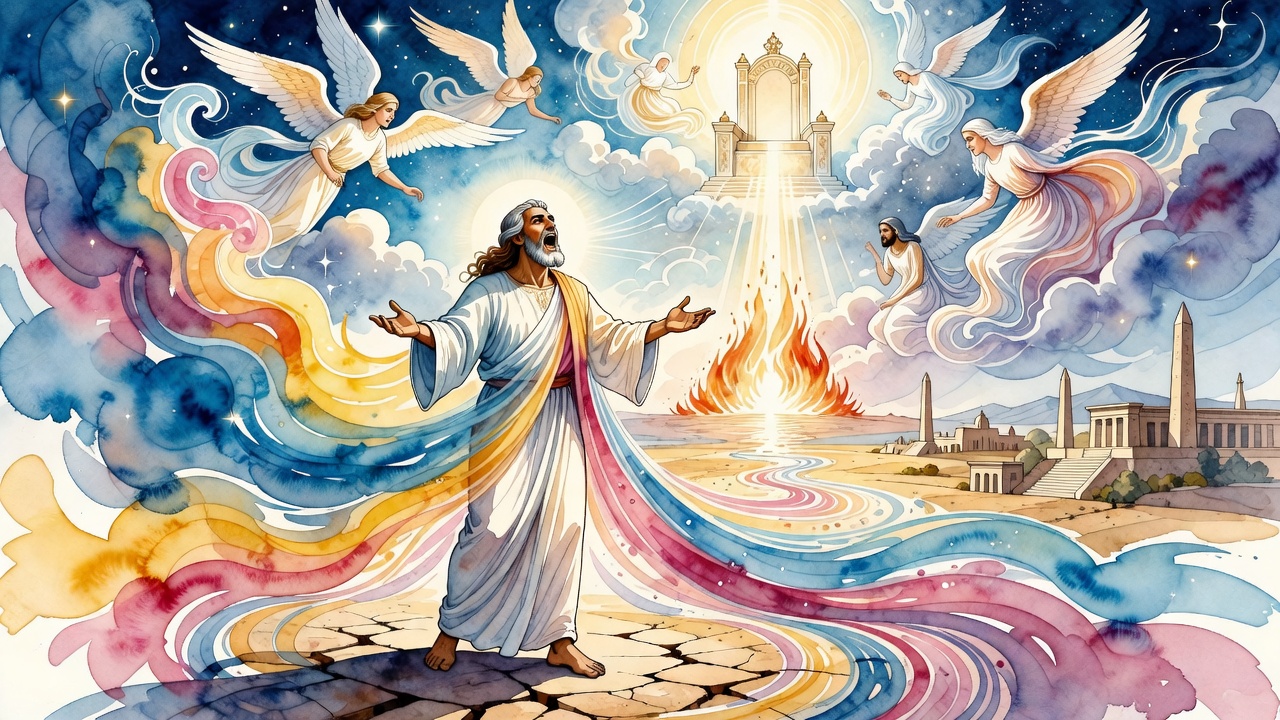
The other brothers stood back and let the two of them go at it. Angels came down out of heaven to watch, and called it a bull against a lion.
Table of Contents
 Click for full size
Judah Broke the Door
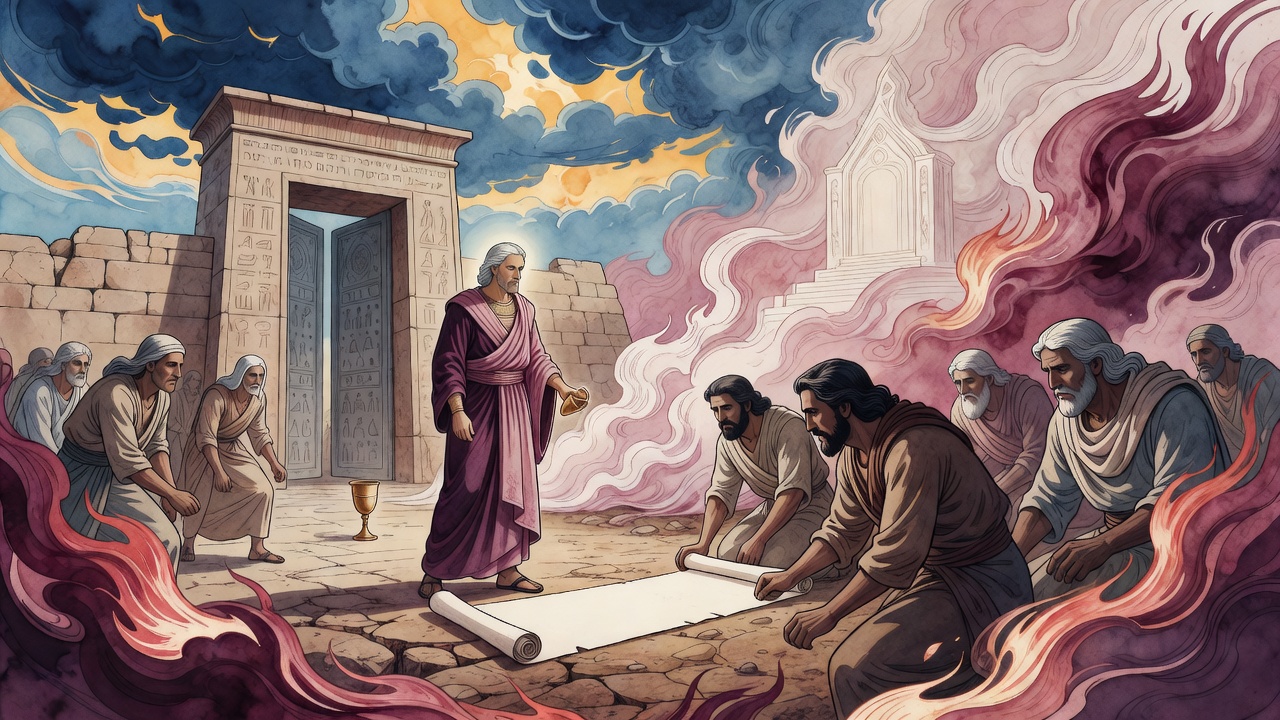
Judah put his shoulder into the door of the viceroy's house, broke it open, and walked in with his brothers behind him.
He started polite. "Let my lord not take it badly. May your servant say one word." Then he dropped it. "Send our brother back with us to our father. If you do not, your soul goes out of you today, and so does every soul in Egypt."
He laid out the family record like a man reading charges. Two of his brothers had taken Shechem apart over one sister, and seven Amorite cities after it, and they would do the same for Benjamin. He was stronger than either of them. And there was the other precedent, older: Pharaoh had once taken Sarah from her husband, and the plagues that came down on that house were still being talked about in Egypt.
Joseph did not move on his throne. "Why have you opened your mouth so wide? As Pharaoh lives, if I send my fighting men at you, you and these brothers of yours sink in the mud."
"As the Lord lives," Judah said, "once I draw this sword I do not put it back until every man in Egypt is dead. I will begin with you and I will finish with Pharaoh your master."
The Brothers Stood Back and Let Them
The rest of them did not step in, and it was deliberate. Reuben, Simeon and Levi were all older than Judah and all of them kept their mouths shut. "Two kings are quarreling," they told each other. "It is not for us to get between them."
Angels came down out of heaven to stand and watch it.
They had seen a bull and they had seen a lion, and they knew which way that goes. "By nature the bull is afraid of the lion," they said to each other. "Look at these two. It is an even fight, and neither of them will stop."
The Stone Went Up and Came Down as Powder
The two of them traded threats until the threats got personal.
"If you open your mouth again," Joseph said, "I have the strength to close it. Look how many stones are lying on this floor. I will drive one into your mouth and break your jaw with it."
"The fire of Shechem is burning in my heart. I will burn your whole country with it."
"Your daughter-in-law Tamar, who killed your sons, put the fire of Shechem out."
"If I pull one hair out of my flesh I will fill Egypt with the blood of it."
"That is how your family works," Joseph said. "You dipped a boy's coat in blood and carried it to your father and told him an animal had eaten him."
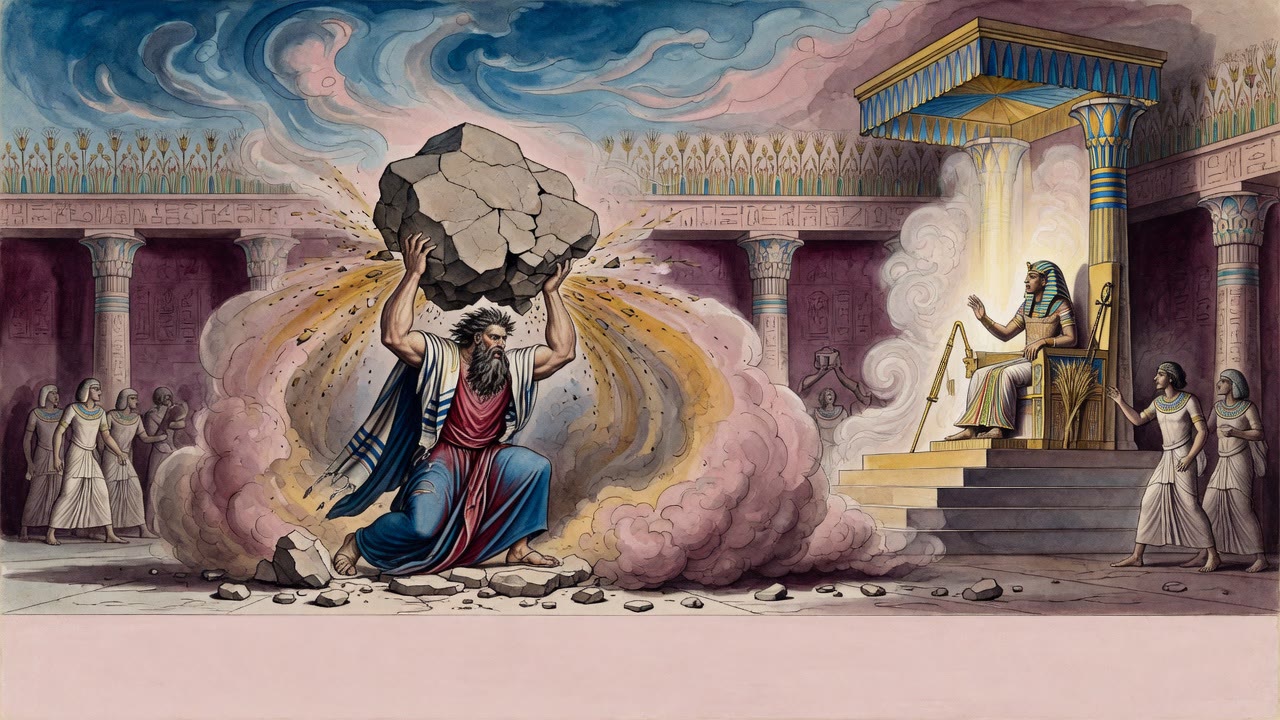
Judah's anger came up in him then and he stopped talking. There was a stone lying on the floor of the hall that weighed four hundred shekels. He picked it up in one hand and threw it straight up out of sight and caught it coming down with his left. Then he set it on the floor, sat down on it with everything he had, and stood up off a heap of powder.
Joseph was frightened, and he covered it fast. He turned to Manasseh his son and told him to do the same, and the boy took another stone and ground it to dust in front of them all.
Judah leaned in to his brothers and said it low. "Nobody say this man is an Egyptian. He did that. He is out of our father's house."
Twelve Streets and One Scream
Joseph sent his son out to raise the city, and the city came.
Five hundred on horseback, ten thousand on foot, and four hundred men who fought with no sword and no spear, only their hands. They came with drums and horns and a shout that put a shake in the ground, and ringed the sons of Jacob until some of the brothers went pale.
Judah looked at them and asked what they were afraid of. Then he sent Naphtali out to count the streets of Egypt, because Naphtali could run over a field of standing grain without bending the ears. Naphtali came back: twelve.
"Put your swords on. I will take three streets. You take one each."
Simeon said he would go up the mountain, tear out one large stone and roll it flat across the whole city. He had wanted things finished before. When Judah sold Joseph to the caravan instead of killing him, Simeon's rage burned for five months, and then his right hand withered for seven days until he understood who had stopped it.
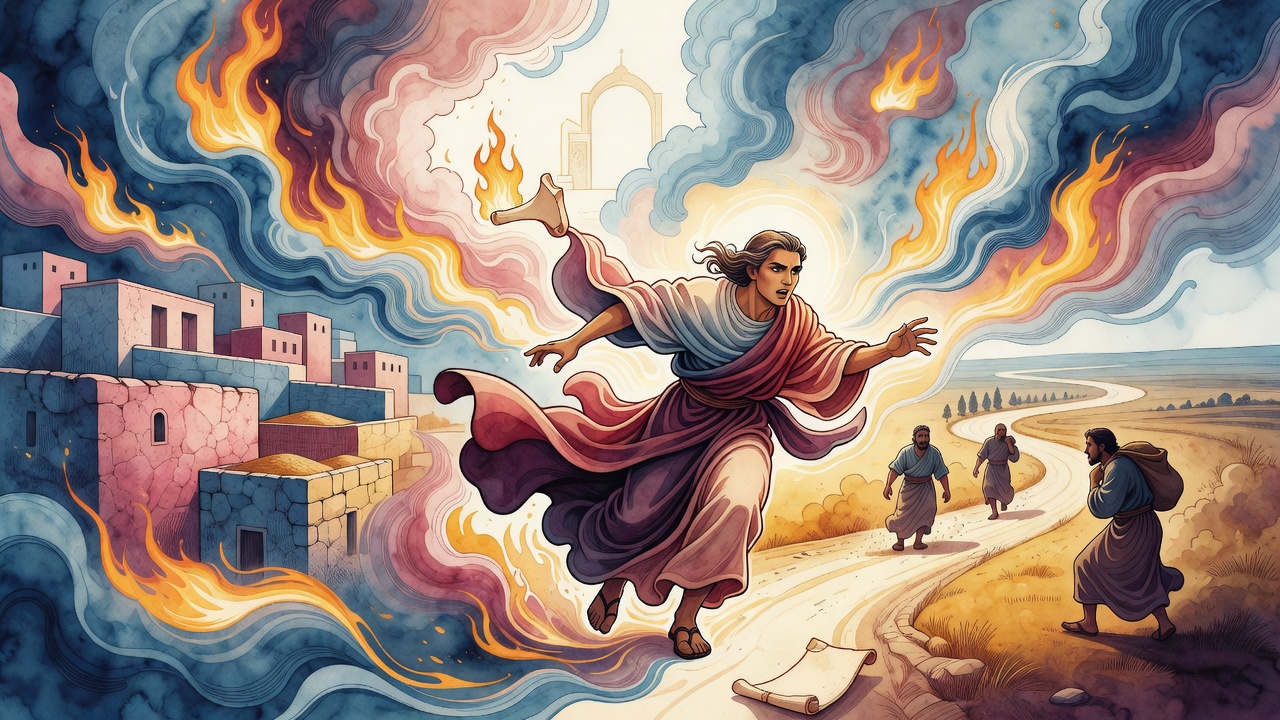
Judah drew his sword and screamed, and the scream did the work. The terror of it fell on the army and they broke and ran over each other, and many of them died in the running, and the brothers chased them all the way to Pharaoh's gate.
Then Judah came back, sat down in front of the viceroy, and roared at him like a lion.
They heard it in Succoth. The walls of Egypt and the walls of Goshen came in off their foundations. Pharaoh came off his throne onto the floor of his own palace. Every pregnant woman in Egypt and Goshen lost the child in her. Pharaoh sent word to his viceroy. "Get rid of that thieving slave and his brothers before they finish us. And if you will not do it, then take everything of mine that you want and go back with them to their country."
The Room Emptied
Joseph came down off the seat and spoke to Judah quietly, and asked him why this one boy mattered so much.
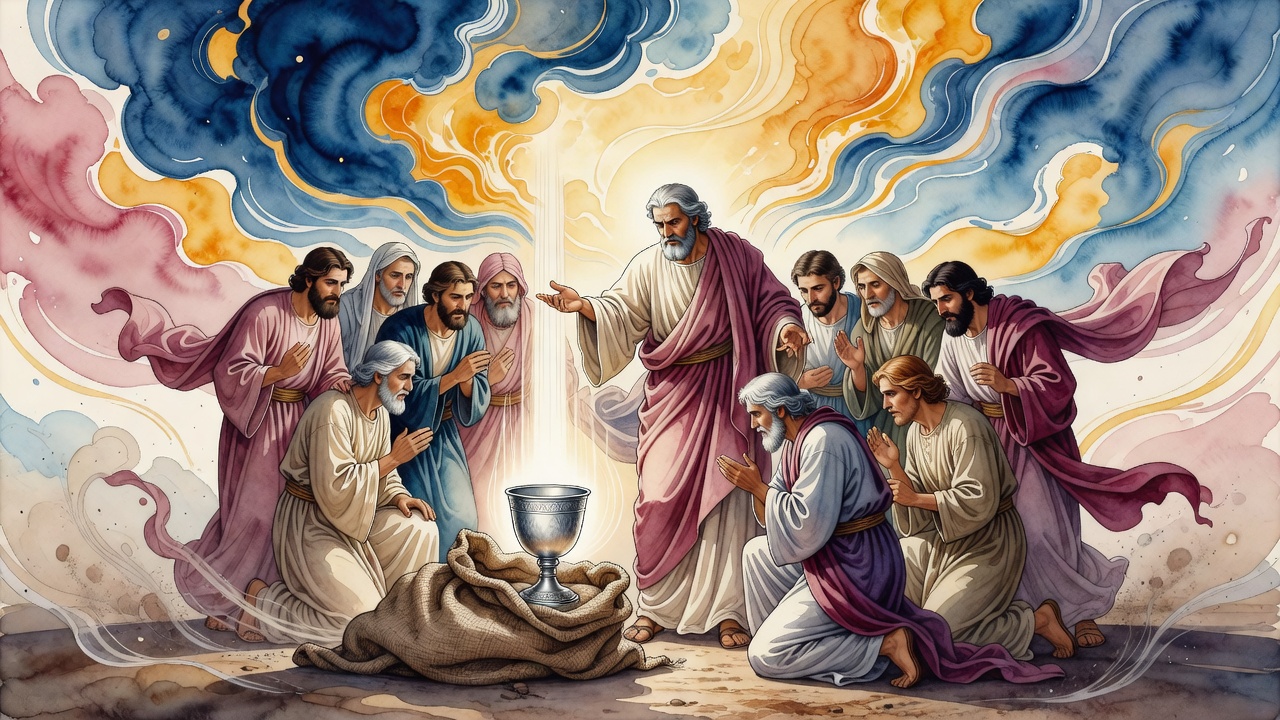
So Judah told him about the old man at home who had already buried one son of that mother, and about the promise he had made to bring this one back, and what he had put up as security. Let me carry the blame forever, in this world and the world to come. "Take me instead. Keep me here as your slave and let the boy go up to his father."
Joseph cleared the hall. Every Egyptian out, the guards out, the door shut.
"I am Joseph, whom you sold into Egypt."
Then he wept so loudly that the men he had just sent outside stood in the corridor and heard all of it.
← All myths