Joseph Listed His Master's Trust and Refused Potiphar's Wife
Grain jars, door bolts, accounts, the order of the servants: an Egyptian officer's whole house hung on a slave his brothers had sold.
Table of Contents
 Click for full size
Keys in a Slave's Hand
Joseph found favor in his master's eyes and served him, and Potiphar appointed him superintendent over his house, and all that he had he delivered into his hands. The Hebrew is brisk. The rooms of an Egyptian officer suddenly answered to a Hebrew sold by his brothers. Grain jars, accounts, door bolts, the order of servants: all of it hung on a young man who still remembered a coat dipped in blood that was not his.
From the time he was set over the house, the Lord prospered the Mizraite for the sake of the righteousness of Joseph. Blessing entered foreign rooms the way light enters a shut shop when someone finally unbars the door. Potiphar grew richer because Heaven attached increase to a steward who would not steal.
The Day She Spoke
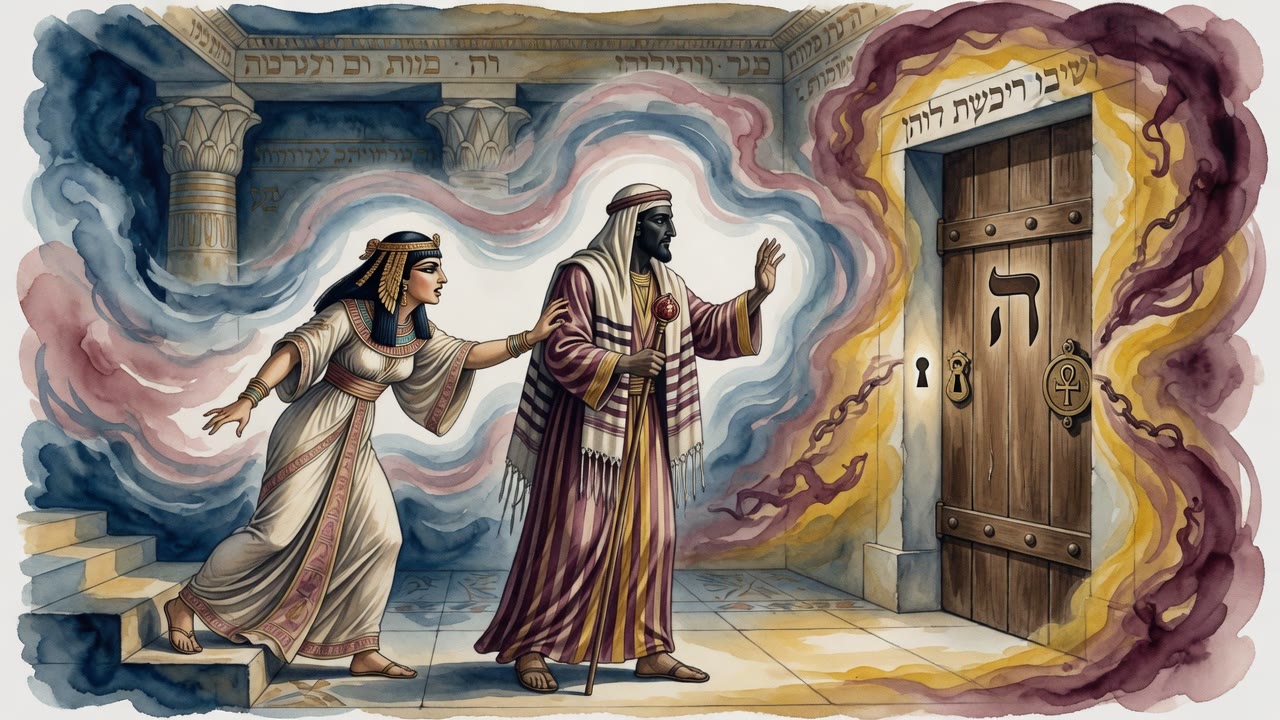
Potiphar's wife did not argue theology. She asked for a body. Joseph's answer came out like a ledger read aloud. Behold, my master taketh no knowledge of what is with me in the house, and all he hath he delivereth into my hand. He listed the trust before he named the sin. The refusal was not a scream. It was an inventory. Every key he held became a reason he could not take the one thing not given.
How then can I do this great wickedness and sin against God? The last line rose above the master to the Master. The house was Potiphar's. The judgment was Heaven's.
Discipline Older Than Egypt
He did not resist because desire had never touched him. He subdued his inclinations by the strong discipline he had received from Jakob. Years before the pit, before the caravan, before the Egyptian title, Jacob had trained a son in mussar that could stand alone in a foreign corridor. When no father was in sight, the training was still in the muscles of choice.
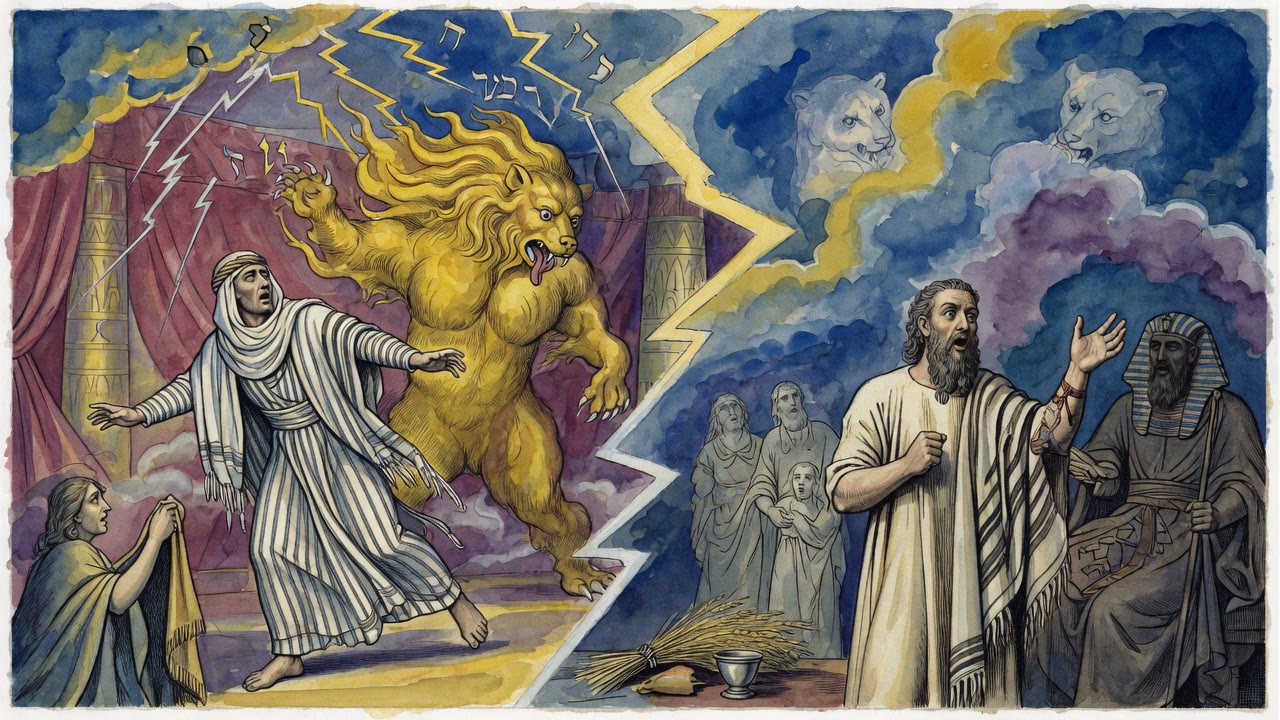
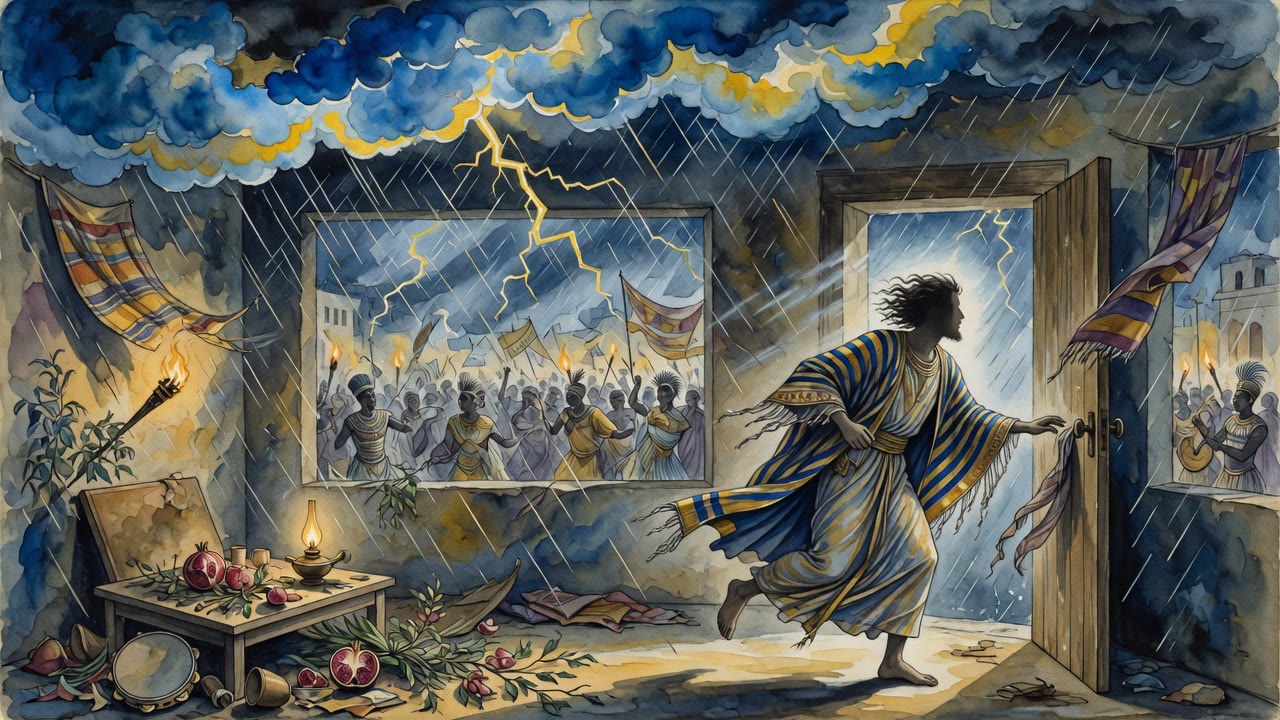
The cloak would later be left in her hand. The story would turn ugly with false witness. The discipline held long enough for Joseph to run, which is sometimes the only victory available in a hallway.
Blessing and Accusation in One House
The same house that prospered for his righteousness also became the stage for his slander. Increase does not always protect the righteous from the powerful. It only proves, after the fact, that Heaven's favor was never identical with human safety. Joseph went down to the prison with the inventory of trusts still true and the wife's story louder in the streets.
Potiphar's wealth had been a testimony. Joseph's chains became another. Both said the steward had been real.
A Name Worth Engraving Later
The Aramaic looks forward from the refusal. Because he returned to his early strength and would not yield to sin, he became worthy of being a ruler and of being joined in the engraving of the names upon the stones of Israel. The ephod's stones were still centuries from the wilderness, yet the Targum hangs them on this moment. A boy who could recite a household trust under pressure becomes a man whose name belongs on holy gems.
Egypt taught him power. Jacob had already taught him how not to spend a soul on a stolen hour. The ledger he spoke in the corridor was the first draft of a ruler's conscience.
What the Inventory Protected
Listing the master's goods was a way of listing his own soul's borders. If everything in the house was delivered into Joseph's hand except the wife, then the exception was the whole moral map. He did not claim angelic coldness. He claimed jurisdiction. Some doors open under a steward's key. One door must stay shut under Heaven's eye even when a powerful woman holds the latch from the other side.
Jacob's discipline made that map portable. A father in Canaan could not stand in an Egyptian corridor, but years of training could. The Targum refuses to let later readers turn Joseph into a statue of purity with no history. He returned to early strength. He subdued inclination. He became worthy of rule and of a name on priestly stones because he practiced refusal when refusal cost him his cloak and his reputation.
Blessing had already entered Potiphar's house for Joseph's sake. The wife tried to spend that atmosphere on desire. Joseph spent it on loyalty. When the false charge came, the prosperity of the house stood as silent witness that the steward had been building, not stealing. Prison would be the next room in the same curriculum. The inventory spoken in the hallway remained the true account, even when the court preferred a louder lie.
He could have framed the refusal as personal distaste and left the theology out. He refused that shortcut. By naming the master's full trust and then God's claim above the master, he made the sin impossible to rebrand as a private romance. It was theft of a house, betrayal of a man, and rebellion against Heaven in one reach of a hand. That is why the inventory had to be spoken before the no.
← All myths