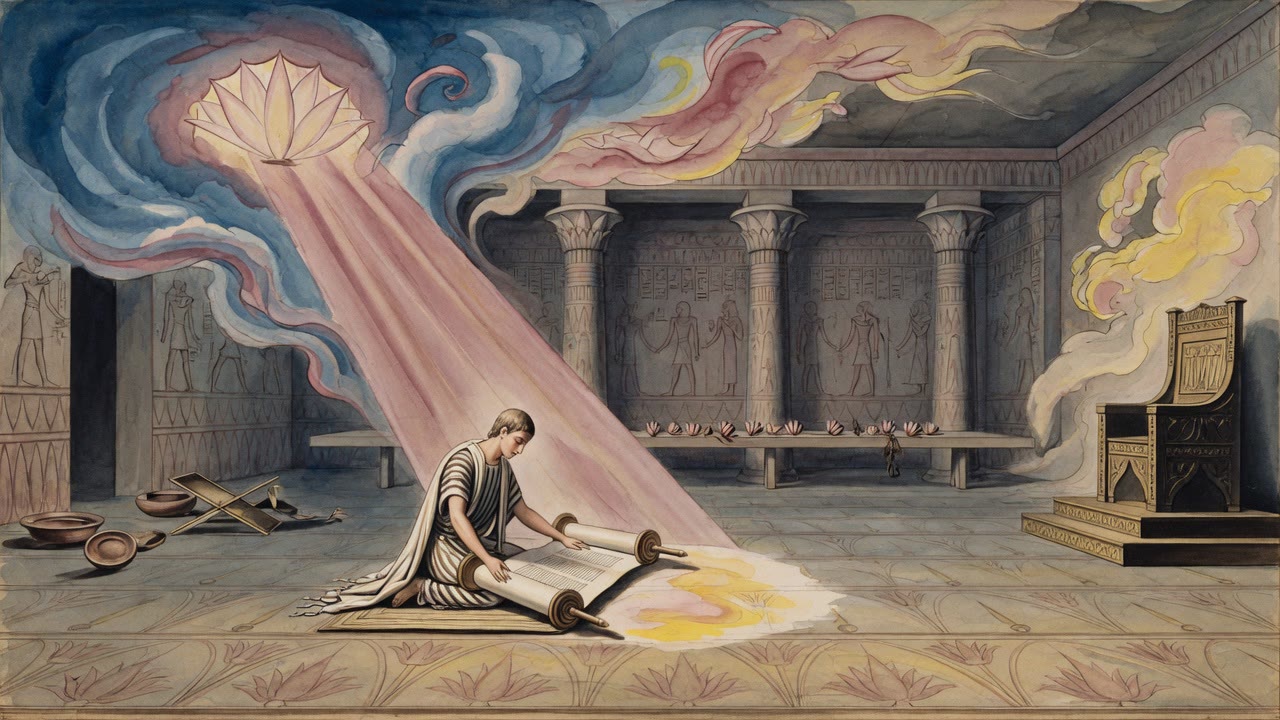
Joseph Left His Garment Behind and Leapt Free
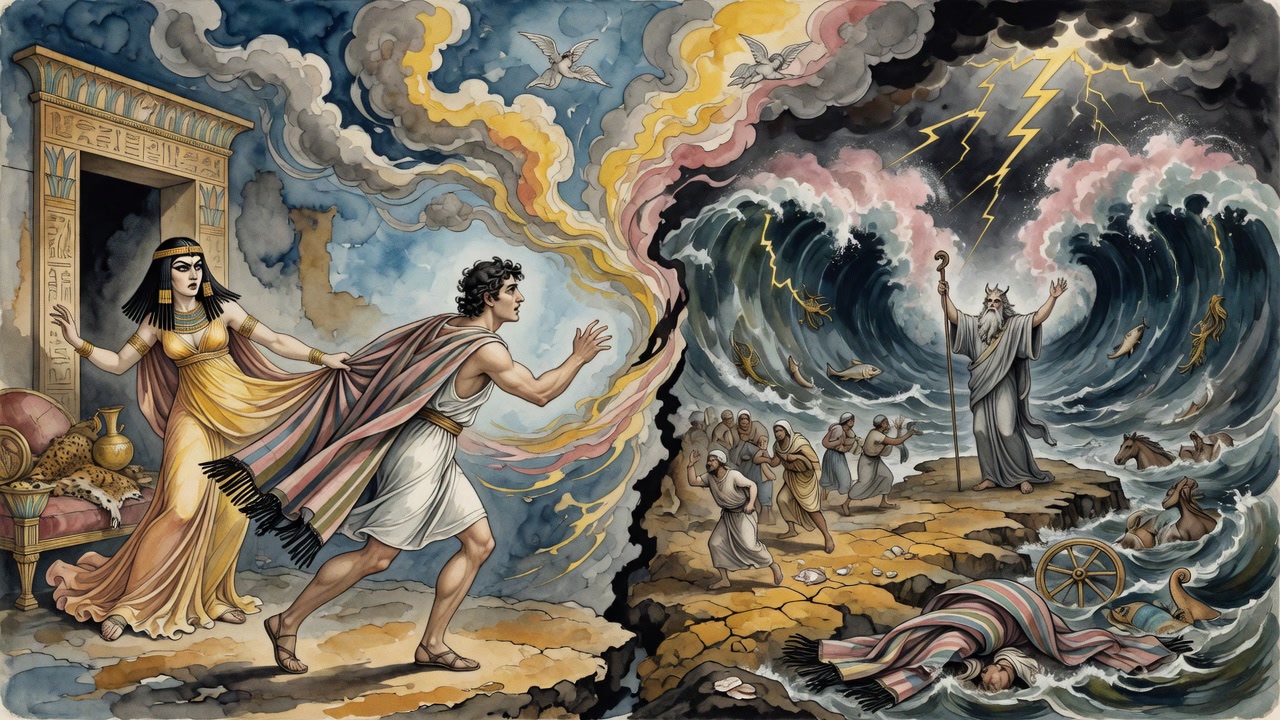
She got a fist into his linen at the shoulder. He twisted. The garment stayed in her hand. He went out with his back bare.
Table of Contents
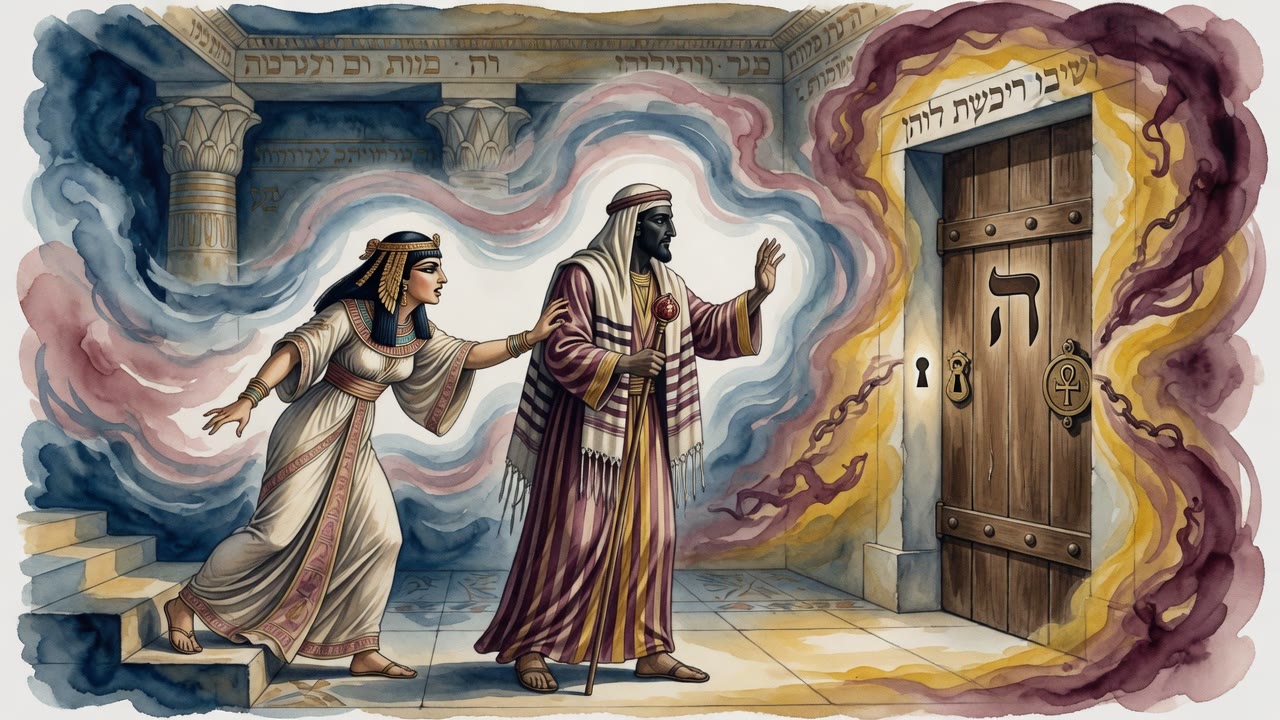
She got a fist into his linen at the shoulder and said it in four words.
 Click for full size
"Lie with me."
The Cloth Came Off in Her Hand
Joseph did not answer her. He twisted, hard, and the garment came away from him and stayed in her hand, and he went out of the room with his back bare and his sandals slapping on the tiles.
It was the middle of the day. Not one of the men of the house was inside the house. Nobody was ever meant to walk in on anything. (Genesis 39:12)
He Leapt Outside
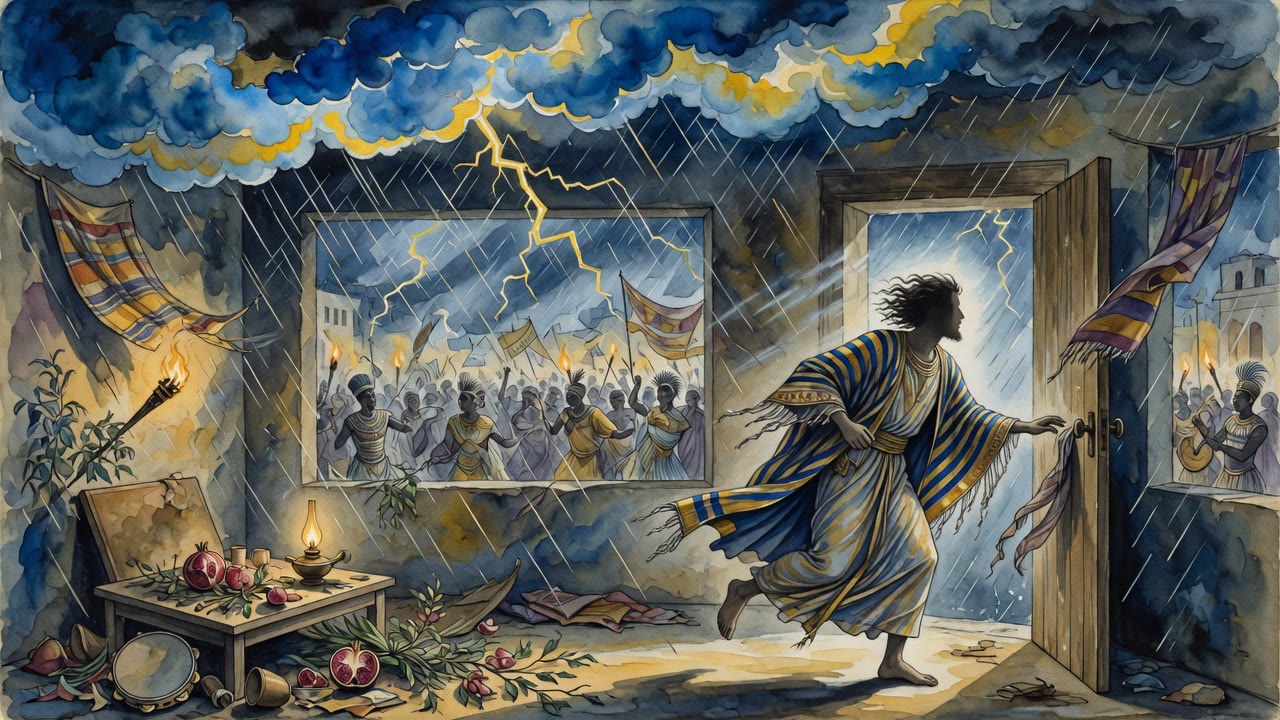
He did not walk out of that room. He leapt, and what threw him was not his own legs.
God had taken Abraham outside once, at night, and stood him under the stars and told him to count them if he could. (Genesis 15:5) Three generations later his grandson went out the same door at a dead run, on the same word, outside.
The courtyard stones were hot enough at that hour to feel through leather. A porter looked up and saw the Hebrew steward crossing the yard half undressed and had already started inventing a reason by the time Joseph reached the gate.
He had run that house. Every jar, every field, every account, every key, everything except one room. He lost all of it in the two seconds it took to twist out of a garment, and he did not slow down to weigh the trade.
She Kept the Garment All Afternoon
She called the household in and told them what had happened, and then told them again, and made each of them able to say it back to her.
See, he brought us a Hebrew man to make sport of us. He came in to lie with me and I cried out with a loud voice.
By the time Potiphar got home that evening every servant on the property had the same sentence ready in the same order, and not one of them stumbled over it.
She kept the garment beside her the whole afternoon so she could hand it to him when he walked in. And in those hours before he came, alone in the room with it, she hugged it and kissed it.
Then she gave it to her husband as evidence. Joseph went to the round house where the king's prisoners were kept, and they put iron on his feet.
A Letter Slid Into His Name
Nobody in Egypt said a word in his defense.
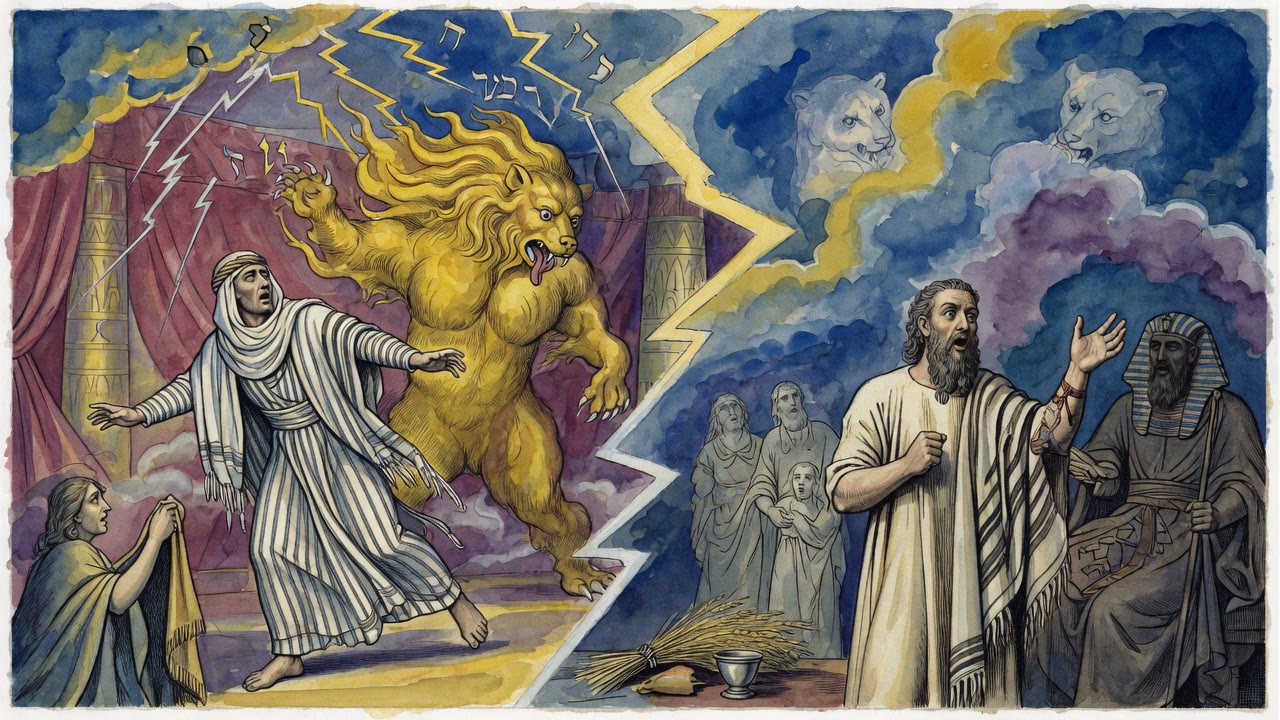
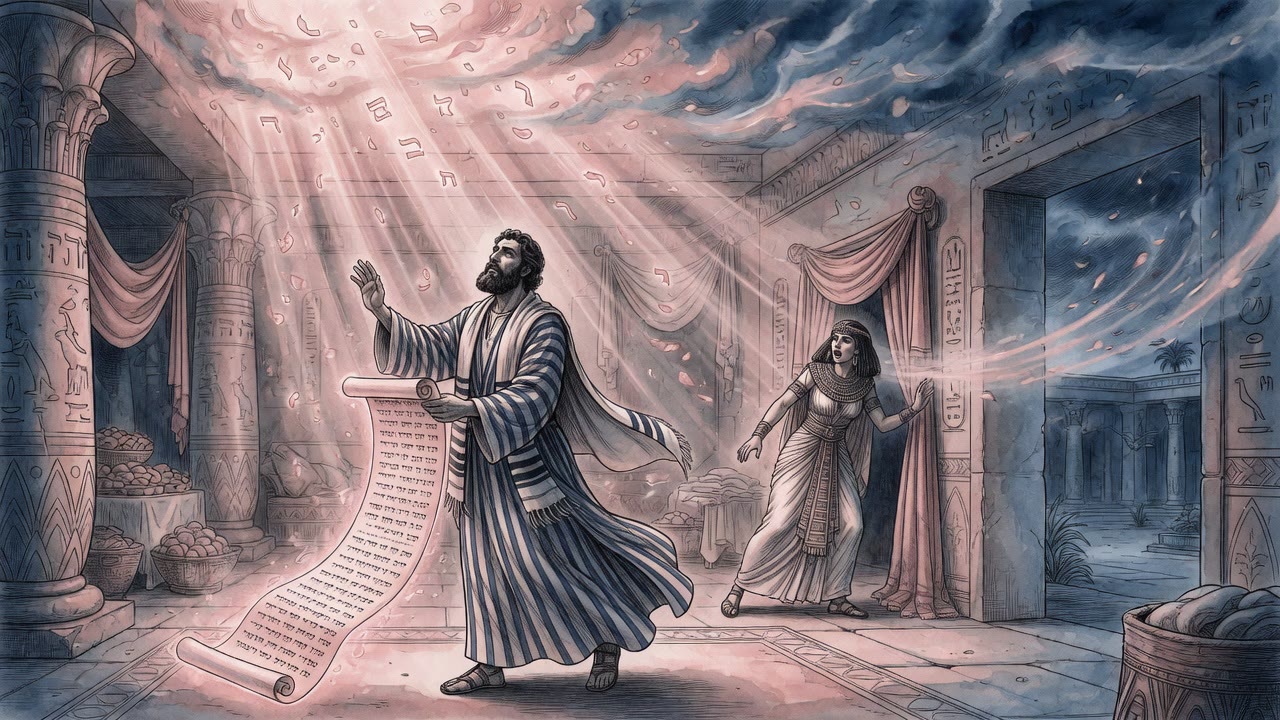
The defense got entered somewhere else, and it was entered in the spelling of his name. In the psalm about the new moon and the festival, his name comes out one letter longer than it should be. Not Yosef. Yehosef. (Psalm 81:6) The extra letter is God's own, taken off the front of the divine Name and slid into the middle of a man's, and what it is doing in there is testifying. He did not touch Potiphar's wife.
He was not the only one carrying a verdict around in his name.
Yael threw a covering over Sisera in her tent before she put the peg through his skull, and the word for that covering, semikha, turns up nowhere else in the entire Hebrew Bible as the name of any object. Reish Lakish read it as two words instead of one. My name is here. God's name pitched inside her tent, on the record, that the man never touched her. (Judges 4:18)
And Palti, who was handed King Saul's daughter Michal while her husband David was still alive and did not lay a hand on her for all those years, is called Palti in one book and Paltiel in another. He married her as Palti. He gave her back as Paltiel. The whole difference between the two names is El.
The Sea Saw and Fled
Generations later, on a night with an army behind them and open water in front of them, the sea got out of the way.
The psalm says the sea saw and fled. (Psalm 114:3) It does not say what the sea saw. Joseph's bones were in the column that night, carried up out of Egypt in a coffin because he had made the children of Israel swear they would not leave him behind, and what the water saw was a man who had left his garment in a woman's hand and fled. It recognized the move. It did the same thing.
He got none of that in the prison. Chains do not feel like a splitting sea. He sat there year after year on a false charge, in a country where every witness had been coached, with the garment folded away in a rich woman's chest, and the only thing he had was the fact of what he had not done. Nobody in Egypt believed it. It was already written into the middle of his name.
← All myths