Parshat Vayeshev5 min read

Joseph Fled a Woman and the Sea Fled for His Bones

The Red Sea did not split because Moses raised his staff. One rabbi traced it to a single act of moral courage Joseph made in a private room centuries before.

Curated by Arthur · Told by Maggid ·
Table of Contents
  1. A Private Room in Egypt
  2. What Shimon of Kitron Taught
  3. What Joseph Saw
  4. The Bones That Traveled

A Private Room in Egypt

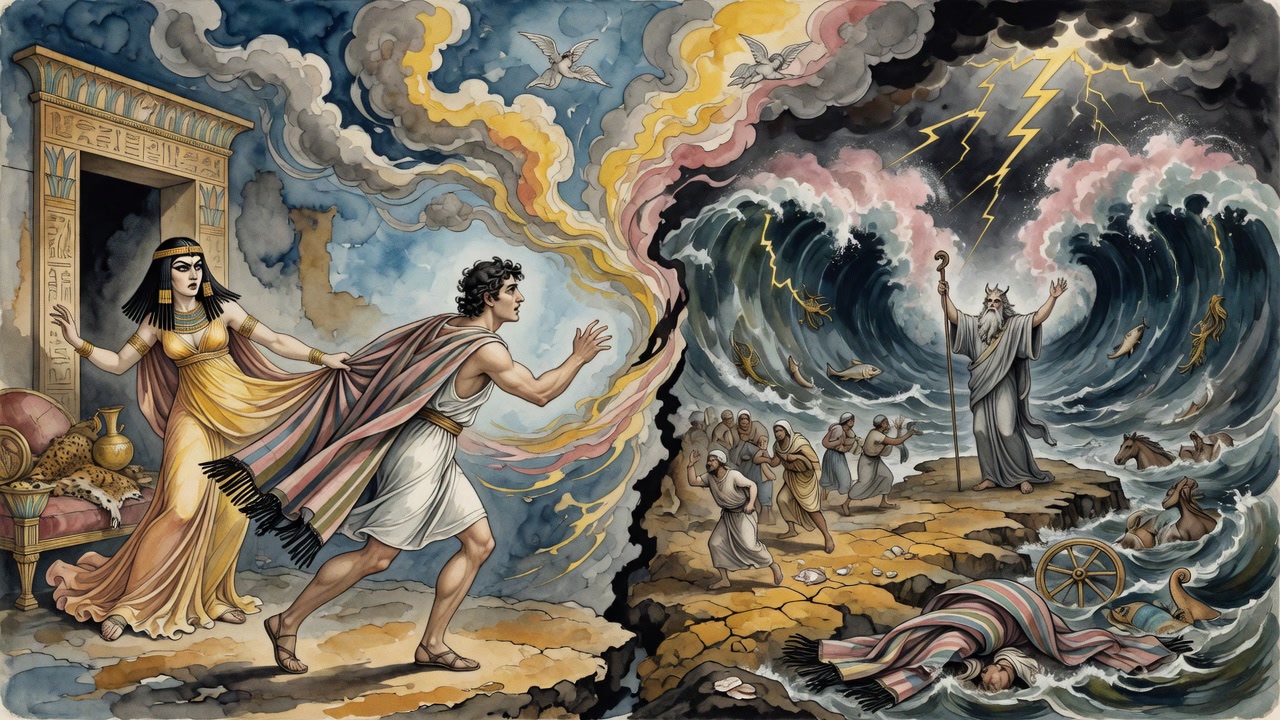
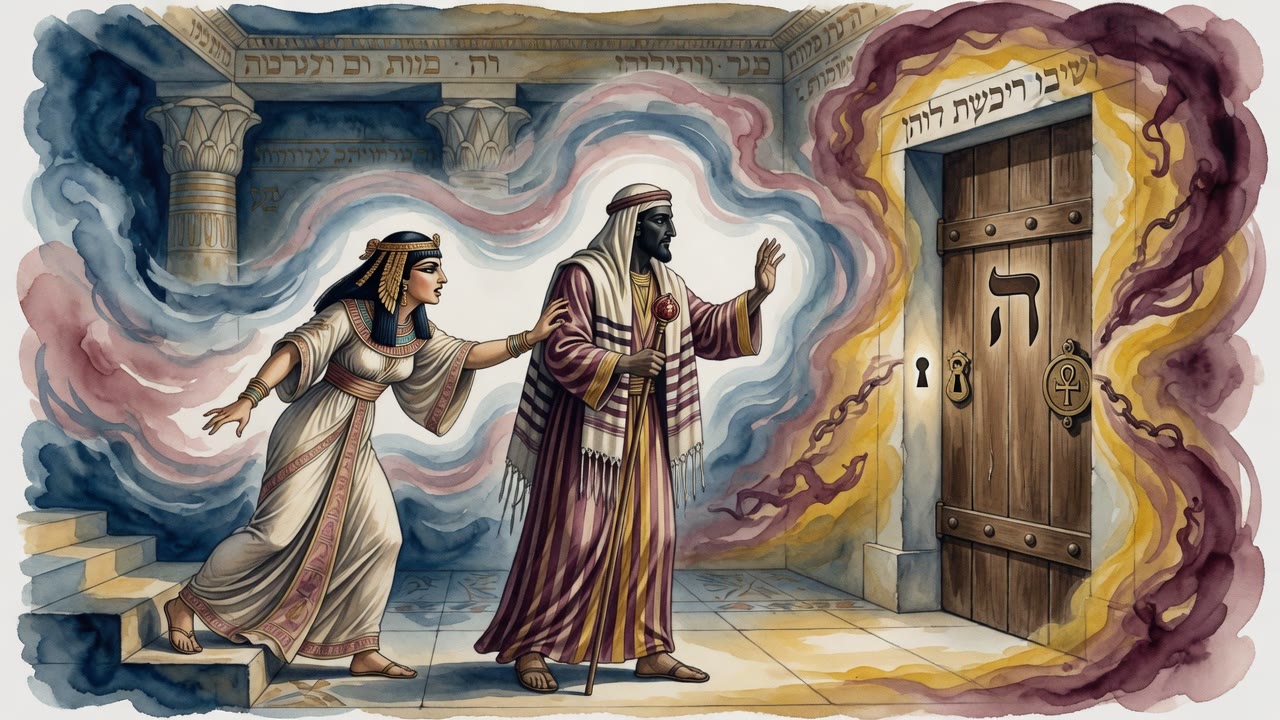
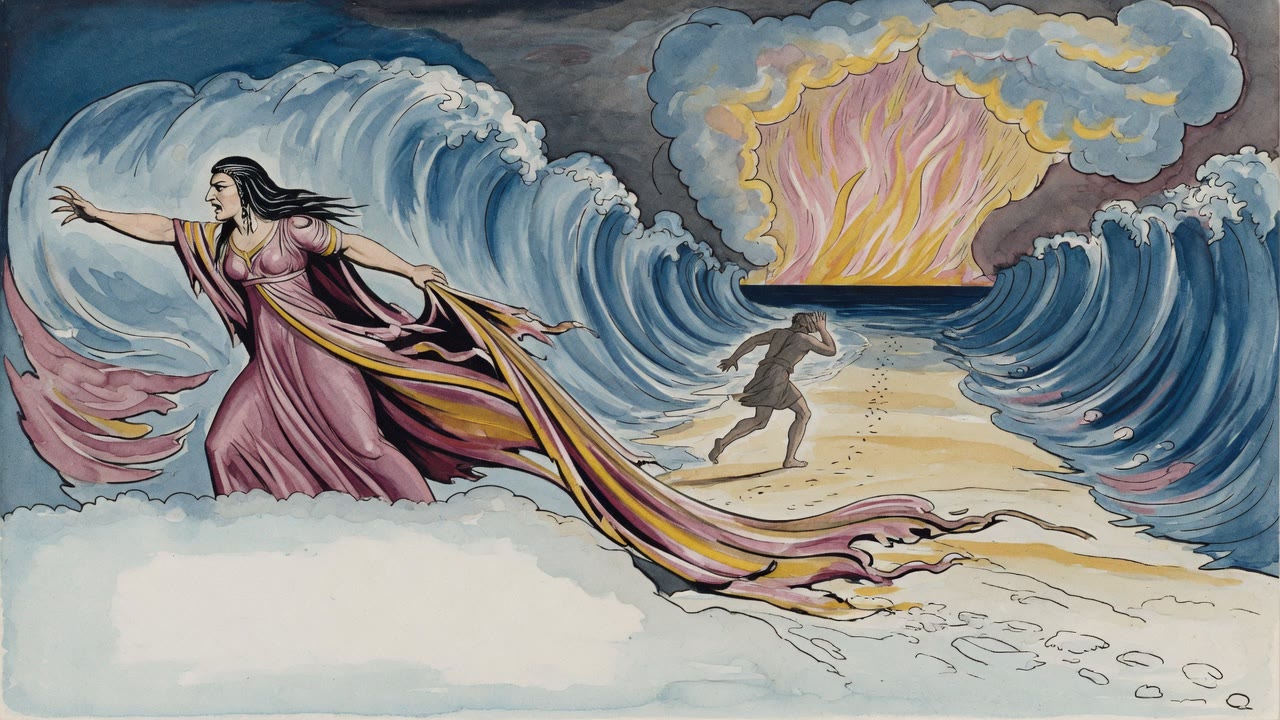
It happened in a room that no one else saw into. Potiphar's wife had been working toward this moment for a long time, wearing down the young man's resistance through daily proximity and daily pressure, finding him alone, finding him in circumstances where refusal carried risk. She grabbed his garment. He left his garment in her hand and he fled.

The word the Torah uses for his running is vayanas. He fled. He ran out of the room and out of the house and into the street and away from what she was offering and what she was threatening. He was a slave. She was his owner's wife. Refusing her was dangerous, and he refused anyway, and then he ran. The garment stayed behind in her hand and became the evidence she used to destroy his reputation and send him to prison. He ran straight into years of imprisonment over his own act of virtue.

What Shimon of Kitron Taught

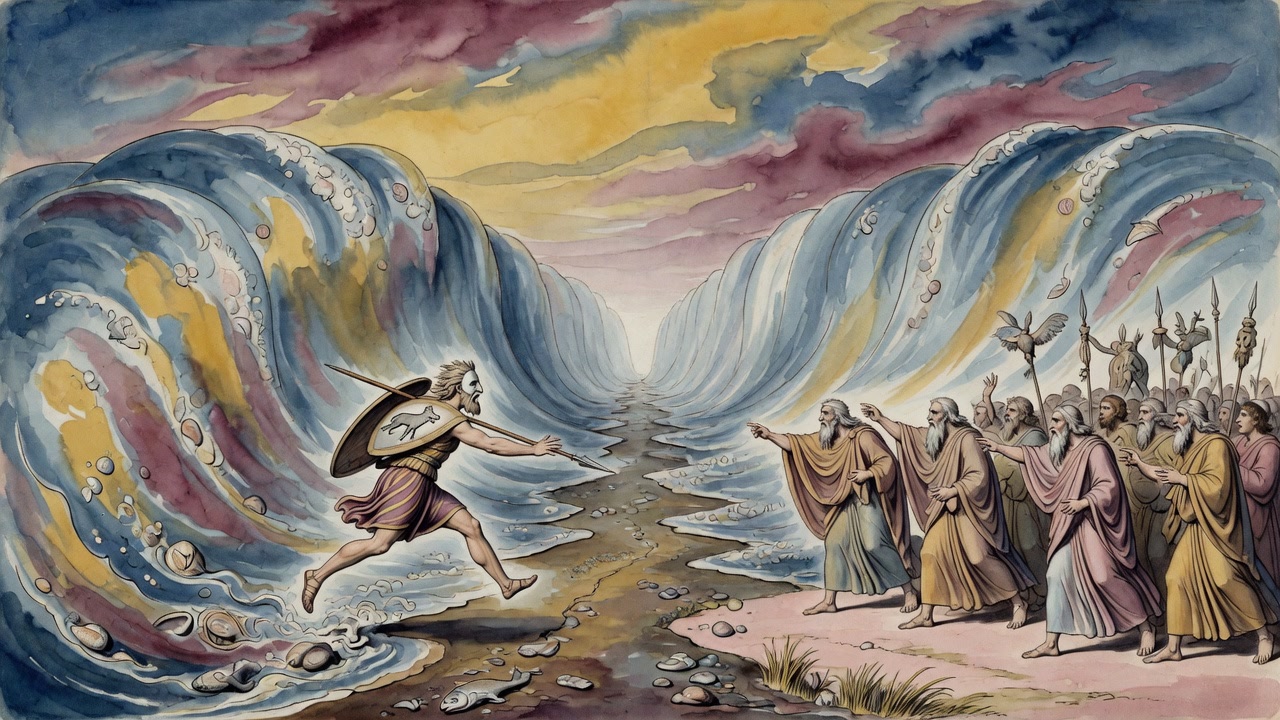
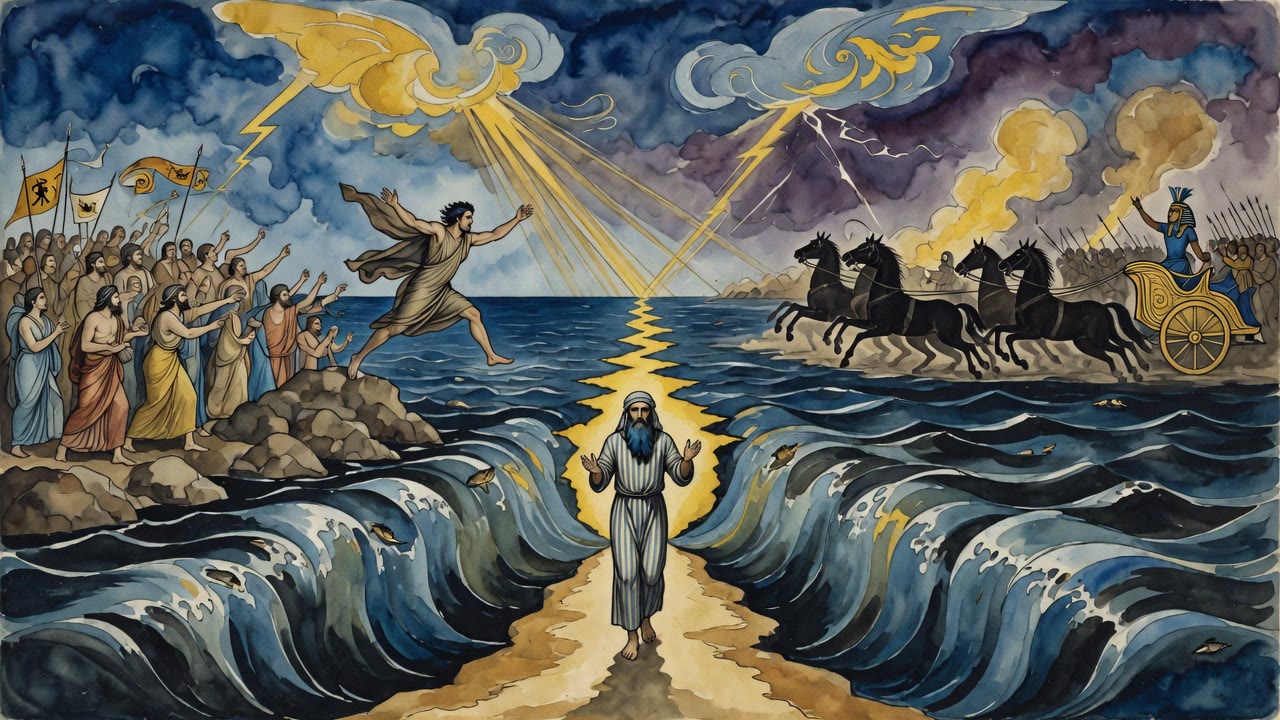
Centuries later, at the edge of the Red Sea, the Israelites were trapped between the water ahead and Pharaoh's army behind. Moses raised his staff. God drove back the waters with a strong east wind. The sea split and the Israelites walked through on dry ground and the army that followed them into the gap was swallowed when the waters returned. It is the central miracle of the Exodus, the event that more than any other defines what divine intervention in history on behalf of Israel looks like.

Shimon of Kitron, whose teaching is preserved in the Mekhilta DeRabbi Yishmael, the tannaitic legal and narrative commentary on Exodus, taught that the miracle had an older cause. God said: in the merit of the bones of Joseph, I will split the sea for them. The sea did not split because of Moses raising his staff or because the Israelites cried out or because God simply decided the moment had arrived. It split because of what had happened in a private room in Egypt more than two centuries before the Exodus. It split because a young man ran.

The connection is built from a pair of verses that share a single Hebrew word. In Genesis 39:12, when Joseph fled from Potiphar's wife, the Torah says vayanas, he fled. In Psalm 114:3, describing the splitting of the sea, the text says the sea saw and fled, vayanos. The sea fled because Joseph fled. One act of moral courage, invisible to every human witness, had purchased a miracle that saved an entire nation from a pursuing army.

What Joseph Saw

Aggadat Bereshit, a later midrashic collection, preserves a teaching on how Joseph endured the years in Egypt before the sea splitting, before any of the redemption. The text frames it through the complaint of Israel in exile, the words from Isaiah: my way is hidden from the Lord, my justice has passed away from my God. The whole nation's despair condensed into one verse. He has forgotten us. The exile has gone on too long.

Rabbi Shmuel reframes the complaint with a verse from Lamentations: why should a living man complain about his sins? The answer is that a complaint arising from your own choices is not a complaint you have standing to make. But the rabbis acknowledged the distinction between suffering that comes from your own decisions and suffering that feels disproportionate to anything you have done. The first requires repentance. The second requires patience and a longer view. Joseph in prison had both kinds of suffering at once, the long consequence of his own brothers' hatred and the daily weight of a false accusation he had done nothing to deserve. He waited. The teaching is that the waiting was also being recorded somewhere, also accumulating toward something.

The Bones That Traveled

When Joseph was dying in Egypt, he made his brothers swear: when God remembers you and takes you up out of this land, carry my bones up from here. Moses, four hundred years later, was the one who went to find the bones before the Exodus. He knew where to look because Serach bat Asher, who had been alive when Joseph was buried, was still alive and remembered. Moses took the bones out of Egypt in a casket, and the casket traveled with Israel through forty years of wilderness and across the Jordan and into the land Joseph had never seen as a free man.

The sea had split for those bones. The bones of the man who had fled in a private room, who had gone to prison for his virtue, who had waited in prison for two years after the cupbearer forgot him, who had interpreted Pharaoh's dream and saved Egypt and saved his brothers' lives and forgiven the people who had sold him. The sea looked at those bones and it fled. The verb in the psalm is the same verb Joseph used on his way out of Potiphar's house. One act in one room, centuries before. The sea remembered.


← All myths
From the tradition

Sources

3 sources

The texts this telling draws on, in full. Open a card to read inline, or expand it for a wider, quieter read.

Aggadat Bereshit 61Aggadat Bereshit

Jacob said: "My way is hidden from the Lord, and my justice has passed away from my God" (Isaiah 40:27). This was Israel speaking, the whole nation's complaint condensed into one verse. The Holy One is not paying attention. He has forgotten us. Exile has gone on too long.

Rabbi Shmuel reframes the complaint with a question from Lamentations: "Why should a living man complain about his sins?" (Lamentations 3:39). The answer is: he shouldn't, because the complaint that comes from your own sins is a complaint you have no standing to make. But the rabbis were not heartless, they acknowledged the distinction between suffering that comes from your own choices and suffering that feels disproportionate to anything you've done. The first requires repentance, not complaint. The second requires patience, and maybe prayer.

Rabbi Shimon goes further: "Why should a person complain? Is it not enough that he is alive and sees this sun?" The point is not toxic positivity, it's perspective. The exile is real. The suffering is real. But the capacity to question God, to bring the complaint before the heavenly court, to use Isaiah's words to frame your grief, that capacity itself requires being alive. The very complaint is the evidence of the life that makes the complaint possible. Jacob was not forgotten. The fact that he could say "I have been forgotten" was proof that something was still listening.

Full source
Mekhilta Tractate Vayehi Beshalach 4:19Mekhilta DeRabbi Yishmael

The Mekhilta DeRabbi Yishmael preserves a remarkable teaching by Shimon of Kitron about why God split the Red Sea for Israel. The answer has nothing to do with Moses raising his staff or the Israelites crying out in prayer. It goes back to a single act of moral courage performed by one man generations earlier: Joseph.

Shimon of Kitron taught that God said: "In the merit of the bones of Joseph, I will split the sea for them." The connection between Joseph and the sea is established through a pair of verses linked by a single Hebrew word. In (Genesis 39:12), when Potiphar's wife grabbed Joseph's garment and tried to seduce him, the Torah says "he left his garment in her hand and he fled", vayanas, he fled. In (Psalms 114:3), describing the splitting of the sea, the text says "the sea saw and it fled", vayanos, it fled.

The same Hebrew root, nus, meaning "to flee," appears in both verses. Joseph fled from sin. The sea fled from Israel. Shimon of Kitron reads this verbal parallel as a causal connection: because Joseph fled from temptation, the sea would later flee before his descendants.

This teaching carries a powerful moral lesson. The greatest miracle in Israelite history, the splitting of the Red Sea, was earned not by military might or political negotiation but by one man's private decision to resist temptation. Joseph was alone in a room with Potiphar's wife. No one was watching. He could have given in and no human would have known. But he fled, and that act of fleeing rippled forward through the centuries until the waters of the sea fled in response. In rabbinic thought, the merit of the righteous does not expire. It accumulates, and at the right moment, it splits oceans.

Full source
Yalkut Shimoni on Torah 146:4Yalkut Shimoni on Torah

"And she caught him by his garment, and he fled and went outside" (Genesis 39:12). He leaped by the merit of the fathers, as you say, "And He brought him outside" (Genesis 15:5). Shimon of Kitron says: By the merit of Joseph's bones the sea split before Israel, as it says, "The sea saw and fled" (Psalms 114:3), by the merit of "and he fled and went outside." "And she called to the men of her house" (Genesis 39:14), she put him on the lips of all of them. "And she laid his garment beside her" (Genesis 39:16), she embraced and kissed it. "Your servant did to me according to these words" (Genesis 39:19), she said it to her husband at the time of intimacy. "And Joseph's master took him" (Genesis 39:20), he said to him, "I know that it was not from you; only that I may not mix dross among my children."

Rav Huna said: His service was pleasing to his master; he would go out and rinse the cups and arrange the tables and make the beds. She would say to him, "With this matter I have occupied you; by your life, I will oppress you with other matters," and he would answer, "He executes judgment for the oppressed" (Psalms 146:7). "I will cut off your rations," and he would answer, "He gives bread to the hungry." "I will put you in chains," and he would answer, "The LORD releases the bound." "I will blind your eyes," and he would answer, "The LORD opens the eyes of the blind." "I will bend your stature," and he would answer, "The LORD raises up those bowed down." To what extent? Until she placed an iron fork beneath his neck so that he would lift his eyes and look at her; even so he would not look at her, as it is written, "His soul came into iron" (Psalms 105:18).

("And the warden of the prison gave into Joseph's hand", his service was pleasing to his master; he would go out and rinse the cups and arrange the tables and make the beds for him.) Joseph went down to Egypt and spent twelve months in Potiphar's house, as it says, "And it was from the time he appointed him in his house", "in the house" because of the heat, "in the field" because of the cold. Twelve years he spent in prison, as it says, "They afflicted his foot with the fetter" (Psalms 105:18). "And Joseph was thirty years old when he stood," and so on. At that very period Isaac died. The seven years of plenty and two years of famine, Joseph was separated from his father, not seeing him for twenty-two years, just as Jacob was separated from his father.

Full source