5 min read

Joseph Sat Alone Reciting What His Father Taught Him

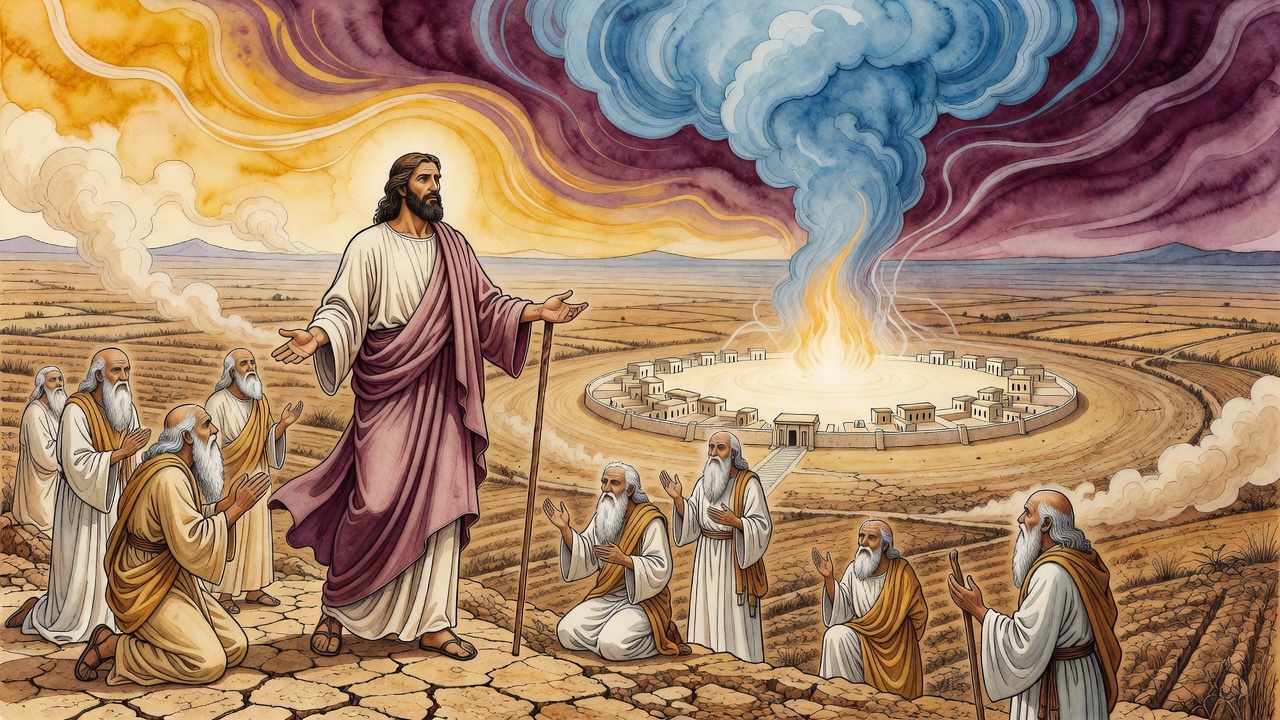
Potiphar looked at the traders, then at the boy they were selling, and said out loud that this was no slave. He bought him anyway, and not for the accounts.

Curated by Arthur · Told by Maggid ·
Table of Contents
  1. The Buyer Who Asked for a Guarantor
  2. What the Master Had Bought Him For
  3. The Sabbath in the Empty House
  4. The Woman Who Was Set Over Him
  5. The Warden Stopped Looking
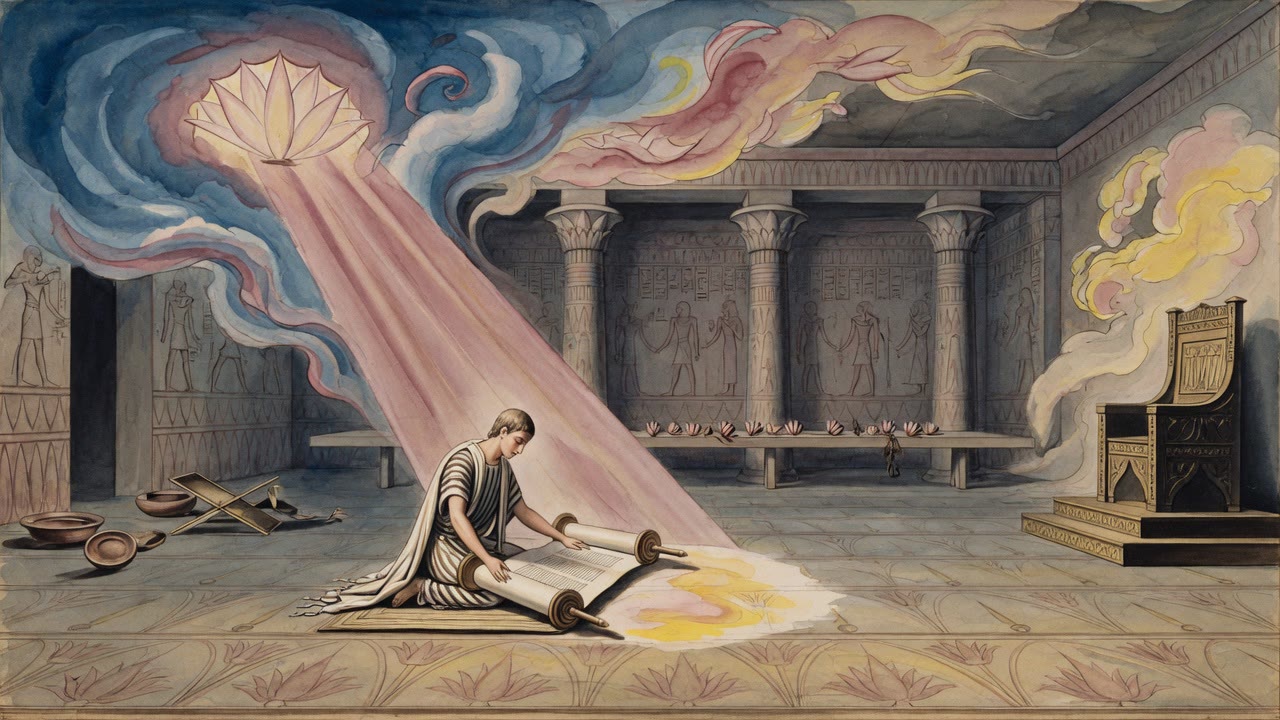
Joseph Sat Alone Reciting What His Father Taught Him Click for full size

The Buyer Who Asked for a Guarantor

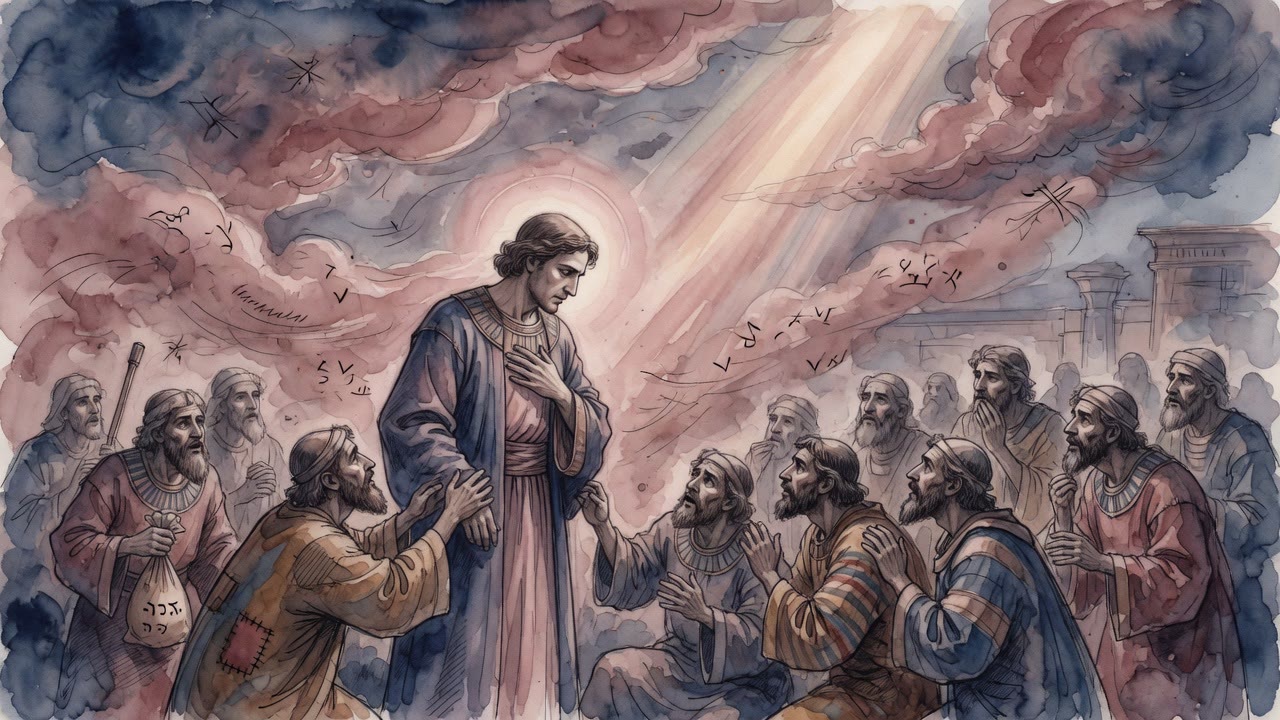
The Ishmaelites brought the boy into the Egyptian market and Potiphar stopped in front of them and did the arithmetic out loud.

Look at the men selling. Look at the merchandise. It runs the other way in every other stall in this market. That is no slave.

He bought him anyway. He was too careful a man to walk away from a bargain and too careful a man to take one on trust, so he made the traders produce a guarantor first, the way a buyer does when he thinks the goods have been stolen out of somebody's house. The traders found him one. The money changed hands. Joseph was seventeen and had been in a pit that morning and in a caravan by afternoon, and the God who had gone down the road with him from Dothan came into that house behind him and stayed.

What the Master Had Bought Him For

Potiphar had not bought a steward.

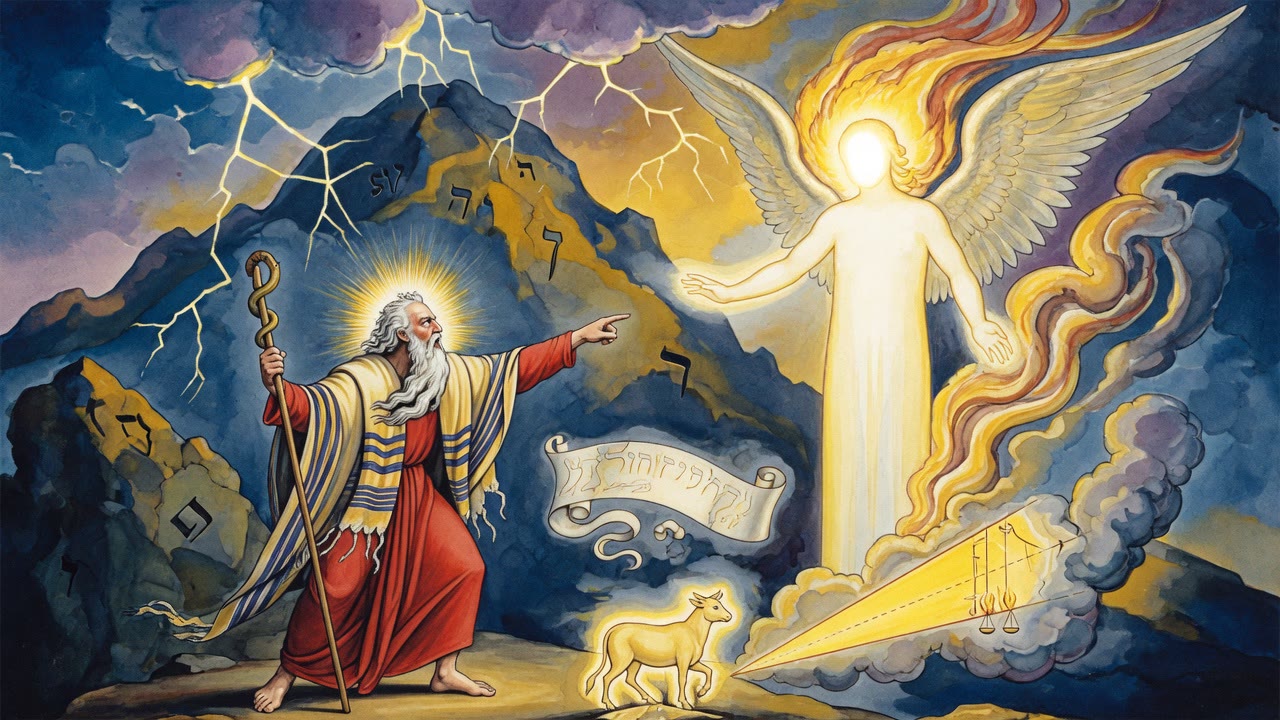
He had bought a beautiful boy for himself, and everyone in the household knew what that meant, and there was nothing in Egypt to stop him. There was something outside Egypt. Gabriel came down and took the man's manhood from him before he ever laid a hand on Joseph. When a bear starts killing the children of a province you do not argue with the bear. You break its teeth.

Even the man's name came out of the affair damaged. He goes into the record as Potiphar and he comes out of it as Potiphera, one letter longer, the way a scar is longer than the cut.

So the boy bought for a bed ended up running the accounts instead. Every slave costs a household something. This one made Potiphar rich. Every slave is watched for theft. This one gathered every coin the house earned and handed it over. The Egyptian stopped counting after a while and left everything in Joseph's hands, and the field and the herd and the granary all did better than they had any right to.

The Sabbath in the Empty House

One day Joseph came into the house to do his work and there was nobody in it.

Rabbi Eliezer worked out which day that was from the word for work, the same word used of the seventh day, when God rested from all His work. It was the Sabbath. And what work does a man have on the Sabbath?

He sat down alone in his master's empty house and went over what his father had taught him, out loud, reciting it the way Jacob had said it to him in a tent in Hebron years before, a boy's whole inheritance carried into Egypt inside his head because nothing else had survived the pit. There was no one in the country who could correct him if he got a word wrong. He said it all anyway.

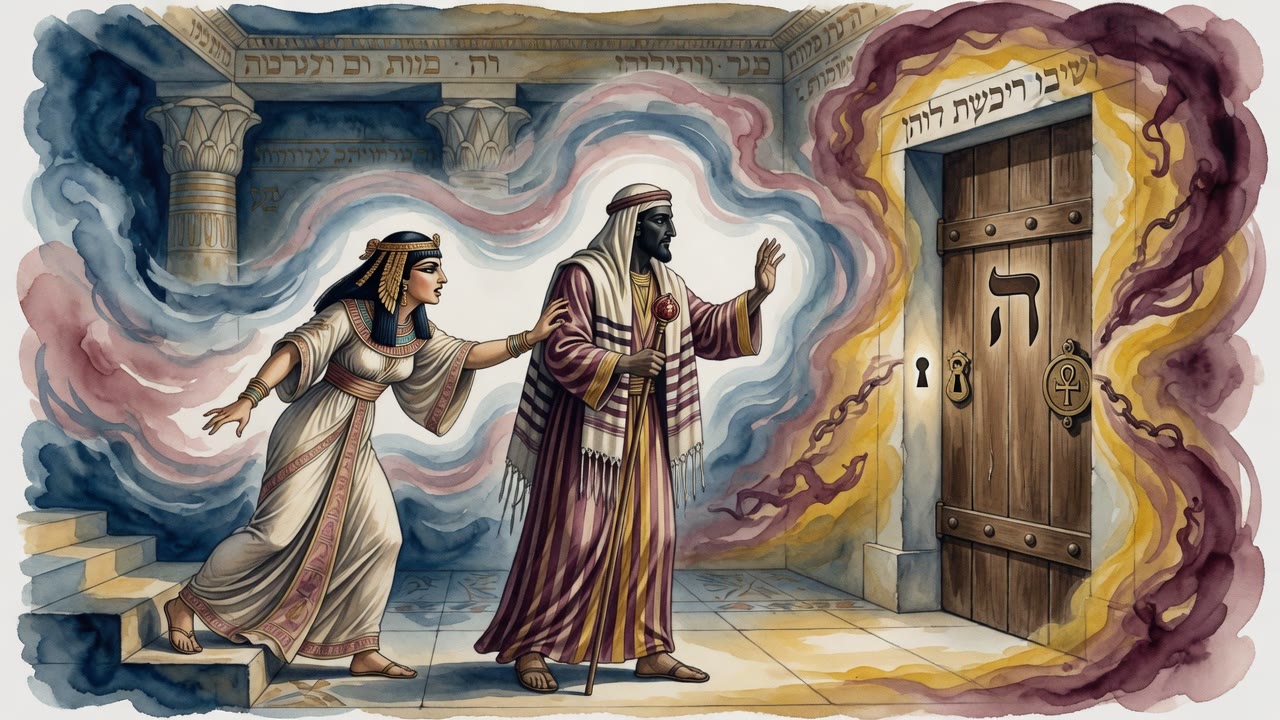
Then the door opened.

The Woman Who Was Set Over Him

She had been coming at him for a year, and heaven had let her.

The tale Joseph once carried to his father about his brothers, the bad report he brought out of his own mouth, had a bill attached to it, and the bill came due in his master's house wearing his master's wife's face. He was drawn up out of the pit on cords of love, and the same hand that pulled him up raised an enemy over him.

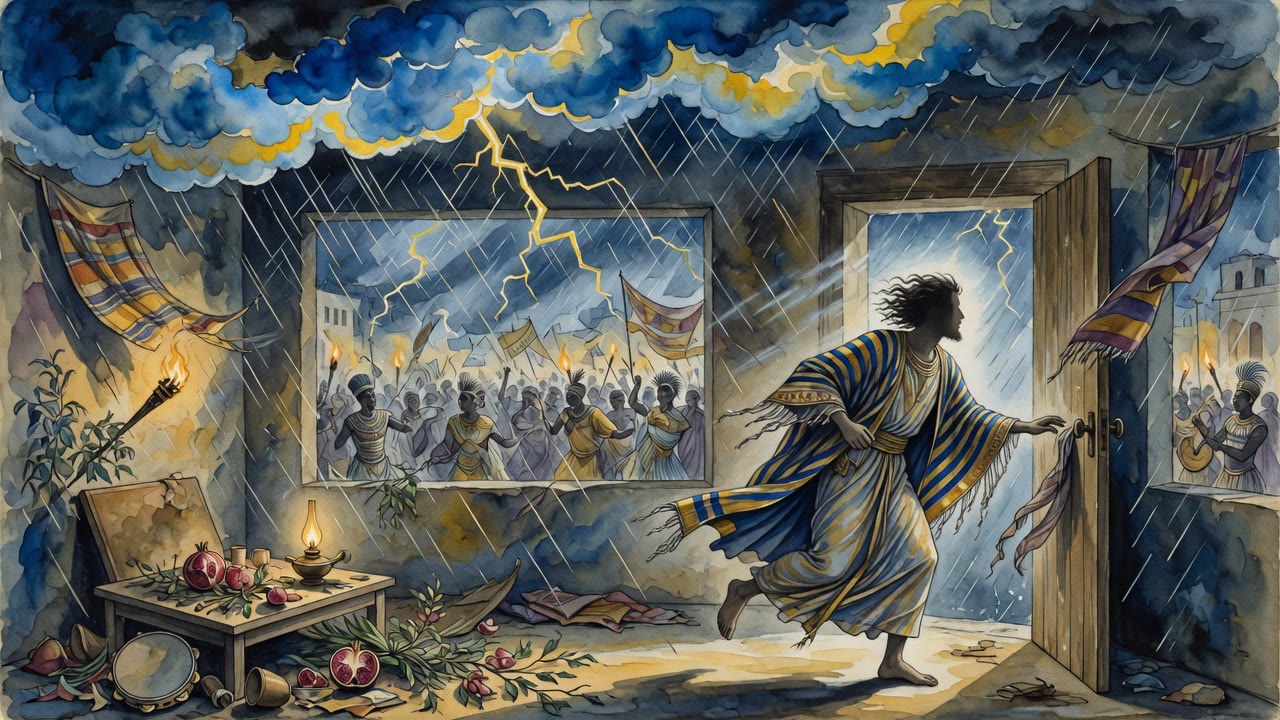
Every slave in Egypt was assumed to be available. This one was not. She talked, and he did not listen. She reached, and he was already at the door. He left the coat in her hands and went out into the yard, and the coat became the evidence, and the evidence went to Potiphar, and the man who had once wanted him for himself now had every reason in the world to want him buried in a cell.

The Warden Stopped Looking

In the prison the keeper handed him the keys within a month and after that never inspected anything. Not the stores, not the accounts, not the prisoners. He looked at what was under Joseph's hand exactly once and then stopped looking for the rest of the years, because whatever had come down the road from Dothan had come into the prison too, and it prospered whatever the boy touched. It had done the same thing upstairs in the master's house when life was easy. It did it in the cell when life was not.

Years later a cow was being dragged toward the slaughterhouse and would not walk. So they took her calf and led it out in front of her, and she followed it down the road on her own legs, against everything in her.

Jacob should have gone down to Egypt in iron. God said, he is My firstborn son, and I will not bring him down in chains. So He drew the son ahead, pit to caravan to cell to throne, and the old man came after him.


← All myths
From the tradition

Sources

4 sources

The texts behind this telling. Some cards carry a translation of the source; others are our own retelling of it, and each card says which. Every card links out to the original.

Yalkut Shimoni on Torah 146:2Yalkut Shimoni on Torah

Translation of the source text.Torat Emet (Yalkut Shimoni) · CC-BY-NC

"And he came into the house to do his work" (Genesis 39:11). Rabbi Eliezer says: It was the Sabbath, as it is written, "For on it He rested from all His work" (Genesis 2:3). And what work did he have? He was reviewing and reading what his father had taught him.

Full source
Yalkut Shimoni on Torah 145:14Yalkut Shimoni on Torah

Translation of the source text.Torat Emet (Yalkut Shimoni) · CC-BY-NC

(Genesis 39:1) "And Joseph was brought down to Egypt." It is written, "With cords of a man I drew them" (Hosea 11:4) this is Joseph, "and they drew up and lifted Joseph out of the pit." "With bands of love" (ibid.), as it is said, "and Israel loved Joseph." "And I was to them as those who lift the yoke" (ibid.) for I lifted his foes over him, and which one was this? This was Potiphar's wife. Why all this? "upon their jaws" (ibid.) because he brought forth a matter from his jaw [his mouth], as it is said, "and Joseph brought their evil report." And in the end, "and I laid food before him" I bring upon him many feedings, [as it is said] "and Joseph was the ruler [shallit] over the land" (Genesis 42:6). "And Joseph was brought down" he ruled over them [the verb yarad read as 'to rule'], as you say, "and he shall have dominion from sea to sea" (Psalms 72:8); he subdued them, as you say, "for he ruled over all the region beyond the River"; he uprooted them from their place, as you say, "and he scraped it into his palms" (Judges 14:9). "And Joseph was brought down [hurad]" he brought down our father Jacob. A parable: of a cow they were dragging to the slaughterhouse, and it would not be drawn. What did they do? They drew its calf before it, and it walked along against its will, not of its own desire. So it was fitting that our father Jacob go down to Egypt in iron chains. The Holy One, blessed be He, said, "He is My firstborn son, and shall I bring him down in disgrace? Behold, I will draw his son before him, and he will go down after him against his will, not of his own desire." From where do we know that the Divine Presence went down to Egypt? As it is written, "and the LORD was with Joseph" (Genesis 39:2). "To Egypt [Mitzraymah, with a final heh]." It was taught in the name of Rav Nachman: Anything that requires a lamed at its beginning [meaning 'to'], one places a heh at its end Seir-ward, Sodom-ward, Egypt-ward, Haran-ward. They objected: But is it not written, "the wicked shall return to Sheol [she'olah]"? [Meaning] to the lowest chamber that is in Sheol. "And he bought him." The bought ones acquire [Joseph would acquire Egypt though he was the one bought]. All slaves diminish their master's house, but this one "and the LORD blessed the Egyptian's house for Joseph's sake." All slaves are suspected of theft, but this one "and Joseph gathered up all the money." All slaves are suspected regarding forbidden relations, but this one "he did not listen to her." All slaves are fed terumah by their master, but this one fed his master terumah, as Rabbi Yehoshua ben Korcha said: Eleazar took a wife from the daughters of Potiphar [Potiphera]. ["Potiphar."] He is Potiphera who would fatten [mefatem] bulls for idolatry; Potiphera, who would bare himself [po'er] to idolatry; and once Joseph went down there he became Potinon. "Officer [seris] of Pharaoh" who was castrated in his body [seris also meaning eunuch], teaching that he took him for [carnal] use, and the Holy One, blessed be He, castrated him in his body. A parable: of a bear that was bereaving the people of the province; he said, "Break out its fangs." So this teaches that he took him only for [carnal] use, and the Holy One, blessed be He, castrated him, as it is written, "for the LORD loves justice and does not forsake His pious ones" (Psalms 37:28) it is written "His pious one" [in the singular], and who is this? This is Joseph the righteous; "they are preserved forever, but the seed of the wicked is cut off" teaching that he took him only for use, and the Holy One, blessed be He, castrated him in his body. "An Egyptian man" a cunning man. What was his cunning? In every place a German sells a Cushite, but here a Cushite sold a German [an unlikely sale, so the buyer was wary]; "this is no [ordinary] slave." He said to them, "Bring me a guarantor," and this expression is none other than a term of suretyship, as you say, "I will be surety for him; of my hand" (Genesis 43:9); and it is written "from the hand of the Ishmaelites who had brought him down there." A slave may sell [property] and the son of a slave-woman may sell, but a free man is a slave to both of them.

Full source
Yalkut Shimoni on Torah 146:5Yalkut Shimoni on Torah

Translation of the source text.Torat Emet (Yalkut Shimoni) · CC-BY-NC

"The warden of the prison did not see anything in his hand, because the LORD was with him" (Genesis 39:23). Until now [we have learned this] in a time of distress; and from where do we know it was so even in a time of ease? Scripture teaches, "And all that he did the LORD made to prosper in his hand" (above, verse 3).

Full source
Yalkut Shimoni on Torah 145:15Yalkut Shimoni on Torah

Translation of the source text.Torat Emet (Yalkut Shimoni) · CC-BY-NC

"And Joseph was brought down to Egypt" (Genesis 39:1). Do not read it as "was brought down" but as "he brought down" [the same letters reread], for he brought down Pharaoh's astrologers from their high standing. "And Potiphar bought him." He bought him for himself; the angel Gabriel came and castrated and mutilated him: at first it is written Potiphar, and later it is written "Potiphera."

"And the LORD was with Joseph" (Genesis 39:2). Yet of the other tribes it does not say this. Rabbi Yudan said: A parable. It is like a man who had before him twelve beasts laden with wine. One of them entered the shop of a gentile. He left the eleven and went after that one. They said to him, "Why?" He said, "These are in the public domain, and I do not fear that their wine will be made into a libation to idols; but this one entered a gentile's shop, and I fear its wine may be made into a libation." So too, these were grown and under their father's authority, but Joseph was young and on his own, therefore, "And the LORD was with Joseph."

"And he became a prosperous man." "A man who leaps," as you say, "And they crossed over [forded] the Jordan before the king" (II Samuel 19:18). A parable: a she-bear was passing through the marketplace adorned with precious stones and pearls. They said, "Whoever leaps onto her may take what is on her." There was a clever man there. He said, "You are looking at what is on her, but I am looking at her teeth."

Full source