5 min read

Joseph Points Potiphar at the Burning Sun

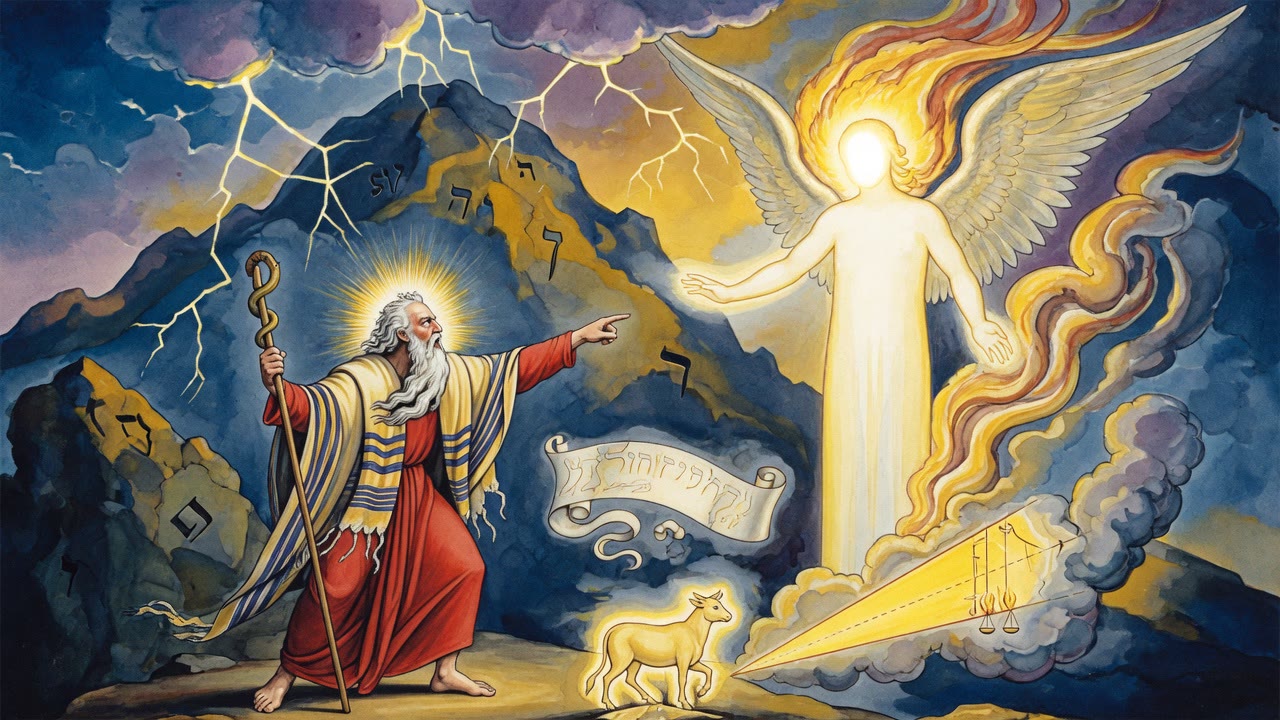
In Potiphars house Joseph prays under his breath. The Egyptian demands to see his God. Joseph points at the sun and asks who can stare at a mere servant.

Curated by Arthur · Told by Maggid ·
Table of Contents
  1. Lips Moving in a Slave House
  2. The Eye That Shut Itself
  3. Slave and King, Same Fear
  4. Sabbath Before Sinai
  5. Glory Shared
Joseph Points Potiphar at the Burning Sun Click for full size

Lips Moving in a Slave House

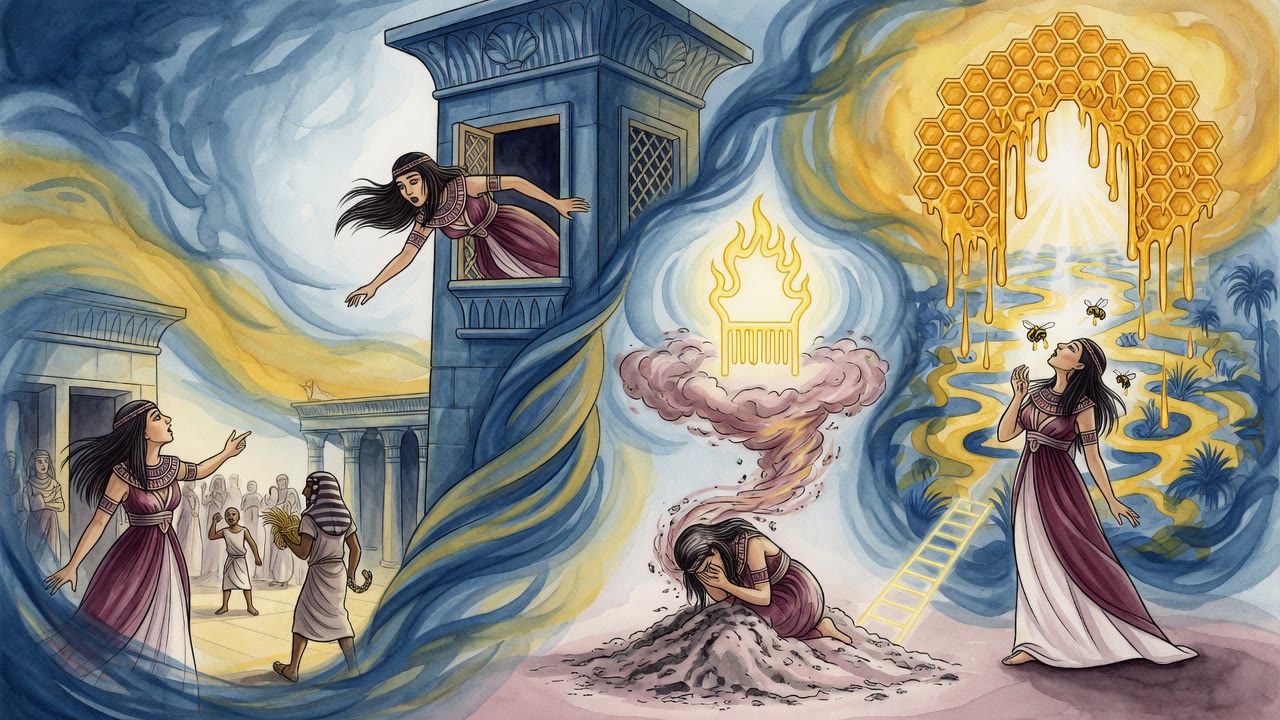
In the house of Potiphar, Joseph moved his lips in secret prayer. Floor dust. Kitchen noise. An Egyptian master's eyes. His master watched the murmur and demanded an accounting. "What are you saying under your breath?" "I bless the Holy One," Joseph answered. "Then let me see your God," said the Egyptian, as if a god were a household idol that could be set on a table.

Joseph pointed upward. "Look at the sun, only one of His many servants. You cannot bear to stare at it. How could you behold His glory?" Potiphar's face tightened against the light he already knew could blind. The Holy One answered that daring defense with nearness. "For your sake, I will reveal Myself to him." That is why Scripture says his master saw that the Lord was with him. A slave's refusal to hide the Name became a window Potiphar could not close.

The Eye That Shut Itself

God repays good for good. Because Joseph's eye shut itself against Egypt's daughters, Heaven said, "It is upon Me to reward that eye." Jewels once clicked on stone from wall slits when he rose in the chariot. Perfume rode the heat. He kept his gaze down. Because Joseph fled and left his garment rather than sin, the sea itself fled at the sight of his coffin when Israel left Egypt. Joseph kept the weight of the Ten Commandments before Sinai ever thundered them.

"I have repaid you a little here," God told him in the sages' telling, "but the principal waits in the world to come. By Jacob's merit and yours, Israel shall be redeemed forever." The man who would not look up at thrown jewels still became the eye through which Egypt learned a Name it could not see. The house that tried to own him learned it was being watched.

Slave and King, Same Fear

The tribal princes' names later hid Joseph like sealed scrolls. Elishama: he heeded his God and not his mistress. Gamaliel: God recompensed His people, and the Rock redeemed him. Why such recompense? Because of the cleanness of Joseph's hands. A poor man leans on the Holy One. Let him grow rich and he leans on wealth, and the fear of Heaven slips. Not so Joseph. The ladder of his life did not change the Name under his tongue.

A slave, enticed with soft words, he answered, "How can I do this great wickedness and sin against God?" A king, crowned over Egypt, he said still, "I fear God." Fear did not shrink when the house changed. The same Name held both rooms. Soft speech in Potiphar's corridor and hard power on Egypt's throne met the same refusal to sell the eye or the heart.

Sabbath Before Sinai

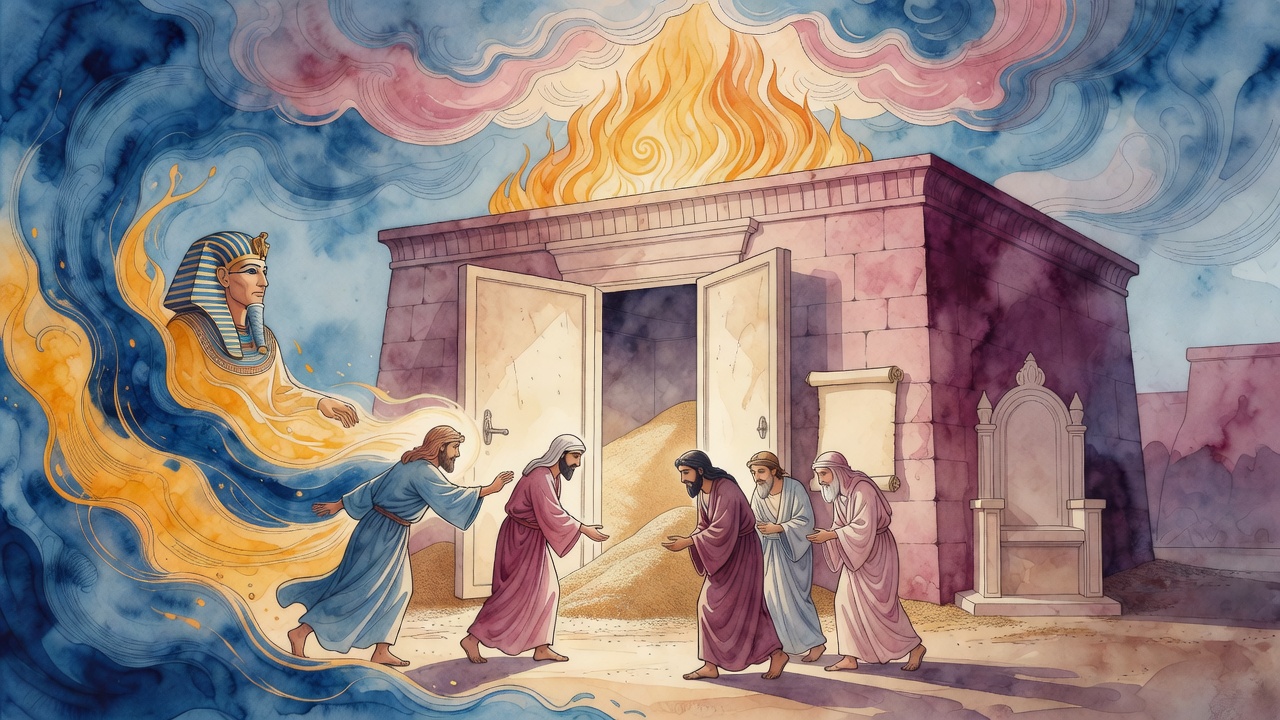
When his brothers returned, Joseph ordered a beast slaughtered and prepared for the morrow's meal. Kings do not cook a day ahead for ordinary hunger. One master uncovered the secret. It was the Sabbath, and the word "prepare" is the Sabbath's own word. "You guarded My day before I gave it," said the Holy One. "By your life, your descendant in Ephraim shall bring his offering on the Sabbath day."

A private loyalty became a public calendar. The prince of Ephraim would stand in the cycle of offerings on the day Joseph had already kept in a foreign court, when no tablet yet demanded it. The kitchen of a viceroy became a rehearsal for the Tent. Time itself learned Joseph's fear before the law carved it in stone.

Glory Shared

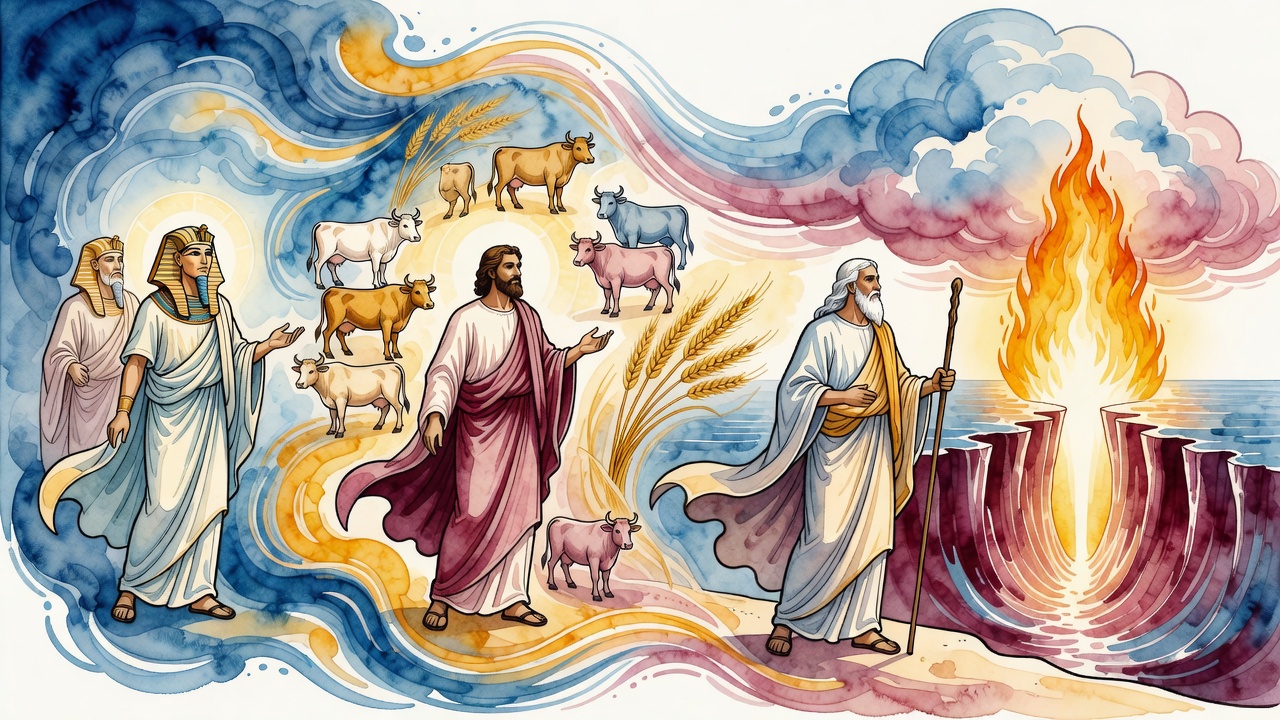
This, the rabbis teach, is the King of glory: the One who shares His glory with those who fear Him. A mortal king lets no other hold his scepter, sit his throne, or ride his horse. God gave His staff to Moses, seated Solomon on His throne, and lifted Elijah heavenward on the whirlwind that is His own way in the storm. Even the robe of honor and majesty He bestows upon the Messianic King. Generosity sits where jealousy would sit in a human court.

Moses' face blazed and he did not know it. Trumpets that herald a king going forth were placed in Moses' hand: make for yourself two trumpets of silver. Blessings once spoken from Heaven's own mouth passed into Abraham's charge. Abraham held back, seeing two trees grafted in one orchard, life and death, Isaac and Ishmael, and left the final choice to God. Then the priests would lift their hands over Israel. Joseph's whispered prayer in Potiphar's house sits inside that same generosity. Heaven does not hoard nearness from those who refuse to sell it. A slave pointing at the sun was already standing in shared glory.


← All myths
From the tradition

Sources

4 sources

The texts behind this telling. Some cards carry a translation of the source; others are our own retelling of it, and each card says which. Every card links out to the original.

Midrash Tanchuma Buber, Nasso 34:1Midrash Tanchuma Buber, Nasso

Translation of the source text.Midrash Tanchuma (Buber), Public Domain, on Sefaria · CC-BY-SA

R. Abin the Levite [son of Rabbi] said: Joseph would offer blessing, and his master saw him whispering with his mouth. He said to him: Joseph, what are you saying? And he answered and said to him: I am blessing the Holy One, blessed be He. He said to him: I wish to see your God. Joseph said to him: Behold the sun, which is one of His many servants, you cannot gaze upon it; how much more so His glory! The Holy One, blessed be He, said: For your sake I am revealing Myself to him, as it is stated (Genesis 39:3), "And his master saw that the Lord was with him," and so forth.

R. Abin the Levite son of Rabbi said: What is the meaning of (Psalms 24:9) "[Who is this] King of glory", He who shares His glory with those who fear Him, this is the Holy One, blessed be He. A king of flesh and blood, no one else makes use of his scepter, but the Holy One, blessed be He, gave His scepter to Moses, as it is stated (Exodus 4:20), "And Moses took the staff of God in his hand." And no one else sits upon his throne, [but the Holy One, blessed be He, seated Solomon upon His throne], as it is written (1 Chronicles 29:23), "And Solomon sat upon the throne of the Lord as king." And no one else rides upon his horse, [but the Holy One, blessed be He, mounted Elijah upon His horse]. And what is the horse of the Holy One, blessed be He? Tempest and storm, as it is stated (Nahum 1:3), "The Lord, His way is in the whirlwind and in the storm," and it is written (2 Kings 2:11), "And Elijah went up in a whirlwind to heaven." Thus the Holy One, blessed be He, shares His glory with those who fear Him. And His garment He gave to the King Messiah, as it is stated (Psalms 21:6), "Honor and majesty You bestow upon him," and the garment of the Holy One, blessed be He, is honor and majesty, [as it is stated] (Psalms 104:1), "You have clothed Yourself with honor and majesty."

What is written concerning the Holy One, blessed be He? (Jeremiah 51:56) "For the Lord is a God of recompense, He shall surely repay", for He repays the good according to their good and the wicked according to their wickedness. What is written concerning Joseph? (Genesis 49:22) "Joseph is a fruitful son." The Holy One, blessed be He, said to him: Joseph, let there be peace upon the eye that shut itself and did not look at any of the Egyptian women, as it is stated (ibid.), "Daughters stepped upon the wall." R. Reuben said: What is the meaning of "upon the wall" ('alei shur)? The Holy One, blessed be He, said: It is upon Me ('alai) to pay reward to that eye.

Our Rabbis taught that they would eat in the Sanctuary within the curtains, but at Shiloh, as far as the eye could see. Whatever Joseph did, the Holy One, blessed be He, repaid him. What is written? (Genesis 39:12) "And he left his garment [in her hand and fled and went outside]." The Holy One, blessed be He, said to him: [By your life,] when the children of Israel go out from Egypt, the sea is destined to see your coffin and to flee, as it is stated (Psalms 114:3), "The sea saw and fled." And what did it see? [It saw] that Joseph had kept all Ten of the Commandments. Simeon, the man of Kitron, says: It saw the bones of Joseph. And moreover, the coffin of Joseph would proceed before the Ark, and the nations of the world would see it and say: What is the nature of this coffin that proceeds together with the Ark of the Torah? And Israel would answer them and say: The one in this coffin fulfilled what is written in this Ark. And what was in the Ark? The Ten Commandments. And Joseph fulfilled them all before they were even given at Sinai. The Holy One, blessed be He, said to Joseph: Joseph, even though I have repaid you a portion of your reward in this world, the principal endures for you in the world to come, when Israel is redeemed with an everlasting redemption. By the merit of Jacob and by your merit they are redeemed, as it is stated (Psalms 77:16), "You redeemed Your people with Your arm, the children of Jacob and Joseph, Selah."

Full source
Midrash Tanchuma Buber, Nasso 33:1Midrash Tanchuma Buber, Nasso

Translation of the source text.Midrash Tanchuma (Buber), Public Domain, on Sefaria · CC-BY-SA

[Another interpretation of (Numbers 7:48): "On the seventh day, the prince of the children of Ephraim, Elishama ben Ammihud."] Rabbi Meir and Rabbi Joshua ben Korhah used to expound the names. Elishama, "my God ('Eli) he heeded (shama)," but to his mistress he did not heed. Ben Ammihud, "he was with me ('immi)," but with her he was not. And likewise Gamaliel ben Pedahzur (Numbers 7:54): Joseph said, [Gamaliel], "God (El) recompensed (gamal) my people with good recompenses (gemulim)." Ben Pedahzur, "the Rock (Tzur) redeemed (padah) him." And who caused this for him? "The Lord rewarded me according to my righteousness; according to the cleanness of my hands he recompensed me" (Psalms 18:21). Rabbi Samuel bar Abba said: What is "the cleanness of my hands"? Like the purity (berirut) of my hands, for I was clear (barur) in the commandments. "The Lord rewarded me", how? When a person is poor, he trusts in the Holy One, blessed be He; but when he is rich, he trusts in his wealth, and there is no fear upon him. But Joseph, when he was a slave, feared the Lord, for his mistress enticed him with words, and he said to her, "How then can I do this great wickedness and sin against God?" (Genesis 39:9). And when he became king, he increased in fear, as it is said, "I fear God" (Genesis 42:18). And when his brothers came down to him a second time, "And Joseph saw them... and slaughtered an animal and prepared (hakhen), for the men shall eat with me at noon" (Genesis 43:16). Now is it not the case that it is not the way of kings to prepare from one day for the next? Rabbi Yohanan said: It was the Sabbath, and "preparing" (hakhen) is nothing other than the Sabbath day, as it is said, "And they shall prepare what they bring" (Exodus 16:5). The Holy One, blessed be He, said to him: You kept the Sabbath before it was given. By your life, for the son of your son I will bring it about that he shall offer on the Sabbath day, as it is said, "On the seventh day, the prince of the children of Ephraim."

Full source
Midrash Tanchuma Buber, Beha'alotcha 15:1Midrash Tanchuma Buber, Beha'alotcha

Translation of the source text.Midrash Tanchuma (Buber), Public Domain, on Sefaria · CC-BY-SA

[Another interpretation:] What is the meaning of (Psalms 24:10) "The LORD of Hosts, He is the King of Glory"? That He shares of His glory with those who fear Him, as befits His glory. How so? He is called God (Elohim), and He called Moses "God," as it is said (Exodus 7:1), "See, I have made you a god to Pharaoh." He revives the dead, and He shared of His glory with Elijah, and he revived the dead one, as it is said (I Kings 17:23), "And Elijah said, See, your son lives." Because the Holy One, blessed be He, shares of His glory with those who fear Him, He clothes the Messianic King in His own garment, as it is said (Psalms 21:6), "Honor and majesty You lay upon him."

Our Rabbis taught: A king of flesh and blood, none may ride upon his horse, none may wear his garment, none may make use of his seal, and none may sit upon his throne; yet with all of these the Holy One, blessed be He, shared with those who fear Him and gave them. How do we know? As it is said (Nahum 1:3), "The LORD, His way is in the whirlwind and the storm"; and He gave it to Elijah, as it is said (II Kings 2:11), "And [Elijah] went up by a whirlwind into the heavens." And none may wear his garment, what is written (Psalms 104:1)? "Honor and majesty You have put on"; and concerning the Messianic King it is written (Psalms 21:6), "Honor and majesty You lay upon him." And none may make use of his crown, what is written concerning Moses (Exodus 34:29)? "And Moses did not know that the skin of his face shone." And none may sit upon his throne, yet it is written (I Chronicles 29:23), "And Solomon sat upon the throne of the LORD as king." And none may make use of his scepter, yet He gave it to Moses, as it is said (Exodus 4:17), "And take this staff in your hand," etc. What is written concerning the Holy One, blessed be He (Psalms 47:6)? "God has ascended amid the blast, the LORD amid the sound of the shofar." The Holy One, blessed be He, said to Moses: I have made you a king, as it is said (Deuteronomy 33:5), "And He was king in Jeshurun." Just as the king, when he goes forth, they sound the trumpet before him, so too you, when you go forth, let them sound the trumpet before you: "Make for yourself two trumpets of silver."

Full source
Midrash Tanchuma Buber, Nasso 17:1Midrash Tanchuma Buber, Nasso

Translation of the source text.Midrash Tanchuma (Buber), Public Domain, on Sefaria · CC-BY-SA

[Another interpretation of (Numbers 6:23): THUS SHALL YOU BLESS.] The Holy One, blessed be He, said: In the past I was required to bless My creatures. I blessed the first man and his wife, as it is stated (Genesis 1:28), "And God blessed them, etc." I blessed Noah and his sons, as it is stated (Genesis 9:1), "And God blessed Noah and his sons." I blessed Abraham, as it is stated (Genesis 24:1), "And the Lord blessed Abraham in everything." The Holy One, blessed be He, said: From now on, behold, the blessings are handed over to you, as it is stated (Genesis 12:2), "And be a blessing."

What did Abraham do? He fathered two, Ishmael and Isaac, and he did not bless them. A parable: to what is the matter comparable? To a king who had an orchard and gave it to a tenant-farmer. Within that orchard was one tree of the drug of life, and one tree of the drug of death grafted upon it. The tenant-farmer said: If I water the tree of the drug of life, the tree of the drug of death drinks. The tenant-farmer said: I will work and complete my time, and whatever the king wishes to do in his orchard, let him do. The king is the Holy One, blessed be He, and the orchard is the world. The Holy One, blessed be He, handed it over to Abraham; He said to him, "And be a blessing."

What did Abraham do? He had two sons, one righteous and one wicked, Ishmael and Isaac. Abraham said: If I bless Isaac, Ishmael will ask that I bless him, and he is wicked. Rather, I am flesh and blood; when I depart from the world, the Holy One, blessed be He, will do His will. When Abraham departed, the Holy One, blessed be He, revealed Himself to Isaac and blessed him, as it is stated (Genesis 25:11), "And it came to pass after the death of Abraham that God blessed Isaac his son." And Isaac blessed Jacob, and Jacob blessed the twelve tribes, as it is stated (Genesis 49:28), "All these are the tribes of Israel, twelve." From now on, said the Holy One, blessed be He, behold, the blessings are handed over to you; and the priests shall bless My children.

Full source