Parshat Vayeshev5 min read

Joseph Kept Quiet So His Brothers Would Live

The Ishmaelites learned Joseph was Jacob's son and pressed him to confess. He kept the slave story so his brothers would not die for selling him.

Curated by Arthur · Told by Maggid ·
Table of Contents
  1. Whispers on the Road to Egypt
  2. Sold Again Before the Dust Settled
  3. Zuleika's Eyes and Joseph's Grave
  4. The Slave Who Would Not Name His Father
Joseph Kept Quiet So His Brothers Would Live Click for full size

Whispers on the Road to Egypt

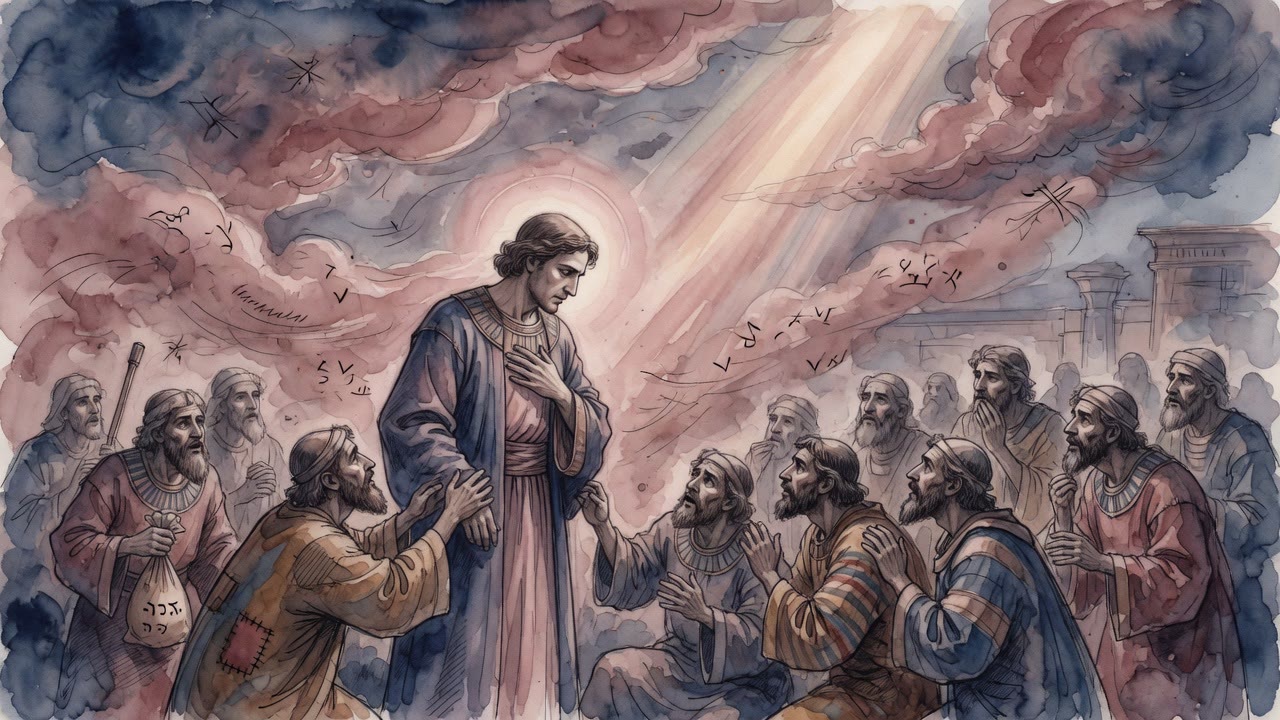
The caravan that owned Joseph began to hear names it did not want. Jacob's son. Not a runaway. A prince of tents whose father tore sackcloth for him under Canaan's sky. The Ishmaelites confronted the boy with the hard curiosity of men who fear lawsuits more than theology. "Why are you pretending to be a slave? We know your father is mourning you."

Joseph could have said yes and turned the road into a rescue. He kept the slave story. He held it for the sake of the brothers who had sold him, because a revealed truth would make them men who stole a free son, and free sons' blood draws freer fathers. Silence became a shield he built for the people who had broken him. The pit was behind him. The coat was gone.

Fear of Jacob made the merchants impatient. A man favored by heaven and by other men is a dangerous father to cheat. They wanted Joseph off their books before reputation found their camp and turned commerce into judgment. A secret freeborn boy was a liability that walked, ate, and might one day speak at the wrong fire.

Sold Again Before the Dust Settled

A shopkeeper entered the tangle, begging to be clear of Potiphar's suspicion that a man had been stolen. In those first chaotic days merchants had already quarreled over who would keep the extraordinary youth. Unable to share him, they parked him with a shopkeeper until later. God let Joseph find grace there. The whole house went into his hands, and silver followed trust the way it always does when heaven is still writing a longer plot.

Joseph was coached to testify that he had been bought for money. He said the words. The eunuch's house opened. The chain of sales tightened into a single Egyptian doorway. Each sale was a smaller death of the name son of Jacob, and each time Joseph helped dig the grave of that name so his brothers would not hang for having sold it.

Potiphar's thresholds did not know they were admitting a future feeder of nations. They knew only a purchased body with a face that made other men argue over ownership. Grace in a shopkeeper's eyes became competence in a steward's ledgers. Competence is how exile sometimes dresses while it waits for dreams to mature into grain.

Zuleika's Eyes and Joseph's Grave

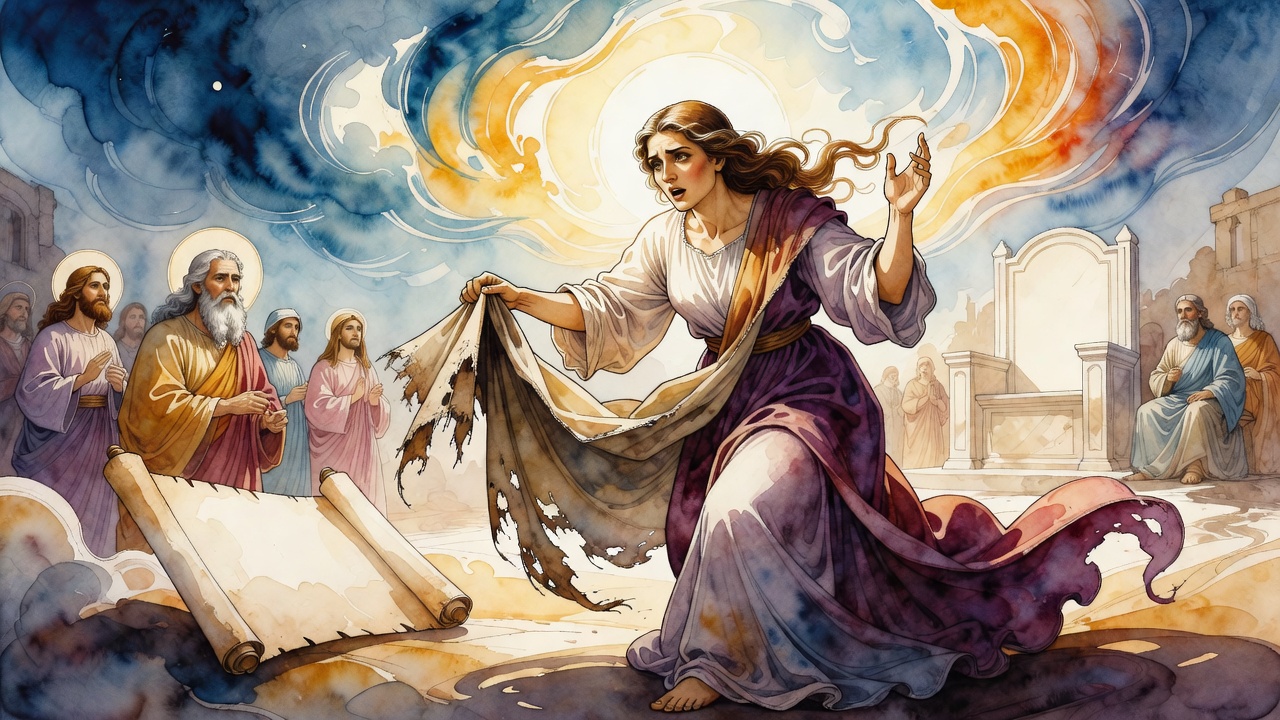
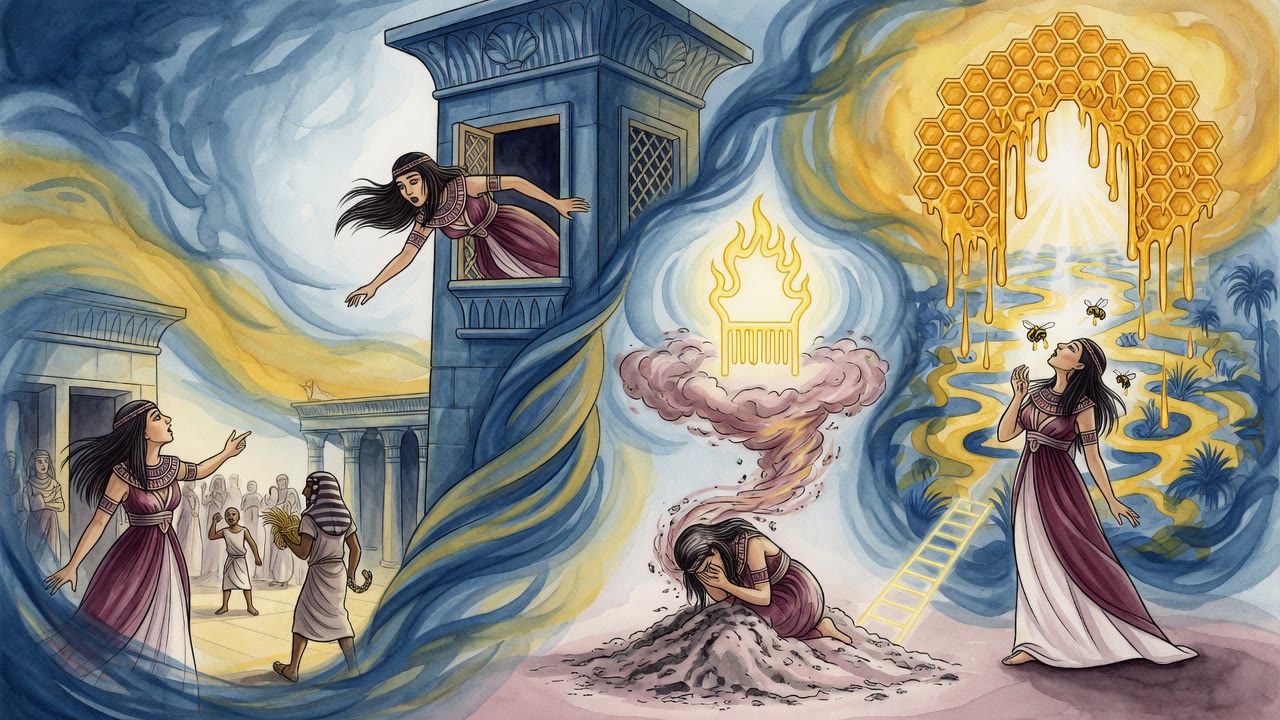
In Potiphar's house the danger changed shape. Zuleika, the master's wife, circled Joseph with praise that did not stop for breath. "How fair is thy appearance. Never have I seen so well-favored a slave." Day after day the words returned like a net. Joseph answered with the Creator, not with vanity. "God, who formed me in my mother's womb, hath created all men."

She praised his eyes that had charmed Egypt. He answered with the grave. Beautiful eyes go ghastly in death. The reply was not cruelty for sport. It was a young man nailing his body to mortality so another person's hunger could not turn him into an idol. Flattery wants a mirror. Joseph gave her a corpse-to-be and a God who forms flesh before anyone praises it.

Day after day the pressure returned. Day after day he refused to let flattery rewrite the commandments. The same discipline that sealed his mouth before the Ishmaelites sealed his body before Zuleika. He would not trade a brother's life for a softer collar. He would not trade a master's wife for a night that would unmake him.

The Slave Who Would Not Name His Father

Between the Ishmaelite confrontation and Zuleika's pursuit stands one apprenticeship. Joseph learned what not to say, and for whose sake. Vindication would have been sweet and lethal. Confession of free birth might have freed him into Jacob's arms and hanged ten brothers on the law of theft and blood. He chose the longer story in which those brothers would one day bow and live.

Egypt would later bow without knowing it bowed to a Hebrew who once chose silence over vindication. The coat was gone. The name son of Jacob stayed locked behind his teeth until the hour when revealing it would feed nations instead of hanging kin. Prison would still come, because Zuleika's hunger would turn to accusation when refusal shamed it.

Even prison would be a corridor, not a wall, for a man who had already practiced dying to his own immediate justice. Silence can be a weapon aimed outward or a shield held over other men's necks. Joseph chose the shield, and Egypt became the long corridor in which that choice was tested by gold, by prison, and by a woman's mouth that would not stop praising him into ruin.


← All myths
From the tradition

Sources

3 sources

The texts behind this telling. Some cards carry a translation of the source; others are our own retelling of it, and each card says which. Every card links out to the original.

Legends of the Jews 1:88Legends of the Jews

Retold in our words. Read the original at the link below.The Legends of the Jews by Louis Ginzberg (1909) · Public Domain

The Ishmaelites who’d taken him to Egypt began to suspect something wasn't right. They'd heard whispers: "This Joseph... he's not just some runaway. He's the son of Jacob, a powerful man back in Canaan!" They confronted him. "Why are you pretending to be a slave?" they demanded. "We know your father is mourning you, wearing sackcloth!"

Joseph must have been torn. Part of him must have yearned to shout, "Yes, it's true! I am Jacob's son!" But he held back. Why? For the sake of his brothers, the very ones who had betrayed him. He stuck to his story: he was a slave.

The Ishmaelites were now worried. They feared Jacob’s wrath. They knew he was a man of God, favored by both the Lord and by men. They couldn't risk having Joseph found in their possession. Their solution? Sell him, and quickly.

Enter a new player: a shopkeeper. He pleaded with the Ishmaelites to rescue him from Potiphar, the Egyptian official, who might accuse him of stealing a man. He wanted Joseph cleared of suspicion. The Ishmaelites, always looking out for themselves, had a little chat with Joseph. "Tell Potiphar we bought you for money," they instructed him. "Testify to that."

Joseph, trapped in this web of deceit, agreed. He testified that the Ishmaelites had indeed purchased him. And then, the chief of the eunuchs, seemingly satisfied, released Joseph from prison and dismissed everyone involved. He was free from prison, but still a slave, still separated from his family.

What’s fascinating about this short passage is how it highlights the themes of deception, survival, and faith. Joseph's ability to maintain his composure, even while concealing his true identity, speaks volumes about his character. And the Ishmaelites, driven by fear of divine retribution, unwittingly become instruments in God's plan. How often in life do we act out of fear, not realizing that our actions are part of a larger, unseen design?

Full source
Legends of the Jews 1:82Legends of the Jews

Retold in our words. Read the original at the link below.The Legends of the Jews by Louis Ginzberg (1909) · Public Domain

Legends of the Jews turns to Joseph's First Chaotic Days as a Slave in Egypt.

Well, the Legends of the Jews, that amazing compilation of rabbinic lore gathered by Louis Ginzberg, fills in some of those gaps. It paints a vivid picture of Joseph's initial days in a strange land.

A group of merchants, squabbling over who gets to own this extraordinary young man. Each one, recognizing something special in him, wanting him all to themselves. They can’t agree.

So, what do they do? A classic example of human indecision, really. They decide to leave him with a shopkeeper. Just like that. "We'll be back," they probably said. "With more goods, and we'll sort this out then."

And here's where the story takes a beautiful turn. Quite simply, that "God let Joseph find grace in the sight of the shopkeeper." It’s a small sentence, but it speaks volumes. Chen, grace – that ineffable quality that allows us to connect with others.

This shopkeeper clearly saw something in Joseph. Maybe it was his inherent honesty, his work ethic, or just that spark of divine favor. Whatever it was, the shopkeeper entrusted everything to him. "All that he had, his whole house, he put into Joseph's hand." Can you imagine that level of trust?

And what was the result? "Therefore the Lord blessed him with much silver and gold." It’s a classic biblical theme: when you treat others with kindness and trust, blessings follow. It’s not always immediate, and it’s not always material wealth, but it’s a deep, abiding sense of well-being.

The story continues, telling us that Joseph remained with the shopkeeper for a specific period: "three months and five days. Why include it? Perhaps to emphasize the brevity of this interlude. A brief respite, a moment of relative stability, before the next chapter of Joseph's tumultuous life unfolded.

It's a reminder that even in the darkest of times, even when we feel lost and alone, there are glimmers of hope, moments of grace, and opportunities to connect with others. And maybe, just maybe, those moments are enough to sustain us until our own dreams come true.

Full source
Legends of the Jews 1:104Legends of the Jews

Retold in our words. Read the original at the link below.The Legends of the Jews by Louis Ginzberg (1909) · Public Domain

That’s kind of the vibe we get with Joseph and Zuleika in the Legends of the Jews. You know, Joseph, the one with the coat of many colors? Before he became a big shot in Egypt, he was, well, a slave. And his master's wife, Zuleika, she was really into him.

Ginzberg, in his masterful retelling in Legends of the Jews, paints a picture of Zuleika relentlessly pursuing Joseph. Day after day, she'd shower him with attention. "How fair is thy appearance, how comely thy form!" she'd gush. "Never have I seen so well-favored a slave as thou art."

It's almost comical, the intensity of it. But Joseph, bless his heart, wasn't having any of it. He deflects it all with a simple, powerful reminder: "God, who formed me in my mother's womb, hath created all men."

He's not denying her compliments outright, but he's pointing to something bigger. He's saying, "This isn't about me. This is about the Creator."

And Zuleika? She keeps going! "How beautiful are thine eyes, with which thou hast charmed all Egyptians, both men and women!" she exclaims. She just won't quit!

But Joseph, ever steadfast, responds with a dose of reality. "Beautiful as they may be while I am alive, so ghastly they will be to look upon in the grave."

Ouch. Talk about a mood killer! But it's more than just a rejection. It's a profound statement about mortality, about the fleeting nature of physical beauty. He's reminding her – and himself – that there's more to life than appearances.

It’s a pretty stark contrast. Zuleika, caught up in the superficial, and Joseph, grounded in something deeper. How often do we get caught up in the superficial, the fleeting, the things that ultimately don't matter? And how often do we need a reminder, like Joseph's, to ground us in what truly does?

Full source