Zuleika Kissed the Cloth Torn from Joseph
The cloth still held the shape of his shoulder. She kissed it. Then her friends came back from the river and told her how to use it.
Table of Contents
 Click for full size
The Garment in Her Hands
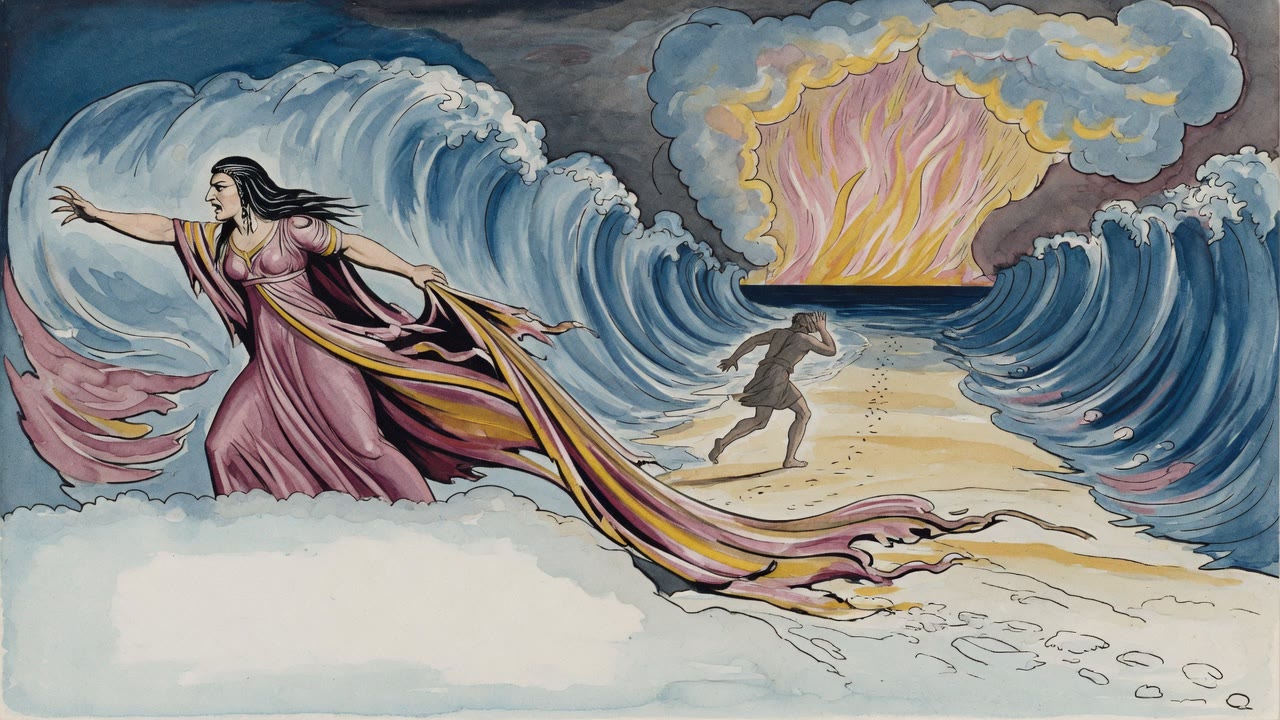
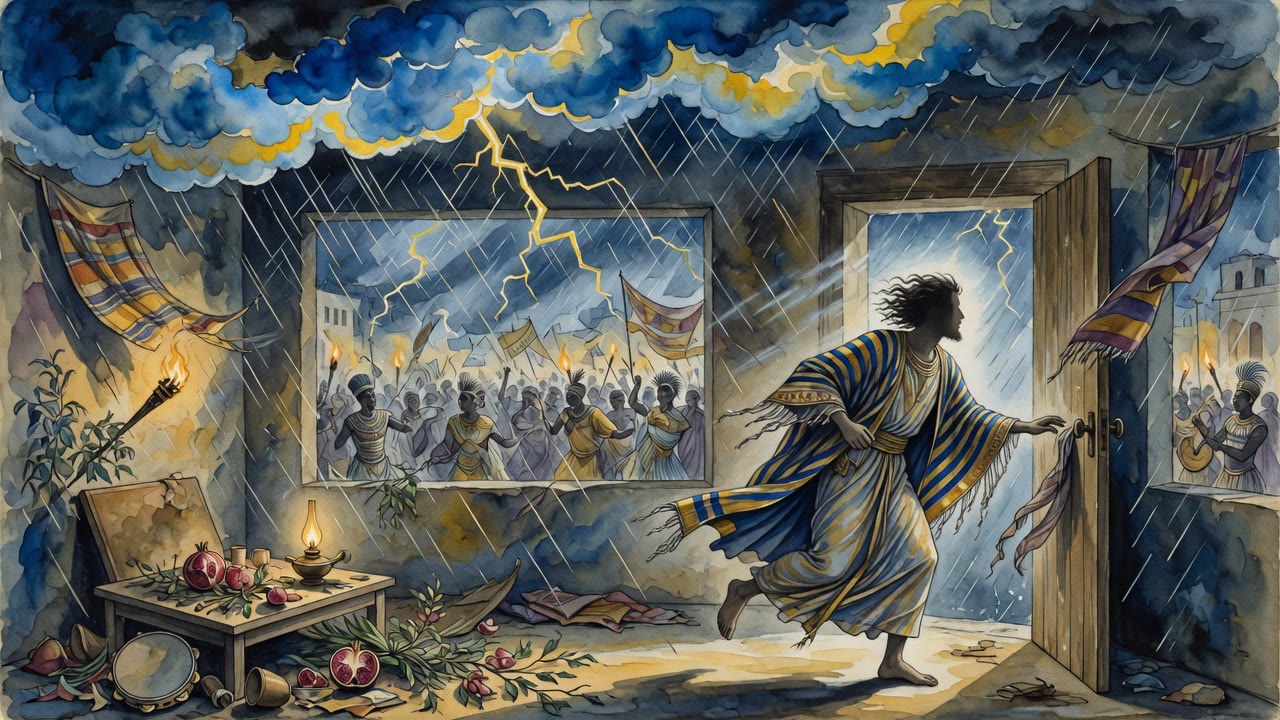
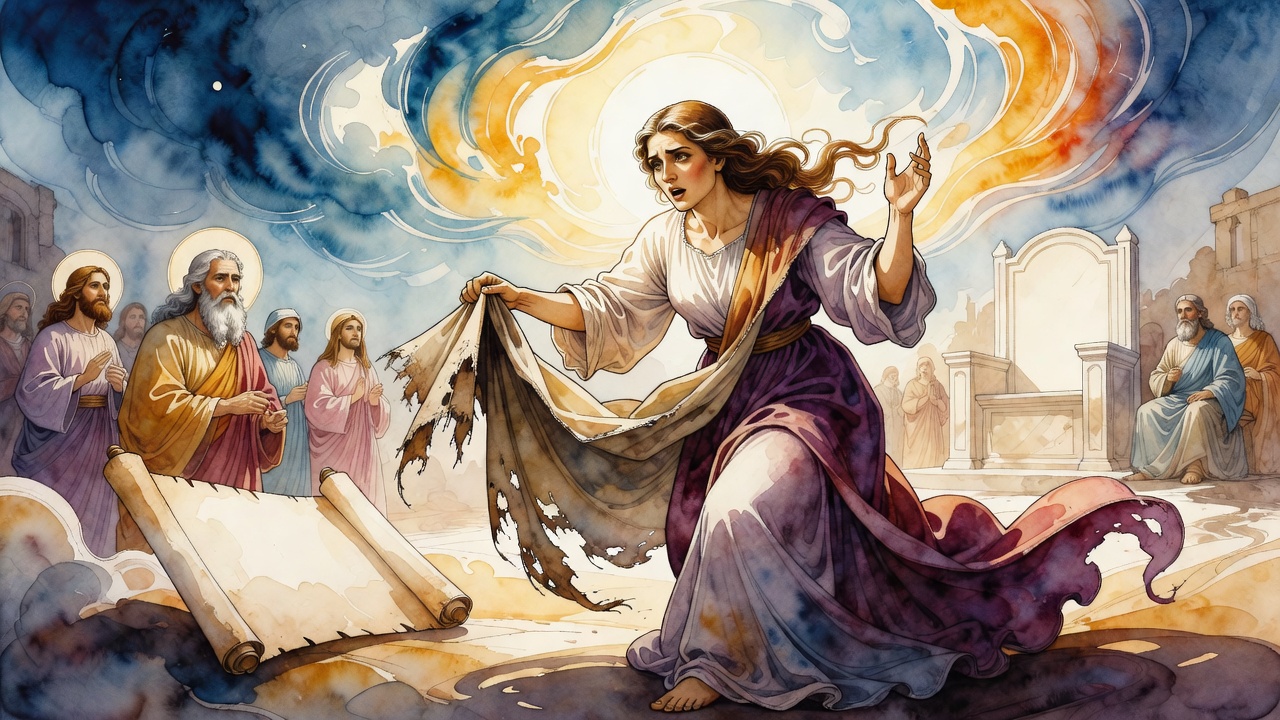
Joseph ran. The door of Potiphar's house slammed on a man who would not do what he had been told to do. In Zuleika's hands a piece of cloth stayed behind, torn in the flight, still shaped to a shoulder.
She did not drop it. She kissed it. She caressed it. The scrap was all she had of him, and she used it as if the cloth could be convinced in his place.
Then the other thought arrived, colder. He could speak. He could name the room. Reputation in an Egyptian great house was a blade, and she felt it against her throat. She began to arrange a story while the linen was still warm from his body.
Friends Returned from the Nile
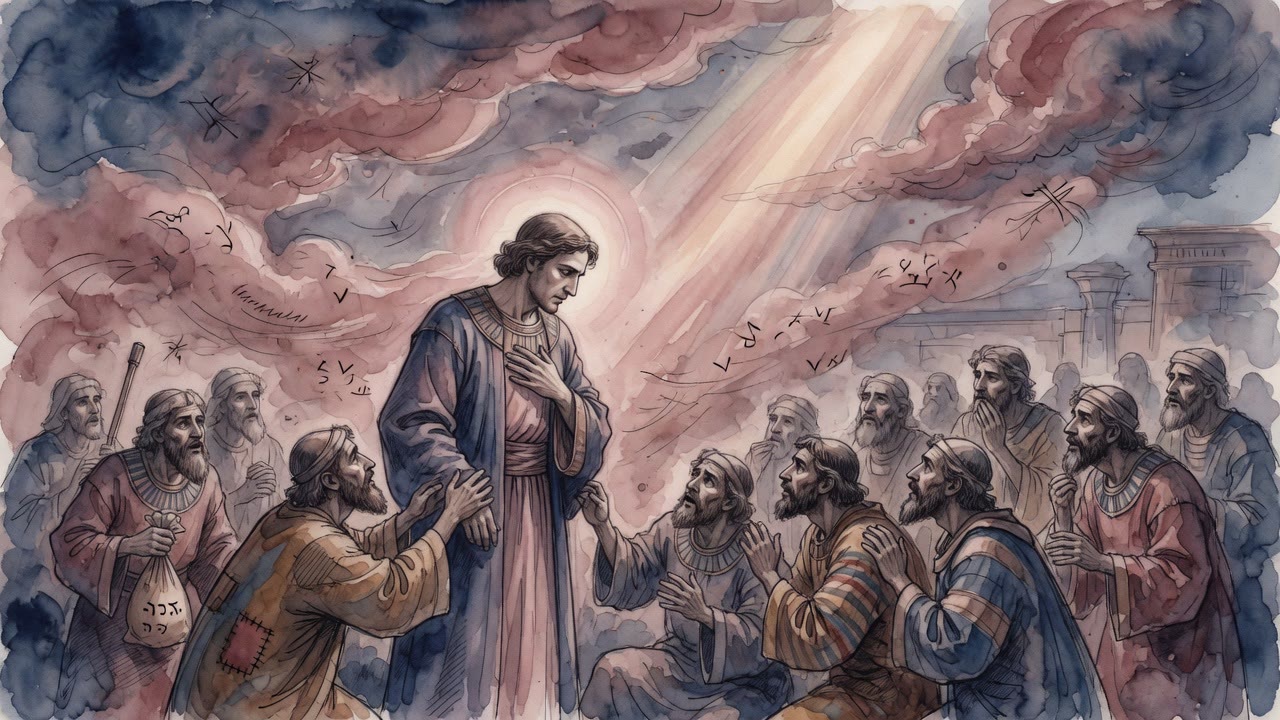
Her companions came back from a festival on the river, laughter still on them, and found her pale and drawn. She told them everything. The attraction that would not loosen. The refusal that had shamed her. The torn garment like a witness that could cut either way.
They did not soothe. They advised with the cold clarity of people who live by reputation's weather. Accuse him first. Tell your husband he was the aggressor. Potiphar will jail the Hebrew to protect the honor of his house and the quiet of his name.
Zuleika went further at their urging. She asked them to claim that Joseph had harassed them as well, to paint him as a pattern of danger, not a single refused hour. False witness multiplied in a circle of women who preferred a clean story to a true one. Power in the house belonged to the wife of the captain of the guard. Truth belonged to the slave who had run with half a garment left behind. The friends chose power.
Prison Instead of the Table
The charge landed in a house ready to believe it. Joseph went down into the prison that would become another house of management under his hand, keys and trust earned the hard way among the condemned. The courtroom of the heart was not fair. A narrative reversed because the audience wanted the powerful woman comforted and the foreign youth contained behind stone.
He kept the covenant of the fathers in a house that did not know the Name. That refusal cost him the garment and the years of iron. The cloth Zuleika kissed became evidence against him in the mouth of a woman who needed him silenced.
He Asked Which Houses They Searched
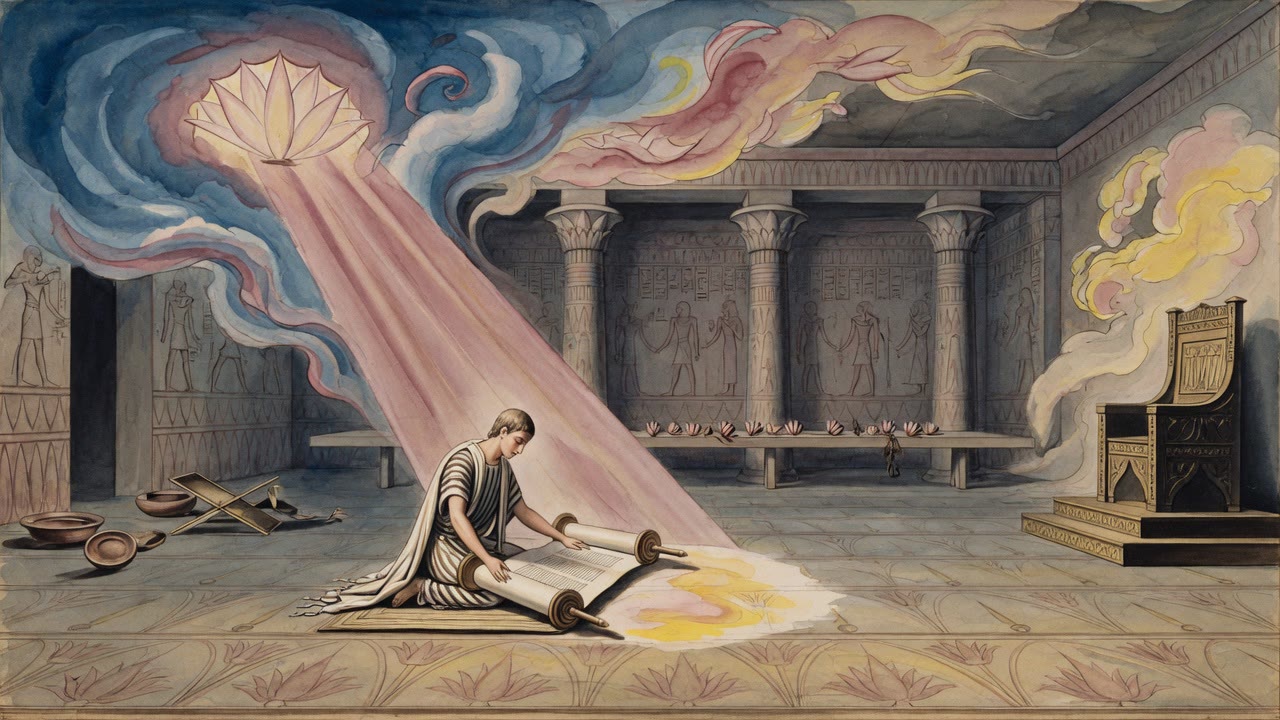
Years later Joseph stood over his brothers as viceroy, and they did not know him. He asked with iron in the voice whether they had searched every place on earth and found Egypt the only land left for a missing brother. He asked what a brother of theirs would be doing in a house of ill-fame if they were sons of Abraham, Isaac, and Jacob.
The brothers answered that some Ishmaelites had stolen him and sold him into slavery in Egypt, and that Joseph had been exceeding fair of form and face, so they had feared he was sold for the worst uses. They had searched even the disreputable houses to find him.
Guilt spoke in their defense. Zuleika's room was one kind of market for a beautiful captive. Their sale into the caravan had opened the road that led to her door. They had thrown him. She had kissed what he left behind. Both accusations put a young man in chains. Only one was a lie about a bedroom. Both were about control of a story that could not bear his rising.
A torn garment can mean flight from sin or proof of sin, depending on who holds it and who speaks first. Zuleika held it and spoke first. Her friends held the courtyard and spoke with her until the story hardened. Joseph held silence before men until God opened the prison with dreams not his own, dreams of cupbearers and bakers that would climb, eventually, to Pharaoh's sleepless nights.
Better a prison with a clean name before heaven than a bed that unwrites the house of Jacob. That answer was already given in the running, years before Pharaoh's ring found his hand. The cloth stayed in her room. He did not.
← All myths