Joseph Painted His Eyes and Did Not Know the Road
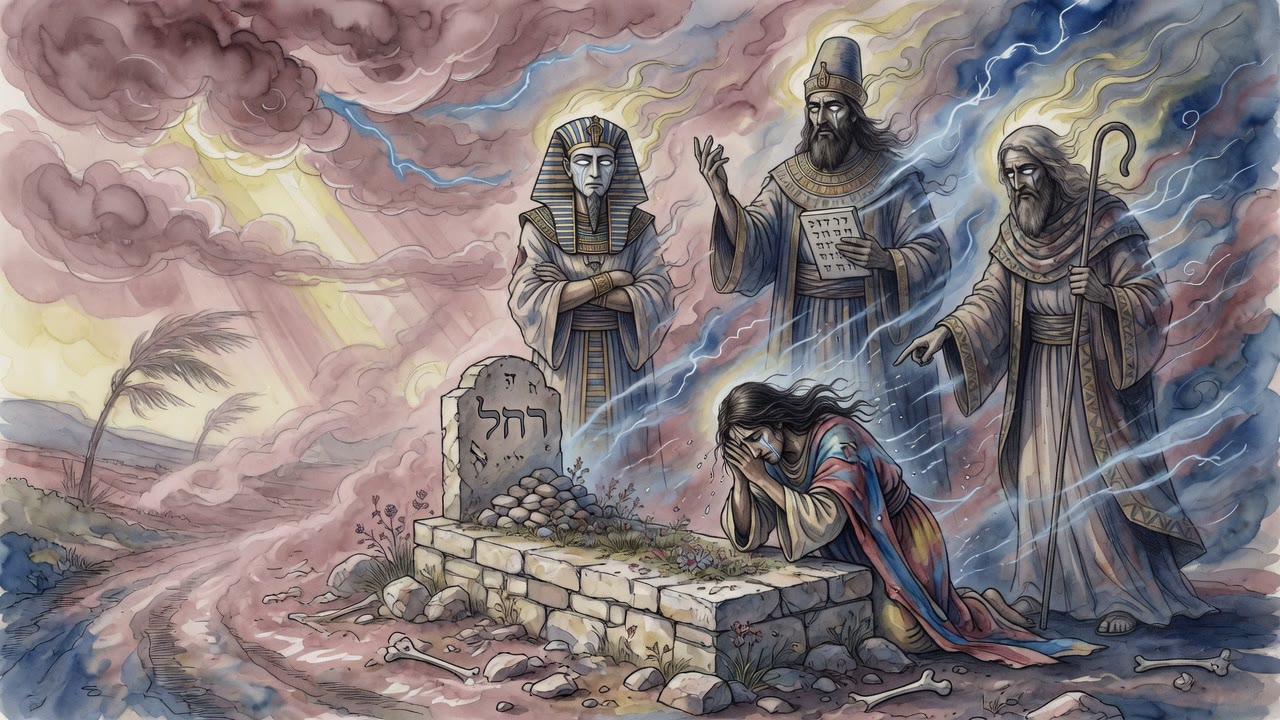
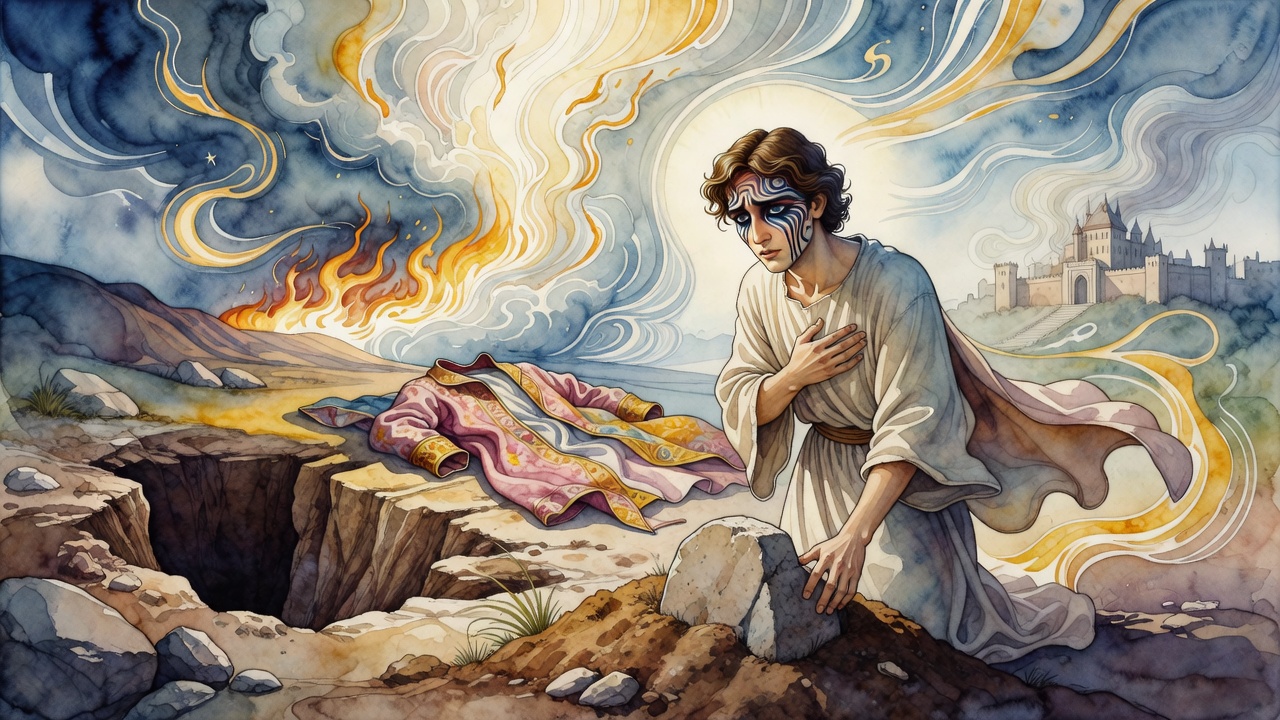
The traders waited in the road at Ephrath while Joseph threw himself on Rachel's stone and begged his dead mother to rise.
Table of Contents
Joseph painted his eyes in the morning and walked out as if the house were a court.
 Click for full size
He dressed with care. He lifted his heel when he walked. When his brothers transgressed, he went straight to Jacob with the news. He was seventeen. He knew the law. He did not know the road.
He Painted His Eyes Before the Glass
Jacob had poured into him everything that had come down from Abraham and Isaac, the daily practices of a household organized around covenant. Joseph absorbed it fast, faster than the older sons, and then he stood in the house of study and taught it back to them.
The sons of Bilhah and Zilpah received particular warmth from him. They occupied the lower rung of the household, and Joseph was their favorite (Genesis 37:2).
He was also carrying reports. His brothers were eating flesh torn from living animals. They were treating the handmaids' sons as slaves. They were casting eyes at Canaanite women. Joseph named it all. Heaven would later answer him measure for measure on each count. He did not see that yet. He understood the law thoroughly and the dynamics of his own family not at all.
The Coat Went Into the Pit
Jacob gave Joseph a coat of many colors (Genesis 37:3). The brothers saw it, and saw what it meant, and chose their moment. The pit came first, stone dry and deep. Then the caravan of Ishmaelite traders heading south toward Egypt. Then the coins passing between hands, twenty pieces of silver for the favorite son.
The caravan had not traveled far when a violent storm broke over the road. Animals buckled. Men scattered. The traders found Joseph bound among their goods and came to him, not with a key, but with a request.
"We have sinned against God and against thee," they said. "Entreat Him to take this plague from us."
Joseph prayed. The storm stopped. The traders weighed their options, debated whether to return him, calculated that distance was cleaner than conscience, and drove the caravan on toward Egypt.
He Ran to Rachel's Stone
The road to Egypt passed Ephrath. Joseph recognized the marker. His mother Rachel was buried here, on the roadside, far from the family cave at Machpelah, because she had died on this stretch of road (Genesis 35:19) and Jacob had set a pillar over her grave where she fell.
Joseph broke from the line of traders and ran. He collapsed over the stone. What came out of him was not composed.
"O mother, arise, come forth and see how thy son hath been sold into slavery, with none to take pity upon him." He begged her to wake, to rise, to stand as his advocate before God, to accuse the brothers who had stripped him and sold him without mercy. He thought of Jacob, somewhere far behind him, not yet knowing, and he asked her to comfort their father too.
Rachel did not rise. The traders waited and moved on.
The Stars Named the Wrong Door
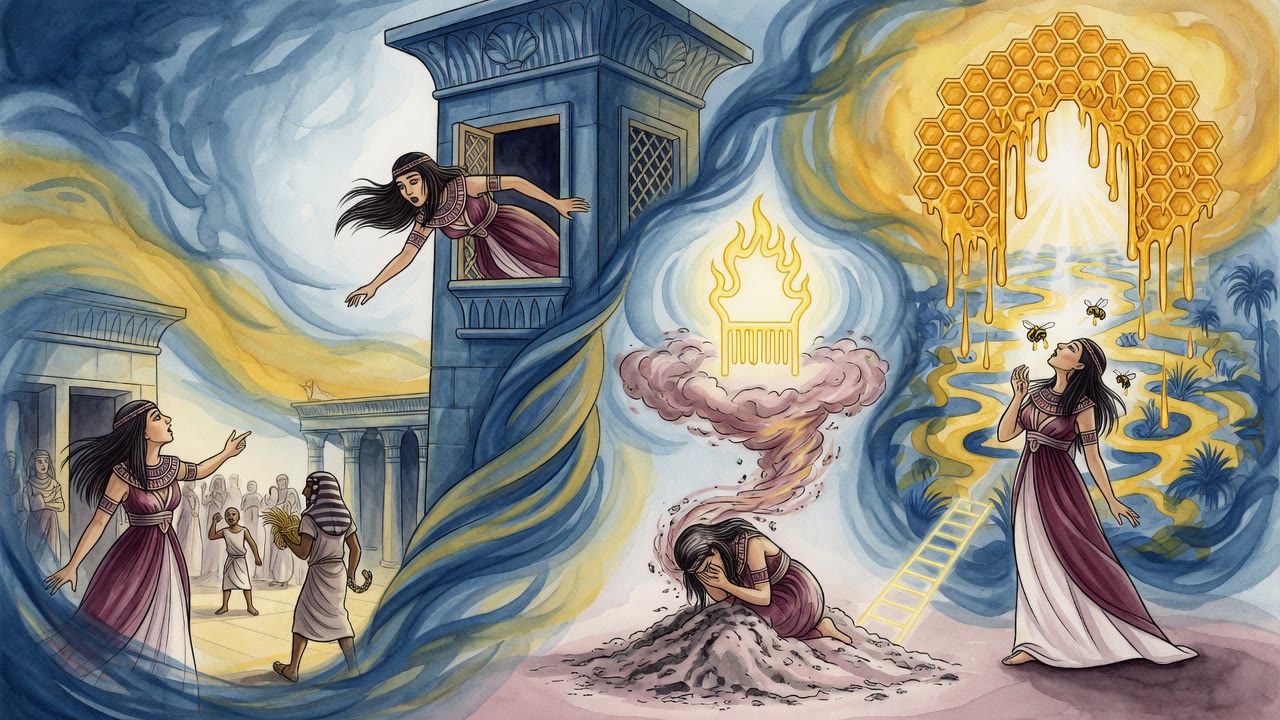
Sold in Egypt to Potiphar, captain of Pharaoh's guard, Joseph entered a household already prepared for him in a way he could not have suspected. Potiphar's wife, called Zuleika in later telling, had been told by astrologers that she would have descendants through Joseph. She took this to mean a direct bond between them. The prediction was sound. The reading was wrong.
She cast her eyes on Joseph (Genesis 39:7). He refused her. She persisted, days and months and years. She threatened prison. He answered with psalms. She threatened blindness and labor. He answered with verses. Threat by verse, he met each attempt the same way. God watches over the oppressed. God loosens the prisoner. God opens the eyes of the blind.
The prophecy did come true. Joseph eventually married Asenath, her daughter, and their sons Ephraim and Manasseh became two of the twelve tribes. The descendants she had been promised arrived through that line, not the one she had kept forcing open.
The Boy at the Stone Held On
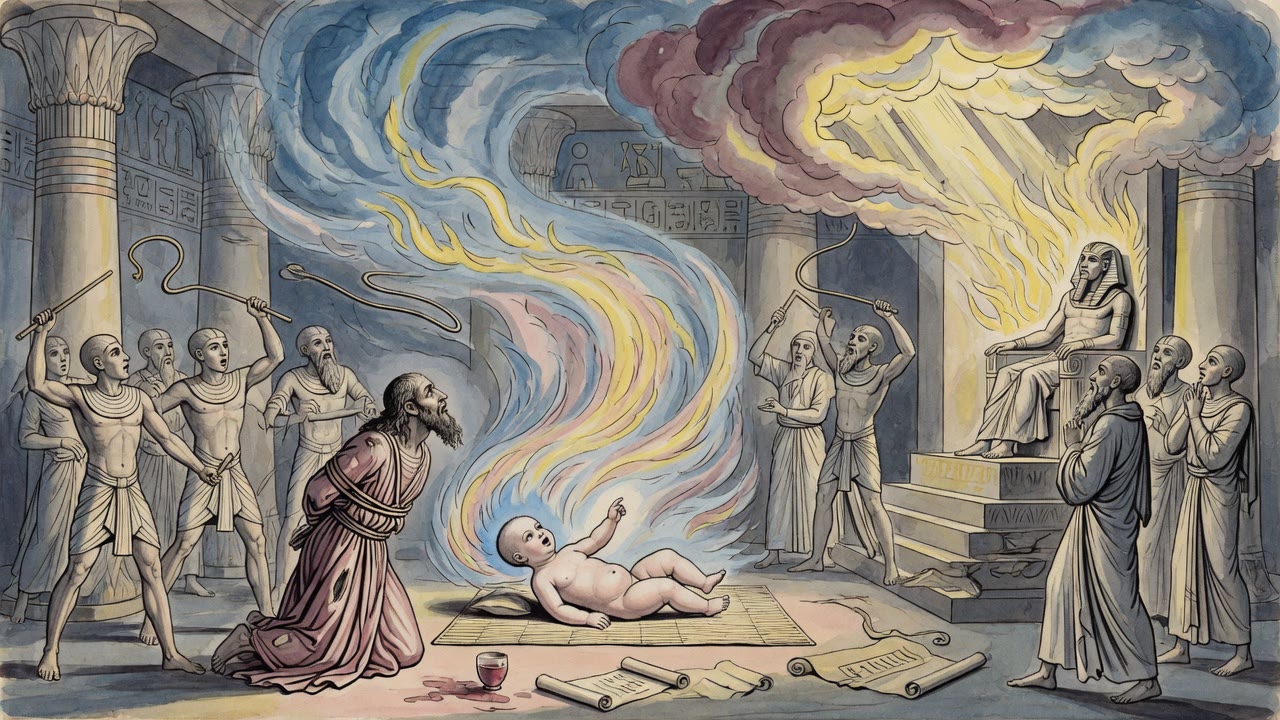
The boy who tattled on his brothers, who walked with a mincing step and painted his eyes and did not understand why the coat was a provocation, became the man who held on inside Potiphar's prison. He had no family in Egypt. He had no standing. He did not even have a language that was his own.
Grief poured into stone at Ephrath. A boy crying into his dead mother's grave with no one to hear him. That became the posture he held for the next thirteen years. He had learned, at the roadside, that a body could lose everything and still call out.
Thirteen years later he would feed Egypt through seven years of famine. In the prison he only knew the stone had not answered, and he had spoken anyway.
← All myths