The Year After Joseph Died, Pharaoh Put Joseph's Brothers to Work
The magicians told Pharaoh his seven daughters would die young. He had been inside the dream. He ordered every magician in Egypt killed.
Table of Contents
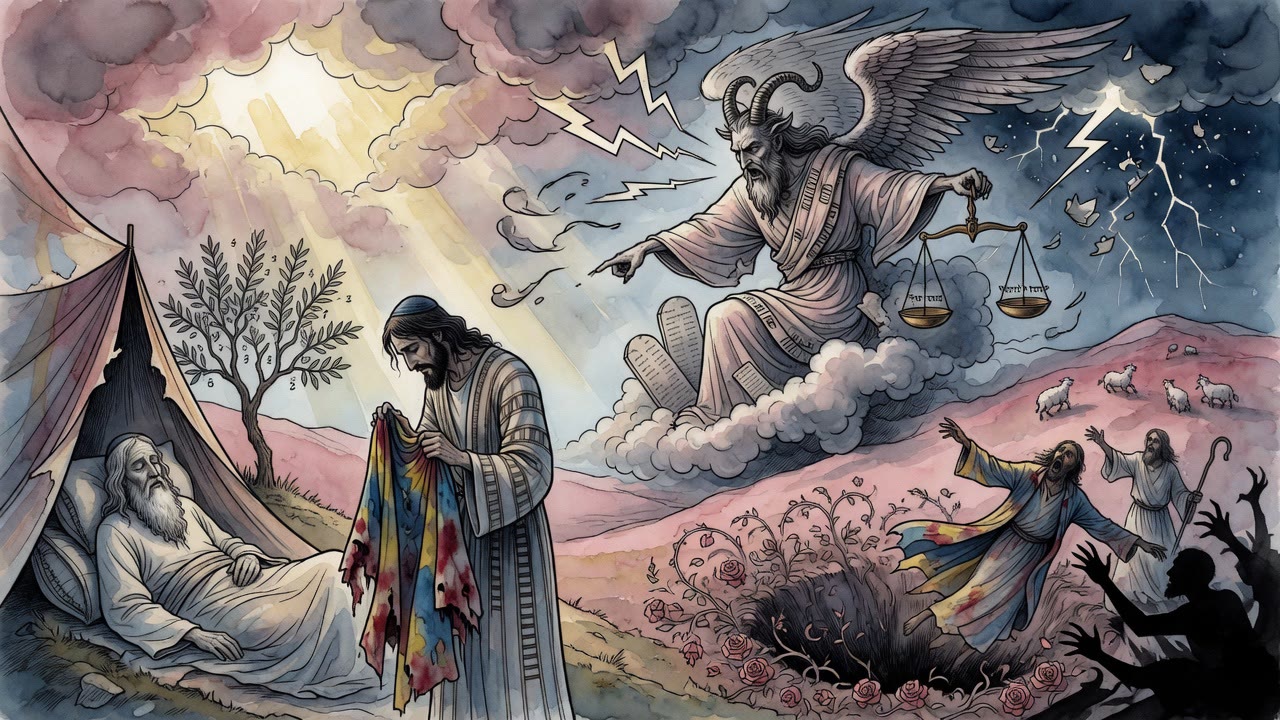
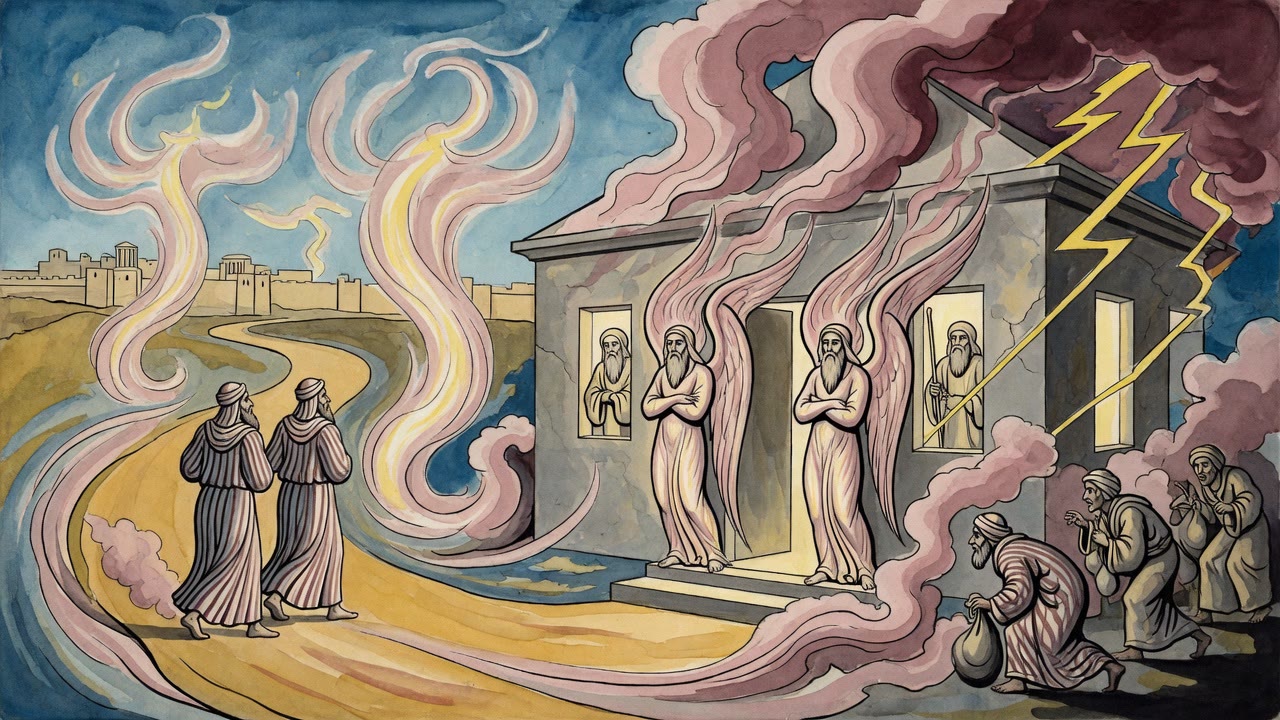
The Ishmaelite traders had a boy in the baggage, bought cheap out of a pit at Dothan, and somewhere on the road south the sky went black on them.
 Click for full size
Lightning came down. The thunder shook the ground under the animals. The drivers lost the track. Then the camels stopped walking, folded their legs, and sat, and no amount of beating would get one of them up again.
The traders stood in the dark shouting at each other. Why has God done this to us? What have we done?
One of them worked it out. It is the slave, he said. It is what we did to that slave. Let us go to him and beg him to forgive us, and if the storm lifts, then we will know.
Joseph was seventeen and tied up in the baggage, and the men who owned him came and asked his pardon.
Seven Daughters Who Would All Die
Years on, in a bedroom in Egypt, a king dreamed about cattle coming up out of the river and woke with the pictures still in him and no idea what they meant.
The magicians came in and had an answer ready. The seven fat cows are seven daughters who will be born to you, they said, and the seven lean ones that ate them mean the daughters will all die while you are still alive. The seven full ears are seven cities you will build, and the seven blasted ears mean the cities will all be destroyed in your lifetime.
The king listened to men telling him to his face that everything he built would be buried before he was. He did not believe a word of it. He was not stupid. He had been in the dream.
He sent for more of them. He put out a proclamation that any wise man in Egypt who knew dreams and did not present himself that day would die. They came from Goshen and Rameses and Tachpanches and Zoar and every town on the borders. They filled the hall and stood in front of the throne and contradicted each other.
Seven kings from your line. Seven princes who will destroy them. Seven strong cities and seven Canaanite nations. Seven queens you will marry, all of whom will die before you. Fourteen children who will fight each other, and seven will kill the stronger seven.
Not one of them said famine.
The king's anger came up in him and he threw all of them out of the hall in disgrace. Then he sent an order through Egypt that every magician in the country was to be killed and not one of them left alive. The captains of his guard drew their swords and started.
The Butler Walked In During the Killing
Merod, the chief butler, came in during that and bowed and sat down in front of the king, and told a story about a prison.
Two years ago you were angry with me and you put me in the ward, he said, me and the chief baker. There was a Hebrew slave in there who waited on us. He belonged to the captain of the guard. We both dreamed in one night and we told him in the morning and he read them, each man his own, and every single thing he said happened exactly as he said it.
"Do not kill the people of Egypt for nothing," the butler said. "He is still in the house of confinement."
The order was stopped. The killing stopped. The king sent men to the dungeon and told them not to frighten the prisoner on the way, in case he came in confused and could not speak properly.
Three Steps and Two Sons
They shaved him and took the prison clothes off him and brought him up.
The throne in Egypt sat at the top of seventy steps, and a man climbed as many of them as he had languages. A prince came up to the thirty-first and the king came down to the thirty-sixth. A commoner came up three and the king came down four.
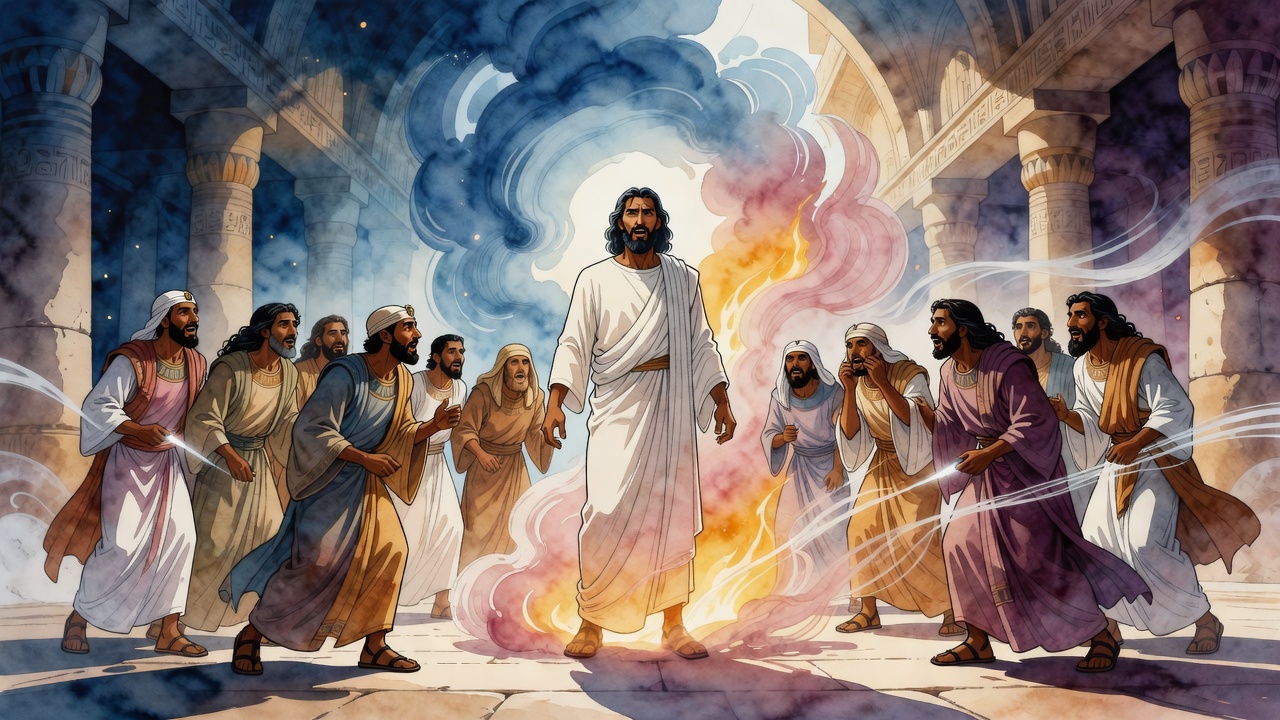
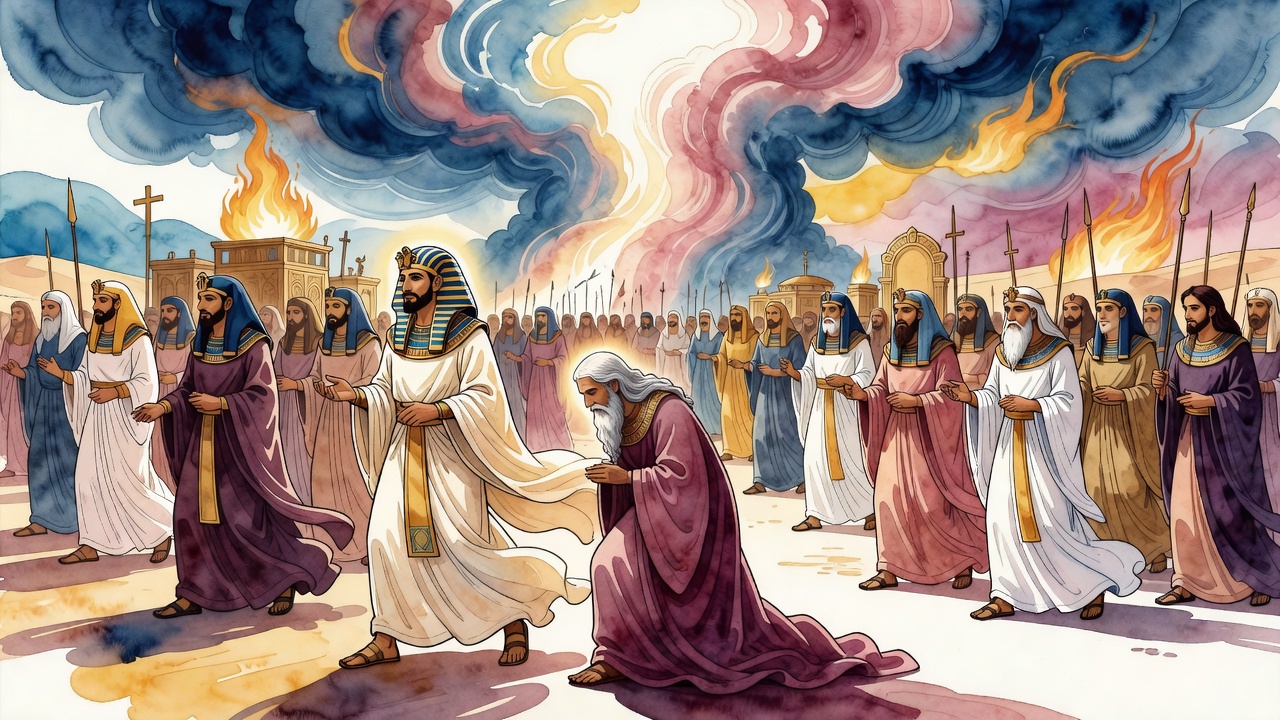
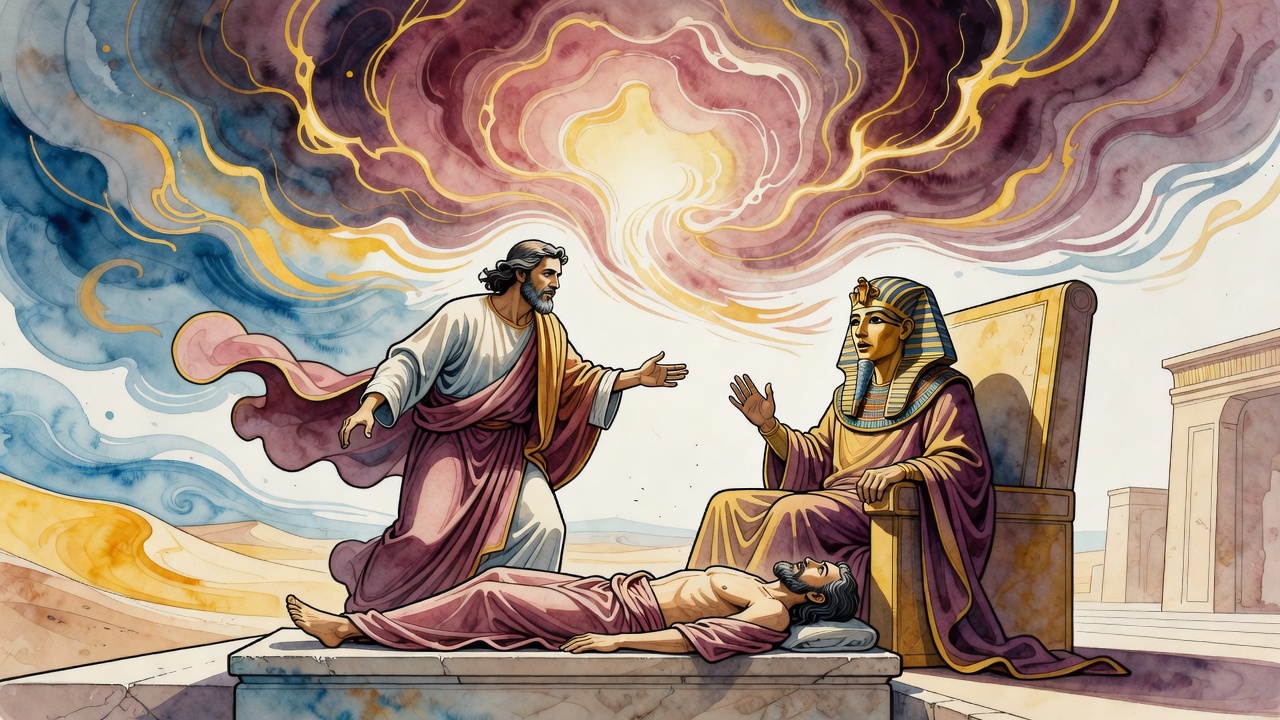
Joseph bowed on the floor and climbed three steps, and the king of Egypt came down to the fourth to talk to him.
He told the king it was not two dreams. It was one dream told twice, and it came twice because the thing is fixed and God is about to do it. Seven years of more food than the land can hold, then seven years of famine that will eat the memory of the good ones. Find a wise man. Put him over Egypt. Fill the storehouses.
"And who says any of that is true?" the king said.
Joseph gave him a sign. Your wife is sitting on the birthing stool right now and she will bear you a son today, and you will be glad about him. And the son you already have, the firstborn, born two years ago, will die today, and the boy born this morning will be your comfort for him.
Then he bowed and walked out. Before the day ended the queen delivered a son, and while the messenger who brought the news was still leaving the room, servants found the king's firstborn lying dead on the floor of the house.
The Seventy-Second Year
When the brothers finally made peace, the king was delighted. He had been afraid a feud inside that family would wreck Egypt. He sent wagons and word that the best of the land was theirs.
Not everyone in the palace was delighted. His own servants stood around afterward saying it out loud to each other. One son of Jacob came here and was promoted over our heads, so what happens to us when ten more of them arrive?
In the seventy-first year after Jacob's household came down into Egypt, Joseph died.
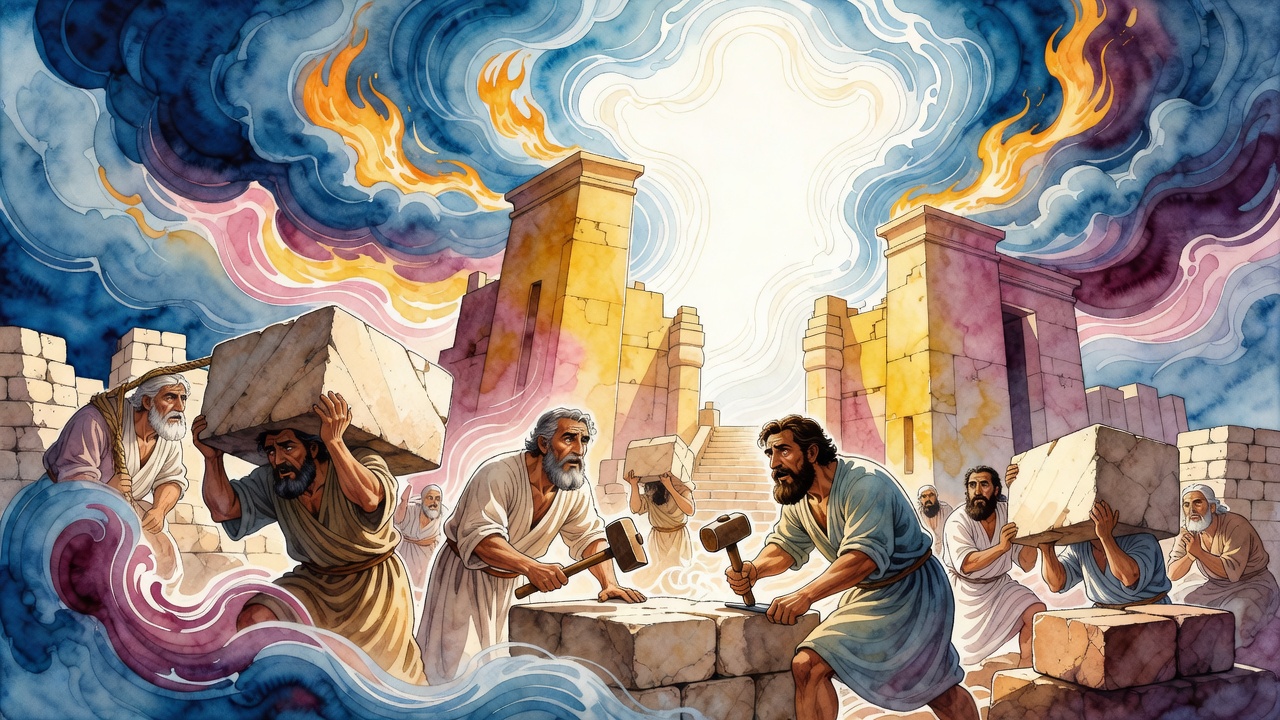
In the seventy-second year, the king of Egypt gave orders for a strong palace to be built for him, a beautiful one, fit to be a royal house, and he commanded the sons of Jacob to help the Egyptians build it. The king who signed that order was not the one who had come down the steps of his own throne to speak to a shaved prisoner. That Pharaoh had been dead for forty years.
The palace was finished. He moved in and reigned securely. That same year Zebulun died at a hundred and fourteen, and three years later Simeon died at a hundred and twenty, and each of them was put in a coffin and handed to his children.
← All myths