5 min read

Egypt's Elders Climbed North to Bury Father Jacob

Joseph waits outside Pharaoh's court in mourning, then leads Egypt's elders to Hebron while children stay in Goshen and Abraham's cave deed holds the claim.

Curated by Arthur · Told by Maggid ·
Table of Contents
  1. Permission Bought With Humility
  2. Aliyah for a Dead Man
  3. What Stayed in Goshen
  4. The Cave Bought Like a Deed
  5. Corridor, Court, Cave

Joseph could have ordered a funeral with a lifted finger. He stood in the hallway instead.

Egypt's Elders Climbed North to Bury Father Jacob Click for full size

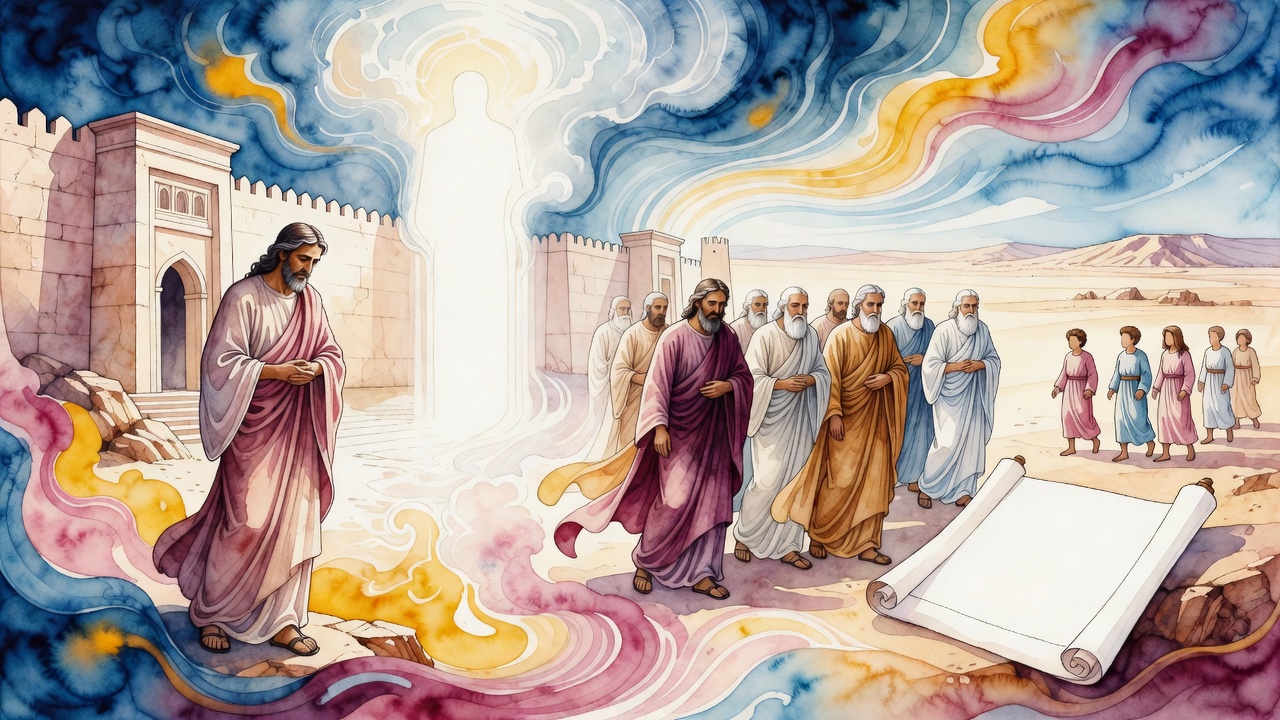
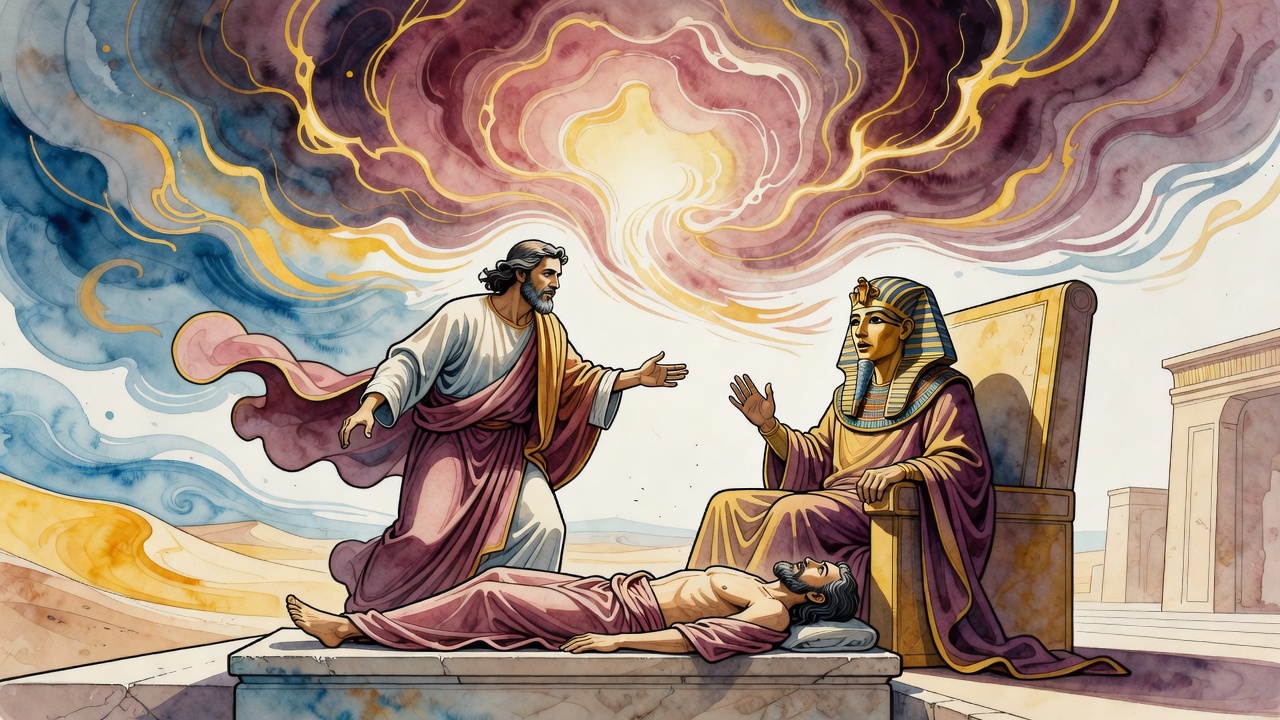
Egyptian protocol kept a mourner from the throne room. Hair uncut, beard grown, clothes torn for a father: none of that belonged before Pharaoh's clean-shaven court. So Joseph spoke to the lords of Pharaoh's house and asked them to carry his words: if I have found favor in your eyes, speak in Pharaoh's hearing and let me go up to bury my father (Genesis 50:4). The second man in Egypt waited on messengers because grief had a dress code he would not break.

Permission Bought With Humility

He did not storm the dais. He did not trade the ring for a shortcut. His father's burial mattered more than his own efficiency. A great man, in this telling, is one who will wait in a corridor until he is allowed to ask. Pharaoh granted what the intermediaries brought. Then a procession formed that Hebrew memory had never seen.

The lords of the house carried a son's request the way lesser men carry petitions for land or grain. Joseph had once stood clean-shaven before Pharaoh with dream-interpretations that saved the kingdom. Now he could not enter looking like a son in mourning, so he used the machine of court the way he used granaries: with patience and precise channels. The dead father still set the terms.

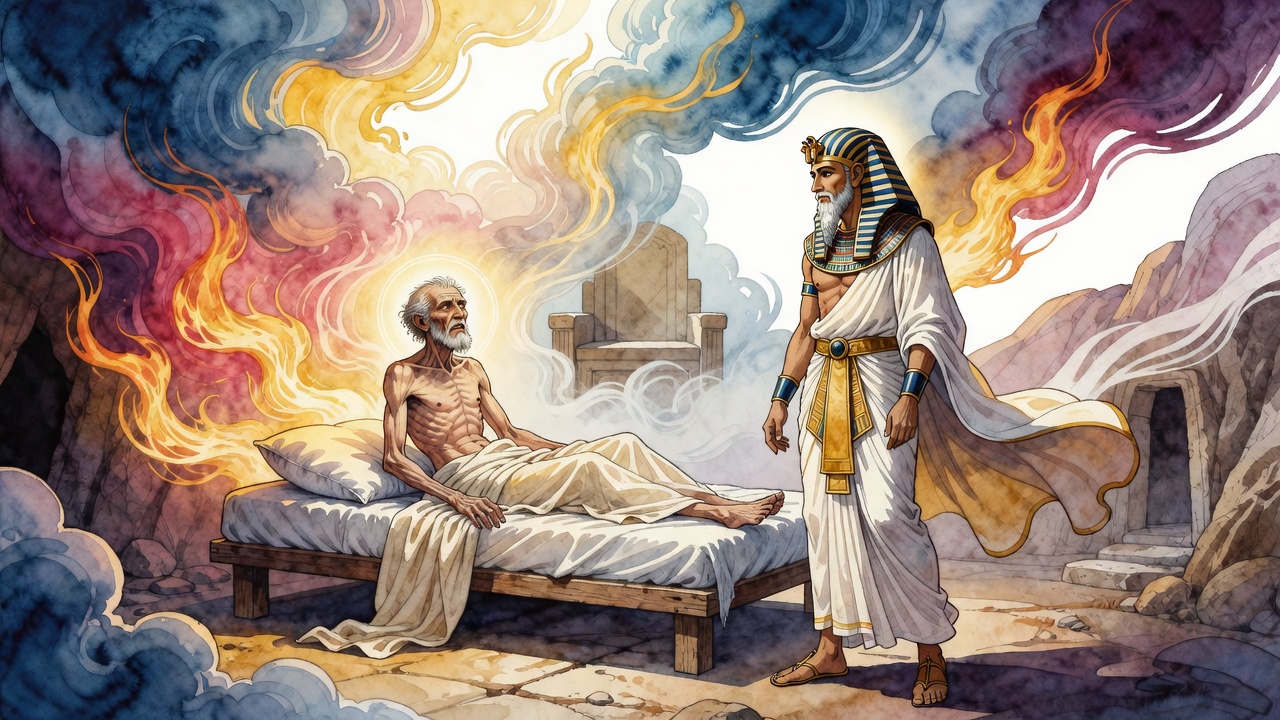
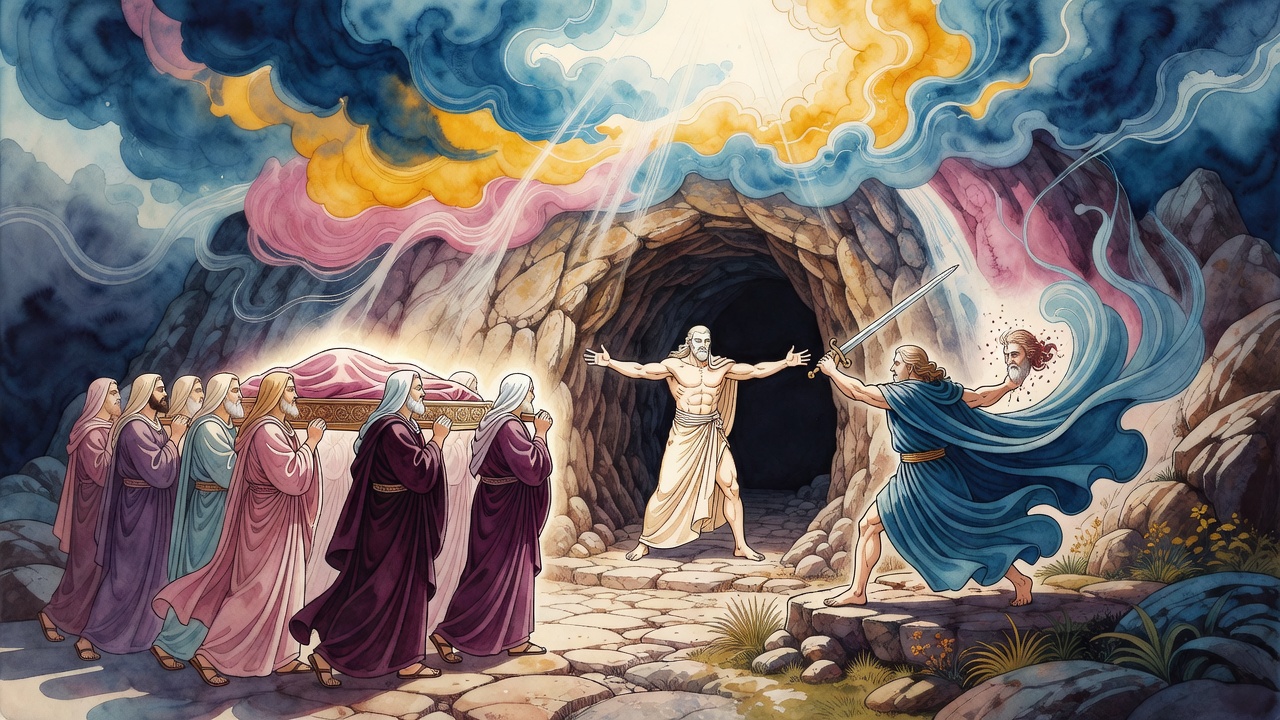
Joseph went up to bury his father, and with him went all Pharaoh's servants, the elders of his house, and all the elders of the land of Egypt (Genesis 50:7). Three circles of power emptied northward: personal attendants, royal household, elders of the whole land. A shepherd-patriarch's coffin pulled the greatest court of the age toward Hebron.

Aliyah for a Dead Man

The verb keeps rising. Joseph went up. The servants went up. The elders went up. The same root Jewish speech later uses for pilgrimage attaches here to a burial march. When a righteous soul is carried toward the Land, even Egyptian nobles are making an ascent. Jacob in his coffin accomplished what Jacob in his lifetime never did: he brought Pharaoh's court to the edge of the promise.

This was not a family wagon train. It was a state occasion. Chariots, horsemen, a very great camp. Canaanite watchers would later name the threshing floor's mourning. Egypt's grief for a Hebrew became a public weather system moving up the road.

Horses raised dust. Elders who had never bowed to Jacob's God rode as if a dynasty were relocating its founder. In a sense it was. The seventy souls of Israel were moving their root bone toward purchased earth while leaving their living children behind in Goshen's temporary mercy. The coffin was the true migrant. Everyone else was escort.

What Stayed in Goshen

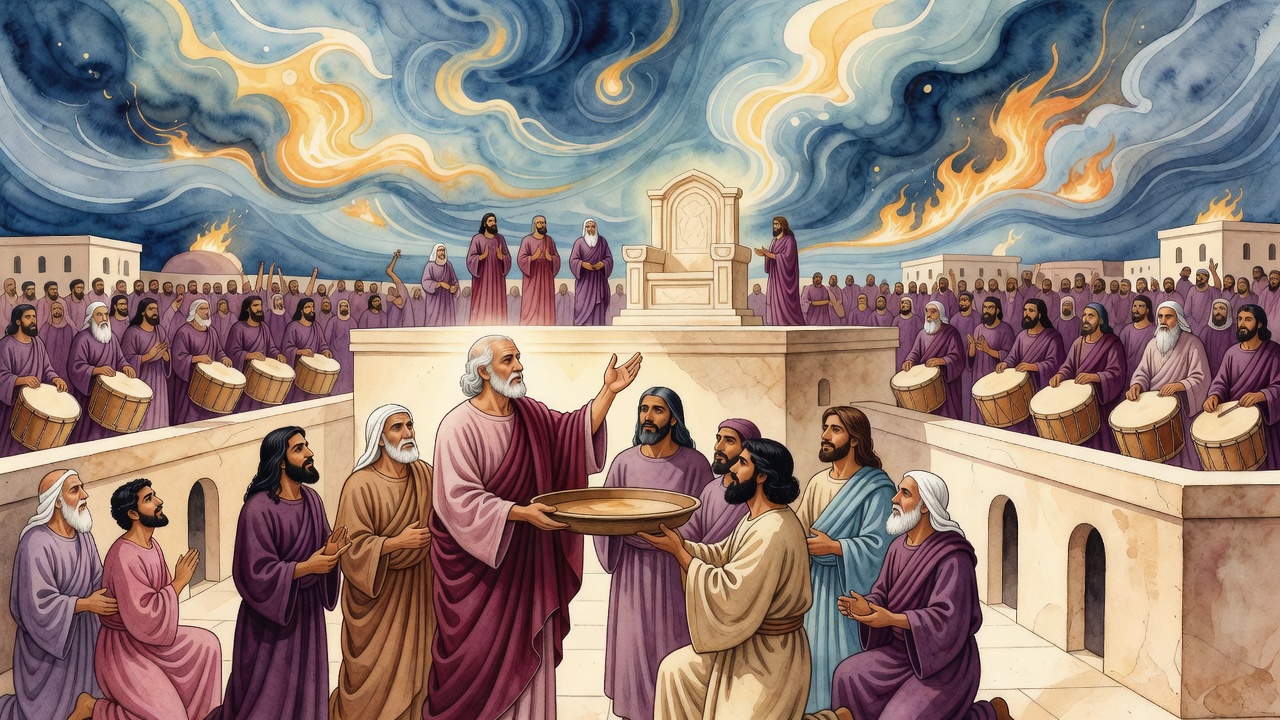
Only the children, the sheep, and the oxen they left in the land of Goshen (Genesis 50:8). Everyone else went. The little ones stayed. The flocks stayed. A funeral from Egypt to Hebron meant weeks, desert risk, tribal edges. Small legs could not make the trek. Herds could not be driven at that pace without loss. So the adults entrusted the next generation to Goshen's safety and promised themselves a return.

By leaving the children, the household also admitted the truth of the hour: they were not yet exiting Egypt for good. That exodus would wait for Moses. They were going up to keep an oath, then coming back to an exile that still fed them. The children waiting in Goshen would grow. Their grandchildren would leave with unleavened dough on their backs. This march was mourning, not redemption.

The Cave Bought Like a Deed

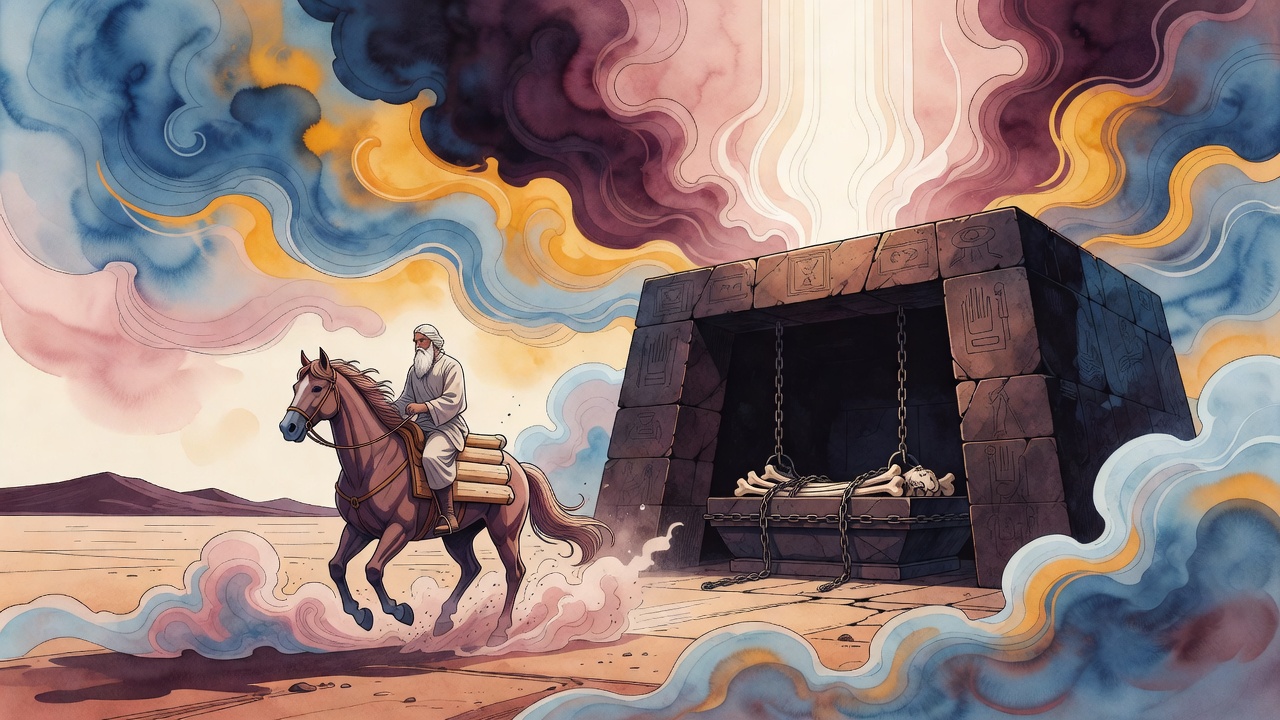
Jacob had already named the burial site with a lawyer's care: the cave in the double field opposite Mamre in Canaan, which Abraham bought from Ephron the Hittite for an inheritance of burial (Genesis 49:30). The Aramaic presses kinyan, legal acquisition. Four hundred shekels of silver in the city gate. Witnesses. Fair price. No squatter's claim. No sword-title.

Abraham's first owned piece of the promised land was a tomb. Sarah, Abraham, Isaac, Rebecca, Leah, and now Jacob. Burying the last patriarch there was not only love. It was a renewal of title for every generation that would need ground under the covenant. The coffin went into purchased earth while Egypt's elders watched a Hebrew family exercise a deed older than their dynasties.

Corridor, Court, Cave

Joseph began in a hallway, too unkempt for a throne, and ended at a cave his great-grandfather had paid for in public silver. Between those rooms moved a nation of Egyptians who did not share Jacob's God and still climbed for his burial. The children in Goshen did not see the cave that day. They inherited the story. The flocks kept eating Nile grass while the bones of Israel claimed Hebron again.

Power waited on mourning. Empire escorted a shepherd home. The first Jewish land remained a grave, and that was enough to pull the elders of Mizraim up the road.

When the cave mouth closed again, Egypt's elders turned south toward Nile politics, and Joseph's brothers turned toward a future still named Goshen. The deed in the gate at Hebron outlasted the procession. Silver spoken before witnesses outlasted chariots. Jacob slept where Abraham had paid, and the corridor where Joseph once waited became, in memory, the place where power learned to yield to a burial oath.


← All myths
From the tradition

Sources

4 sources

The texts behind this telling. Some cards carry a translation of the source; others are our own retelling of it, and each card says which. Every card links out to the original.

Targum Pseudo-Jonathan on Genesis 50:4Targum Pseudo-Jonathan on Genesis

Retold in our words. Read the original at the link below.The Targum of Jonathan ben Uzziel, trans. J. W. Etheridge, London, 1862 · Public Domain

Joseph was the second most powerful man in Egypt. He could have ordered the funeral procession with a wave of his hand. Instead, Targum Pseudo-Jonathan preserves a curious diplomatic scene. "Joseph spake with the lords of the house of Pharoh, saying, If I may find favour in your eyes, speak now in the hearing of Pharoh" (Genesis 50:4).

Joseph does not approach Pharaoh directly. He uses intermediaries. The Aramaic preserves a detail many commentators have noted: while mourning, Joseph could not wear court attire or appear unshaven before the king. Egyptian protocol required a clean-shaven, groomed presence in Pharaoh's throne room. So Joseph sends the request through the "lords of the house". Pharaoh's advisors, asking them to carry his words for him.

There is a quiet humility in it. The viceroy who once stood before Pharaoh to interpret dreams now speaks from behind the veil of mourning, through messengers. The Targum shows us a Joseph who knows that power does not exempt a son from the customs of grief. He observes Egyptian court protocol even when it makes his task harder. His father's burial matters more than his own efficiency. A great man, the Targum is teaching, is one who will wait in the hallway until he is allowed to ask.

Full source
Targum Pseudo-Jonathan on Genesis 50:7Targum Pseudo-Jonathan on Genesis

Retold in our words. Read the original at the link below.The Targum of Jonathan ben Uzziel, trans. J. W. Etheridge, London, 1862 · Public Domain

When Pharaoh granted Joseph's request, a procession formed that had no precedent in Hebrew history. Targum Pseudo-Jonathan records it plainly. "And Joseph went up to bury his father; and all the servants of Pharoh, the elders of his house, and all the elders of the land of Mizraim, went up with him" (Genesis 50:7).

Three circles of Egyptian leadership joined the funeral. The personal servants of Pharaoh. The elders of the royal household. The elders of the entire land of Egypt. This was not a family burial. This was a state occasion. The greatest civilization of the known world emptied its courts to carry a Hebrew shepherd-patriarch north to Hebron.

The Aramaic phrasing repeats the verb "went up", aliyah, three times in the surrounding verses. Joseph went up. The servants went up. The elders went up. The same root that Jewish tradition uses for pilgrimage to Jerusalem is used here for the journey to bury Jacob. The Targum is making a subtle point: when a righteous soul is carried home to the Holy Land, even Egyptian nobles are making an aliyah. Jacob in his coffin accomplished what Jacob in his life never did, he brought the Egyptian court to the borders of the Promised Land.

Full source
Targum Pseudo-Jonathan on Genesis 50:8Targum Pseudo-Jonathan on Genesis

Retold in our words. Read the original at the link below.The Targum of Jonathan ben Uzziel, trans. J. W. Etheridge, London, 1862 · Public Domain

Targum Pseudo-Jonathan records a small, telling detail about the funeral caravan. "And all the men of Joseph's house, and his brethren, and his father's household: only their children, and their sheep and oxen, left they in the land of Goshen" (Genesis 50:8).

Everyone else went. The children stayed. The flocks stayed.

The Aramaic is preserving a practical wisdom about mourning rites. A funeral procession from Egypt to Hebron was a long, difficult journey, weeks of travel, tribal warfare risks, desert conditions. Small children could not make the trek. Flocks could not be driven at that pace without being lost. So the adult Israelites entrusted their children and livestock to the safety of Goshen, knowing they would return.

There is also a quiet covenantal point. By leaving the children behind, the family was promising itself that it would come back. The Israelites were not abandoning Egypt to return to Canaan permanently, that would come in Moses's time, centuries later. They were going up only to fulfill Jacob's final oath, and then coming home to their Egyptian town. The Targum captures a family in a transitional moment: mourning a father, still rooted in exile, not yet ready for exodus. The children waiting in Goshen would grow up, and their grandchildren would eventually leave for good.

Full source
Targum Pseudo-Jonathan on Genesis 49:30Targum Pseudo-Jonathan on Genesis

Retold in our words. Read the original at the link below.The Targum of Jonathan ben Uzziel, trans. J. W. Etheridge, London, 1862 · Public Domain

Jacob names the burial site with the precision of a deed. Targum Pseudo-Jonathan preserves the legal language. "In the cave that is in the Double Field over against Mamre in the land of Kenaan; for Abraham bought the field of Ephron the Hitah for an inheritance of burial" (Genesis 49:30).

The Aramaic insists on the word kinyan, legal acquisition. Abraham did not camp there. He did not claim it by force. He paid four hundred shekels of silver in the hearing of the city gate (Genesis 23:16). This was a public, notarized, irrevocable transaction. Hebron's first Jewish plot was acquired the way lawyers acquire land: in full view, with witnesses, for fair market value.

Why does Jacob dwell on these details from his deathbed? Because a covenant needs ground. Abraham's promise from God included the land of Canaan, and this cave was the first and only piece he actually owned. Burying Jacob there is not merely sentimental. It is a legal act reinforcing the family's claim to the land for every generation that will follow. The patriarchs chose Hebron as the anchor. Sarah, Abraham, Isaac, Rebekah, Leah, and now Jacob. The Targum is telling us: in Jewish history, the first piece of the Promised Land that truly belonged to Israel was a tomb.

Full source