Jacob Folded Ephraim into the Twelve Tribes
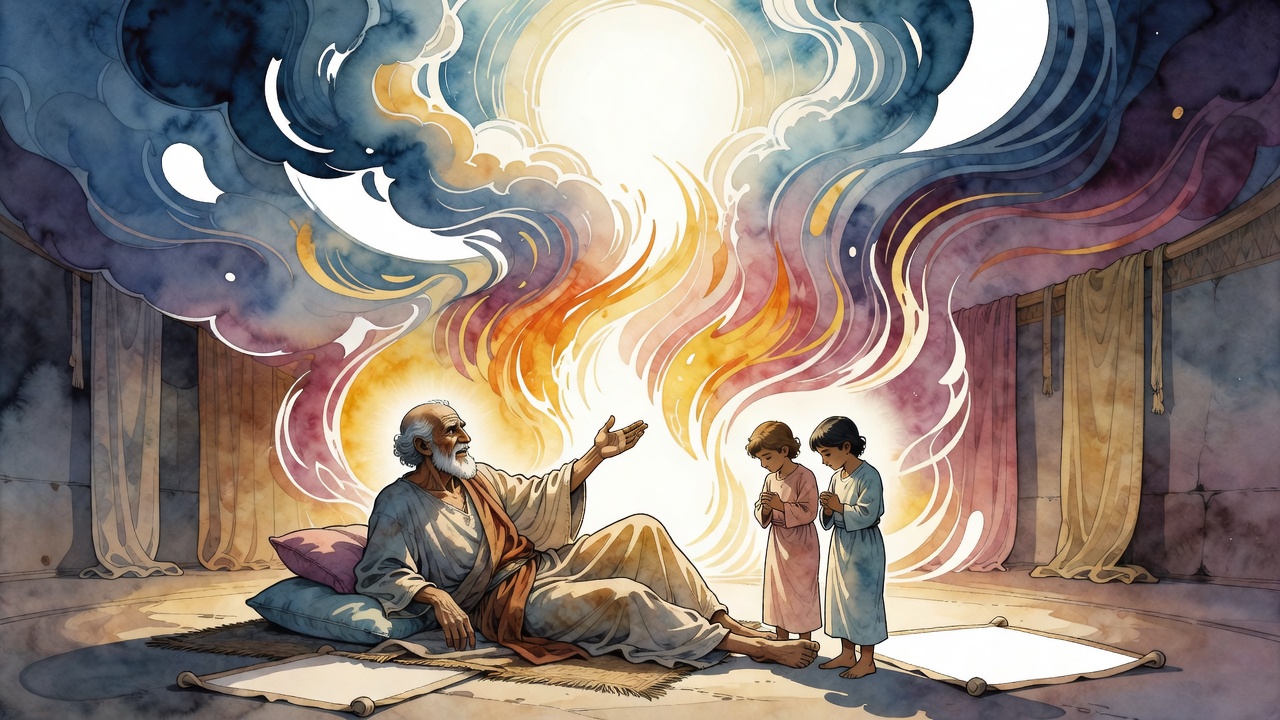
Asenath nursed the dying man and told Joseph to bring his sons for a blessing. Jacob's answer was that in seventeen years the boys had never come.
Table of Contents
Disease found Jacob soft where life had already hammered him hard. Years with Laban had burned day and night into his bones. The night-wrestle with the angel and the meeting with Esau had left victories that still ached. He was not built, at the end, to carry fever on top of history. The body that had won too many fights began to lose the quiet one.
 Click for full size
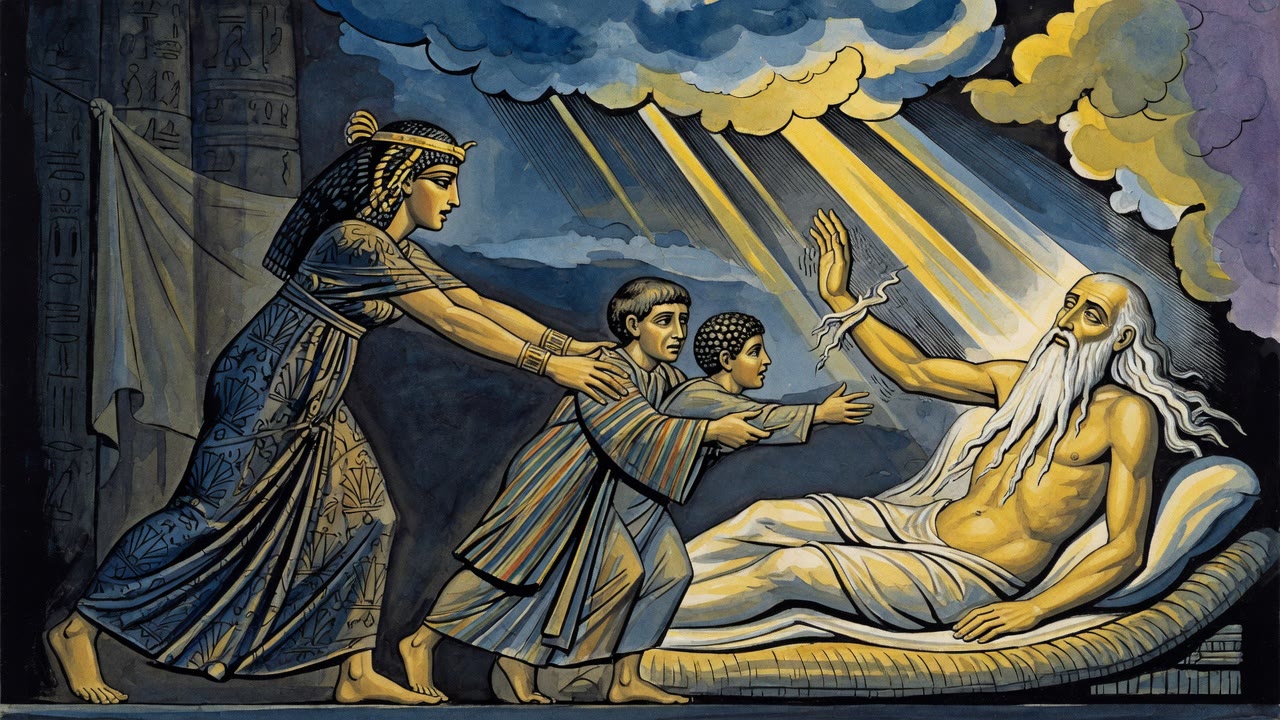
All the years of his sojourn in Egypt, Asenath, wife of Joseph, nursed him. When she saw the end near, she told Joseph a thing she had heard. One blessed by a righteous man is as though blessed by the Shekhinah (שכינה), the divine Presence. "Bring thy sons hither, that Jacob give them his blessing." The nurse spoke like a sage. The dying man would have to answer like a ledger-keeper of heaven.
Seventeen Years Without the Boys
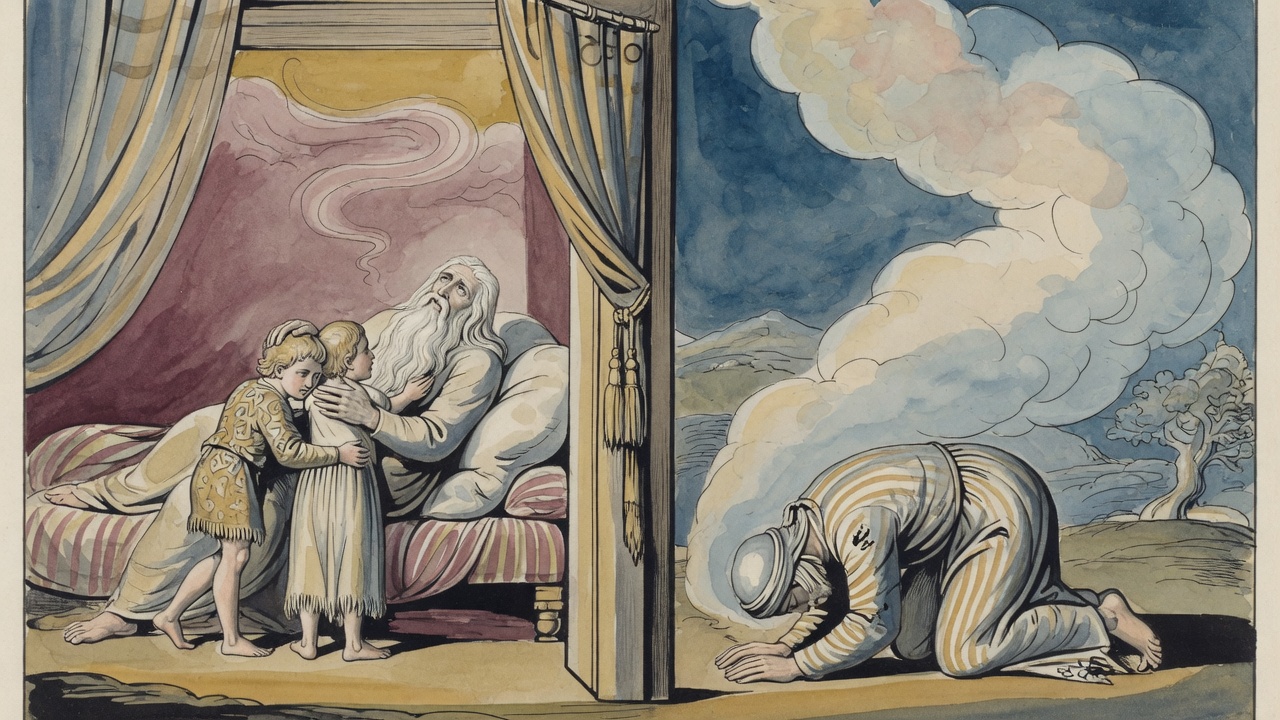
Joseph brought Manasseh and Ephraim. Jacob did not smile first. He measured the visit the way a man measures a door that has stayed shut too long. "In all the seventeen years thou hast been visiting me, thou didst never bring thy sons with thee, but now they have come, and I know the reason."
The reason cut both ways. If he blessed them as his own, he risked standing against the word that made him father of twelve tribes. Fourteen names would crowd a promise built for twelve. If he refused, he would wound the son who had fed him through famine and bent Egypt's storehouses toward a Hebrew tent. "So be it, I will bless them," he said. "But think not I do it because thou didst support me all these years. There is quite another reason." Gratitude was real. It was not the engine.
The Unpaid Tithe of Sons
At Beth-el, fleeing toward Haran, Jacob had vowed a tenth of all he owned to God. Goods he had tithed. Sons he had not finished tithing. Law pulled the firstborn of each mother out of the count, Reuben, Joseph, Dan, and Gad, and the arithmetic of holiness stalled like a cart in mud.
God had appeared again at Beth-el and said, "Be fruitful and multiply." After that word only Benjamin was born to Jacob in the old way of the camp. The old man now heard Manasseh and Ephraim inside that older blessing, a nation and a company of nations waiting in two Egyptian-born boys. Adopt the two, and ten countable sons remain, and a tenth can be given. He would leave the world free of the sin of an unpaid vow. The blessing was a debt payment disguised as love, and love disguised as accounting. Both were true at once.
Ephraim Named Head of the Future Academy
Ephraim received a separate blessing that reached past flocks into study halls not yet built. "Ephraim, my son, thou art the head of the Academy, and in the days to come my most excellent and celebrated descendants will be called Ephrati after thee." Learning itself was planted in a grandchild born under Pharaoh's sky. The younger hand found the first place, as Jacob's own life had once stolen a first place in a different tent.
Joseph took two gifts that tied Egypt back to Canaan's blood and Eden's first clothes. Shechem, the city Jacob had held with sword and bow when Amorite kings came for revenge after the affair of Dinah. And the garments God had made for Adam, passed hand to hand until they reached Jacob. Shechem was reward for Joseph's chastity when immorality first burst in that place, and inheritance through Asenath, Dinah's daughter, to whom Shechem son of Hamor had once given the city. Sword, bow, and a wife's lineage met in one municipal gift.
A Body That Had Won Too Many Fights
The blessings came from a frame already cracking. Jacob had beaten the angel and survived Esau, but the wins had spent him. Egypt's soft years could not rebuild what Canaan and Padan-aram had spent. Asenath's hands could steady a cup. They could not unwrite decades of night labor and fear. When the sons of Joseph left the bed, the map of Israel had changed without adding chaos. Twelve remained the count that mattered, and two Egyptian-born boys stood inside it as Reuben and Simeon stood.
Outside, Goshen still held flocks and grandchildren and the low talk of men who did not yet know how long Egypt would stay kind. Inside the room, an old shepherd finished the only war left to him, the war between promise and arithmetic, and chose both by adopting the boys who made the numbers holy again. The man who had limped from the Jabbok limped toward death with his vow closed and his favorite son's house enlarged under a name that would one day mean academies as much as tribes.
Joseph had waited seventeen years to bring the boys. Jacob had waited a lifetime to balance a tithe. The sickbed became the place where both waits ended, not in ease, but in a blessing that rearranged the future while a nurse who was also a daughter of Dinah's line watched the last strength leave a grandfather's hands.
← All myths