5 min read

Jacob's Last Arrow at Esau and the Crossed Hands

At Machpelah, Jacob's bow struck Esau. In Egypt, his crossed hands made Joseph's sons his own and bent Israel's future at the edge of death.

Curated by Arthur · Told by Maggid ·
Table of Contents
  1. The Cave Refused Peace
  2. The Bow Bent Twice
  3. The Iron Tower Fell
  4. The Hands Crossed in Egypt
  5. The Grandsons Became Sons

The corpse of Jacob reached Machpelah and found Esau waiting at the mouth of the cave.

Egypt had sent its honor guard. The sons had carried their father out of the land where he died, back toward the cave Abraham bought with silver and witnesses. The burial place was supposed to be settled. A deed. A family claim. A final rest beside the mothers and fathers.

Esau stood there with armed men.

The Cave Refused Peace

The sons lowered their shoulders under the weight of the bier. Dust clung to their sandals. Behind them stretched the long road from Egypt. Before them stood the brother who had once sold the birthright and now wanted the remaining place in the cave.

Judah had no patience left for soft words. His father had spent a lifetime measuring danger, blessing one child, fleeing another, bowing when he had to, wrestling when he had to. Now the old quarrel had followed his body to the grave. Esau's warriors wore mail. They had not come to mourn.

Judah turned toward his father and spoke as if death had not closed the old man's ears. "How long will words of peace be wasted on him? He attacks like an enemy."

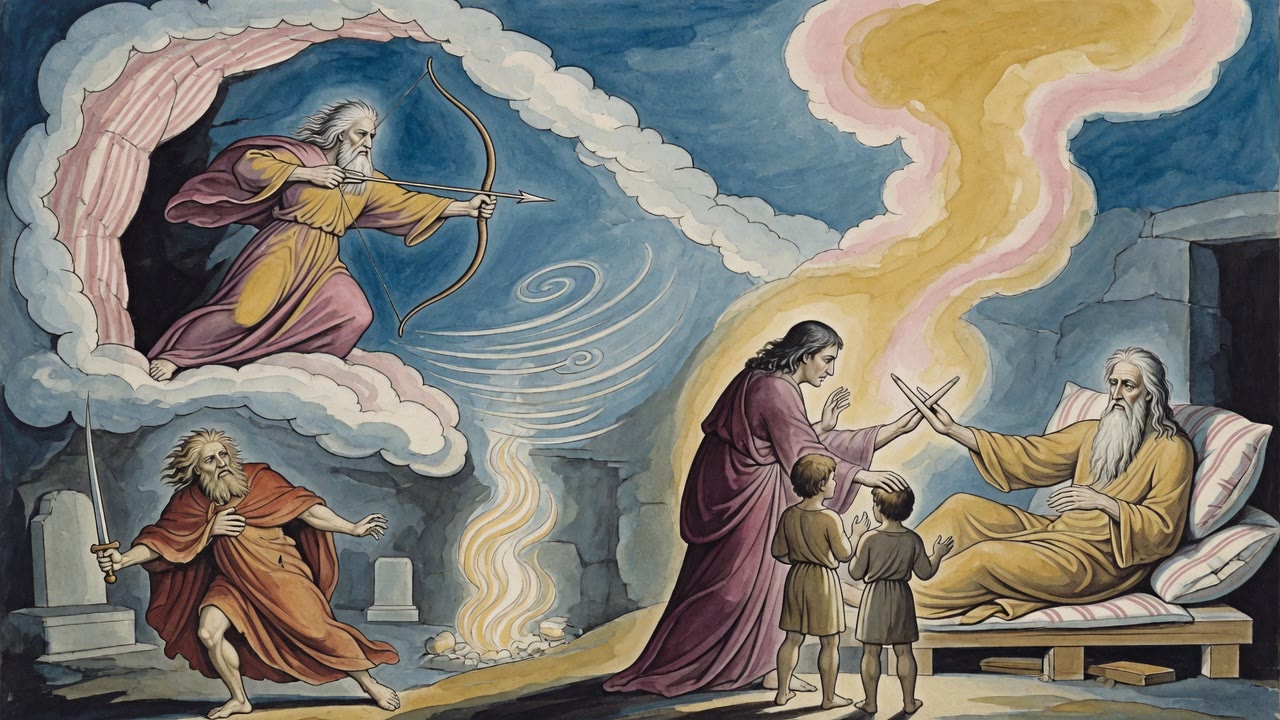
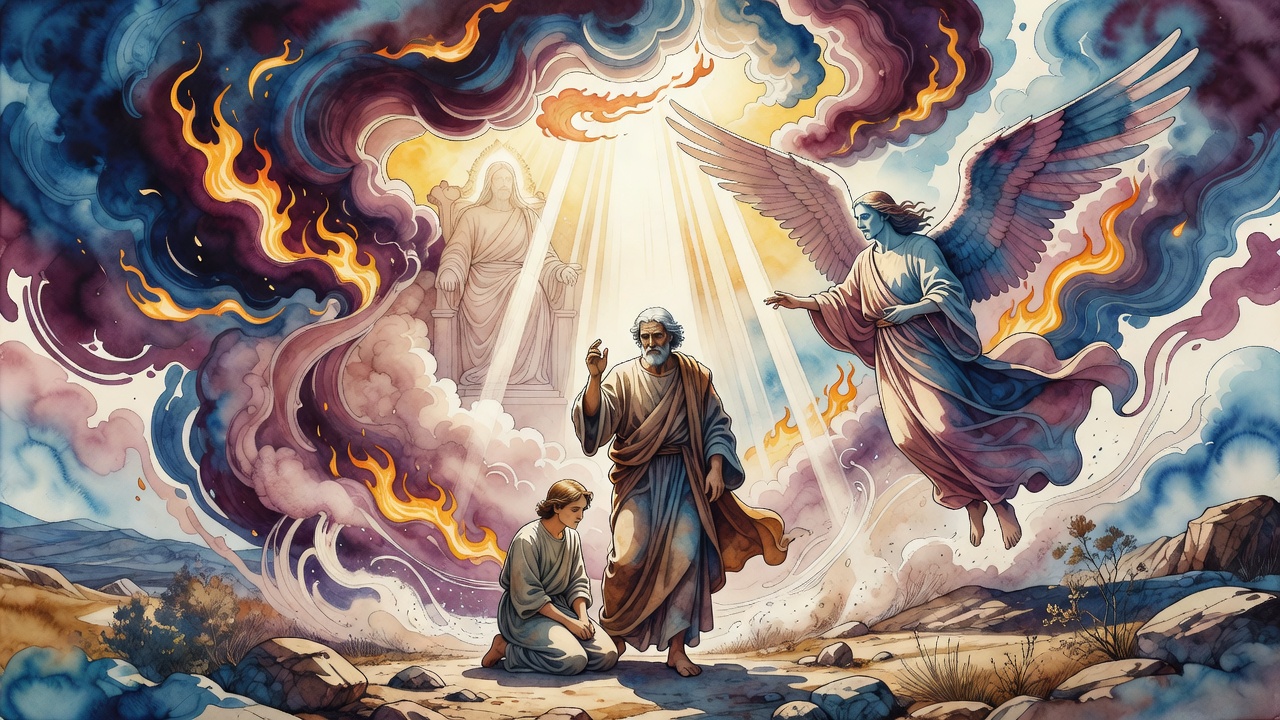
Then the impossible thing happened. Jacob's hand found the bow.

The Bow Bent Twice

The first arrow flew at Adoram the Edomite. He fell before the cave. The second arrow carried every old injury with it: the stolen blessing, the hunted night, the years with Laban, the fear of meeting Esau with children and wives spread behind him. It struck Esau in the right thigh.

The wound was mortal.

Esau's sons lifted him onto an ass and carried him away to Adora. The brother who had once come in from the field red with hunger now left the family tomb bleeding from the leg. Machpelah did not open for him. The gate held for Jacob.

But the field did not go quiet. Judah split the brothers around the citadel like men who knew the burial would not be won by one arrow alone. Naphtali and Gad went south with him and fifty of Jacob's servants. Levi and Dan went east with fifty more. Reuben, Issachar, and Zebulon went north. Simeon, Benjamin, and Reuben's son Enoch went west.

The Iron Tower Fell

The missiles came so thick they dimmed the sun. Stones, darts, and rocks cracked against bucklers. Judah pressed forward with Naphtali on one side and Gad on the other. They reached an iron tower and seized it by force.

Judah cut down six valiant men. Naphtali and Gad killed two each. The servants fought behind them, one man falling for each hand that reached him. Still the enemy held the south. The brothers struck together. Each chose a man and killed him. The line did not break. They charged again, and each killed two.

The cave had become a battlefield because inheritance is never only land. A burial plot can hold a whole argument about who belongs to the covenant, who has sold his place, who may stand at the mouth of the fathers and say mine.

The Hands Crossed in Egypt

Before the road to Machpelah, another battle had taken place in a quiet Egyptian room.

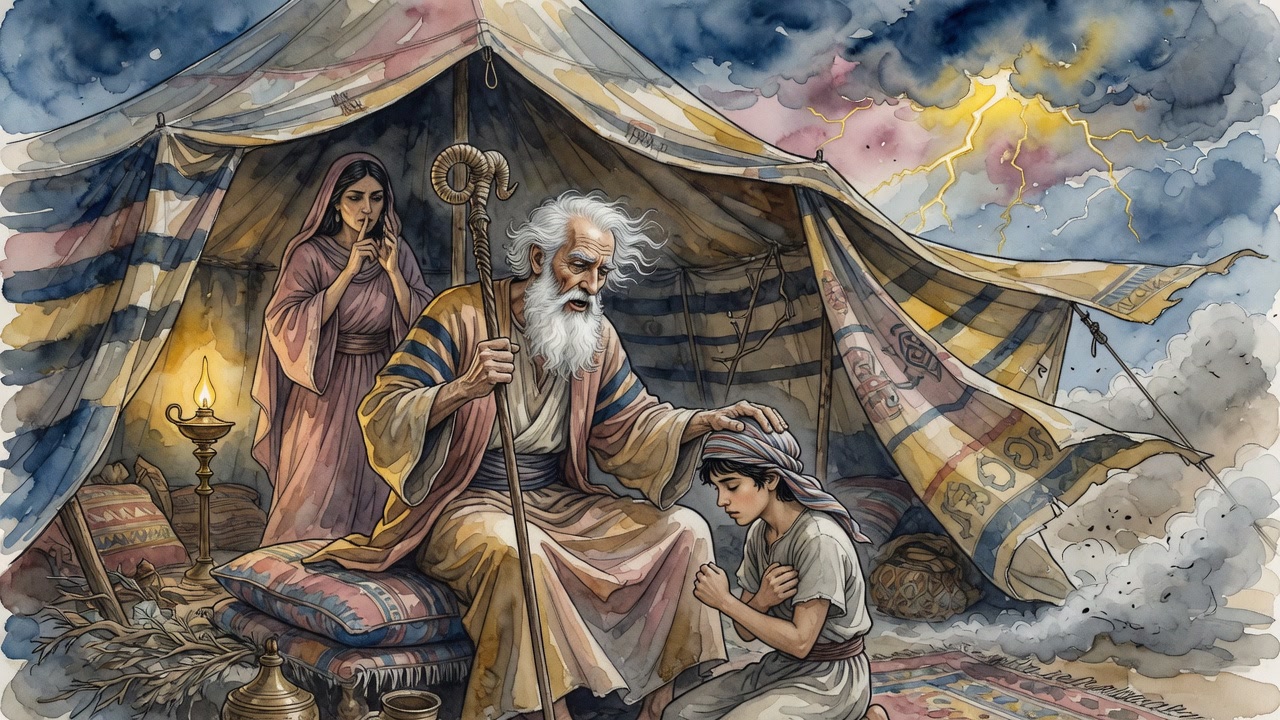
Joseph brought his two sons close to the bed. Manasseh was the firstborn. Ephraim was younger. The arrangement should have been simple: the right hand for the elder, the left for the younger. Joseph knew how fathers could disturb birth order. His own life had been burned by a coat, a preference, a dream, and brothers who could not bear the shape of it.

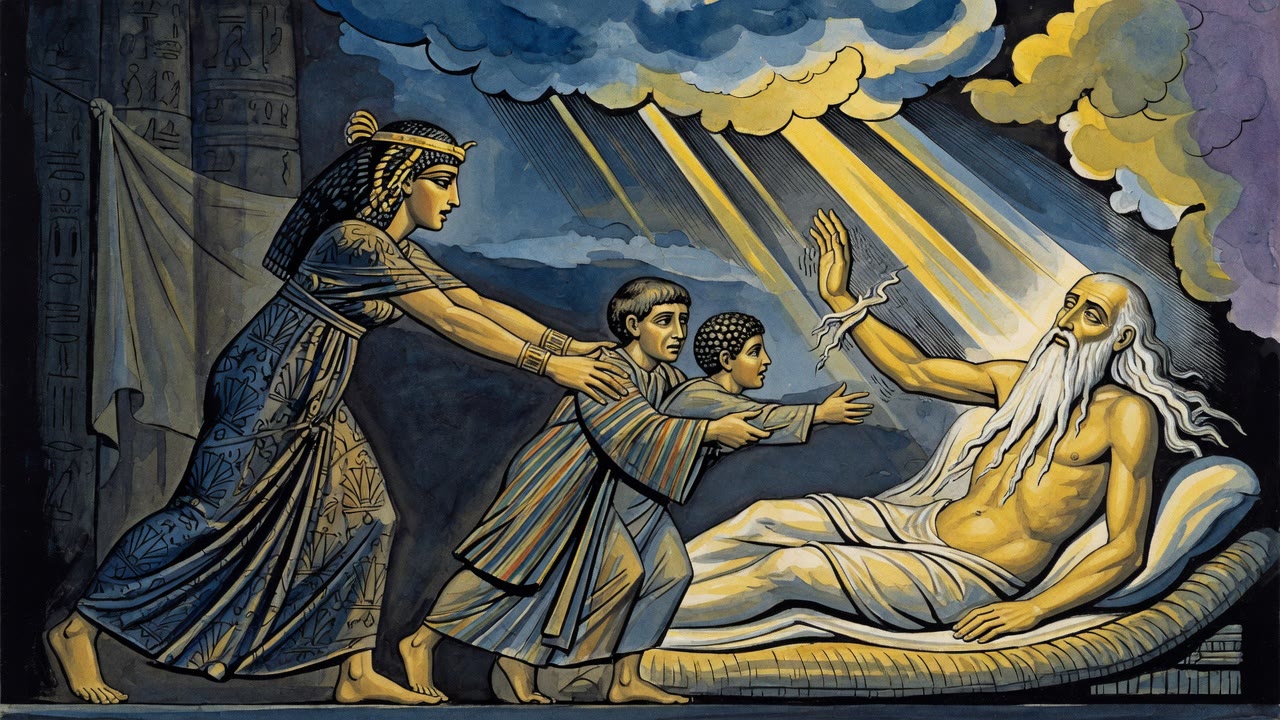
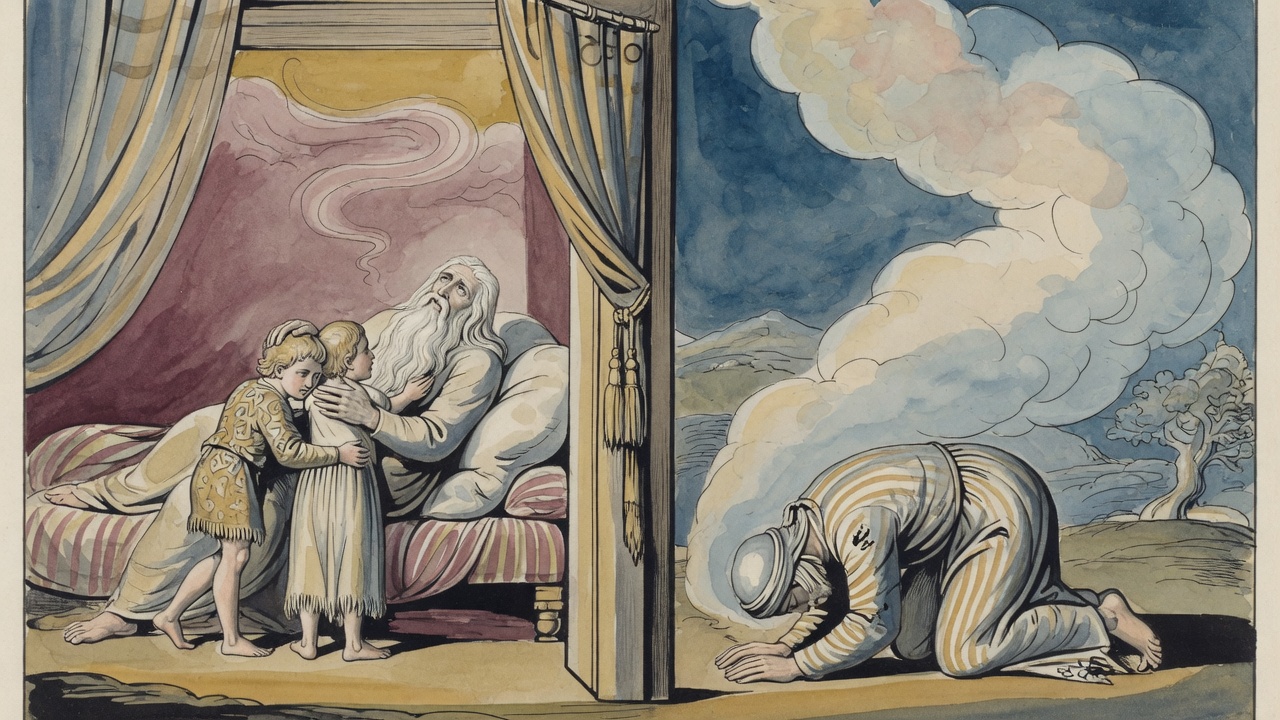
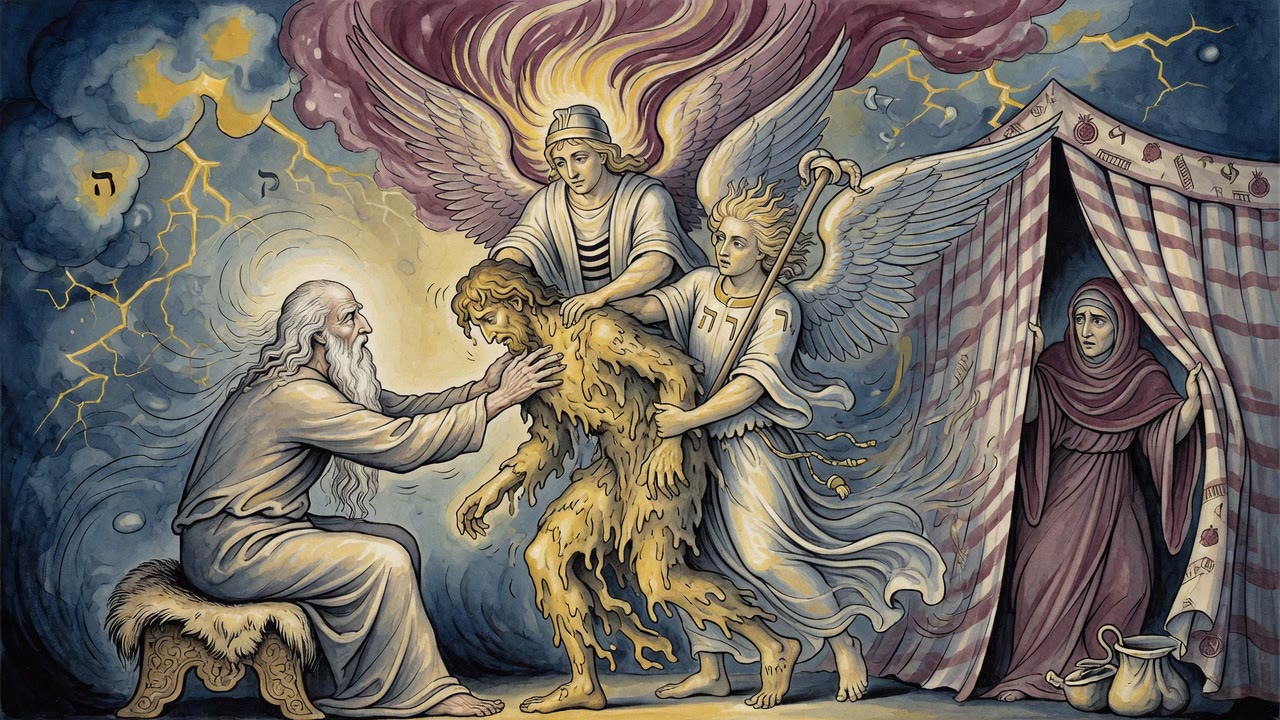
Jacob's eyes were dim, but his hands knew what they were doing. He crossed them. The right hand went to Ephraim's head. The left went to Manasseh.

Joseph tried to correct him. Not like that, Father. This one is the firstborn.

Jacob refused the correction. The younger would grow greater. The elder would also become a people, but the greater blessing would rest where Jacob placed it. He had crossed rivers, names, and destinies. Now he crossed his hands over two Egyptian-born boys and made them his own.

The Grandsons Became Sons

Jacob did not merely bless Joseph's children. He claimed them. Ephraim and Manasseh would stand beside Reuben and Simeon. They were grandsons by birth, sons by decree.

The old family pattern bent again. Laban had once pointed at daughters and grandchildren and called them his own, grasping for possession with a crooked mouth. Jacob, at the end, used the same force of kinship without theft. He did not seize children to control them. He lifted them into the tribes.

At Machpelah, the bow guarded the burial. In Egypt, the crossed hands guarded the future. One gesture drove Esau away from the cave. The other drew Joseph's sons into the house of Israel. The line moved forward under a crossed hand and through a cave mouth wet with battle dust.


← All myths

From the tradition

Sources

2 sources

The texts this telling draws on, in full. Open a card to read inline, or expand it for a wider, quieter read.

Legends of the Jews 6:274Legends of the Jews

It wasn’t exactly a warm reunion.

The story, as retold in Ginzberg's Legends of the Jews, paints a picture of simmering tensions boiling over. Judah, ever the pragmatist, wasn't buying Jacob's attempts at peace. "How long," he demanded of his father, "will you waste words of peace and friendship upon him? He attacks us unawares, like an enemy!"

That’s when things get… well, Biblical.

Jacob, hearing the urgency in his son’s voice, took action. He grasped his bow, and in a moment that surely echoed with the weight of their shared history, he killed Adoram the Edomite. But that wasn’t all. A second arrow flew, this one finding its mark on Esau's right thigh. The wound was mortal. Esau’s sons lifted him onto an ass, and he was brought to Adora, where he died. A grim end to a long-standing sibling rivalry, wouldn't you say?

But the battle wasn’t over.

Judah, a true warrior, organized his brothers and their servants for a strategic assault. He led Naphtali and Gad to the south of the citadel, supported by fifty of Jacob's servants. Levi and Dan, with fifty servants, went east; Reuben, Issachar, and Zebulon, also with fifty servants, to the north; and Simon, Benjamin, and Enoch (Reuben's son), with fifty servants, to the west.

Judah, known for his bravery, charged into battle alongside Naphtali and Gad. They even managed to capture an iron tower! Imagine the scene: sharp missiles raining down, so many that they darkened the sun. Their bucklers deflected the worst of it, rocks and darts and stones flying thick and fast.

Judah, with Naphtali on his right and Gad on his left, broke through the enemy lines, personally killing six valiant men. Naphtali and Gad each took down two soldiers, and their servants each accounted for one. A fierce fight, no doubt.

Even with all their combined might, they couldn't dislodge the enemy from the south of the citadel. They launched a united attack, each brother picking out a victim and slaying him. And then another, even more ferocious attack, each brother now killing two men. Still, victory remained elusive.

This passage from Legends of the Jews isn't just a battle scene. It's a glimpse into the complex relationships, the deep-seated resentments, and the raw courage that define the early generations of the Jewish people. It makes you wonder, doesn't it? How much of our own lives is shaped by the battles, both literal and figurative, that we inherit?

Full source
Pirkei DeRabbi Eliezer 36:7Pirkei DeRabbi Eliezer

It turns out, that feeling might be more ancient and profound than you think. Jewish tradition actually has something pretty amazing to say about it. to a fascinating little teaching found in Pirkei DeRabbi Eliezer, specifically chapter 36. Pirkei DeRabbi Eliezer is a non-canonical Midrash, a collection of stories and teachings that expand on the Hebrew Bible. It's full of wisdom and insight, and this particular passage explores the beautiful bond between grandparents and grandchildren.

The core idea? “The sons of a man's sons are like his own sons.” But where does this notion come from? The text points us straight to the story of Jacob, or Yaakov, in the Book of Genesis. Remember when Jacob is nearing the end of his life in Egypt? He adopts his grandsons, Ephraim and Manasseh, the sons of Joseph. (Genesis 48:5) tells us Jacob declared, "Ephraim and Manasseh, even as Reuben and Simeon, shall be mine." Reuben and Simeon were Jacob's actual sons, part of the original twelve tribes. Yet, here he is, equating his grandsons with them. Were Ephraim and Manasseh literally his sons? Of course not! They were the children of his son, Joseph. But, Pirkei DeRabbi Eliezer uses this verse to teach us that the sons of a man's sons – his grandsons – are considered as his own. It's a powerful statement about the enduring nature of family and lineage. The connection transcends generations.

The teaching doesn't stop there. What about granddaughters? What about the children of one's daughters? The text continues: "And the sons of one's daughters are as one's own sons." Interesting, isn't it?

To illustrate this point, we turn to another biblical narrative: the story of Laban and Jacob. Remember Laban? He was Jacob's uncle and father-in-law, and not always the most trustworthy character. In (Genesis 31:43), Laban says to Jacob, "The daughters are my daughters, and the sons are my sons."

Now, were those sons Laban's actual sons? No, they were the sons of his daughters, Leah and Rachel, Jacob's wives! Yet, Laban claims them as his own. Pirkei DeRabbi Eliezer uses this example to extend the principle: the sons of a man's daughters – his grandsons through his daughters – are also considered as his own.

So, what's the takeaway here? It's more than just a legalistic point about inheritance. It's about the deep, unbreakable bond that connects grandparents and grandchildren. It’s about the enduring nature of family. These stories remind us that family ties run deeper than blood, encompassing love, responsibility, and a shared heritage. It suggests a profound spiritual connection across generations.

Think about your own family. Do you feel that special connection with your grandchildren, nieces, and nephews? This ancient teaching suggests that feeling is not only natural but also deeply rooted in our tradition. It’s a beautiful reminder of the enduring power of family, a legacy that extends far beyond our own lives. Maybe that's why those little ones feel so close to our hearts. They are, in a very real sense, our own.

Full source