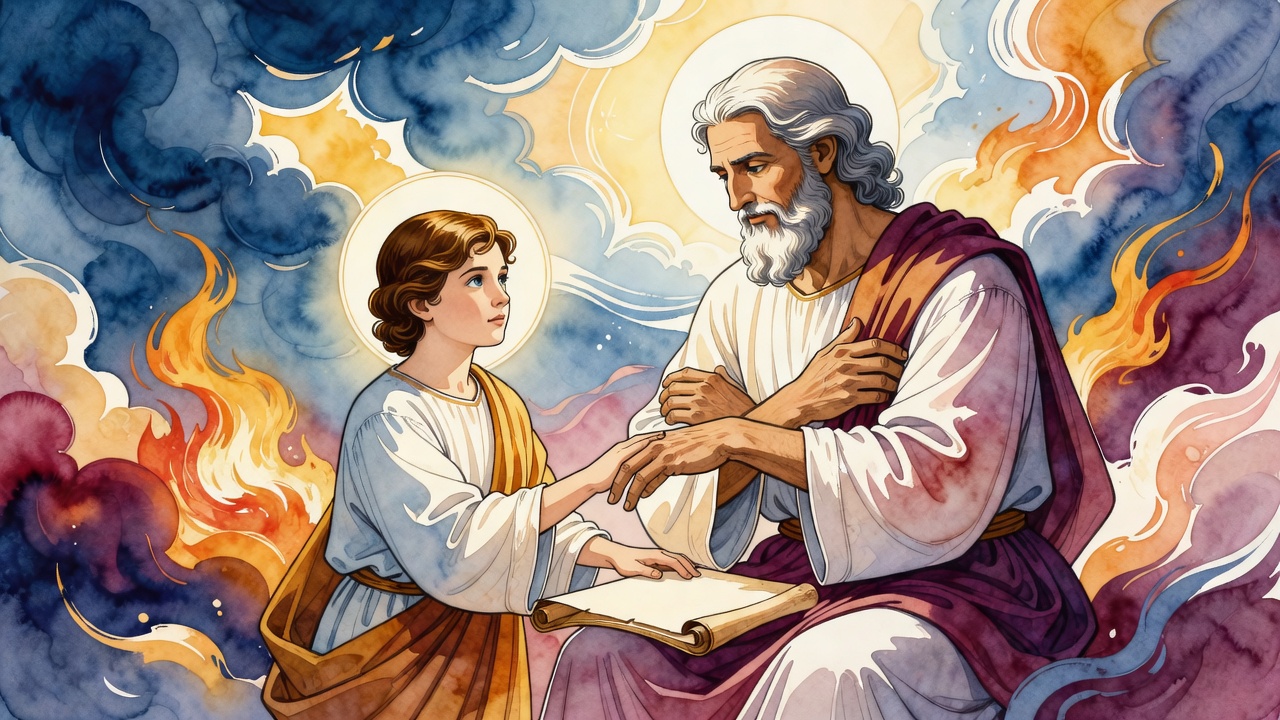
Joseph Held Out a Ketubah to His Blind Father
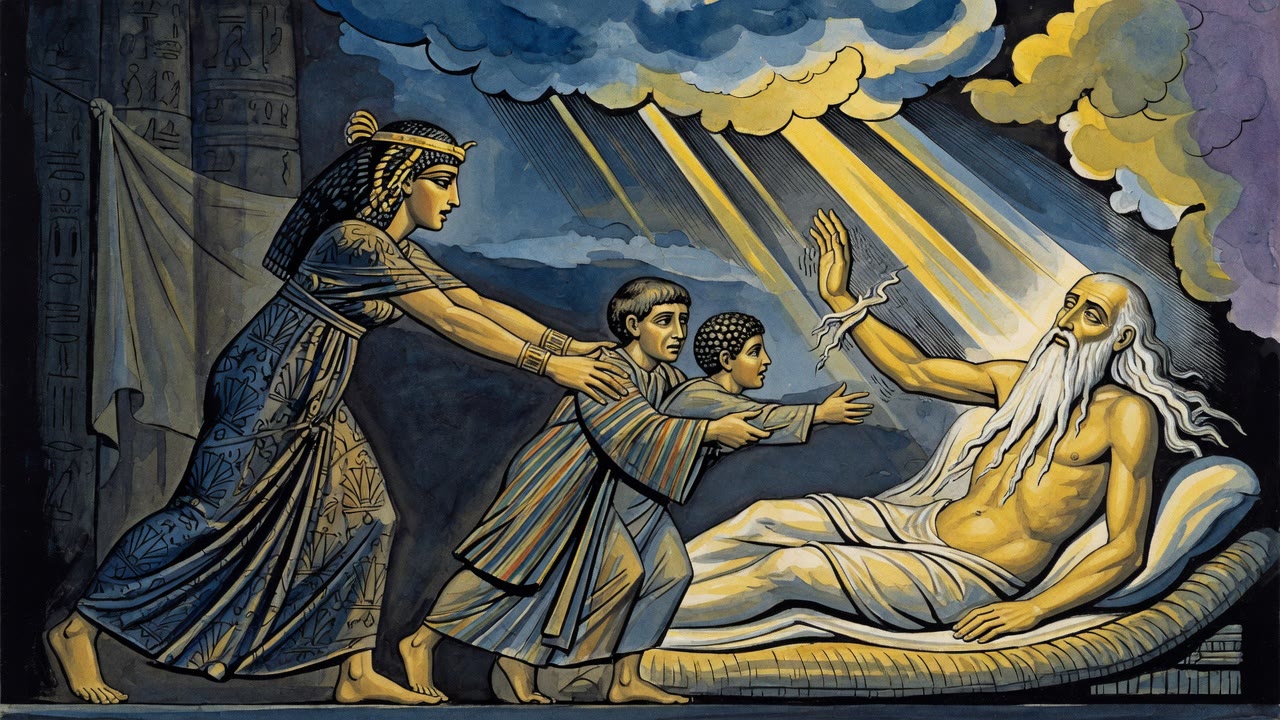
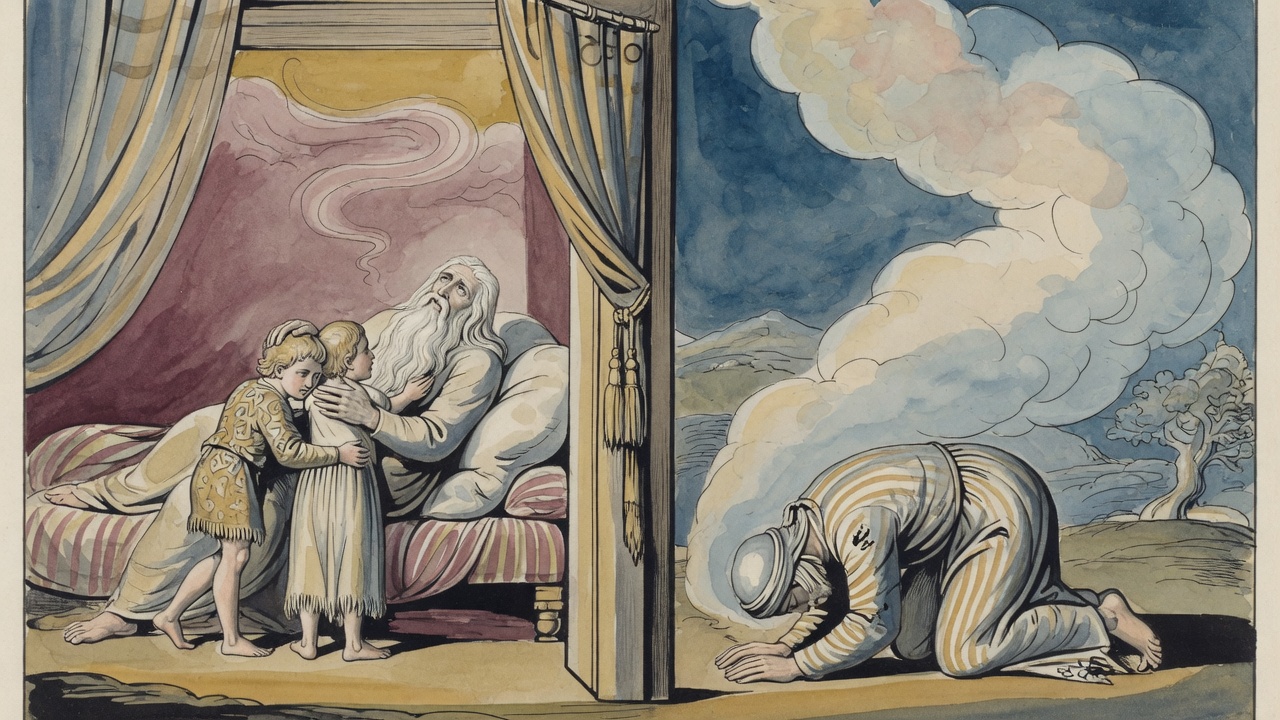
Jacob could not make out the boys at his bed. Joseph put a marriage contract in his hands. The old man's fingers followed lines he could not see.
Table of Contents
Jacob's eyes had gone heavy with age. He could hear breathing at the foot of the bed, two sets of it, small and close together, but the faces would not come clear. He asked who they were.
 Click for full size
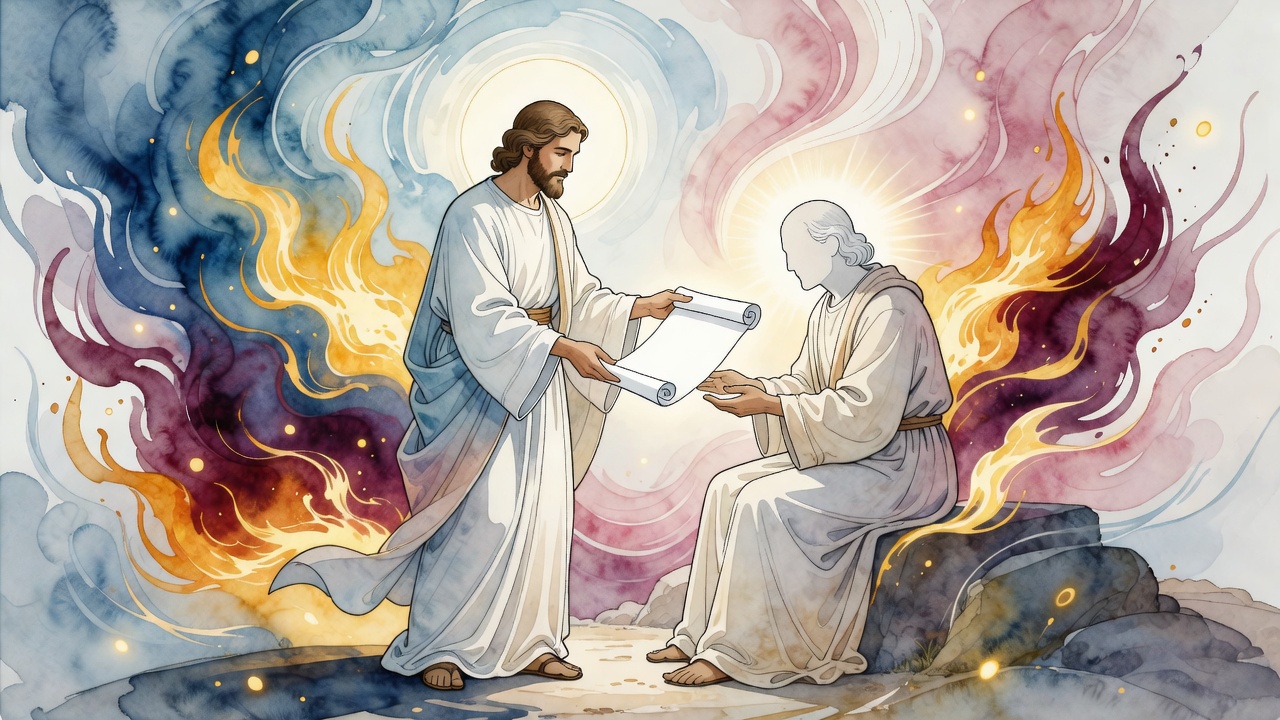
Joseph did not answer with names. He reached into his robe and brought out a document.
The Question a Blind Man Asked
The room in Goshen was quiet enough to hear papyrus. The boys stood where their father had placed them, taught Egyptian manners by Egyptian tutors, waiting while an old man on a sickbed tried to make them out. Jacob knew grandsons when they were in the house. The question was not a failure of memory. It was a demand for proof. Whose sons are these, and by what marriage.
Joseph held the writing out. A ketubah (כתובה), a marriage contract, in the Aramaic telling. He put it into the hands of a man who could not read it.
The Writing in Joseph's Hand
"They are my sons which the Word of the Lord gave me according to this writing," he said, "according to which I took Asenath the daughter of Dinah your daughter to be my wife."
Asenath was not a stranger out of an Egyptian priest's house. She was Dinah's daughter. Jacob's own granddaughter. The writing said so in a form that could be produced, examined, and kept. Jacob's fingers moved along the lines. He could not see the letters. He could feel that a contract had weight, and that his son had carried it into the room instead of a speech.
Ephraim and Menasseh did not move. The paper was doing the talking. The question the room had been circling since the children walked in had an answer a hand could hold.
"Bring them now near to me," Jacob said, "and I will bless them."
From Grandsons to Sons
Then the old man went further than a blessing.
"Your two sons who were born to you in the land of Egypt before I came to you into Egypt are mine. Ephraim and Menasseh, as Reuben and Shimon, shall be reckoned unto me."
In one sentence the boys stopped being grandsons. They were sons now, ranked with the first two Jacob had ever fathered, and the tribal map of Israel bent around a bed in Goshen. Joseph, firstborn of Rachel, took his double portion. Not in silver. In tribes.
The names Jacob chose for the comparison were not idle. Reuben was the eldest, Shimon the second, and both had spent what came with the rank, Reuben in his father's bed and Shimon in the streets of Shechem. Two boys born in Pharaoh's Egypt were being slotted into places their uncles had emptied.
Joseph said nothing about it. He had brought the paper. The paper had done its work.
The Crossed Hands
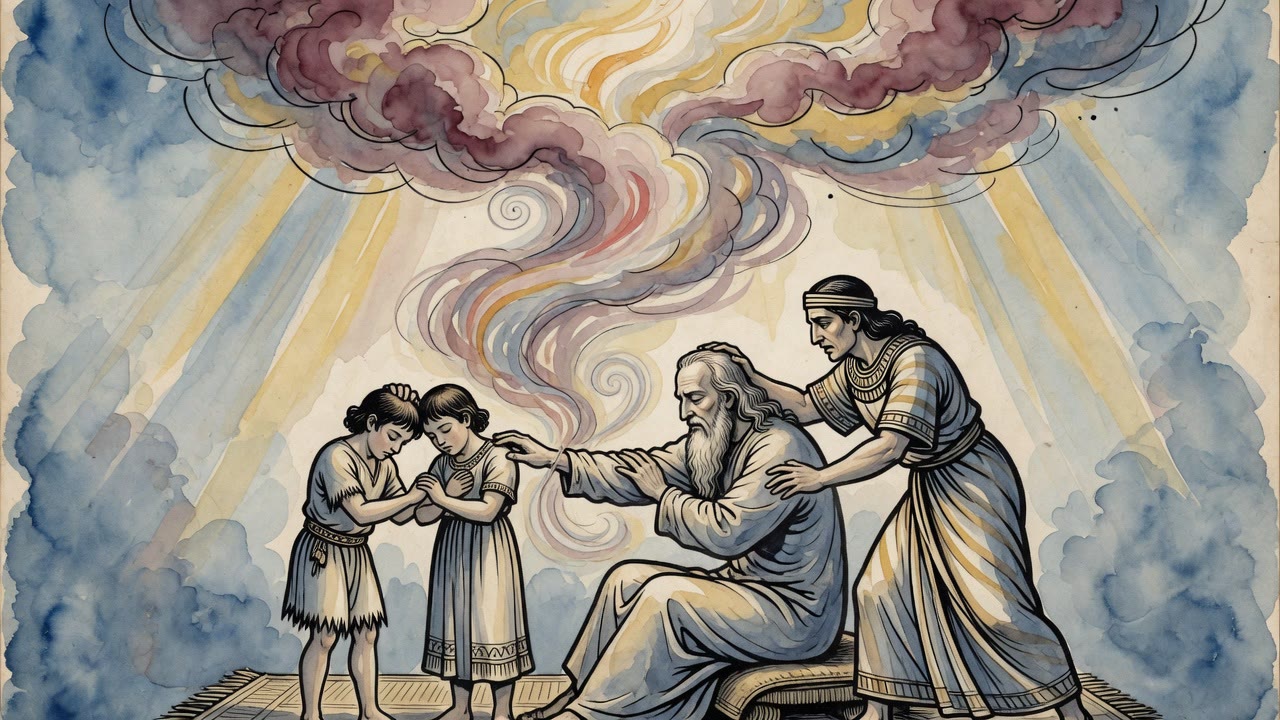
He set the boys where his father's palms could find their heads, the elder under the right hand, the younger under the left, arranged the way he arranged granaries and grain trains, by rank and by order.
Jacob crossed his arms.
The right hand came down on Ephraim, the younger. Joseph reached to lift it and move it back where it belonged, and his father would not be moved. The younger would be greater. His offspring would fill nations. That was the blessing, delivered against the placement of the hands that had brought the boys forward.
The man who once took a blessing meant for his brother, wearing goat skin on his arms while a blind father groped at him, now gave one out of sequence on purpose. His eyes had failed the same way his father's had. Nothing else about the scene rhymed.
Joseph let go of the wrist.
What the Paper Bought
Outside, Egypt still held the grain and the roads and the storehouses Joseph had filled. Inside the room, two boys who had entered as an Egyptian official's children were leaving as tribes. The contract lay on the blanket where Jacob's hand had left it, close enough to reach for again.
Ephraim would be the greater. Menasseh would still be a son, not a guest. Asenath's name sat in the writing on the bed, Dinah's daughter, so the house of Israel would not have to guess later how an Egyptian marriage had entered the line. Jacob's fingers had already walked the lines he could not see. The blessing was on the boys. The paper stayed within reach.
← All myths