Jacob Called Reuben a Garden Drowned by Flood
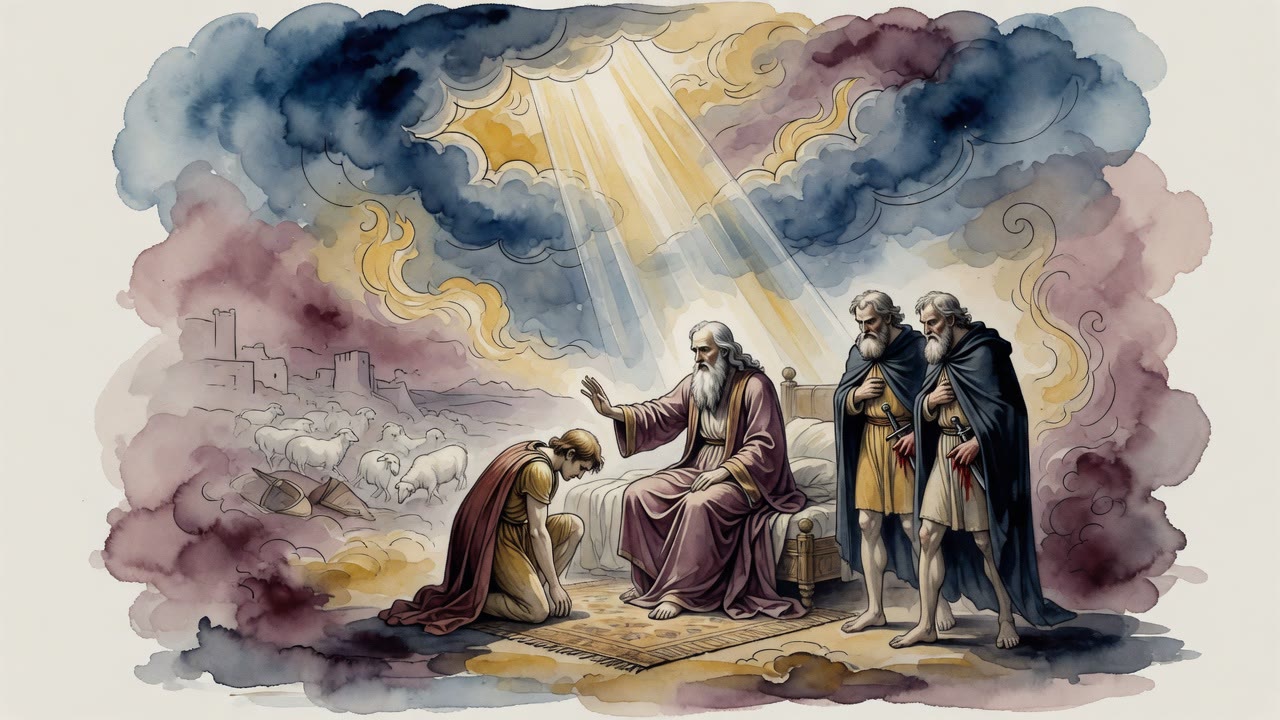
Reuben stood at the bed waiting for a curse. His father named a little garden the flood had drowned, and still called him my son.
Table of Contents
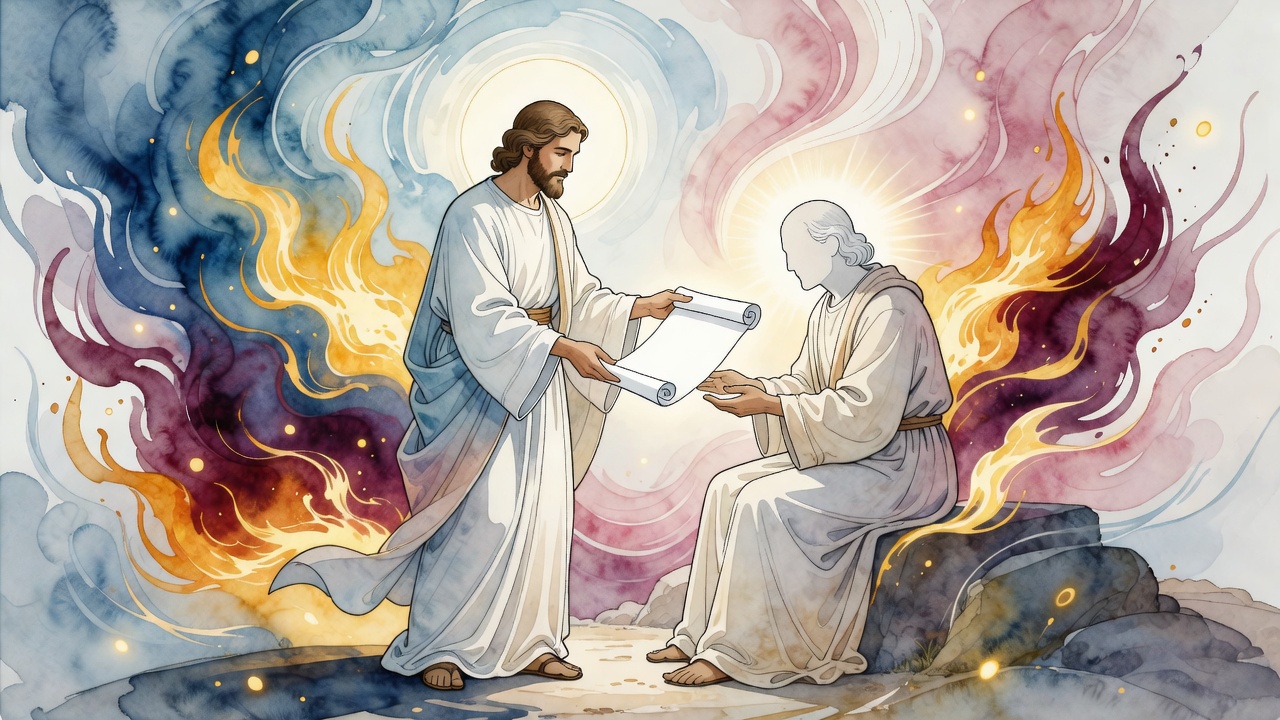
Jacob turned on the bed and looked at Reuben. He did not open with a curse shaped like a name. He opened with a picture.
 Click for full size
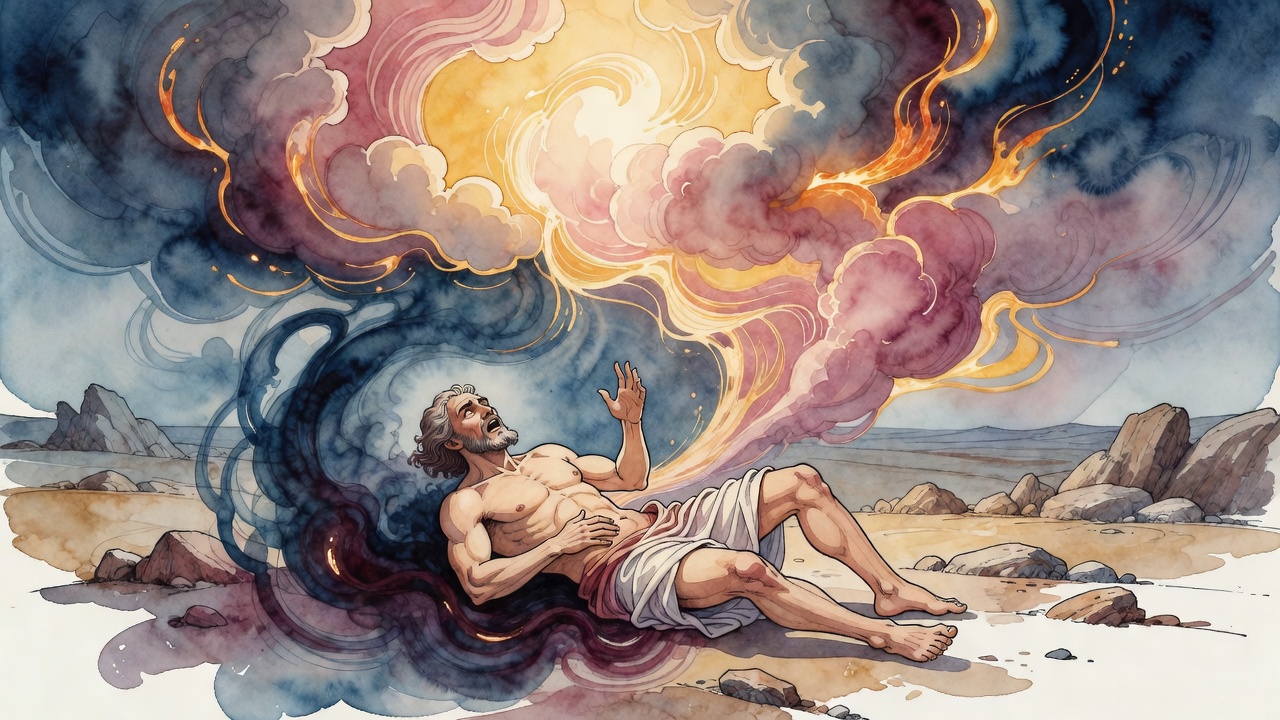
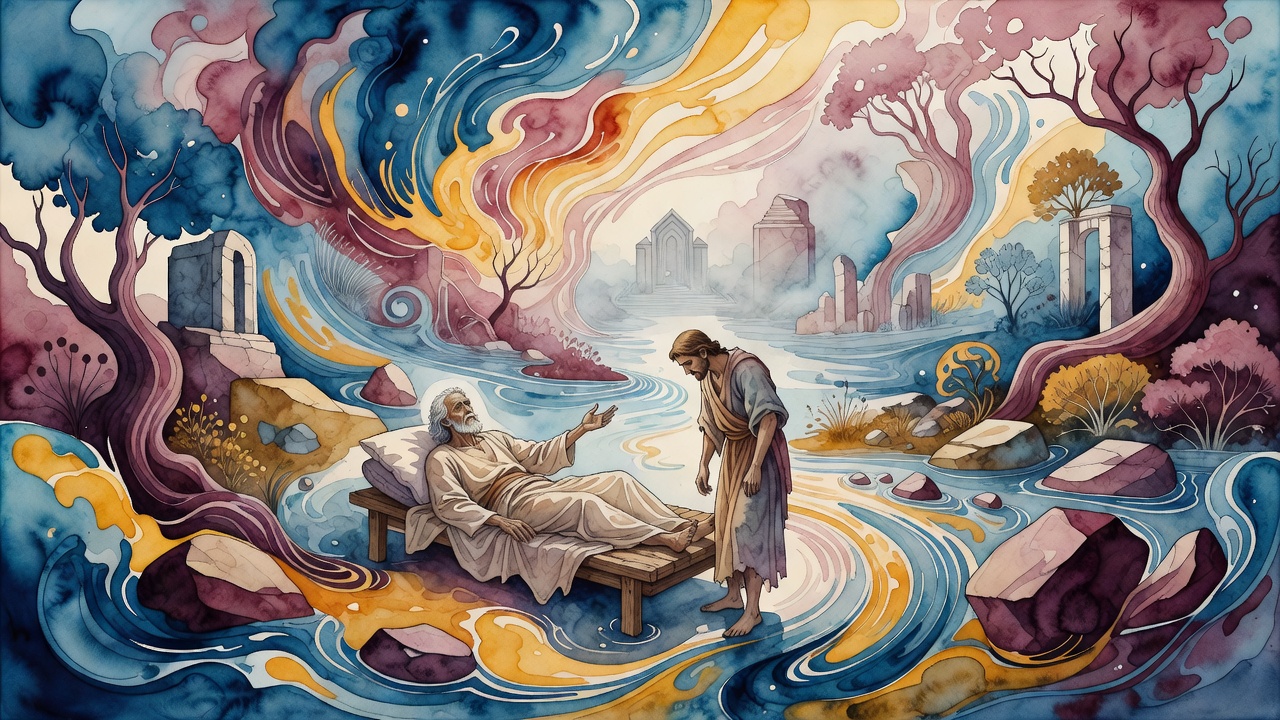
"I will liken thee to a little garden in the midst of which there enter torrents swift and strong, which it cannot bear, but is overwhelmed."
The soil was good. The water was too much. Passion had rushed through faster than the beds could hold. The brothers did not say Bilhah's name. They did not have to. The incident still stood in the room like wet earth after a storm. Jacob named the sin without letting the sin become the whole man. A torrent came through Reuben. Reuben was not the torrent.
Add Not
Then the father's voice gave the door.
"Be repentant then, Reuben my son, for thou hast sinned, and add not; that wherein thou hast sinned it may be forgiven thee."
Invitation, not only verdict. The garden was overwhelmed. The garden was not uprooted. Teshuvah (תשובה), the turn back, sat in two words: add not. The first flood already broke the banks. A second would salt the soil forever. Return is not a speech. It is the refusal to open the sluice again when the sky darkens.
Reuben's mouth opened and closed. He did not argue the night with Bilhah. He had already lived inside that argument for years. He stood and took the medicine of "my son" and "add not" in one swallow.
Wet Earth After the Night
Years back Reuben had gone in and confused his father's bed. Jacob had heard. The camp had heard. Reuben had lived since then as a firstborn whose firstness was a rumor he could not cash. He had fasted. He had worn the shame like a second garment. None of that put the water back in the banks.
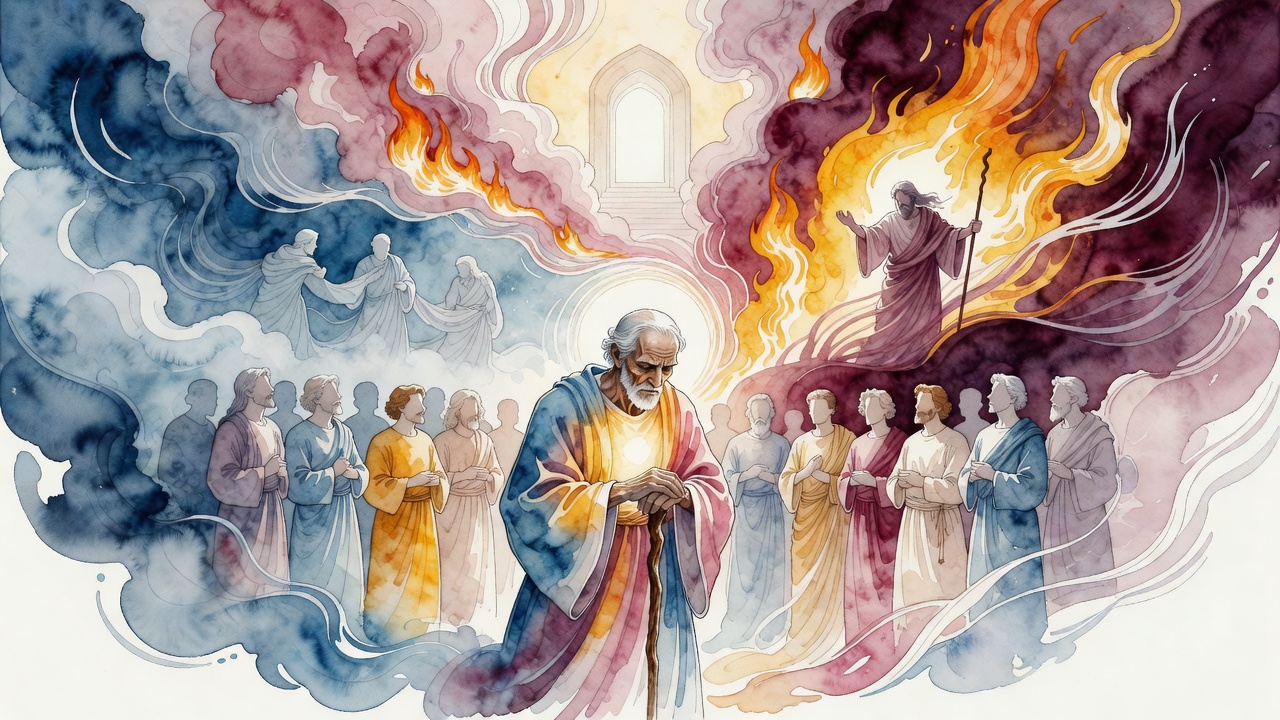
Jacob did not replay the night for sport. He put it in the room as weather. Torrents. A garden that could not bear them. Then he asked for a future in which the sluice stayed shut. The other sons shifted their weight. Leah's boys watched without speaking. The garden image would follow them into their own nights.
The Double Portion Walked to Egypt
Earlier, at another bed, when Joseph's sons were raised to full tribal rank, Jacob had said Ephraim and Menasseh would be reckoned as Reuben and Shimon. The eldest's double place was already cracked. Firstborn honor had been washed out by a night of trespass. The double portion moved to Joseph's line. Reuben kept life, tribe, and a name that would still march under a standard, but the crown of beginning was gone.
Forgiveness and demotion can share a sentence. Jacob practiced both without pretending they were the same medicine. Ephraim and Menasseh gained what Reuben lost. The Egypt-born boys stood in the rank the firstborn had flooded away.
Reuben heard that old sentence again under the garden image. He had not been erased. He had been reassigned.
A Name That Still Means See
Every son of Jacob had been named for a redemption still ahead. Reuben points toward "I have seen the affliction of My people" (Exodus 3:7). Even the firstborn who failed was labeled with God's seeing. Simeon with hearing. Judah with thanks. The list shuffles in different verses so no birth-wife's child can forever outrank a maidservant's child.
Reuben's name still means "see, a son." Jacob looked at him as if the seeing were still possible. See a son who can return. The other sons heard the garden image too. Jacob's precision set a standard: name the flood, keep the soil, refuse the second surge.
My Son
Rank can be moved. The portion can travel to Egypt-born boys. The word son remains. Reuben leaves the deathbed still first in birth order and no longer first in portion. He leaves with a father who still claims him while refusing to pretend the flood did not happen.
His shoulders dropped a fraction, then squared again. Firstborns learn early how to stand under weather. Jacob's voice did not rise. Floods do not need shouting. They need channels.
Somewhere in the room a lamp smoked. Someone trimmed it. Reuben tasted the word repent like a man tasting medicine he already knows he must finish. The blessing moved on, but the garden stayed behind his eyes, wet and salvageable. Outside a bird called once and went quiet. Inside, the invitation stood. Repent, and add not.
← All myths