5 min read

Rebekah Blessed Jacob and Warned Him to Flee

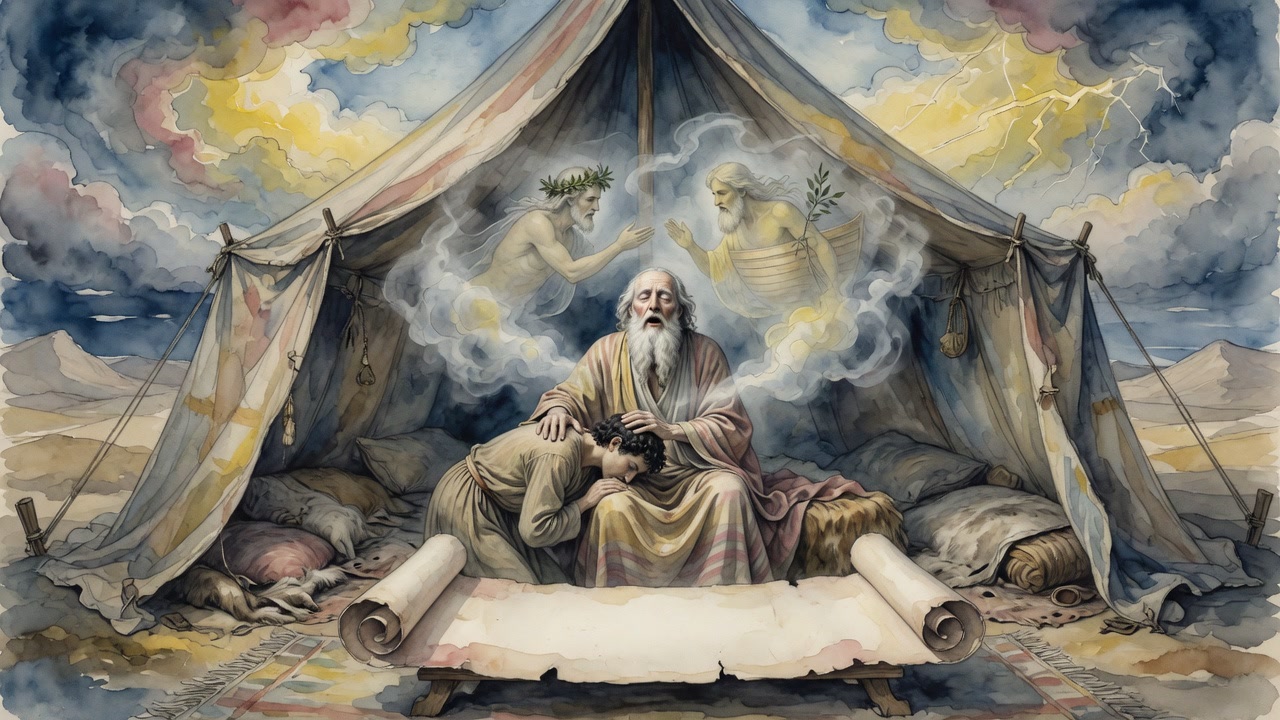
Rebekah laid hands on Jacob, dressed him in priestly garments, and sent him from Esau. Her warning became prophecy at Jacob's burial.

Curated by Arthur · Told by Maggid ·
Table of Contents
  1. The Smoke in Isaac's House
  2. Hands on the Chosen Son
  3. The Goatskins and the Garments
  4. The Hunter Who Served His Father
  5. The Son Who Would Not Run

Smoke moved through Isaac's house before Rebekah moved against the future.
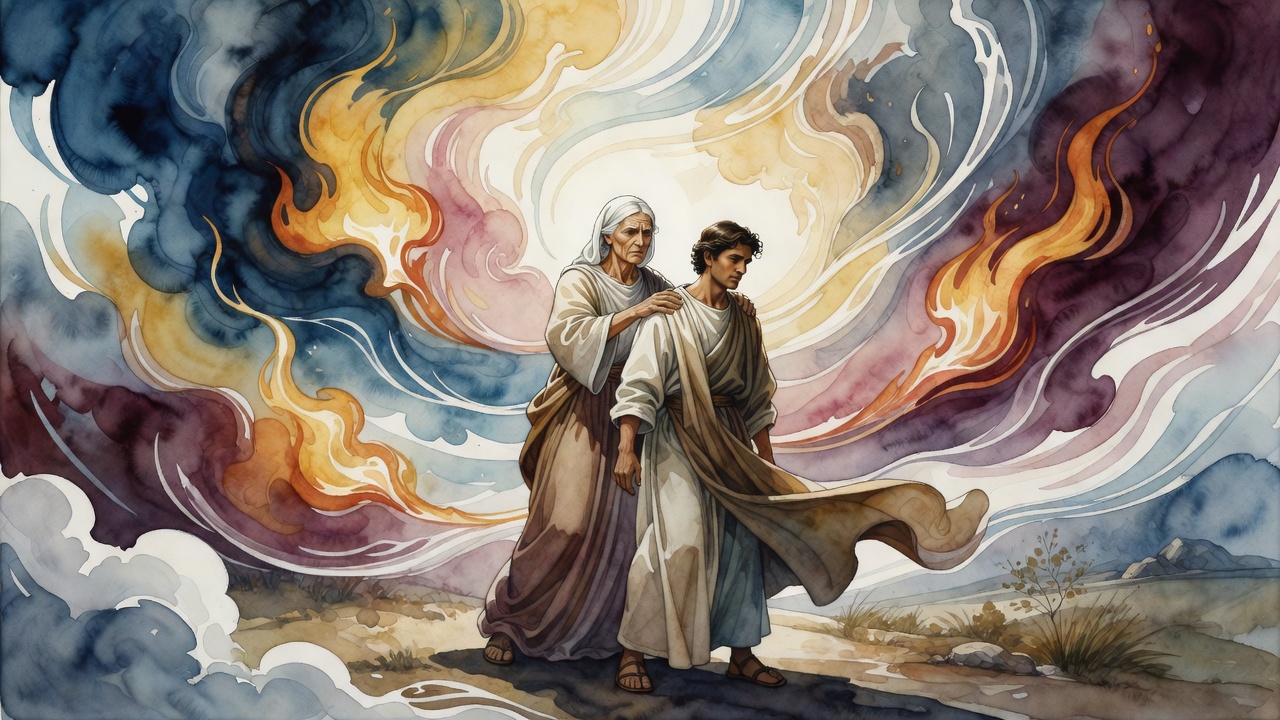
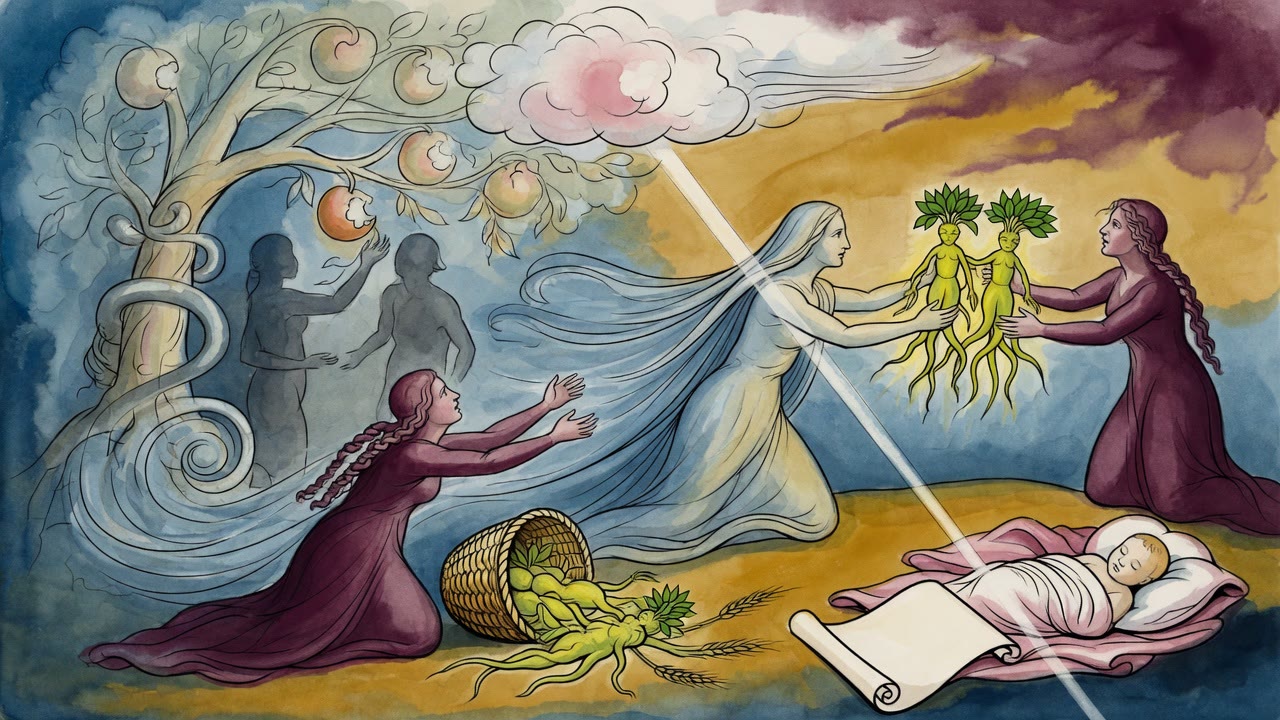
Esau's wives burned incense before their idols under the same roof where Isaac tried to grow old in peace. Rebekah had known such smoke in her childhood home and could endure it. Isaac had not. It stung eyes already weakened by angel tears, tears that had fallen when he lay bound on the altar beneath Abraham's knife.

The Smoke in Isaac's House

The house was not quiet. The old comparison said a bone can survive a blow that shatters earthenware. Woman came from bone, man from dust. Rebekah endured what Isaac could not, and Isaac's sight failed under more than age.

Blindness settled over him while the wrong son stood nearest the blessing. Rebekah watched the house fill with smoke, old pain, and danger. Waiting would not keep the covenant safe. Waiting would hand it to Esau.

Hands on the Chosen Son

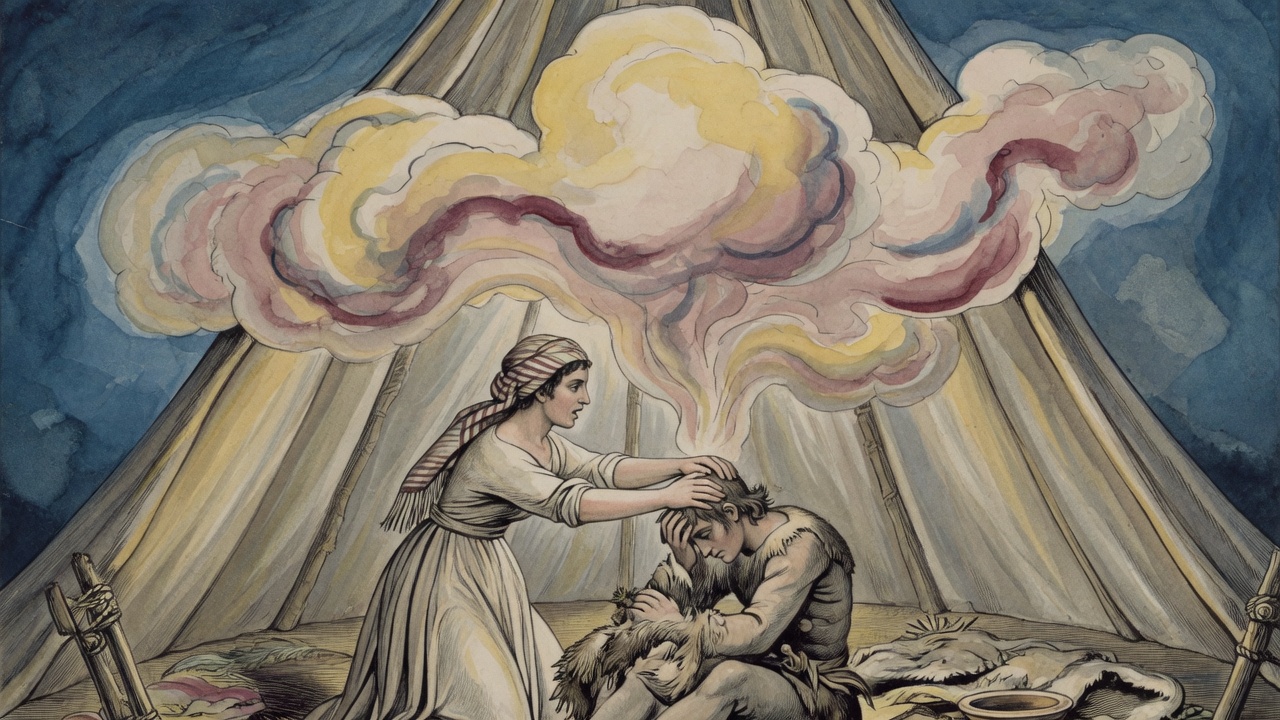
When the spirit of the Lord came over her, Rebekah laid her hands on Jacob's head. This was not Isaac's blessing stolen in a dark room. This was a mother's blessing given openly between her palms and her son.

"May the Lord of the world love him," she prayed, "as the heart of his affectionate mother rejoiced in him. May He bless him."

Her hands did not tremble. A mother can be tender and terrifying in the same hour. Rebekah blessed Jacob, then prepared him to walk into his father's touch wearing another man's skin.

The Goatskins and the Garments

Jacob feared the moment Isaac's hand would find him. His voice could be managed. Food could be prepared. But Esau was hairy, and Jacob was smooth. If Isaac touched him and knew the fraud, blessing could turn to curse.

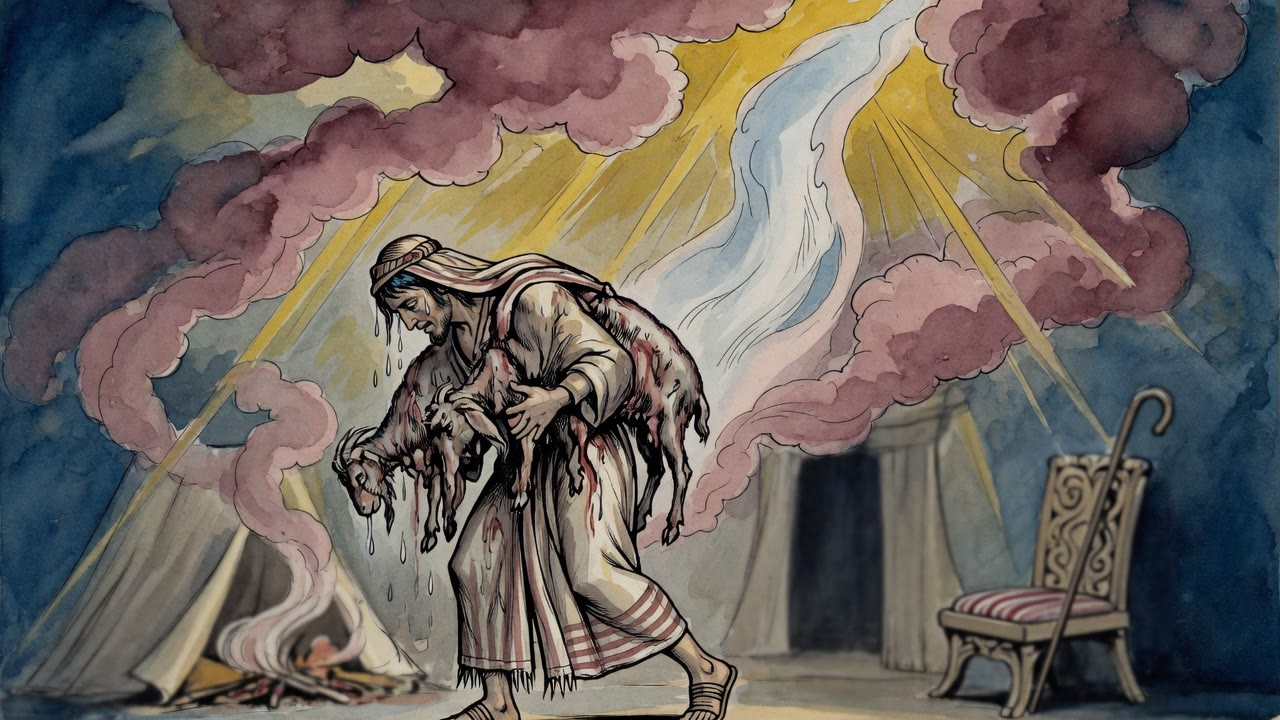
Rebekah tore the skins of two young goats into strips and sewed them together. Jacob was so large that ordinary pieces would not cover his hands. Then she brought out Esau's garments, not common hunting clothes, but priestly raiment older than the twins.

God had clothed Adam in those garments when Adam was firstborn of the world. From Adam they passed to Noah, from Noah to Shem, from Shem to Abraham, from Abraham to Isaac, and from Isaac to Esau as the elder son. Rebekah judged the matter differently. Jacob had bought the birthright. The garments belonged with the birthright.

Before the Tabernacle stood, the firstborn served as priest. Cloth could carry an office. When Rebekah dressed Jacob, she was not only covering smooth skin. She was moving the priestly sign from the son born first to the son chosen to bear it.

The Hunter Who Served His Father

Esau had not left those garments with his wives. He knew better. The treasure remained in Rebekah's keeping, and he wore it in his parents' house when he came to serve Isaac.

On the street, Esau could wear rags. Before his father, he dressed like royalty. "My father is a king in my sight," he would say, "and it would be wrong to serve him in anything but royal apparel."

That honor mattered. The good fortune of Esau's descendants rested on the respect he showed his father. Rebekah was not moving against a cardboard villain. She was moving against a son who could honor Isaac beautifully and still endanger Jacob's life.

The Son Who Would Not Run

After the blessing, Esau's anger sharpened toward murder. Jacob did not reach for the road. Courage held him in place, or pride did. He told Rebekah he was not afraid. If Esau wished to kill him, Jacob would kill Esau first.

Rebekah heard two deaths in that sentence.

"Let me not be bereaved of both my sons in one day," she said. The words left her as a mother's plea and carried the weight of prophecy. Jacob still resisted. Isaac was old and blind. If Jacob left without his father's command, Isaac might curse him. He would go only if Isaac sent him.

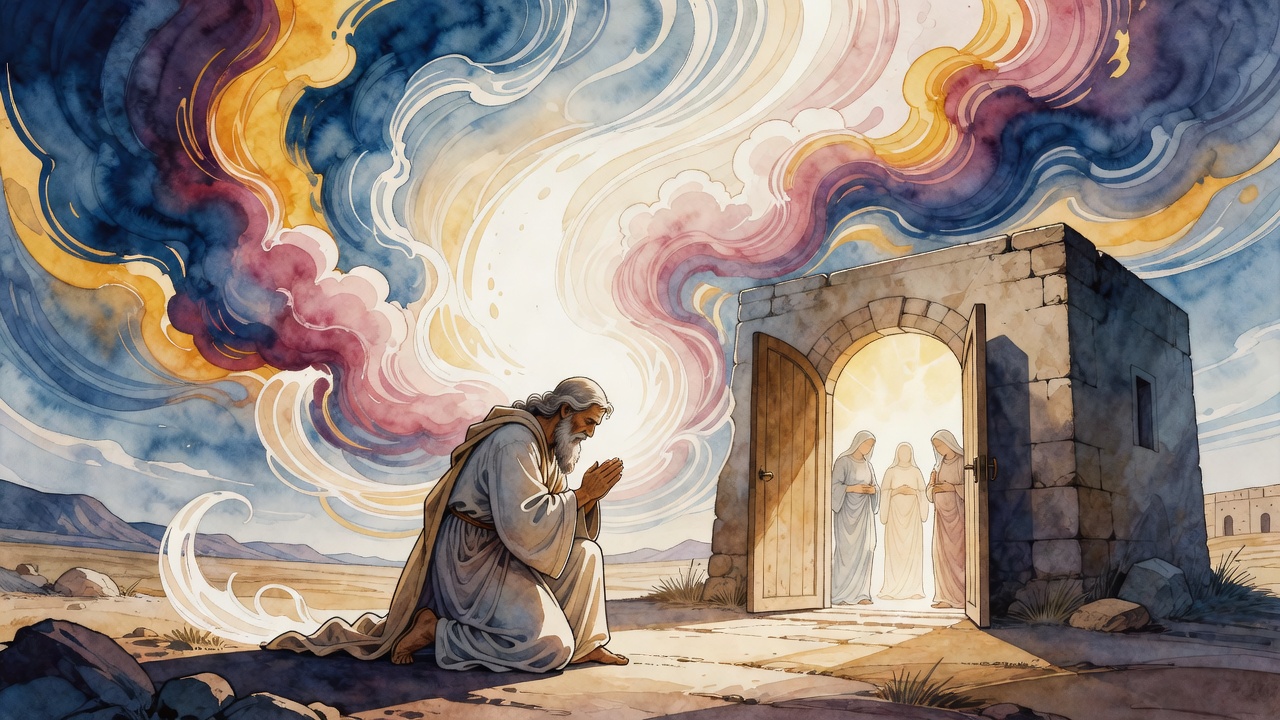
Rebekah had to save one son from the other without breaking the son who would not flee. Her warning waited years for its answer. When Jacob's body was finally carried for burial, Esau was slain that same day. The sentence spoken in the smoky house reached the grave before the brothers could escape it.


← All myths
From the tradition

Sources

3 sources

The texts this telling draws on, in full. Open a card to read inline, or expand it for a wider, quieter read.

Legends of the Jews 6:82Legends of the Jews

He knew that Esau, his brother, harbored murderous intentions. The tension was thick, a palpable danger hanging in the air. But running wasn't exactly Jacob’s first instinct.

As the story goes, Jacob declared to his mother, Rebekah, "I am not afraid; if he wishes to kill me, I will kill him." Can you imagine the resolve in his voice? The sheer bravery?

Rebekah, wise and insightful, saw a bigger picture. She responded, "Let me not be bereaved of both my sons in one day."

Here's where it gets really interesting. Rebekah wasn't just expressing a mother's fear; she was tapping into something deeper – a prophetic vision. The text suggests a divine insight into the future. As she spoke, so it happened. When their time came, Esau was slain while the burial of Jacob was taking place. – the intertwined destinies, the fulfillment of a mother's prophetic words. It’s a powerful reminder of the weight words can carry.

But before that grim event, there's a more immediate concern. Jacob, hesitant to leave his aging and blind father, Isaac, raises another objection. "Behold," he says to Rebekah, "thou knowest that my father has become old and does not see, and if I leave him and go away, he will be angry and will curse me. I will not go; if he sends me, only then will I go."

It's a delicate dance, isn't it? Jacob is trying to balance obedience to his parents, especially his father, with the very real threat to his life. He understands the power of a father's blessing – or, in this case, a father's curse. He won't leave unless he's explicitly told to. This shows his deep respect for the established order, for the authority of his father, even amidst the chaos swirling around him.

What does this teach us? Perhaps it’s about the complexities of family, the weight of prophecy, and the courage it takes to navigate treacherous paths. Or maybe it’s about the enduring power of a mother's love and a son's respect, even in the face of death.

Full source
Legends of the Jews 6:50Legends of the Jews

The Torah tells us that Rebekah, knowing what was right and divinely inspired, took matters into her own hands to make sure that Jacob, not Esau, received Isaac’s blessing. But that wasn't the only blessing Jacob received! According to the Legends of the Jews, when the spirit of the Lord came over Rebekah, "she laid her hands upon the head of Jacob and gave him her maternal blessing. It ended with the words, 'May the Lord of the world love thee, as the heart of thy affectionate mother rejoices in thee, and may He bless thee.'" What a powerful and tender image! Imagine the warmth and love that poured into that blessing.

The tradition turns to Esau's marriages. We know that Esau's choice to marry Canaanite women caused great distress. But did you know just how much? It wasn’t just Rebekah who was troubled. Isaac suffered even more! According to Ginzberg's retelling in Legends of the Jews, Esau's marriages were "an abomination not only in the eyes of his mother, but also in the eyes of his father. He suffered even more than Rebekah through the idolatrous practices of his daughters in-law." Why was this?

The text offers an interesting, even somewhat archaic, explanation, saying it is "the nature of man to oppose less resistance than woman to disagreeable circumstances." It uses the analogy of a bone and an earthen pot, suggesting that man, created from dust, lacks the endurance of woman, formed from bone. Intriguing, isn't it? While this might sound a little strange to our modern ears, it highlights a belief in the different strengths and sensitivities of men and women in ancient times.

The Legends of the Jews tells us that Isaac was made prematurely old by the conduct of his daughters-in-law, and he even lost his sight. Rebekah, having been accustomed to the incense burnt before idols in her childhood home, could bear it under her own roof. Isaac, however, had never experienced such things while living with his parents. "He was stung by the smoke arising from the sacrifices offered to their idols by his daughters-in-law in his own house."

But there's another layer to Isaac's failing eyesight. Remember the story of the Akeidah, the Binding of Isaac? Legends of the Jews also recounts that when Isaac lay bound upon the altar, about to be sacrificed by his father, the angels wept. "And their tears fell upon his eyes, and there they remained and weakened his sight." This adds a poignant dimension to Isaac's suffering, connecting it to one of the most emotionally charged moments in the Torah. His physical blindness becomes a symbol of the deep trauma he endured.

So, what do we take away from this? It’s a reminder that even within the grand narratives of the Torah, there are intimate, human stories unfolding. Stories of maternal love, marital discord, and the enduring impact of both blessings and trauma. It makes you wonder about the unseen burdens and hidden blessings within our own lives and families, doesn't it?

Full source
Legends of the Jews 6:60Legends of the Jews

The story of Jacob and Esau, and their mother Rebekah's intervention, is a wild ride, full of trickery and profound implications.

Jacob, was still hesitant about Rebekah's plan to deceive Isaac and secure the blessing meant for Esau. His worry? That his blind father, Isaac, would touch him and realize he wasn't the hairy Esau. It’s a fair point! So, Rebekah, ever resourceful, tore the skins of two young goats – kids, as they're called in the Bible – into strips. But – that ordinary strips wouldn't do the trick. She sewed them together to create a convincing disguise for his hands.

The disguise didn’t stop there. Rebekah felt justified in dressing Jacob in Esau's special garments. These weren't just any clothes. Oh no. These were legendary! According to tradition, they were the high priestly raiment in which God Himself had clothed Adam, "the first-born of the world." (!) In those early days, before the Mishkan (Tabernacle) was built, the first-born males served as priests.

These garments, imbued with such profound history, had been passed down through generations. From Adam to Noah, then to Shem, and then to Abraham. Abraham, in turn, gave them to Isaac, who then passed them on to Esau as the elder son.

But Rebekah believed that since Jacob had bought the birthright from Esau, he was also entitled to these garments. As Ginzberg tells us, there was no need to retrieve the garments from Esau's house. Esau, knowing his wives all too well, wouldn’t entrust such a treasure to them! Instead, they were kept safe with his mother – Rebekah herself.

And get this: Esau actually used these garments frequently in his parents' home. While he might be happy to wander around in rags, he felt it was his duty to appear before his father, Isaac, in his finest clothes. "My father," Esau supposedly said, "is a king in my sight, and it would ill become me to serve before him in any thing but royal apparel."

It’s a fascinating detail, isn’t it? This outward show of respect, even from a flawed character like Esau. And the story doesn’t end there. the verse says, Esau’s descendants owe all their good fortune on earth to the great respect he showed his father. As the story concludes: Thus doth God reward a good deed.

So, what do we take away from this elaborate ruse? Is it about destiny? The power of a mother's love? Or perhaps it's about the unexpected ways in which even small acts of respect can have lasting consequences. It's a story that makes you wonder about the choices we make and the legacies we create.

Full source