5 min read

Reuven Spent His Life Repairing What He Did in One Night

After the night with Bilhah, Reuven lived in lifelong remorse until Moses sealed his pardon. Twelve sons still counted him, and the blessing said he would live.

Curated by Arthur · Told by Maggid ·
Table of Contents
  1. The Night Jacob Heard
  2. Twelve Names Still Spoken
  3. Years of Self-Affliction
  4. Moses Seals the Pardon
  5. Love That Makes God Beloved
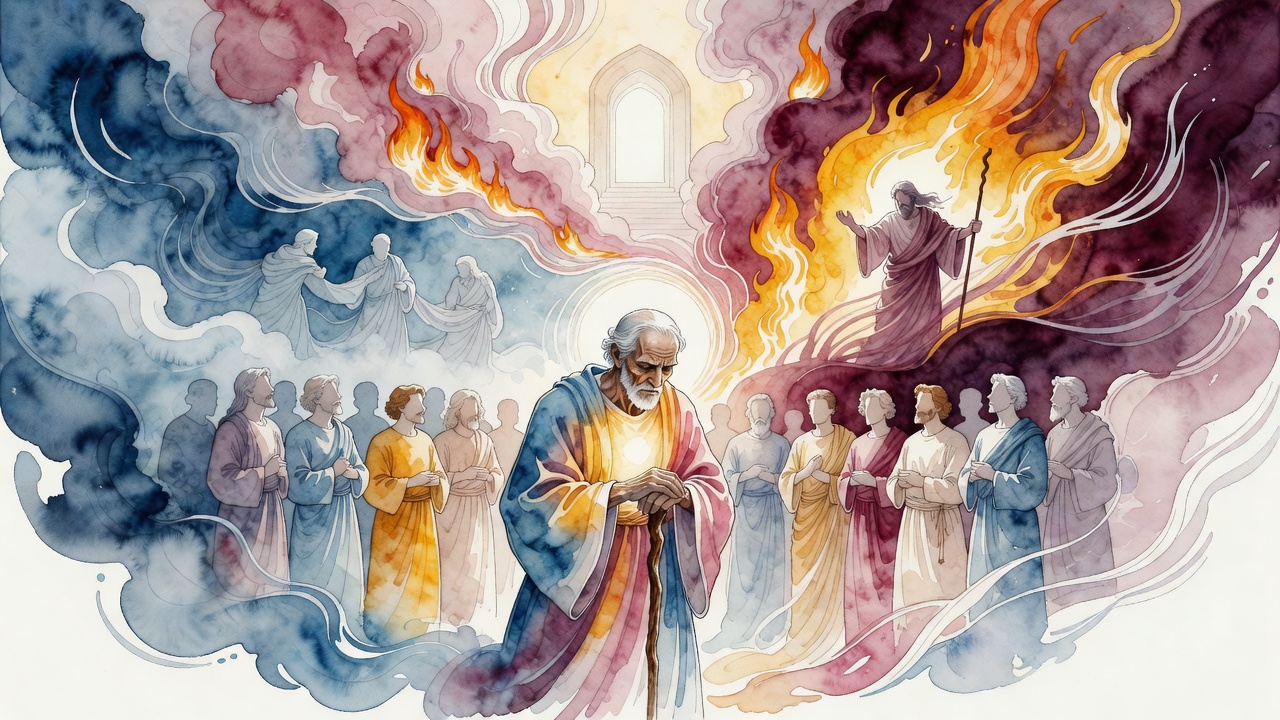
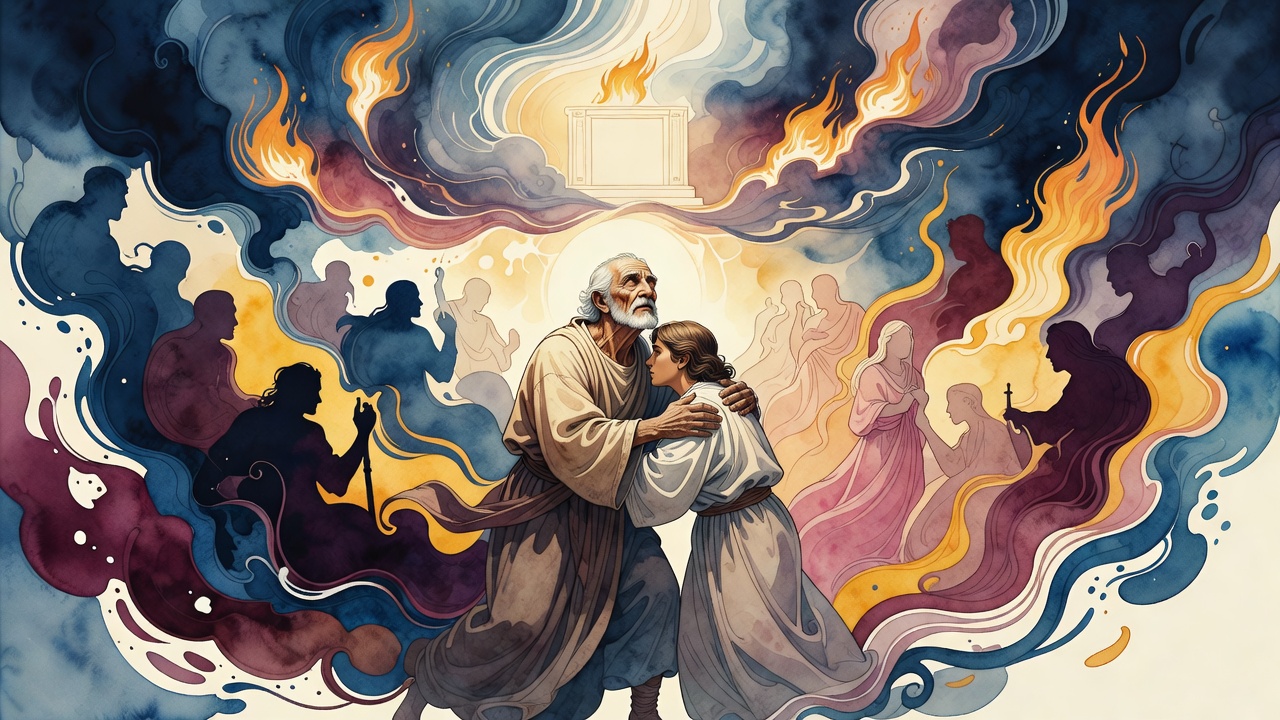
Reuven Spent His Life Repairing What He Did in One Night Click for full size

The Night Jacob Heard

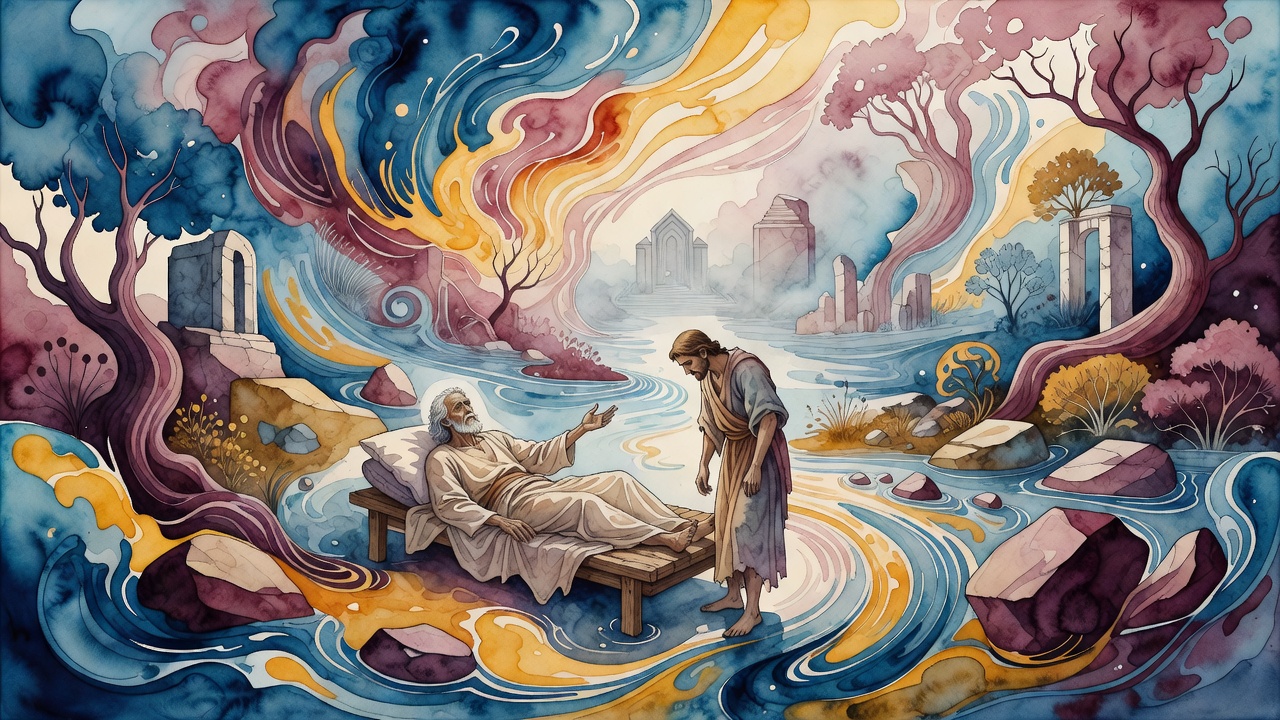
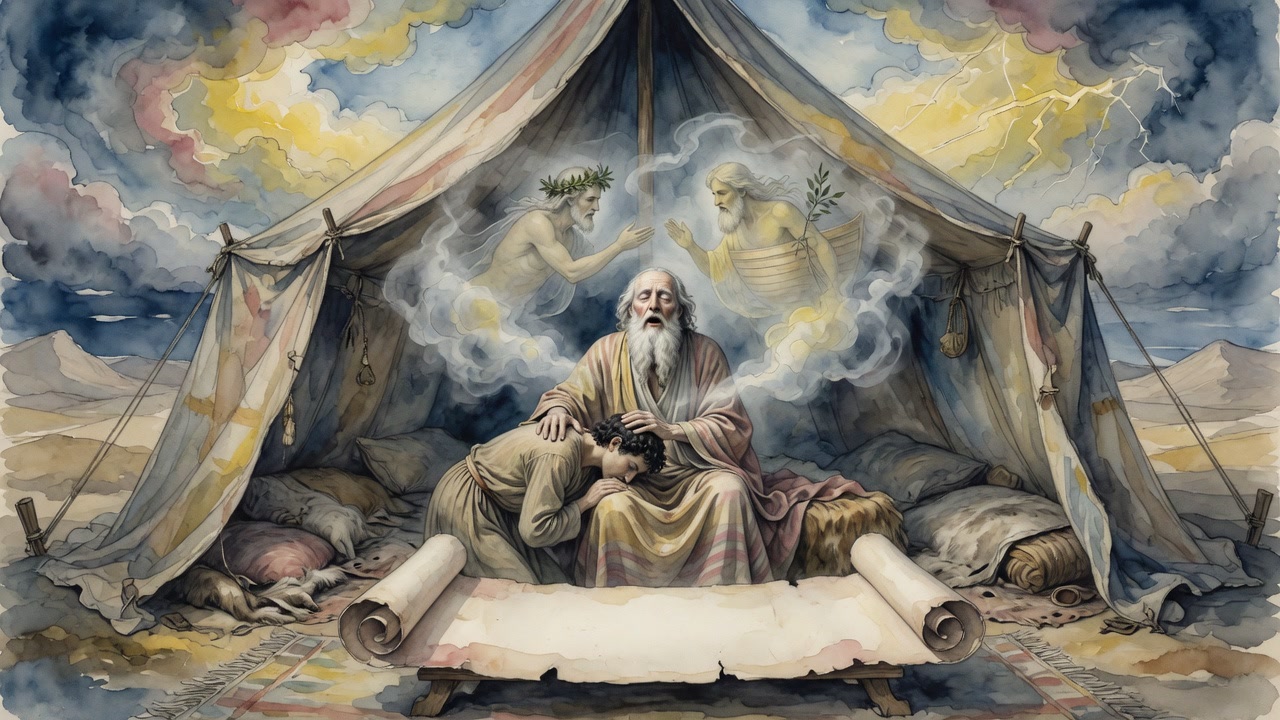
Reuven crossed a line that should have been a wall. When Israel dwelt in that land he went to Bilhah, his father's concubine, and Israel heard (Genesis 35:22). Jacob's face closed like a door slammed in winter. Base matter, the tradition calls it. The firstborn had touched the structure of the house and made the beams shudder. Servants pretended not to know. Brothers looked at the ground. The camp of the family, always a fragile city of tents, tilted.

Could such a thing come from his own blood? Would the twelve become eleven in the ledger of Heaven? The question sat on Jacob's chest heavier than any stone he had ever set for a pillow on the road from Beersheba.

Reuven did not run from the camp. Running would have been easier than staying under his father's silence. He stayed, and the silence became a furnace that would shape the rest of his years.

Twelve Names Still Spoken

The next breath of Torah says the sons of Jacob were twelve. Reuven is still in the count. The Holy One, blessed be He, would not let the father write his eldest out of the world. The inclusion right after the wound is not carelessness. It is evidence. Repentance had already begun to work in the dark, and Heaven was counting a man still inside the family.

Reuven heard the number and did not swagger. He heard it as a stay of execution he would spend the rest of his life trying to deserve. Being named among the twelve after such a night is not applause. It is a rope thrown to a man already in the water, and he must swim hard not to let it go.

Every time the roll of sons was spoken in later years, the night rose again in his mind and was answered again by the fact of his name still on the list. That rhythm became his private liturgy of return.

Years of Self-Affliction

He did not perform a single public speech and call it done. He afflicted himself over the act for a lifetime, carrying remorse the way other men carry a trade. Brothers watched him grow quieter at certain thresholds, slower to claim the privileges of the firstborn, quicker to put his body between danger and the weaker ones.

He had been the one who meant to save Joseph from the pit and came back too late to an empty hole and torn clothes. Guilt stacked on guilt. The firstborn's hands learned the weight of almost and the weight of too much. At meals he ate like a man who does not trust his own appetite. At night he slept like a man who expects the past to knock.

Teshuvah (repentance, the turning back toward God) for him was not a weekend. It was the shape of his remaining days, a long repair of a short violence. In Egypt, when the brothers stood before Joseph and fear reopened every old pit, Reuven's silence had a different grain than the others. He had practiced remorse so long it had become a second language.

Moses Seals the Pardon

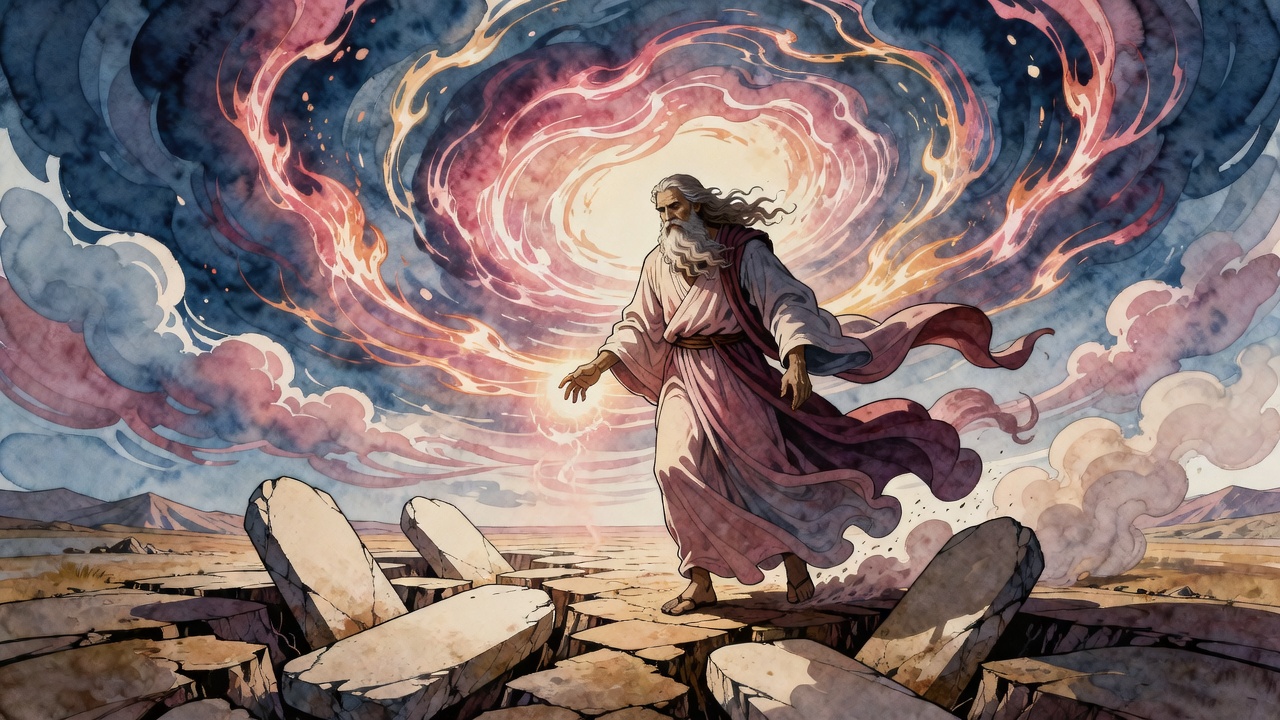
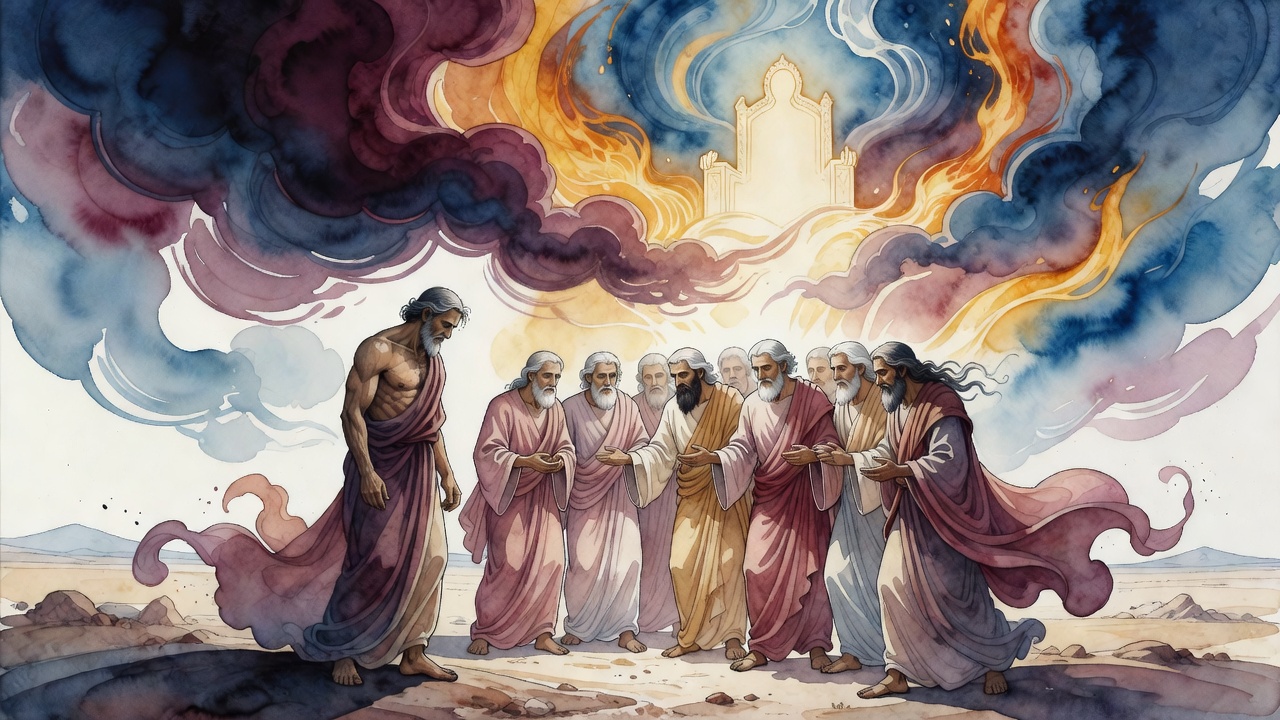
Generations later Moses stood over the tribes with blessings in his mouth and stopped at Reuven with a verdict that sounded like medicine. "Let Reuven live and not die" (Deuteronomy 33:6). Live in this world. Not die in the world to come. The great teacher accepted the long penitence and wrote it into Israel's farewell on the plains of Moab.

A man can fall far enough to crack a household and still be blessed into life if the turning is real and the years are spent. Moses did not erase the night. He refused to let the night be the last word. The tribe that would camp under Reuven's banner carried both memories: the sin that almost unmade him, and the blessing that remade his future.

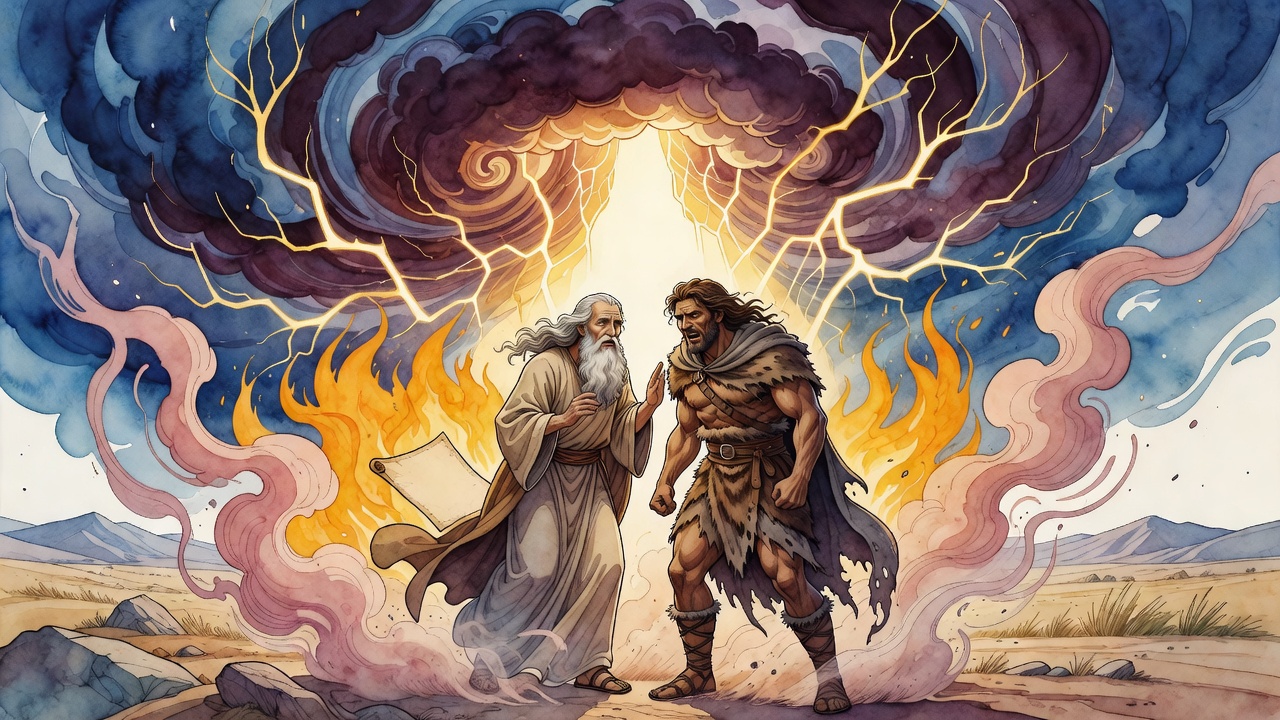
Jacob, on his deathbed, still had hard words for him about instability like water. The hard words and Moses' later blessing are not enemies. One names the fracture. The other names the repair that outlived the fracture. Between them Reuven remains a full person: neither erased nor whitewashed.

Love That Makes God Beloved

The same stream of teaching that saves Reuven also asks how a person makes God beloved among people. Abraham and Sarah "made souls" in Charan (Genesis 12:5) not by crafting bodies but by drawing strangers under the wings of the Shechinah (שכינה), the divine presence. Love of God is not only private heat. It is a life that makes the Holy Name attractive to others.

Reuven's repair was quieter than Abraham's table, but it ran on the same current: a life redirected until Heaven and family could count him again without flinching. The firstborn who broke a boundary spent decades becoming someone a nation could bless without lying. That, too, is a way of making God beloved: prove that return is possible, and that the Name still wants the one who fell.

Counted among twelve because return is real work and real work is honored, Reuven becomes a walking argument against cheap despair. The night happened. The years after it also happened. Moses spoke live over both.


← All myths
From the tradition

Sources

3 sources

The texts behind this telling. Some cards carry a translation of the source; others are our own retelling of it, and each card says which. Every card links out to the original.

Sifrei Devarim 31:6Sifrei Devarim

Retold in our words. Read the original at the link below.Sifrei by Rabbi Shraga Silverstein · CC-BY

It's a story about Reuven, Jacob's eldest son, and a deeply troubling act. "And it was, when Israel dwelt in that land, that Reuven went and lay with Bilhah, his father's concubine, and Israel heard."

The shock, the betrayal. Jacob, upon hearing this, was utterly devastated. Could it be, he wondered, that such a vile act, "base matter" as the text puts it, could come from his own flesh and blood? Did this tarnish the entire lineage?

The Holy One, blessed be He, reassured Jacob. Reuven, it turns out, had repented. The very next verse, (Genesis 35:22), states, "And the sons of Jacob were twelve" – crucially including Reuven. This inclusion, right after the mention of his transgression, is no accident. It's evidence of his repentance and acceptance back into the fold.

In Sifrei Devarim, Reuven spent his entire life in remorse, afflicting himself over his actions. The weight of guilt, the constant self-reproach.

And then, finally, comes the absolution. Moses, the great leader, accepted his penitence. This is symbolized in (Deuteronomy 33:6), with the blessing, "Reuven shall live (in this world) and he shall not die (in the world to come)." A powerful declaration, signifying not only his continued existence in this realm but also his assured place in olam haba, the world to come.

So, what do we take away from this ancient story? It’s not just about a transgression, but about the profound power of repentance, of teshuvah (repentance). It's evidence of the enduring possibility of change, of growth, and of being welcomed back, even after the deepest of falls. It is a reminder that the human experience is filled with the potential for both great error and even greater forgiveness.

Full source
Sifrei Devarim 210:6Sifrei Devarim

Retold in our words. Read the original at the link below.Sifrei by Rabbi Shraga Silverstein · CC-BY

That feeling, that pervasive sense of collective responsibility, echoes powerfully in a passage from Sifrei Devarim, a collection of legal interpretations on the Book of Deuteronomy. It grapples with the ritual of atonement for an unsolved murder. And it’s deeper than just clearing the town's name.

The text quotes (Deuteronomy 21:7), where the elders of a town near a slain body declare, "Our hands have not spilled this blood, nor have our eyes seen it done."

The Sifrei immediately asks, would anyone seriously suspect the elders, the very pillars of justice in the community, of being murderers? Of course not! So, what's the point of this declaration?

The text goes on to explain that the elders are actually declaring something much more profound. They’re saying that the victim was not “in our hands,” meaning they weren’t dismissed without being offered hospitality, a meal. And “we did not see him” implies that they didn't fail to provide an escort, ensuring his safety as he traveled.

In other words, the elders aren't just denying direct involvement; they're acknowledging a potential failure of communal responsibility. They're admitting that perhaps, just perhaps, they could have done more to protect this person.

And that's where it gets really interesting.

Following this declaration, the Cohanim, the priestly class, would then say, "Forgive Your people, Israel, whom You have redeemed, O L-rd." (Deuteronomy 21:8). The Sifrei Devarim then makes an astonishing claim: "This teaches that this atonement atones for those that left Egypt."

Wait, what? How does a ritual for an unsolved murder connect to the Exodus, to the very foundation of the Israelite nation?

The text continues, "These are the dead, whereby we are taught that the dead, too, require atonement, and that this atonement atones until the exodus from Egypt, and that the spiller of blood sins (retroactively) until the exodus from Egypt."

It seems that this act of atonement isn’t just about clearing the immediate community of guilt. It's reaching back through time, to the generation that left Egypt, acknowledging that even past sins, even those seemingly unrelated, can cast a shadow. It’s a way to cleanse the collective soul, not just of the present generation, but of generations past.

That the actions of our ancestors, the choices they made, still resonate and require atonement. According to Ginzberg's Legends of the Jews, the Exodus generation certainly had its share of missteps, from the Golden Calf to their constant complaining in the desert.

What debts do we inherit from the past? And how do we atone, not just for our individual sins, but for the sins of our ancestors, for the collective failures of humanity? Perhaps, the answer lies in recognizing our interconnectedness, in acknowledging that we are all, in some way, responsible for each other. And perhaps that recognition is the first step toward true atonement.

Full source
Sifrei Devarim 32:3Sifrei Devarim

Retold in our words. Read the original at the link below.Sifrei by Rabbi Shraga Silverstein · CC-BY

The Sifrei Devarim, a collection of early rabbinic legal interpretations on the Book of Deuteronomy, offers a stunningly beautiful and profoundly challenging answer.

It starts with the familiar verse, "And you shall love the L-rd your G-d." But then it takes a turn. The Sifrei doesn't just leave it at that warm, fuzzy feeling. It asks: How do you make G-d beloved by all people? It’s not just about your own personal devotion. It’s about making the Divine attractive, appealing, even irresistible to everyone you meet. How do you even begin to do that?

The text offers a powerful example: our father Abraham. Remember the verse in Genesis (12:5) that mentions "the souls that they had made in Charan"? Did Abraham and Sarah literally create people? The Sifrei Devarim tells us, absolutely not! I mean, if all of humanity got together they couldn't even make a mosquito. So what's going on?

The answer is transformative. Abraham and Sarah didn't create people in the literal sense. Instead, they converted them. They drew them away from idol worship and brought them "under the wings of the Shechinah" – the Divine Presence. Through their actions, through their kindness and their unwavering belief, they made G-d more accessible, more understandable, more lovable to those around them.

That's the key. Loving G-d isn't just about personal piety. It's about being a living embodiment of G-d's values in the world. It's about acting in ways that inspire others to seek out the Divine for themselves. It's about making G-d beloved by all.

And then the Sifrei adds another layer, addressing the very nature of our own internal struggles. How are we to love G-d "with all your heart"? The text clarifies: "with both of your inclinations, the good and the evil." This, perhaps, is the most challenging part of all.

The yetzer hara, the evil inclination, and the yetzer hatov, the good inclination – these are the forces that constantly battle within us. The struggle is real. It's not about pretending that the negative impulses don't exist. It’s not about denying the darkness within. It’s about harnessing all of your energy, even the energy of your darker impulses, and directing it towards love of G-d.

Think of it like this: the yetzer hara can be a powerful engine. It can drive ambition, creativity, even a fierce desire for justice. The trick is to channel that energy, to refine it, to use it for good. Loving G-d with all your heart means embracing the totality of your being – the light and the shadow – and dedicating it to a higher purpose. As the Rabbis teach, we must strive to transform the darkness into light.

So, the next time you recite the Shema, consider the implications of those simple words. Loving G-d is a lifelong journey, a constant process of self-reflection, and an unwavering commitment to making the world a more loving and just place. It's about following in the footsteps of Abraham and Sarah, drawing others closer to the Divine. And it's about embracing the entirety of your own complex, imperfect heart and using it to serve something greater than yourself. What could be a more beautiful calling?

Full source