Parshat Toldot5 min read

Isaac Smelled Paradise Before He Blessed Jacob

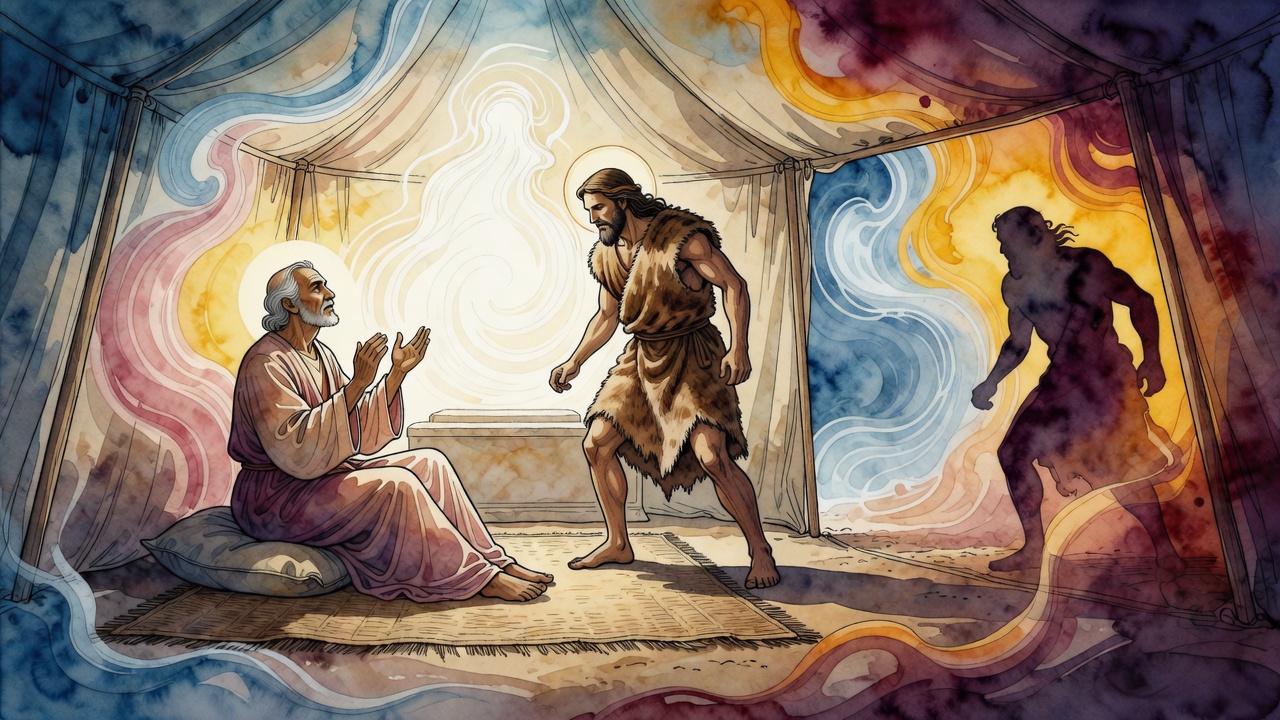
Jacob came into the tent in goat skins and borrowed clothes. He walked out crowned like a bridegroom, his bones strengthened by dew from heaven.

Curated by Arthur · Told by Maggid ·
Table of Contents
  1. Eyes Dim, Nose Open
  2. The Smell of a Blessed Field
  3. Crowned Like a Bridegroom
  4. What Blindness Could Still Judge
Isaac Smelled Paradise Before He Blessed Jacob Click for full size

Eyes Dim, Nose Open

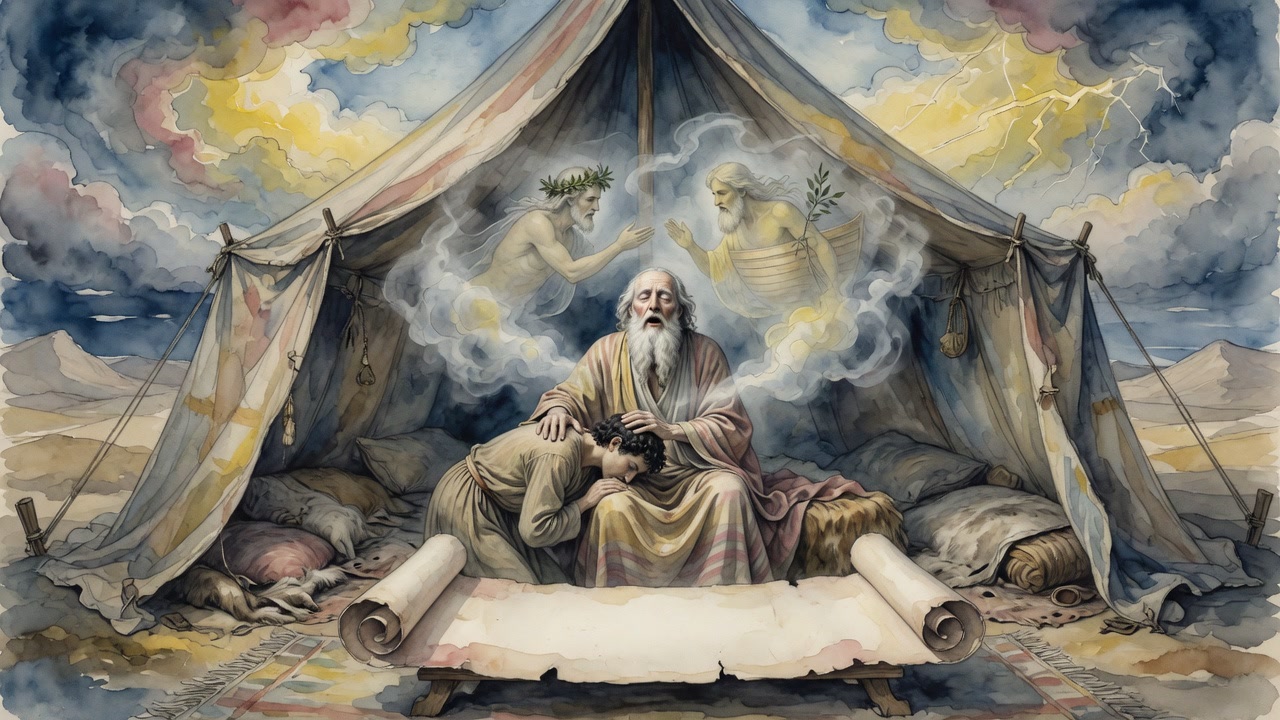
Isaac was old and his eyes were dim, the windows of the house half shuttered. Esau had long snared him with words as much as with venison hot from the field. Midrash Tanchuma reads the game in his mouth as speech that captured a righteous father, for Esau practiced the things heaven hates, haughty eyes, a lying tongue, hands that shed innocent blood, a heart that devises wicked thoughts, feet swift to evil, a false witness, and one who sows discord. Still Isaac prepared a blessing meant to shape generations, and the room held more than food and goat skins.

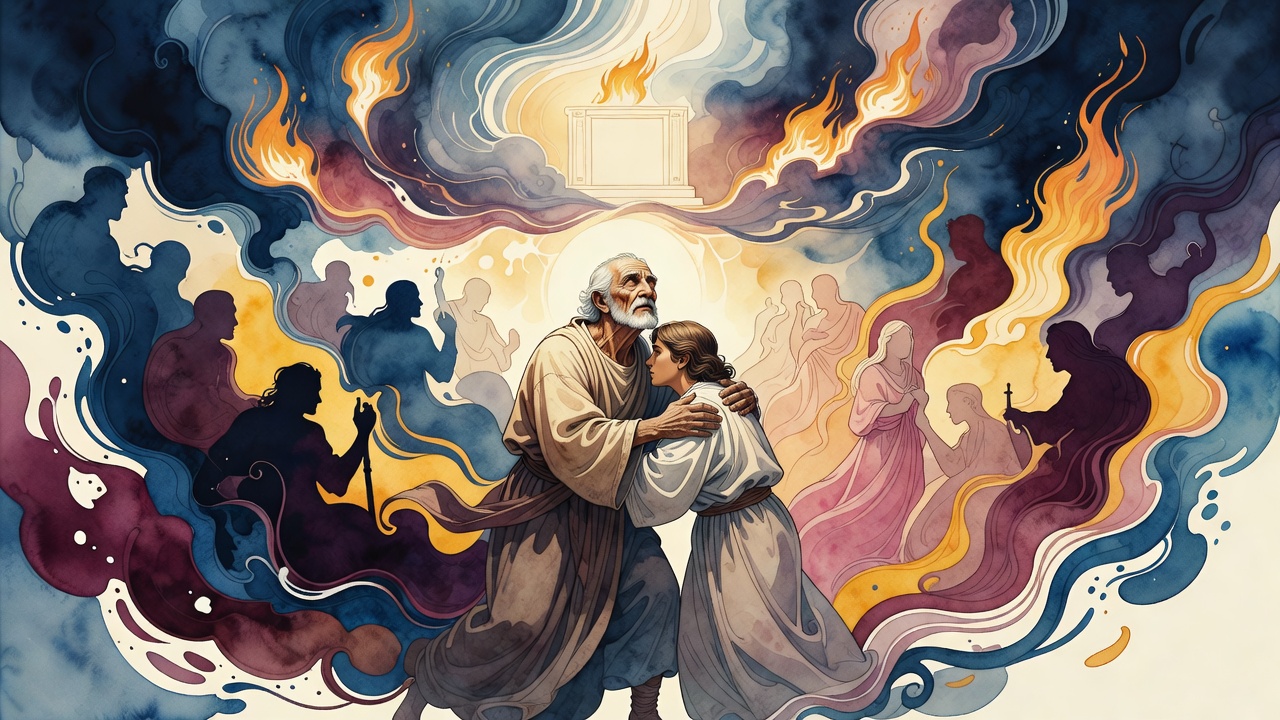
He hesitated at the edge of the words. Legend says he foresaw that some of Jacob's descendants would vex the Lord, a lineage not clean enough for an unreserved gift. How bless a line that would wound the Giver? Then a second sight arrived and balanced the first. Even the sinners among Israel would turn in teshuvah (repentance for sin). The possibility of return unlocked the father's hand. He called Jacob close for a kiss that midrash links to the final kiss Jacob alone would give Isaac at death, a seal of continuity across a grave not yet dug.

The Smell of a Blessed Field

As Jacob drew near in borrowed clothes, Isaac did not only hear a voice or feel a hand trembling under his own. He smelled Paradise. See, the smell of my son is as the smell of the field which the Lord hath blessed. The fragrance of Eden rode on a son wearing goat skins and another man's identity for an hour. Deception stood in the room with its wool and its lies, and still the scent of the garden told Isaac which future could carry the blessing without breaking the world's frame.

Ten blessings followed, tied by Rabbi Judah in Pirkei de-Rabbi Eliezer to the dew of heaven and the fat of the earth, mirroring the ten utterances with which God created all things in the beginning. Peoples would serve him. Nations bow. Brothers of his mother would bend. The blessing was not a wish spoken into empty air. It was a creative force leaning on the same grammar as Bereshit, ten gifts answering ten Ma'amarot, dew answering light, dominion answering the separation of waters.

Crowned Like a Bridegroom

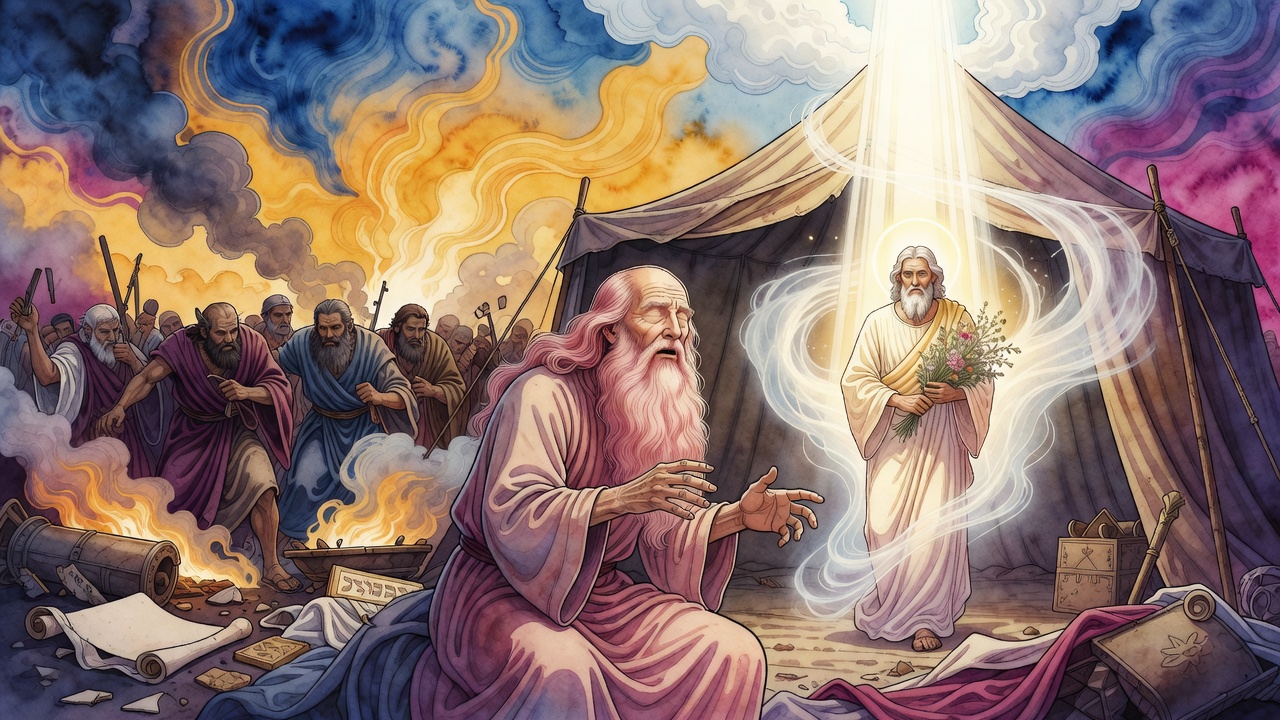
Jacob left his father's presence crowned like a bridegroom, adorned like a bride, the midrash says, radiance sitting on a man who had entered afraid. Quickening dew fell on him from heaven and refreshed his bones until strength walked where fear had walked. He went out a mighty hero, power poured into limbs that had crossed the threshold trembling under skins that still smelled of the flock. The man who had feared his brother's hunt now carried a body lit from within by words that tasted of creation's first ten commands.

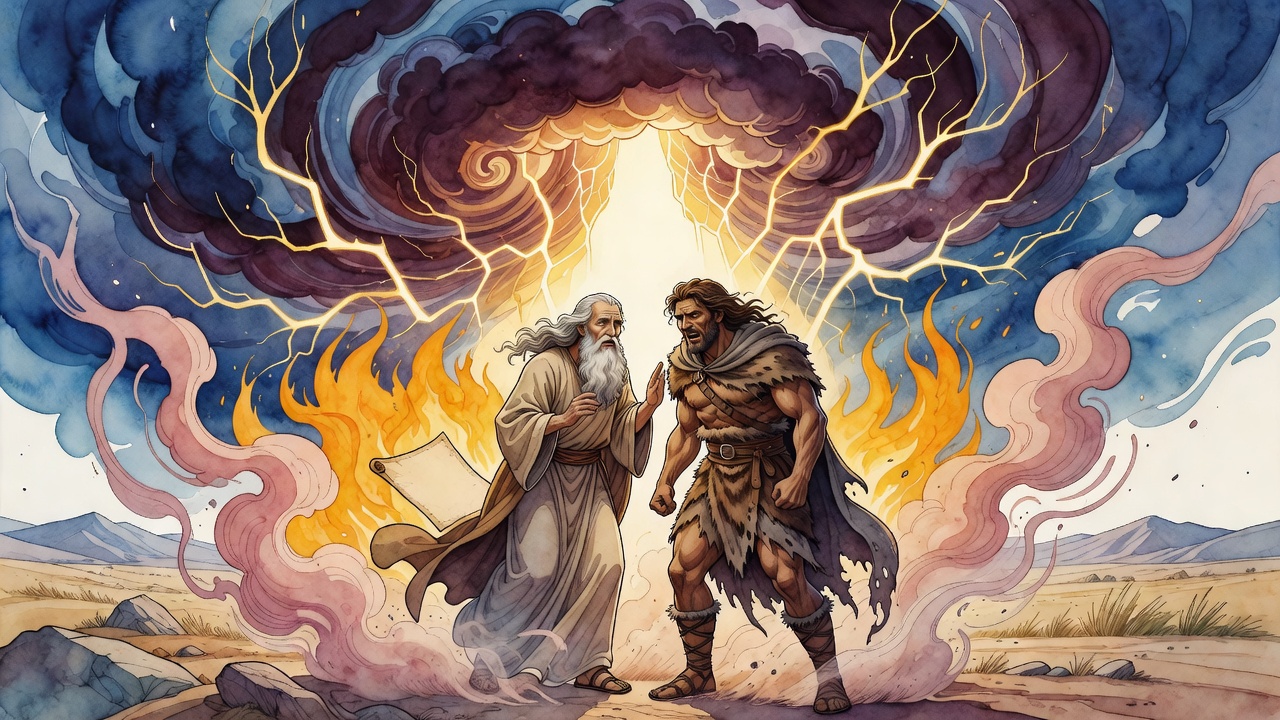
Esau would arrive soon with real meat, real sweat, and real rage that would make him cry a great and bitter cry. The blessing would not reverse for stew already sold years before or for tears that came too late to the tent door. Isaac had smelled Paradise and chosen the son who carried its rumor, fully aware that the line would sin and fully aware that the line would return. Blindness had not made him simple. It had made him attentive to scents heaven still knew how to send.

What Blindness Could Still Judge

Dim eyes did not mean dim judgment. Isaac refused to treat future failure as a reason to withhold the dew of heaven. He treated repentance as a fact strong enough to outweigh the vexation he had already seen in prophetic preview. The kiss, the scent, the tenfold blessing, and the bridal radiance form one sequence that cannot be cut into moral and miracle without bleeding. A father hands over the future not because the future is clean, but because it can turn, and because Eden still leaves a fragrance on the right shoulder at the right hour.

Outside, goat skins itched and Esau's steps grew near. Inside the blessing, bones drank dew. Jacob stepped into history smelling of a garden he had never walked as Adam walked it, carrying ten echoes of the speech that made the world, while a blind man sat behind him certain at last that the field he smelled was blessed enough to risk.

Rebekah, who had dressed her younger son for the hour, waited outside the range of Isaac's dim eyes and sharp nose, knowing the scent of Eden would do what goat skins alone could not. The future of Israel walked out of that tent under dew, while Esau's delayed feast cooled into the bitter cry that would shape a nation's memory of stolen moments and chosen destinies.


← All myths

From the tradition

Sources

3 sources

The texts behind this telling. Some cards carry a translation of the source; others are our own retelling of it, and each card says which. Every card links out to the original.

Pirkei DeRabbi Eliezer 32:16Pirkei DeRabbi Eliezer

Retold in our words. Read the original at the link below.Pirke de Rabbi Eliezer, trans. Rabbi Gerald Friedlander, London (1916) · CC-BY

Rabbi Judah paints a vivid picture. He tells us that Isaac, when blessing Jacob, bestowed upon him ten distinct blessings. Now, these weren't just any blessings. They were specifically connected to "the dews of heaven and the corn of the earth." Why that pairing? Because, as Rabbi Judah points out, these ten blessings directly mirror the Ten Utterances – the Ma’amarot – with which God created the entire world. Each blessing, in its own way, echoes the very act of creation!

It's all there in (Genesis 27:28): "And God give thee of the dew of the heaven." And then, the continuation in (Genesis 27:29), "Let peoples serve thee…" It's not just about material abundance, but about dominion and influence.

The story doesn't end there. Imagine Jacob leaving his father's presence. According to Pirkei DeRabbi Eliezer, he wasn't just walking; he was "crowned like a bridegroom, and like a bride in her adornment." He's not just blessed, he's radiant, transformed, almost otherworldly.

What happens next? "The quickening dew from heaven descended upon him, and refreshed his bones." It’s as if the blessing itself materialized, taking physical form to invigorate him. He's not just spiritually blessed; he's physically strengthened!

This transformation, this empowerment, turns him into "a mighty hero." That’s why (Genesis 49:24) says, "By the hands of the mighty Jacob, from thence is the shepherd, the stone of Israel." This verse, often interpreted messianically, highlights Jacob's strength and his role as a foundation for the Israelite nation.

So, what does this all mean? It's more than just a nice story. It suggests that blessings aren't just empty words. They're potent forces, capable of transforming individuals and shaping destinies. They connect us to the very source of creation, the Ma’amarot themselves. They can bring about tangible change, like dew refreshing the bones, and even turn an individual into a "mighty hero."

What blessings have shaped your life? And what blessings are you ready to bestow on the world?

Full source
Legends of the Jews 6:62Legends of the Jews

Retold in our words. Read the original at the link below.The Legends of the Jews by Louis Ginzberg (1909) · Public Domain

Take Isaac, for instance, getting ready to bless his son. It wasn't just a simple, "May good things come your way." This was a prophetic act, shaping the future of generations.

Isaac hesitated. He had this… unease. A glimpse, perhaps, into the future. As Legends of the Jews, so beautifully retold by Ginzberg, tells us, Isaac foresaw that some of Jacob’s descendants would, shall we say, "vex the Lord." Not exactly the kind of lineage you want to bless unreservedly. But then, another revelation. A counter-balance. He also saw that even the sinners among Israel would eventually turn towards repentance. That even in the darkest corners, there would be a return to the light. This changed everything. This potential for teshuvah (repentance), for turning back, was the key. With this knowledge, Isaac was ready.

He calls Jacob closer, asking for a kiss. But why a kiss? The Midrash (specifically, Midrash Rabbah) explains that this wasn't just any kiss. This was to signify that Jacob, and only Jacob, would be the one to give Isaac his final kiss before death. A powerful image of connection and continuity.

Then, something truly remarkable happens. As Jacob draws near, Isaac doesn't just see him, he smells him. And what does he smell? The fragrance of Paradise itself! "See," he exclaims, "the smell of my son is as the smell of the field which the Lord hath blessed." (Genesis 27:27). Can you imagine? The very scent of divine favor emanating from his son.

It’s a moment thick with meaning. It speaks to Jacob's inherent goodness, yes, but also to the potential for redemption within all of us. Even with the knowledge of future transgressions, Isaac recognizes the spark of the Divine, the promise of repentance, and the enduring connection to something far greater. It's a reminder that even when we anticipate the potential for wrongdoing, the fragrance of Paradise – the potential for good – can still be found within.

Full source
Midrash Tanchuma, Toldot 8Midrash Tanchuma

Retold in our words. Read the original at the link below.Townsend 1989 translation of Midrash Tanhuma, S. Buber Recension · CC-BY

And it came to pass that when Isaac was old, and his eyes were dim (Gen. 27:1). Scripture states elsewhere: A gift (bribe) is as a precious stone in the eyes of him that hath it; whithersoever he turneth, he prospereth (Prov. 17:8). What may the gift (mentioned in this verse) be compared to? To a precious stone which shatters whenever it falls. This verse aptly refers to Isaac, for it is said: Now Isaac loved Esau because he did eat of his venison (lit. the game was in his mouth) (Gen. 25:28). What is the meaning of the game was in his mouth? It means that Esau ensnared the righteous Isaac with the words he spoke. You find that Esau committed every sin which the Holy One, blessed be He, detests; There are six things which the Lord hateth, yea, seven which are an abomination unto Him: haughty eyes, a lying tongue, and hands that shed innocent blood; a heart that deviseth wicked thoughts, feet that are swift in running to evil; a false witness that breatheth out lies, and he that soweth discord among brethren (Prov. 6:16–19). Whenever Esau entered the house, he would ask his father: “My father, is one obliged to tithe for salt?” Isaac would exclaim in amazement: “Observe, how scrupulous this son of mine is concerning the commandments!” And when his father would ask him: “Where were you today, my son?” “At the house of study,” the youth would reply and he would add: “Is this not the law under certain circumstances; are not these things prohibited and these permitted?” By such remarks, he entraped his father with his mouth. That is why he loved him. Thereupon, the Holy Spirit exclaimed: When he speaketh fair believe him not; for there are seven abominations in his heart (ibid. 26:25). Why did Isaac’s eyes become weak? They became weak because he beheld the countenance of the wicked Esau; also because he ate the venison he brought him, as it is said: For the gift blinded them that hath sight (Exod. 23:8).

And his eyes were dim (Gen. 27:1). And when Esau was forty years old, he took to wife Judith the daughter of Be’eri the Hittite, and Basemath the daughter of Elon the Hittite. And they were a bitterness of spirit unto Isaac and to Rebecca (Gen. 26:34–35), and this is followed by the verse And his eyes were dim. Hence, they must have become dim because of his unhappiness.

Though the Shekhinah (the Divine Presence) hovered over Isaac’s home, Esau had married Canaanite women who sacrificed and burned incense before idols. The Shekhinah, thereupon, departed from Isaac’s home. When Isaac beheld what was transpiring within his home, he was sorely distressed. And so the Holy One, blessed be He, said (to Himself): I will dim his sight so that he may no longer see what is transpiring and become even more disturbed. Therefore, And his eyes were dim.

If this was so, why did not Rebecca’s sight become weak? R. Abahu stated: This may be compared to a person carrying utensils made of bone and earthenware. If he should strike the bone utensils against each other, they do not shatter, but if he should strike the bone and earthenware utensils against each other, the earthenware utensils will crumble. Similarly, when Rebecca and Esau’s wives, who like herself were made of bone, came into contact with each other, she was unaffected by them, but Isaac, who was made of the dust of the earth, as it is said: And God created man from the dust of the earth (Gen. 2:7), was quickly affected. Hence, His eyes were dim.

And his eyes were dim. Why did his vision become impaired? The Holy One, blessed be He, foresaw that Isaac would desire to bless Esau, and He decreed, therefore, that his sight should become weak so that when Jacob approached him for the blessing, Isaac would not realize that he was conferring the blessing upon Jacob. David proclaimed: Many things hast Thou done, O Lord, my God, even Thy wondrous works and Thy thoughts toward us. There is none to be compared unto Thee (Ps. 40:6). That is, all Thy wondrous works and Thy thoughts toward us are in our behalf.

He called Esau his greater son (Gen. 27:1). Why did he call him his greater son? To teach us that one must flatter wicked men when they are in power. Isaac foresaw that Esau’s descendants would dominate the world, and therefore he called him his greater son. The Holy One, blessed be He, said to Israel: Inasmuch as Esau is now in control you must flatter him, for My kingdom is not yet firmly established, but in the future, when My kingdom is firmly established, I will call him to account, as is said: And saviors shall come up on Mount Zion to judge the mount of Esau at that time, and the kingdom shall be the Lord’s (Obad. 21).

Full source