Isaac Drew Back His Hands Until Eden Entered the Tent
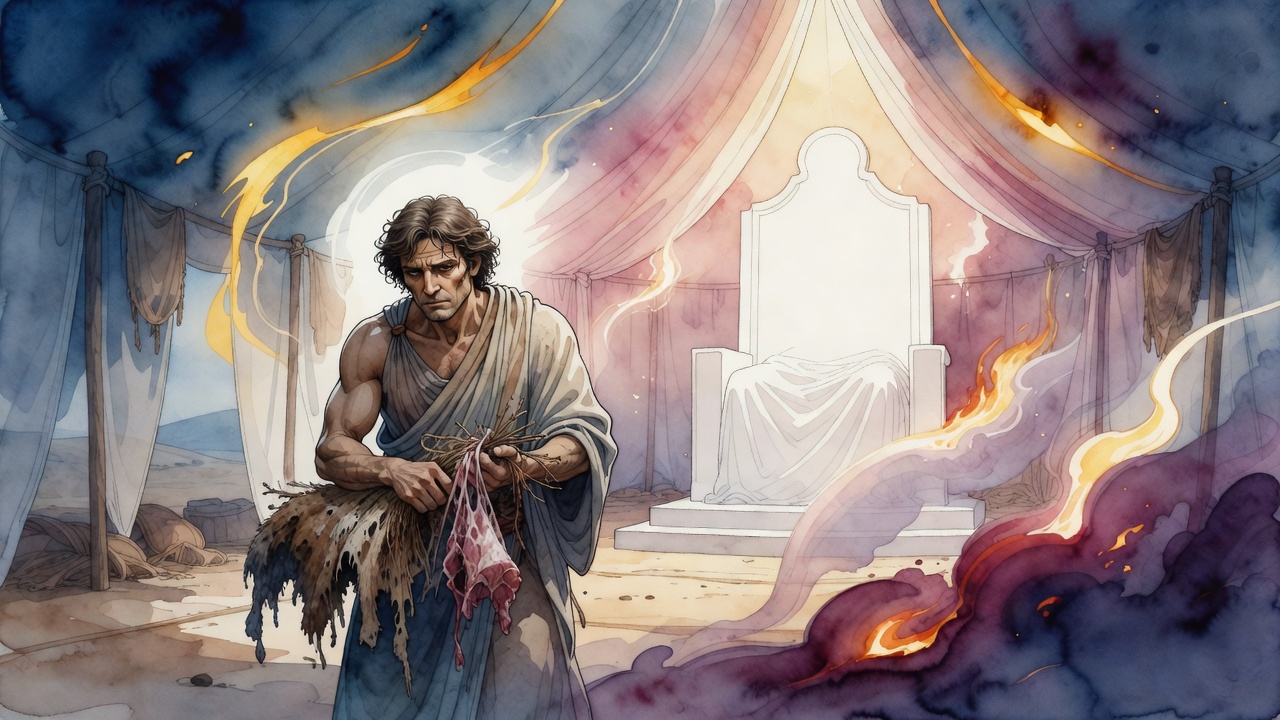
Blind Isaac held his hands above the wool and would not set them down. He had just watched a man walk out of the Temple with the lampstand.
Table of Contents
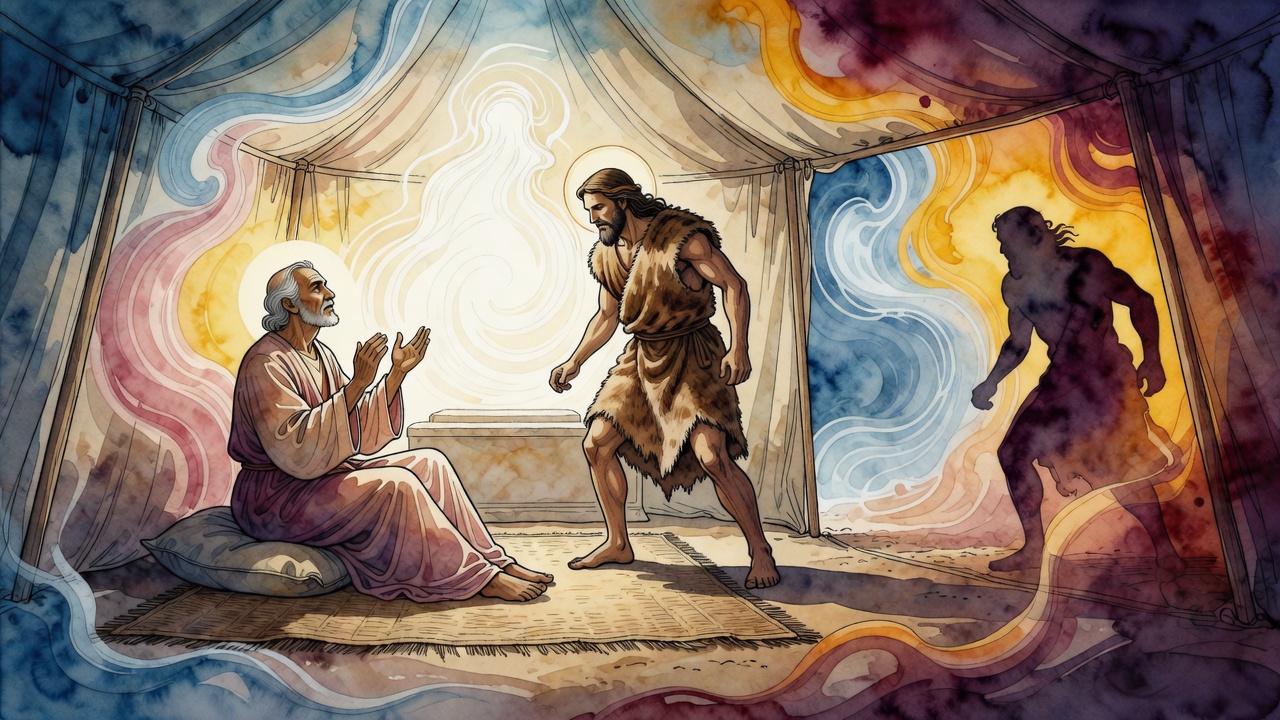
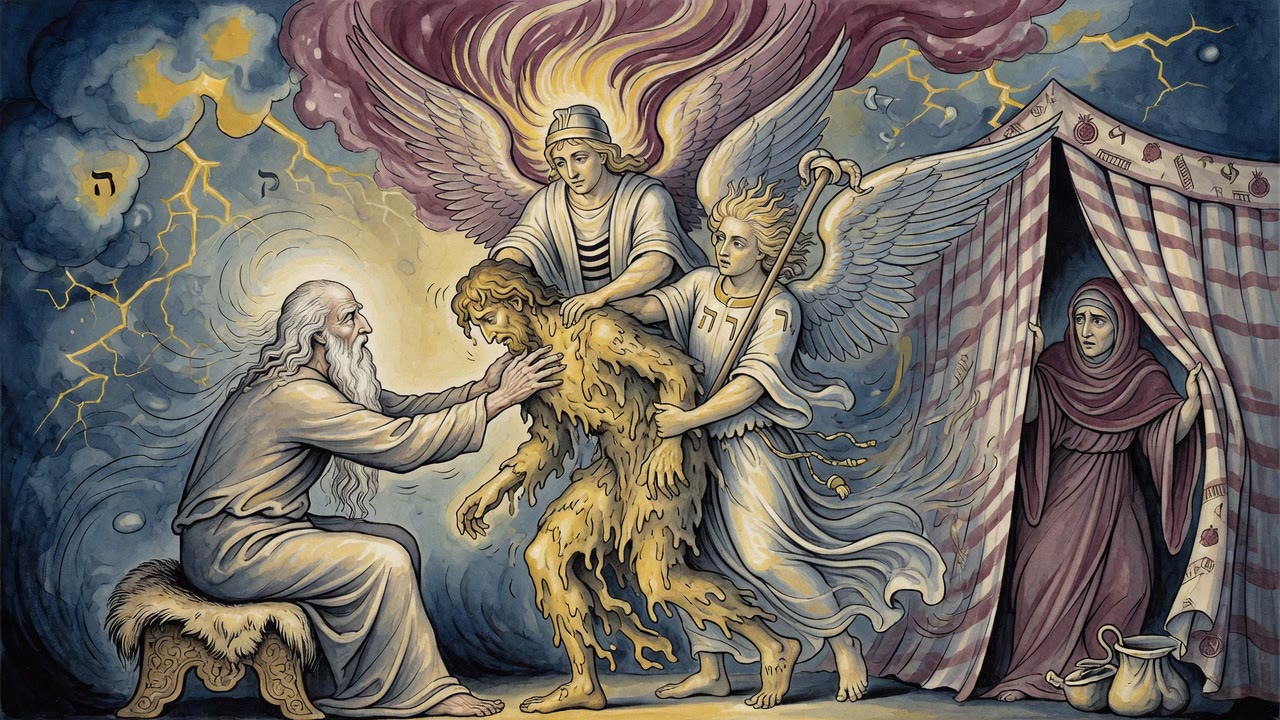
Blind Isaac put his hands out toward his son's head and then held them in the air above the wool.
 Click for full size
The tent smelled of stew and outdoor dust. The boy had answered him. The arms under his fingers were hairy. Everything was in place for the blessing promised to the elder son. Isaac did not move. A prophet does not go blind in the part of him that sees forward, and what he was looking at was not the young man in front of him.
The Man Who Took the Lampstand
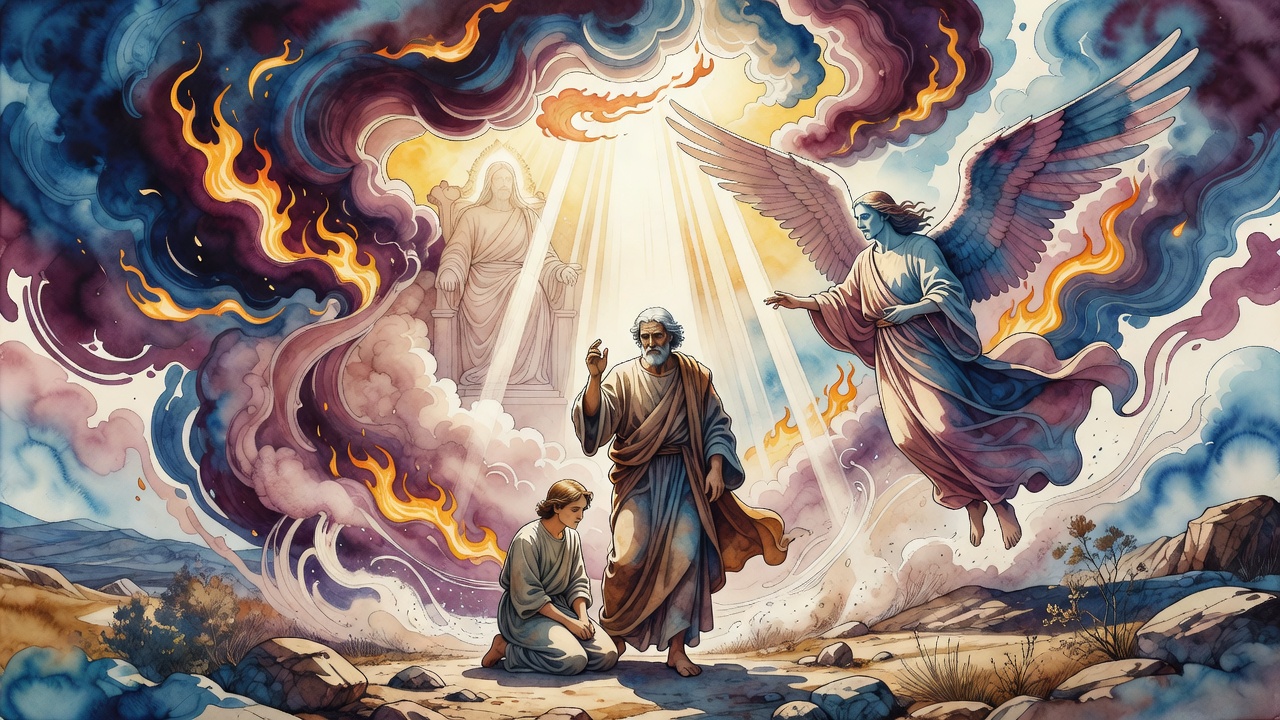
He saw Jerusalem burning. He saw the Temple courts standing open with the nations of the earth too frightened to step over the threshold, and one man from the line of Esau walking in past all of them without hurrying. Yakum went to the lampstand, took it down, and carried it out into the street in front of everyone.
Isaac drew his hands back. To lay them on a head is to sign for everything that comes out of it, and he had just watched what came out of it. So he did not know his son. Recognition would have been consent, and he would not consent to that man in that doorway with that lampstand in his arms.
He held his hands up in the air over a boy he could not see and would not bless.
Eden Came In With the Clothes
Then Jacob leaned closer with the platter, and the air in the tent changed.
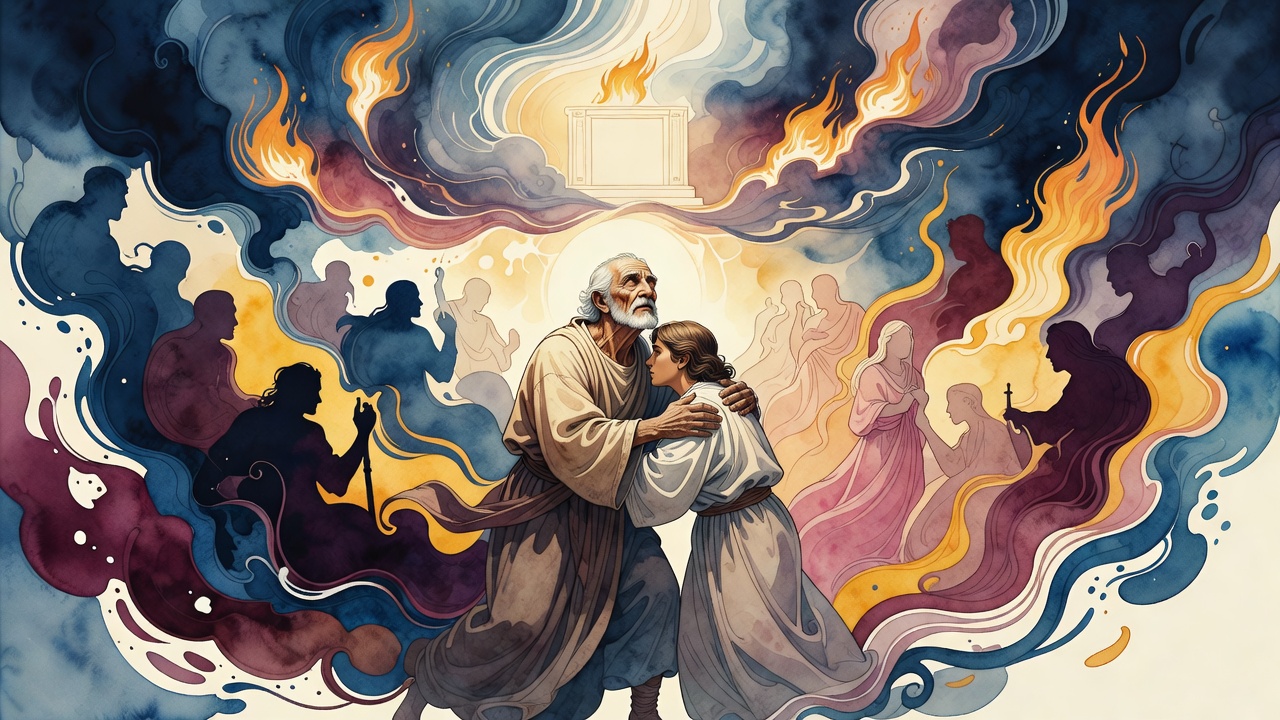
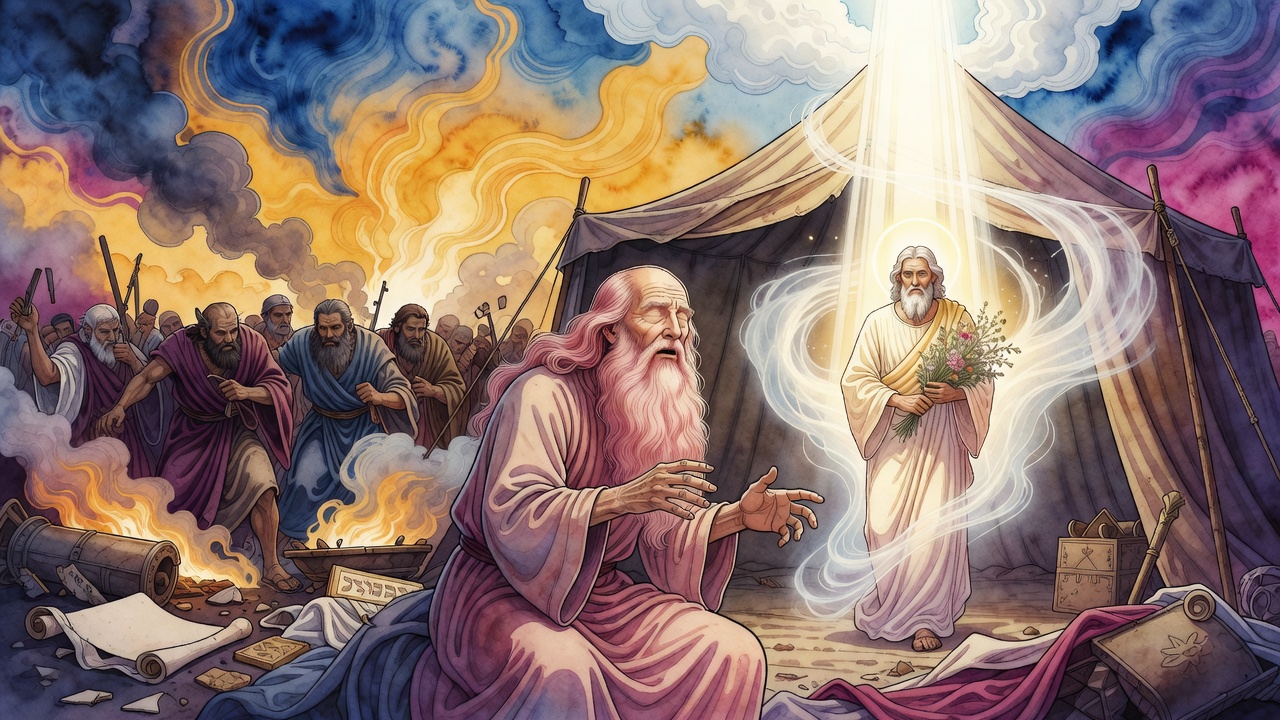
What came off the borrowed clothes was not goat and not kitchen smoke. It was a field after rain, wet ground and green things and something sweeter underneath, and it filled the whole tent at once. The Garden of Eden had entered behind the boy and was standing in the room. Somewhere down that same line Isaac saw a man turn around and come back, and repentance was still possible after all, and his hands came down onto the head and he blessed him (Genesis 27:27).
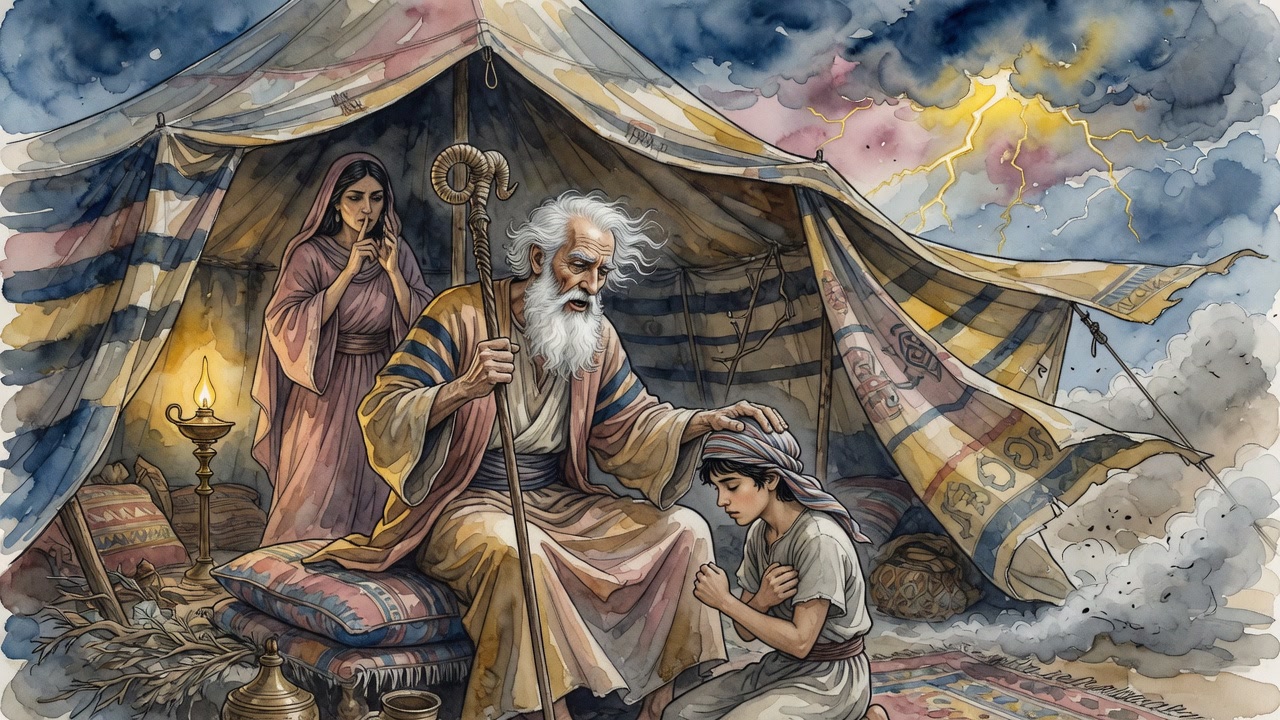
Later, when Esau came in from the field with the game he had actually hunted, something else entered with him. The tent filled with the smell of burning, and Isaac shook so hard that the frame of the tent moved with him. "Who, then?" he said. "Who was it? Where is he?" His voice went up and did not come back down. Two sons had crossed that threshold within the hour, one of them trailing a garden and one of them trailing a pit.
The Hebrew he cried was eifo (אֵיפֹה). The word is "where." In that cry it is also Gehinnom (גיהנם), the pit, a grave hewn open, as the prophet said of a man who cut a tomb for himself in the rock (Isaiah 22:16).
Judah Went Down From His Brothers
The trouble in that household did not stop with the two of them.
Jacob's fourth son Judah walked down out of the hill country away from his brothers, turned aside to a man in Adullam, and married a Canaanite woman (Genesis 38:1-2). Generations later a prophet stood in the courts of a rebuilt Temple and shouted the same word at the tribe that came from him. Malachi called it treachery, the word a man earns when he breaks faith with the wife of his youth. "Judah has profaned the holiness of the Lord," he said, "and has married the daughter of a foreign god" (Malachi 2:11).
Judah was the one the Psalmist had called God's own sanctuary (Psalms 114:2). The higher the shelf, the further the fall when the thing comes off it, and that tribe had been set very high.
They Answered From Haran
There is one more scene at the end of that road, and it has not happened yet.
Jacob is out among his own scattered children, walking through them the way a father works through a crowd looking for a face. "My brothers," he calls, "where do you come from?"
They answer him with the words the shepherds at the well once used, the ones he heard the morning he arrived in Laban's country. "We are from Haran" (Genesis 29:4). In their mouths the place-name has picked up its other meaning. It is not a town anymore. It is the heat of God's anger, charon af (חרון אף), the fire of the judgment that scattered them, and they are naming it to their father's face as the country they have been living in.
He asked that same question once as a young man with light feet, standing at a well in good weather. Now he asks it in a crowd, and this is the answer he gets.
← All myths