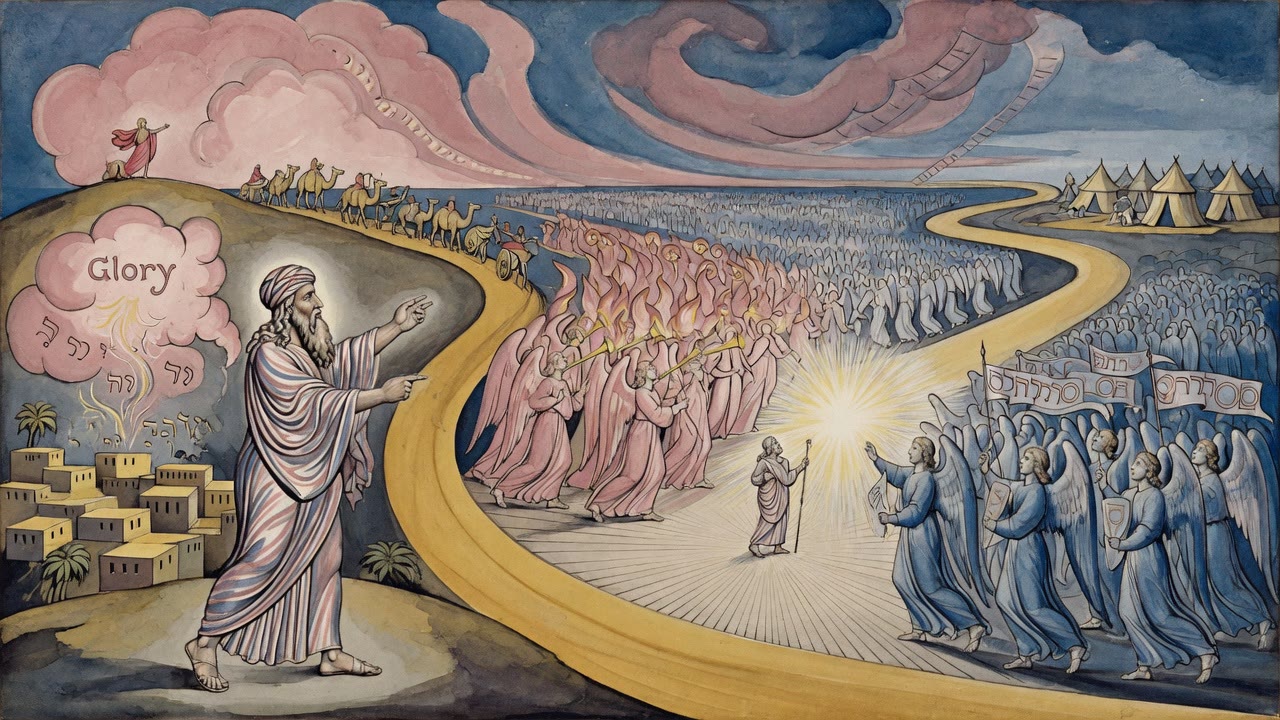
Jacob Buys the Burial Cave with a Heap of Gold
Isaac was already in the ground. Jacob piled gold until it caught the sun and asked Esau to pick. His brother took the heap.
Table of Contents
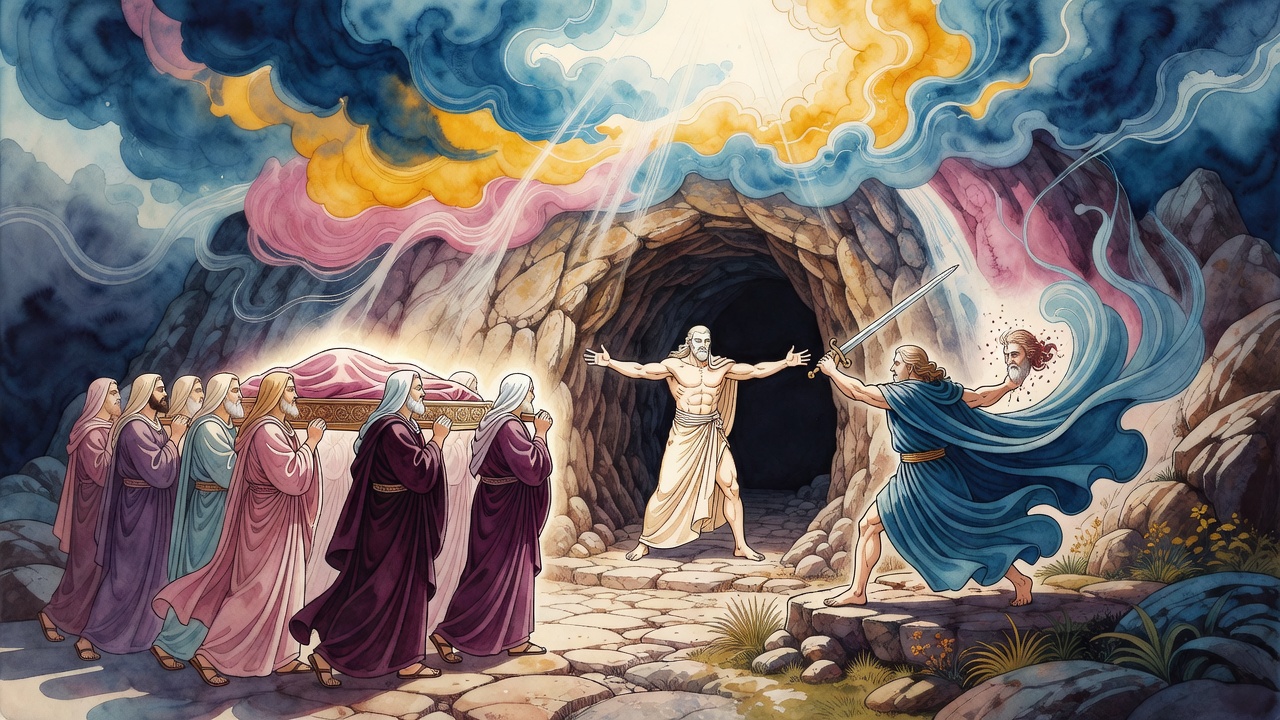
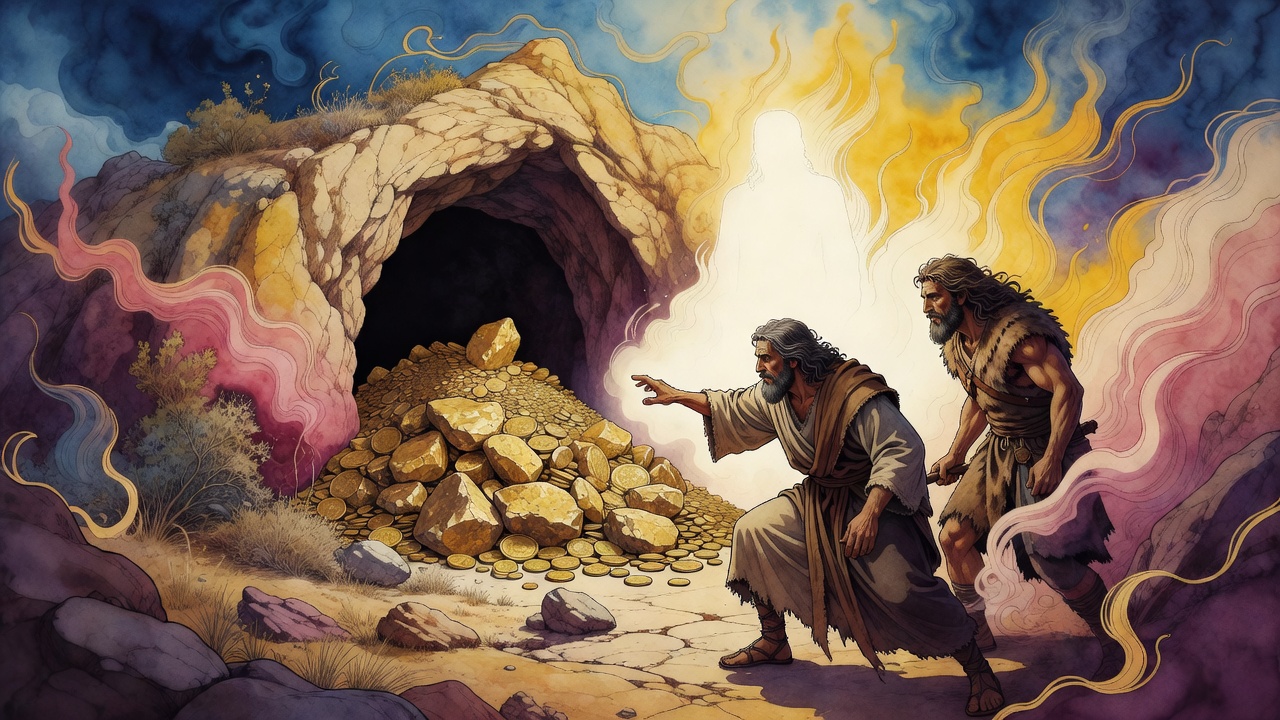
Jacob stacked gold and silver until the pile threw light back at the sky. Opposite the heap, a cave mouth waited, dark as a throat. Isaac was already inside it. Esau stood between metal and stone with the old hunger still in his face.
 Click for full size
"Which do you prefer," Jacob asked, "this heap or the cave?"
Esau's hand went to the heap. He did not look at the mouth in the rock. He took what shone.
The Bargain at the Cave Mouth
Jacob had not come to preach. He had come to buy. After Isaac died, a fear sat in him that would not move. The wicked brother might claim a bed in the cave of the righteous. Blood could do that. A firstborn could stand at a grave and say the ground was his by order of birth, even after he had sold a birthright for stew and hunted a brother with murder on the calendar.
Jacob piled every bright thing he owned into one argument Esau would understand. He let appetite do the rest. Esau chose the heap. Jacob took the grave. The cave of Machpelah (מכפלה), the double cave where the fathers lay, became his by purchase, not only by lineage.
He did not smile. He watched Esau walk away heavy with metal and light of burial rights. Gold can be spent in a season. A grave in that cave holds a name across centuries.
The Dream That Fenced Him
Years earlier he had fled Esau into the field of Aram, into Laban's house, and stayed twenty years under wage theft. When he finally ran, God came to Laban the Aramean in a dream of the night and fenced Jacob's life with a warning. Laban woke and still rebuked him. "Why have you stolen my gods?"
Jacob did not know about the teraphim in the camel bag. He swore a sentence that landed on the wrong body. "With whomsoever you find your gods, he shall not live." At that moment Rachel's death was decreed, and she did not know it yet, and he did not know he had spoken it.
She had taken the house-gods so they would not whisper to her father which road the flocks had taken. They were filthy work: a firstborn killed, salted, a demon's name on gold under the tongue, a corpse set in the wall with candles. She stole them to shut their mouths, and also to empty her father's house of idols. Laban searched the tent and found nothing. The family carried that loss like a stone in a pack. Against that history the purchased cave was a fixed point. Abraham and Sarah were there. Isaac and Rebekah were there. Leah was there. Jacob meant to join them with a title clear enough that Esau's children could not contest it with a story about blood alone.
A Sickbed in Egypt
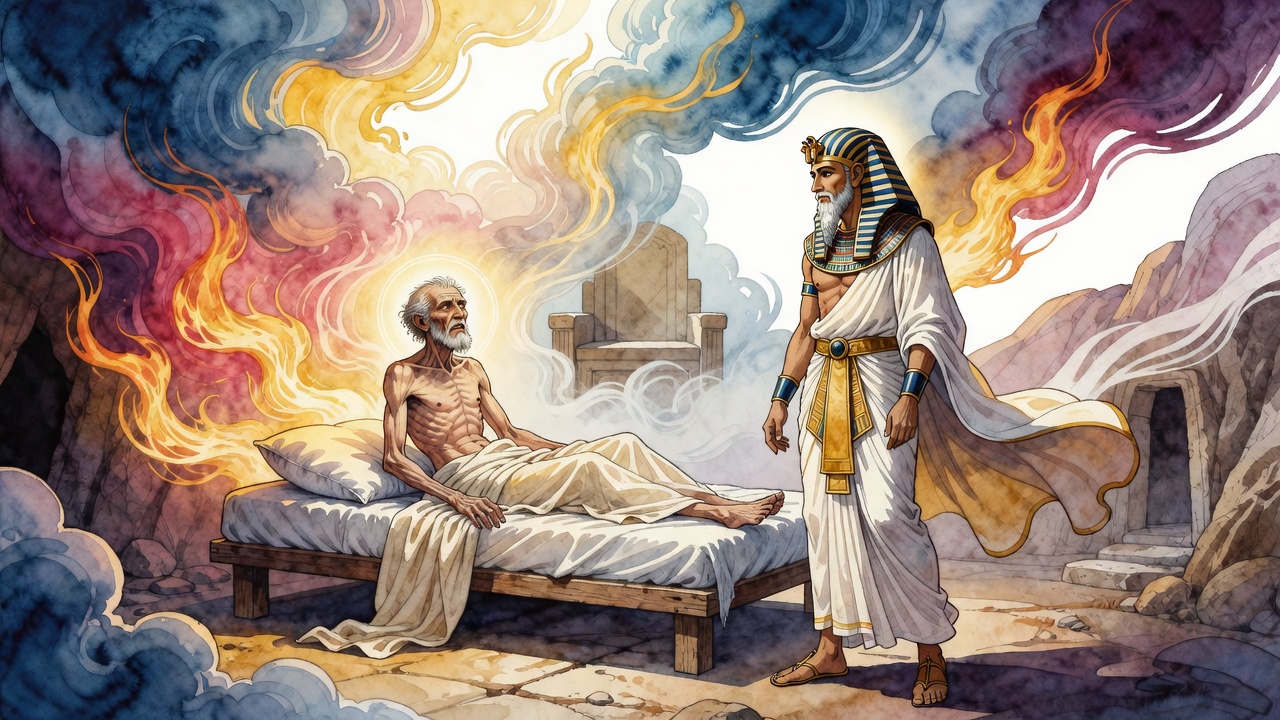
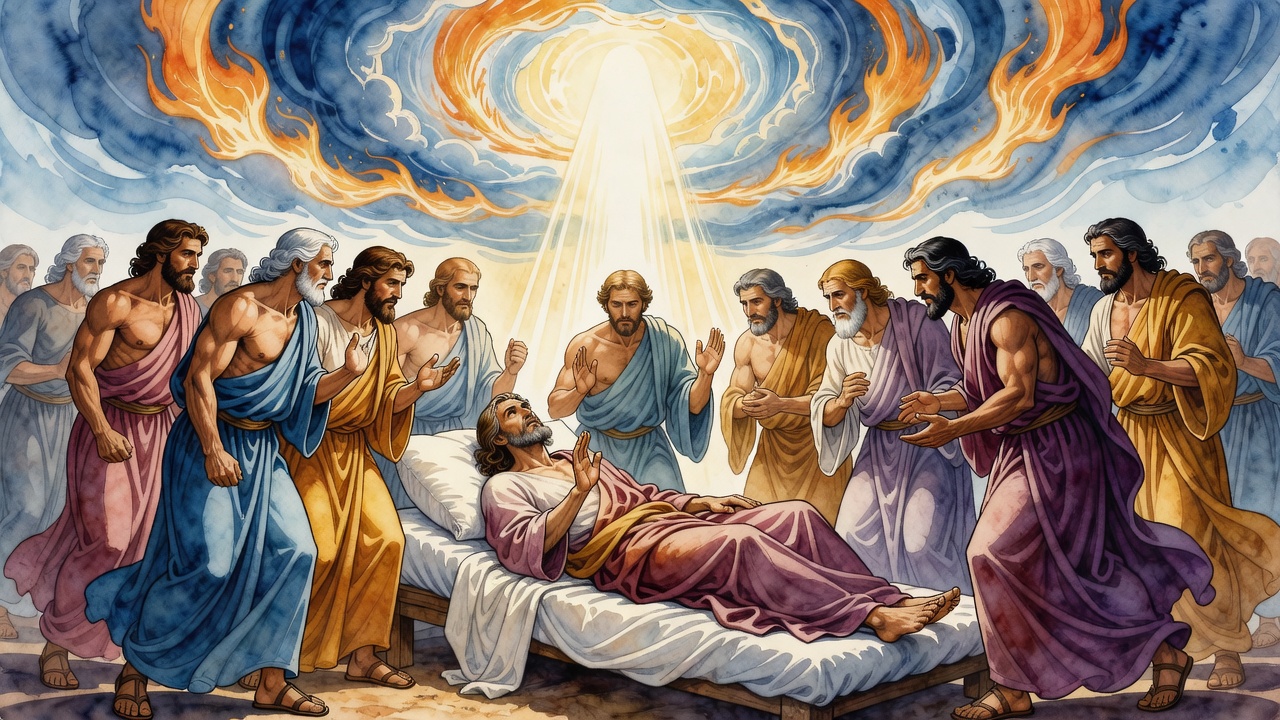
Time brought him to Egypt and to a bed he could barely leave. The time drew near that Israel must die. He called Joseph, because Joseph held authority, and a father still honors a ruler even when the ruler is his son.
"Behold, your father is sick," someone said. The messenger was Ephraim. The boy had been sitting with Jacob over the law when the weakness came. He rose, ran, and put the news in Joseph's ear.
Israel strengthened himself and sat upon the bed. He would not receive the viceroy of Egypt lying flat. He spoke of God Almighty appearing and promising fruitfulness. He claimed Ephraim and Manasseh as his own, equal to Reuben and Simeon. Then he put the old map into a living palm.
"Bury me with my fathers. In the grave I prepared for myself."
Joseph asked where. Jacob did not mean a fresh digging. He meant the cave he had bought with a heap his brother preferred to bones.
The Road Already Paid
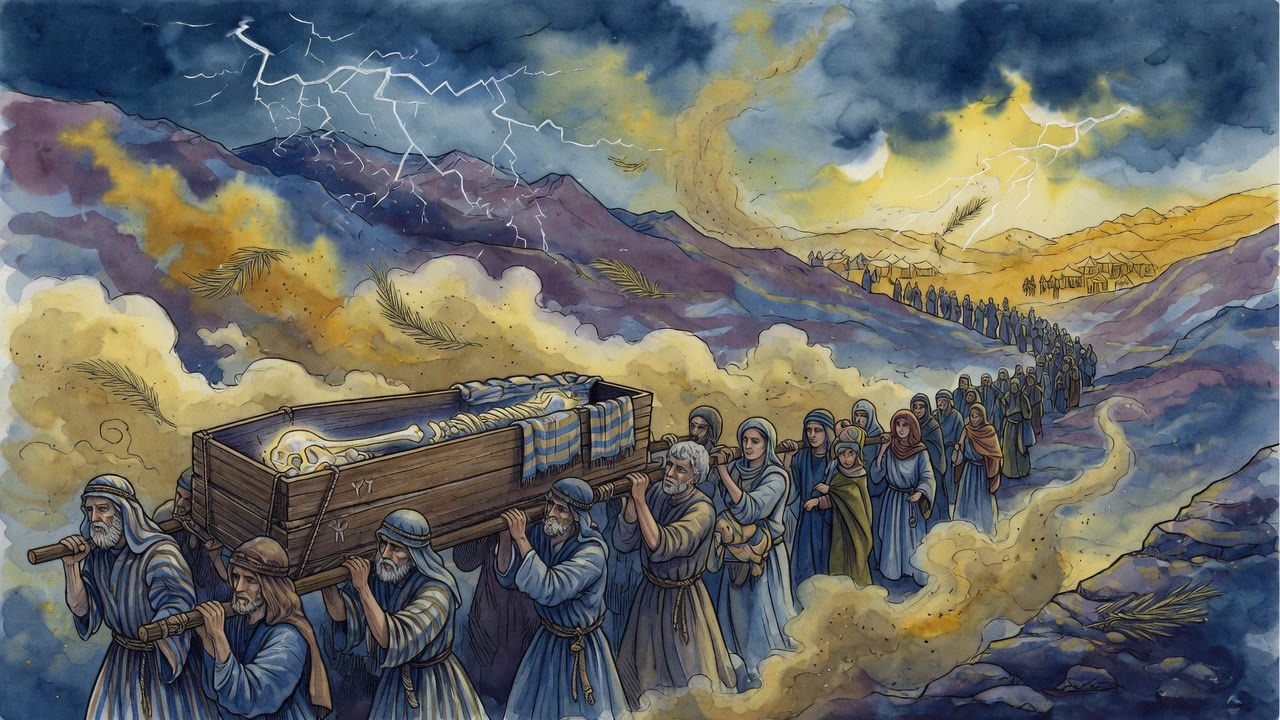
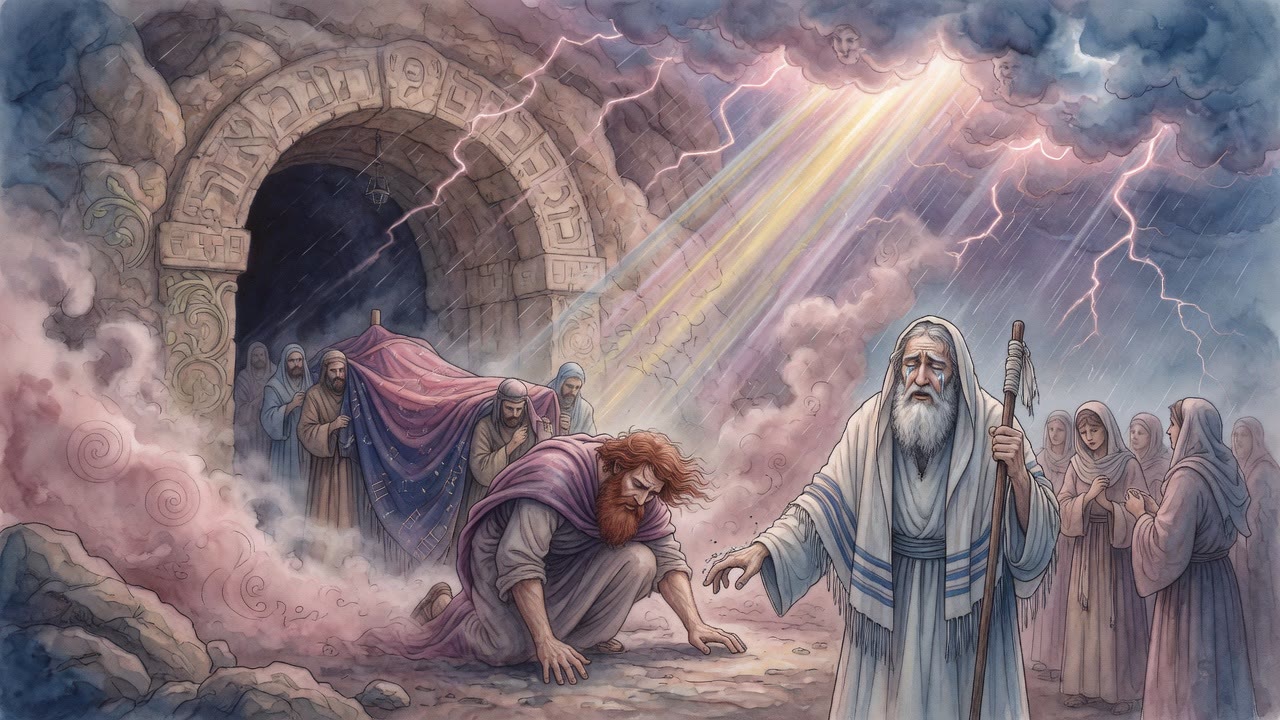
Joseph promised. The brothers would carry. A procession would leave Egypt and mourn at the threshing floor before the cave took its last patriarch. Palace marble could not rewrite the deed. Embalmers could not replace it. Joseph's power could only honor it.
On the sickbed Jacob's hand found Joseph's and pressed. The heap that once shone between two brothers had done its work. It had turned appetite into a signature Esau would not contest when the funeral train finally reached the field.
Jacob had fled Esau once, into Aram. He knew when to bend. At the cave mouth he did not duel. He made Esau choose glitter over eternity and walked away with the only thing that mattered for a death still years ahead. The gold was long spent in Esau's hands. The cave still held.
← All myths