21 myths
Each story names the sources it was written from.
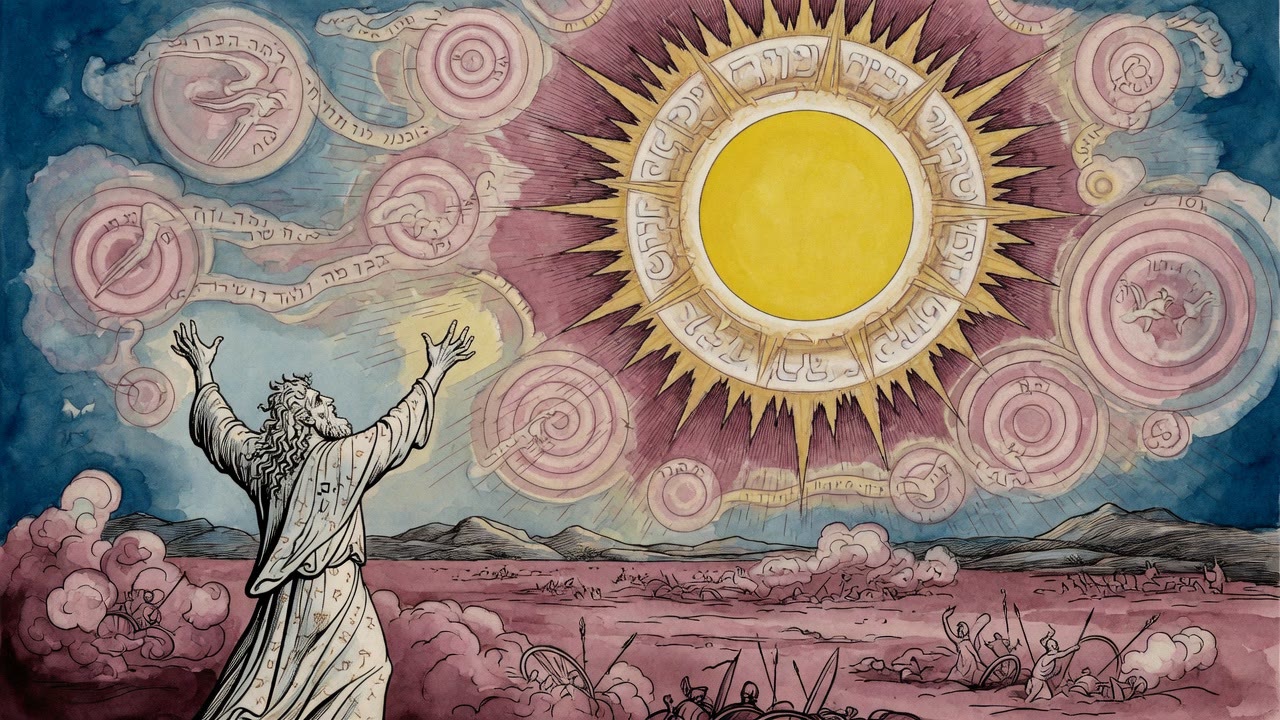
The sun refused Joshua's command at Gibeon, insisting it was older than any man. Joshua answered it, and the sun stood still.
He knew the day and not the hour, so he kept the scroll open. One noise in the garden, and the stair under the king gave way.
When Joshua commanded the sun to stand still, the rabbis said every power he had came from Moses. The moon was still the moon. Its light was borrowed.
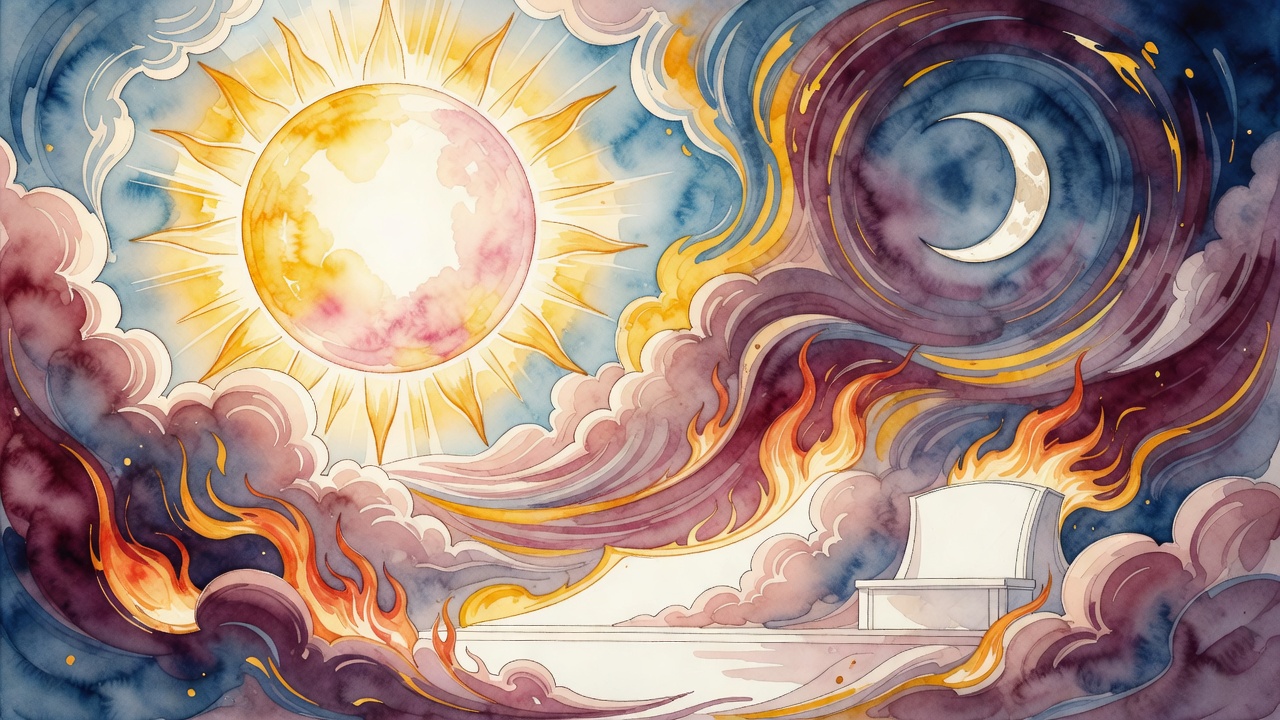
She went up to complain about sharing the sky and came back down smaller. Every month since, Israel burns a goat for a sin God says is His.
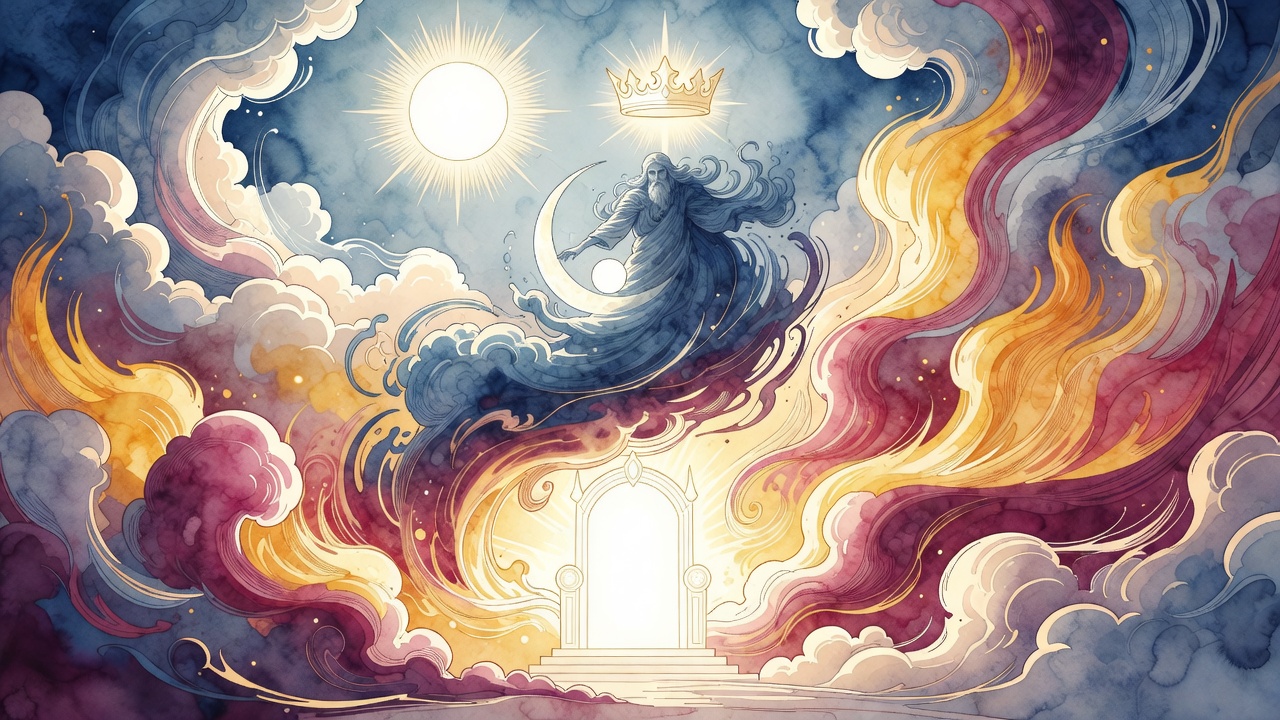
Two great lights, one crown. When the moon is shrunk to the lesser lamp she storms the court for justice, and heaven ends up owing her a debt.
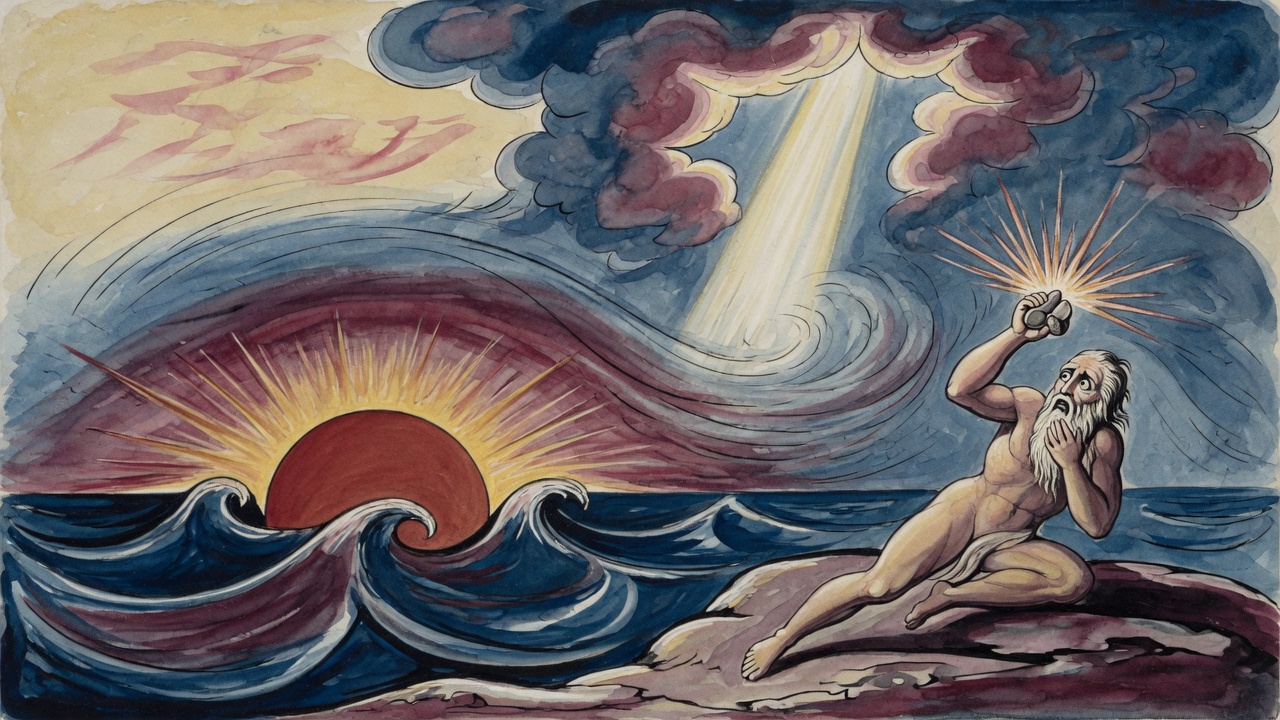
For a week the world never set. Then the first Sabbath ended, the sun drowned in the sea, and a terrified Adam struck two stones in the dark.
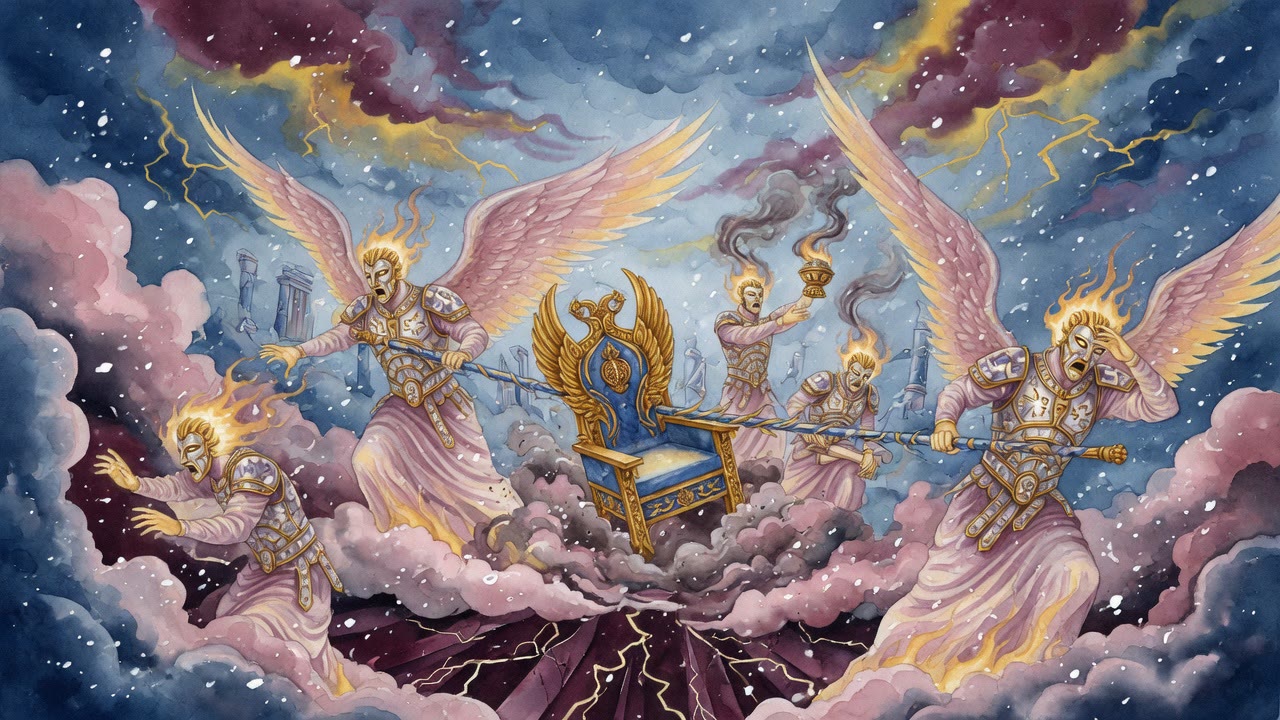
The angels crowded the ladder all night like flies on a sleeping child. Then a light bent over the stone where Jacob lay, and every one of them scattered.
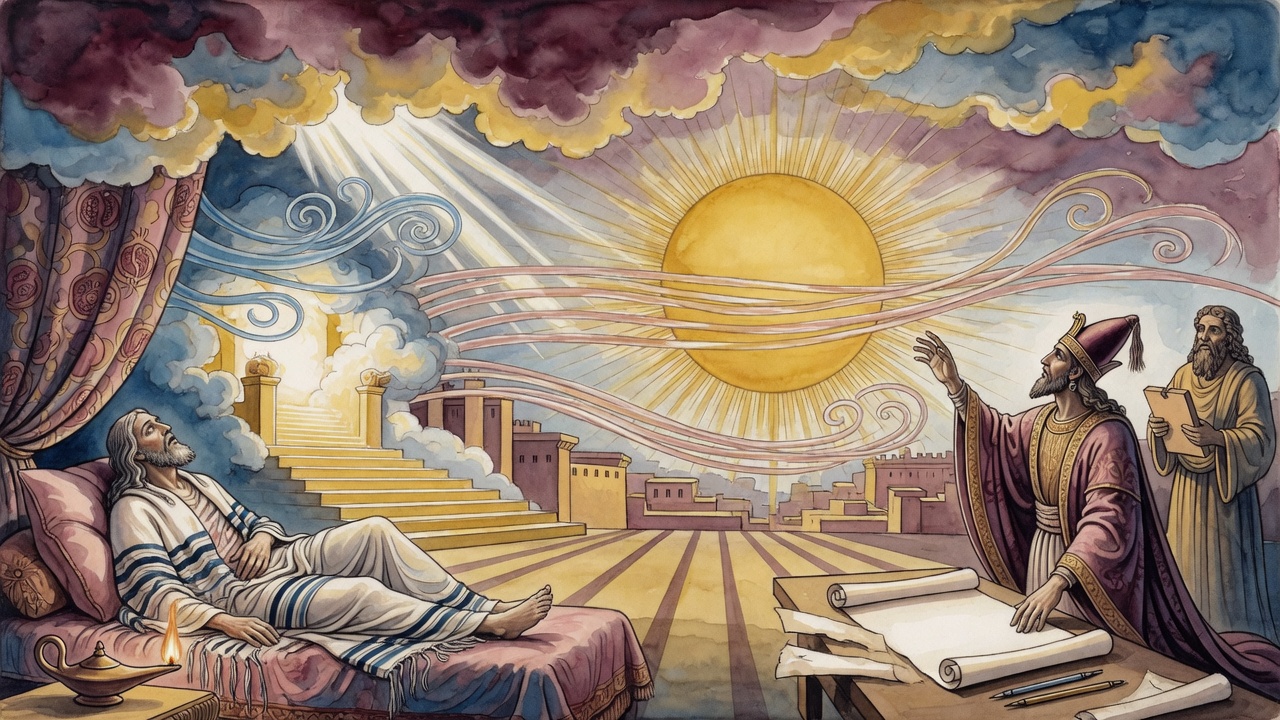
Hezekiah was dying when he asked God to let illness have an exit. In Babylon a prince woke from his noon nap and reached for the guards.
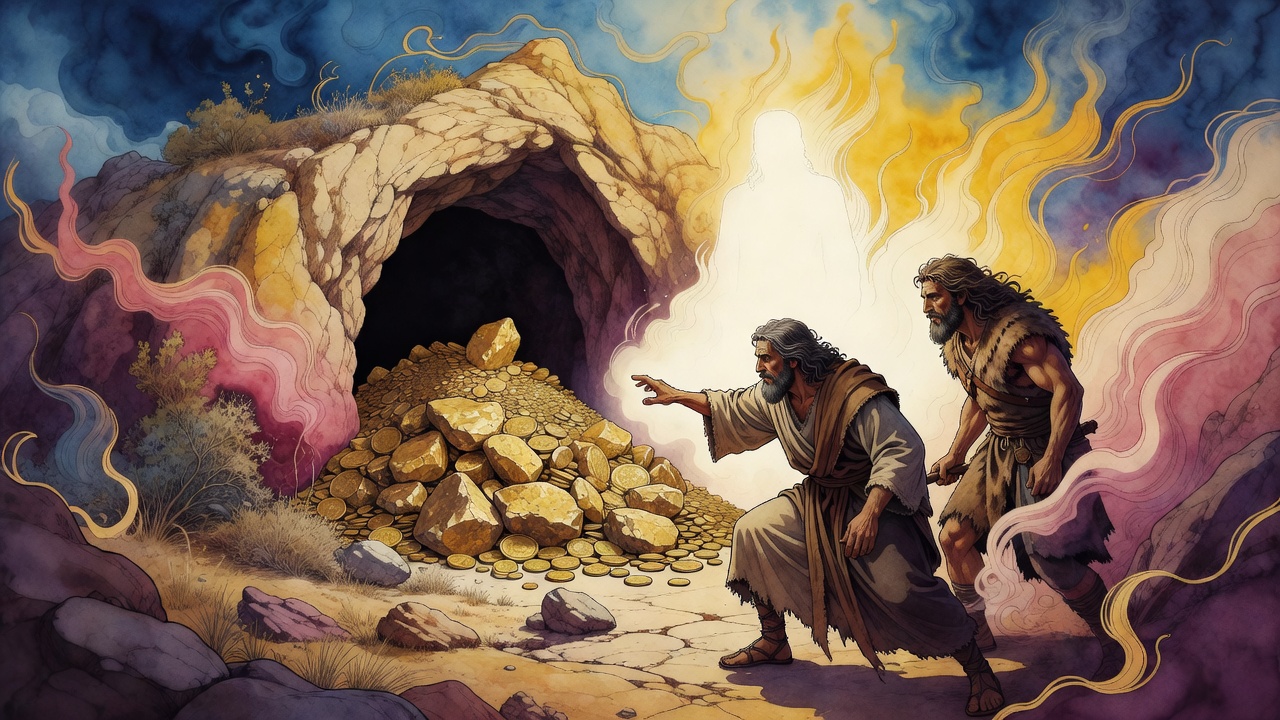
Isaac was already in the ground. Jacob piled gold until it caught the sun and asked Esau to pick. His brother took the heap.
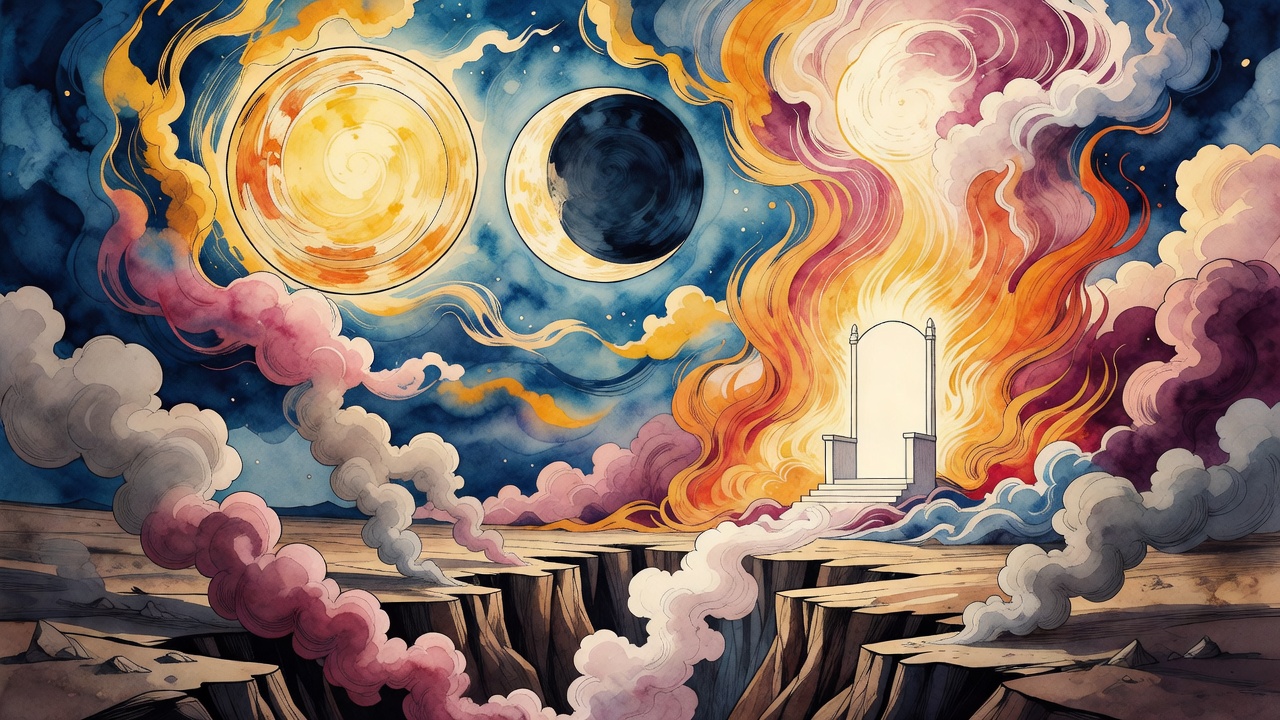
Sun and moon climb to Zebul and refuse to shine until God judges Korach, while smoke from the chasm still answers travelers.
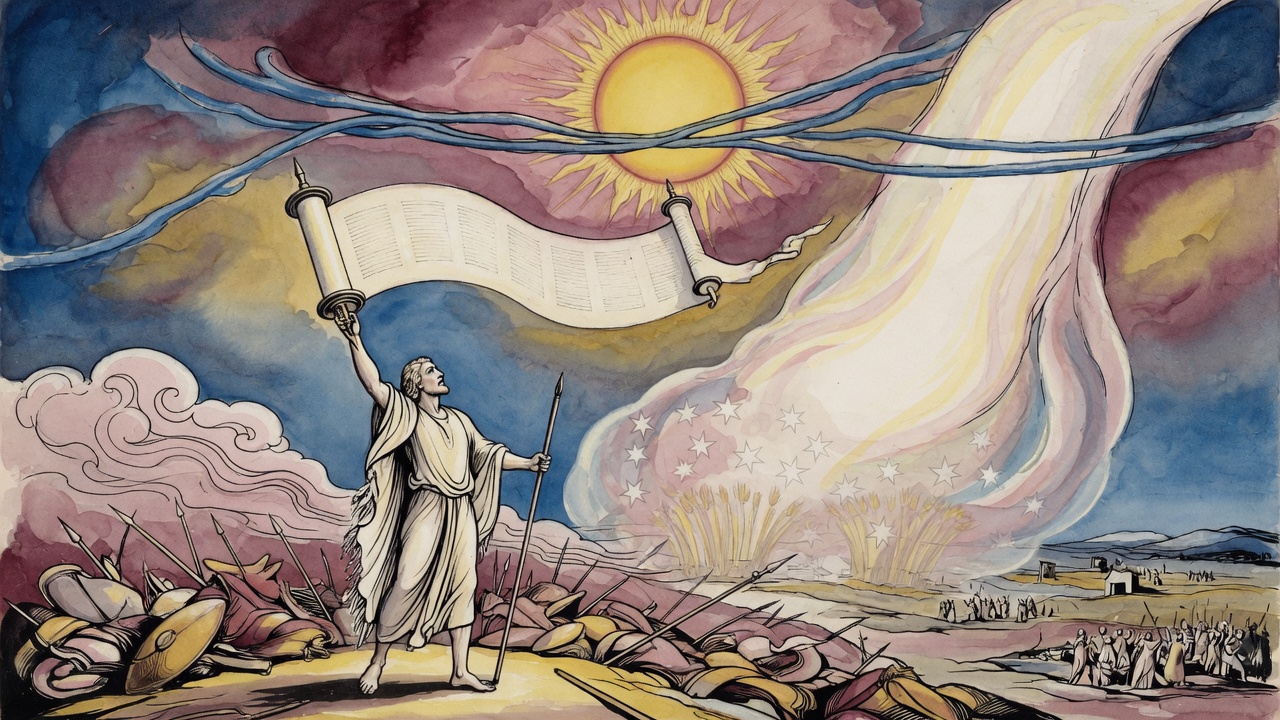
On the field of battle Joshua lifts the scroll he never stopped reading and orders the sun to halt, calling in Joseph's old dream as debt.
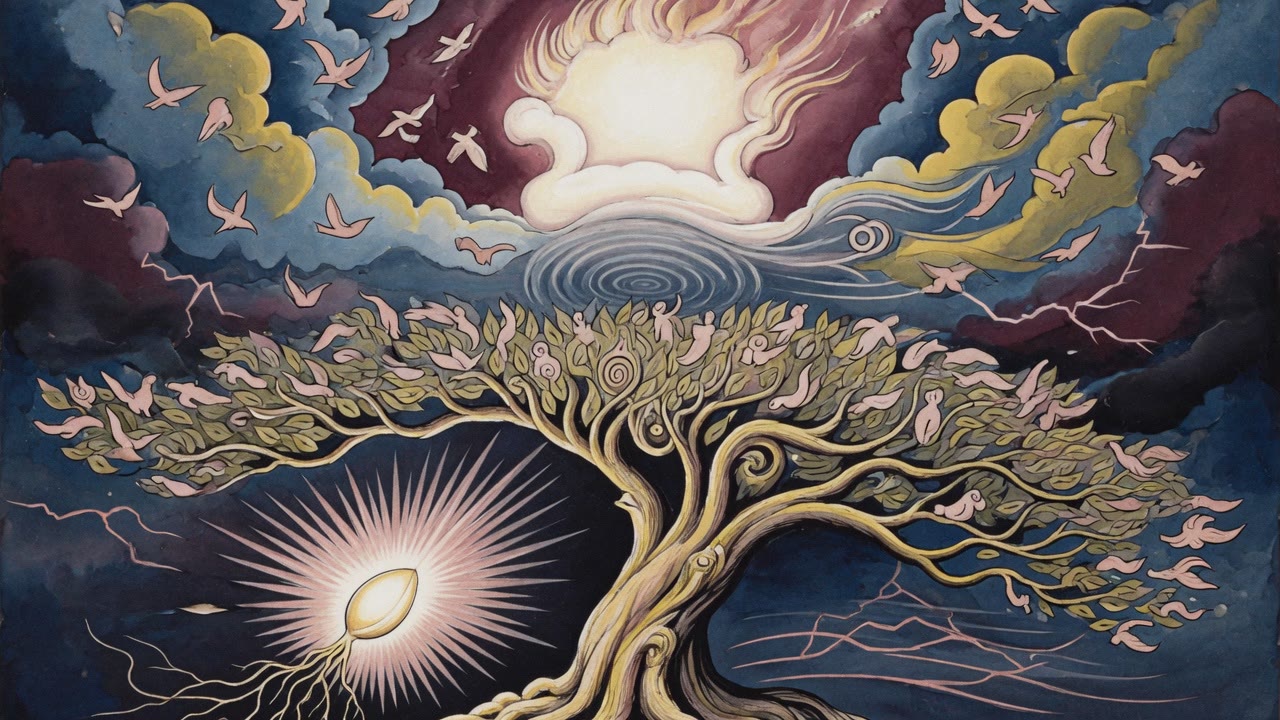
Galgiel took the reins before dawn. The sun had to bathe first. Yesterday's fire was still on it, and the earth could not take that heat twice.
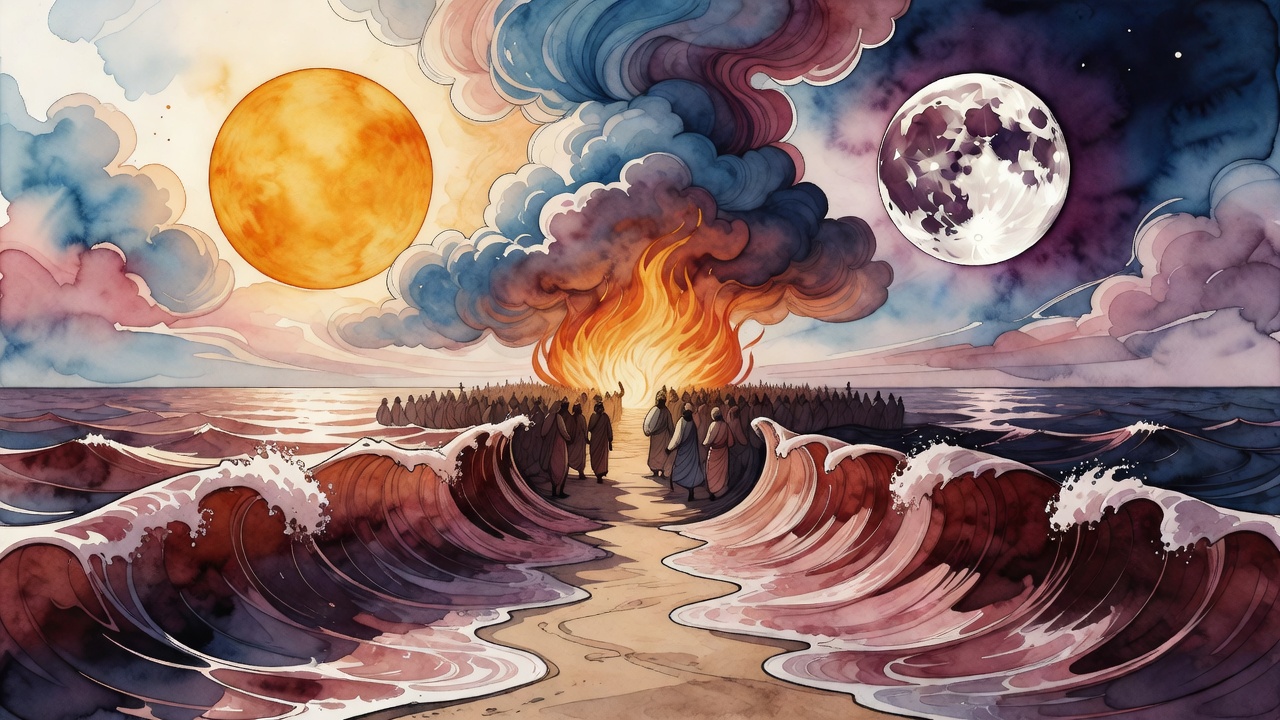
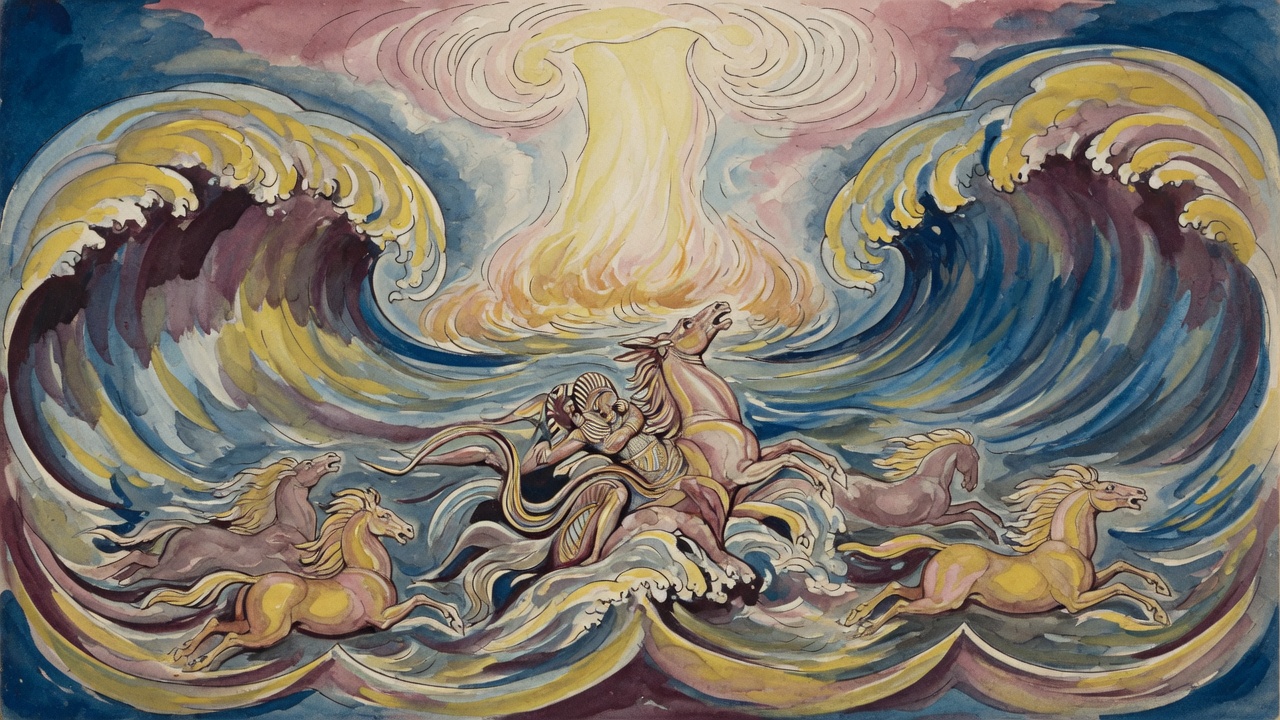
Before the first wave rose, the sun and moon already stood as witnesses that God had bound Himself to tear the sea for Israel.
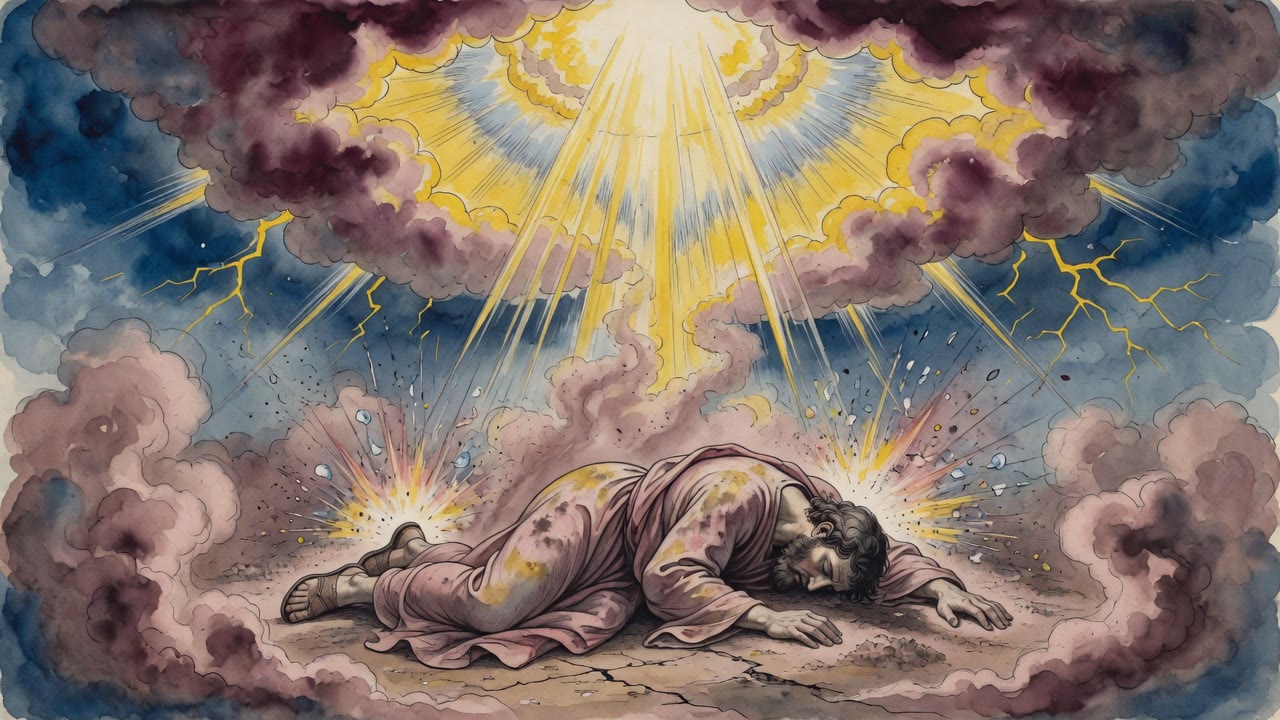
The five kings were still running when the light began to go. Joshua raised the scroll of Deuteronomy toward the sun and told it to be quiet.
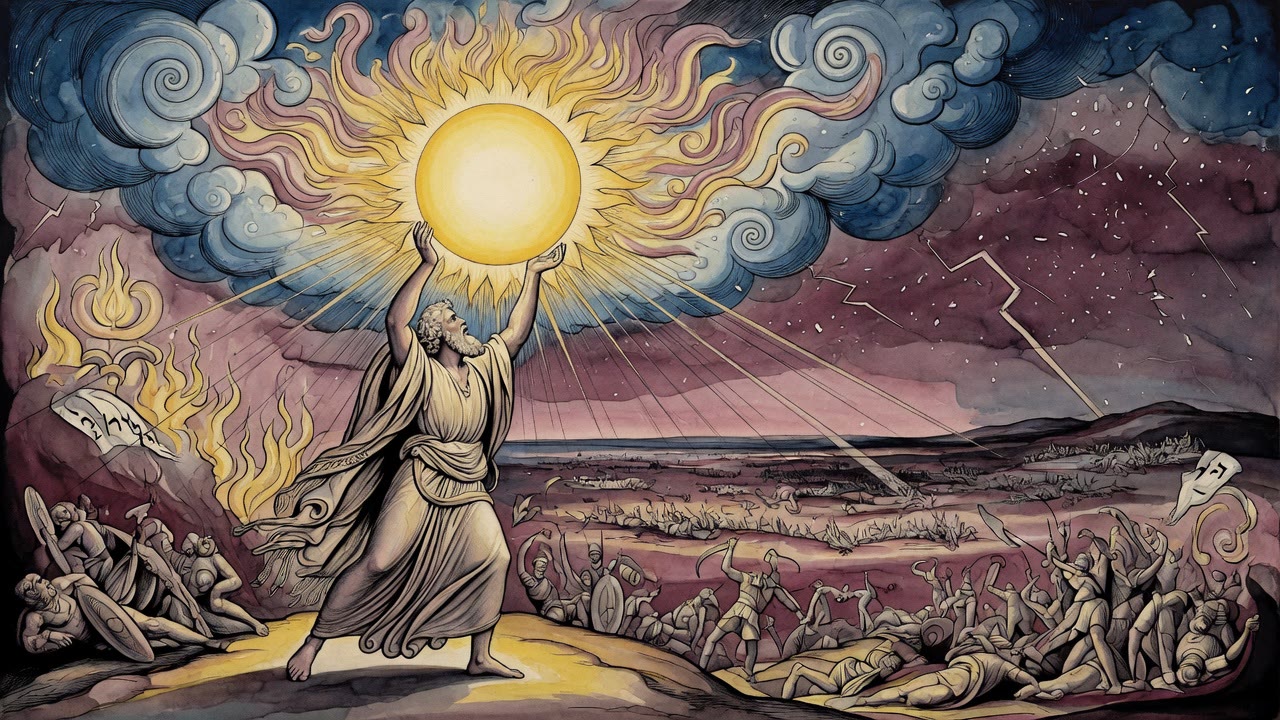
Joshua ordered sun and moon to stand, and the midrash says the righteous rule the lights, holding day open until Israel's battle was done.
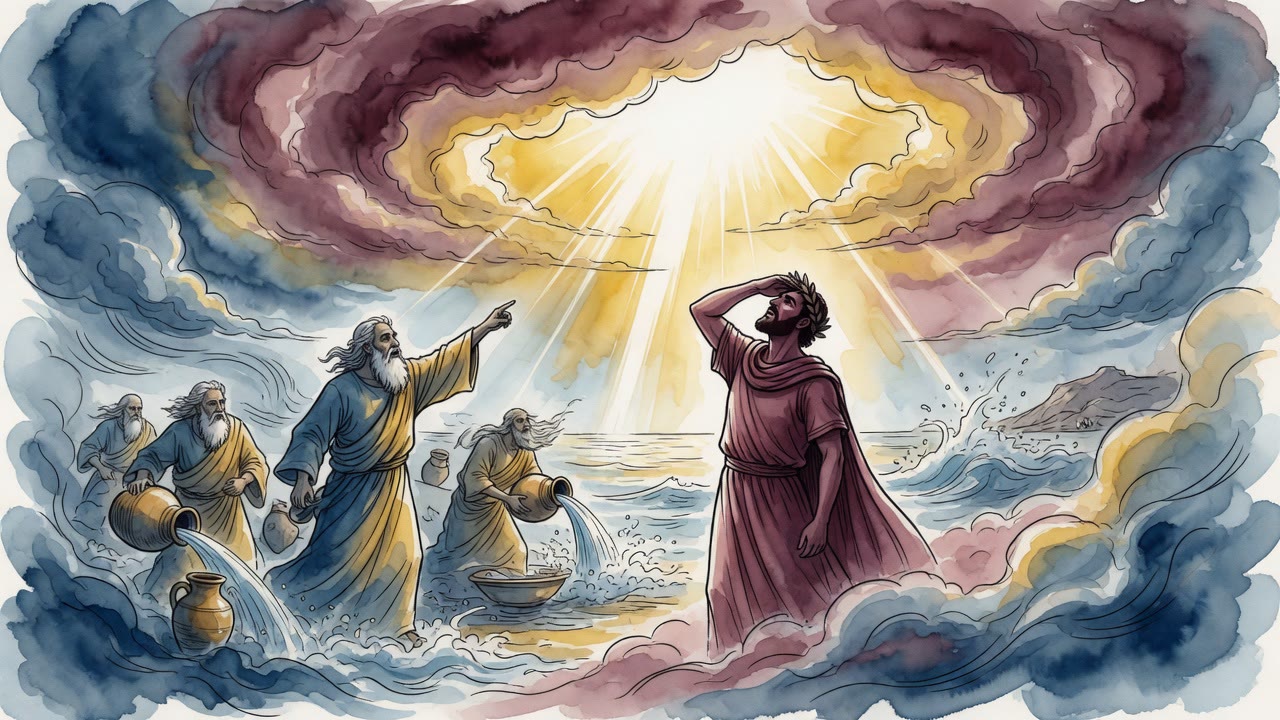
Storm-driven sages poured ocean water that never overflowed, and Rabbi Yehoshua told Hadrian to look at noon light he could not bear.
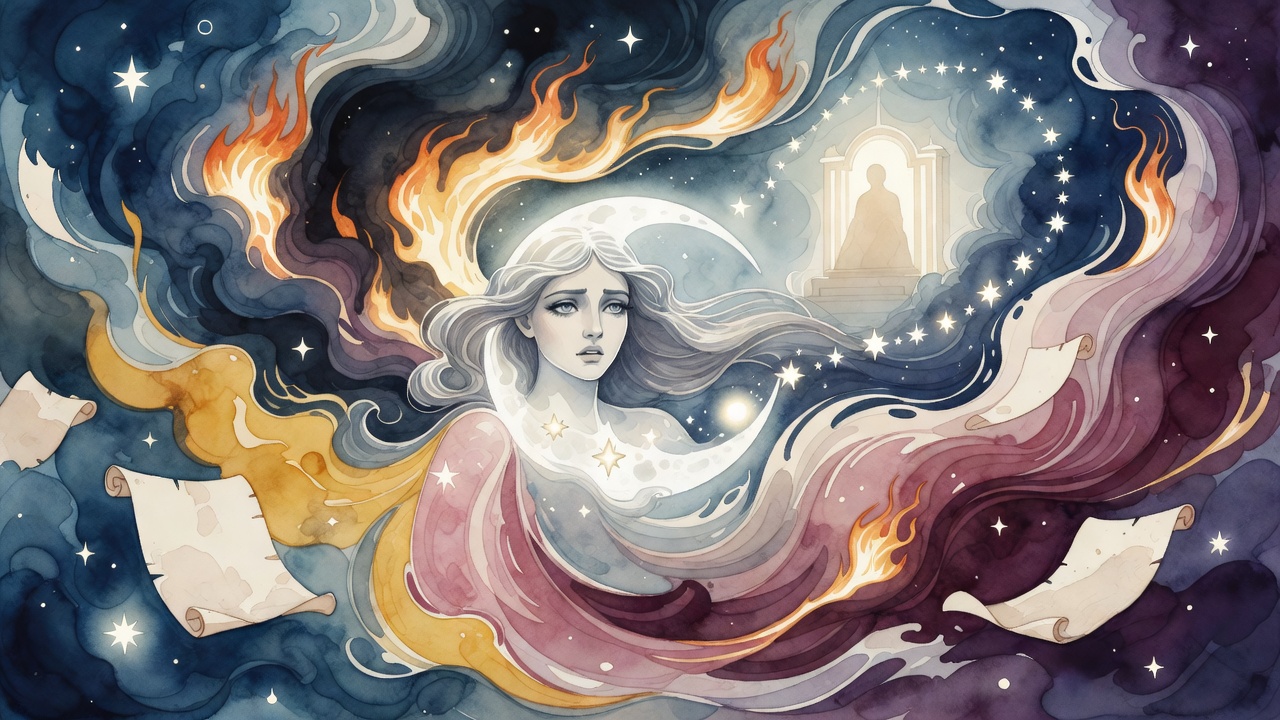
The moon goes dark after speaking out of turn, bargains hard with God for her stolen brightness, and will not rest until stars walk beside her.
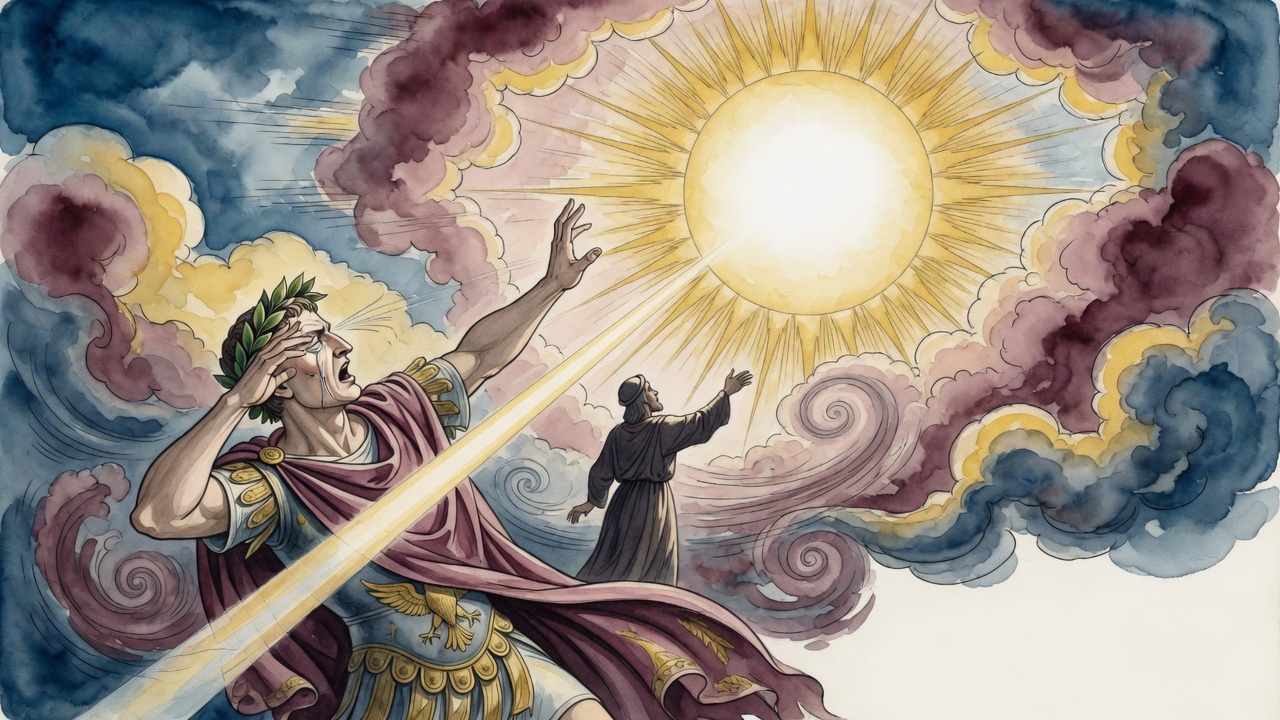
A Roman ruler demanded to see the God of Israel. Rabban Gamliel sent him to stare at the sun, and the challenge broke.
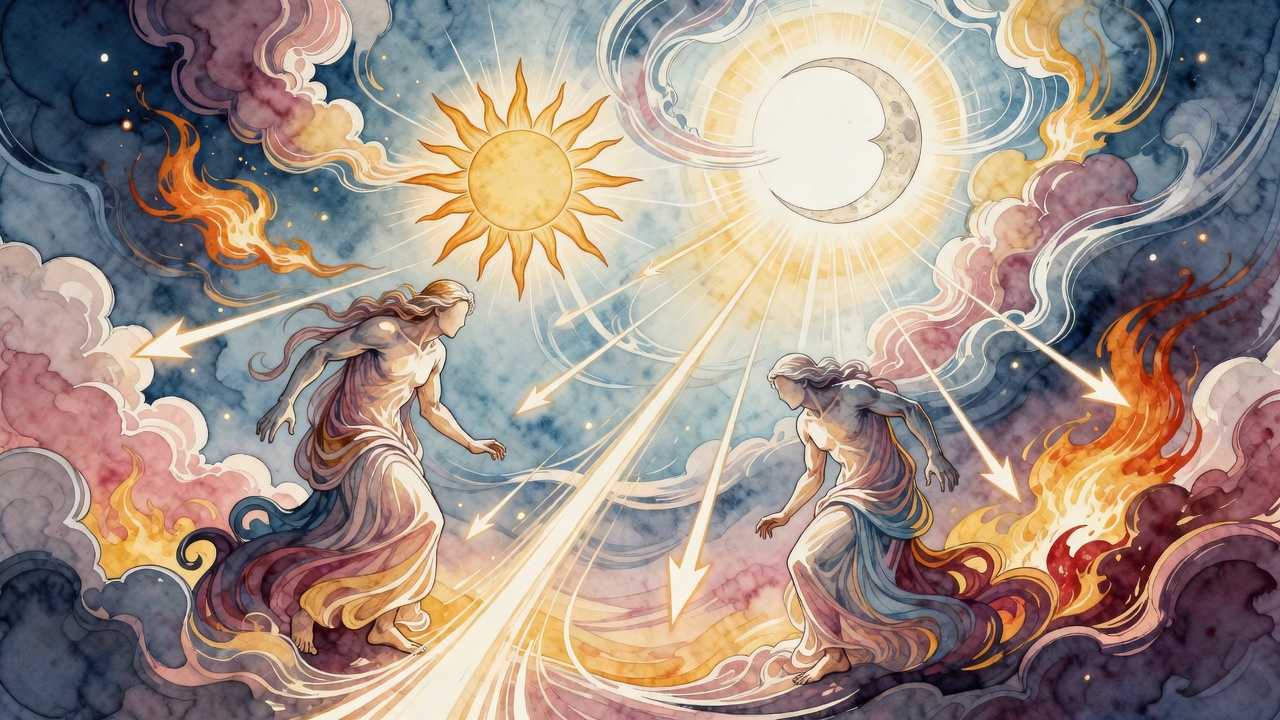
Each dawn the sun and moon enter trembling. God's light blinds them until arrows clear a path, and they rise against their will.
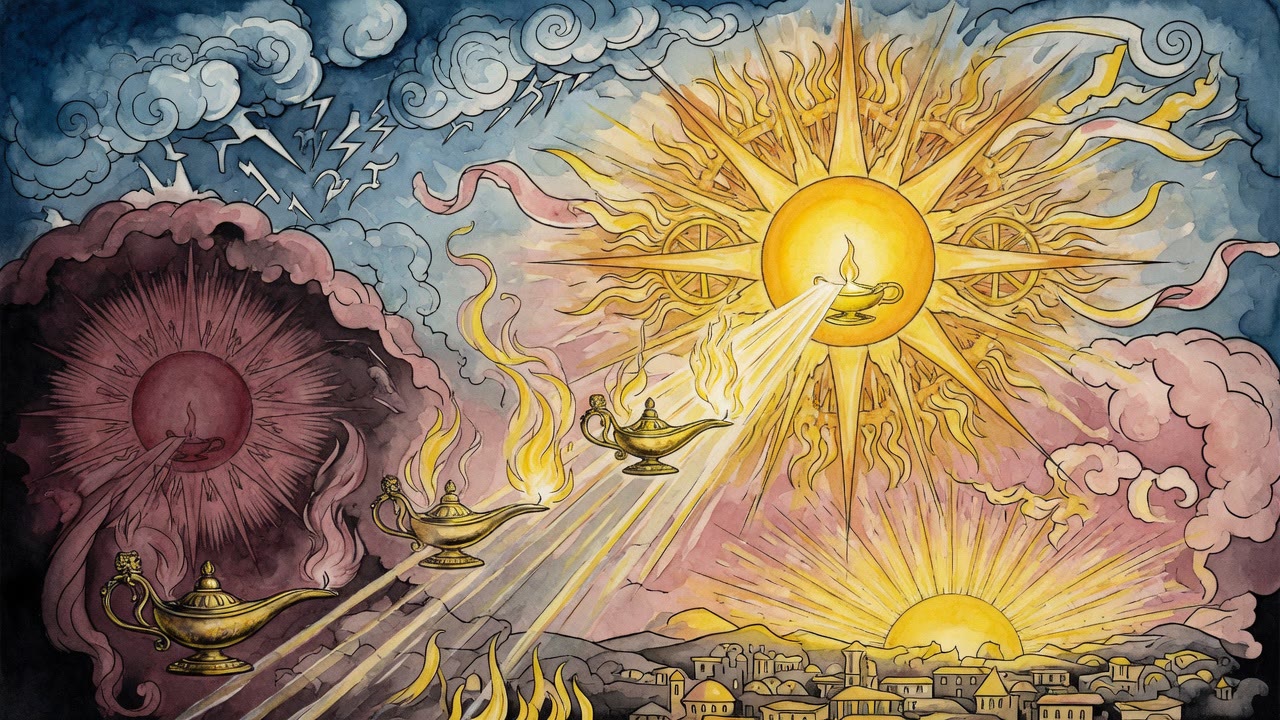
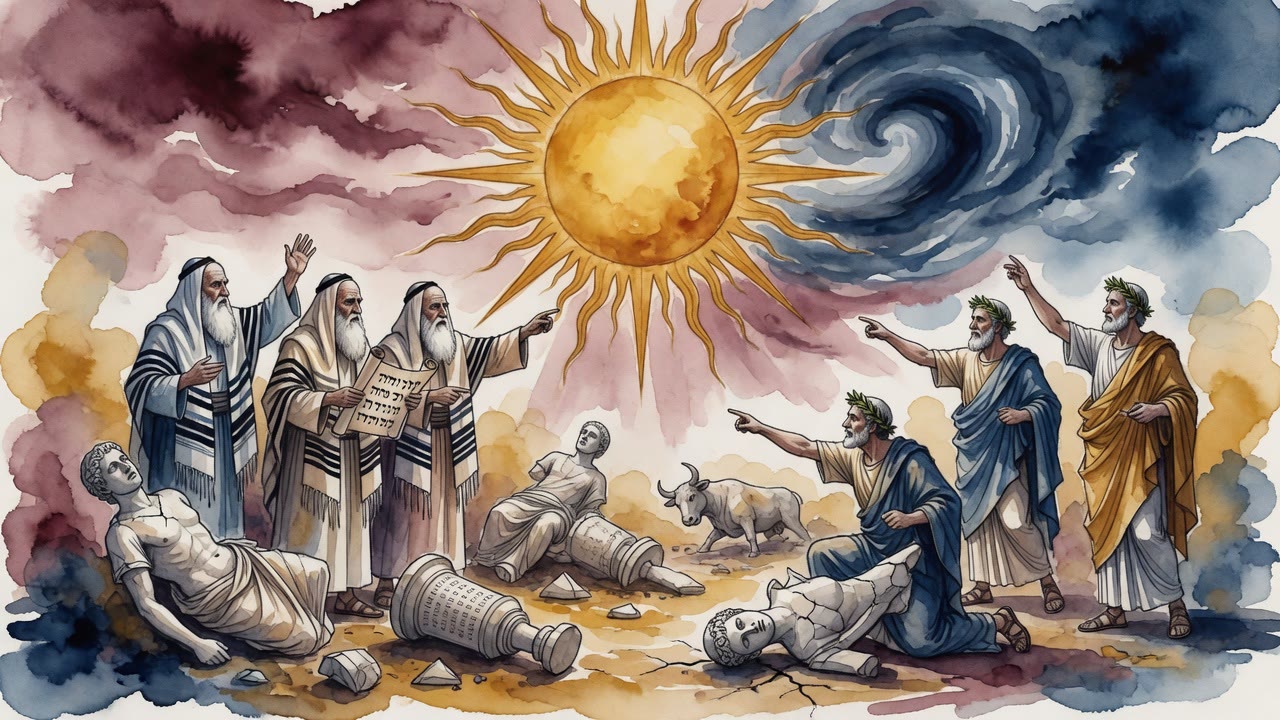
Roman thinkers demand that God erase idols. Jewish elders refuse, because wiping out the sun would prove the fools right.
Before the sun of one tzaddik (a righteous person) goes dark God kindles another, and overhead the daylight charges out like a groom and drags home spent at.
