The Moon Asked Whether Two Kings Can Wear One Crown
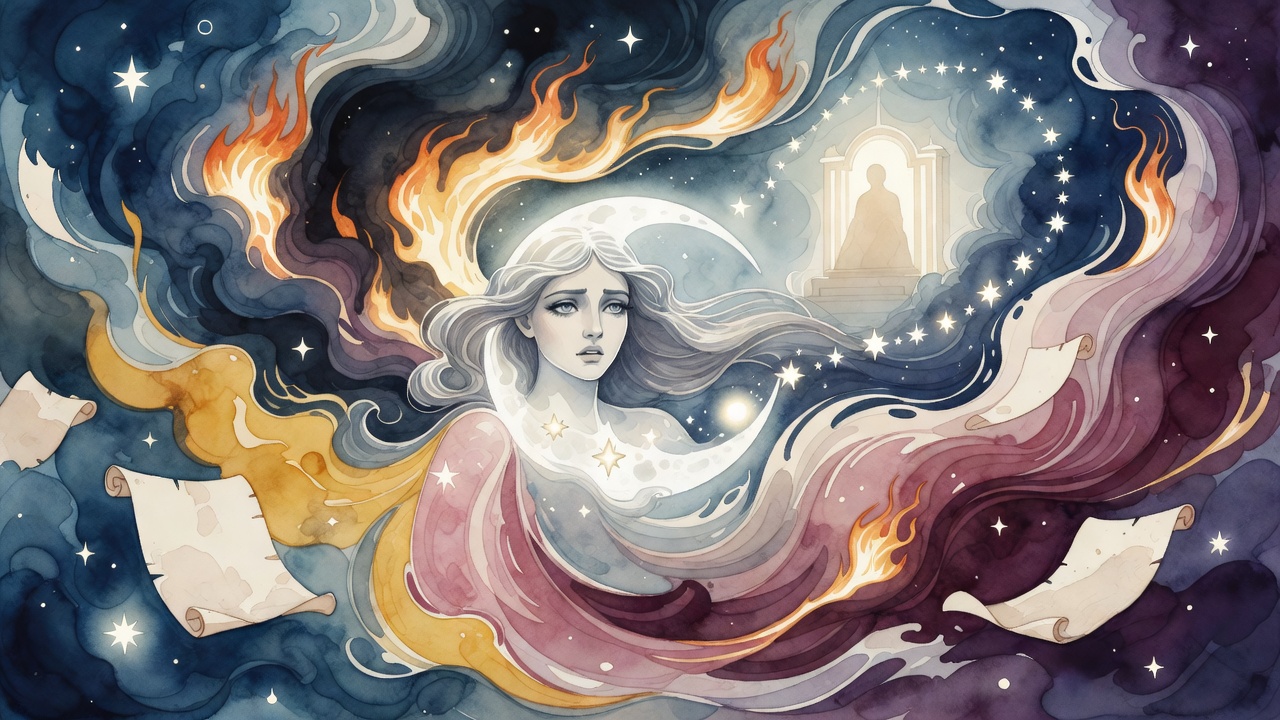
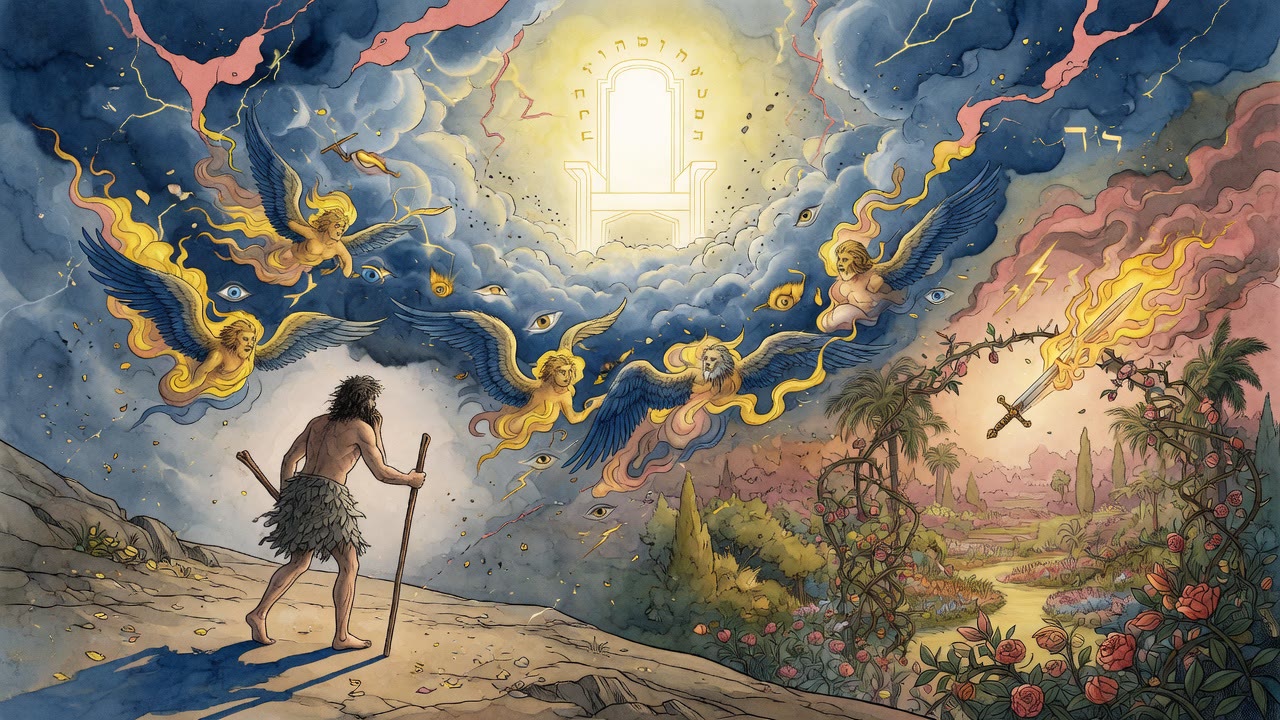
She went up to complain about sharing the sky and came back down smaller. Every month since, Israel burns a goat for a sin God says is His.
Table of Contents
 Click for full size
I Am Greater Than You
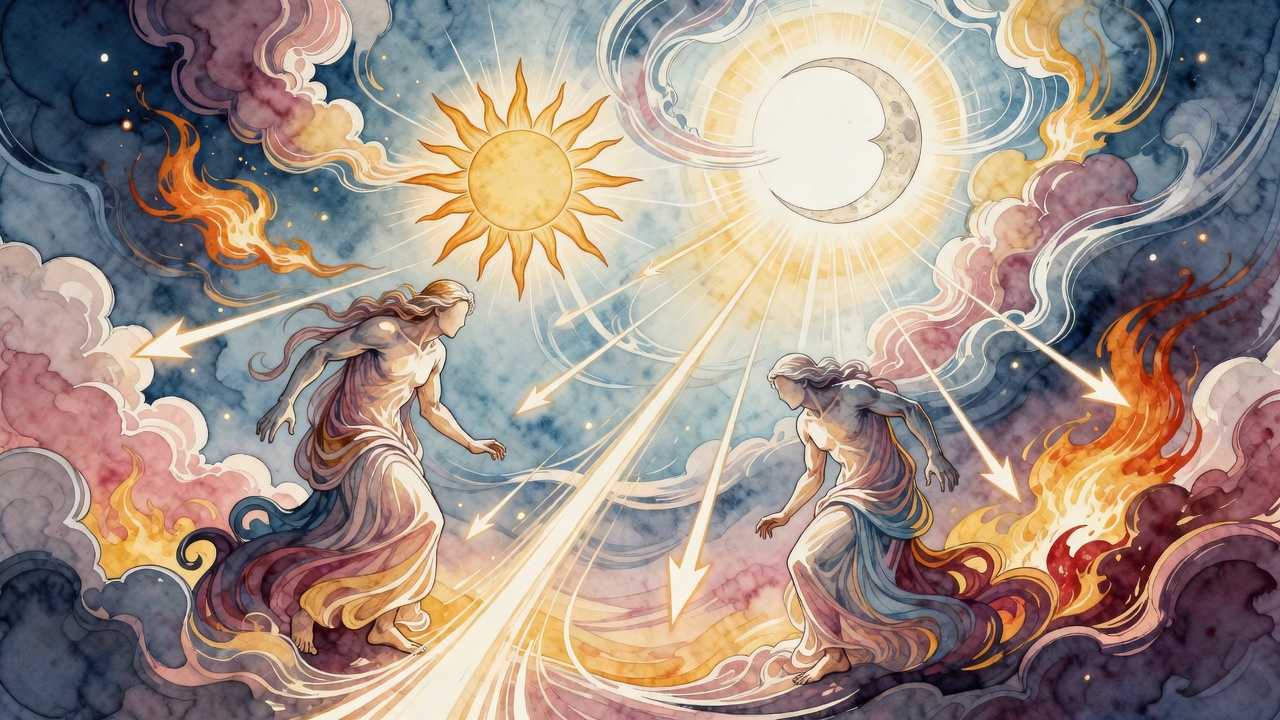
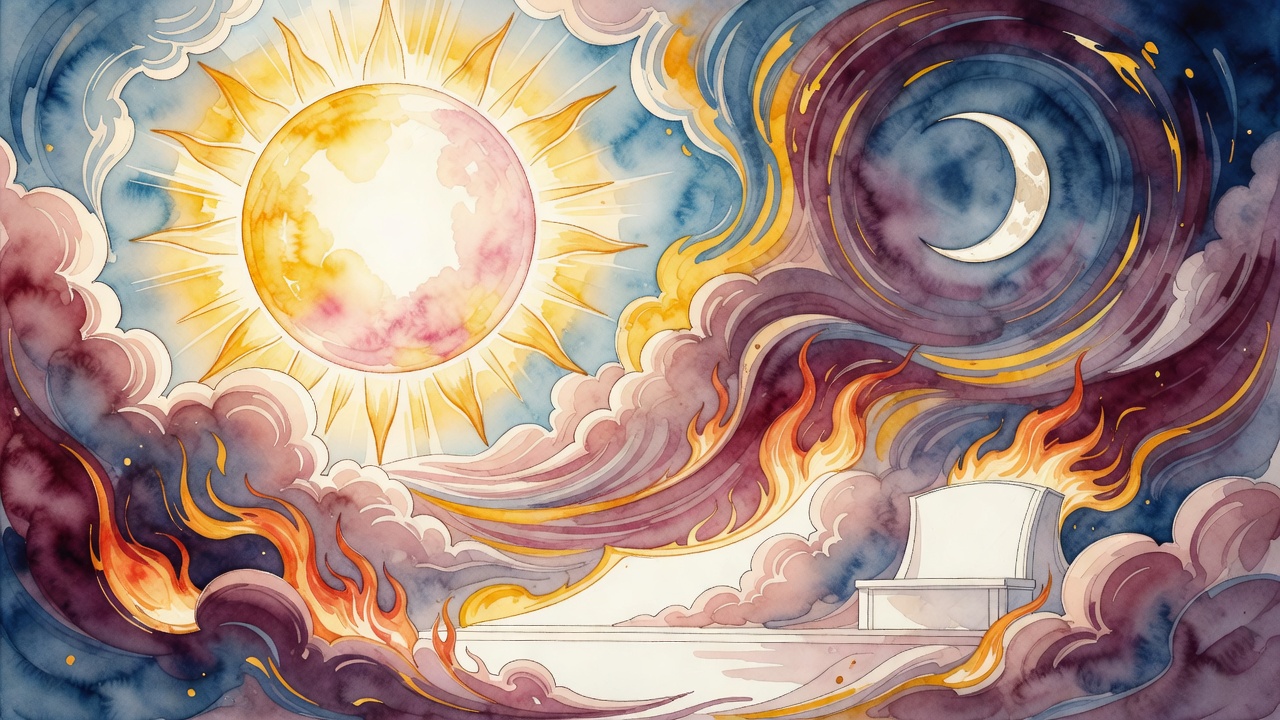
On the fourth day God hung two lamps in the sky, the same size, the same shape, the same light, and for twenty-one years less six hundred and seventy-two parts of an hour nobody on earth could have told you which one was in charge.
Then they started quarreling. One said to the other, "I am greater than you."
They had a great deal to be proud of. Three letters of the unspeakable Name are written on the heart of the sun, and angels walk it across the sky, one shift by day and a different shift by night. It comes out in the morning in a chariot, crowned, like a bridegroom coming out from under the canopy. The moon travels between two banks of cloud stacked like two dishes, one over the other, and leans out from between them at the start of every month with one horn showing.
Two Kings and One Crown
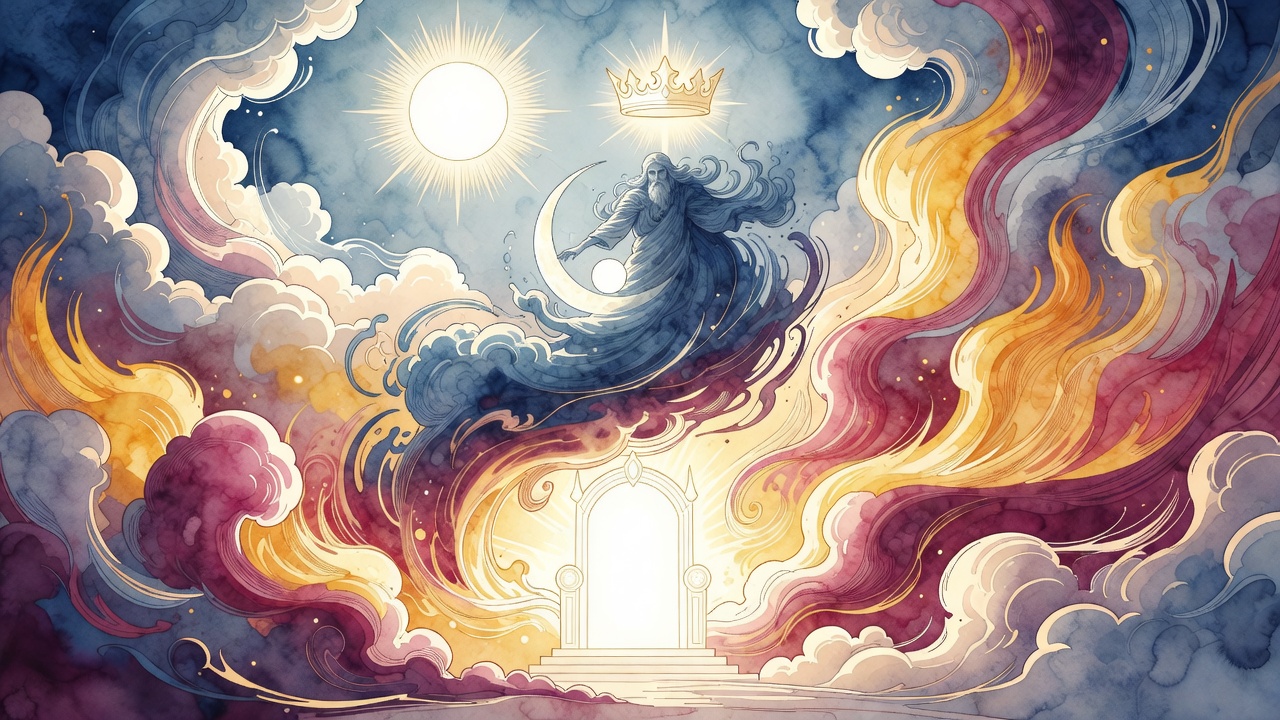
The moon took the argument upstairs.
"Master of the Universe. Is it possible for two kings to wear one crown?"
"Go and make yourself smaller."
She had not seen that coming. "Master of the Universe. I said a decent thing to You. For saying a decent thing I have to shrink?"
"Go and rule by day and by night both."
"What is that worth? A lamp at noon does nothing for anybody."
"Go, then. Israel will count its days and its years by you."
"They cannot help counting the seasons by the sun as well. It is written that both are for signs and for seasons and for days and years."
"Then let the righteous be called by your name. Jacob the Small. Samuel the Small. David the Small."
She Would Not Shrink Herself
She refused to do it with her own hands. Whatever else she was willing to accept, she would not stand in the sky and diminish herself to order, and God rebuked her, and she fell.
The other telling puts a crime under it. The moon carried a false report against the sun, went up to the judgment seat with a lie about her equal, and was cut down for it. Either way the sentence came out the same. The sun stayed the size it was made and was given the day to rule. The moon was made the lesser light and given the night, and the stars were handed over with it, so that she would never again cross the sky without a crowd of smaller lights around her.
Bring an Atonement for Me
God looked at her afterward and saw that her mind was not settled.
So He said, in front of the whole court, "Bring an offering for Me. I made the moon smaller."
That is why the goat brought at the head of every month is the one sin offering the Torah marks out as being for the Lord. Israel drags a goat up to the altar on the first of the month for a sin that no Israelite committed, on behalf of a light that argued in the sky before there were any people, and the smoke goes up for a wrong the Judge admits He did.
The new moon comes around again twelve times a year. The goat goes up. The horn of light leans out from between its two clouds, one part on the first night, another part on the second, until by the middle of the month she is full and the clouds turn east and begin covering her again from the same edge they uncovered first.
The Sun Bows in the West
The sun has its own end-of-day business.
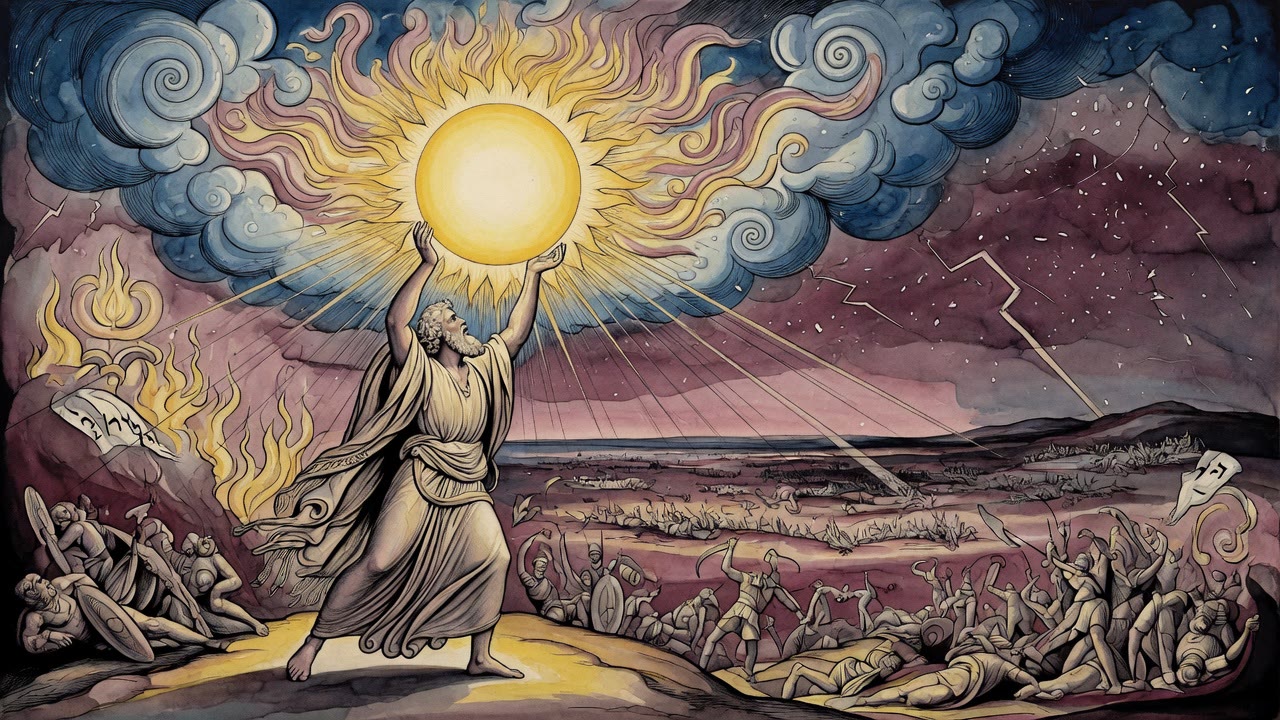
It comes up in the east and goes down opposite, in the west, and the Shechinah (שכינה), the divine presence, is always in the west. So every evening the sun walks into that presence and bows to the King of kings and reports.
"Master of the universe. I have done everything You commanded."
Then it goes out. In summer it turns its rays and its burning face on the earth and would set the whole thing alight if the ice above did not hold the heat back. In winter it turns its cold face down and the world would not survive that either, except that the fire warms the cold. It has never once been asked to make itself smaller.
The moon comes up behind it, and the stars come up with her, and once a month a goat burns on an altar in Jerusalem because the argument was never settled, only ended.
← All myths