The Patriarchs Are the Chariot and the Sun Runs Its Secret Track
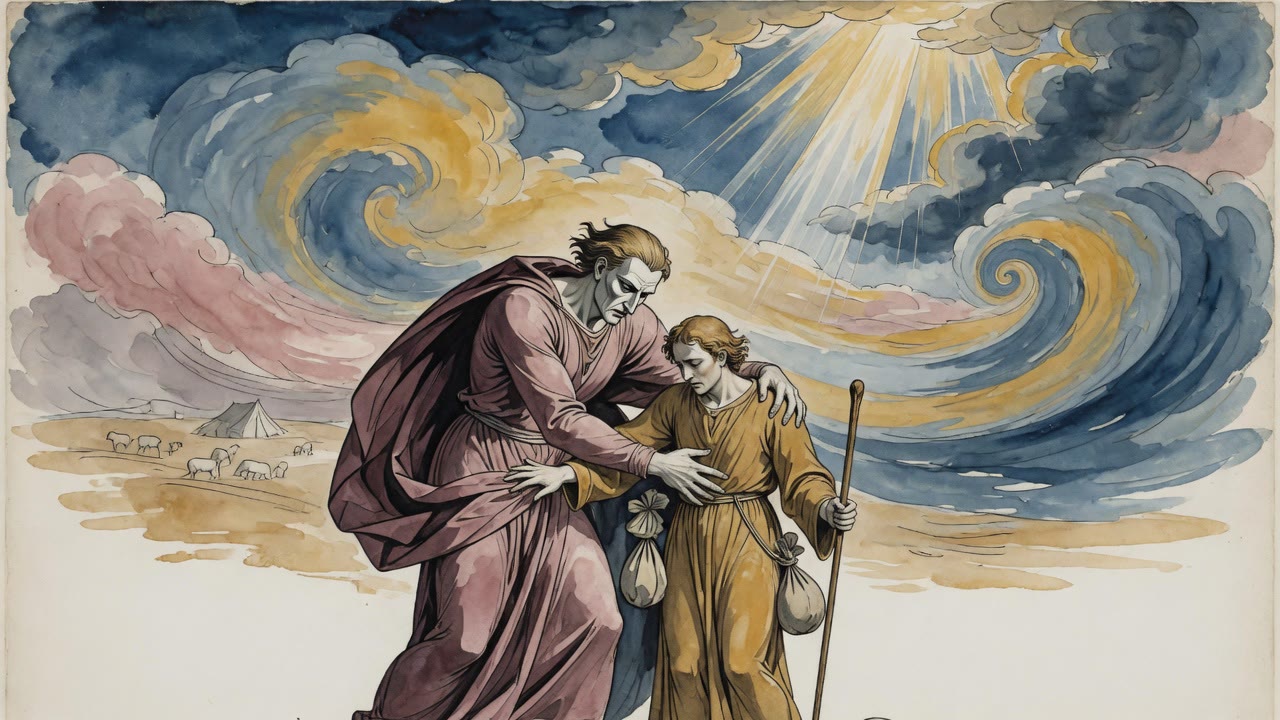
The angels crowded the ladder all night like flies on a sleeping child. Then a light bent over the stone where Jacob lay, and every one of them scattered.
Table of Contents
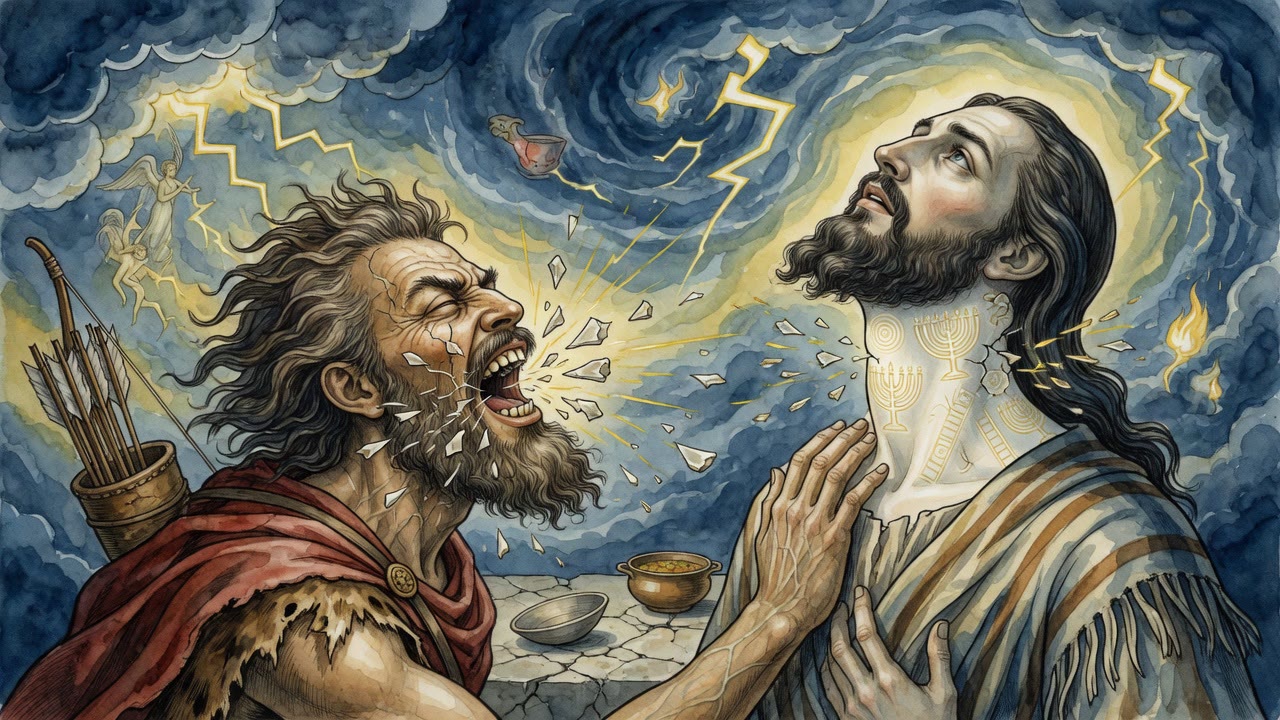
The angels came down the ladder like flies settling on a sleeping child. They had been climbing and descending all night, restless on the rungs that touched the ground at one end and disappeared into the dark at the other. Then a light bent over the stone where Jacob lay, and they scattered.
 Click for full size
A nurse leans over a king's son asleep in his cradle, and the flies lift off and flee. So the sages saw it. The angels had crowded the ladder while the boy slept on bare rock with a stone under his head, and the moment the Holy One was revealed above him, the whole swarm of them broke and ran. After that no creature stood between the sleeper and the One who stood over him.
The Sages Crowded the Verse Like Thirsty Fields
In the study hall they would not leave the words alone. "And behold, the LORD stood over him." Rabbi Yose ben Zimra took up a different verse to open the lock, the cry of a man in a parched place. "My soul thirsts for You, my flesh longs for You, in a dry and weary land without water."
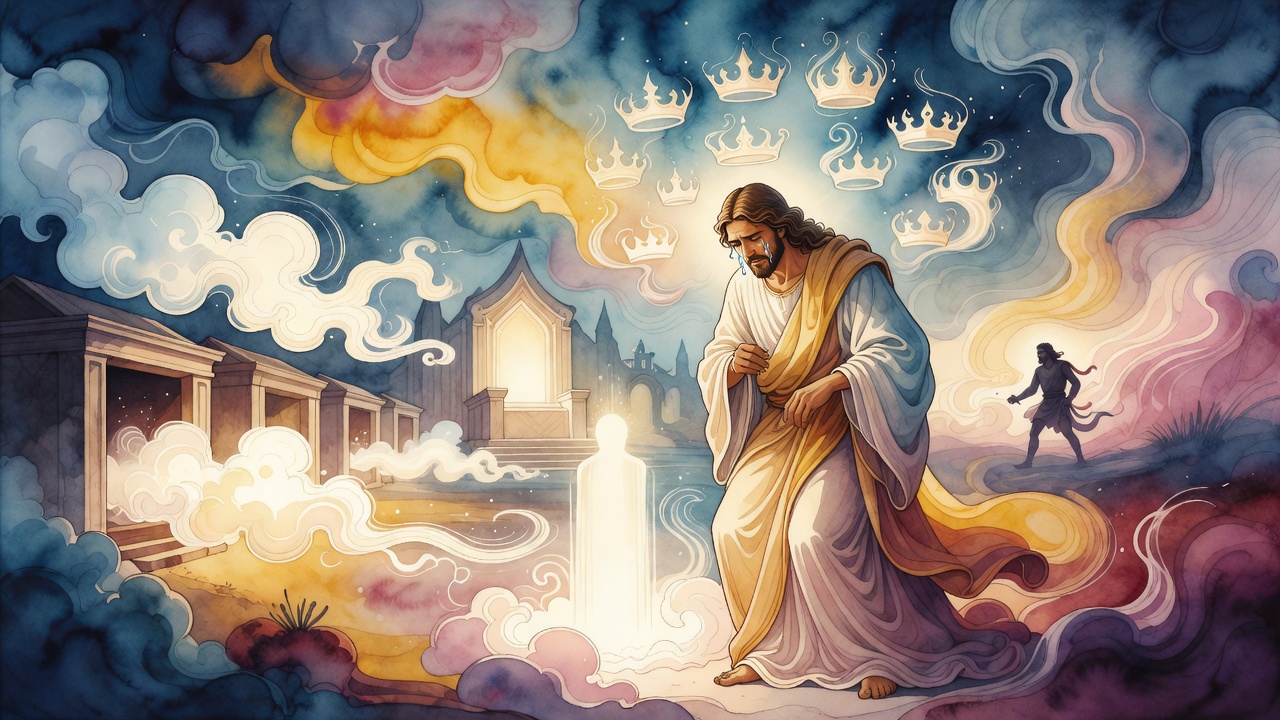
He said it the way fields say it. Cracked ground splitting open under a white sky, every seam in the dirt turned upward toward a cloud that has not come. That is the soul, he said. And the rabbis pushed it further into the body. Two hundred and forty-eight limbs, every one of them thirsting, every joint and bone leaning toward the same rain. Not the soul alone. The whole frame of a person, parched, tilted up, waiting.
And where does a man learn to thirst like that? "In a dry and weary land without water." You learn it where there is nothing. You learn it lying on a stone with your enemy at your back and your home behind you and no roof but the night.
Two Rabbis Quarreled Over a Single Word
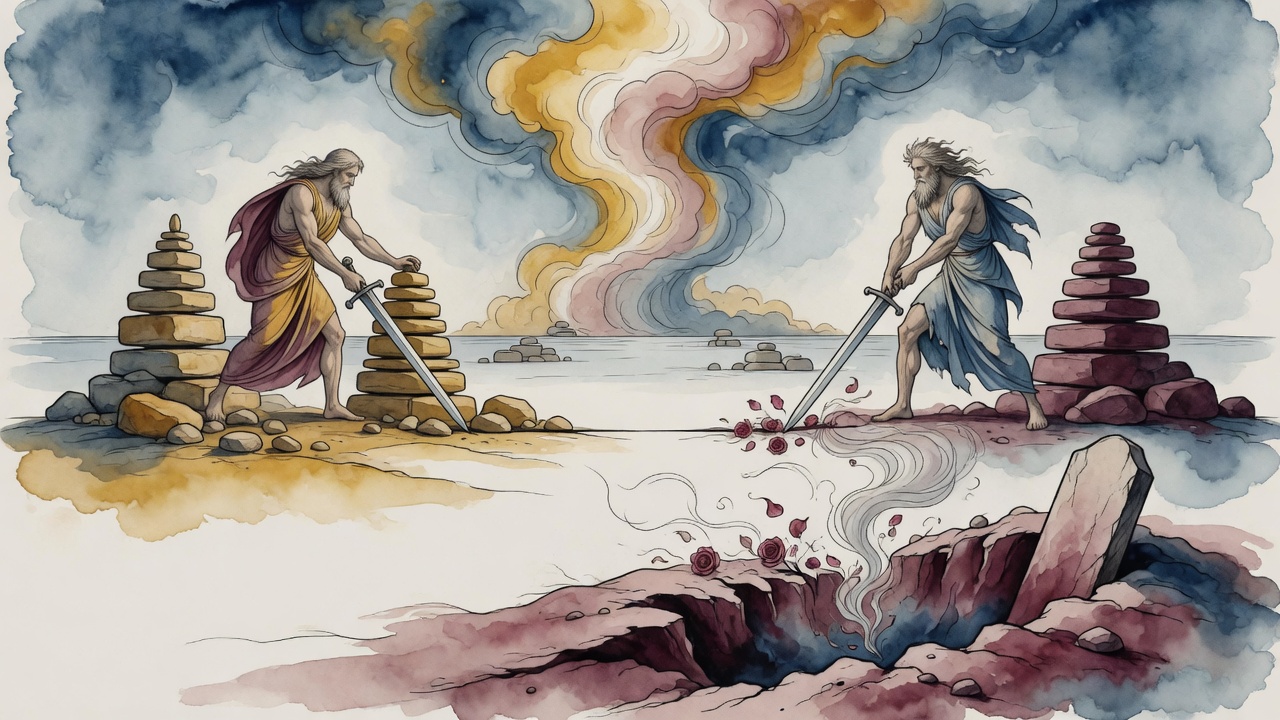
Rabbi Chama bar Chanina reached for iron. "Iron sharpens iron, and a man sharpens the face of his fellow." A knife takes its edge only against the flank of another blade, he said, and a scholar takes his edge only against another scholar. So the word in the verse, "together," meant Jacob, the one on whom the Divine Presence fixed itself and would not be pried loose.
But then the quarrel sharpened on its own terms. "Over him." Rabbi Chiyya the Great and Rabbi Yochanan stood on opposite sides of those two words. One said it meant the Lord stood over the ladder. The other said it meant the Lord stood over Jacob himself, over the sleeping man.
And that second reading caught in the throat. Does God stand over a man? Rabbi Yochanan answered it like a blade going in. The wicked stand over their gods. "And Pharaoh dreamed, and behold, he was standing over the river," over the Nile he worshipped, propped above his idol. But with the righteous it runs the other way. The Holy One stands over them. The god holds up the man.
The Fathers Themselves Are the Chariot
Then Rabbi Shimon ben Lakish said the thing that turned the room cold.
The patriarchs themselves are the Chariot.
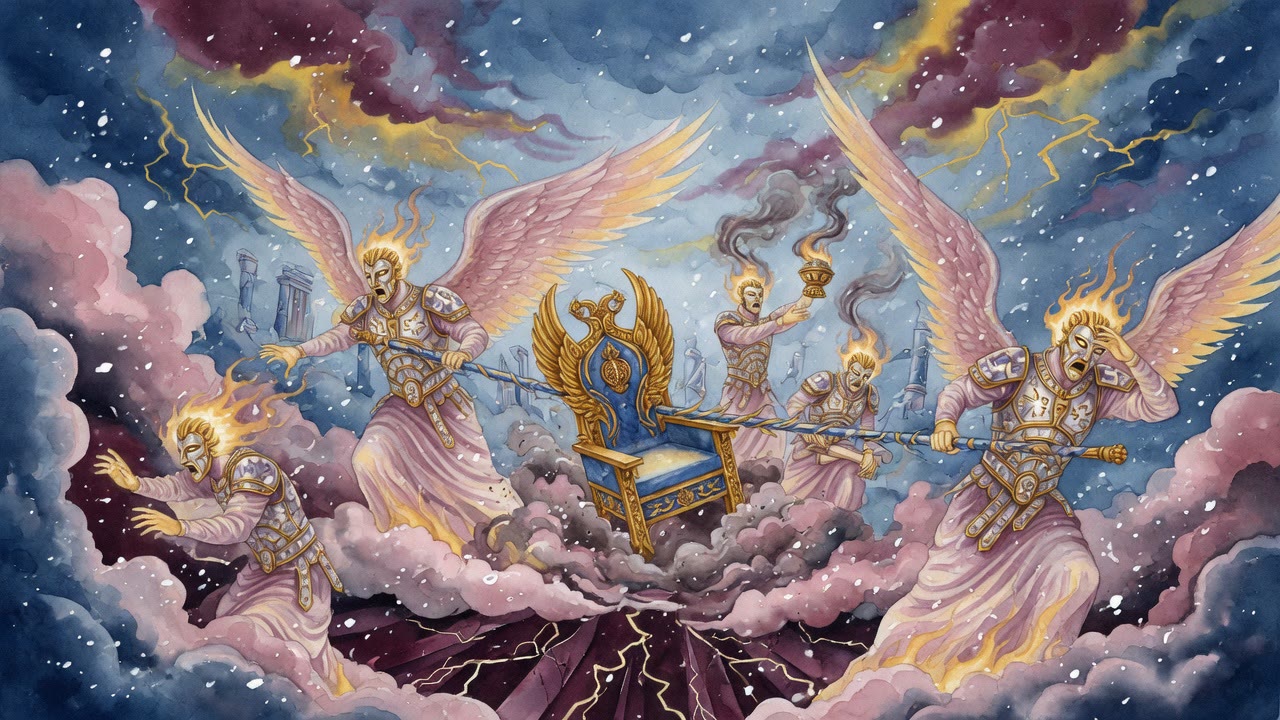
Not that they saw the Chariot. Not that they dreamed it, the way Ezekiel would dream wheels full of eyes by a foreign river. The fathers were the thing itself. The throne-frame God rides through the world. "And God went up from over Abraham," he said, the way a rider rises from over the seat he has been carried in. Up from over Abraham. Up, one day, from over Jacob asleep on the stone.
So the ladder was no longer the marvel in the room. The man under it was. A body in the dust with a god mounted over it, and every thirsting limb in him a part of the chariot's living gold.
Above the Sleeper the Sun Ran Its Secret Track
And over that vision, higher than the ladder, the sun kept its own appointed circuit, and it did not wander.
It went out through three hundred and sixty-six apertures cut in the rim of heaven, entering by the east, one window for nearly every day a year can hold. Ninety days it kept to the southeast quarter. Ninety-one to the northeast. And set between them, dead center, one aperture called Nogah, which is to say splendor, brightness, the pure window in the middle of the wheel.
From Nogah the year turned. At the autumn quarter the sun set out from splendor and crossed window by window toward the south until it came to the aperture called Bilgah. At the winter quarter it reversed off Bilgah and ran backward through the gates until it reached Ta'alumah, the hidden one, the window of the buried thing that is brought up into light. In spring it left the hidden window and climbed north, aperture by aperture, to No'aman. And in summer it retreated from No'aman until it came to Cheder, the chamber, the gate out of which the whirlwind and the cold come tearing.
Four turnings, four seasons, no idle step in any of them. The same machinery of longing that thirsted in Jacob's bones thirsted in the sky, and kept its hours, and shut each window behind it before opening the next.
One Machine Built on the Bodies of the Fathers
So the whole of it stood revealed in the study hall, stacked floor to ceiling. At the bottom, cracked fields and a parched man's two hundred and forty-eight bones, all of them leaning up. Above that, a stone, a sleeper, a ladder swept clean of angels. Above that, the Holy One standing over the man like a nurse over a cradle, the rider over his living chariot of fathers. And over all of it the sun running its scored track from Nogah to Bilgah to Ta'alumah to No'aman to Cheder and home, never once losing the count.
One engine. Every gear of it turning on the same thirst, and the lowest gear of all a man asleep on a rock in a dry land, holding up the weight of heaven without knowing he was the throne.
← All myths