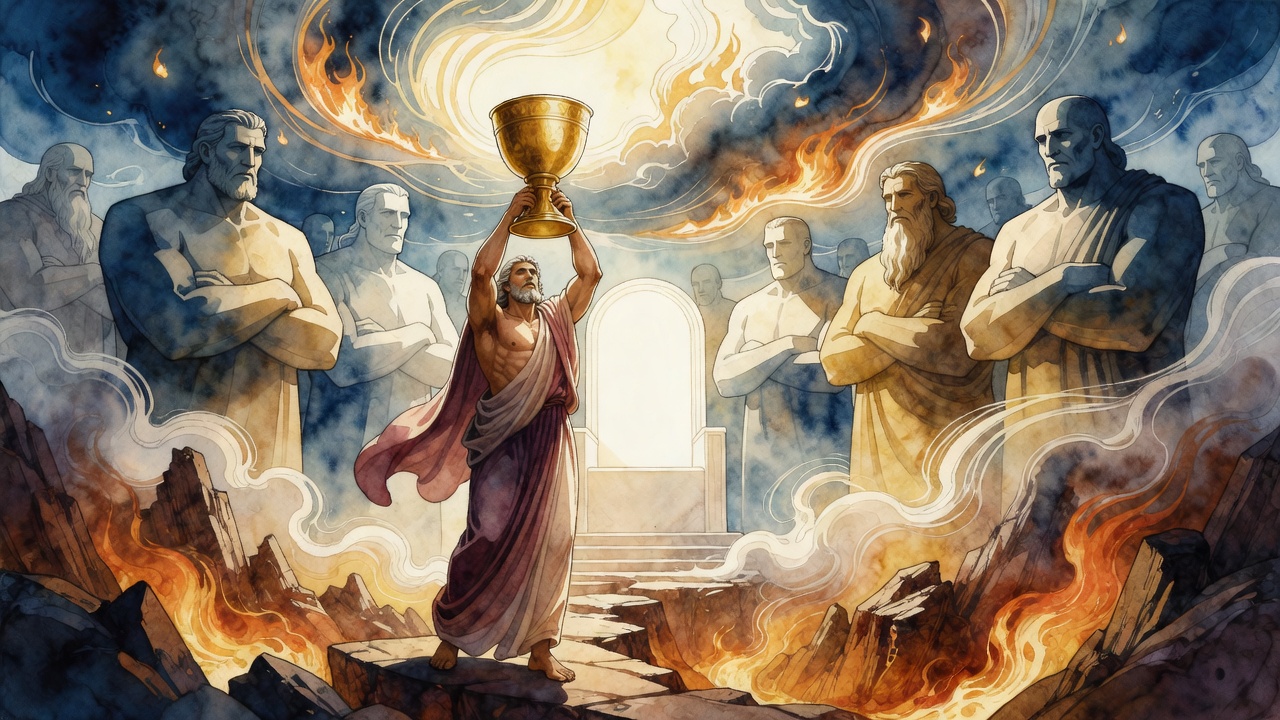
David Died on Shavuot While the Sun Waited
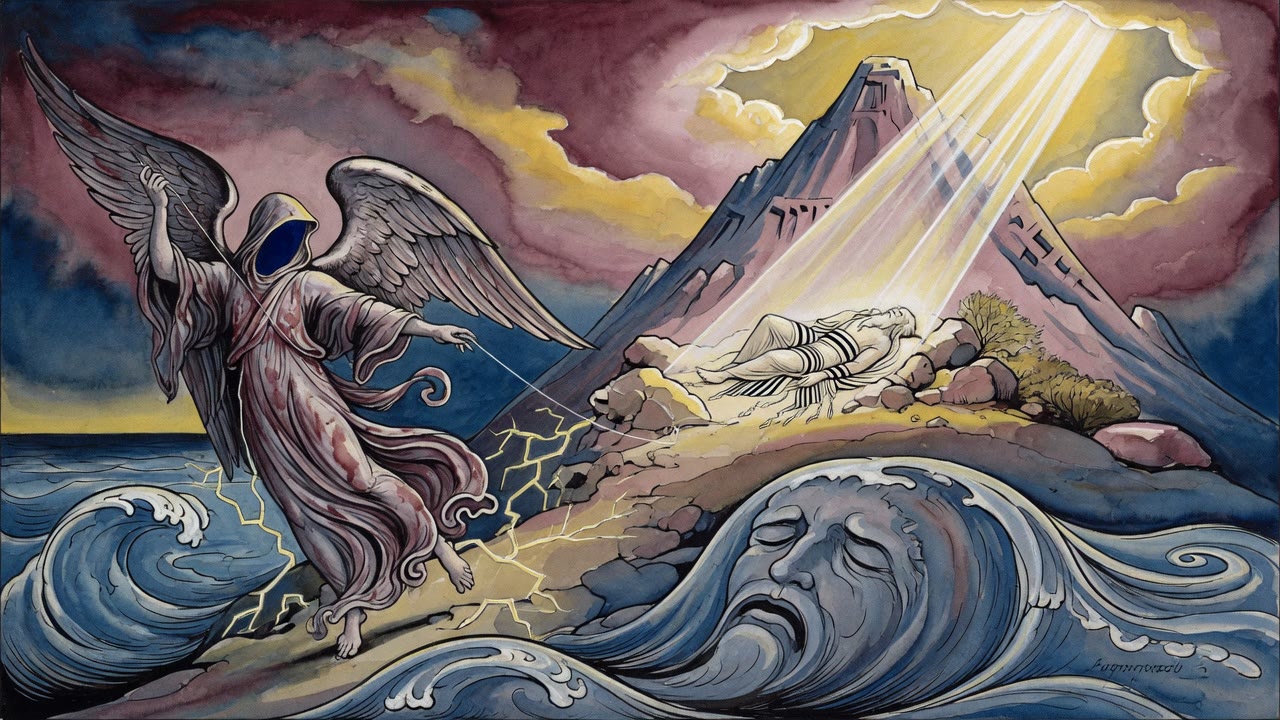
He knew the day and not the hour, so he kept the scroll open. One noise in the garden, and the stair under the king gave way.
Table of Contents
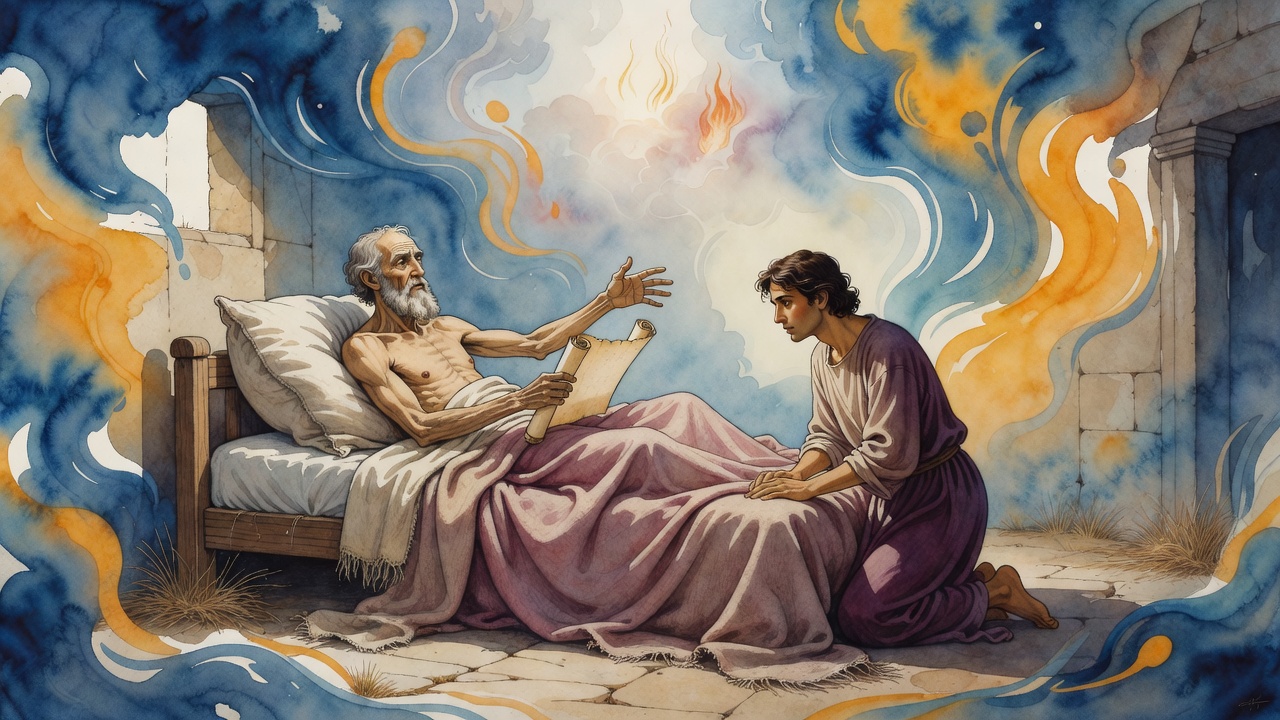
David knew the day, but not the hour, so he filled the hours until there was no crack left in them. A man can live around a day if he fills it with guards, lamps, footsteps, voices, and words of Torah, and if he keeps his mouth moving and his mind burning. An hour is a crack in the floor, and the Angel of Death needs only the crack.
 Click for full size
He asked for the decree to shift. Let it be Friday, before Shabbat enters, but the answer was no. Let it be Sunday, after Shabbat leaves, but the answer was no again. The day was fixed, and it fell on Shabbat. It also fell on Shavuot, when Israel remembers the giving of Torah, the very gift David used as a shield.
The Scroll Stayed Open
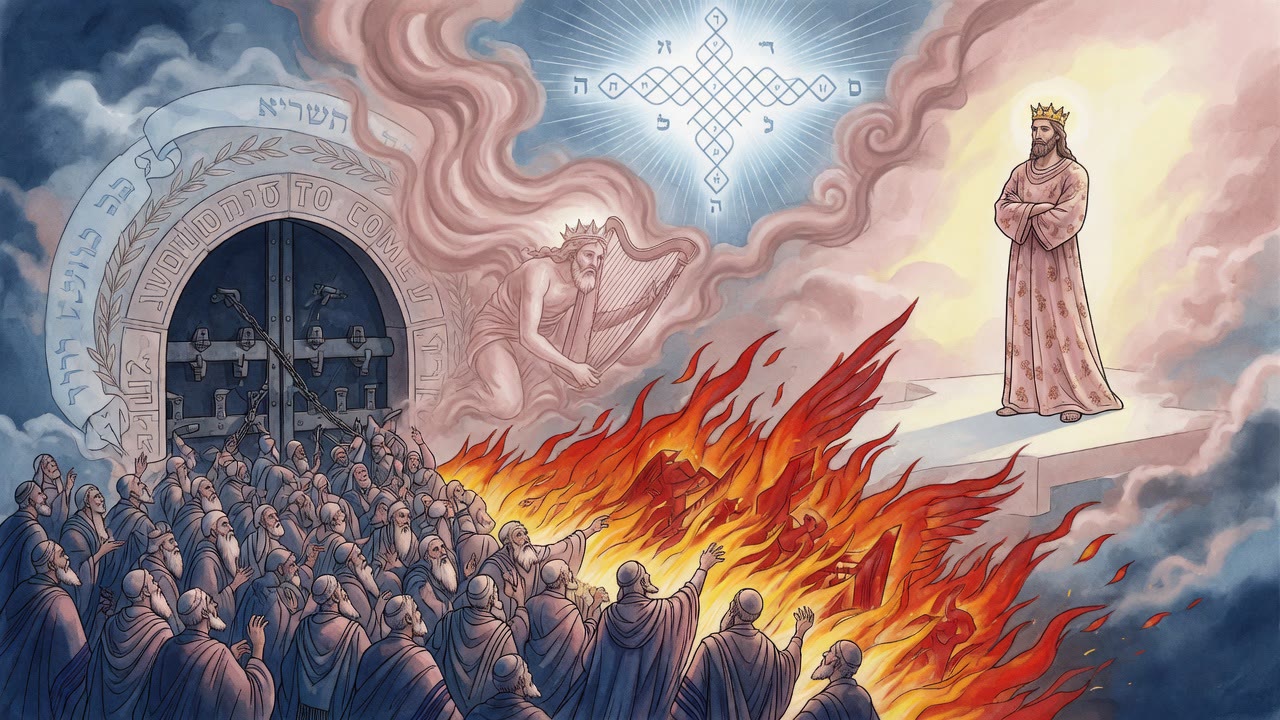
So he turned the holy day into a fortress. He studied and sang, and he moved through the hours as if a soul could outrun its leaving by refusing to become still. The Angel of Death waited for silence and found none, because every word of Torah rose like a locked door, and every breath of praise kept the blade outside.
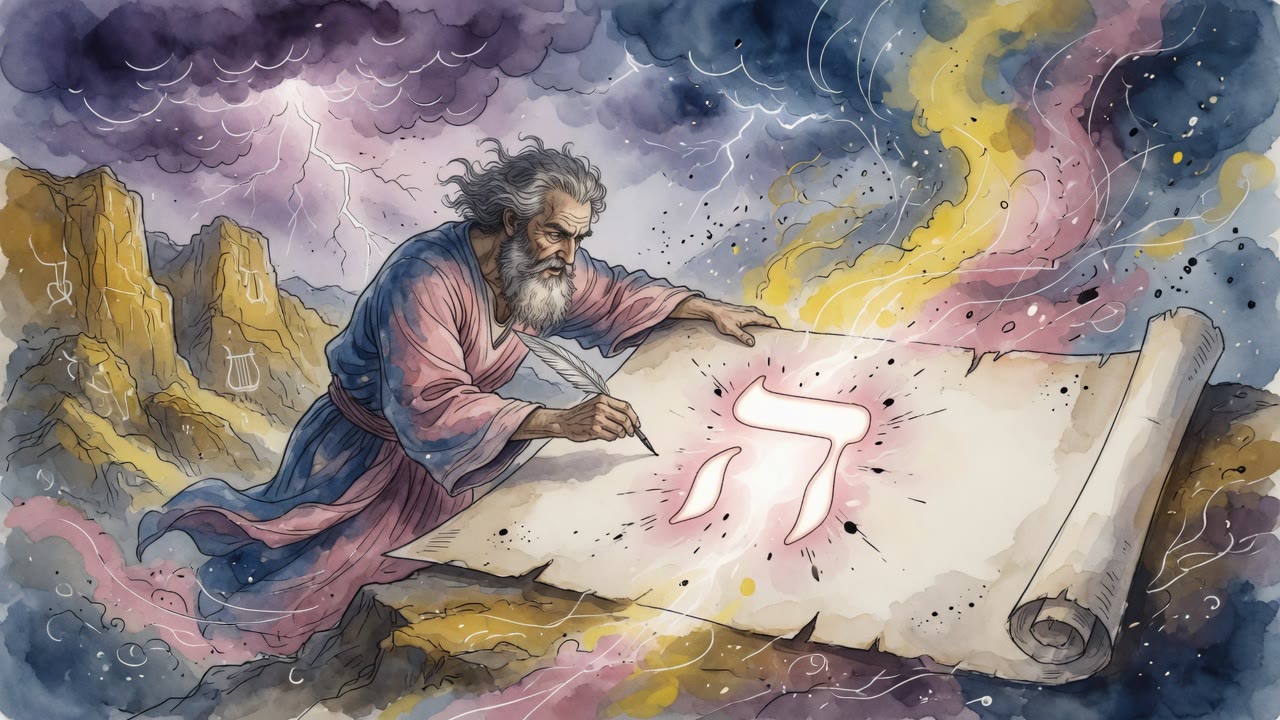
Long before the last day he had already prayed against the wrong kind of sleep. "Look upon me," he pleaded. "Light my eyes, lest I sleep the sleep of death" (Psalms 13:4). He did not ask to become immortal. He asked not to die abandoned. "I trust in Your kindness," he said, and he anchored that trust in a kindness that fills the earth, and in Torah that speaks kindness with its tongue (Psalms 13:6).
Even exile entered the prayer: Babylon, Media, and Edom, places where Israel would have to learn how to breathe under foreign power. If mercy could hold him at the edge of his last sleep, it could hold them in lands where the old songs sounded far from home.
How Long Will I Wait
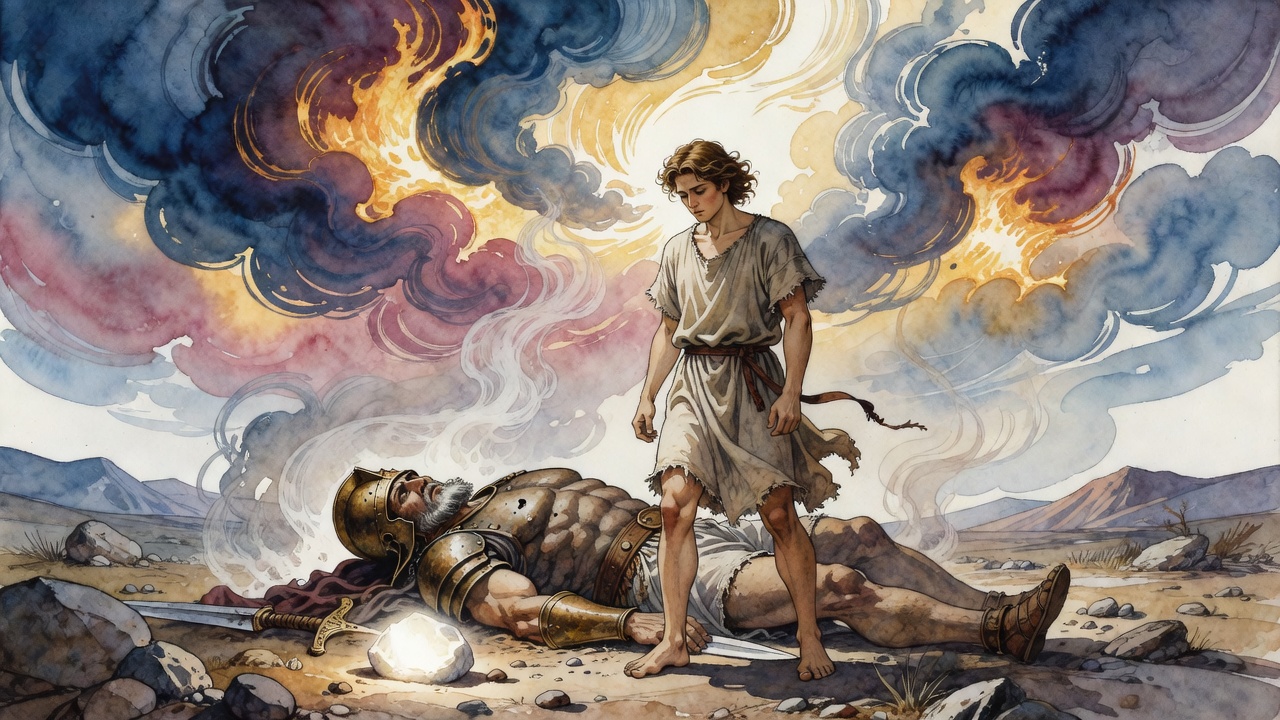
He knew the other arithmetic too. The wicked get lifted, and Haman would one day be raised above the princes, fifty cubits of promotion, a height that looks like reward until it becomes a gallows. David had asked how long he would have to wait, watching men like that climb, while he stayed subservient to the kingdoms of Torah and mitzvot and kept Shabbat with his whole soul.
The waiting did not make him put the scroll down. It made him hold it harder, because if the wicked can be raised in public, a king still has to earn his last hour in private, word by word, until the mouth stops.
The Garden Made a Sound
The angel did not break the door. He made a noise in the garden instead, so leaves shifted, and a branch moved where no branch should have moved. David heard it from the palace and paused, so the body that had been kept in motion turned toward the sound, and the mind that had been fastened to Torah loosened for one instant.
He went down the steps, and the stair gave way beneath him. The king who had escaped Saul's spear, Absalom's revolt, foreign armies, plague, and the trembling sight of an angelic sword met death in a broken step. There was no battlefield and no trumpet. Just a sound in the garden, a foot placed where wood would not hold, and the soul leaving on Shabbat, on Shavuot, while the words of Torah still hung in the air.
Death won the hour because an interruption is enough. The song did not go with him in the way a sword goes with a soldier. It stayed in the room.
The Body Lay in the Heat
Shabbat made the grief more difficult. The body could not be moved as the household wished. David, who had carried a kingdom through war and song, lay exposed while the day continued its holy course.
Solomon stood inside a law he could not push aside. His father was dead and his own reign had begun, but the sun climbed and the courtyard brightened anyway. A king's body lay under the heat, and the son had to ask what honor looked like when honor itself was fenced by commandment.
Then wings spread above David, and eagles guarded the body and threw shade over the fallen king. The sun could reach the stones, the walls, the palace roof. It could not claim David's face, because even after the stair broke, a covering still arrived.
The Sun Stayed in Its Pouch
Outside the palace, another mercy was already working. The sun is not gentle by nature. Its fire could burn the world bare. Each morning, before it rises in full force, God weakens it with water and keeps it inside a covering, a pouch, a tent of restraint. The world survives because power is held back.
One day that covering will be removed, and the same sun will scorch the wicked and heal those who fear God's name. No second fire has to be built, because the light already exists. The difference lies in whether it meets a life as wound or medicine.
David's body lay under a moderated sun, and his soul left under a fixed decree, but his psalm still trusted mercy. The same God who would not move the day also kept the light from destroying the world before its time. The king died on Shavuot in shade, and the sun waited in its pouch while the eagles stood their watch.
Somewhere in the heat, the king's breath stopped, but the song did not.
← All myths