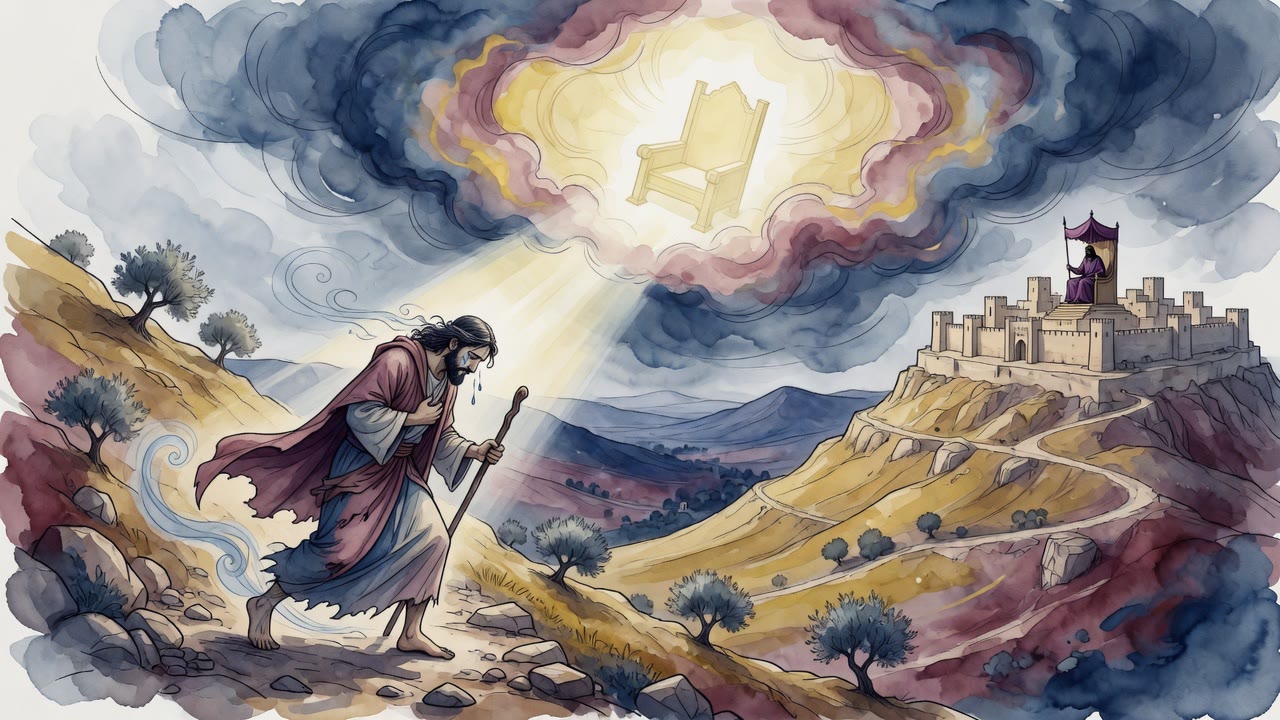
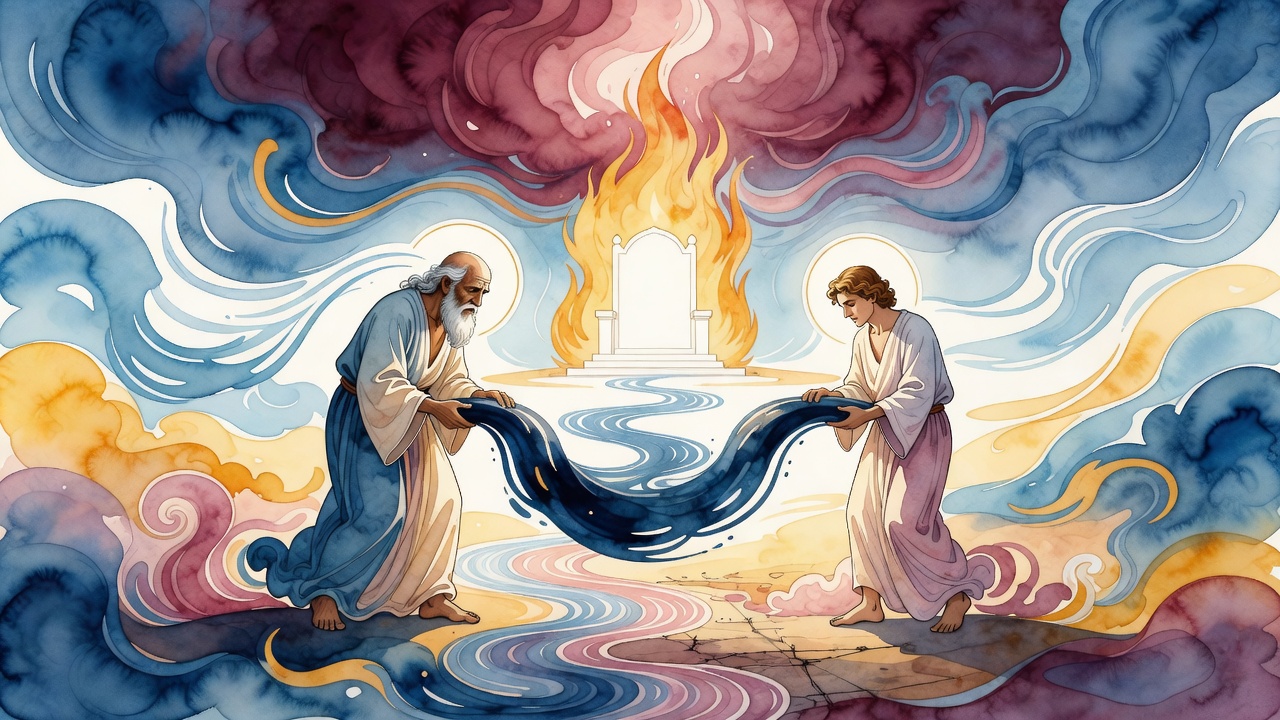
David Learned the Stone Was Never His Strength
Goliath fell on his face. A blow to the forehead should send a man backward. The boy who threw never claimed the arm.
Table of Contents
For forty days the Philistine walked out into the valley at first light and shouted the same offer. For forty days the army of Israel found somewhere else to be.
 Click for full size
Forty Days of the Same Voice
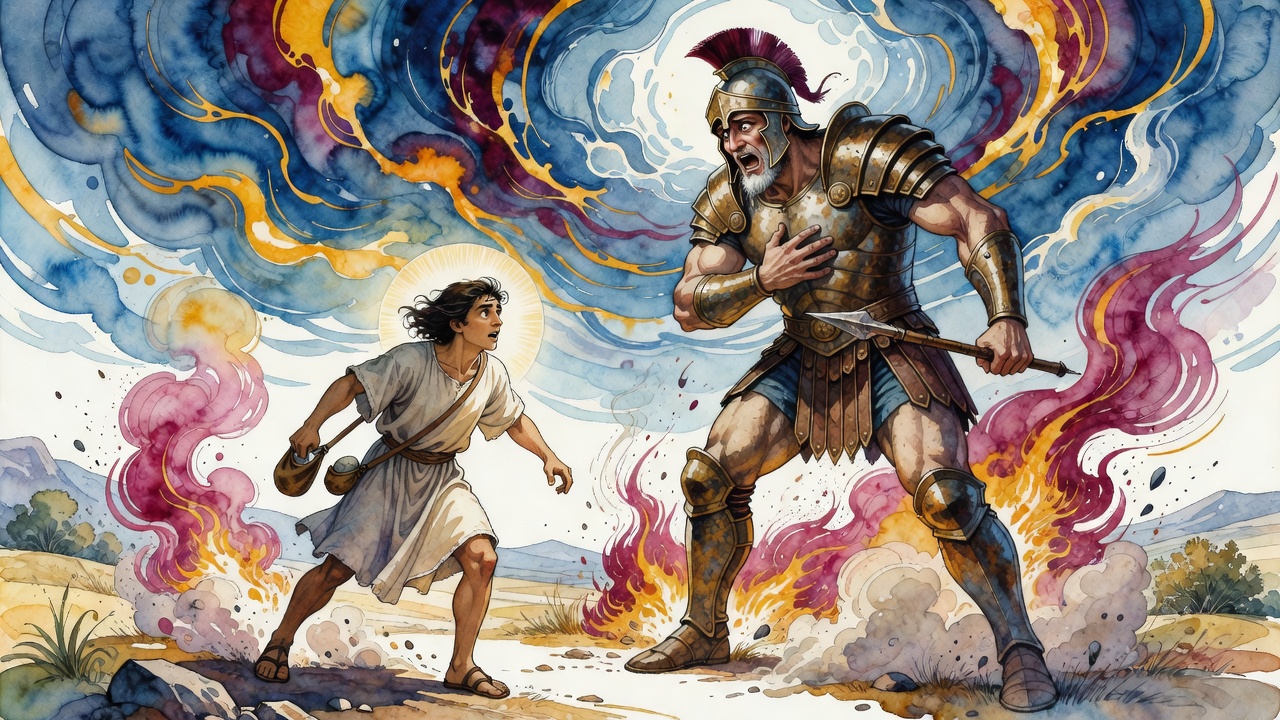
Goliath came out in scale armor that threw the light back. A bronze helmet sat on his head. The shaft over his shoulder carried an iron point heavier than most men could swing. He did not want a battle. He wanted one man. The voice went up both slopes and sat in the tents until evening.
On the fortieth morning a boy came down the hill with bread and cheese for his brothers, and with no business in that valley at all.
Five Stones in a Shepherd's Pouch
David stopped at a streambed on the way down. He put his hand in the cold water and picked out five stones, which is the act of a young man who has done this before and expects to need more than one. He had gone after a lion and a bear that took lambs from his father's flock. He had pulled the lambs out of their mouths and killed both animals in the hills where nobody was watching. He had thrown at rocks in the cold before the flock needed him. He knew what a sling could do at that range.
Saul tried to put his own armor on the boy. The bronze sat wrong on David's shoulders. He walked a few steps in it, then took it off and set it down. He would not fight in another man's metal. What Saul said as David walked away was not a strategy. "Go, and may the Lord be with you."
David went down with a leather pouch and an arm he had trained himself. He was sure of the arm.
The Giant Fell Toward the Boy
Goliath looked at the staff in the boy's hand and laughed. "Am I a dog, that you come at me with sticks?" He cursed David by his gods and promised the birds a meal (1 Samuel 17:43).
David did not step back. "You come with a sword and a spear and a javelin. I come in the name of the Lord of hosts, the God of the ranks of Israel, whom you have insulted."
He put his hand in the pouch, took one stone, and slung it.
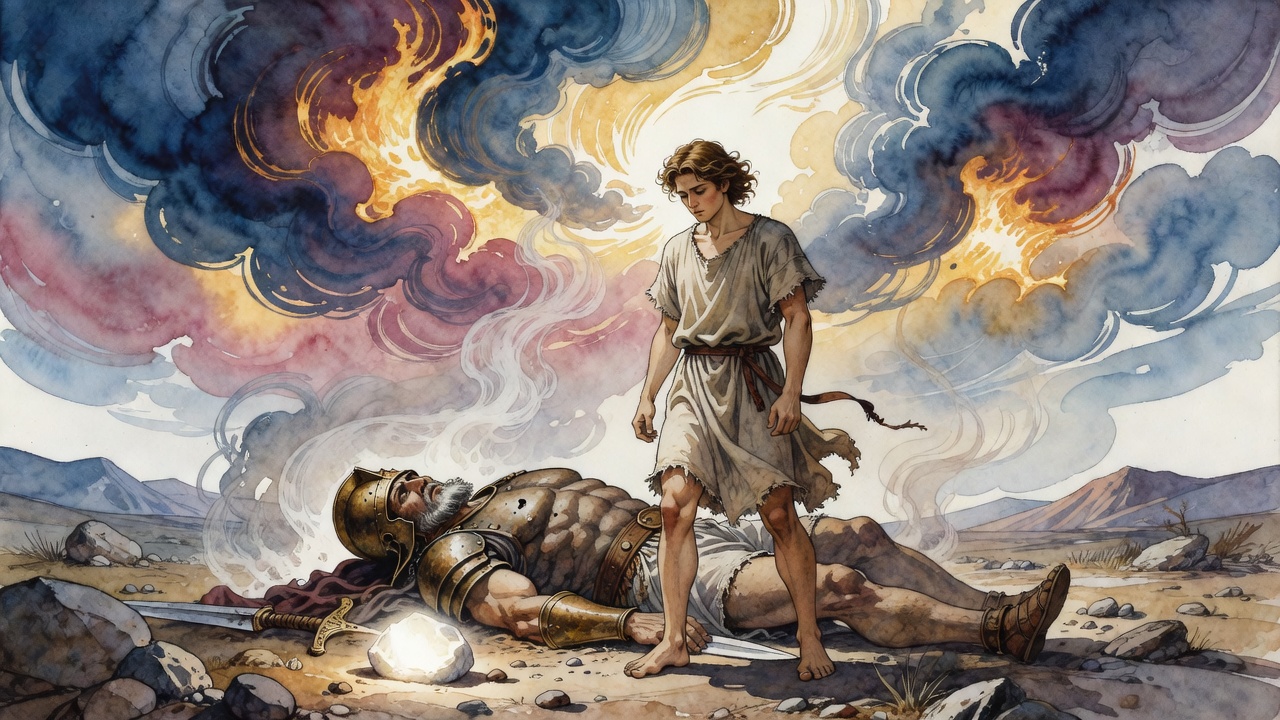
The giant went down on his face.
Strike a man in the front of the skull and his head snaps back. His body follows it. He falls away from the one who threw. Goliath was hit in the face and fell toward the boy, forward, flat, into the dirt at the bottom of the valley. The ground took the weight of him.
The bronze helmet was still on his head. The river stone went through it.
An Angel Carried What David Threw
An angel went with that stone. Not to throw it. David threw it. The angel held it on a line into the one part of the face that mattered and drove it through metal a river stone cannot break. David's arm was real. His nerve walking down that slope in front of two armies was real. The angel kept the stone from bouncing off bronze, and turned a body the wrong way into the dust.
David ran and stood over him. He had not brought a sword, so he took Goliath's own and cut the head away. Later he said the plainest words he ever used about war. "I did not know how to fight. He taught me."
He Handed Every Title Back
He had forty years after that to decide what the valley had meant, and he spent them handing everything back.
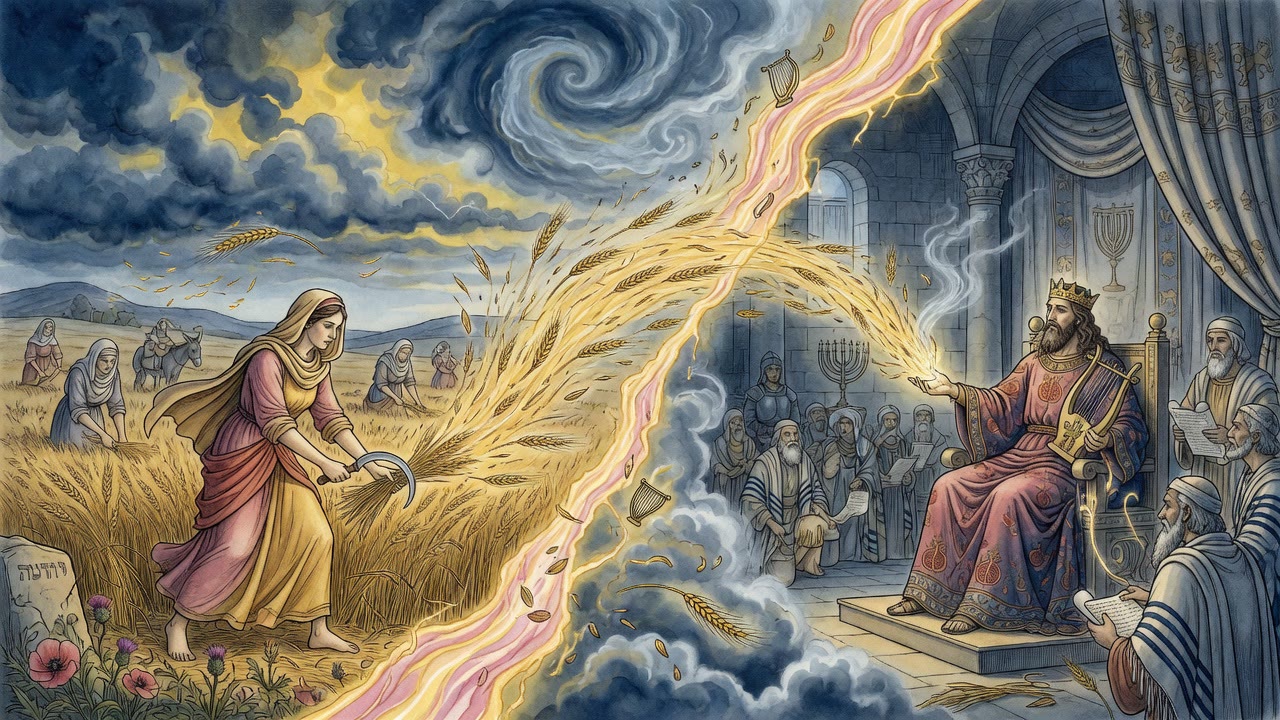
He sat on a throne and said he was not king, that God was king and had made him one. He was strong, and he said he was not strong. He was rich, and he said he was not rich, and that the greatness and the power belonged somewhere else. When he sat in judgment over the whole country and got the rulings right, he called himself the instrument and not the hand. When he talked about his wars, he refused the sentence any other king in that part of the world would have carved into a wall. It was not my strength that won. He helped me. He made me a fighter.
His son Solomon put the principle in a single line. "In all your ways, know Him."
The psalm that gathers all of this does not begin with the giant or the crown or the city he took. It begins with a blessing, and then a list, and the list is not of David's titles. My rock. My mercy. My fortress. My high tower. My deliverer. My shield. The one I trust in. Seven names for God, and every one of them a thing David is admitting he was not.
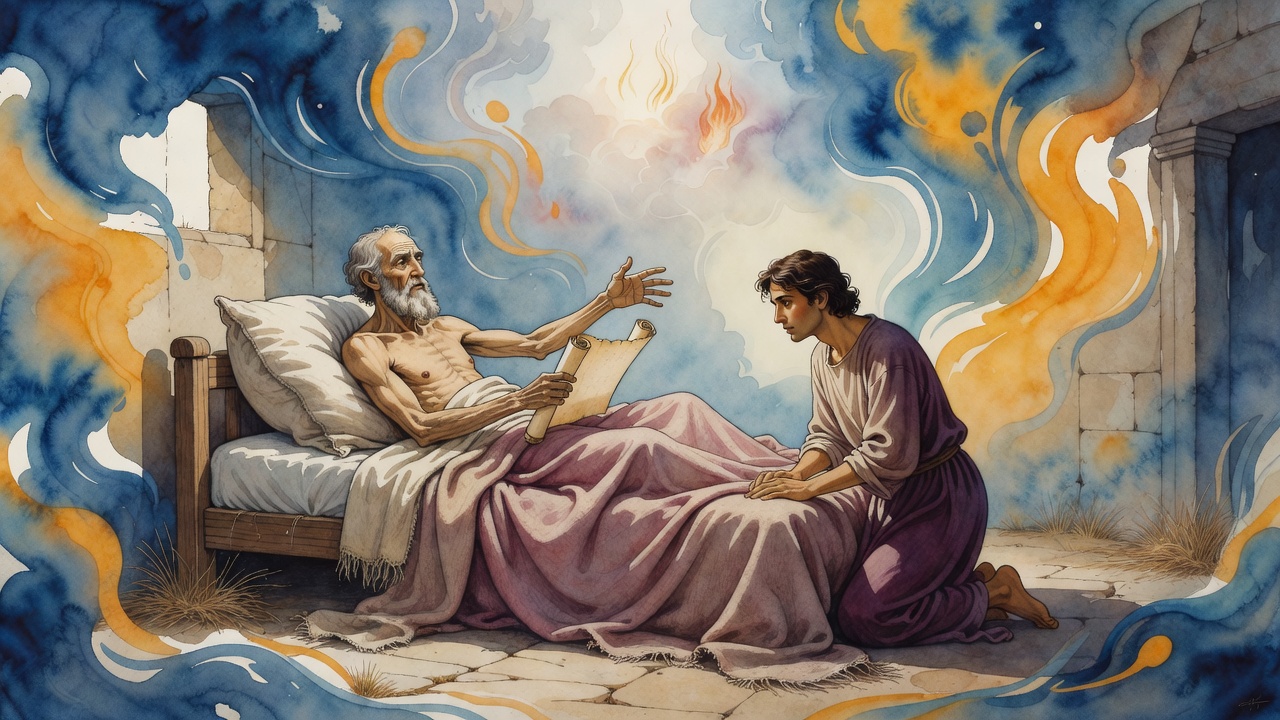
Elsewhere he says something quieter about the same arrangement. The day of his death and the day of his judgment were both hidden from him, and that is why he sings. An old man with a harp, hiding nothing, listing what held him up. In the valley he had counted five stones and needed one. He never once said the arm that threw it was the reason he came back up the hill.
← All myths