David Called Himself a Servant Bought at the Market
King David had every reason to claim noble blood. Instead he traced his lineage to Ruth the convert and called himself a slave purchased from outside the house.
Table of Contents
 Click for full size
Saul Asks and David Answers
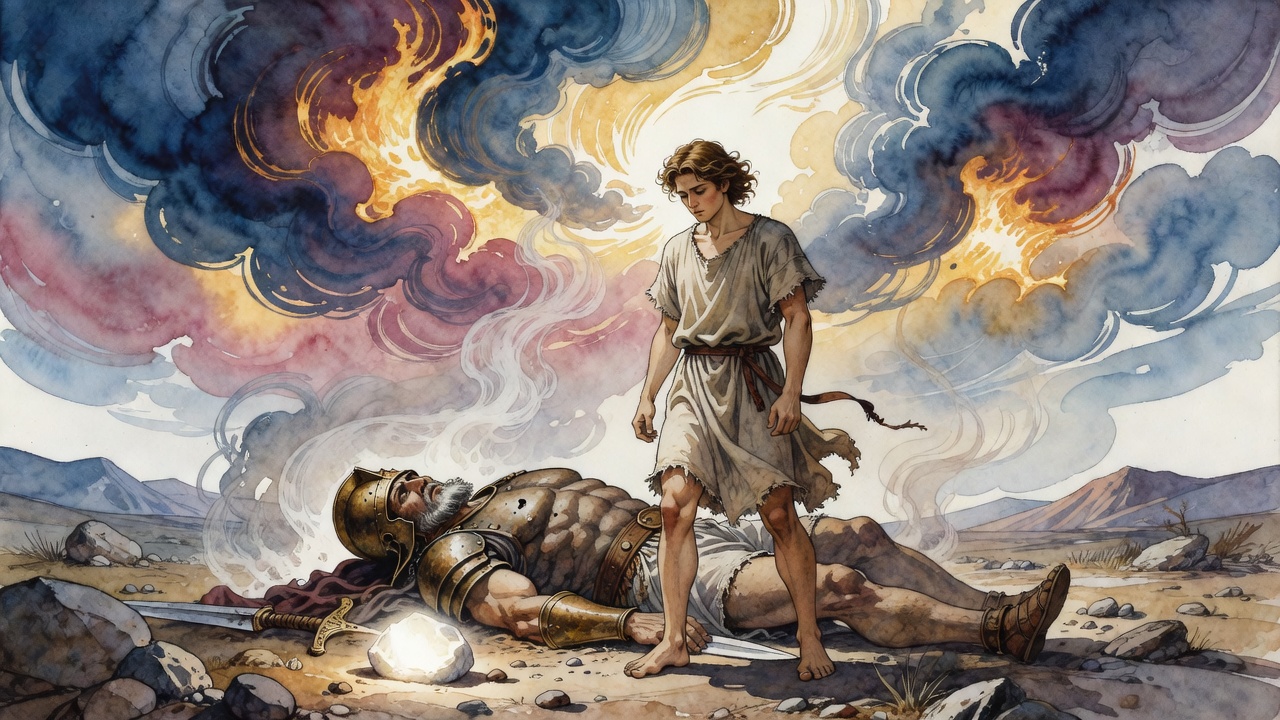
Saul asked David who his father was. This was after Goliath was dead and the Philistine army was running and the whole Israelite force was watching the young man holding the giant's head. It was a moment when David could have said almost anything and been believed.
He said he was the son of Jesse, of Bethlehem, of the tribe of Judah. All of that was true. But the midrash preserved in Midrash Tehillim on Psalm 116 adds a phrase that changes the whole texture of the answer. David did not compare himself to a servant born inside the household, a child raised from birth with some claim to loyalty and connection. He compared himself to a servant bought in the market. A stranger acquired with coins. A person with no history in the house and no inherited standing within it.
This is the lowest category. A household servant has roots. A purchased servant has nothing but the transaction.
What David Inherited From Ruth
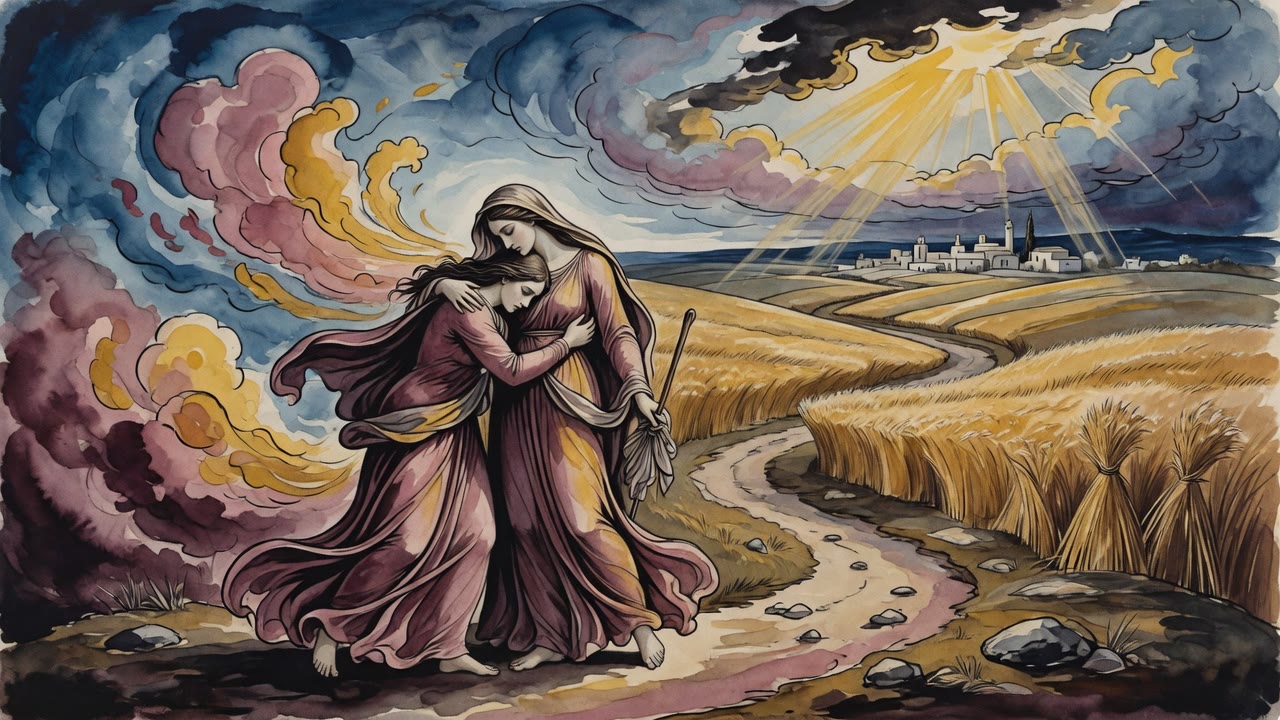
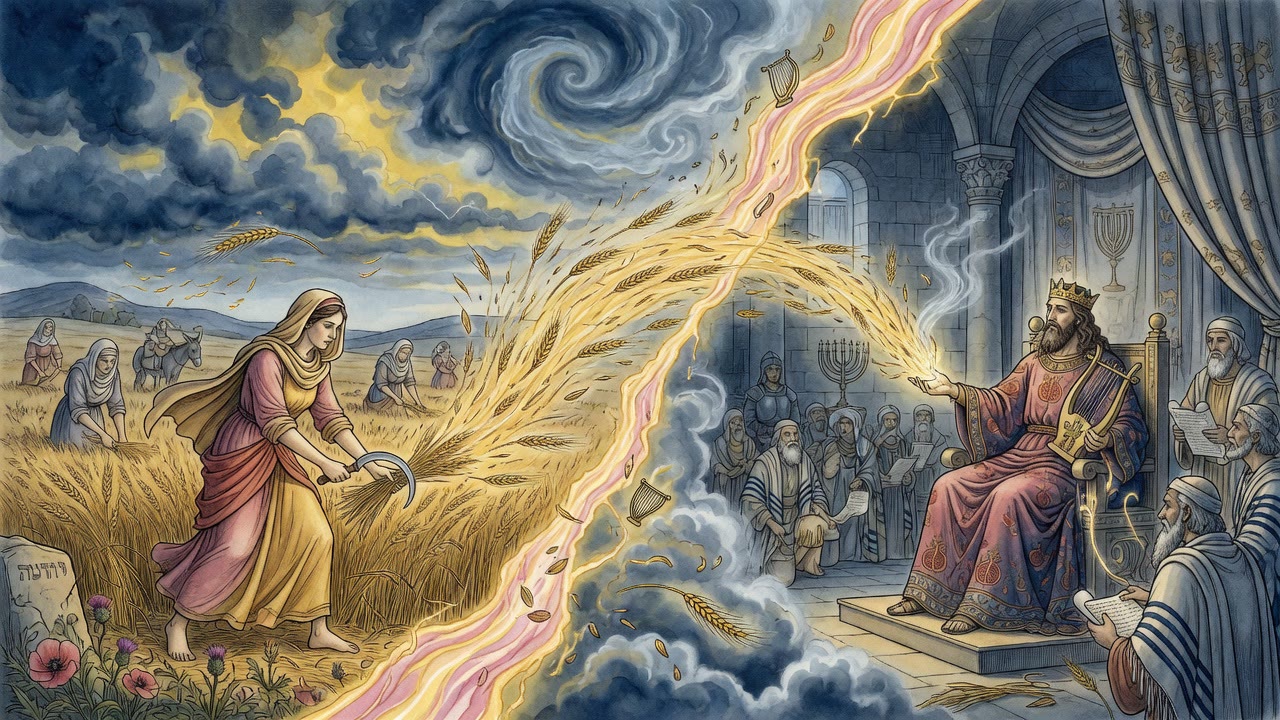
The rabbis understood what David was saying. He was not performing modesty for the king's benefit. He was identifying the actual shape of his lineage. His great-grandmother was Ruth the Moabite, a foreign woman who had walked away from her people and her gods to follow her mother-in-law Naomi back to Bethlehem. Ruth entered the household of Israel from outside. She was acquired, if you will, by covenant rather than by birth. She had no ancestral claim. Everything she built within Israel she built from the single decision to stay.
The Wisdom of Ruth preserved in the midrashic tradition pushes this further. It notes that Ruth understood a principle that most people spend their whole lives resisting: the person who enters a household from outside and earns belonging through presence and loyalty is, in a specific sense, more committed to that household than someone born into it. The one born inside can take it for granted. The one who came from outside has no such luxury. Every belonging they have was chosen, not inherited.
The Lie That Teaches Truth
The same passage in Midrash Tehillim contains a teaching about lies that sounds, at first, like a contradiction. It says that David learned from Ruth that all people can be liars. This seems like a dark lesson to carry forward from a woman the tradition praises as one of the most loyal figures in the entire Hebrew Bible.
But the teaching is precise. Ruth's journey to Bethlehem included Naomi's attempt to send her daughters-in-law back to their own families. Naomi said: go back, I have nothing to give you, your future is not with me. This was not exactly a lie, but it was a statement designed to make Ruth do something Naomi did not actually want her to do. Naomi was protecting Ruth by understating her own desire to keep her. And Ruth saw through it, which is why she made the famous declaration of loyalty that sealed her fate in the better direction.
David learned this from his ancestor: the people who love you most will sometimes say things designed to send you away from them, because they believe that is what's best for you. Hearing the truth inside those words requires understanding why someone might speak the opposite of what they feel.
A Credential, Not a Confession
David did not describe his outsider lineage as a flaw in his pedigree. He offered it as a credential. The man who descends from Ruth, from the woman who came in from outside and chose everything she had, carries a different kind of loyalty than the man who inherited his standing. David was telling Saul something about what he was. Not despite the Moabite blood in his line but because of it.
The rabbis found in this a principle about the nature of belonging. The convert and the descendant of converts bring something into Israel that cannot be inherited. It has to be chosen each generation. Ruth chose it. David knew she had chosen it and claimed that choosing as his lineage.
← All myths