4 min read

David Left One Letter Out of the Daily Psalm

Psalm 145 praises God through the alphabet, but David left out Nun, the letter the sages heard as falling, and answered it anyway.

Curated by Arthur · Told by Maggid ·
Table of Contents
  1. The Promise Attached to Ashrei
  2. The Letter That Fell Away
  3. The Fall Answered by the Next Breath
  4. The Daily Mouth Returns to the Gap

The psalm walked the alphabet and stepped around one letter.
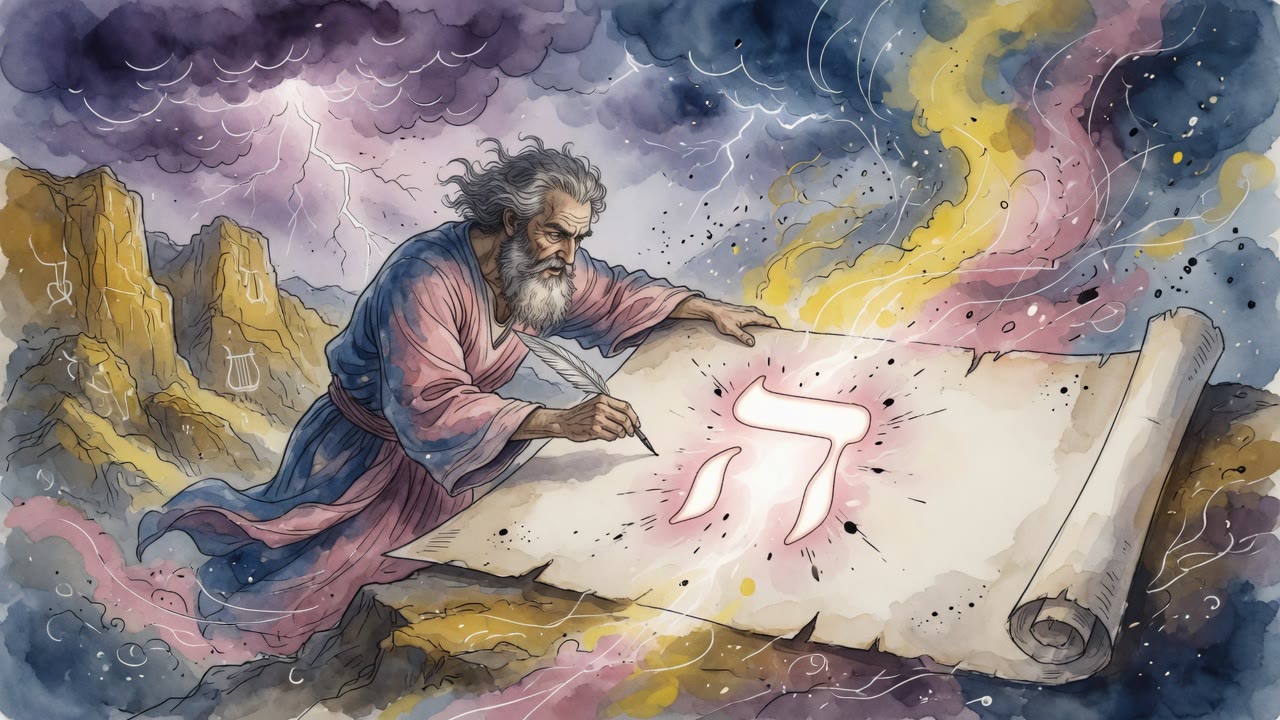
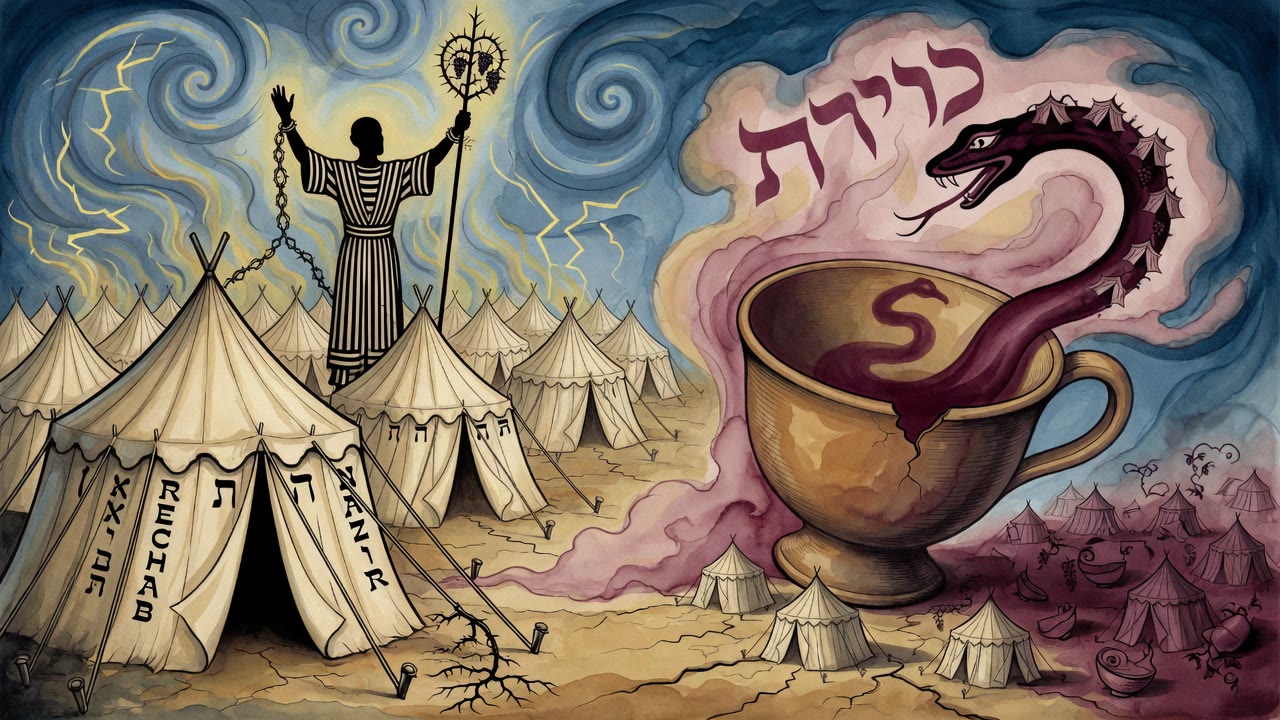
Aleph came. Bet came. Gimel, dalet, hei, each in order, praise arranged like stones in a path. Psalm 145 moved from letter to letter until the place where Nun should have stood. There, David left a gap.

Anyone who prays the daily service knows the psalm by its opening word, Ashrei. It is said again and again, morning and afternoon, until its shape becomes familiar enough that the missing letter can hide in plain sight. Twenty-two Hebrew letters should have stood in the acrostic. Only twenty-one appeared.

The gap is quiet. No blank marker announces it. The poem simply moves on, and only the person counting letters feels the floor drop for an instant under the prayer.

The sages noticed.

The Promise Attached to Ashrei

Rabbi Elazar ben Abina made the claim first.

Whoever recites Psalm 145 three times each day is assured a share in the World to Come. The statement was too large to pass quietly. Why this psalm? Why not Psalm 119, which builds eight verses for every letter and makes a palace of the alphabet? Why not the Great Hallel, which says openly that God gives food to all flesh?

The answer was that Psalm 145 holds both strengths together. It walks the alphabet and says, "You open Your hand and satisfy every living thing." Structure and sustenance meet in one poem.

Then the missing Nun made the claim more dangerous. A perfect daily psalm had a visible wound.

The Letter That Fell Away

Nun carried the sound of falling.

The sages heard inside it the word nefilah. Collapse. Descent. The verse waiting behind that letter came from Amos: "She has fallen and will not rise again, the virgin of Israel." If David placed that line inside praise, the acrostic would become a funeral procession.

So he did not place it there.

The omission was not denial. David knew falling. He knew pursuit, failure, grief, and sons who died. He also knew that praise cannot be honest if it pretends collapse is not part of Israel's alphabet. The empty place remained, a silence shaped like Nun.

People kept saying the psalm anyway. Their mouths moved over the missing letter day after day.

The Fall Answered by the Next Breath

The next letter was Samech.

Immediately after the gap, the psalm says that the Lord upholds all who fall. David did not write Nun, but he wrote the verb of falling into the line that followed and placed God under it like hands.

The Palestinian sages pressed the rescue even further. The verse in Amos could be read not as final ruin but as reversal. She has fallen and will not fall again. Rise, virgin of Israel. The same words that sounded like burial could be turned until they opened into command.

That is why the gap mattered. The psalm did not erase catastrophe. It surrounded catastrophe with praise, then answered it with support.

The Daily Mouth Returns to the Gap

Three times a day, ordinary mouths return there.

Not only sages. Not only martyrs. People with work, hunger, fear, and unfinished repentance say the alphabet of praise and pass the place where Nun is missing. They do not repair the psalm by adding the letter. They let the absence remain and let the next line carry them.

Ashrei trains the mouth to praise without pretending the fall was never real. The missing Nun becomes part of the prayer's honesty. The hand that opens to feed every living thing is also the hand under those who have already fallen.

The daily repetition matters because falling rarely announces itself once. It returns in memory, in fear, in the body's old expectation of collapse. The psalm makes the worshipper pass the gap and then speak support, not once in a lifetime but again and again until the sequence enters muscle and breath.

David left one letter out. The sages did not put it back. They made Israel say the poem until the silence became familiar, and the next breath became trust.

The missing Nun also keeps pride out of praise. An alphabet that pretends every letter stands upright would make prayer too clean for human mouths. David's psalm lets the worshipper praise God while still knowing where the collapse would have been written. The silence remains counted each day.


← All myths

From the tradition

Sources

2 sources

The texts this telling draws on, in full. Open a card to read inline, or expand it for a wider, quieter read.

Ein Yaakov, Berakhot 1:18Ein Yaakov, Berakhot

R. Elazar b. Abina said: "He who recites Te-hila l' David (Ps. 145) three times a day may be sure of an inheritance in the world to come." What is the reason? Shall I say because that particular chapter is arranged alphabetically? Then why not prefer chapter 119 Ps., which has an arrangement of eight repetitions of each letter of the alphabet? Is it because it has the verse Thou openeth Thy hand and satisfieth the demands of all Thy creatures. [it influences men to be benevolent]? If so, then why not the Great Hallel? in which also is written (Ib. 136, 25.) He giveth food to all flesh. Because Tehila l' David has the advantages of both; [is arranged alphabetically and influences men to be benevolent] R. Jochanan said: "Why is the letter Nun missing in the [alphabetical course of] Ashrei? Because the letter Nun is used for bad tidings. It is said (Amos 5:2) She is fallen (Nafla) and will not rise again, the virgin of Israel." In Palestine they interpret [this prophecy of Amos as good tidings] thus: She is fallen and will not fall again! Rise! virgin of Israel! R. Nachman b. Isaac said: "Even so, David indicates [the prophecy of] the Nun for the purpose of strengthening Israel, through a holy vision; for he says (Ps. 145:14) The Lord upholdeth all who are fallen (Noflim)."

Full source
Ein Yaakov, Berakhot 1:17Ein Yaakov, Berakhot

(Ib. b) We are taught: The sages made a fence to their words [to protect their ordinances], lest a man coming from the field in the evening, would say: "I will go home, eat a little, drink a little, and sleep a while and then I will read Sh'm'a and pray the evening service." In the meantime he will fall asleep and sleep through the whole night without having read the Sh'm'a or prayed. But [in order to prevent this they say:] "A man coming from the field in the evening shall enter the synagogue, and if he be accustomed to read the Scripture, let him do so; or if he be able to study traditional law, let him do that. After this, he should read the Sh'm'a and pray; then he can eat his meal and recite the Aftermeal Benediction. He who transgresses the words of the wise, deserves the penalty of death." Why docs the Baraitha use the expression here that "He who transgresses the words of the wise is worthy of the penalty of death," and not use it in any other place? If you wish, you may say, because here the force of sleep puts him beyond his own control [and if he is not strongly warned against it, he may transgress the command even though he really desires to fulfill it]; and if you please, you may say, because it is the intention [of the Baraitha] to reverse the opinion of those who say that the evening service is only optional it tells us, therefore, [by its warning,] that it is obligatory. The master said [above]: "He reads the Sh'm'a and prays (the evening service)" This is in support of [the view of] R. Jochanan, who was accustomed to say: "Who is sure to have a share in the world to come? He. who, immediately after the benediction of Geula, says the prayer of the Eighteen Benedictions at the evening service." R. Joshua b. Levi said: "The Eighteen Benedictions were ordained to be said in the middle." On what do they base their difference of opinion? If you please, you may say on a Biblical passage, and if you please, you may say on common sense. As to reason, R. Joshua holds that the redemption (of Egypt) commenced on the evening (towards the fifteenth of Nisan) although the real redemption did not take place until the morning, [therefore the Ge-ula which indicates the redemption should be said immediately before the Eighteen Benedictions in the evening also]; but R. Joshua b. Levi holds that as long as the real redemption did not take place until the morning then the redemption of the evening matters little. As to the Biblical passage they differ in the interpretation of the passage. (Deu. 6:7) And when thou lieth down, and when thou riseth up, (referred to Sh'm'a). R. Jochanan holds: "We compare Lying down [at evening] to arising [in the morning] for the reason that just as the reading of the Sh'm'a in the morning comes before the prayer, so, in the evening, the reading of the Sh'm'a comes first also, and then the prayer of the Eighteen Benedictions." R. Joshua holds: "We compare the reading of the Sh'm'a when lying down to the reading of the Sh'm'a when arising, for the reason that just as in the morning the Sh'm'a is read close upon rising so is the Sh'm'a of the evening read just before lying down." The following objection was raised by Mar b. Rabina: "We have learned (in a Mishnah (the earliest code of rabbinic law)) 'In the evening, he says two benedictions before the Sh'm'a and two after the Sh'm'a.' If the Eighteen Benedictions should be said immediately after Ge-ula, then the Benedictions of Hash-ki-benu, prevents his having the Ge-ula, (the first one after Sh'm'a) closely after the Eighteen Benedictions?" Since the Rabbis ordained that Hash-ki-benu is to be said [between Ge-ula and the Eighteen Benedictions] then it is considered as one long benediction; for if we do not say so, then in the morning how can we say the Eighteen Benedictions immediately after the Ge-ula? Has not R. Jochanan said: "He should first say, O Lord, open Thou my lips, and my mouth shall declare thy praise (Ps. 51:17), and then proceed with the Eighteen Benedictions; and at the conclusion he should say. May the words of my mouth, and the meditation of my heart be acceptable before Thee, O Lord, my rock and my redeemer, (Ib. 19, 15)." But since the Rabbis ordained that the passage [O Lord, open my mouth, etc. ] be said, it is considered one long prayer (part of the eighteen benedictions), so in this instance also, since the Rabbis ordained that the Hash-ki-benu be said between Ge-ula and the Eighteen Benedictions, it is considered a part of Ge-ula

Full source