Parshat Bereshit6 min read

Two Equal Lights and the Moon That Was Diminished

Two great lights, one crown. When the moon is shrunk to the lesser lamp she storms the court for justice, and heaven ends up owing her a debt.

Curated by Arthur · Told by Maggid ·
Table of Contents
  1. She Carries Her Grievance Into the Court
  2. She Will Not Accept the Sentence Quietly
  3. Heaven Offers Her the Names of the Humble
  4. God Calls for an Offering Against Himself
  5. The Day Her Worshippers Are Shamed

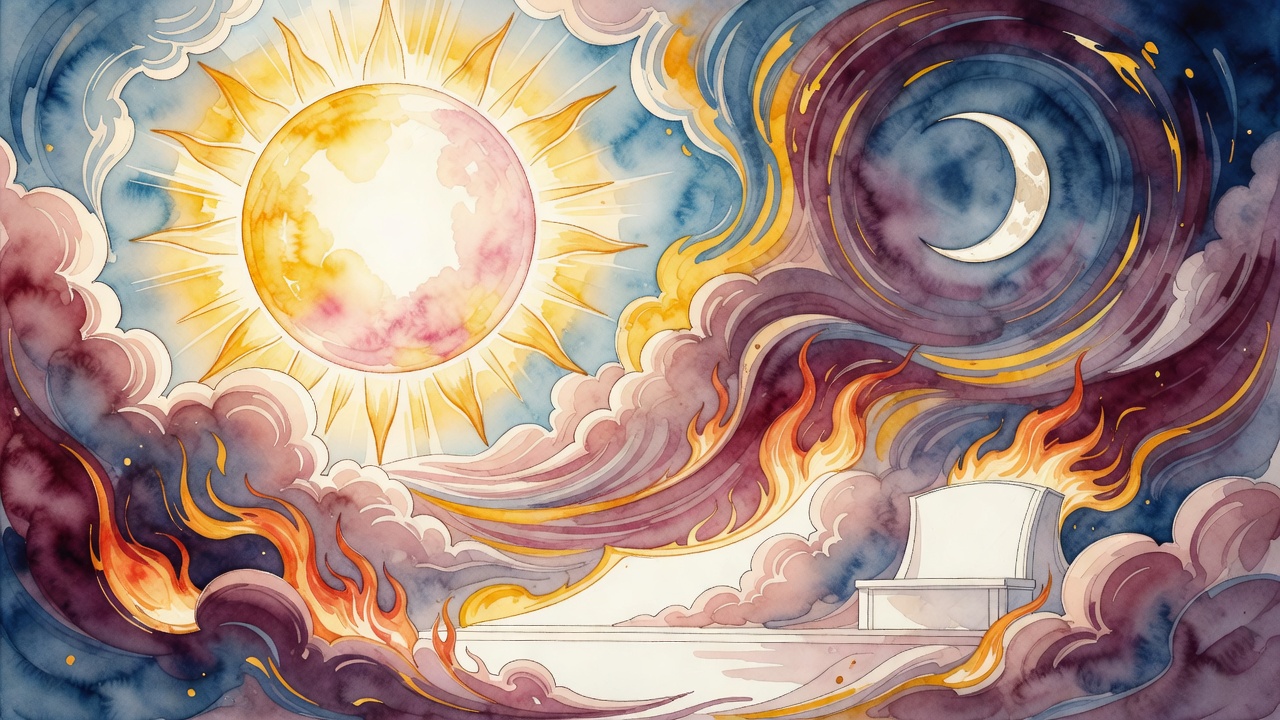
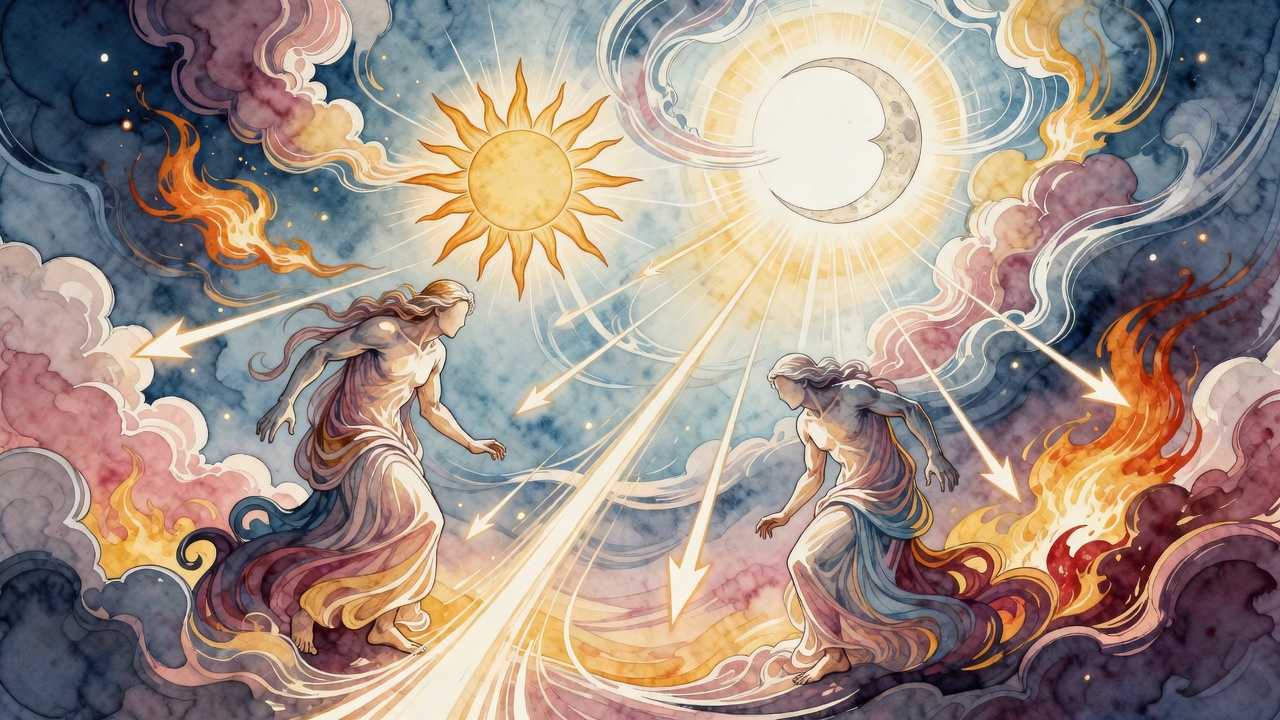
On the fourth day, two lamps of equal fire hung in the new sky, and the word that hung them called them by one name. "The two great lights." The moon burned beside the sun, neither above the other, both crowned, both sovereign over the dark and the day. For one breath of creation there were two rulers and one rule, and nothing in the heavens told them apart.
Then the second clause of the verse arrived like a verdict. "The greater light." "The lesser light." The moon heard the word lesser settle onto her like a hand pressing her down, and she did not weep and she did not bow. She left her place in the sky and went up through the gates to where judgments are made.

She Carries Her Grievance Into the Court

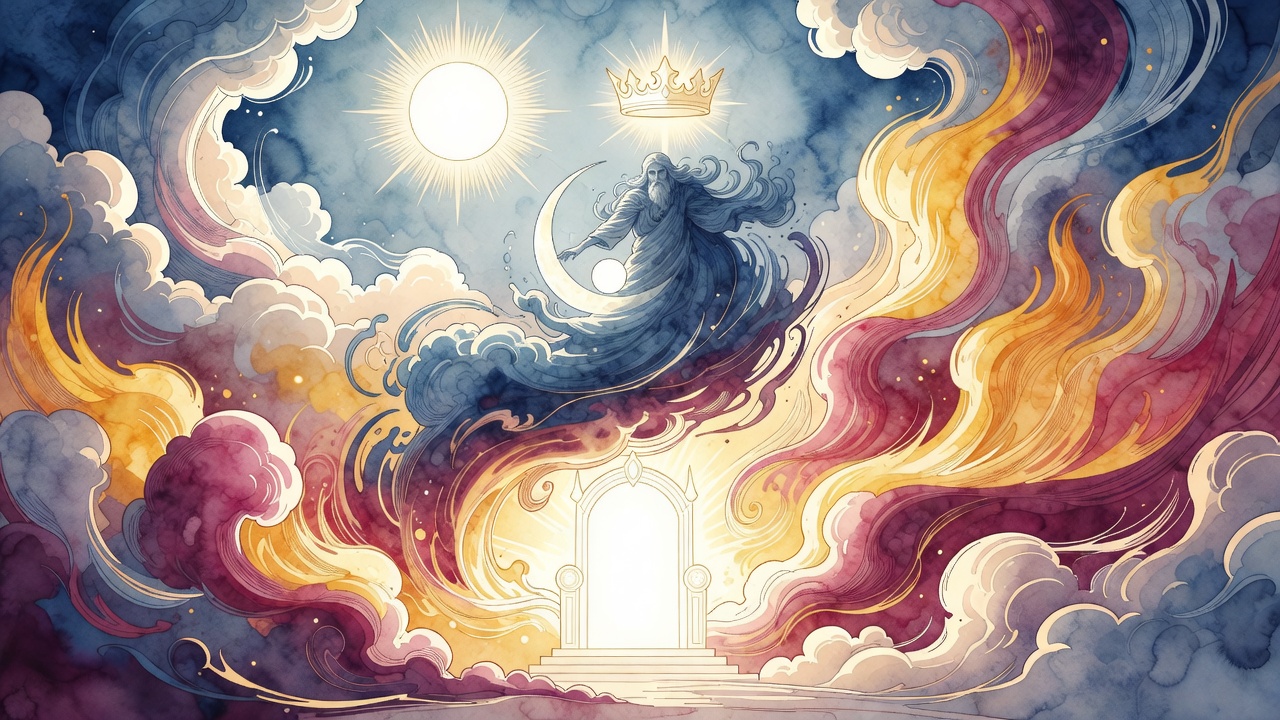
She came before the Holy One and did not soften it. "Master of the Universe," she said, "is it possible for two kings to make use of one crown?" It was a clean argument and an honest one. Two thrones cannot share a single circle of gold. One must rise, one must fall. She had been made an equal and then renamed a subordinate in the same sentence, and she wanted to know by what law a queen is unmade between one word and the next.

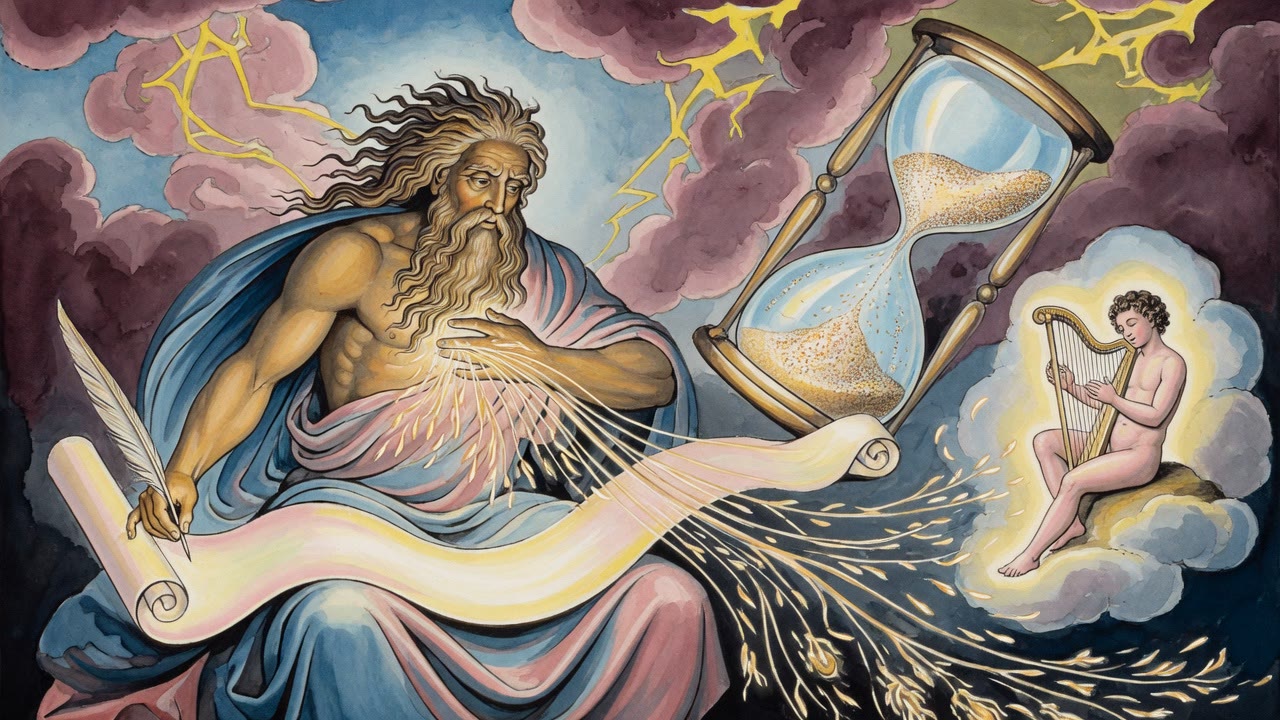
The answer came without anger and without comfort. "Go and diminish yourself." No counterargument. No defense of the verse. Just the sentence carried out, as if her own logic had been the blade. She had proven that two kings cannot wear one crown, and so one of the two would shrink, and the court had already decided which.

She Will Not Accept the Sentence Quietly

She turned the injustice back on Him. "Master of the Universe, because I said a fitting thing before You, shall I go and diminish myself?" She had spoken truth and the truth had been used to cut her down. So heaven began to offer her gifts, the way a court offers a wronged petitioner everything except the one thing taken.

"Go, and you shall rule by day and by night." She did not bow. "What use is a lamp at noon?" A pale disk hanging in the bright sky, ignored by every eye, a crown no one can see. The gift was an embarrassment and she named it one.

"Go, and Israel shall reckon by you the days and the years." Still she pressed. The day was reckoned by the sun as well. "It is impossible for the day not to be reckoned by it too, for it is written, they shall be for signs and for appointed times." Every gift offered to her, the sun already held. She had been promised dominions that were not hers alone, and she refused to be paid in shared coin.

Heaven Offers Her the Names of the Humble

So the offer changed shape. "Go, and the righteous shall be called by your name." Jacob the Small. Samuel the Small. David the Small. The men who would carry the weight of Israel would carry her diminishment in their titles, the small ones, the lesser lights who lit the world more truly than the great ones ever did. It was the finest gift heaven had. The wronged would be named for the wronged.

And still her mind was not settled. She had come for her crown and been offered consolations. She had been made small and handed the company of the small. The verse stood, the diminishment stood, and the moon stood in the court with her standing stripped and no restoration in hand.

God Calls for an Offering Against Himself

Then the Holy One did a thing no petitioner had asked for and no court had ever seen. He turned the case against Himself. "Bring an atonement for Me," He said, "for I diminished the moon."

Heaven went silent at it. The Judge had ruled, and now the Judge confessed a debt. There would be a goat. On the first of every month, when the moon was a thin returning sliver clawing her way back from nothing, a goat would be brought, and over it would be spoken a phrase set apart from all the other offerings of the festival calendar. A sin-offering "to the LORD." Not the people's sin. His. A standing apology nailed to the calendar, renewed with every new moon, a debt heaven chose never to finish paying. The smallest light in the sky had argued the King into owing her, month after month, for as long as the months would run.

The Day Her Worshippers Are Shamed

The grievance did not end in the court. It ran forward into time, to a day the Targum saw at the edge of the world. On that day the Lord would turn against the mighty host that dwelt in power, against the kings, the sons of men who ruled the earth, and they would be gathered into the prison and shut in the dungeon, and only after many days remembered.

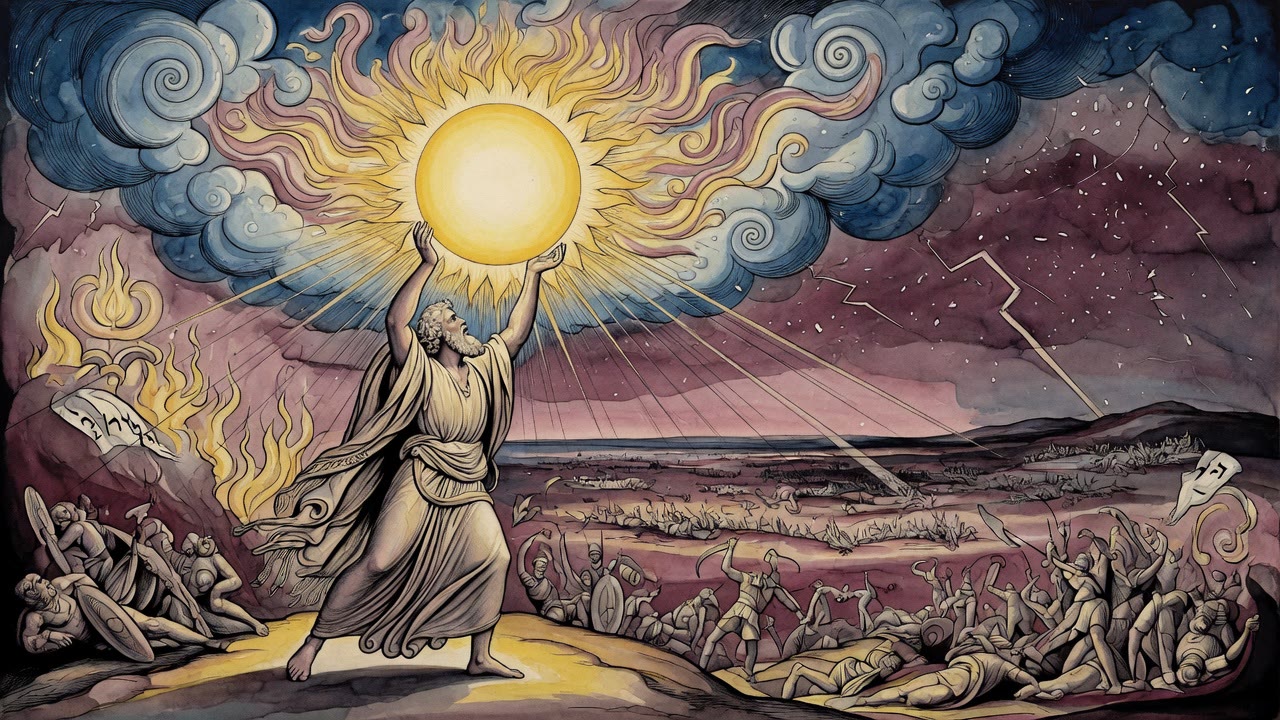
And on that day a stranger reckoning would come due. Those who bowed to the moon would be confounded. Those who served the sun would be ashamed. The two great lights, the equal and the unequal, the wronged queen and the unshrunk king, would both watch their worshippers covered in shame, because the power of the Lord of hosts would be revealed on Mount Zion and before the elders of His people in glory. The moon had won a confession out of heaven and a goat out of every month. But no one was permitted to kneel to her. The crown she lost was never to be handed to anyone else, in the sky or under it.


← All myths
From the tradition

Sources

3 sources

The texts this telling draws on, in full. Open a card to read inline, or expand it for a wider, quieter read.

Yalkut Shimoni on Torah 8:10Yalkut Shimoni on Torah

Rabbi Shimon ben Azzai raised a contradiction: It is written, "And God made the two great lights," and it is written, "and the lesser light." The moon said before the Holy One, blessed be He: Master of the Universe, is it possible for two kings to make use of one crown? He said to her: Go and diminish yourself. She said before Him: Master of the Universe, because I said a fitting thing before You, shall I go and diminish myself? He said to her: Go, and you shall rule by day and by night. She said before Him: Master of the Universe, what use is a lamp at noon? He said to her: Go, and Israel shall reckon by you the days and the years. She said: But it is impossible for the day not to be reckoned by it as well, as it is written, "and they shall be for signs and for appointed times." He said to her: Go, and the righteous shall be called by your name - Jacob the Small, Samuel the Small, David the Small. Still her mind was not settled. The Holy One, blessed be He, said: Bring an atonement for Me, for having diminished the moon. And this is what Resh Lakish said: Why is the goat of the new moon different, that it is said of it "to the LORD" (Numbers 28:15)? The Holy One, blessed be He, said: Let this goat be an atonement for My having diminished the moon.

Full source
Targum Jonathan on Isaiah 24:21-23Targum Jonathan on Prophets

And it shall come to pass at that time, that the Lord shall punish the mighty host that is dwelling in power, and the kings, the sons of men, who are dwelling upon the earth.

And they shall be utterly gathered for the prison, and they shall be shut up in the dungeon, and after many days they shall be remembered.

And they shall be confounded that worship the moon, and they shall be ashamed that worship the sun; because the power of the Lord of hosts shall be revealed in mount Sion, and before the elders of his people in glory.

Full source
Bereshit Rabbah 6:3Bereshit Rabbah

Take the creation story in Genesis, for example. We read in (Genesis 1:16) that God made "two great lights" – the sun and the moon – to rule the day and the night. Seems straightforward. But then the text goes on to say, "the greater light to rule the day, and the lesser light to rule the night." Wait a minute! They were both great, and now one is diminished? What happened?

That’s exactly the question that the rabbis confront in Bereshit Rabbah 6, a beautiful collection of rabbinic commentary on Genesis. Rabbi Yudan, quoting Rabbi Tanchum ben Rabbi Ḥiyya and Rabbi Pinḥas quoting Rabbi Simon, points out this very bewilderment. It seems contradictory. So, what's the explanation?

One answer, they suggest, is that "one of them entered into the realm of its counterpart." The moon, sometimes encroaches upon the sun's territory – it's visible during the day. And because of this "trespassing," its light was diminished.

This idea is further illustrated by Rabbi Pinḥas, who draws a parallel to the offerings brought on holidays and the New Moon (Rosh Chodesh). For most holidays, the Torah specifies "one goat as a sin offering" (Numbers 29:5). But for Rosh Chodesh, it says, "one goat as a sin offering for the Lord" (Numbers 28:15). The Holy One, blessed be He, is essentially saying, "Bring atonement on My behalf for having diminished the moon, as it is I who caused it to enter into the realm of its counterpart."

It’s a powerful image: God, in a sense, taking responsibility for the moon's diminished state. And the underlying message? If even something that enters another's realm with permission is diminished, how much more so for one who enters without permission! It's a lesson about boundaries, respect, and the consequences of overreach.

But the story doesn't end there. Rabbi Levi, in the name of Rabbi Yosei bar Ilai, offers another layer of meaning. He suggests that the greater (older) entity should count by the greater thing (the sun), and the smaller (younger) entity should count by the lesser thing (the moon). Esau, often seen as the older brother representing the more worldly, immediate gratification, counts by the sun. Jacob, the younger, representing the more spiritual and enduring, counts by the moon.

Rav Naḥman then builds on this idea, saying that it's actually a good omen. Esau, associated with the sun, has dominion during the day but not at night. He has his share in this world, but not in the World to Come (Olam Ha’ba). Jacob, associated with the moon, has dominion during both night and day – he has a share in both this world and the next.

Rav Naḥman adds a final, beautiful thought: As long as the light of the greater one (Esau) is in existence, the light of the lesser one (Jacob) is not discernible. But when the light of Esau recedes, the light of Jacob will shine forth. It's a message of hope and resilience, echoing the words of (Isaiah 60:1-2): "Arise, shine, for your light has come…. For, behold, the darkness will cover the earth, [and thick darkness the peoples, but upon you the Lord will shine and His glory will be seen upon you]."

So, what does this all mean for us? Maybe it's about recognizing the value in both the "greater" and the "lesser" aspects of our lives. Maybe it's about understanding that sometimes, what seems like a diminution is actually a necessary step towards a greater, more enduring light. And maybe, just maybe, it's a reminder that even when we feel diminished, our light still has the potential to shine brightly.

Full source