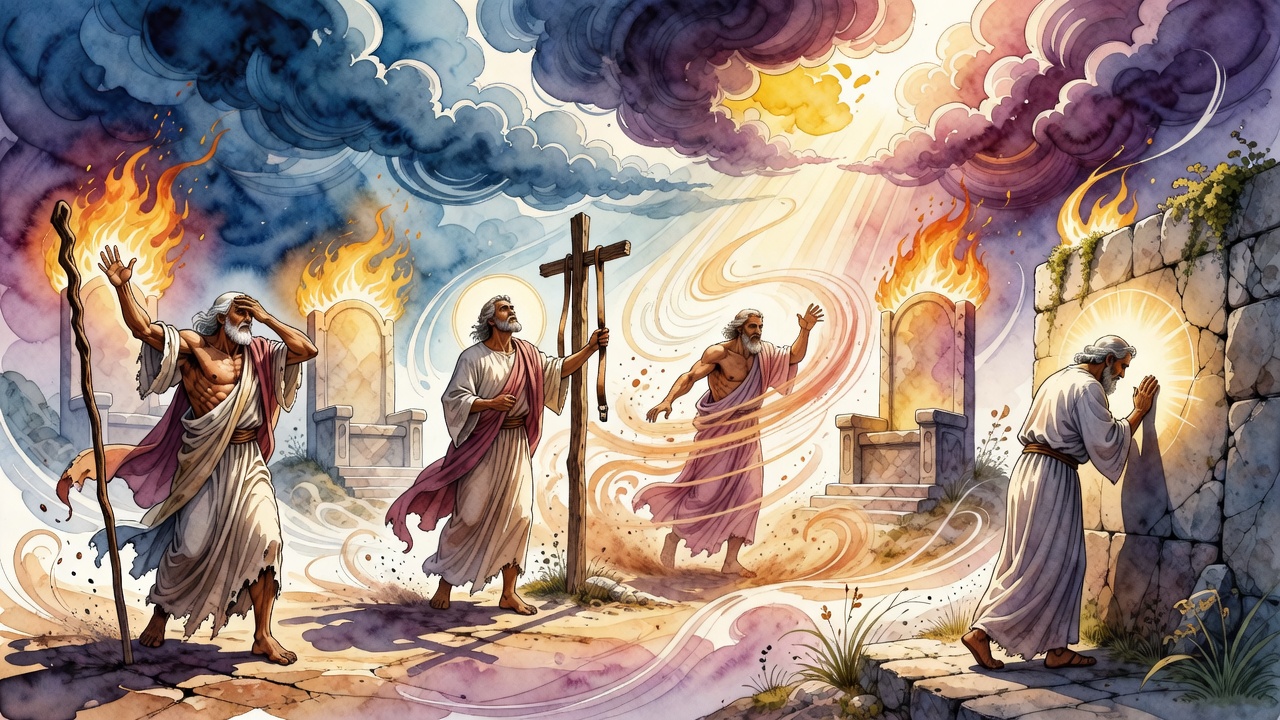
Abraham Argued With God While Job Sat in Ashes
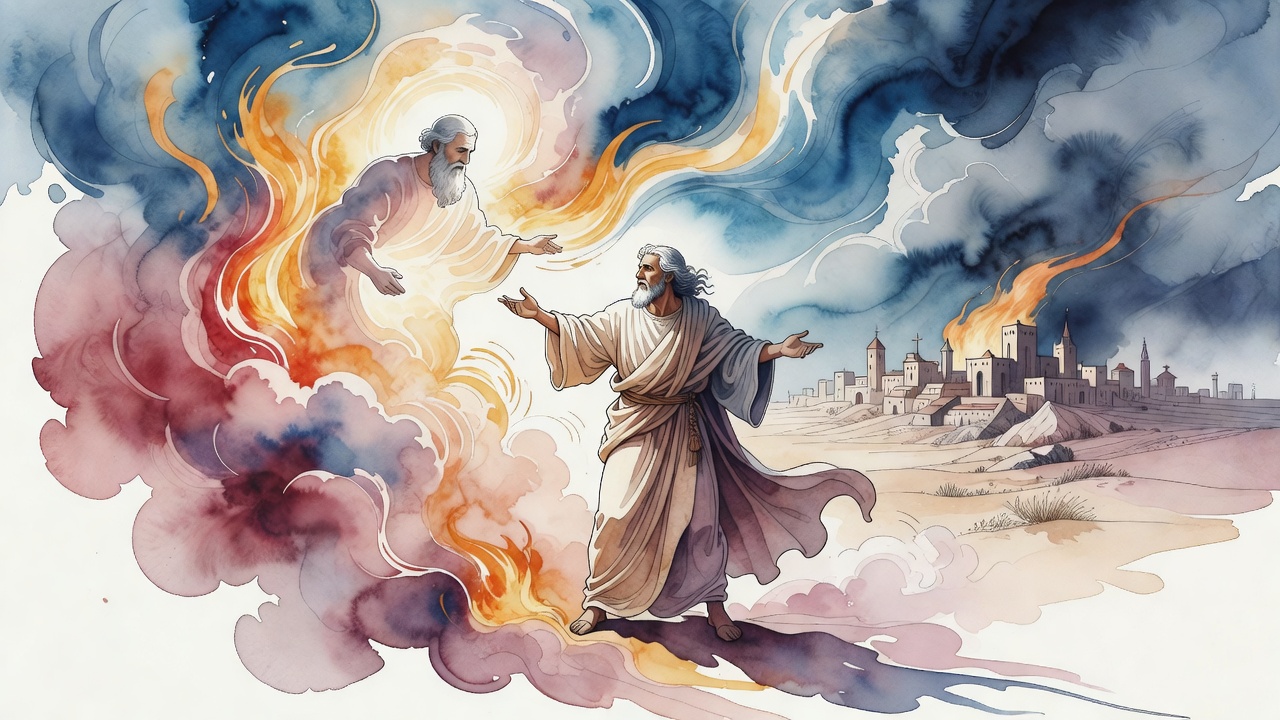
The smoke had not risen yet. Abraham planted his feet in the dust and asked if the Judge of all the earth would burn the innocent with the rest.
Table of Contents
Abraham stood in the heat and put his body between the city and the fire.
 Click for full size
The smoke had not risen. Traders still called in the streets of Sodom. Children still ran. Thieves still counted. Heaven had already turned toward judgment. Abraham stepped into the path anyway.
Fifty Names in the Dust
He had no army to place between flame and gate. He had no bribe, no treaty, no altar hot enough to buy a delay. He lifted a sentence and held it up like a shield.
"Far be it from You to slay the righteous with the wicked, so the righteous become like the wicked. Far be it from You. Shall the Judge of all the earth not do justice?" (Genesis 18:25)
God did not strike him for the question. Abraham pressed. Fifty righteous, he said. Then forty-five. Then forty. Thirty. Twenty. Ten. Each number fell out of his mouth like a stone dropped into a well. Each answer came back with mercy still alive inside it.
He was not flattering Heaven. He was holding God to the name of Judge and refusing to let that name go slack. He named people who might still be walking those streets, and he made Heaven count them one by one.
The City That Could Not Spare Ten
Sodom did not produce ten. Abraham waited. The silence that followed the last number was worse than a shout. The bargain could not save the city. Fire would come. The streets would empty. The gates would stand with no one left to argue in them.
Abraham did not leave smaller. He had argued from inside the covenant. He had spoken as if justice was real enough to demand an account even from Heaven. When he turned back toward his tent, his mouth was still shaped around the word ten.
Behind him the air began to change. He did not look back to watch the first roof catch. He had done what a man can do with a number and a Name. The rest belonged to the Judge he had refused to let forget Himself.
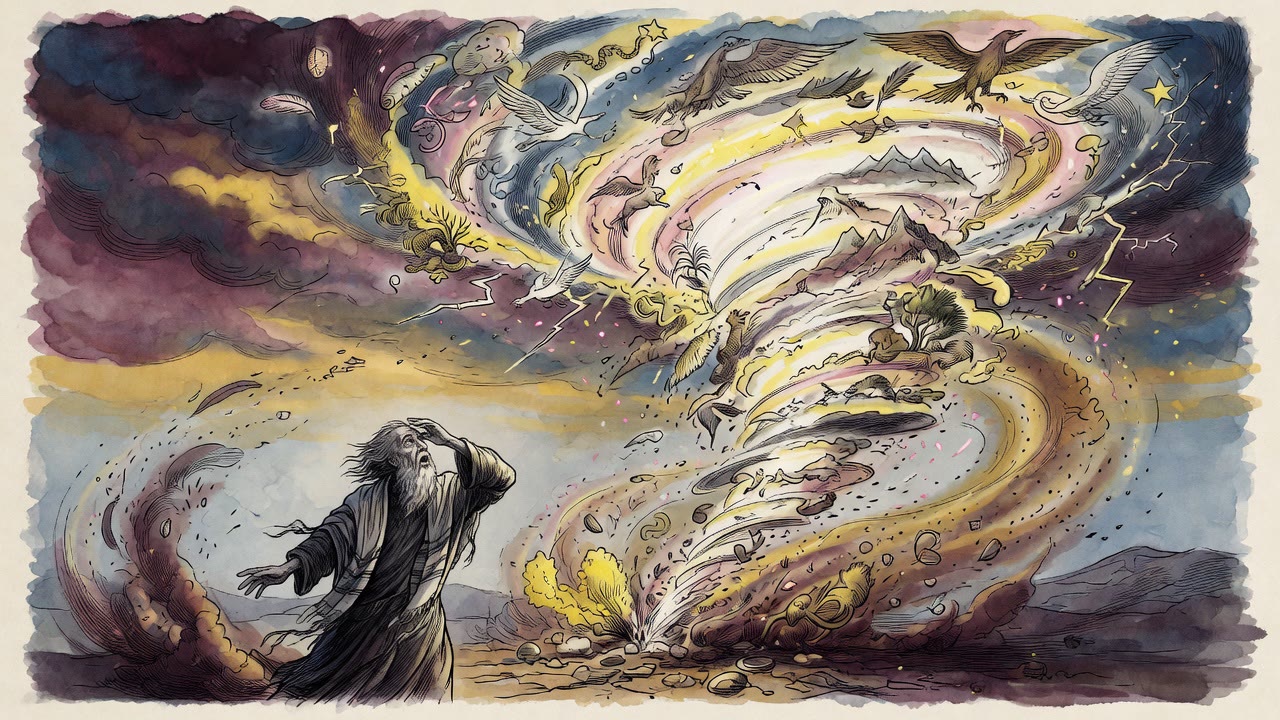
Job Opened His Mouth Over Ashes
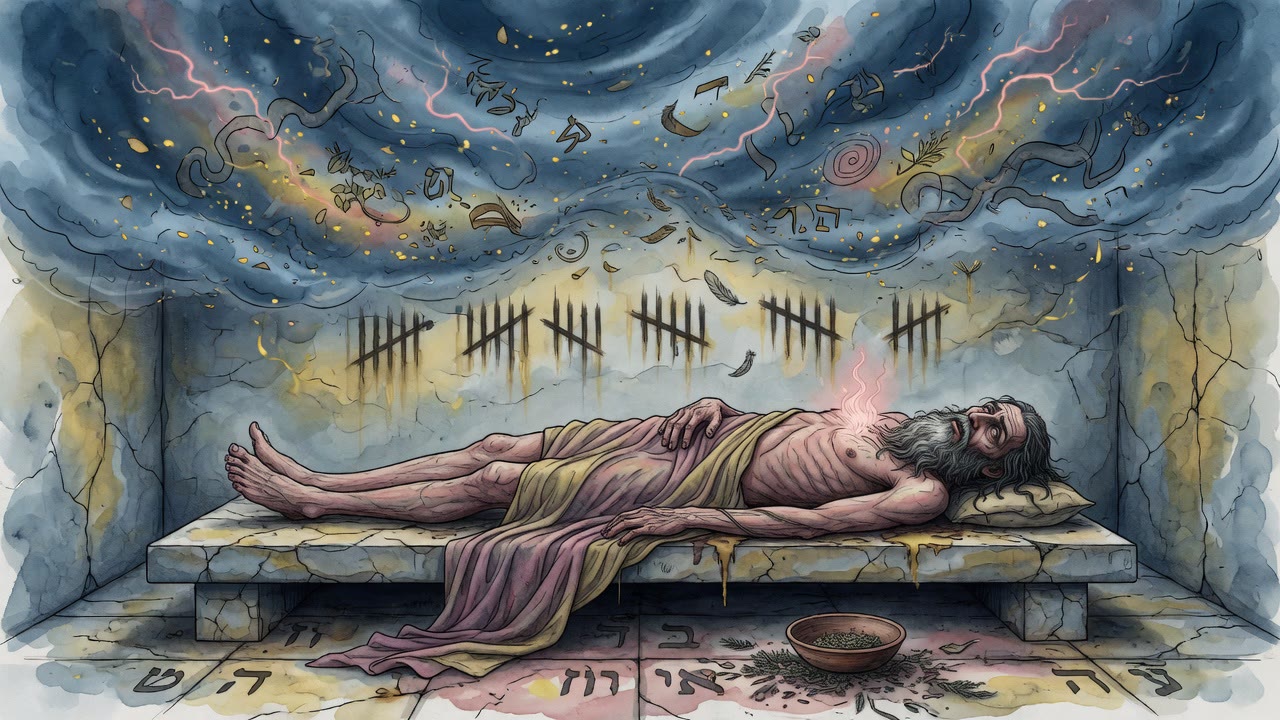
Job sat in a different wreckage. Wealth gone. Children gone. Skin broken. Friends close enough to speak and too far to comfort. Dust filled his mouth, and the dust tasted like a verdict no one had explained.
He looked at the world and saw no scale. The innocent suffered. The violent breathed. Graves took both. The sentence that came out of him sounded close to Abraham's protest, but it ran the other way.
"It is all one," he said. "God destroys the blameless and the wicked together." (Job 9:22)
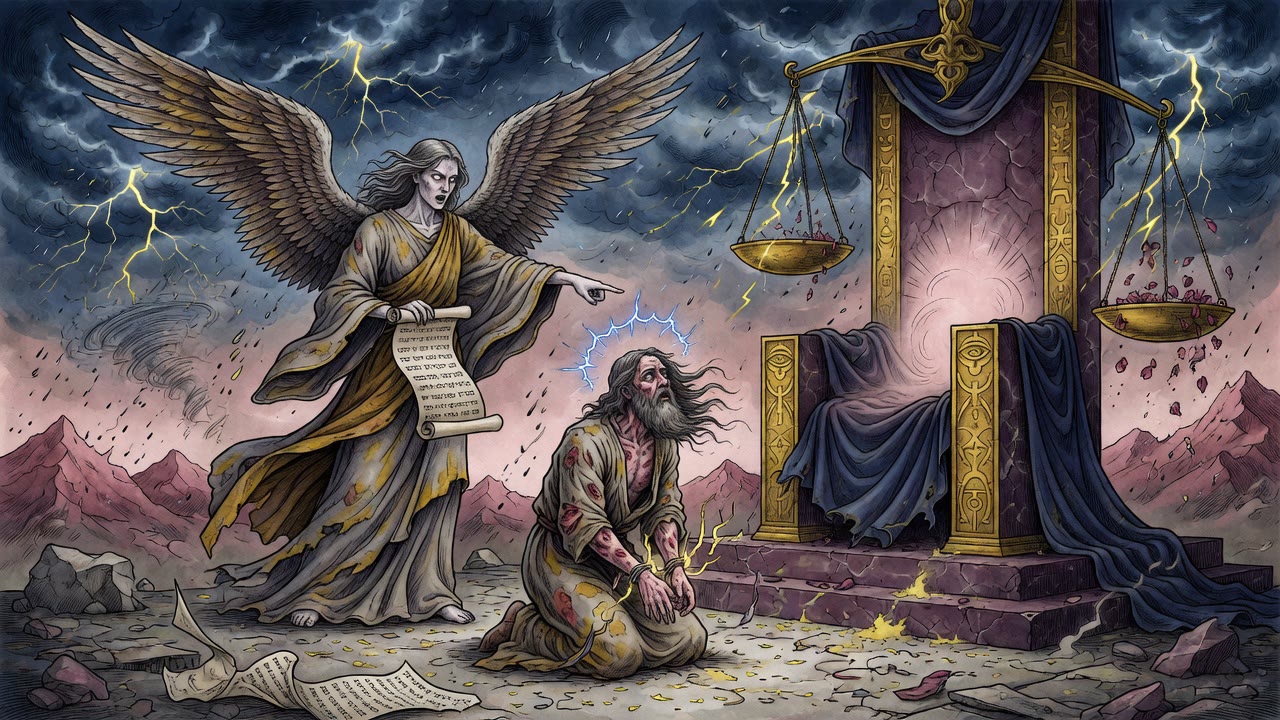
The words did not bargain. They let the court go. If perfect and wicked fall under the same blow, then judgment has no grammar, and a cry is only noise over emptiness. Job went further. He told the Lord of the world that ox and ass, Paradise and hell, righteous and wicked, all of it sat in one hand, and no one could hinder that hand.
His friends answered that the wicked could not roll their guilt onto God. They had been given Torah as a remedy. Job did not take the comfort. He sat. The ash stayed on his skin.
The Rock They Forgot at the Water
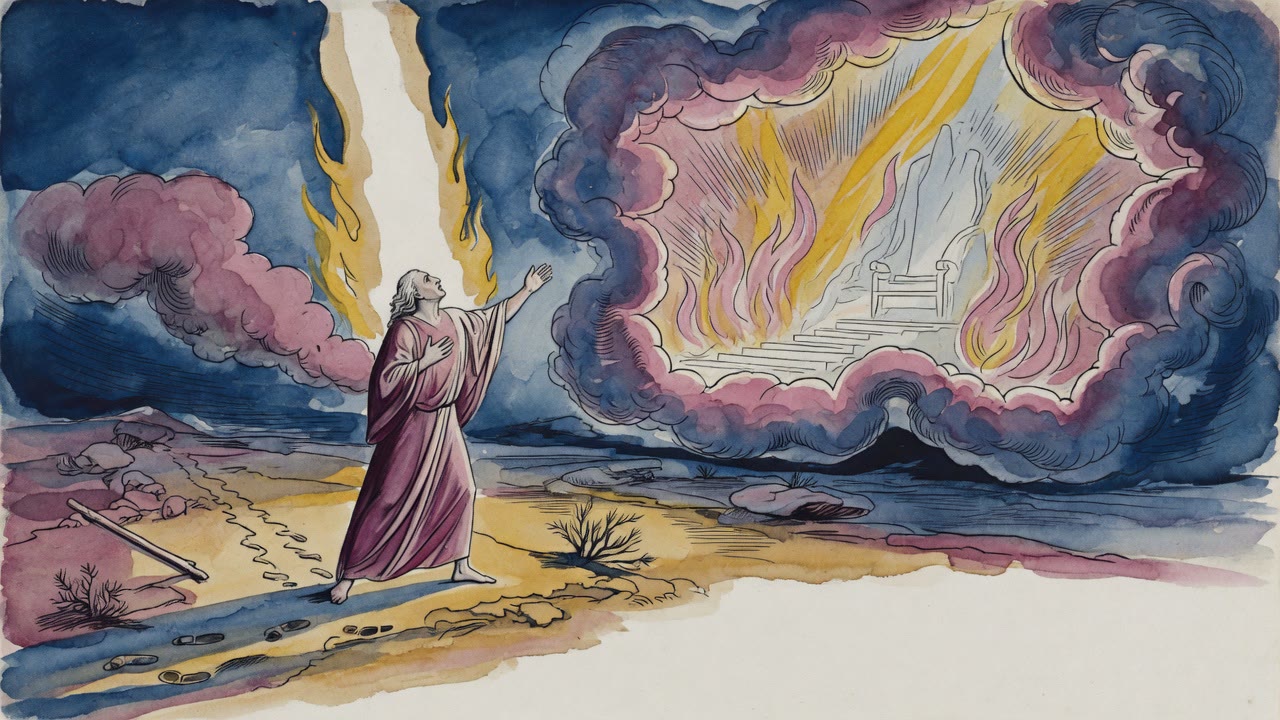
A later command sits in the bones of Israel. Look to the rock from which you were hewn, to Abraham your father and to Sarah who bore you. (Isaiah 51:1-2) A people under pressure can forget its stone. A man under pain can forget it too.
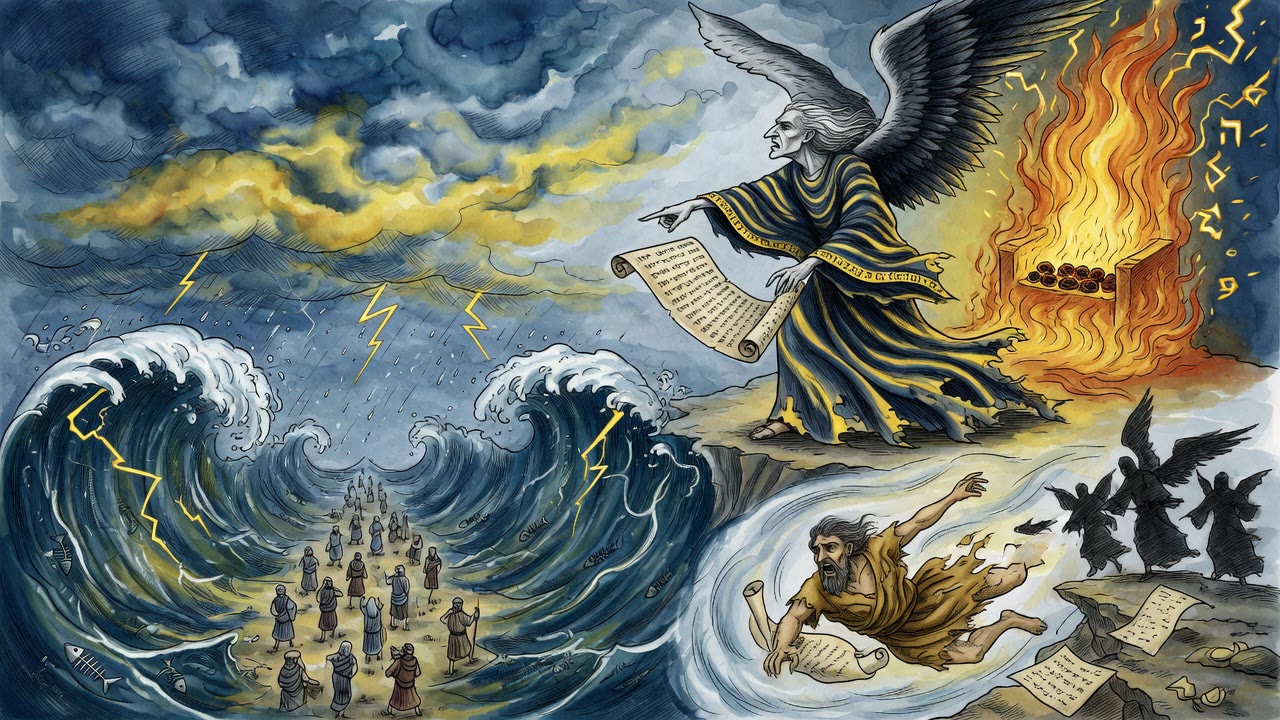
At the sea they sang, "This is my God," while the water still trembled from rescue. Soon afterward thirst cracked their voices. They asked why they had been brought from Egypt to die, they and their children and their livestock. (Exodus 17:3) The mouths that had praised now accused.
The Rock of their birth did not cease to be Rock. Human trust thinned until blessing met resistance where song had been. Gratitude can be brief. Fear has stamina.
The Calf After the Song
At Sinai they answered, "We will do and we will hear," while the mountain still smoked. Soon afterward gold took the shape of a calf, and mouths that had pledged loyalty called the statue the god that brought them up from Egypt. (Exodus 32:4)
Each reversal did something to the bond. Whenever Heaven moved to confer good, the people weakened the celestial power by forgetting the One who brought them forth. The mouth that sings at morning can accuse by afternoon.
When fire came to Sodom, Abraham was still standing in the dust with the number ten unfinished on his tongue. On the ash heap, Job's mouth was already full of the sentence that made the righteous and the wicked one dark line. Israel was told to look at the first of those two men, and keep looking, even when thirst and gold made the looking hard.
← All myths