4 min read

Jacob Said His Way Was Hidden and God Answered Back

Jacob told God his path had been forgotten. A tenth-century midrash answers the complaint the Torah left hanging for centuries.

Curated by Arthur · Told by Maggid ·
Table of Contents
  1. A Line That Should Not Be There
  2. Joseph Sold, Jacob Grieving
  3. What Levi Yitzchak Heard in the Verse
  4. Jacob Cannot Believe the News

A Line That Should Not Be There

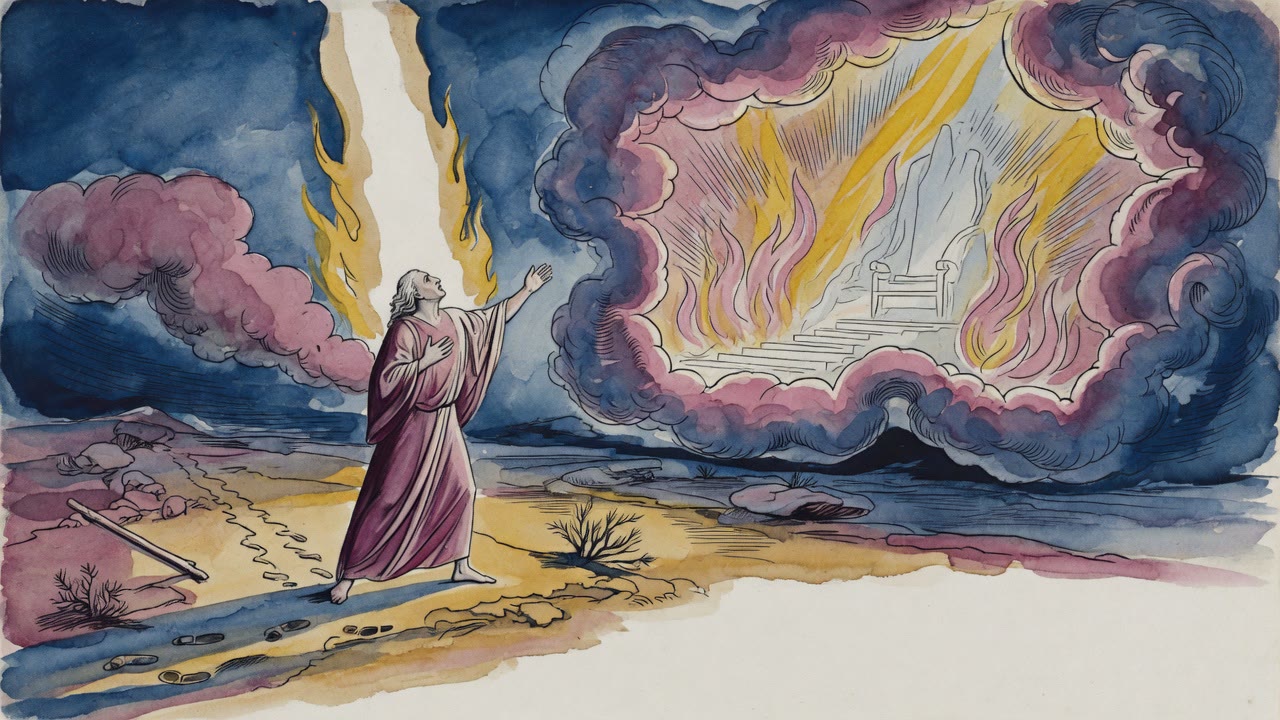
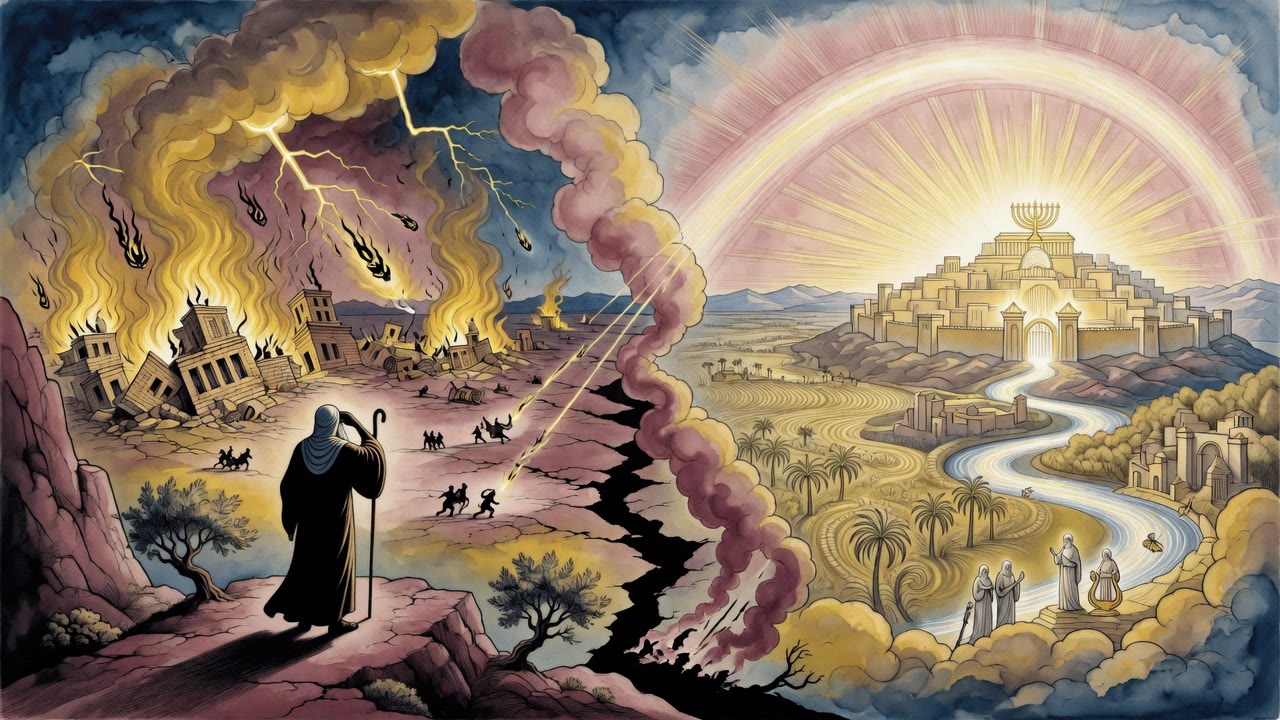
My way is hidden from the Lord, and my cause is passed over by my God (Isaiah 40:27). The verse is easy to skim as one more line among the long chapters of comfort in Isaiah. The rabbis stopped on it and could not move on. This was not an anonymous complaint. The word the rabbis fixed on was Jacob, the name embedded in the verse's address. Jacob had said this. The father of the twelve tribes, the man who had wrestled with an angel and refused to release him until he was blessed, had looked at his life and said: God has stopped looking at me.

The scandal was not the sentiment. Plenty of figures in the Hebrew Bible cried out that God had abandoned them. The scandal was who said it. This was the man the traditions in the Book of Jubilees, a second-century BCE Hebrew apocryphon retelling of Genesis in a priestly calendar, called the one at the center of the fathers. The rabbis believed Jacob needed an answer.

Joseph Sold, Jacob Grieving

The Jubilees material traces the moments that might have produced the complaint. Joseph's brothers had changed their minds about killing him and sold him instead to Ishmaelite merchants. The Book of Jubilees provides the chilling detail: they changed their minds, a casual notation about a decision that shattered their father's world. Jacob would spend years in grief over Joseph, certain the boy was dead, certain the wolves or the wilderness had taken him, with no way to learn otherwise.

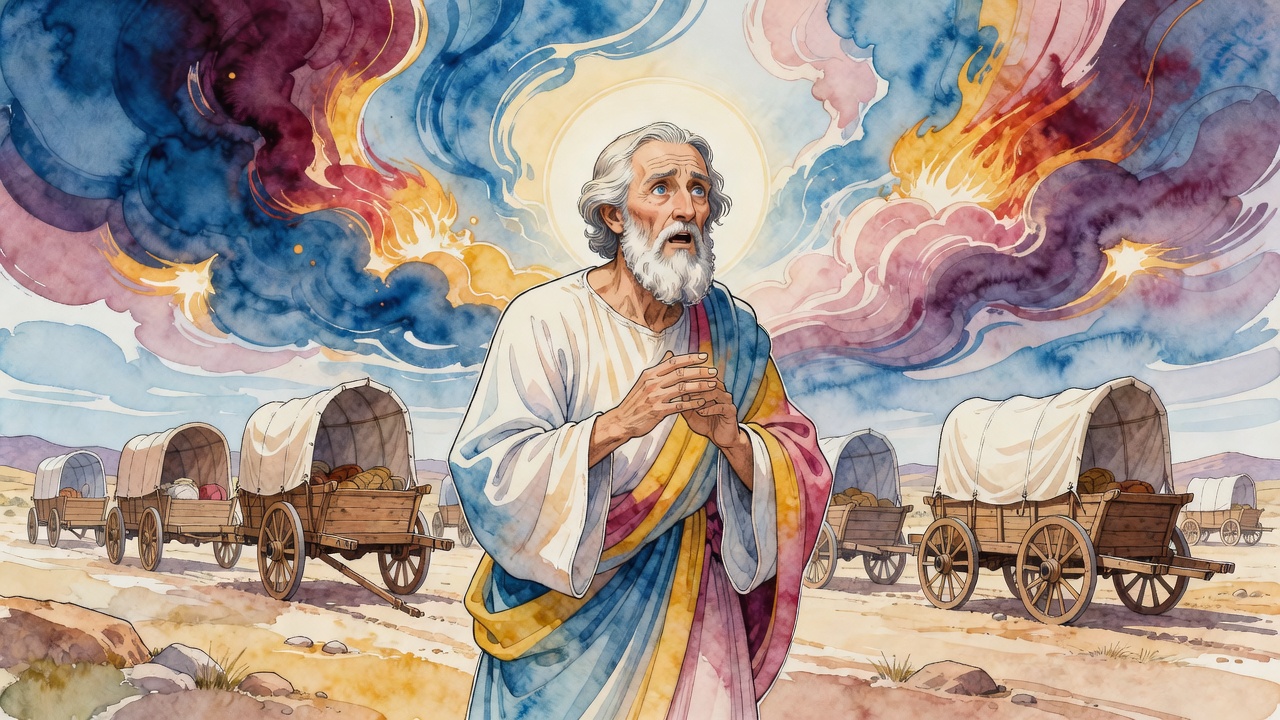
When the wagons finally came from Egypt, Joseph's wagons, sent as proof that the son was alive and in power, the text says the life of his spirit revived. It had not been alive before. The word the tradition reads there could mean spirit, breath, wind. Something that had stopped moving in Jacob started moving again when he saw those wagons.

What Levi Yitzchak Heard in the Verse

Rabbi Levi Yitzchak of Berditchev, the eighteenth-century Hasidic master, heard the same verse differently. He turned it toward Jacob's inner preparation. Jacob had just come from Beer Sheva, and Levi Yitzchak reads the departure as a moment of consecration, the vessel being made ready before the light enters. Every sacred act requires preparation. The ladder, the dream, the angel, the wrestling, all of it required a Jacob who had been shaped by what came before.

The complaint, my way is hidden, was not evidence that Jacob had been forgotten. It was evidence that he was in a phase of formation that looked, from the inside, like abandonment. The rabbis of Levi Yitzchak's school believed that what feels like hiddenness is often preparation, that the father who appears to have stopped watching is in fact watching most closely.

Jacob Cannot Believe the News

The Book of Jubilees returns Jacob to that moment when the news of Joseph arrived and says he was beside himself in his mind. He was in shock. Utter disbelief. The sons had returned from Egypt breathless with an impossible story, and Jacob could not hold it. Years of convinced grief had done something to his capacity to absorb good news.

The wagons changed him. The tangible proof, the physical objects sent by a living son who had authority over the wagons of Egypt, moved faster than language through his grief and reached him. His spirit revived. The rabbis who read this alongside Isaiah 40:27 were saying: the man who cried out that his way was hidden lived to see what was being prepared in the hiding. The complaint was true when it was said. The answer came later, and when it came, it arrived on wheels.


← All myths

From the tradition

Sources

3 sources

The texts this telling draws on, in full. Open a card to read inline, or expand it for a wider, quieter read.

Book of Jubilees 34:16Book of Jubilees

Book of Jubilees turns to Jacob, Joseph Among the Fathers.

So, where were we? Joseph's brothers, simmering with jealousy, had a change of heart. They almost killed him. But instead... they sold him. Sold him to Ishmaelite merchants. This, according to the Book of Jubilees, happened because they changed their minds. A chillingly casual detail.

These merchants then hauled Joseph down to Egypt, that ancient land of wonders and, in this case, sorrow. There, he was sold again, this time to Potiphar. Now, Potiphar's title is interesting: "the eunuch of Pharaoh, the chief of the cooks, priest of the city of ’Êlêw." Quite the resume. It paints a picture of a powerful figure, deeply embedded in Egyptian society and religious life. The Book of Jubilees is very specific in its details.

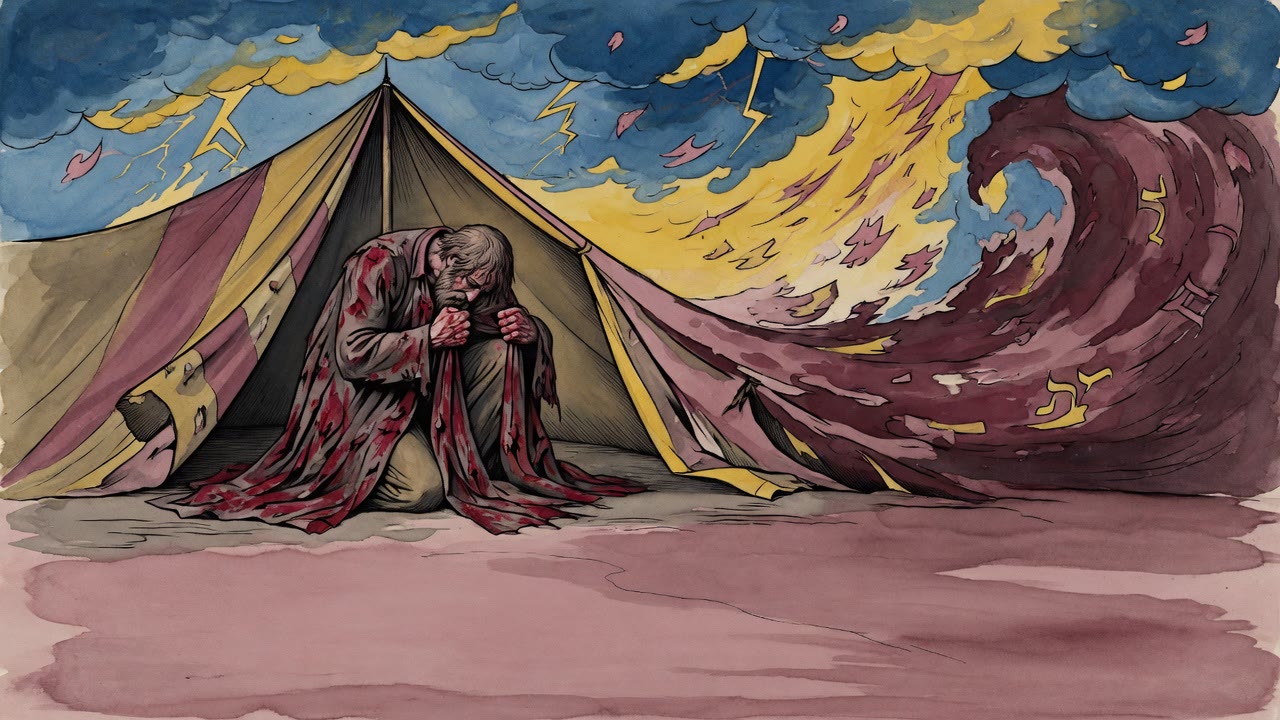
Then comes the really heartbreaking part. Joseph's brothers, those architects of deception, they weren't done yet. They slaughtered a young goat – a kid, as the text says. And they dipped Joseph's coat in its blood. Can you imagine? The image is visceral, brutal.

They then sent this bloodied coat to their father, Jacob, on the tenth day of the seventh month. This date might seem insignificant, but remember, in Jewish tradition, dates often carry symbolic weight.

The Book of Jubilees emphasizes the timing: Jacob received the coat in the evening. All that night, he mourned. The text says he became "feverish with mourning." – the physical manifestation of grief. He was convinced, utterly and completely, that Joseph had been devoured by a wild animal. "An evil beast hath devoured Joseph," he laments.

The tragedy here isn't just the loss of a son; it's the deliberate cruelty of the brothers, the calculated deception that ripped Jacob's world apart. It makes you wonder, doesn't it? How well do we really know those closest to us? And what lengths might someone go to out of envy and resentment?

The story of Joseph, as told in the Book of Jubilees, serves as a stark reminder of the devastating power of betrayal and the enduring strength – and vulnerability – of familial love. It's a human story, resonating across millennia.

Full source
Kedushat Levi, VayetzeiKedushat Levi (Rabbi Levi Yitzchak)

"Jacob left Beer Sheva" (Genesis 28:10). Rabbi Levi Yitzchak of Berditchev connects this verse to a surprising topic: Chanukah. The word Chanukah (חנוכה) derives from chinukh (חנוך), "consecration" or "education," and this concept illuminates Jacob's entire journey.

Just as the priests could not perform their sacred duties without first being consecrated through their garments (Exodus 29:33), and children must be trained in commandments before becoming bar or bat mitzvah, every sacred act requires preparation. The vessel must be made ready before it can hold the light.

Jacob had been contemplating the unity of God from the day he could think. He understood that the foundation of all creation was the Jewish people. As the Zohar teaches, "Israel arose in thought first" (Zohar I:24). The Jewish people are called even (אבן), "foundation stone," because the entire universe emerged from that origin. They are the root not only of humanity but of the celestial realms as well.

When Jacob lay down to sleep and dreamed of the ladder with angels ascending and descending (Genesis 28:12), he was witnessing the structure of reality itself. The angels going up represented the spiritual forces of the Land of Israel departing as he left. The angels coming down were the forces appointed over the lands outside Israel, preparing to accompany him into exile.

But the deeper meaning is about consecration. Jacob's journey away from Beer Sheva was itself a form of chinukh, a preparation for the spiritual work he would accomplish in Laban's house. Before you can elevate the sparks trapped in the lowest places, you must be trained. Before you can build a dwelling place for God in the darkness, you need the education of the ladder: seeing the full architecture of upper and lower worlds, understanding that God stands at the top of every descent, and knowing that even exile is a preparation for redemption.

Full source
Book of Jubilees 44:1Book of Jubilees

That’s where Jacob found himself when he heard the news – unbelievable news – that his beloved son, Joseph, was not only alive but thriving in Egypt.

Can you imagine the scene? His sons return from Egypt, breathless, with this impossible story. Years of grief, years of believing Joseph was dead, had taken their toll. The text from the Book of Jubilees tells us, "their father did not believe it, for he was beside himself in his mind." He was in shock. Utter disbelief.

Then… the wagons arrived.

These weren’t just any wagons; these were Joseph's wagons. Proof. Tangible evidence that his son was alive and powerful. "When he saw the wagons which Joseph had sent, the life of his spirit revived."

It's such a simple sentence, but packed with emotion. The Hebrew word for "spirit" here could also be translated as "breath" or "soul." Seeing those wagons wasn't just about verifying a fact; it was about Jacob's very life force being renewed. It was like he was being brought back from the brink.

And then comes that beautiful, simple statement: "It is enough for me if Joseph liveth; I will go down and see him before I die."

All the years of hardship, the pain of loss… suddenly, none of that mattered as much. Joseph was alive. That was enough. He had to see him. Before it was too late.

So, Israel, another name for Jacob, prepared for his journey. Jubilees gives us specific details: "And Israel took his journey from Haran from his house on the new moon of the third month." This is interesting. The “new moon of the third month" refers to the month of Sivan on the Hebrew calendar, the same month that Shavuot (the festival celebrating the giving of the Torah) occurs. The text continues, "and he went on the way of the Well of the Oath." The Well of the Oath refers to Be'er Sheva, a place loaded with ancestral significance; it's where Abraham made a covenant.

And what's the first thing he does? He offers a sacrifice. Jubilees specifies: "and he offered a sacrifice to the God of his father Isaac on the seventh of this month." He goes to God. He acknowledges the divine hand in this miraculous turn of events. It's a moment of gratitude, of rededication. He is returning to the land promised to his forefathers.

What does this short passage from Jubilees tell us? It speaks to the enduring power of hope, the resilience of the human spirit, and the importance of family bonds. It's a reminder that even in the darkest of times, joy and renewal are possible. And sometimes, all it takes is a wagonload of hope to rekindle the flame within us.

Full source