6 min read

Jacob Could Not Stop Mourning and the Rabbis Knew Why

Jacob sees the bloody coat and refuses to be comforted. Twenty-two years later the refusal still holds. The rabbis explain why.

Curated by Arthur · Told by Maggid ·
Table of Contents
  1. The Coat and the Moment Everything Changed
  2. Why He Could Not Stop
  3. Twenty-Two Years
  4. The Book of Jubilees and the Shock of Reunion
  5. What He Said to His Sons

The Coat and the Moment Everything Changed

Jacob had been anxious for days. He had sent Joseph to check on his brothers at Shechem and then word stopped. He sent a slave racing to find out what had happened. Too much time had passed.

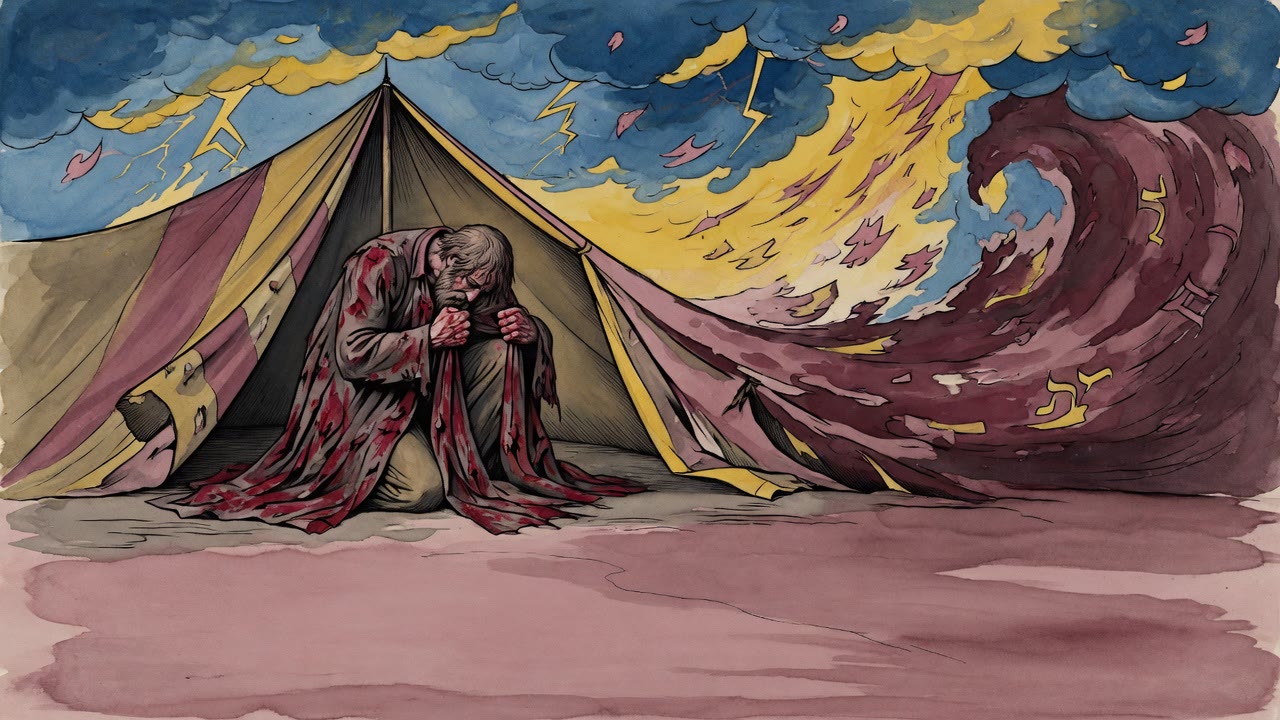
When the brothers came home, they were not carrying their brother. They were carrying a coat dipped in goat's blood that they had torn and stained and aged until it looked like what they needed it to look like. They showed it to Jacob without speaking, the most devastating form of delivery possible: here is this, what do you make of it.

Jacob made exactly what they intended him to make of it. He said: it is my son's coat. A wild beast has devoured him. Joseph is without doubt torn in pieces. He tore his own clothes. He put on sackcloth. He mourned his son.

Why He Could Not Stop

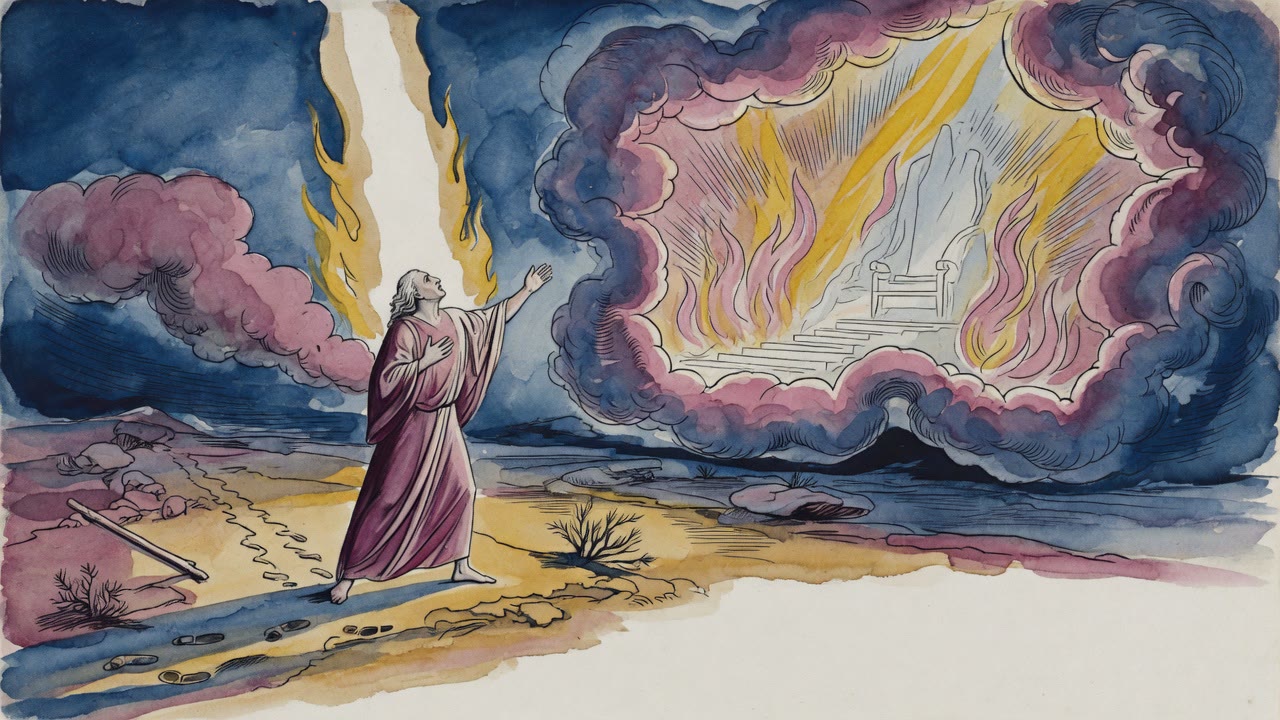
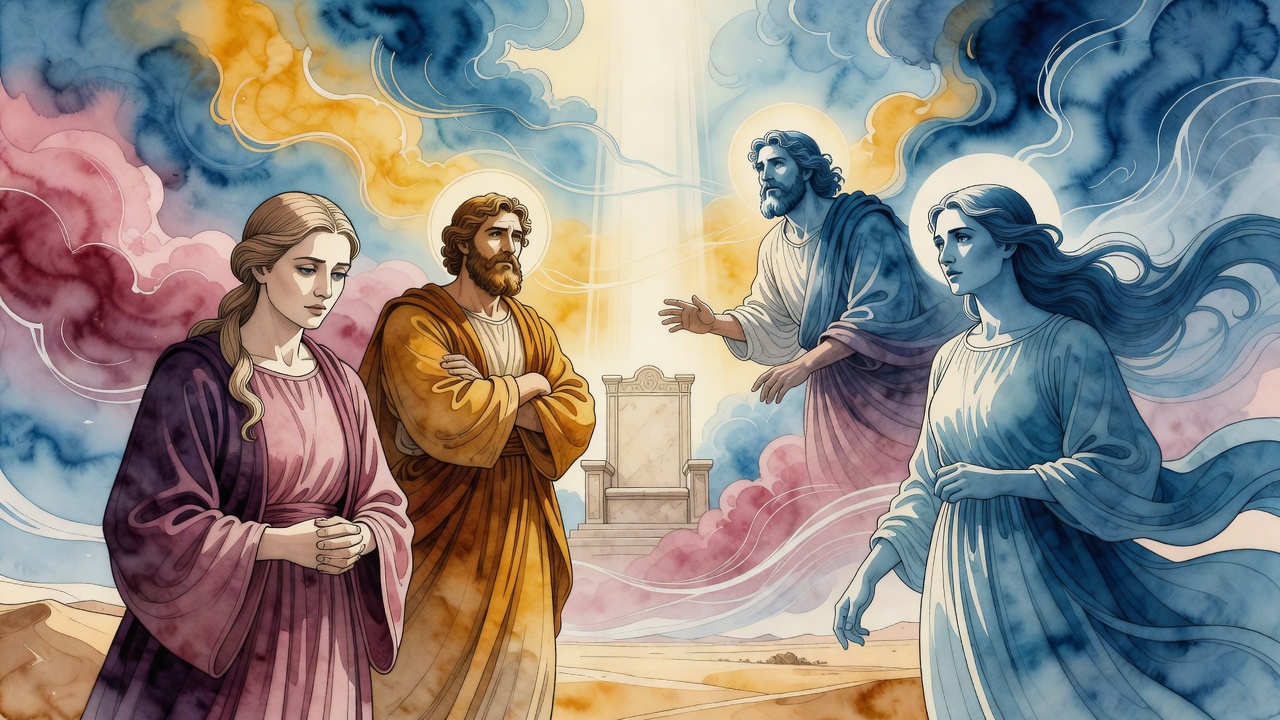
His children and grandchildren came to comfort him. They gathered around him and tried to soften it. He refused. He said: I will go down to my son mourning into Sheol. He would not be consoled. He wept. He kept weeping.

The sages asked why. Not as a psychological question but as a theological one: why does the Torah say he could not be comforted? What does it mean that all the ritual comfort offered by his family made no difference?

The answer the tradition gave was precise. The dead can be forgotten. Grief for the dead, however intense, eventually loosens its grip. Time works on it. But the living cannot be mourned into acceptance. Jacob's mourning did not diminish because Joseph was not dead. The father's heart had no mechanism for releasing a grief it was not supposed to have. At some level below rational thought, Jacob knew his son was alive. The mourning could not close because the loss had not actually happened.

Twenty-Two Years

Joseph had been sold at seventeen. He was thirty when Pharaoh lifted him out of prison. The years of plenty ran seven years. The famine began. Joseph was thirty-nine when his brothers came to Egypt for the first time. Jacob had been mourning for twenty-two years.

The number twenty-two was not random to the sages. They calculated it against another twenty-two. Jacob had been away from his father Isaac for twenty-two years while he lived with Laban in Padan-Aram. He had not been present to honor his father during those years. The grief he suffered for Joseph, the twenty-two years of it, was measure for measure: the same span of a son's absence he had caused his father, now returned to him as a father experiencing his own son's absence.

The accounting was exact. The rabbis were not making a case for cosmic cruelty. They were making a case for a universe in which nothing is lost or unrecorded, in which what a man does to his father comes back to him as a father.

The Book of Jubilees and the Shock of Reunion

The Book of Jubilees, retelling the Joseph story, stays with Jacob through the famine and into the moment his sons return from Egypt with the news that Joseph is alive. His sons came back breathless with the impossible information. Jacob's response was not joy. His response was disbelief so complete it resembled illness.

He was beside himself in his mind. He could not take in what he was being told. Twenty-two years of grief had restructured him around the certainty of Joseph's death. The news that Joseph was alive in Egypt as second to Pharaoh was not something he could absorb in language. He had no category for it.

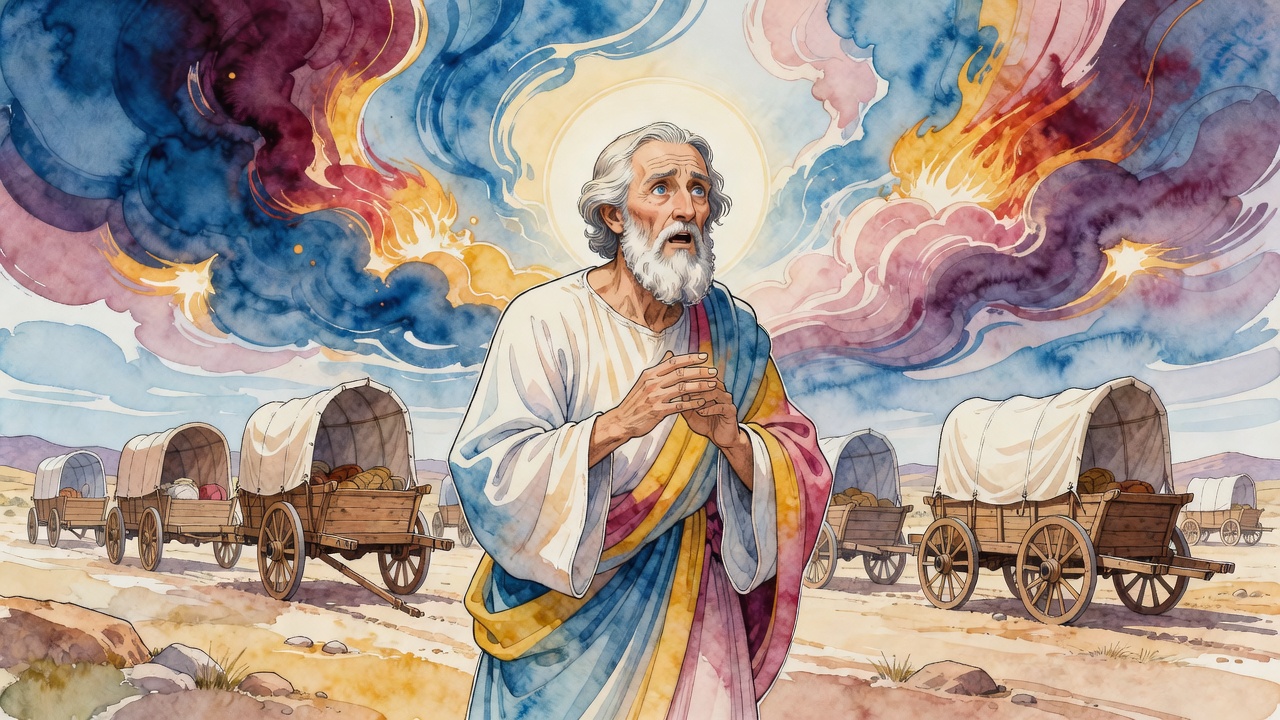
Then the wagons arrived. Joseph had sent wagons to carry his father down to Egypt. And the spirit of Jacob revived. The physical evidence moved something the words could not reach: here were the wagons, here was the proof of a living son's provision, here was the material reality of what his children were telling him. He believed it because he could touch it.

What He Said to His Sons

The Book of Jubilees records Jacob's reaction in a specific direction. He did not start immediately preparing for the journey. He stood in the shock of what was being returned to him and understood something about what the years had contained. He said: it is enough. Joseph my son is yet alive. I will go and see him before I die.

The tradition around this reunion is dense with what was not said between the father and the son when they finally met. Jacob fell on Joseph's neck and wept for a long time. Joseph wept on his father. The text does not record a single word of dialogue in that embrace. The sages noted this: some reunions are too large for language. Some things that happen between people have to happen in silence because they have been going on for twenty-two years and the words available are not large enough.


← All myths

From the tradition

Sources

8 sources

The texts this telling draws on, in full. Open a card to read inline, or expand it for a wider, quieter read.

Legends of the Jews 1:47Legends of the Jews

Jacob, anxious and yearning for news of his sons and the flock, sends Joseph out to check on them. Time passes. Too much time. A knot of unease tightens in Jacob’s stomach. He can't shake the feeling that something is terribly wrong.

So, in a flurry of worry, Jacob sends a slave racing to his sons. He needs to know, he has to know, what's happening. The tension must have been unbearable.

Finally, they arrive. But not with good news. Not at all. Can you picture the scene? The sons, returning to their father in the evening light. Their clothes are torn, ripped in grief or… something else? Dust coats their hair, a visible sign of mourning, or perhaps, of guilt. They’re a picture of devastation.

Jacob’s heart leaps with dread. And then they confirm his worst fears. They tell him what Naphtali had already hinted at. They tell him... about the coat.

As the narrative unfolds in Legends of the Jews, we see Jacob completely undone. “It is my son's coat; an evil beast hath devoured him; Joseph is without doubt torn in pieces," he cries out. The words are raw, visceral. He’s inconsolable. He replays the last moments in his mind, torturing himself with the "what ifs." "I sent him to you to see whether it was well with you, and well with the flock. He went to do my errand, and while I thought him to be with you, the misfortune befell."

Think about the crushing weight of those words. The errand. The trust. The unbearable thought of his son, alone and vulnerable.

And then comes the sons' reply. Cold. Calculating? "He came to us not at all. Since we left thee, we have not set eyes on him." Did they avert their eyes? Did their voices waver? We can only imagine the subtle cues that might have hinted at the deception.

The story leaves us hanging, doesn’t it? With a father's grief, a son's supposed demise, and a lingering question mark hanging over the brothers' story. It’s a stark reminder of how easily trust can be broken, and the devastating consequences that can follow. And perhaps, a seed of doubt planted… is everything as it seems?

Full source
Legends of the Jews 1:15Legends of the Jews

The tale begins simply enough. Jacob's sons, Joseph's brothers – remember, the ones who definitely weren't Joseph's biggest fans – were pasturing their father's flocks near Shechem. They were gone a long time. Too long. Jacob, a good father and a practical man, began to worry. He wasn't just concerned about his sons; he also needed to know about the flocks. After all, as the text reminds us, it's our duty to care for the things from which we derive benefit.

So, Jacob decides to send Joseph to check on them.

Jacob knew there was animosity between Joseph and his brothers. He understood the potential danger. Yet, he still asked Joseph to go. Why?

Perhaps he hoped that Joseph, being his favorite, could smooth things over. Maybe he underestimated the depth of the brothers' hatred. Or perhaps, he simply felt he had no other choice. He needed to know what was happening.

And what about Joseph? He knew his brothers resented him. He was likely aware of the risks. But "in filial reverence," as Ginzberg phrases it in Legends of the Jews, Joseph readily agreed to go. "Here am I," he declared, a phrase that echoes throughout Jewish tradition as a sign of complete dedication and willingness to serve.

It's a poignant moment, charged with unspoken tension. Joseph's eagerness, his unquestioning obedience, is both admirable and heartbreaking.

But here's the kicker. Later, Jacob would be haunted by this moment. Every time he remembered Joseph's willing spirit, the memory would stab him in the heart. "Thou didst know the hatred of thy brethren," he would lament, "and yet thou didst say, Here am I."

Imagine that. The crushing weight of regret, the agonizing awareness that you sent your beloved son into a potentially dangerous situation, and he went willingly, out of love and respect for you.

This short passage is a masterclass in foreshadowing. It lays the groundwork for the tragedy to come, hinting at the betrayal and heartbreak that await both Jacob and Joseph. It also highlights the complex dynamics within the family – the love, the jealousy, the duty, and the regret.

It leaves you wondering: could Jacob have done anything differently? Was Joseph's fate sealed the moment he said, "Here am I?" And what does this story teach us about the burdens of parenthood, the complexities of family relationships, and the enduring power of regret?

Full source
Book of Jubilees 34:16Book of Jubilees

Book of Jubilees turns to Jacob, Joseph Among the Fathers.

So, where were we? Joseph's brothers, simmering with jealousy, had a change of heart. They almost killed him. But instead... they sold him. Sold him to Ishmaelite merchants. This, according to the Book of Jubilees, happened because they changed their minds. A chillingly casual detail.

These merchants then hauled Joseph down to Egypt, that ancient land of wonders and, in this case, sorrow. There, he was sold again, this time to Potiphar. Now, Potiphar's title is interesting: "the eunuch of Pharaoh, the chief of the cooks, priest of the city of ’Êlêw." Quite the resume. It paints a picture of a powerful figure, deeply embedded in Egyptian society and religious life. The Book of Jubilees is very specific in its details.

Then comes the really heartbreaking part. Joseph's brothers, those architects of deception, they weren't done yet. They slaughtered a young goat – a kid, as the text says. And they dipped Joseph's coat in its blood. Can you imagine? The image is visceral, brutal.

They then sent this bloodied coat to their father, Jacob, on the tenth day of the seventh month. This date might seem insignificant, but remember, in Jewish tradition, dates often carry symbolic weight.

The Book of Jubilees emphasizes the timing: Jacob received the coat in the evening. All that night, he mourned. The text says he became "feverish with mourning." – the physical manifestation of grief. He was convinced, utterly and completely, that Joseph had been devoured by a wild animal. "An evil beast hath devoured Joseph," he laments.

The tragedy here isn't just the loss of a son; it's the deliberate cruelty of the brothers, the calculated deception that ripped Jacob's world apart. It makes you wonder, doesn't it? How well do we really know those closest to us? And what lengths might someone go to out of envy and resentment?

The story of Joseph, as told in the Book of Jubilees, serves as a stark reminder of the devastating power of betrayal and the enduring strength – and vulnerability – of familial love. It's a human story, resonating across millennia.

Full source
Legends of the Jews 1:48Legends of the Jews

Legends of the Jews turns to Joseph, Jacob and the Patriarchs.

It's a story of parental love, devastating loss, and the struggle to find meaning in the face of unimaginable pain.

After seeing Joseph’s blood-soaked coat, Jacob, the father of the twelve tribes, could no longer deny the horrific truth: his beloved son was gone, torn apart by wild beasts. Can you imagine the wave of agony that must have crashed over him? It wasn't just sadness; it was a profound sense of responsibility, a searing guilt. "O my son Joseph, my son," he cries out, "I sent thee to inquire after the welfare of thy brethren, and now thou art torn by wild beasts. It is my fault that this evil chance hath come upon thee."

His lament is a torrent of grief, a desperate plea echoing in the wilderness. He remembers the sweetness of Joseph's life, now contrasted with the bitterness of his death. He's not just mourning the loss of a son; he's mourning the loss of a future, the shattering of a dream. "How sweet was thy life to me, and how bitter is thy death! Would God I had died for thee, O Joseph, my son, for now I am distressed on thy account." The raw pain is palpable.

He even calls out to Joseph's spirit, as if hoping against hope for a connection beyond the veil of death. "O Joseph, my son, where art thou, and where is thy soul? Arise, arise from thy place, and look upon my grief for thee. Come and count the tears that roll down my cheeks, and bring the tale of them before God, that His wrath be turned away from me." It's a primal expression of anguish, a desire to somehow undo the irreversible.

His grief is so all-encompassing that he believes no one has ever suffered such a death. "O Joseph, my son, how painful and appalling was thy death! None hath died a death like thine since the world doth stand." In his sorrow, he sees his own sins as the cause, a common thread in moments of profound loss. It's a way of trying to make sense of the senseless, to find a reason in the chaos.

And then, amidst the despair, a glimmer of faith emerges. Jacob remembers that God, not he, is the ultimate creator, the giver of life. "It was not I that created thee, and formed thee. I gave thee neither spirit nor soul, but God created thee. He formed thy bones, covered them with flesh, breathed the breath of life into thy nostrils, and then gave thee unto me."

This realization, this surrender to a higher power, is a turning point, however small. "And God who gave thee unto me, He hath taken thee from me, and from Him hath this dispensation come upon me. What the Lord doeth is well done!" It's not a complete acceptance, not a joyful embrace, but a fragile acknowledgement that even in the midst of unimaginable suffering, there is a divine hand at work.

The passage concludes with Jacob utterly overwhelmed, collapsing to the ground, prostrate and immovable. His grief is a physical burden, a weight too heavy to bear.

Jacob's lament is a powerful reminder of the depths of human emotion, the enduring bond between parent and child, and the struggle to reconcile faith with loss. It's a story that resonates because, in some way, we all experience loss. We all confront the question of how to go on when our world has been shattered. It's in these moments that we, like Jacob, are forced to confront our own mortality and to search for meaning in the face of the unknown. Where do we find solace? Where do we find strength to keep going? And how do we honor the memories of those we've lost? These are questions that echo long after the story ends.

Full source
Book of Jubilees 44:1Book of Jubilees

That’s where Jacob found himself when he heard the news – unbelievable news – that his beloved son, Joseph, was not only alive but thriving in Egypt.

Can you imagine the scene? His sons return from Egypt, breathless, with this impossible story. Years of grief, years of believing Joseph was dead, had taken their toll. The text from the Book of Jubilees tells us, "their father did not believe it, for he was beside himself in his mind." He was in shock. Utter disbelief.

Then… the wagons arrived.

These weren’t just any wagons; these were Joseph's wagons. Proof. Tangible evidence that his son was alive and powerful. "When he saw the wagons which Joseph had sent, the life of his spirit revived."

It's such a simple sentence, but packed with emotion. The Hebrew word for "spirit" here could also be translated as "breath" or "soul." Seeing those wagons wasn't just about verifying a fact; it was about Jacob's very life force being renewed. It was like he was being brought back from the brink.

And then comes that beautiful, simple statement: "It is enough for me if Joseph liveth; I will go down and see him before I die."

All the years of hardship, the pain of loss… suddenly, none of that mattered as much. Joseph was alive. That was enough. He had to see him. Before it was too late.

So, Israel, another name for Jacob, prepared for his journey. Jubilees gives us specific details: "And Israel took his journey from Haran from his house on the new moon of the third month." This is interesting. The “new moon of the third month" refers to the month of Sivan on the Hebrew calendar, the same month that Shavuot (the festival celebrating the giving of the Torah) occurs. The text continues, "and he went on the way of the Well of the Oath." The Well of the Oath refers to Be'er Sheva, a place loaded with ancestral significance; it's where Abraham made a covenant.

And what's the first thing he does? He offers a sacrifice. Jubilees specifies: "and he offered a sacrifice to the God of his father Isaac on the seventh of this month." He goes to God. He acknowledges the divine hand in this miraculous turn of events. It's a moment of gratitude, of rededication. He is returning to the land promised to his forefathers.

What does this short passage from Jubilees tell us? It speaks to the enduring power of hope, the resilience of the human spirit, and the importance of family bonds. It's a reminder that even in the darkest of times, joy and renewal are possible. And sometimes, all it takes is a wagonload of hope to rekindle the flame within us.

Full source
Yalkut Shimoni on Torah 143:1Yalkut Shimoni on Torah

"And he recognized it and said, It is my son's tunic" (Genesis 37:33). He said: I do not know what I am seeing. "A wild beast has devoured him" the Holy Spirit flickered within him this is the wife of Potiphar. Another interpretation: this is Judah, for it says "a wild beast," and a wild beast means none other than a lion, as it is written, "Judah is a lion's whelp" (Genesis 49:9).

"And Jacob tore his garments" (Genesis 37:34). The tribes caused their father to tear; where was it repaid to them? In Egypt: "and they tore their garments" (Genesis 44:13). Joseph caused it, and so forth. Manasseh caused the tribes to tear, therefore his inheritance was torn in two, half across the Jordan and half in the land of Canaan. Benjamin caused the tribes to tear; where was it repaid to him? In Shushan the capital: "and Mordecai tore his garments" (Esther 4:1).

"And he put sackcloth on his loins." Because Jacob took hold of sackcloth, it never departed from his sons and his sons' sons until the end of all generations: David, as it says, "and David and the elders, covered in sackcloth" (1 Chronicles 21:16); Ahab, "and he put sackcloth on his flesh" (1 Kings 21:27); Joram, "and the people saw, and behold, the sackcloth was on his flesh within"; Mordecai, "and he put on sackcloth and ashes" (Esther 4:1).

"And he mourned for his son many days." These are twenty-two years. "And all his sons and all his daughters rose to comfort him" (Genesis 37:35). Rabbi Yehudah says: The tribes married their sisters; this is what is written, "and all his sons," and so forth. Rabbi Nehemiah says: They were Canaanite women. Rav Nachman said, concerning Rabbi Yehudah's view, "and all his daughters" how many daughters did he have? He had but one, and would that he had buried her. Rather, a man does not refrain from calling his son-in-law his son and his daughter-in-law his daughter.

"And he refused to be comforted." A noblewoman asked Rabbi Yose: It is written, "for Judah prevailed over his brothers" (1 Chronicles 5:2), and it is written, "and Judah was comforted" (Genesis 38:12); yet this man, the father of them all, his impulse overpowered him, and he refused to be comforted? He said to her: One accepts comfort for the dead but not for the living. A certain heretic asked our master: Is it possible that the dead live? Your forefathers do not concede it, yet you do. What is written of Jacob? "And he refused to be comforted." Had he known the dead live, would he have refused to be comforted? He said to him: Fool, it was precisely because he knew by the Holy Spirit that Joseph was alive that he refused, for one does not accept comfort for the living.

Full source
Legends of the Jews 1:55Legends of the Jews

Jewish tradition understands this deeply, acknowledging that while time can heal the wound of death, the absence of someone vanished, someone still living, leaves a different kind of ache.

This is the heart of Jacob's story after Joseph's supposed death. While his sons presented him with the bloody coat, a flimsy tale of a wild animal, Jacob's heart refused to accept it completely. A seed of doubt, of hope, stubbornly clung to life within him. The Torah tells us of Jacob's immense grief (Genesis 37:34-35), but the Legends of the Jews, drawing from various Midrashic (rabbinic interpretive commentary) sources, gives us a glimpse into the depths of his intuition.

As Ginzberg retells it in Legends of the Jews, Jacob’s intuition, his refusal to be fully consoled, made him suspicious. He couldn't shake the feeling that Joseph was still alive. And then, something remarkable happened.

Jacob went up into the mountains. Imagine him there, amongst the rocks and wind, driven by a father's desperate hope. He hewed twelve stones from the quarry, each representing one of his sons. On each stone, he inscribed not just the son’s name, but also their corresponding constellation and the month associated with that constellation. Think of it: "Reuben, Taleh (Ram), Nisan," and so on for each of his twelve sons.

Then, he put them to the test. He addressed the stones, commanding them to bow down before the one marked with Reuben's name, constellation, and month. And… nothing. The stone remained stubbornly upright. He tried again with the stone for Simon. Still nothing. He repeated the process for each of his sons, one by one. Impatience surely growing, heart pounding.

Until he reached the stone for Joseph.

"I command you to fall down before Joseph!" he declared.

And then, according to the legend, all the stones prostrated themselves! A collective bow, a silent acknowledgment.

But Jacob, ever the careful patriarch, wasn't convinced yet. He repeated the test with other objects – trees and sheaves of wheat. And each time, the result was the same. Whenever Joseph was invoked, the objects bowed down.

This wasn't just wishful thinking. This was something… more.

As the Zohar, the central text of Kabbalah, often emphasizes, the universe itself speaks in symbols and signs. Jacob, attuned to these subtle messages, couldn't ignore the overwhelming evidence before him. As we find in Midrash Rabbah (Genesis Rabbah 84:20), interpreting dreams and signs was a recognized form of divine communication. Jacob couldn't but feel that his suspicion was true. Joseph was alive.

What does this story tell us? It speaks to the power of a parent's intuition, the enduring strength of hope, and the belief that even in the face of overwhelming despair, miracles are possible. Perhaps it also reminds us to pay attention to the signs around us, the whispers of the universe that might just be guiding us toward the truth. And, maybe most importantly, to never give up on the ones we love.

Full source
Midrash Tanchuma Buber, Miketz 6:1Midrash Tanchuma Buber, Miketz

[And Jacob saw that there was grain in Egypt (Genesis 42:1).] This is what Scripture says: "He who commands the sun, and it does not rise, and seals up the stars" (Job 9:7). (Rather, it speaks of Jacob and of his sons, who were likened to them, as it is said, "And behold, the sun and the moon and eleven stars were bowing down to me.") Behold all the wisdom of Job! And who does not know that if the Holy One, blessed be He, were to say to the sun or to the stars that they should not shine, that they would not shine? As it is said, "He who commands the sun, and it does not rise." Rather, it is concerning Jacob and his sons that He speaks [who were likened to them, as it is said, "Behold, the sun and the moon and eleven stars were bowing down to me" (Genesis 37:9)]. "He who commands the sun, and it does not rise", for the twenty-two years that Joseph spent in Egypt apart from his father, the Holy Spirit was hidden from Jacob and from his sons. And he was not far from them, only a journey of four days or five days, yet they did not know that he was in Egypt. And before this, Jacob and his sons were great prophets. Do you wish to know? Once Joseph told them the dream, what does he say? "Shall we indeed come, I and your mother and your brothers?" And when he was sold, they did not know where he was. This is the meaning of "He who commands the sun, and it does not rise." Why so? So that the prophets should not become haughty. Therefore the Holy One, blessed be He, made known to them His power and showed them that they are nothing. And likewise you find concerning the greatest of the prophets, because he said, "And the matter that is too hard for you, [you shall bring to me]" (Deuteronomy 1:17). The Holy One, blessed be He, said to him: You are able to resolve a hard matter? By your life, I will show you! And when the case of the daughters of Zelophehad came before him, he began to find it difficult and did not know what to say, and he brought their case before the Lord, as it is said, "And Moses brought their case before the Lord" (Numbers 27:5). The Holy One, blessed be He, said to him: Did you not say, "The matter that is too hard for you"? Behold, what the women know, you do not know, as it is said, "The daughters of Zelophehad speak rightly" (ibid. 27:7), these judge better than you. And also Samuel, who was weighed against Moses and Aaron, because he said to Saul, "I am the seer" (I Samuel 9:19), the Holy One, blessed be He, said to him: You said, "I am the seer"? By your life, tomorrow I will show you whether you are a seer, as it is said, "Fill your horn with oil and go; [I will send you] to Jesse the Bethlehemite, for I have seen among his sons a king for Myself" (I Samuel 16:1). When he went, what is written? "And it came to pass, when they came, that he saw Eliab and said, Surely the Lord's anointed is before Him" (ibid. 16:6). The Holy One, blessed be He, said to him: Are you the one who said, "I am the seer"? "Do not look upon his appearance" (ibid. 16:7). And also Jacob [and his sons] were prophets and sages, and nothing was hidden from them; yet once Joseph was sold, they did not know about him until the Holy One, blessed be He, [wished it]. Therefore, "He who commands the sun, and it does not rise."

Full source