The Night Egypt Cried and Israel Went Silent
Moses walked out of the throne room burning. He had just told Pharaoh that the king's own servants would come and beg him to leave.
Table of Contents
 Click for full size
Moses Named the Hour and the Houses
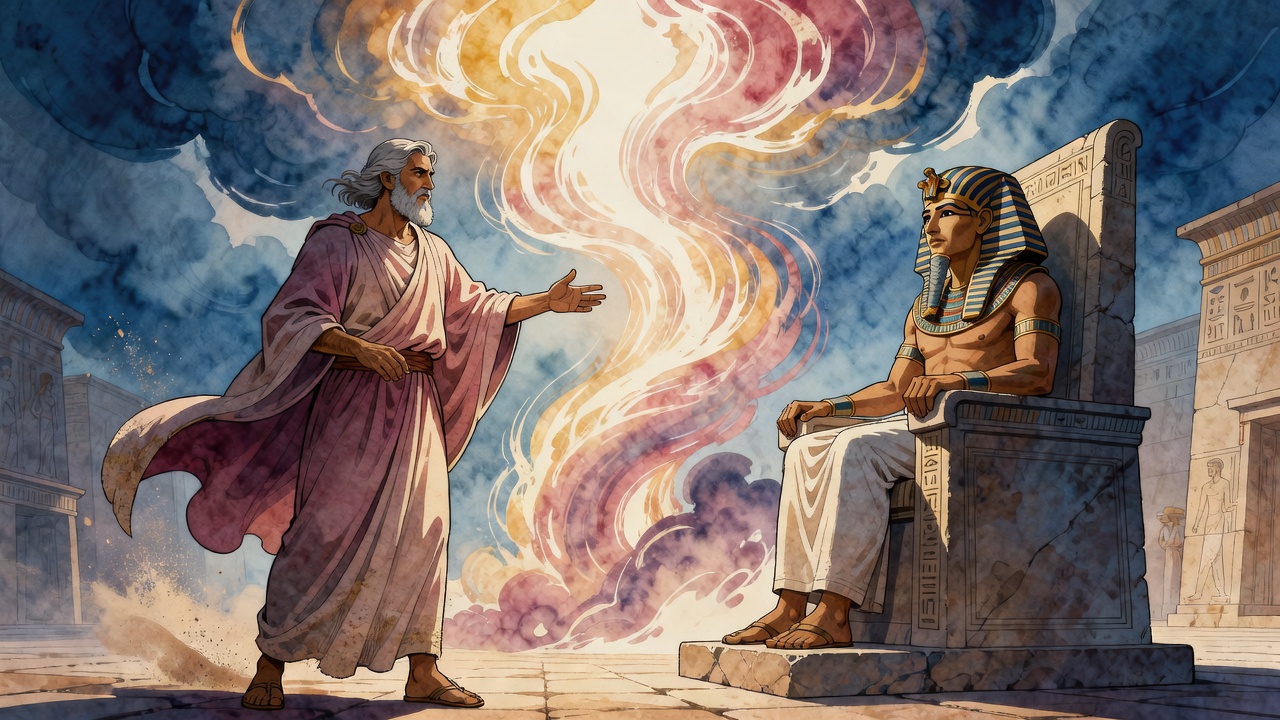
Moses stood in the throne room for the last time and told Pharaoh exactly what midnight was going to look like.
Every firstborn in the land of Egypt would die. He gave the range the way a man gives the boundaries of a field. From the firstborn of Pharaoh, the one who was going to sit on the throne of the kingdom, down to the firstborn son of the lowest servant woman in Egypt, the one who grinds behind the millstones in the dark. And all the firstborn of the cattle.
The heir and the girl at the mill. Nobody in the room could hear that list and pretend there was a rank high enough or low enough to get under it. Not the princes who owned the brickyards. Not the household that had a single Hebrew woman in it and thought that was hardly anything. Egypt had held Israel down as a country, so the blow was measured out to a country.
Your Own Servants Will Come Down and Beg
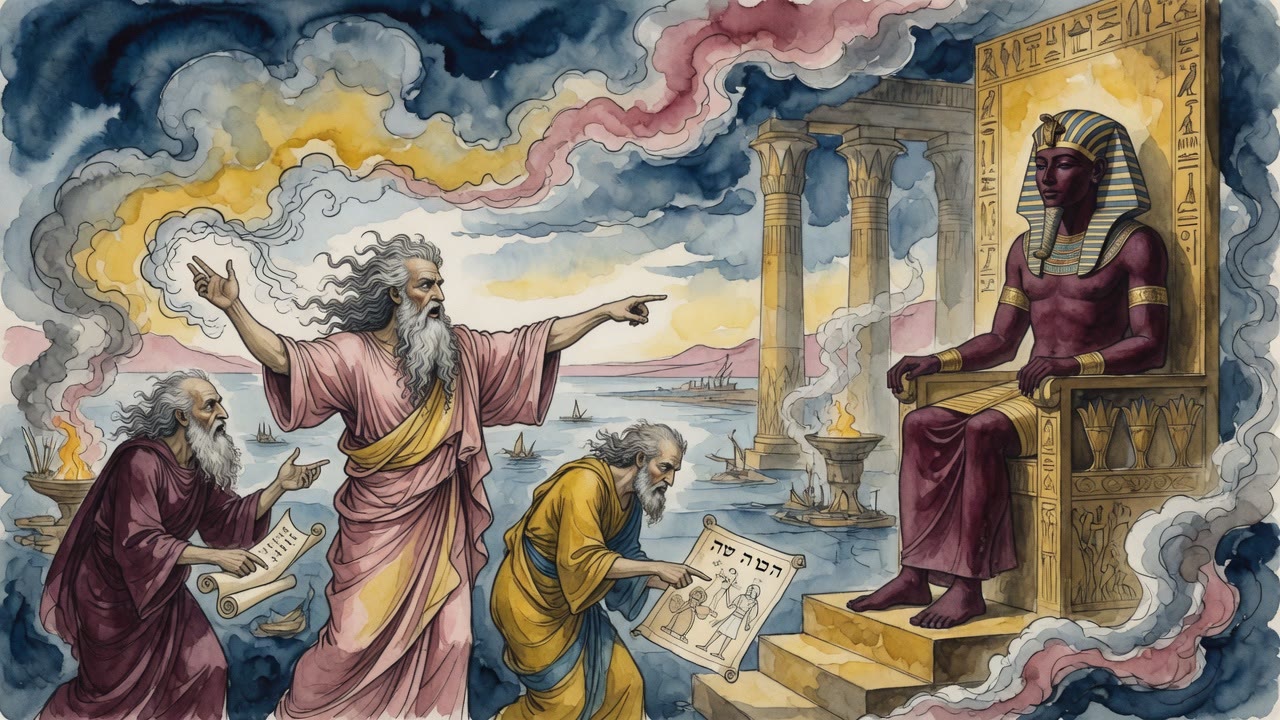
Then Moses told him something worse, and told it as a fact rather than a threat.
All these servants of yours will come down to me. They will bow in front of me. They will say, get out, you and all the people at your heels. And after that, Moses said, I will go.
Not before. After. The man who had spent months coming into this room to ask was announcing that the asking was over and the next request would be travelling the other way.
Then he turned around and walked out of Pharaoh's presence in great anger.
That is the man who once stood at a burning bush and argued that he was slow of speech and that God should please send somebody else. He had watched the king's face set harder after every plague, like metal cooling in a mold. He had run out of arguments and out of patience in the same hour, and he did not stay to be dismissed. He left burning, and the door of the palace shut behind him for good.
Midnight
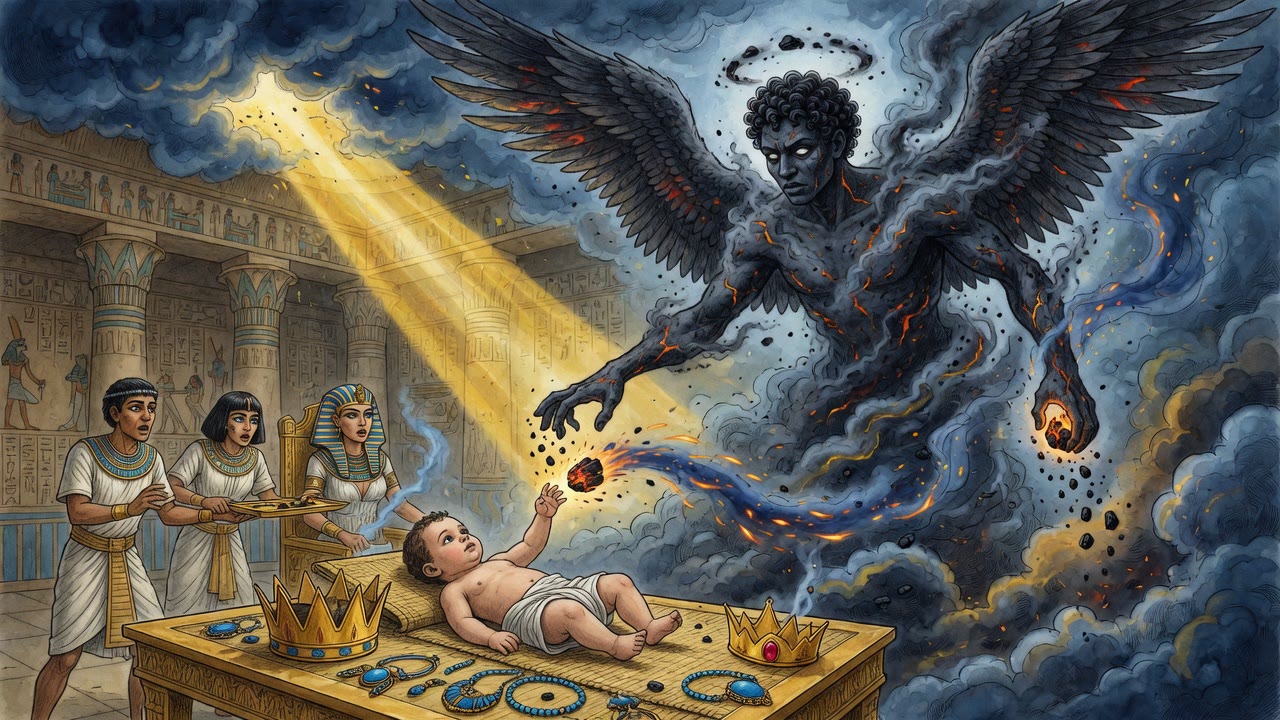
At midnight it fell.
There was not a house in Egypt without a dead body in it. The palace, the barracks, the mill, the byre. The sound went up everywhere at once, not spreading from street to street the way news travels, because it was not news. Every household found out in the same instant, in its own room, by touching somebody.
A great cry went up in all the land of Egypt, and there had never been a stroke like that night, and there never will be another one. Not merely that nothing so bad would happen again. That particular sound, an entire nation crying at the same moment of the same night, was struck once and will not be struck twice.
This was a country that had listened to Hebrew women for generations without hearing them. It had filled its own air with the noise of other people's grief and gone on eating. Now it found out what a whole people sounds like when they all cry together.
Not One Dog Moved Its Tongue
And in the Hebrew quarter, nothing.
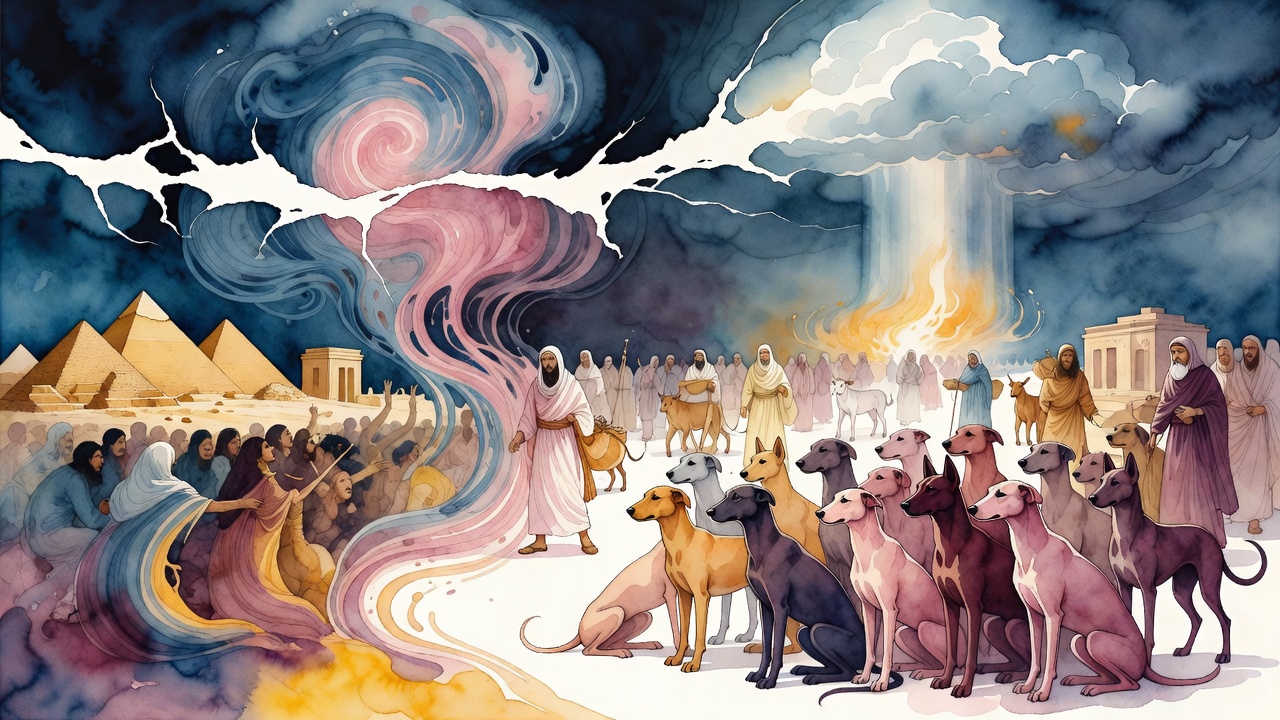
Six hundred thousand on foot besides the children were moving through the dark with bundles on their shoulders and unleavened dough on their backs, carrying sleeping infants, driving flocks, walking out of a country their great-grandparents had been born in. Egyptian dogs lived in those streets. They were not pets. They were scavengers and temple guards, and they barked at movement, at strangers, at the smell of fear, at running feet.
Not one of them lifted its tongue. Not against a man of Israel and not against an animal of Israel. The silence held for the whole crossing of the city, unnatural, arranged, laid over the departure like a hand.
Egypt is howling. Israel walks out through the noise and no dog marks them. And because the dogs kept their mouths shut on that night, they were paid for it afterward, which is why the carcass of a beast that died wrong gets thrown to the dogs and not sold.
They Came Down and Begged
Pharaoh got up in the night. He and his servants and all Egypt, and he sent for Moses and Aaron in the dark and said, get up, get out from among my people, you and the children of Israel, go and serve your Lord as you said. Take your flocks. Take your herds. Go.
His people crowded the Hebrews to hurry them out of the land, saying, we are all dead men.
Exactly as Moses had said in the throne room, and in the same order. The servants came down. They bowed. They begged. Only then did he go.
Israel stepped out between the cry and the silence, the country behind them screaming in every house and the road in front of them so quiet that not one animal in Egypt gave them away.
← All myths