Esau's Head Rolled into Isaac's Lap at Burial
Joseph walked as viceroy and son toward Machpelah. At the cave mouth a twin still wanted a plot. A head came to rest on a blind father's knees.
Table of Contents
 Click for full size
Seventy Days Until the Dust Rose
When Jacob died, Egypt did not shrug. Asenath brought the women of the land to weep. Egyptian men who had known the old Hebrew came day after day. Mourners arrived even from Canaan. Seventy days the grief held, longer than politics usually allows an immigrant shepherd.
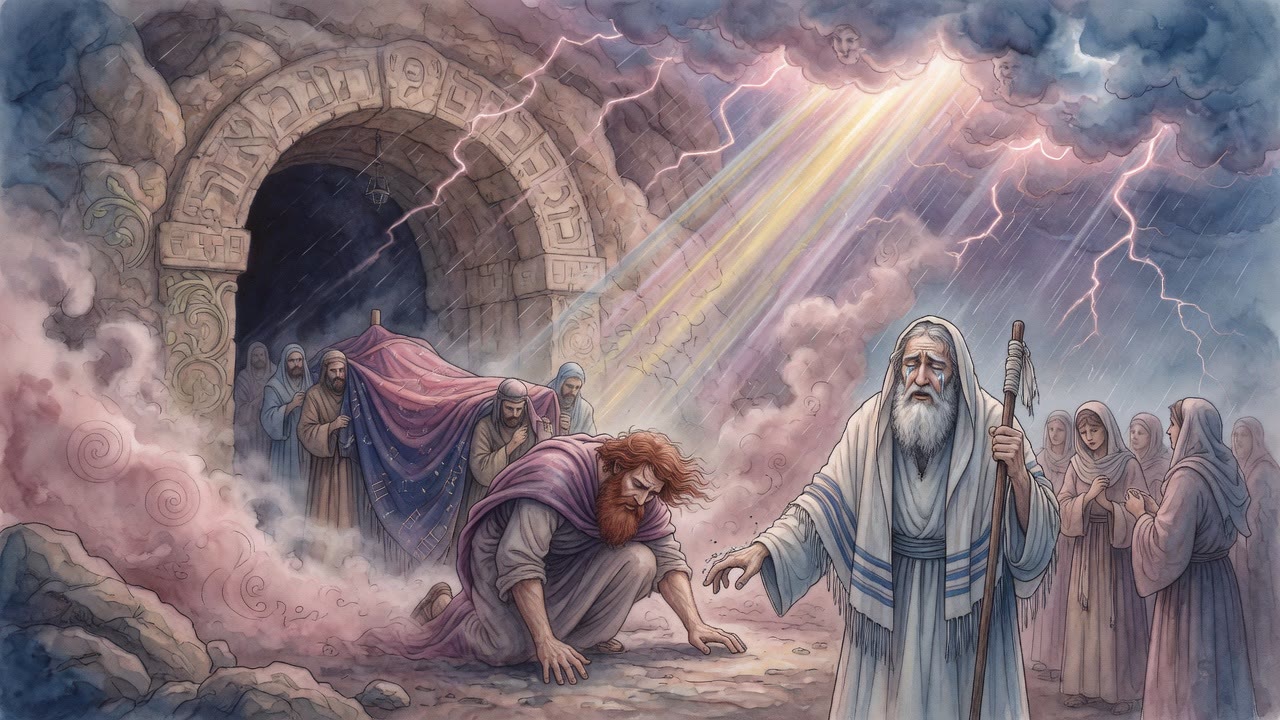
The sons of Jacob tore their garments and girded their loins with sackcloth. They threw themselves on the ground and strewed earth on their heads until the dust rose in a high cloud. The other brothers left the burial arrangements to Joseph. A king's hands on a father's body, they reasoned, would honor Jacob more than ordinary sons could.
The Shekhinah Walked With the Cortege
The cortege that finally moved toward Hebron was a river of officials and sorrow. It halted at the threshing floor of Atad, and there they lamented with a very great and sore lamentation. Joseph walked as both son and viceroy through every mile toward Machpelah.
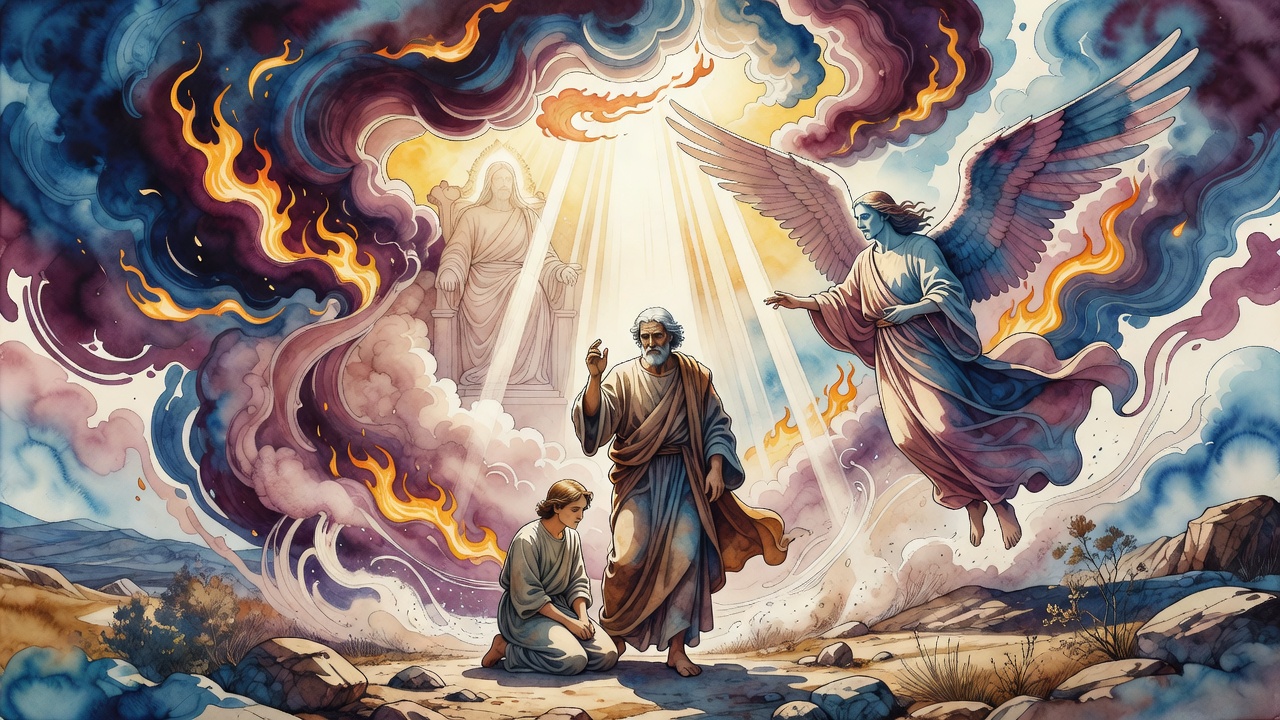
The Shekhinah (שכינה), God's presence among the people, went with them. That was the honor that outweighed the crowns. Canaanites who had meant to stay home watched the honors and changed their minds. They loosened their girdles and joined the grief of a man they had once filed under outsider.
Joseph still had to manage horses, permissions, and the politics of carrying bones through lands that preferred live tribute to dead patriarchs. Grief did not cancel the road. It only made the road a procession under a viceroy's seal.
Thirty-Six Crowns on the Bier
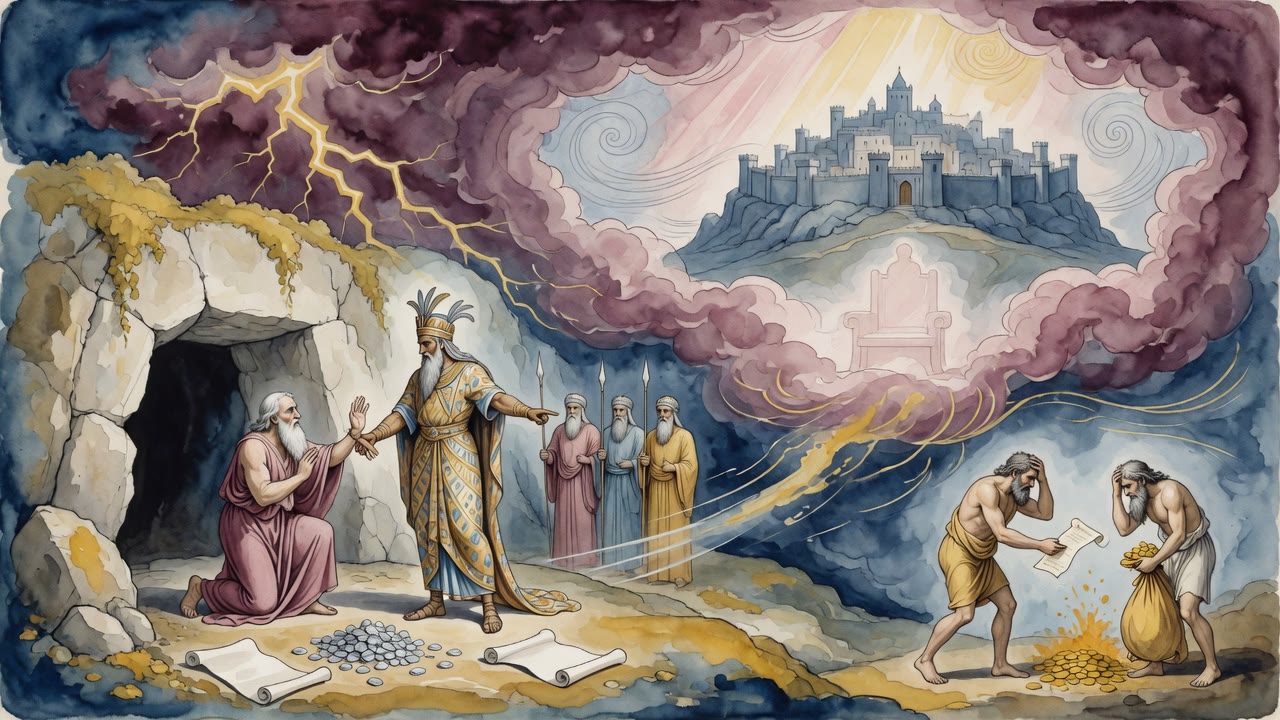
Kings lined the route. The sons of Esau, of Ishmael, and of Keturah appeared as well, and their first design was not mourning. They had come to seize the hour and make war upon the sons of Jacob. Then they saw Joseph's crown hanging from the bier.
The Edomite and Ishmaelite kings and princes followed that example. They attached their crowns too. The bier went on ornamented with thirty-six crowns, a tent-dweller's death turned into a public season. Egypt's presence proved Jacob's weight in a foreign court. Canaan's participation proved that weight had crossed borders. The war party had come to take a grave and ended by decorating it.
The Twin Met Them at the Mouth of the Cave
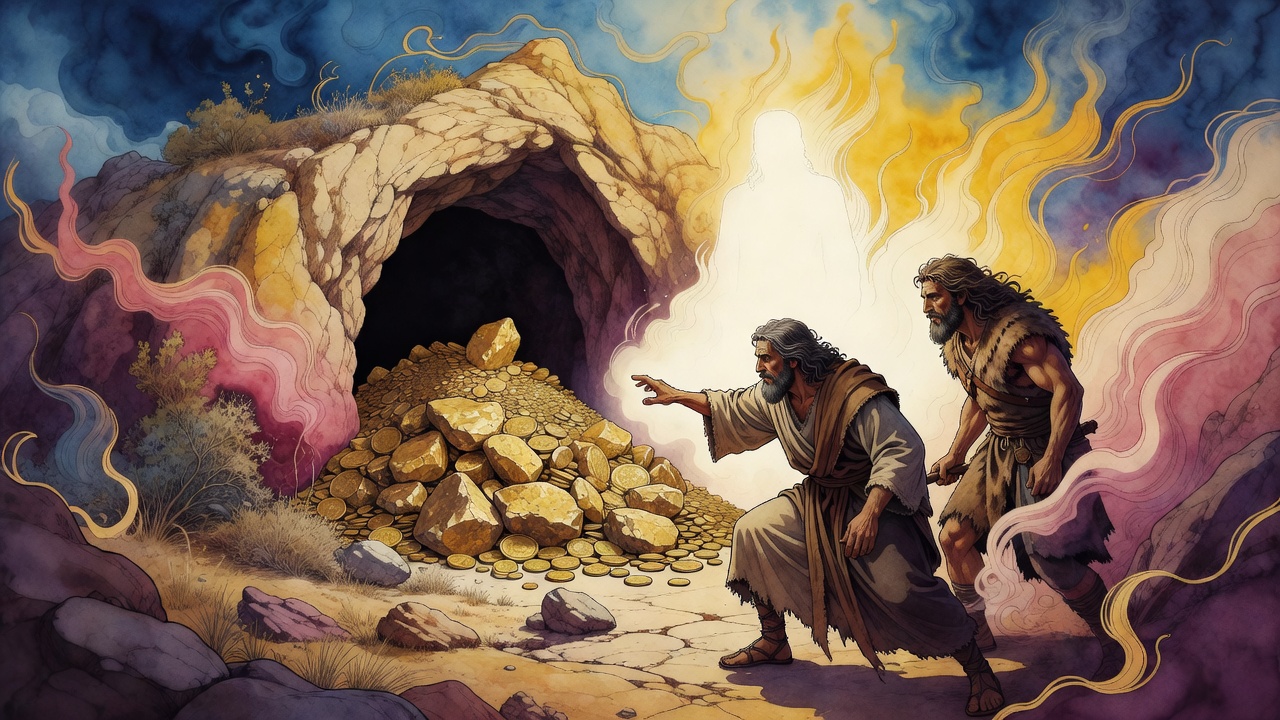
Esau met the burial with a last claim. The cave already held the family's dead, and he wanted his share of the mouth of it. In the clash that followed he fell slain beside Jacob's grave.
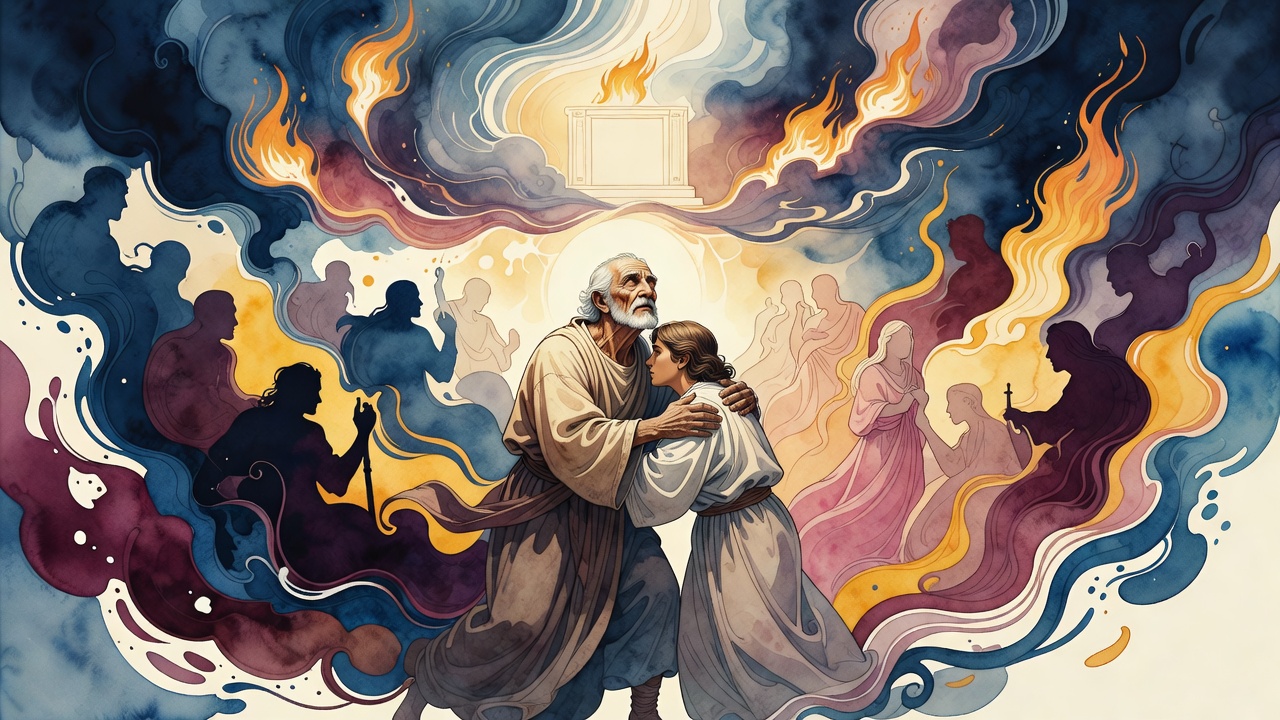
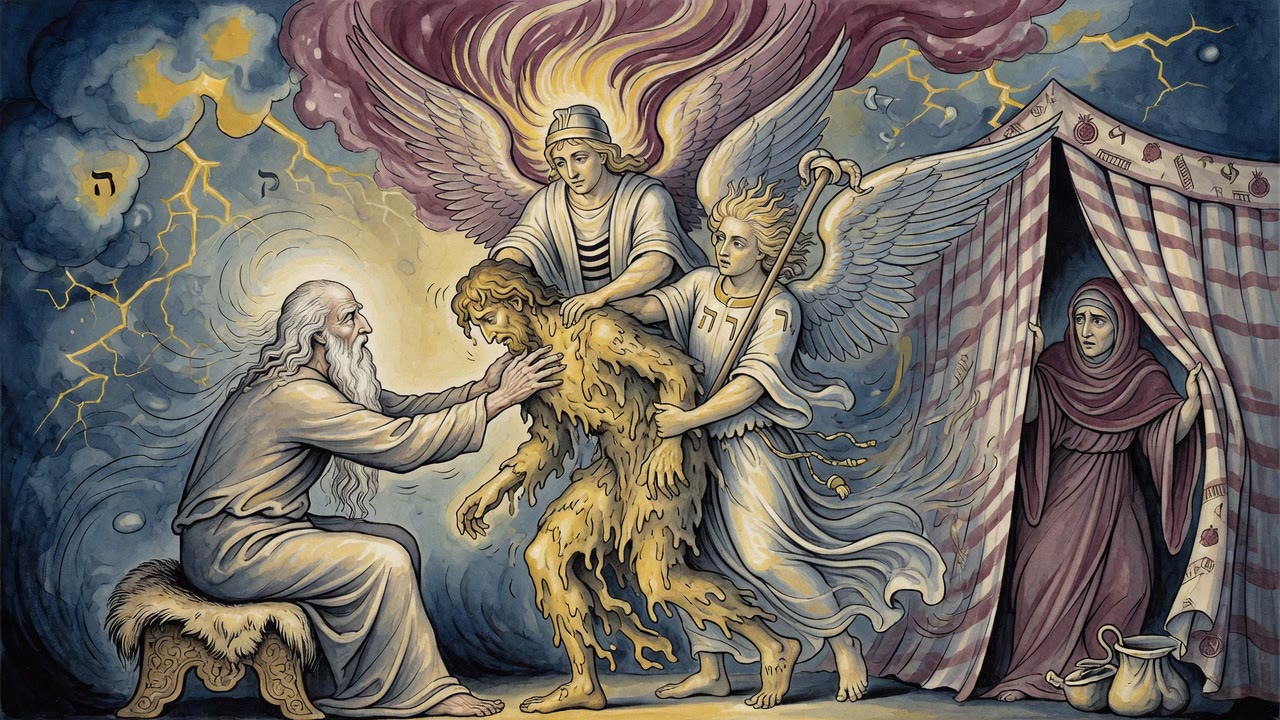
His severed head rolled down into the Cave of Machpelah. It came to rest in the lap of Isaac, blind and aged, who could not see the face and knew it anyway.
Isaac prayed for mercy for Esau. Heaven answered with a refusal sharp enough to end argument. "As I live, he shall not behold the majesty of the Lord."
The father who could not see with his eyes held the head of the son who would not see with his life. Blessing and hunt and red stew and four hundred men collapsed into a skull on a blind man's knees.
The Cave Kept One Brother Whole
Jacob entered Machpelah whole, as he had ordered. Esau's head entered without Esau's body. Nearness is not a deed to the cave. A twin can share a womb and not share a grave's full welcome among the fathers.
Outside, the nations who had bowed their heads in dust went home with a story that mixed honor and horror. Jacob's funeral had drawn kings. Esau's end had drawn a line at the mouth of the cave.
Joseph finished the rites with the dust of the road still on him. He returned to Egypt's politics with a father finally laid where the father had asked to lie. Behind him the cave held one brother's full rest and the other's rejected claim. Isaac's lap had already received what heaven would not spare.
← All myths