Parshat Chayei Sarah5 min read

Abraham Asked Only for a Grave in the Promised Land

God promised Abraham land and stars. At the tenth trial he stayed silent on rumor and paid full silver only to bury his dead.

Curated by Arthur · Told by Maggid ·
Table of Contents
  1. Stars and a Question
  2. The Tenth Trial Is Silence
  3. Four Hundred Pieces of Silver
  4. Peace Counted at the End
  5. Grave First, Map Later
Abraham Asked Only for a Grave in the Promised Land Click for full size

Stars and a Question

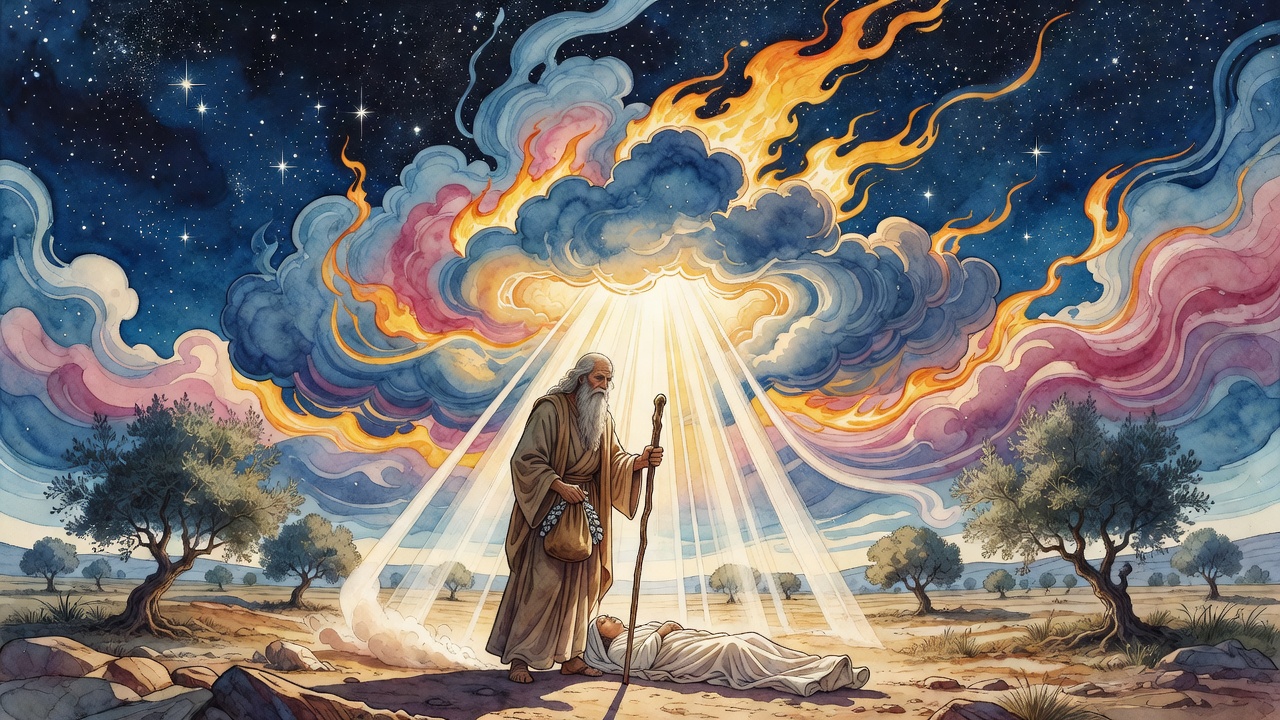
Abraham stood under a night thick with stars, and God said his seed would match that count. "So shall thy seed be." Abraham believed the Lord, and it was counted to him for righteousness (Genesis 15:6). The sky became a census of children not yet born. Then came the land. "I am the Lord that brought thee out of Ur of the Chaldees to give thee the land of the Canaanites to possess it for ever; and I shall be God unto thee and to thy seed after thee."

Belief still asked for a sign. "Lord, Lord, whereby shall I know that I shall inherit it?" God set a covenant of beasts. Heifer of three years, goat of three years, sheep of three years, turtle-dove, and pigeon. Blood and pieces for a promise larger than one man's lifetime.

The sky had spoken. The animals sealed. Abraham walked between wonder and the very human need to know how a promise becomes ground underfoot.

The Tenth Trial Is Silence

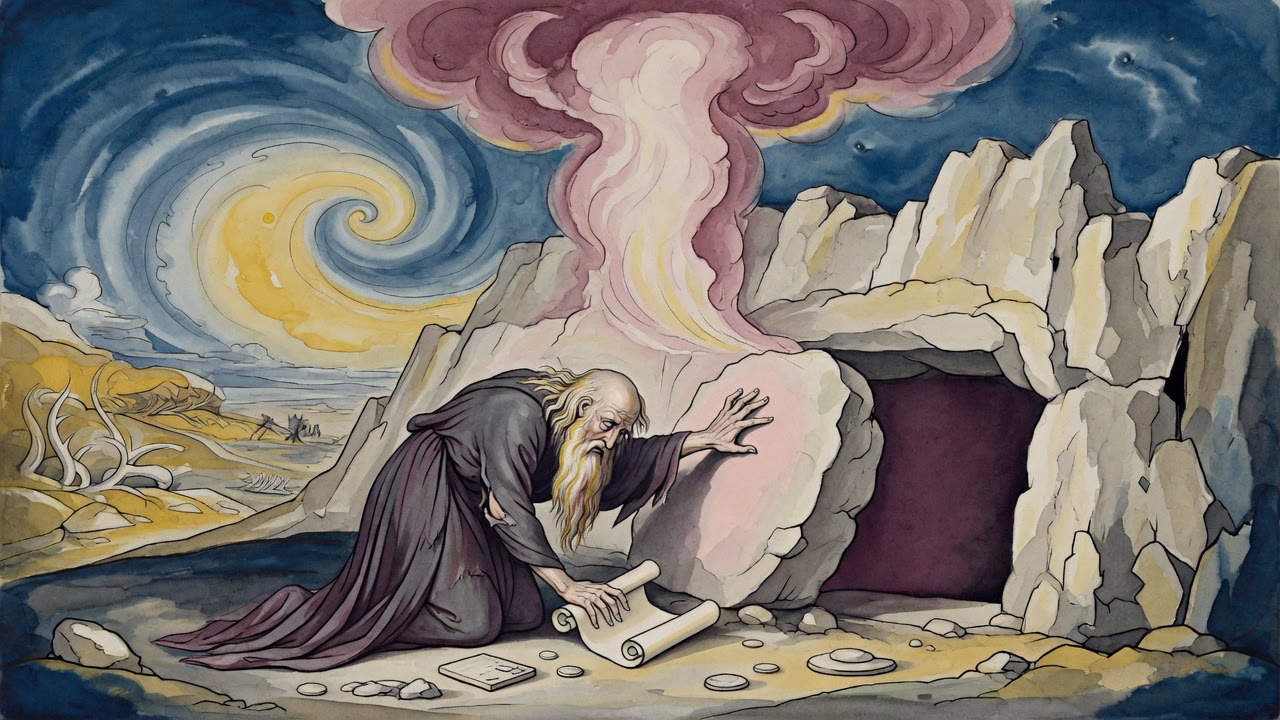
Jubilees names a tenth and final great trial when rumor of the land's gift ran and Abraham "said not a single word regarding the rumour in the land." No boast. No demand for deeds and borders. He asked instead for a place to bury his dead. The man promised a country begged for a grave.

He was found faithful, patient in spirit. Heaven wrote him on the tables as the friend of God. Friendship here meant trust that did not cash the promise early. Not servant only. Not believer only. Friend, recorded where no ink fades.

The same season opened toward Rebecca for Isaac, daughter of Bethuel, son of Nahor, the chain continuing while the father still waited without grasping. Legacy moved forward even as Abraham refused to grab the map.

Four Hundred Pieces of Silver

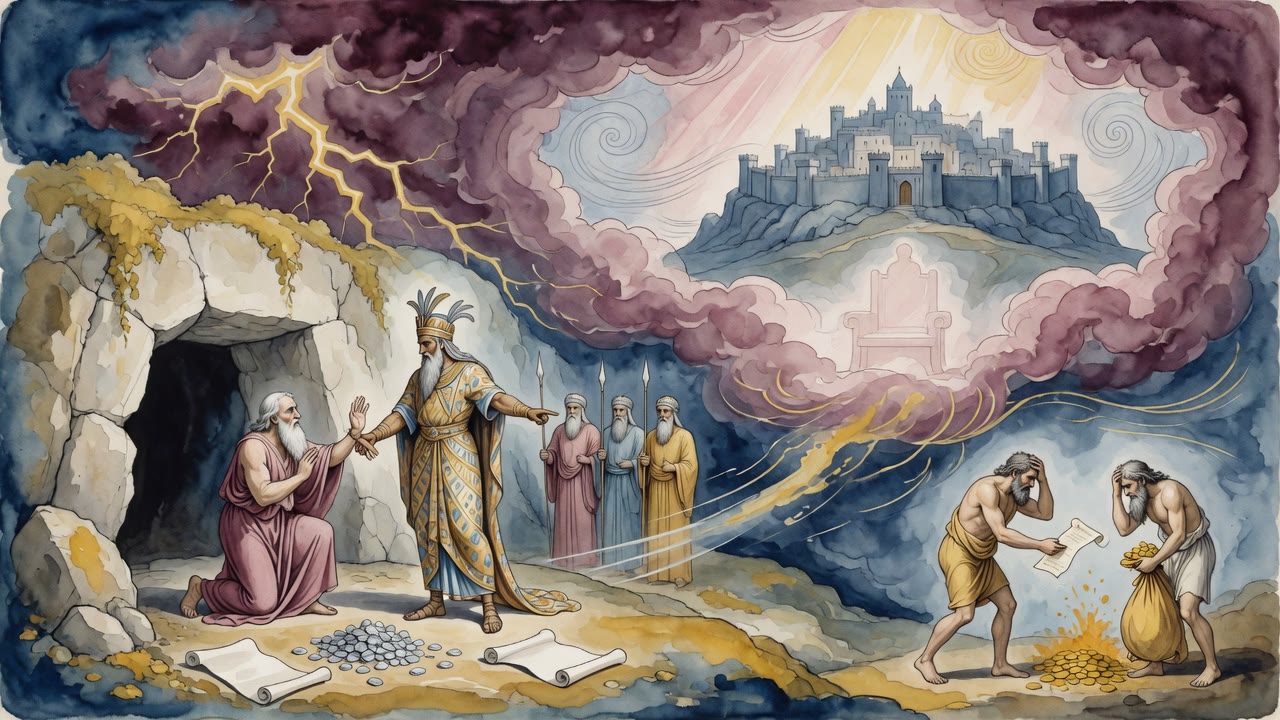
At Hebron, before the sons of Heth, Abraham sought the double cave over against Mamre. The Lord gave him grace in their eyes. He besought in gentleness. They offered the place for nothing. "We shall give it to thee for nothing," they said. He refused the gift.

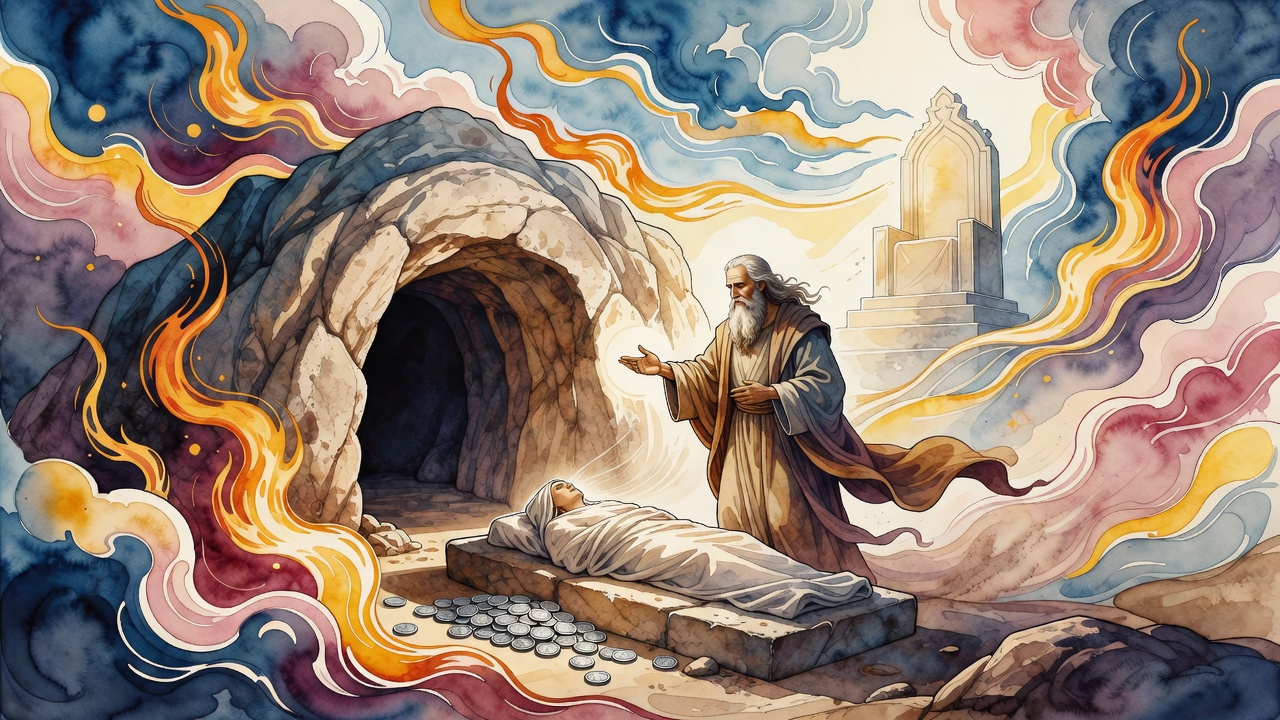
He paid the price in full, four hundred pieces of silver, and bowed twice so ownership would never wear a debt's face. No lingering obligation. No claim that the Hittites had funded Israel's first stake. The silver closed every loophole envy might open later.

Then he buried his dead in the double cave. Sarah's rest became the first permanent stake in the land of promise, bought rather than seized, quiet rather than trumpeted. The friend of God negotiated like a guest who refuses to cheat a host.

Peace Counted at the End

Abraham could look back and say that all his days had been peace, that the sword of the adversary had not overcome him in all God gave him and his children. The line was not naivete. It was accounting after wars, famines, and kings. Mercy had held.

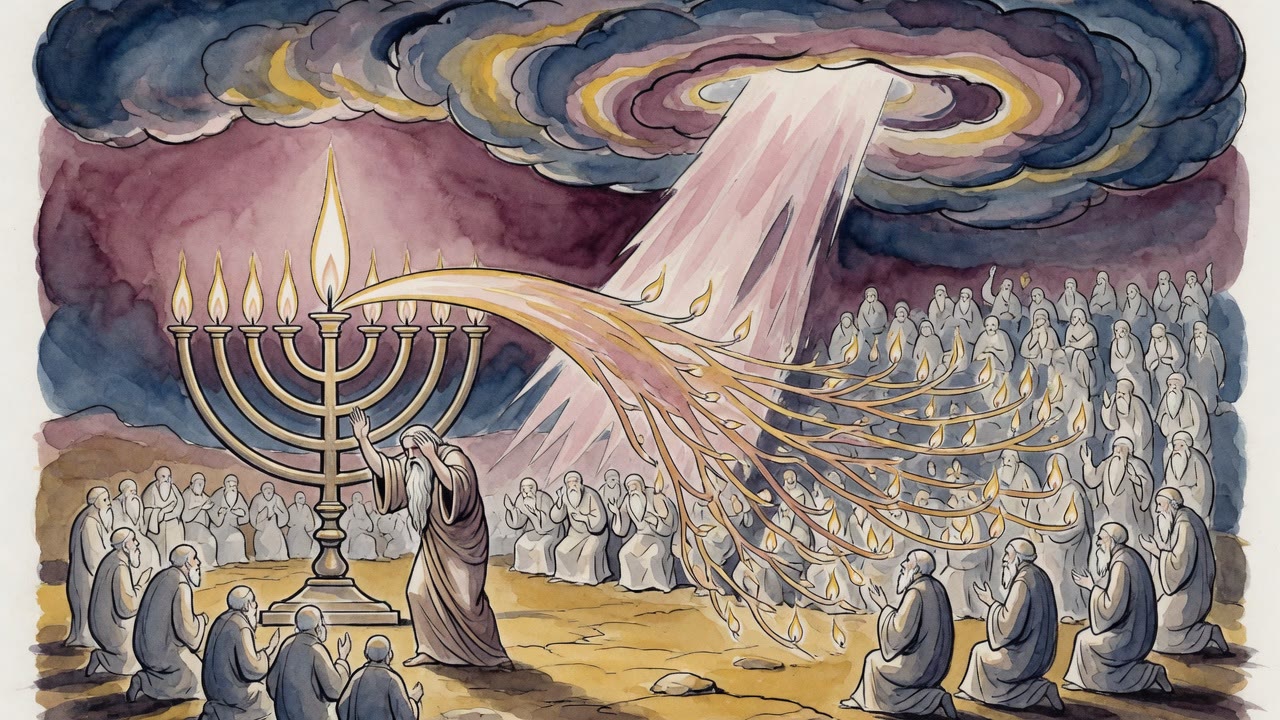
He prayed mercy and peace on his servant and on the seed of his sons, that they might be a chosen nation and an inheritance among the nations from then until all the ages. He called Jacob and blessed him to do righteousness and the will of God. The torch passed in speech heavy enough to bend a young man's shoulders.

The man who once asked how he would know the inheritance now poured inheritance forward without banners. Peace was not the absence of trial. It was the record that the adversary's sword had not won the last word.

Grave First, Map Later

Stars, animals, silence, silver, and a cave. The land came to Abraham first as a place to lay love in the ground without argument. Kings could keep their cities. He kept a deed and a friendship written above.

When the rumor of possession ran, he did not grab. When the Hittites offered free soil, he paid. When peace filled his accounting, he spent it on Jacob's future. The promised land began as a grave bought clean, under a man who already believed the stars.

Tenth trial and last. Not fire. Not a knife over a son. Silence about a rumor, and a request for burial ground. That is the test Jubilees sets as the peak of faithfulness, patient spirit, and the title friend of God.

Other men would have used a divine land-rumor as a claim deed shouted in the gate. Abraham used grief as his only petition. Sarah needed ground. He paid silver so no Hittite could say Israel stole its first permanent hold. The stars still hung over him. The animal covenant still stood. The tenth trial was to leave those glories unspoken while he bowed twice and buried his dead in a cave bought clean and held without shame.


← All myths

From the tradition

Sources

4 sources

The texts behind this telling. Some cards carry a translation of the source; others are our own retelling of it, and each card says which. Every card links out to the original.

Book of Jubilees 14:11Book of Jubilees

Retold in our words. Read the original at the link below.Sefaria Community Translation · CC-BY

That feeling is ancient. It’s woven right into the stories we tell about our ancestors. the story turns to one such moment with Abraham, from the Book of Jubilees.

The Book of Jubilees, sometimes called Lesser Genesis, is a fascinating text. It's a Jewish work from around the 2nd century BCE, offering a retelling of Genesis and Exodus, but with some key differences. It's not part of the Hebrew Bible canon, but it was clearly important in certain Jewish circles and is considered canonical in the Ethiopian Orthodox Church.

So, there's Abraham. He looks up at the night sky, at this infinite expanse dotted with stars. And God says to him: "So shall thy seed be." Imagine hearing that. A promise of countless descendants, more than the eye can even see.

"And he believed in the Lord," Jubilees tells us, "and it was counted to him for righteousness." This echoes (Genesis 15:6). It's a profound moment, a foundation of faith. But even with belief, doubt can creep in, can't it?

Then, God continues, "I am the Lord that brought thee out of Ur of the Chaldees" – that’s ancient Mesopotamia, modern-day Iraq – "to give thee the land of the Canaanites to possess it for ever; and I shall be God unto thee and to thy seed after thee." A powerful declaration. A covenant.

But Abraham, ever the human, responds with a very human question. "Lord, Lord, whereby shall I know that I shall inherit (it)?" It's not a lack of faith, necessarily, but a yearning for certainty. A plea for a sign. We've all been there, haven't we?

And God, in his infinite patience, doesn't rebuke Abraham. Instead, he gives him instructions. "Take Me an heifer of three years, and a goat of three years, and a sheep of three years, and a turtle-dove, and a pigeon."

What’s going on here? What’s with all these animals? This is where things get interesting. This ritual that God commands Abraham to perform is a covenant ceremony. It echoes practices of the time, where animal sacrifices were used to seal agreements. The idea was that if one party broke the covenant, they would suffer the same fate as the animals.

So, we see this interplay of faith and doubt, promise and reassurance. It’s comforting, in a way. It shows us that questioning, seeking, and needing a little extra assurance is all part of the human experience, even on the path of faith. And maybe, just maybe, that seeking is itself a form of devotion.

Full source
Book of Jubilees 19:12Book of Jubilees

Retold in our words. Read the original at the link below.Sefaria Community Translation · CC-BY

The Book of Jubilees, sometimes called Lesser Genesis, is an ancient Jewish religious work that retells much of the Genesis story, often with added detail and a unique perspective on chronology and law. It presents this moment as Abraham's tenth and final great trial.

Here, the text focuses on Abraham's response to the news that God would grant him and his descendants the land. A promise of such magnitude! And yet, Abraham, according to Jubilees 19, "said not a single word regarding the rumour in the land."

Instead, what does he do? He humbly begs for a place to bury his dead.

The scene. He doesn't demand his promised inheritance. He doesn't boast about divine favor. He simply asks for a small piece of land to lay his loved ones to rest. This act of humility, of focusing on the immediate needs of mourning rather than the grand promise of the future, is presented as the ultimate test of his faith.

The Book of Jubilees emphasizes that Abraham "was found faithful, patient in spirit." It's not just about believing in God's promise, but about trusting in God's timing and plan, even when the path forward isn't clear. It's about demonstrating faith through action, through quiet perseverance, and through unwavering humility.

And the reward? He "was recorded on the heavenly tables as the friend of God." What a profound statement! Not just a servant, not just a believer, but a friend. This suggests a relationship of deep trust, mutual respect, and unwavering loyalty.

The passage then transitions briefly to a seemingly unrelated detail: "And in the fourth year thereof he took a wife for his son Isaac and her name was Rebecca..." Why is this mentioned here, right after Abraham's greatest trial? It emphasizes the continuation of Abraham's legacy. His faithfulness paved the way for future generations, for the fulfillment of God's promise. Rebecca, daughter of Bethuel, the son of Nahor (Abraham's brother), becomes a crucial link in the chain, ensuring the continuation of the lineage. The careful detailing of the family connections reinforces the importance of heritage and lineage in the unfolding story.

Sometimes, it's the quiet acts of humility, the unwavering patience, and the steadfast trust in something greater than ourselves that truly define our character. It's about focusing on the present, even when the future holds grand promises. And perhaps, most importantly, it's about striving to be worthy of being called a friend of God.

Full source
Book of Jubilees 19:8Book of Jubilees

Retold in our words. Read the original at the link below.Sefaria Community Translation · CC-BY

Sometimes, the most fascinating details are tucked away in texts just outside the mainstream, like the Book of Jubilees.

Abraham is familiar. But do we really know him?

The passage begins by telling us "And the Lord gave him grace before all who saw him." Imagine the scene. Abraham, a man blessed by God, approaches the sons of Heth, the Hittites, seeking to purchase land. Not just any land, but "the land of the double cave over against Mamre, that is Hebron." This cave, of course, would become the final resting place for Sarah, and eventually Abraham himself, Isaac, Rebekah, Jacob, and Leah. It’s a place of immense significance.

What's striking is Abraham's demeanor. The text specifies that "he besought in gentleness" the sons of Heth. He's not demanding, not entitled, but respectful, even humble. He understands the importance of acquiring this land legitimately.

And the Hittites? They offer it to him for free! "We shall give it to thee for nothing," they say. A generous offer. But Abraham refuses. "He would not take it from their hands for nothing, for he gave the price of the place, the money in full." Four hundred pieces of silver, a considerable sum.

Why is this so important? Because Abraham insists on paying. He wants no question of ownership, no lingering obligation. He wants this land to be his, rightfully and justly acquired. He even bows down before them twice, acknowledging their ownership and solidifying the transaction. It’s a profound demonstration of integrity.

This act, seemingly simple, speaks volumes about Abraham’s character and his understanding of covenant. He’s not just claiming land; he’s establishing a lasting legacy, a physical connection to the Promised Land for generations to come.

And after this, the text simply states, "and after this he buried his dead in the double cave." A simple statement, yet pregnant with meaning. A cycle has begun: life, death, and the promise of continuity on this very specific piece of earth.

The passage concludes with a seemingly unrelated detail: "And all the days of the life of Sarah were one hundred and twenty-seven years, that is, two jubilees and four weeks and one year: these are the days of the years of the life of Sarah." This precise reckoning of Sarah’s age highlights the importance of time and chronology within the Book of Jubilees. The book is obsessed with calendrical calculations and aligning earthly events with divine time. Sarah’s life, neatly packaged into jubilees and weeks, emphasizes this theme.

Perhaps it's a reminder that true legacy isn't just about grand pronouncements or miraculous feats, but about the quiet integrity with which we conduct ourselves, the respect we show to others, and the careful consideration we give to the foundations we build for the future. And sometimes, the most profound stories are found not in the headlines, but in the details, waiting to be unearthed.

Full source
Book of Jubilees 22:13Book of Jubilees

Retold in our words. Read the original at the link below.Sefaria Community Translation · CC-BY

"All my days have been unto me peace," he declares. This is Abraham, the man who faced trials, tribulations, and even the agonizing test of the Akeidah (the Binding of Isaac). And yet, he proclaims peace.

The Book of Jubilees, considered apocryphal by some but revered by others, offers a unique perspective on biblical narratives, often expanding on the stories we know from Genesis and Exodus. It retells the history of the world, dividing time into "jubilees" – periods of 49 years. And it’s within this framework that we find this beautiful passage.

Abraham continues, "The sword of the adversary hath not overcome me in all that Thou hast given me and my children all the days of my life until this day." It’s not just about physical safety, is it? It’s about something deeper. A protection from the destructive forces that could have consumed him, his family, his very purpose. It speaks to a divine shield, a constant presence that guided him through the storms.

Then comes a heartfelt prayer, a plea for divine mercy and peace upon his servant – himself – and upon the seed of his sons. "My God, may Thy mercy and Thy peace be upon Thy servant, and upon the seed of his sons, that they may be to Thee a chosen nation and an inheritance from amongst all the nations of the earth from henceforth unto all the days of the generations of the earth, unto all the ages." What a powerful vision! Abraham isn't just concerned with his own well-being, but with the destiny of his descendants, their role as a "chosen nation," an am segulah, a treasured people.

And finally, a moment of direct address. "And he called Jacob and said My son Jacob, may the God of all bless thee and strengthen thee to do righteousness, and His will before Him." The torch is being passed. The blessing, the responsibility, the legacy – all entrusted to the next generation. Jacob, the future Israel, the father of the twelve tribes, is now charged with carrying on this covenant.

Abraham's words, recorded in the Book of Jubilees, remind us to seek that inner peace, that divine protection, and to strive to be a blessing to those who come after us. What kind of legacy are we building? And how can we

Full source