Parshat Vayera7 min read

The Night a Phantom Swordsman Walked the Cities of the Philistines

A drawn sword moves unseen through Gerar, men fall in the dark, and a wailing rises that no Philistine can fight or explain.

Curated by Arthur · Told by Maggid ·
Table of Contents
  1. A Sword That No Hand Held
  2. The King Wakes in Agony
  3. The Servants Read the Signs
  4. A Voice Argues With Heaven
  5. What the Dreams Were Moving Toward

The first scream came from the cattle pens, where a herdsman of Gerar woke to find he could not draw breath. His mouth would not open. His nostrils had sealed like wax poured into a mold. Beside him the oxen thrashed against their ropes, their bodies shut tight as stones, and the man clawed at his own face in the dark and made no sound at all.
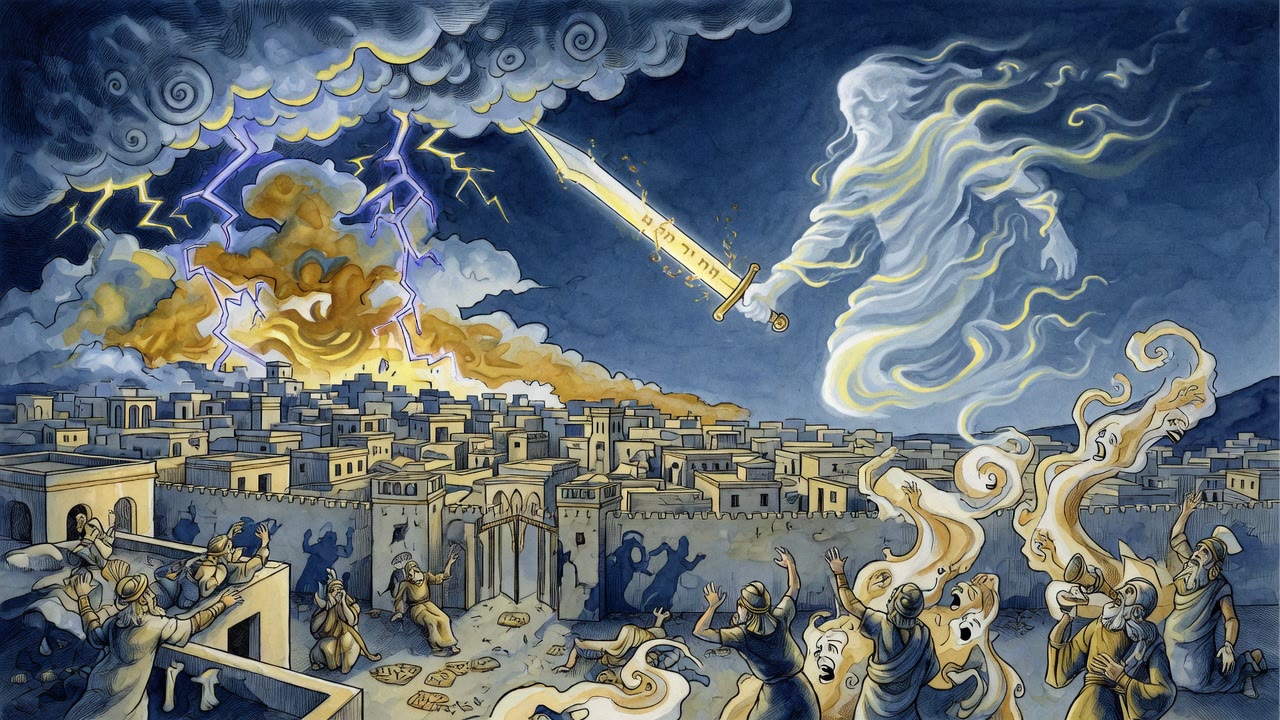
By the time the moon stood high, every house in the land of the Philistines had its own version of the horror. In one street a woman beat on a neighbor's door and could not call out. In another a child went blue at the cradle while its mother screamed without voice. The land filled with a silence that was worse than any noise, the silence of a whole people trying to cry out and failing, until at last the apertures opened again and the wailing broke loose all at once across the cities.

A Sword That No Hand Held

Then they saw him. Not a raider, not a soldier of any king they knew. A figure walked the roads between the towns with a drawn sword lifted high, and where he passed, men fell. He spoke to no one. He answered no challenge. Watchmen who ran at him with spears found their spears turned to nothing in their hands. He moved through gate and wall as though the stone were air, and the blade came down, and another man lay in the dust of his own threshold.

They tried to count him among the things that could be fought. He could not be fought. A people that had armies and chariots and high walls stood that night completely undone by one figure they could not touch, sent by a will they could not see, for a reason none of them yet understood.

The King Wakes in Agony

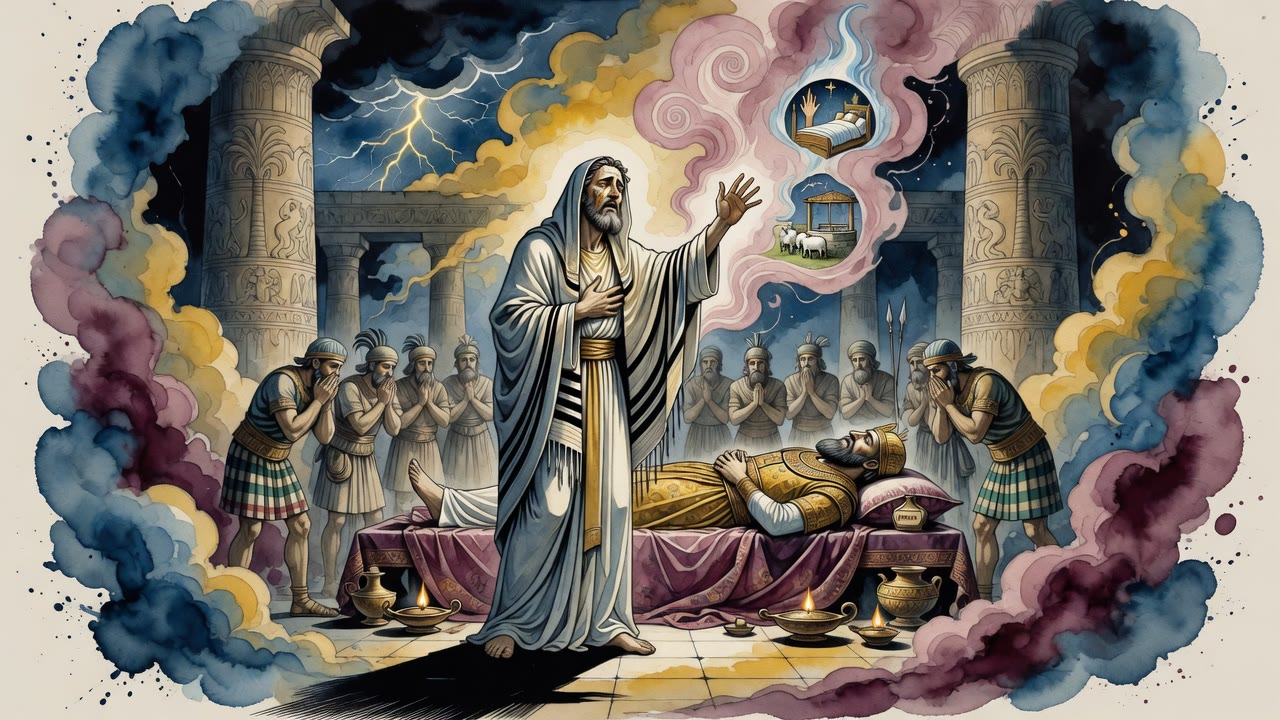
In the palace, Abimelech had not been spared the dream. He saw the same swordsman, but the sword was lifted over his own neck, and a voice came with it. "You are a dead man," the voice said, "because of the woman you have taken, for she is a man's wife." The king woke with the words still ringing and his whole body in torment, every passage of him sealed and burning, and the terror of the dream worse than the pain.

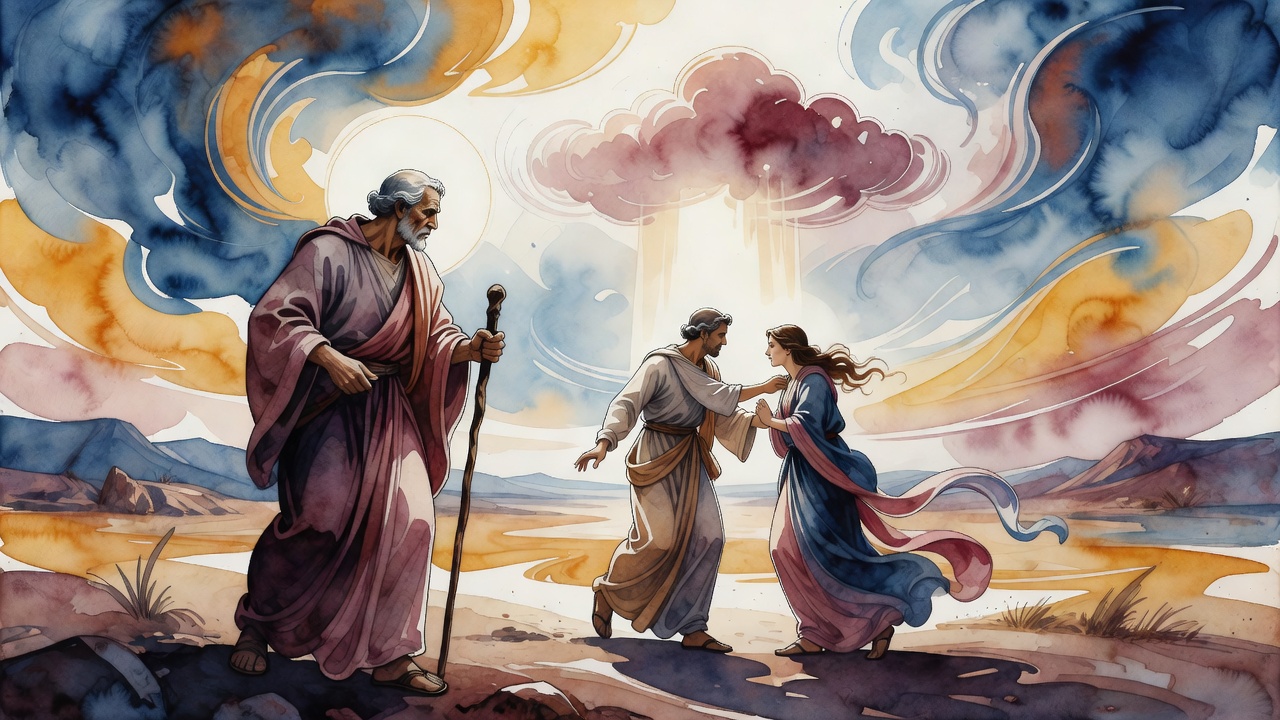
He had done what kings do. Word had reached him of a stranger in his land traveling with a woman of impossible beauty, and the stranger had called her his sister, and she had called the stranger her brother, and every mouth in the caravan had said the same. So Abimelech had brought her into his house, as was his right, and given the brother gifts fit for the kin of a queen. He had not touched her. And now his servants found him on the floor of his own chamber, gasping, the smoke of a burned city still hanging on the southern horizon like a warning he had failed to read.

The Servants Read the Signs

He gathered them and told the dream, every word of it, the figure and the blade and the sentence of death. The men looked at one another, and one of them stepped forward, because someone had to.

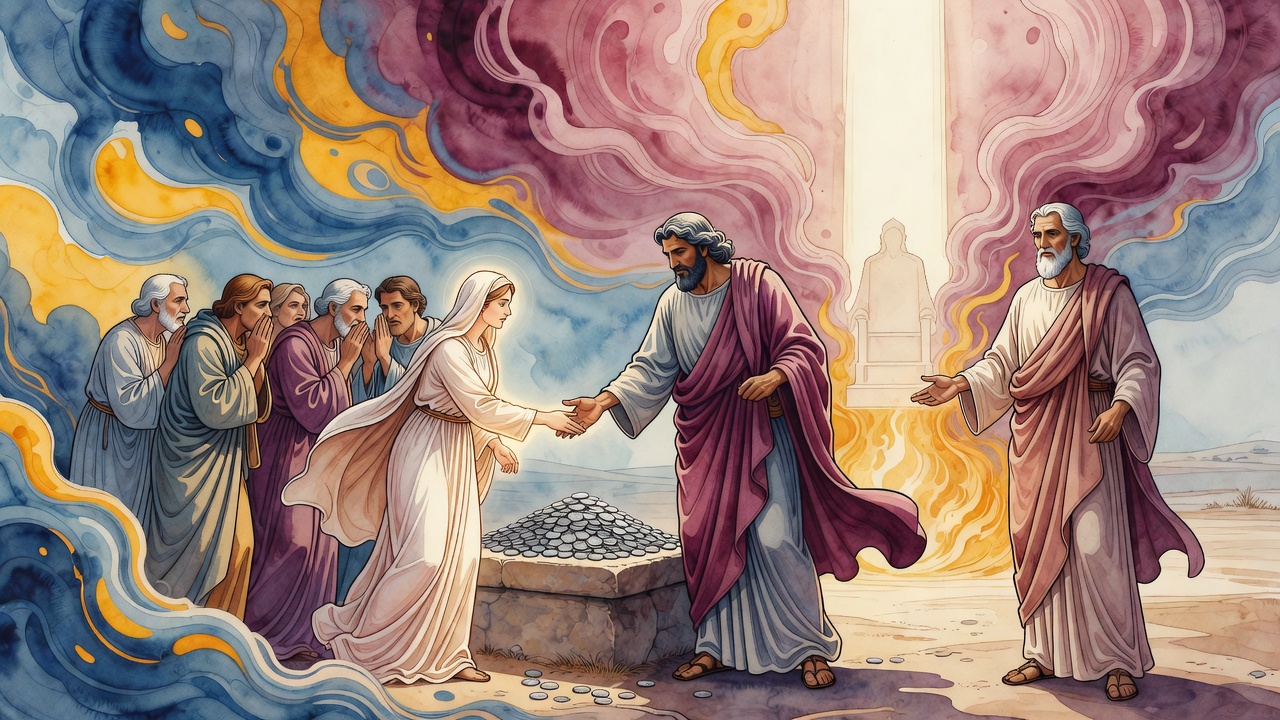
"O lord and king," the servant said, "restore this woman to the man, for he is her husband." He had pieced it together while the king spoke. The brother was no brother. It was a thing the stranger had done before, in another land, to another throne. "Thus did he with the king of Egypt as well," the servant went on, "and God sent heavy afflictions upon Pharaoh when he took the woman to himself." The whole region carried the memory of it, the plagues that had fallen on Egypt's house over this same beauty, this same lie that was not quite a lie.

Then the servant said the thing none of them had dared to say aloud. "Consider, O lord and king, what has come upon us this night. Great pain there was, and wailing, and confusion in the land. We know it came upon us only because of this woman." The connection was no longer a guess. The sealed bodies, the voiceless mouths, the swordsman in the roads, all of it hung on one woman in the king's house and the husband who was not her brother.

A Voice Argues With Heaven

Not all of them agreed. Some among the servants waved it away. Dreams, they said, are full of falsehood, smoke that means nothing in the morning. But before the argument could settle, God spoke to Abimelech a second time, awake now, and the demand was the same as the sword's. Send the woman back, or die.

And here the king of Gerar did a thing few men dared. He argued. "Is this Your way?" he cried out. "The man said she was his sister. She said he was her brother. Every voice said the same. Will You slay even a righteous people?" The answer came down on him with terrible patience. "I know you have not yet sinned, for I withheld you from sinning, and I did not let you touch her. You did not know she was a man's wife." But the question turned back on the king like the blade had. A stranger arrives with a woman of such beauty, and you ask no further. Should a king not have asked?

What the Dreams Were Moving Toward

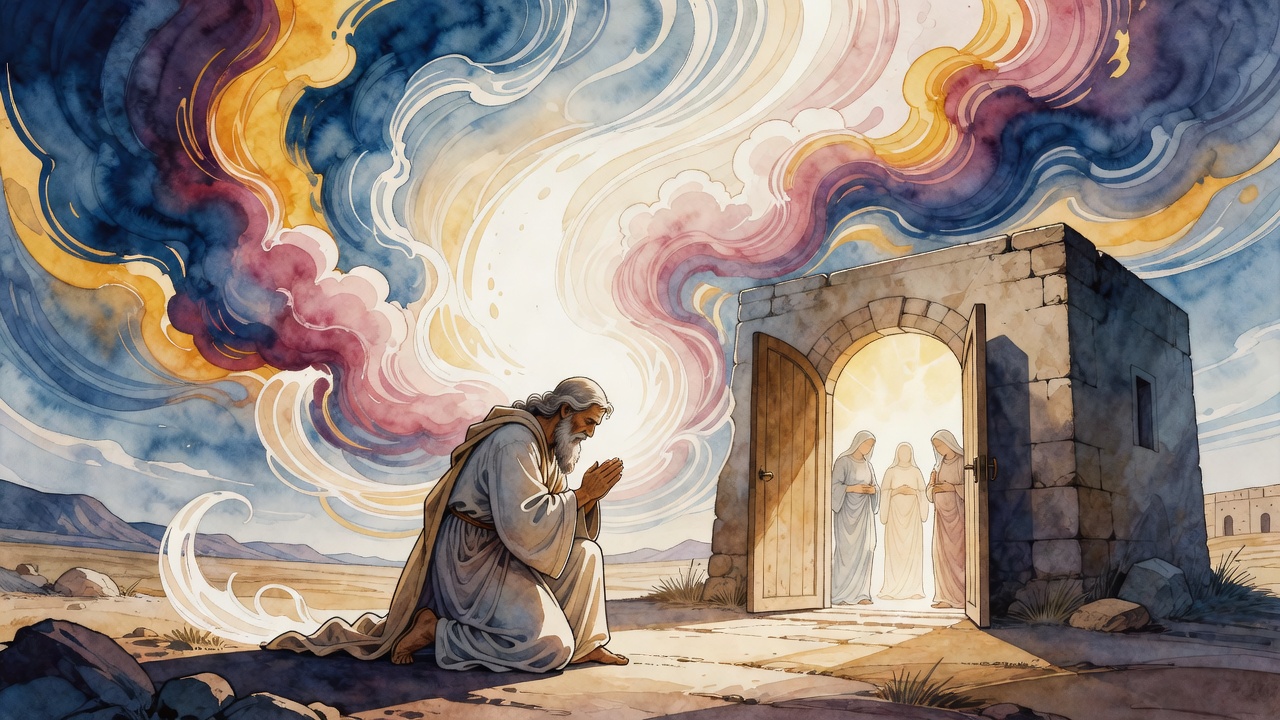
So Abimelech rose in the gray light, his land still groaning, and gave the woman back, and the husband prayed for him. The sealed bodies opened. The wailing died. The swordsman was gone from the roads as though he had never walked them, and the cities of the Philistines breathed again, never knowing how close the whole people had come to following Sodom into smoke.

They thought a strange and beautiful woman had nearly destroyed them. They did not see the shape of the larger thing, the quiet machinery turning beneath their terror, dreams sent and withheld, beauty used as a snare, kings bent without their knowing, all of it pushing a chosen line forward across the centuries toward a famine, a far country, and a boy whose own dreams would one day carry an entire family down into Egypt. The Philistines fought a phantom for one night. They never learned whose hand had drawn the sword, or where the road it walked was leading.


← All myths
From the tradition

Sources

2 sources

The texts this telling draws on, in full. Open a card to read inline, or expand it for a wider, quieter read.

Legends of the Jews 5:183Legends of the Jews

This particular story plunges us into the land of the Philistines. Imagine the scene: A night filled with inexplicable terror. A "great crying" echoes across the land as people witness a spectral figure, a man wielding a sword, cutting down anyone in his path.

The horror doesn't stop there. The story intensifies, becoming almost surreal. "In men and beasts alike," Ginzberg writes, "all the apertures of the body closed up." Can you imagine the sheer panic? The physical distress? The sense of utter helplessness as their bodies betray them in such a bizarre way? The land is seized by "indescribable excitement," a chaotic frenzy born of fear and pain.

The next morning, the king awakens. He's not just startled; he's in agony. And terrified. This isn't just a bad dream; it's a sign. He summons his servants, recounts the horrifying vision, and awaits their counsel. It's a moment ripe with tension.

One servant steps forward, offering an explanation that is both insightful and politically astute. "O lord and king!" he exclaims, "Restore this woman unto the man, for he is her husband." It's a moment of recognition, a piercing of the veil of deception. The servant reveals that the man, who claimed the woman was his sister, was merely playing a part, a strategy he'd used before in Egypt.

The servant continues, drawing a parallel: "Thus did he with the king of Egypt, too, and God sent heavy afflictions upon Pharaoh when he took the woman unto himself." This reference immediately connects the current crisis to a well-known precedent, a story etched in the collective memory of the region. The implication is clear: interfering with this man and his wife brings divine wrath.

The servant drives the point home with chilling clarity. "Consider, also, O lord and king, what hath befallen this night in the land; great pain, wailing, and confusion there was, and we know that it came upon us only because of this woman." The connection is undeniable. The suffering of the Philistines is directly linked to the king's actions.

The story, found in Legends of the Jews, reminds us of the power of stories to convey moral lessons and explore complex themes of justice, deception, and divine intervention. It's a reminder that even in the ancient world, actions had consequences, and that sometimes, the truth – even when disguised – will find its way to the surface. It makes you wonder, doesn't it, about the hidden forces at play in our own lives and the consequences of our choices?

Full source
Legends of the Jews, V. Abraham, Among The PhilistinesLegends of the Jews

Abraham wasn't one to linger where things got… unpleasant. With Sodom a smoldering memory, and whispers about Lot's daughters filling the air, Abraham packed up and headed for Gerar, land of the Philistines. He was a generous soul, accustomed to welcoming travelers, and the area around Sodom was pretty much a no-go zone.

This isn't the first time we've seen Abraham in a bit of a… predicament. Remember Egypt? Well, he and Sarah cooked up a familiar plan: Sarah, stunningly beautiful as ever, would pose as his sister. It wasn't a lie, exactly (she was his half-sister), but it certainly wasn't the whole truth.

Word of Sarah's beauty reached King Abimelech, who, quite taken with her, brought her into his house and showered Abraham with gifts befitting the brother of a queen.

As they say, the best-laid plans… That night, Abimelech had a rather unsettling dream. An angel of the Lord appeared, sword raised, ready to strike him dead! The reason? He'd taken another man's wife, the angel thundered. He was commanded to return Sarah immediately, or face dire consequences.

The night was filled with terror. A spectral figure roamed the land, cutting down anyone in his path. And to top it off, everyone, human and beast alike, suffered from… well, let’s just say bodily malfunctions. The whole land was in an uproar.

In the morning, a terrified Abimelech recounted his dream. His servants, naturally, had opinions. Some urged him to return Sarah, pointing out the parallels with Pharaoh's earlier woes (remember those plagues?). Others dismissed it all as mere "dreams," full of falsehoods.

But then, God Himself appeared to Abimelech again, reiterating the demand: release Sarah, or face death.

Abimelech, understandably, was confused, even indignant. "Is this Thy way?" he protested. "The man said she was his sister! She said he was her brother! Everyone said the same!"

God acknowledged Abimelech's innocence – to a point. "I know thou hast not yet committed a trespass," He said, "for I withheld thee from sinning. Thou didst not know that Sarah was a man's wife." But, God pointedly asked, shouldn't he have been a little more inquisitive, especially when a stranger arrives with such a beautiful woman?

God then revealed that Abraham, being a prophet, foresaw the danger. But, He added, Abraham also knew that Abimelech hadn't actually touched Sarah. And here's the kicker: Abraham would pray for Abimelech's well-being.

The smoke from Sodom still hung in the air, a grim reminder of divine wrath. Abimelech, seeing it, feared a similar fate. He confronted Abraham, reproaching him for the deception.

Abraham, in turn, explained his fear: "the fear of God not being in the place, the inhabitants of the land slay me for my wife." He then launched into a brief autobiography, recounting his trials and God's constant protection, even mentioning Shem and Eber, two kinsmen who served as prophets, sent to warn the nations.

Abimelech, perhaps chastened, gave lavish gifts to Abraham – a stark contrast to Pharaoh, who gave gifts to Sarah herself. Abimelech sought Abraham's blessing and even gave Sarah a special robe designed to conceal her beauty. It was also, subtly, a jab at Abraham for not providing adequately for his wife. Ouch.

Despite the ordeal, Abraham not only forgave Abimelech but also prayed for him. This, the text emphasizes, makes Abraham an example for us all. As it says, "Man should be pliant as a reed, not hard like the cedar." Be slow to anger, quick to forgive, even after deep injuries. Don't hold grudges.

Abraham's prayer was specific: "O Lord of the world! Thou hast created man that he may increase and propagate his kind. Grant that Abimelech and his house may multiply and increase!" And, remarkably, God answered. This marked the first time, we're told, that God fulfilled the prayer of one human being for the benefit of another. Abimelech and his people were healed, and Abimelech's barren wife conceived.

So, what do we take away from this? It's a story of deception, fear, divine intervention, and ultimately, forgiveness. It's about navigating tricky situations, understanding human fallibility, and the power of prayer. And maybe, just maybe, it's a reminder that even in the shadow of destruction, new life, new beginnings, are always possible.

Full source