Parshat Vayera6 min read

The Sister Word Abraham and Sarah Carried Out of Ur

Before Abraham left his father's house, he asked Sarah for one kindness, a single word she would speak in every strange land. Call me your brother.

Curated by Arthur · Told by Maggid ·
Table of Contents
  1. The Night He Walked Out of His Father's House
  2. The Word Travels With Them
  3. Gerar, and the Word Again
  4. The King Pleads His Innocence
  5. What Abraham Finally Says Out Loud
  6. The Laughter They Kept Between Them

The Night He Walked Out of His Father's House

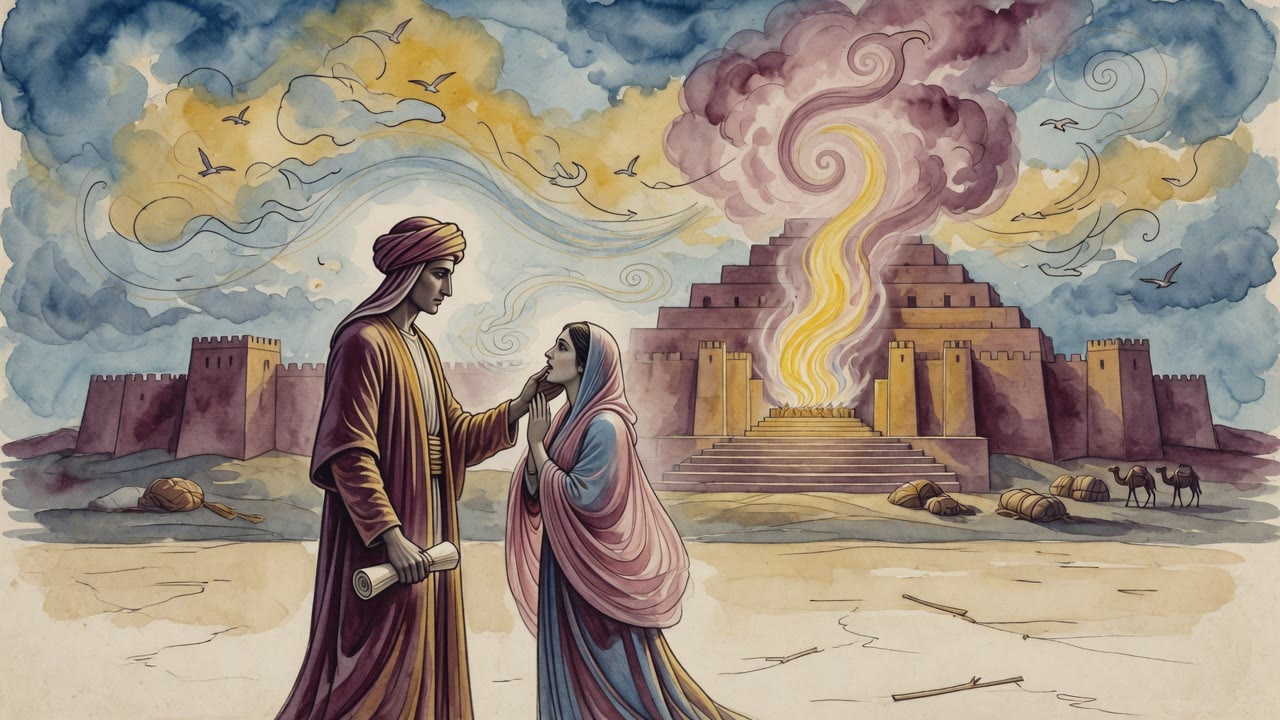
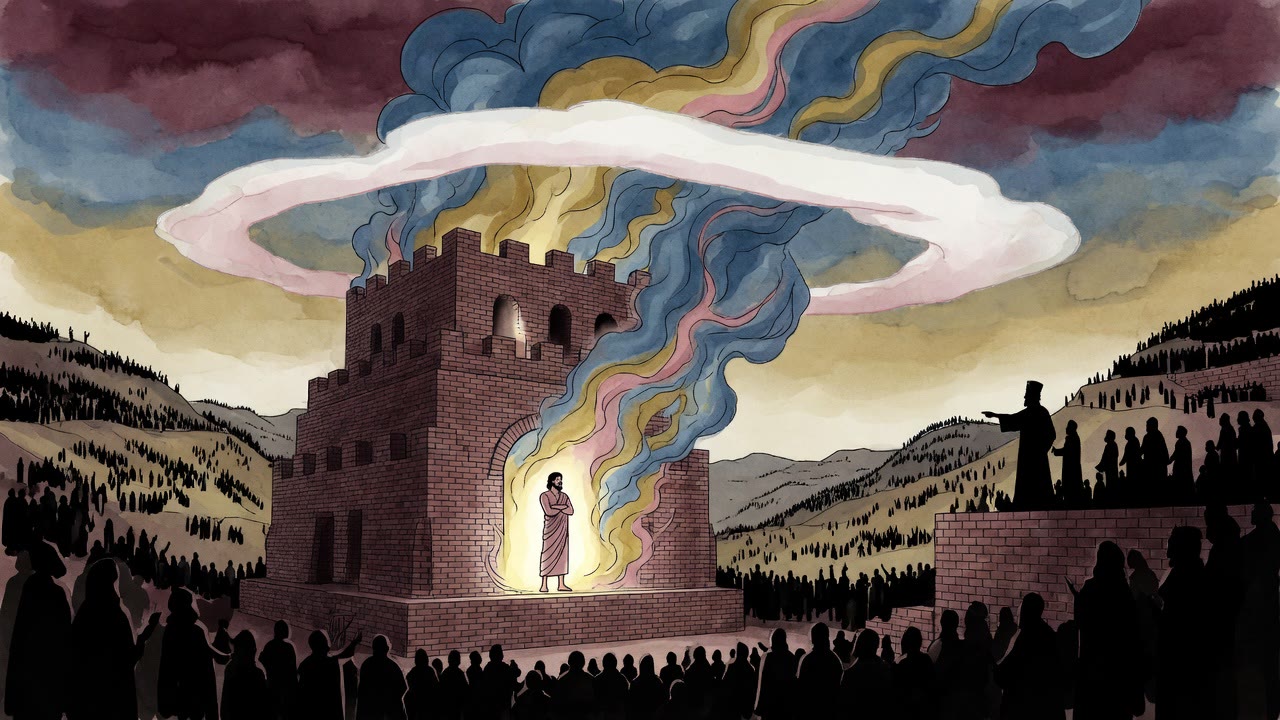
The lamps in Terah's house burned in front of the idols, and the smoke smelled of oil and old prayer. Abraham stood in the doorway with the night behind him. They had pressed him that evening, the household and the neighbors, to bow with the rest, to set his face toward the carved stone and the painted clay and call them gods. He would not. He had broken with them already in his heart, and now his feet were following.

He found Sarah in the dark before he went. He took her hands. He did not promise her safety, because he had none to give. He told her instead what the road would be. Strangers everywhere. Kings who took what they wanted. A beautiful woman traveling with one man was a prize, and the man beside her was an obstacle that a sword could remove in a moment.

So he asked her for a kindness. Not a coin, not a vow of love, a sentence. In every place they came to, in every gate where men looked too long, she would say one thing about him. He is my brother. The word would stand between her and a corpse. A husband could be killed to clear the way. A brother could be bargained with, delayed, outlasted. They sealed it there in the lamplight, two people and one word, and then they went out into the world together.

The Word Travels With Them

The word went down into Egypt first. Famine drove them there, and at the border the danger Abraham had foreseen rose up exactly as he had said it would. So Sarah spoke the sentence they had carried from Ur, and Pharaoh took her, and the kindness she had promised held the line until heaven cracked it open and they were sent away with their lives and their flocks (Genesis 12:13).

It would have been easy, after that, to set the word down. They did not. The word was not a single trick for a single border. It was the shape of how they would survive a world that had no place for them. They carried it north and east through years of tents and wells and bargaining, and Abraham kept the promise Sarah had asked nothing for in return, except that he keep it too.

Gerar, and the Word Again

Then came Gerar, and a second king. Abimelech ruled there, and when his men saw Sarah they reported her to him, and the old danger stood up a second time. Sarah said the word. Abraham let it stand. Abimelech sent and took her into his house, certain he was taking an unmarried woman, and the door of the palace closed behind her.

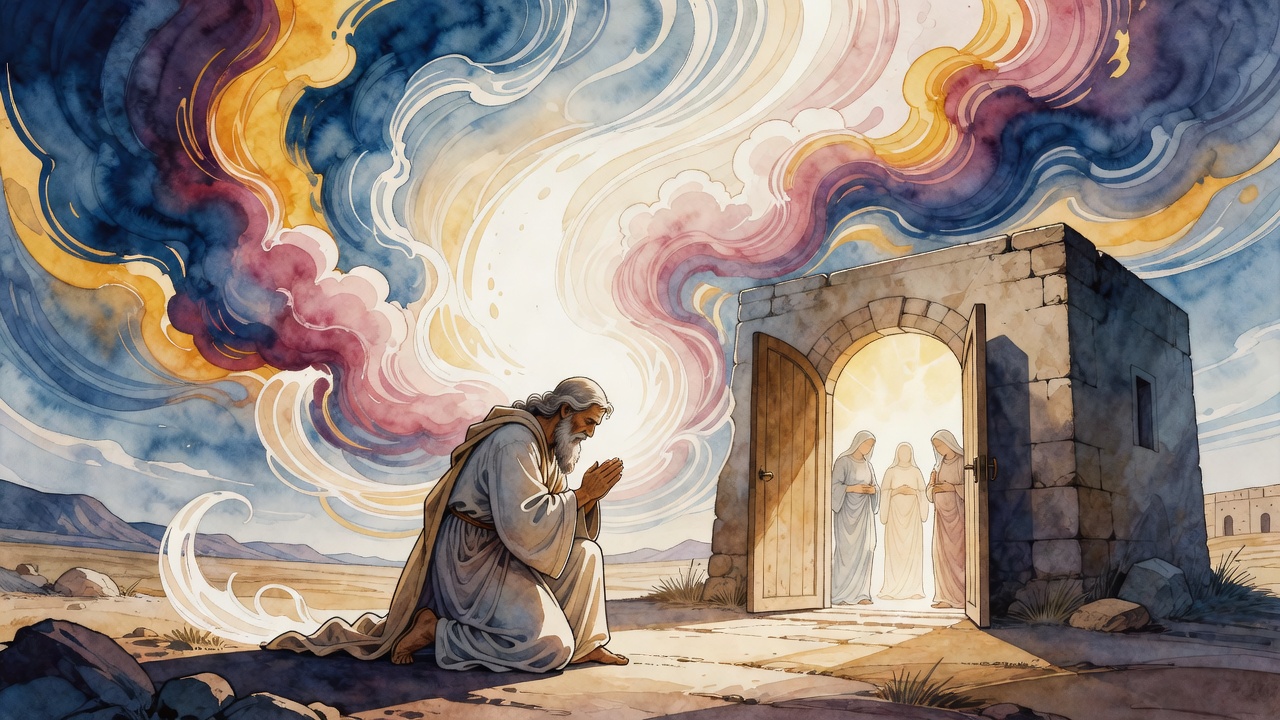
That night a voice came to the king in his sleep. A word came from before the Lord to Abimelech in a dream of the night, and the word was a sentence of death. You are a dead man, it said, for the woman you have taken is married. The king woke with the verdict ringing in him, and he had not so much as touched her.

The King Pleads His Innocence

Abimelech argued back into the dark. He had not known. The man had called her his sister, and she herself had said the same of him, with one voice between the two of them. He had acted, he said, in the truthfulness of his heart and the innocency of his hands. He had been deceived, and a deceived man should not die for a sin he was reaching toward blind.

The answer that came was stranger than acquittal. Before Me also it is manifest, the voice told him, that in the truthfulness of thy heart thou didst this. And so I restrained thee from sinning before Me. Therefore I would not permit thee to come near her. The king had not kept himself away from Sarah. Heaven had kept him. Something had stood in the doorway of that bedchamber the way Abraham had once stood in the doorway of his father's house, and it had not let the king pass.

What Abraham Finally Says Out Loud

When Abimelech confronted him in the daylight, Abraham did not invent an excuse on the spot. He told the truth that went back to Ur. She was his close kin, of his father's house. And then he said the thing that had never been spoken aloud to a king before, the secret behind the sister word.

When they sought to turn me aside to the worship of idols, he said, and I went forth from my father's house, I said to her, this is the kindness thou shalt do me. In every place to which we come, say concerning me, he is my brother. The deception that looked from the outside like a coward trading his wife for his own skin was, from the inside, a pact two refugees had made the night they chose one God over many and walked out with nothing but each other and a word to keep them alive.

The Laughter They Kept Between Them

The same care ran the other direction too. When the promise of a child came to them in their old age, Sarah laughed inside herself, thinking that after she was worn out and her lord was old this pleasure would hardly come now (Genesis 18:12). The reproach came back, is anything too hard for the Lord (Genesis 18:14). It named only Sarah's laughter. Abraham had doubted as well, first, when the impossible son was first promised. Heaven knew it and said nothing of his, because to repeat a husband's private doubt to his wife was to put a crack in the peace between them. The same hand that guarded Sarah's body in Gerar guarded the marriage itself, and kept one laugh quiet so the two who left Ur together would not be turned against each other.


← All myths
From the tradition

Sources

5 sources

The texts this telling draws on, in full. Open a card to read inline, or expand it for a wider, quieter read.

Targum Jonathan on Genesis 20Targum Jonathan

Abraham tells a foreign king that Sarah is his sister. Again. He already pulled this move with Pharaoh in Egypt (Genesis 12:13). Now in Gerar, he does it a second time. And the Targum Jonathan reveals the real reason why.

Abimelech, king of Gerar, takes Sarah into his household. That night, "a word came from before the Lord unto Abimelek, in a dream of the night," telling him he is a dead man for taking another man's wife. Abimelech protests his innocence. Abraham told him she was his sister. She confirmed it. He acted "in the truthfulness of my heart and the innocency of my hands."

God agrees. And the Targum's version of God's response is remarkable. "Before Me also it is manifest that in the truthfulness of thy heart thou didst this, and so restrained I thee from sinning before Me; therefore I would not permit thee to come near her." God does not merely acknowledge Abimelech's innocence. God takes credit for physically preventing him from touching Sarah. The divine intervention was not passive. It was an active restraint.

The most revealing addition comes when Abraham explains himself. In the Hebrew, Abraham says Sarah is "the daughter of my father but not the daughter of my mother" (Genesis 20:12). The Targum changes this: she is "the daughter of my father's brother", making Sarah his cousin, not his half-sister. And then Abraham adds a line that does not exist in the original Hebrew at all: "When they sought to turn me aside to the worship of idols, and I went forth from my father's house, I said to her, This is the kindness thou shalt do me: in every place to which we come, say concerning me, He is my brother."

The "sister" deception was not cowardice. It was a survival pact forged in the moment Abraham broke from his family's idolatry. When he rejected the gods of his father, he became a target. The agreement with Sarah was a strategy born from religious persecution, a detail the Targum supplies to defend Abraham's honor.

Abimelech gives Abraham sheep and a thousand silver coins, and tells Sarah the money is "a veil of the eyes", compensation for one night separated from her husband. The Targum ends with a pointed note: "Abraham knew that Abimelek had not come near Sarah his wife." The patriarch's reputation, and his wife's dignity, are preserved.

Full source
Legends of the Jews 5:143Legends of the Jews

They were promised a child in their old age – a miracle, really. But when faced with the seemingly impossible, did they truly believe?

The Torah tells us that when God says Sarah will bear a son, she laughs to herself, thinking, "After I am worn out and my lord is old, will I now have this pleasure?" (Genesis 18:12). It's a very human reaction, tinged with disbelief and maybe a touch of humor.

What's fascinating is God's response. He asks Abraham, "Is anything too hard for the Lord?" (Genesis 18:14). According to the Legends of the Jews, compiled by Louis Ginzberg, God’s reproach wasn’t just aimed at Sarah. It was for Abraham, too!

The text suggests that Abraham also harbored doubts when first told he would have a son. But here’s the kicker: God only mentions Sarah’s incredulity. Why?

This is where it gets really interesting. The Legends of the Jews points out that God, in His infinite wisdom, didn’t want to disrupt the peace between Abraham and Sarah. Can you imagine Abraham’s reaction if he knew exactly what Sarah had said about his advanced age? It might have caused friction, maybe even resentment.

The sages understood this deeply. So precious is the harmony between husband and wife, they believed, that even God Himself would alter the truth to preserve it. It's a powerful idea, isn't it?

This concept is further explored in the Talmud (Yevamot 65b), where the Rabbis discuss the permissibility of telling "white lies" for the sake of peace. It's not about blatant falsehood, but about carefully considering the impact of our words and prioritizing harmony. God, the source of all truth, chooses to present a slightly adjusted version of events to protect a marriage. It speaks volumes about the importance of shalom bayit – domestic peace – in Jewish tradition.

It also reminds us that even our spiritual heroes weren't perfect. They wrestled with doubt, they had their moments of weakness. But it’s in those moments, in the way they (and God!) navigated those challenges, that we find profound lessons about faith, compassion, and the enduring power of love. So maybe the next time you're struggling with your own doubts, remember Abraham and Sarah. You're in good company.

Full source
Legends of the Jews 5:184Legends of the Jews

Dreams have always held a powerful sway over our imaginations, and in the world of the Torah, they're often a direct line to the divine. But what happens when a dream delivers a warning, a prophecy, or even a threat?

That's exactly what happened to Abimelech, king of Gerar, in the story of Abraham and Sarah. He dared to take Sarah, Abraham's wife, into his household, believing she was Abraham's sister. Some of his servants, according to the Legends of the Jews, dismissed the whole thing: "Be not afraid of dreams! What dreams make known to man is but falsehood."

Then, God Himself appeared to Abimelech in a dream! The message was clear: release Sarah immediately, or face dire consequences. Can you imagine the shock? The fear?

Abimelech, understandably, wasn't thrilled. He protested, "Is this Thy way? Then, I ween, the generation of the flood and the generation of the confusion of tongues were innocent, too! The man himself did say unto me, She is my sister, and she, even she herself said, He is my brother, and all the people of their household said the same words." He felt tricked, deceived. He'd acted in good faith, based on what he'd been told. He's essentially saying, "I'm being punished for something everyone agreed to!"

God responds, acknowledging Abimelech's innocence – to a degree. "Yea, I know that thou hast not yet committed a trespass, for I withheld thee from sinning. Thou didst not know that Sarah was a man's wife." God is letting Abimelech know that He intervened. However, He also points out a crucial flaw in Abimelech's behavior: "But is it becoming to question a stranger, no sooner does he set foot upon thy territory, about the woman accompanying him, whether she be his wife or his sister?"

It's a fascinating point. Was Abimelech truly blameless? Or did he fail to exercise proper caution, to show basic hospitality and respect? God implies that a more discerning ruler wouldn’t have jumped to conclusions based solely on Abraham's words.

And then comes the kicker. God tells Abimelech that Abraham, "who is a prophet, knew beforehand the danger to himself if he revealed the whole truth. But, being a prophet, he also knows that thou didst not touch his wife, and he shall pray for thee, and thou shalt live."

So, Abraham, despite his deception, holds the key to Abimelech's salvation. It's a beautiful reminder that even in moments of conflict and misunderstanding, there's always room for forgiveness and reconciliation. It's also an illustration of the power of prophecy and the unique relationship between prophets and God, where their prayers carry immense weight.

This story from Legends of the Jews (a compilation of Midrash (rabbinic interpretive commentary) and Aggadah (non-legal rabbinic narrative) which draws from sources such as Genesis 20) leaves us pondering. How often do we jump to conclusions based on incomplete information? How can we cultivate a sense of trust and discernment in our interactions with others? And what role do dreams, those mysterious whispers from the unconscious, play in guiding our paths? Perhaps, like Abimelech, we should pay a little more attention to what our dreams might be trying to tell us.

Full source
Targum Pseudo-Jonathan on Genesis 20:5Targum Pseudo-Jonathan on Genesis

(Genesis 20:5) continues Abimelech's defense:

"Did he not tell me, She is my sister? and did not she also say, He is my brother? In the truthfulness of my heart and the innocency of my hands have I done this."

Abimelech's argument is airtight. He relied on the testimony of two witnesses, Abraham himself and Sarah herself, both of whom told him, separately, the same story. Any judge in any court would rule for him on those facts alone.

Then he adds the crucial phrase: "In the truthfulness of my heart and the innocency of my hands." The Aramaic of the Targum, bi-q'shitut libbi u-v'nikayut y'day, echoes the Psalmist's language a thousand years later: "He who has clean hands and a pure heart" (Psalm 24:4). Abimelech is making a moral claim and a ritual claim at once. His heart did not intend; his hands did not touch.

The rabbis loved this scene because it complicates an easy reading of the patriarchs. Abraham is not entirely innocent here. He had instructed Sarah to pretend to be his sister, and he had done it twice, first with Pharaoh in Genesis 12 and now with Abimelech. The Targum preserves the awkwardness without excusing it.

Meanwhile, Abimelech, the pagan king, the outsider, speaks with the ethical clarity that the patriarch himself did not always manage. The Torah is comfortable holding both truths at once: the covenant flows through Abraham, but righteousness can sometimes shine brighter in the person outside the covenant than inside it.

The takeaway: honesty of heart and cleanness of hands are the currency that even pagan kings can offer to the God of Israel. And sometimes they offer it more clearly than the patriarchs.

Full source
Yalkut Shimoni on Torah 90:1Yalkut Shimoni on Torah

"And Abimelech had not come near her, and he said, Lord, will You slay even a righteous nation?" (Genesis 20:4). He said: if You judged this way the generation of the Flood and the generation of the Dispersion, were they righteous? Rabbi Berekhiah said: "if You will slay this nation, You will be slaying a righteous one." "Did he not himself say to me, She is my sister, and she, even she herself said, He is my brother" (Genesis 20:5); even the donkey drivers and camel drivers and the members of his household, all of them said so. "In the innocence of my heart and the cleanness of my hands I have done this." He said to him: as for innocence, you have it; as for cleanness of hands, you do not, as is shown by His answer, "I also knew that you did this in the innocence of your heart" (Genesis 20:6); this teaches that there had been a touching of hands there.

"Therefore I did not let you touch her" (Genesis 20:6). It is like a mighty horseman riding upon his horse, and the horse was galloping beneath him, and he saw a child thrown in the road, and he reined in the horse and it caused no harm. Whom does one praise, the horse or the rider? You must say the rider. So too, "Therefore I did not let you touch her, from sinning against Me": your inclination, which would have led you to sin, was given into My hand, and I prevented you from sinning, I held you back from the sin, and the credit is Mine and not yours.

"And now, restore the man's wife, for he is a prophet" (Genesis 20:7). He said to Him: who will persuade him and let him know that I did not touch her? He said to him: for he is a prophet. He said: and who will make it known to all? He said to him: "and let him pray for you, and live." And if you do not restore her, know that you shall surely die. From here we learn that there is no formal warning for the descendants of Noah.

"And Abimelech rose early in the morning and called all his servants" (Genesis 20:8). Because they saw the smoke of Sodom rising like the smoke of a furnace, he said: perhaps these are the angels who were sent to Sodom and have come here; therefore, "and the men were greatly afraid." "Deeds that ought not to be done you have done to me" (Genesis 20:9): everywhere relief used to precede your coming, but here famine preceded you. "And Abraham said, Because I thought, surely there is no fear of God in this place, and also indeed she is my sister, my father's daughter" (Genesis 20:11-12). "What have you done to us; you are a dead man because of the woman"; "and what wrong did I do to you; know that you shall surely die, for you brought upon me"; "for the LORD had closed up every womb" (Genesis 20:18).

Full source