Shimon Executed a Lone False Witness, and Yehudah Called It Murder
Shimon ben Shetach sends one scheming witness to the sword, and Yehudah ben Tabbai swears the court itself has spilled innocent blood.
Table of Contents
 Click for full size
One Mouth, One Blade
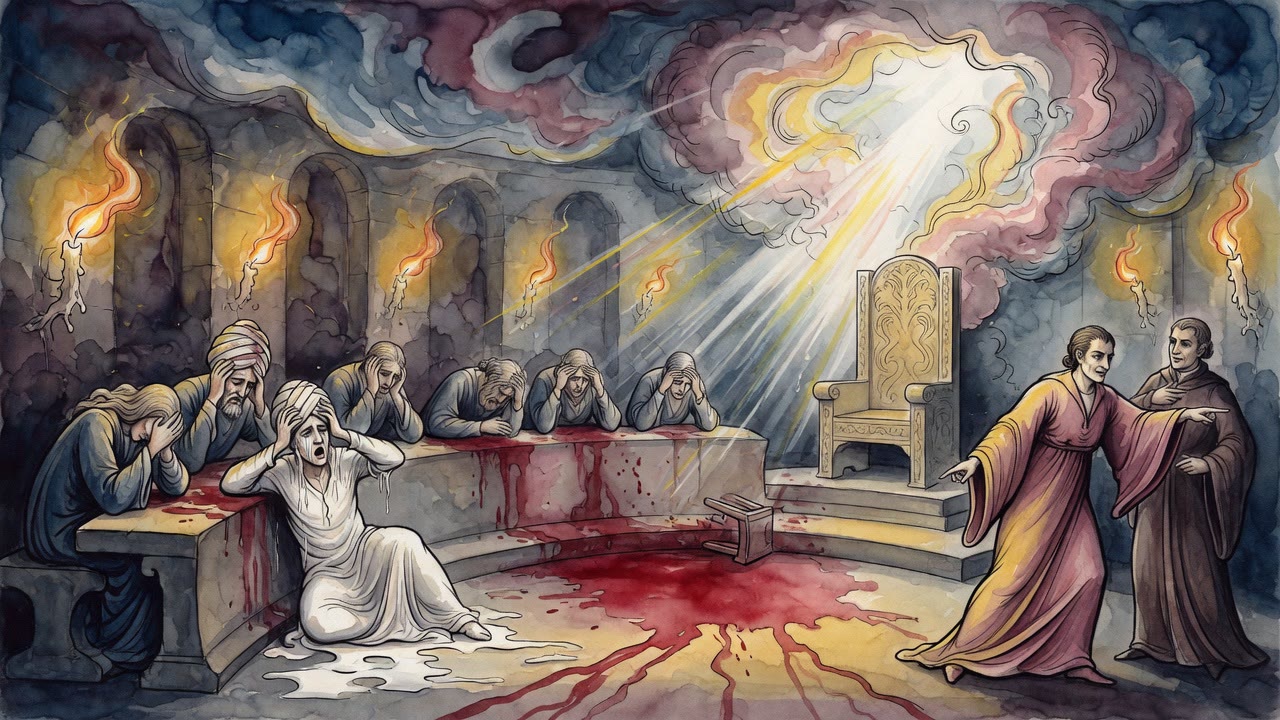
The court smelled of oil and dust. A man who had once sworn a life away stood between two benches, and the room waited for a second liar who never came. Shimon ben Shetach had already heard the proof that this one was a zomem, a scheming witness, a mouth that had tried to sell a neighbor to death with invented sight. The second conspirator had melted into the alleys. Only one face remained under the judges' eyes.
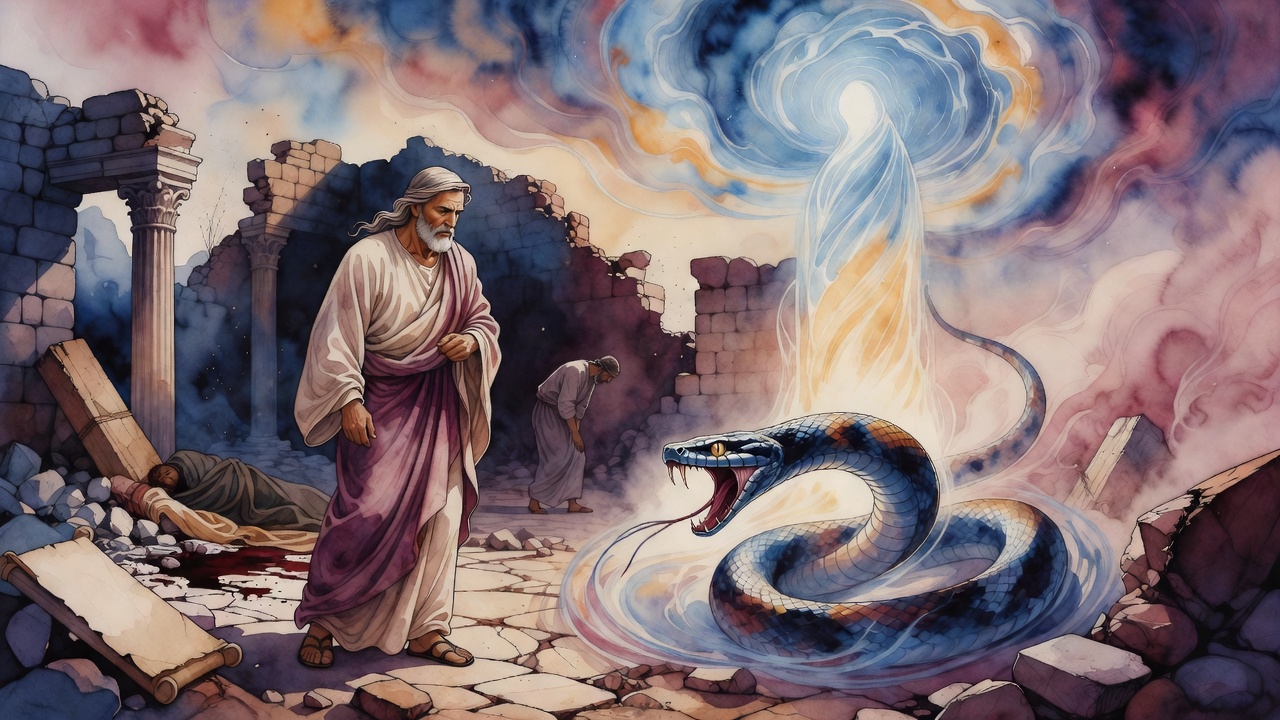
Shimon gave the order. The sword that the Torah binds to capital blood took that single life. The courtyard quieted the way a market quiets after a body falls. No one clapped. No one sang. A false tongue had been cut out of the world, and still the law felt unfinished.
Outside the gate a woman who had feared the schemer's first testimony pressed a hand to her mouth. Her husband still breathed. The court had saved him once by catching the lie. Now it had killed for the lie. She did not know whether to bless the bench or fear it.
Yehudah Names Innocent Blood
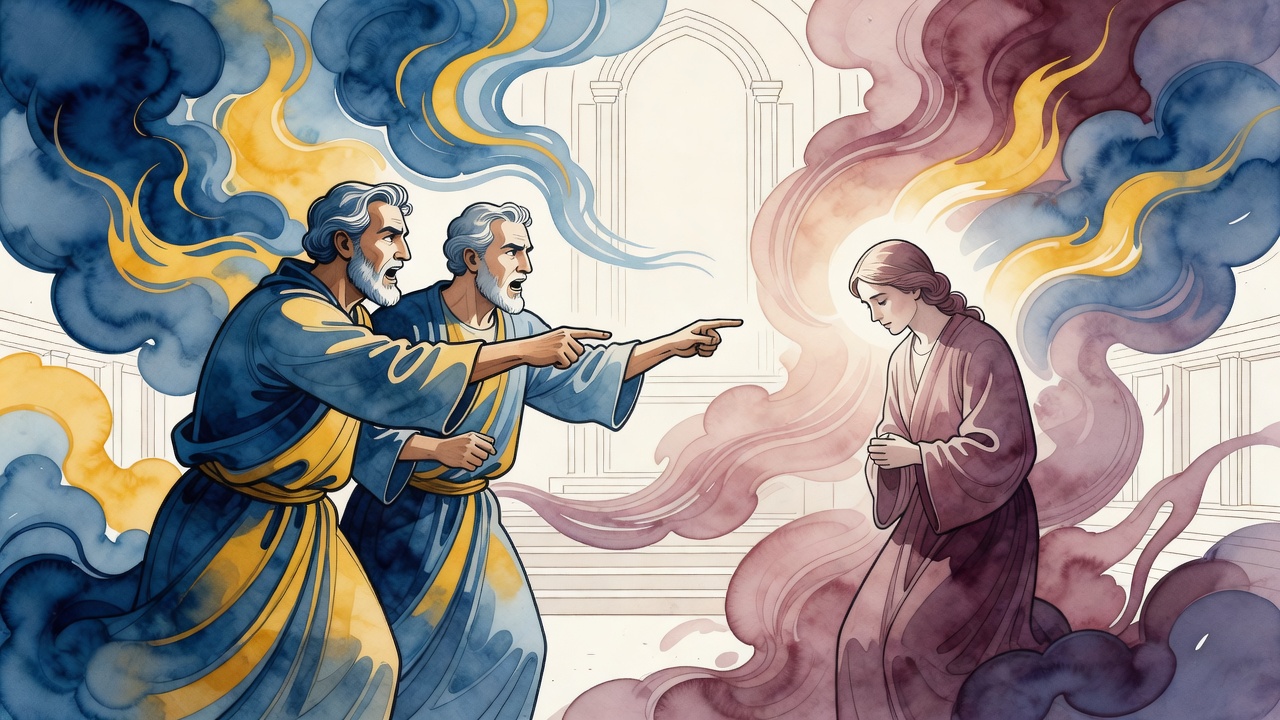
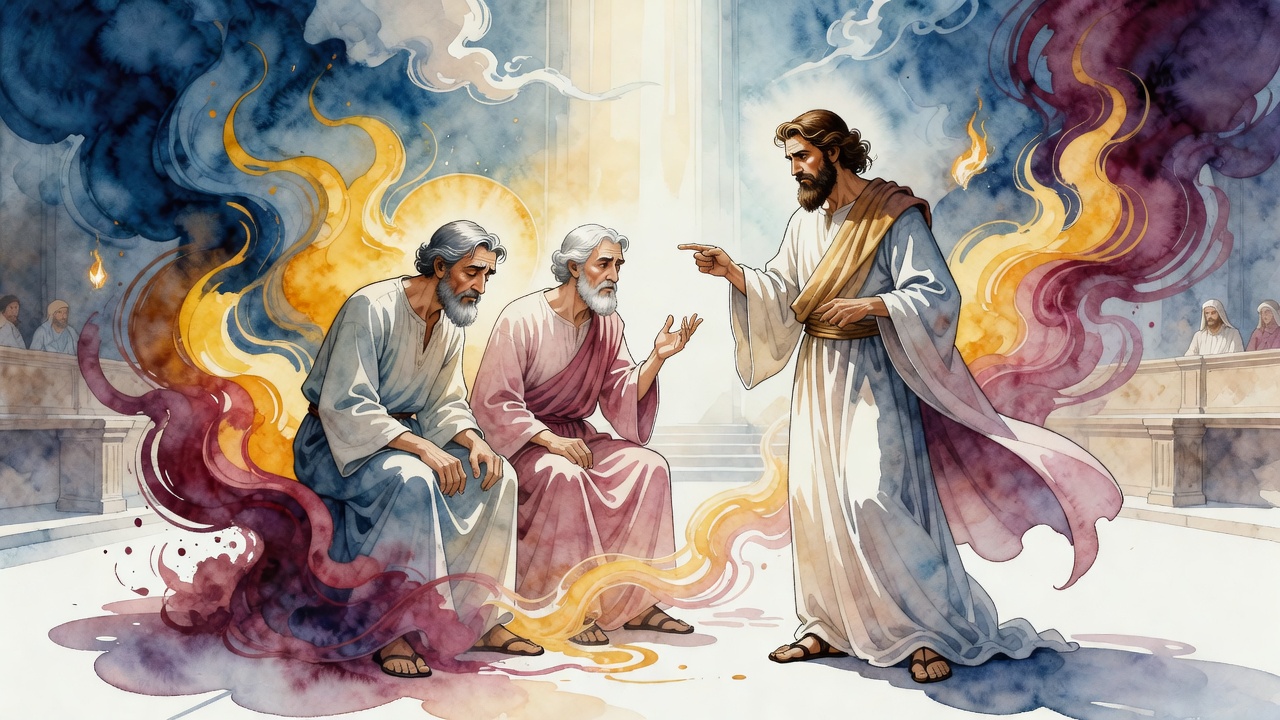
Yehudah ben Tabbai did not wait for a polite hour. He turned on his partner with a vow that scraped the plaster. "May I not see the consolation if you did not spill innocent blood!"
Innocent. The word landed harder than the sword. The man had lied. The man had hunted a soul with speech. Yehudah still called the execution a stain, because the Torah does not let one conspirator die alone. "Kill by witnesses." "Kill scheming witnesses." Both clauses, he said, keep the number two. Just as a court may not kill a free man on a single pair of eyes, so it may not kill a scheming pair until both mouths are caught. One liar without his twin is not a completed plot under the law. He is a leftover that the court has no right to burn.
Shimon was no student fumbling a first case. He was the hand that had steadied Israel through hard years. Yehudah still accused him of murder-by-procedure. Precision, not pity, was the charge. In the silence after the vow, scribes looked at their tablets as if numbers themselves might bleed.
How Death Is Named
Elsewhere the sages press a quieter knife. The Torah says of certain blood, "he shall be put to death," and leaves the method unsaid. Is it the sword? Is it strangulation? The academy follows a verbal chain until the blade answers, then checks itself again. Someone objects that blood could be spilled from any limb, that death need not come as a clean stroke. They drag in the heifer whose neck is broken in a wild valley when a corpse is found and no killer is known. The eglah arufah teaches that innocent blood is not erased by any convenient cut. Method matters. Place matters. The shape of the death tells whether justice is a court or a riot with a verse in its teeth.
In the room where the zomem died, those debates were not abstract. The sword is not a metaphor when it is in a man's hand. If the method is wrong, the blood that falls is not the liar's alone. It is the court's. A student later asks whether a neck-stroke differs from a wound opened at the ankle. The question sounds ghoulish until you remember Yehudah's vow. Every opening in a body is either law or crime.
Two or Nothing
Yehudah's rule feels cruel to modern ears that want every proven liar broken. The midrash does not care for that hunger. A conspiracy is a double rope. Cut only one strand and you have not proven the knot. You have only proven a single mouth, and a single mouth, even a wicked one, is not enough to open the door of capital death for scheming witnesses. The Torah that refuses to kill on one honest witness also refuses to kill on one dishonest one without his partner.
Shimon may have feared a city full of half-conspiracies, men who always leave a friend in the wind. Yehudah feared a court that learns to love the shortcut. Between those fears the blood on the stones cooled. Watchmen were sent into the alleys for the missing twin. Rumors named three different men. None of them stood again under the same lamp.
What the Stones Remember
Years later the story is told not as a triumph of tough justice, but as a quarrel between two great men over a single body. The schemer is almost forgotten. The argument remains. How many mouths must open before the sword may answer? How carefully must the court count before it calls its own work holy?
The false witness wanted a neighbor dead. The court that rushed him may have wanted the same for the sake of public fear. Yehudah stood between those two wants and said the law is thicker than either. Two. Always two. Until the second liar is dragged into the light, the first remains a living wound the court may not close with steel.
Night took the benches. Oil smoked. Somewhere in the city a family still mourned the man the schemer had tried to kill, and somewhere else a different family mourned the schemer himself. The consolation Yehudah swore not to see if the blood was innocent is the same consolation every court wants: the day when judgment and truth wear the same face. That day had not arrived in the courtyard. Only the sword had.
← All myths