The Striker Kept Paying the Doctor Every Time the Wound Reopened
The man on the mat thought the swelling had cooled. He stood, and the pain climbed his leg again. His wife walked to court holding the old bandage.
Table of Contents
 Click for full size
The Fist and the Relapse
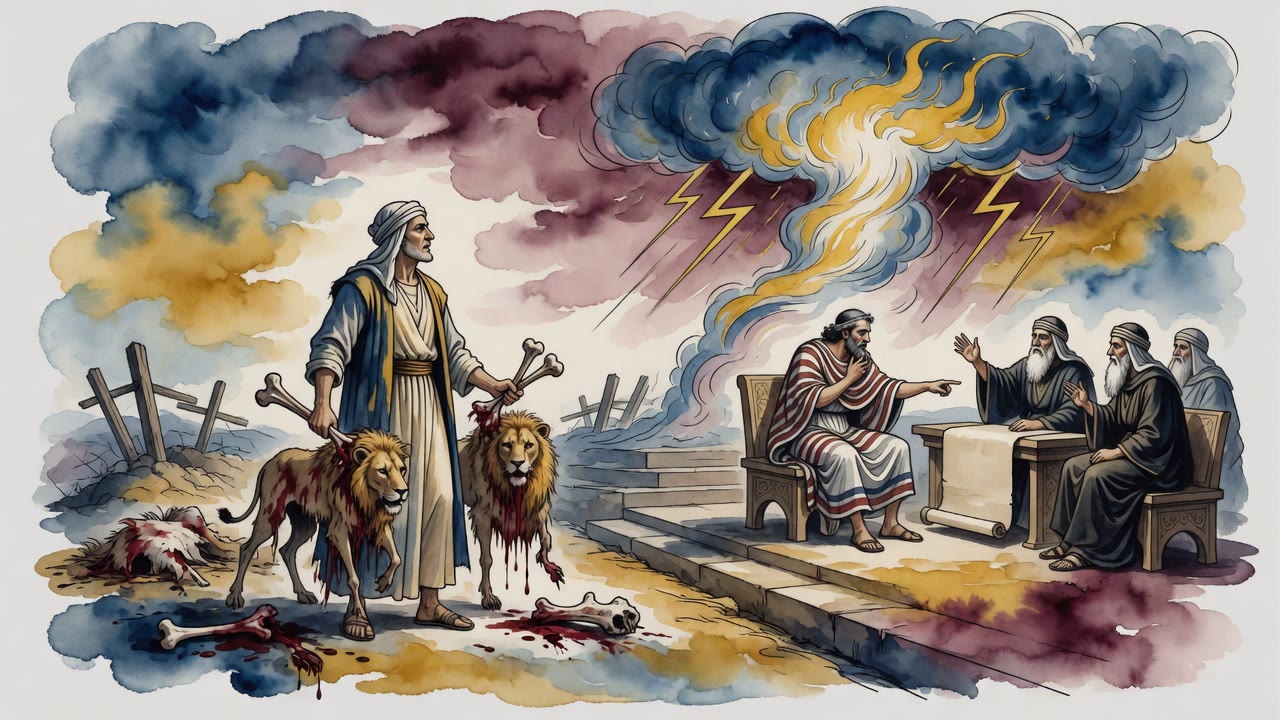
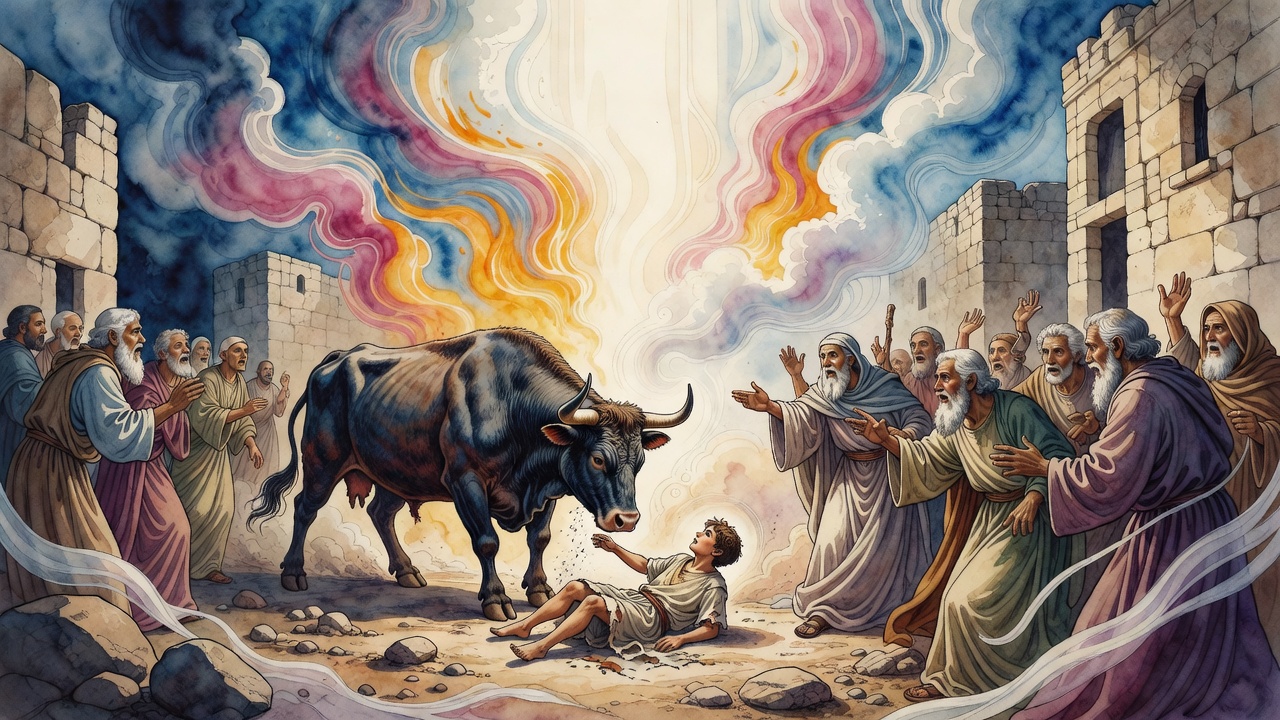
The man on the mat thought the swelling had finally cooled. He stood, took three steps, and the pain climbed his leg like a rope on fire. Across the yard the striker heard and set his jaw. He had already paid the physician once. In his mind the account was closed. The victim's wife did not agree. She walked to the court with the old bandage in her hand like evidence that bodies do not honor human bookkeeping.
The Mekhilta reads the Torah's doubled phrase, heal shall he heal, as ongoing duty. If the wound heals and reopens, even four or five times, the striker keeps paying for treatment. One round of care is not a ticket out. Causation matters. Growths that sprout because of the wound stay on his bill. Troubles that arrive from elsewhere do not. The law tracks the bruise's true children, not every ache in the village.
When a Body Buys Freedom
In another doorway a slave held a cloth to his mouth where a permanent tooth used to live. The master's anger had been quick. The consequence was slower and larger than either man expected. The verse names eye and tooth, yet the Sages free a slave for any visible permanent loss. A baby tooth that regrows would not open the gate. A wound that will not return does. Even a sliver of bone torn from a beard can end ownership, because the gate of freedom is widened by the phrase he shall send him free.
The slave did not smile. Freedom won through injury is still freedom stained with the hour that made it necessary. The court's job is not to romanticize the blow. The court's job is to refuse a world where a master can mark a body and keep the labor anyway.
The Ox That Must Face the Stones
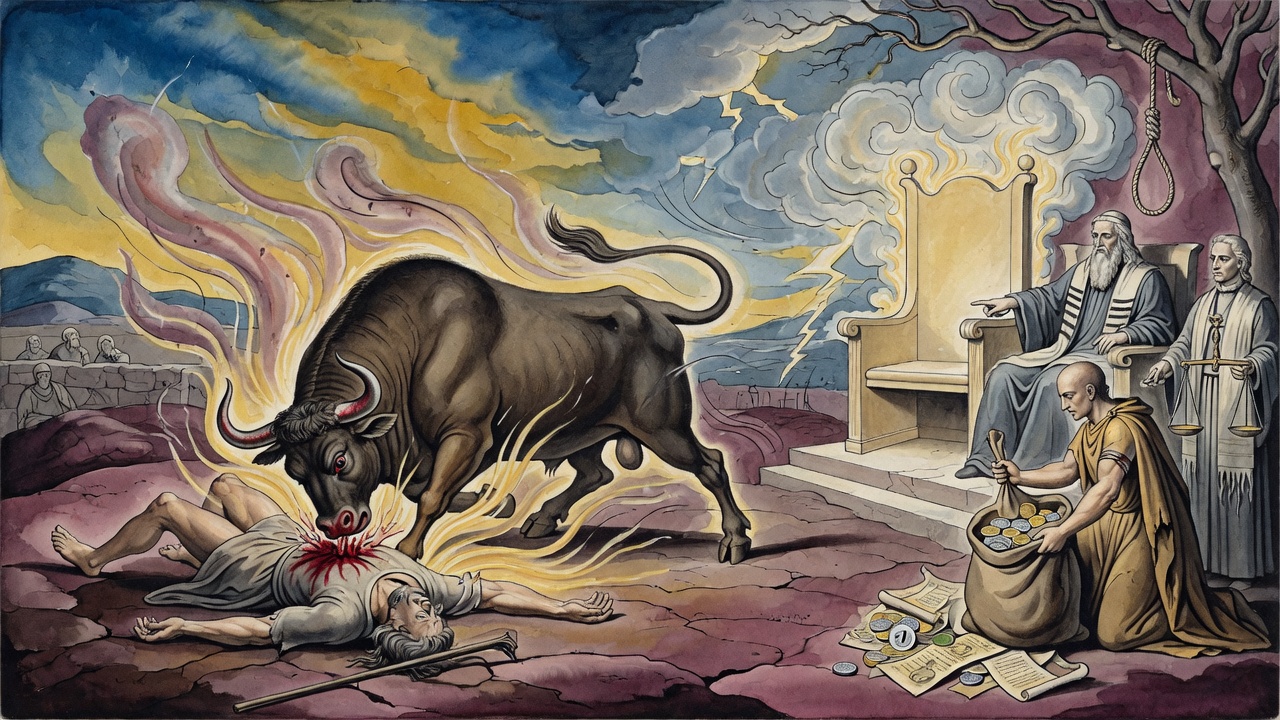
Down the lane an ox that had killed stood under guard, heavy-shouldered and stupid with heat. The Mekhilta asks why Scripture repeats that the ox shall be stoned when the penalty seems already known. The repetition blocks a false distinction. Whether the victim is one's own servant or another's, the animal's death sentence does not thin out. Human status games do not rewrite the ox's liability.
Resh Lakish tightens the purse string beside the sentence. Thirty shekels to the slave's master and the stoning of the ox stand or fall together. If the killing is not the sort that condemns the animal to stoning, the fixed thirty shekels do not activate. The Torah links the two clauses on purpose. Heavy payment rides with the gravest case. Lesser cases do not inherit the full tariff by lazy analogy.
Courts That Can Count Pain
These scenes share one refusal. Pain is not abstract. A relapse is not a nuisance. A missing tooth is not a footnote. A goring is not a rumor. Israel's civil law trains the eye to measure consequence the way a physician measures fever, again and again, until the true end arrives.
The striker who hoped for a single receipt learns otherwise. The master who thought a mouth was his tool learns otherwise. The ox owner who wanted a cheaper category learns that wording is the measure of liability. Precision is mercy for the injured and a curb for the powerful.
What the Village Learned by Evening
By sundown the physician had been called a second time. He cleaned the wound and named the fee without apology. The striker paid with a face like wet clay. The freed slave sat outside the gate touching the empty place in his mouth as if reading a new alphabet. Freedom papers, if required by the school that demands a deed, would wait for morning, but the air already knew he was not returning to the same yoke. The ox's owners argued in low voices about stones and shekels and intent. One wanted a cheaper category. The verse would not sell it to him.
Children listened from the well and learned that adult strength has a bill, and that bills can outlast pride. A girl asked her mother why the Torah cares so much about a tooth. The mother said because a mouth is how a person eats and speaks, and anyone who breaks a mouth must meet a law that still has ears. Another child asked why an ox is stoned if the ox does not know verses. The father said that owners live inside the minds of their animals, and negligence is a kind of knowledge.
The Maggid does not turn these laws into a bloodless manual. He keeps the mat, the tooth cloth, the animal's breath, the doubled verb heal. Jewish justice begins in bodies under pressure. It continues in courts that will not let a first payment erase a second injury. It ends, when it can, in closed wounds, opened freedom, and animals that do not get to rewrite their own verdicts by belonging to the right man. Measure follows flesh. Flesh does not follow convenience.
← All myths