Haman Once Sold Himself to Mordechai as a Slave
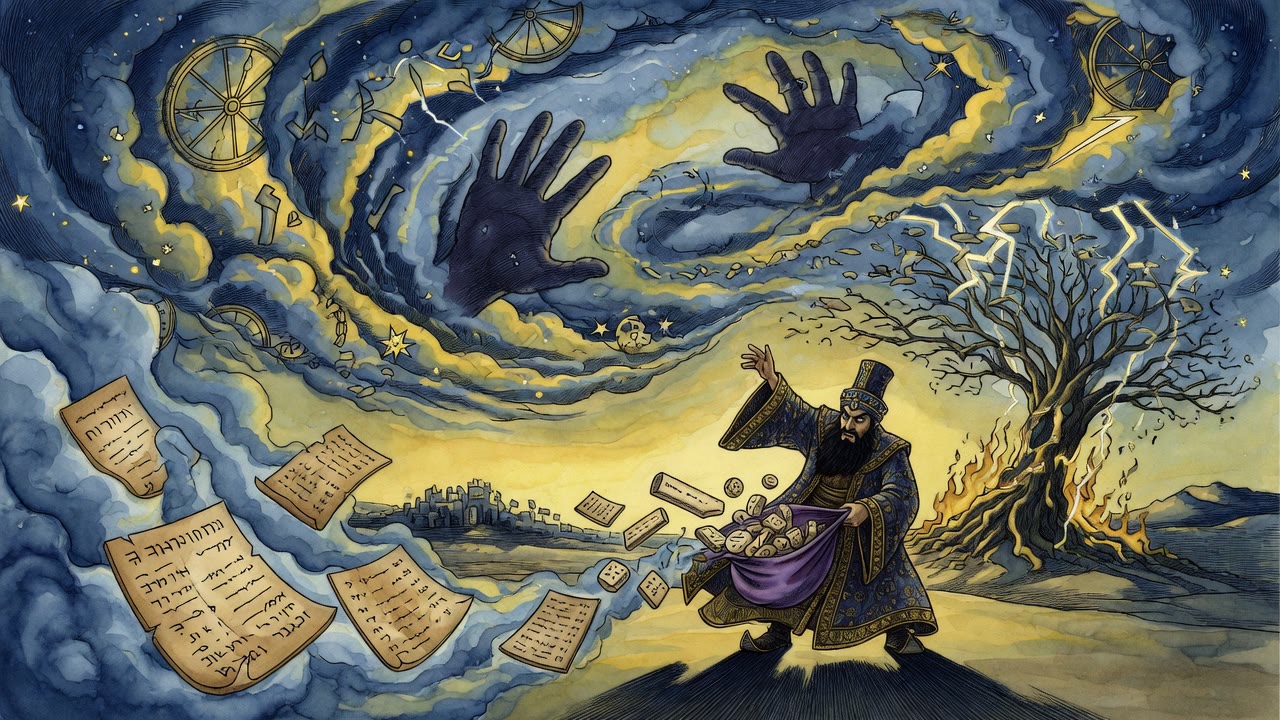
Haman's troops were starving. Mordechai had grain and would not take interest. He asked for a slave's name cut into his own knee.
Table of Contents
The men under Haman had stopped marching. They had started counting how many hours of hunger they would take before they killed their general.
 Click for full size
Supply lines had failed. There was no grain in the camp. No paper. No scribe. The troops told Haman they would finish him unless he found rations. He had no money that could buy a field of wheat in a famine. He had one name left to try.
Mordechai was in the region. Mordechai had food.
Food for a Slave's Name
Haman sent a messenger. He would pay back the cost of feeding the army. Ten percent interest. Whatever Mordechai named. A loan. A clean transaction. No marks on anyone.
Mordechai listened and refused the money.
He made one counter-offer. He would feed Haman's army if Haman sold himself into slavery. Not a debt. A transfer of legal status. Mordechai would become Haman's owner, and the price of the food was Haman's freedom.
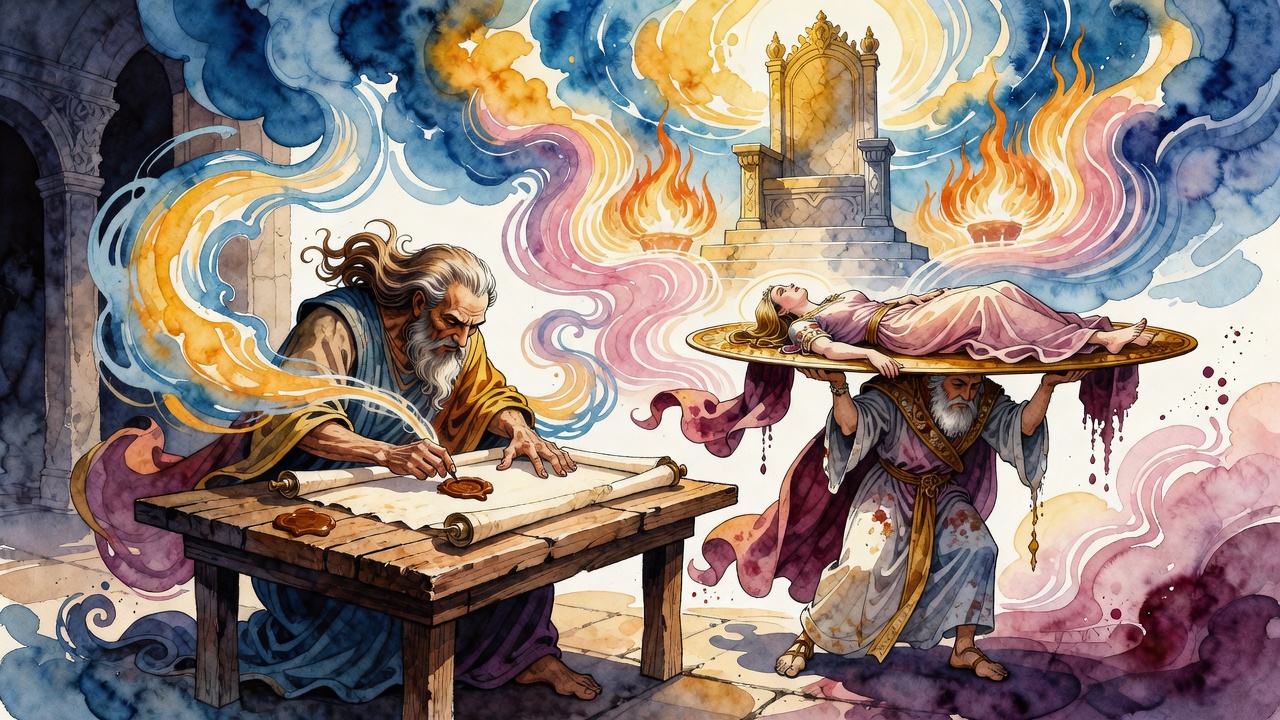
There was no parchment in the camp. So the bill of sale was carved into Mordechai's kneecap. A deed of ownership scratched into skin. Haman's name on the meat of a knee.
Haman accepted because the alternative was a knife from his own ranks. He fed his army. He marched out of the famine. Then he rose, the way powerful men rise, until he was the second man in the Persian Empire, and the only Jew in the capital who would not bow to him was walking around with the ownership papers inscribed in his own leg.
The Knee in the Gate
Whenever Haman passed in the palace gate, Mordechai stretched out his knee. Not a full bow. A reminder. Enough for Haman to see the old contract still living on bone.
Haman could not tell Ahasuerus the truth. He could not say: that man owns me, and the paper is his leg, and when he walks past me I feel the panic of a man who never actually left the cage he crawled out of. Hatred of one Jew is hard to sell to a king. Hatred of a people is easier. So the rage that began at a kneecap grew until it wanted scholars, then the whole of Mordechai's nation.
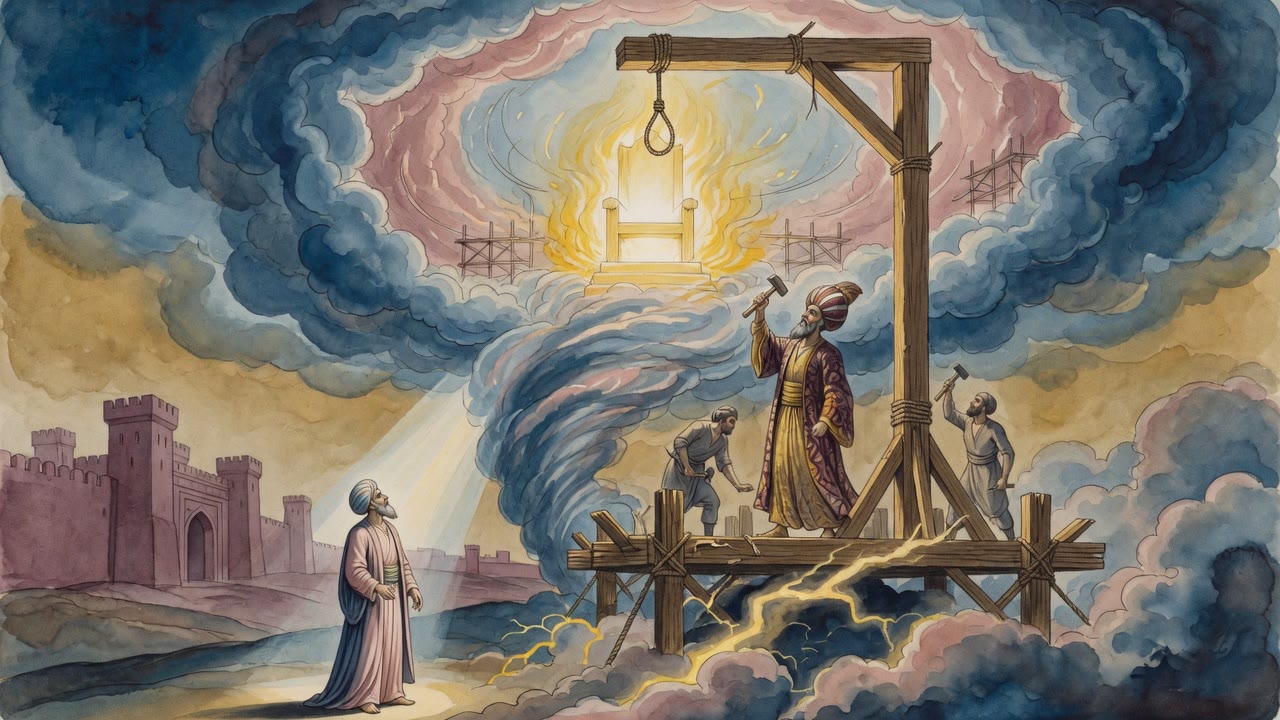
The decree went out. Haman built a gallows. He timed his request. He walked toward the throne planning to ask permission to hang the man who owned him.
The Honor He Designed
That night the king could not sleep. He had the chronicles read aloud. The entry that came up was Mordechai uncovering an assassination plot. Nothing had been done to honor him. The king asked what honor such a man deserved.
Haman entered at that moment, the hanging request still in his mouth. Before he could speak, the king asked his question. Haman, certain the king meant him, described the most extravagant honor he could imagine: the king's own robes, the king's own horse, a great lord proclaiming his glory through the streets of Shushan.
"Excellent," said the king. "Do all of this for Mordechai."
Haman tried to trade the sentence for something smaller. Make him ruler of a city. Strike coins with both names. Anything but this. Ahasuerus would give Mordechai cities and districts and the obedience of kings on land and water. The street honor, Haman still had to perform with his own hands.
A Foot on the Neck
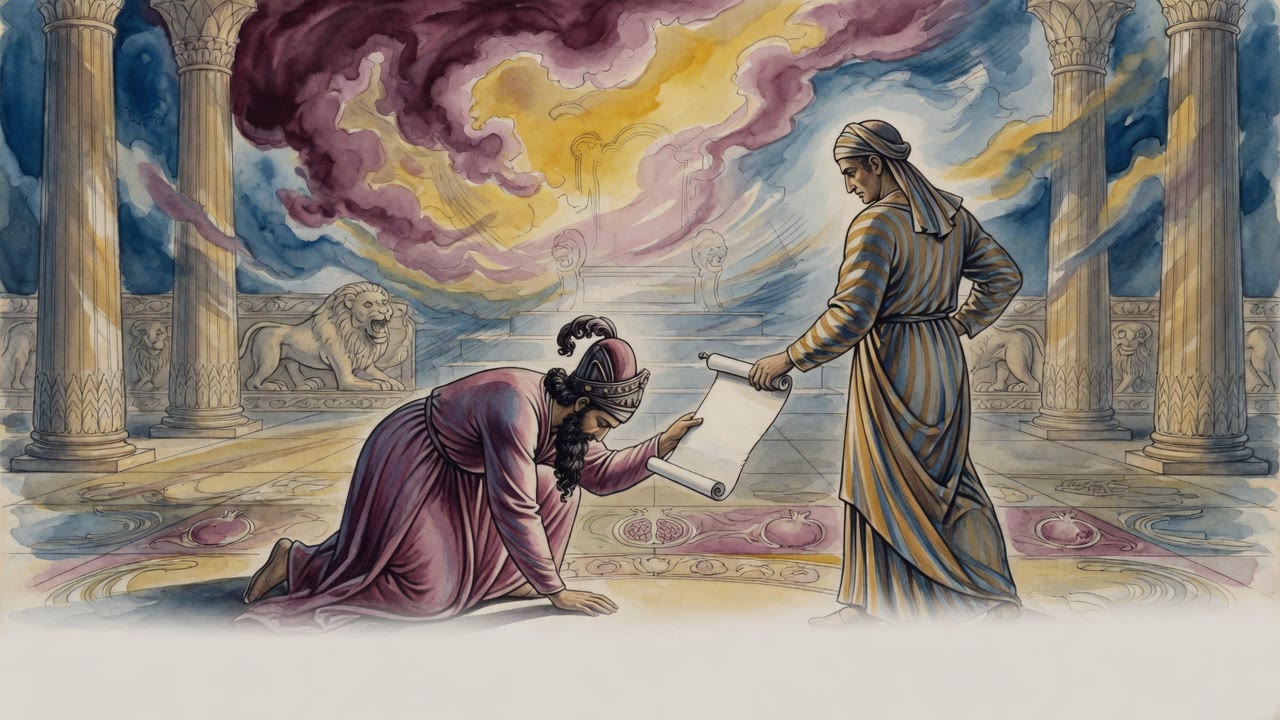
Haman took the apparel and the horse and went to Mordechai. "Arise," he said. "Put on the purple of the king."
Mordechai had sat three days in sackcloth and ashes because of what Haman had done. "Villain," he said. "Take me to the bathhouse first. Then I will put on the purple."
Haman washed him. Haman dressed him. Haman told him to mount. Mordechai said the fast had left him no strength to climb. So Haman lowered himself in the street, and Mordechai put his foot upon Haman's neck, and from that living step he mounted the king's horse.
"Blessed be the Omnipresent, who hath not let aught of His words fall to the earth," Mordechai said, and he quoted the old line about treading upon high places (Deuteronomy 33:29).
Then he rode. Haman walked in front and called out the words he had invented for himself: thus shall be done to the man whom the king delights to honor. He said them loud enough for the city to hear. Behind him Mordechai sat with the same posture he had kept in the palace gate, as if nothing that was happening lay outside the natural order of things. The knee that held the bill of sale did not need to be shown. The whole street could see who was walking and who was riding.
When it was over, Mordechai returned to his seat at the king's gate. Haman went home mourning, his head covered, carrying a humiliation he could not explain without confessing the famine, the knife of his own troops, and the name still cut into another man's bone.
← All myths